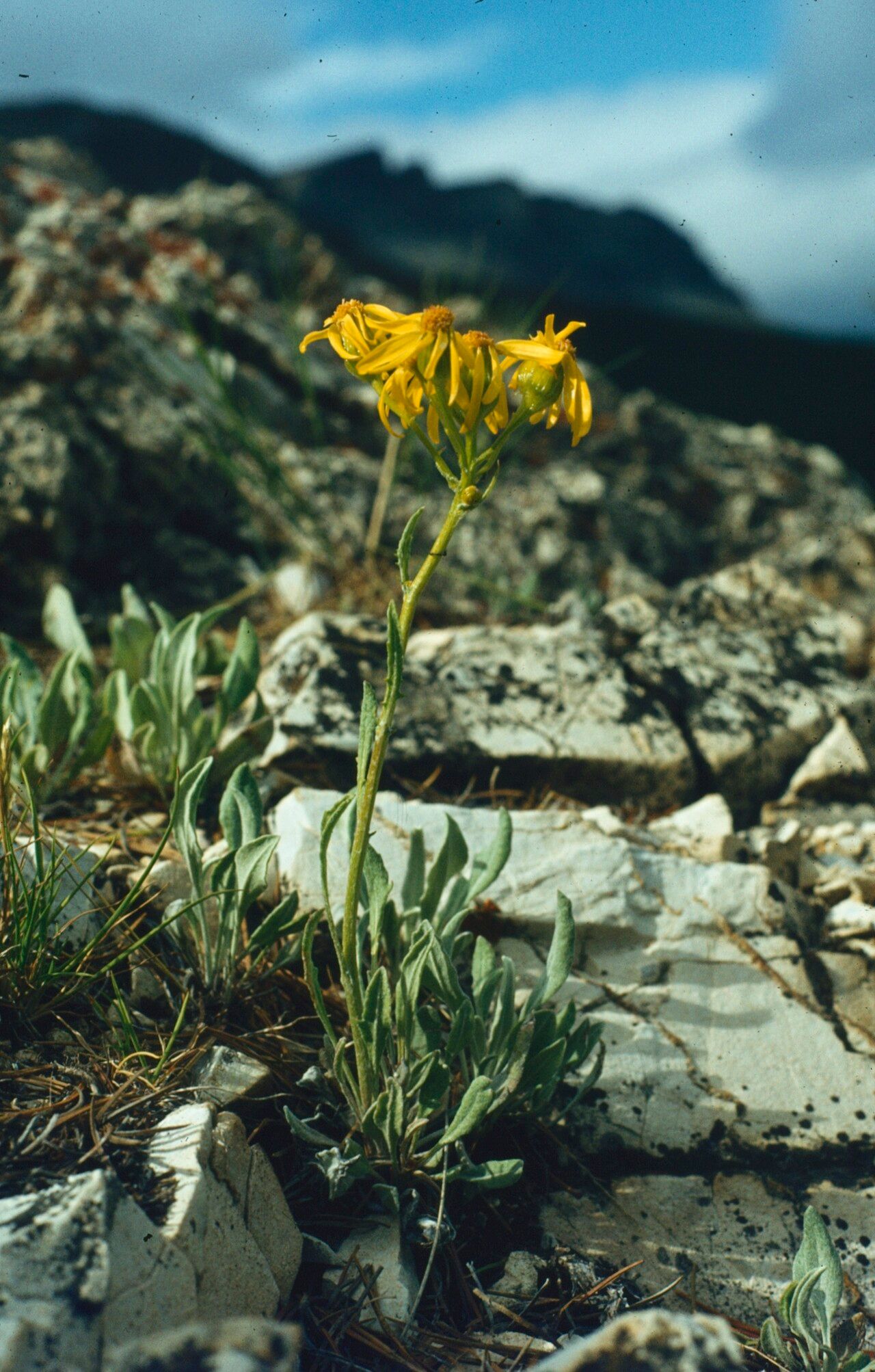
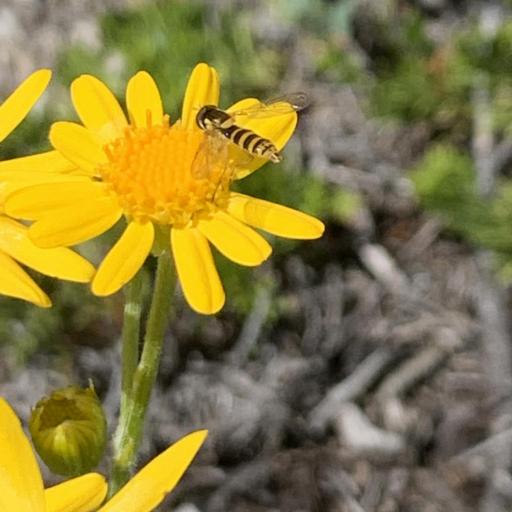
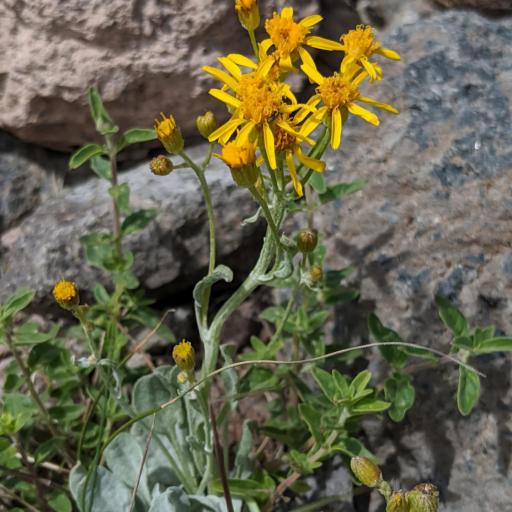
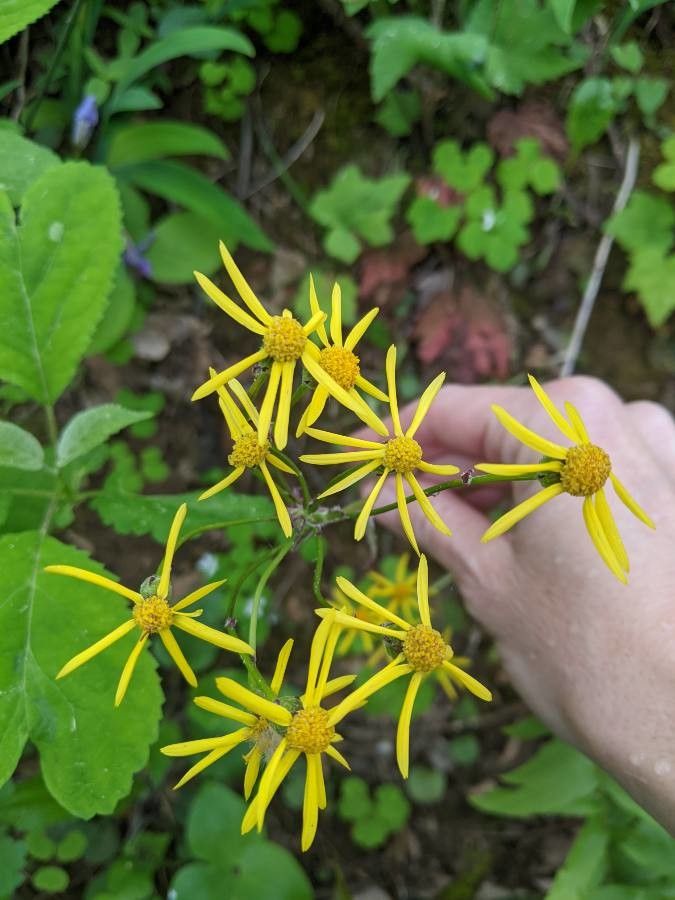
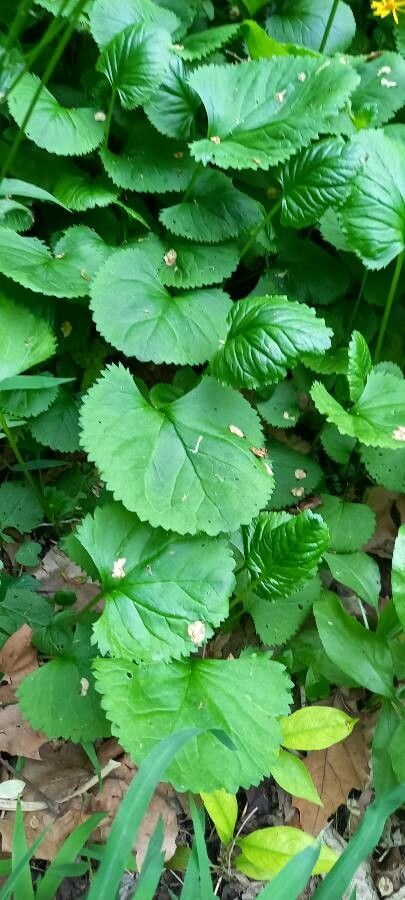
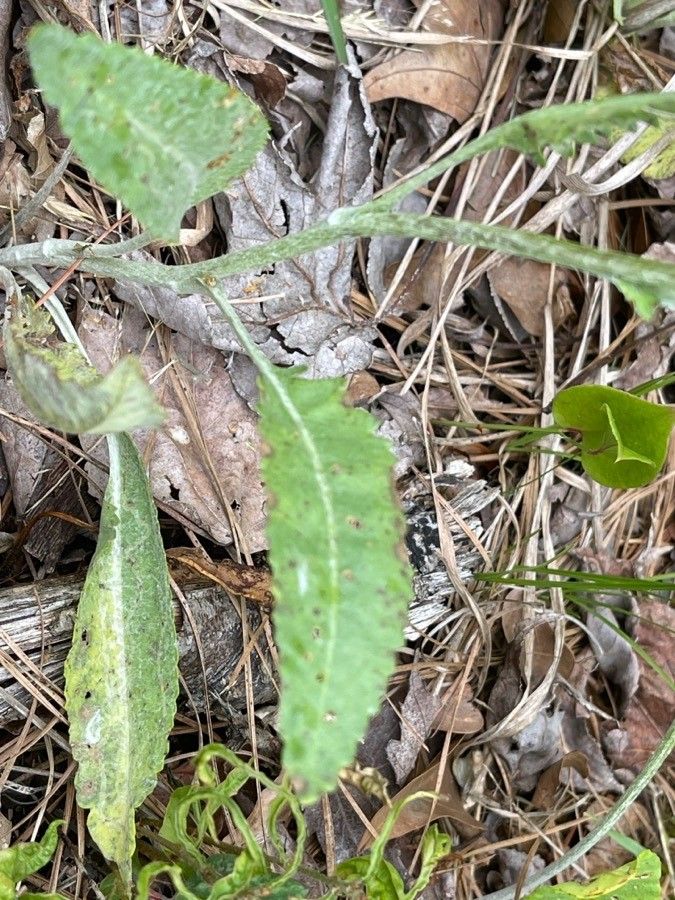
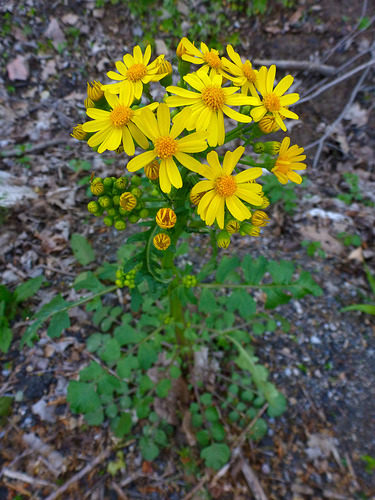
Packera cana is a species of flowering plant in the aster family known by the common name woolly groundsel. It is native to western and central North America, where it can be found in a wide array of habitat types at all elevations from grassland to the alpine climates of mountain peaks. It is a perennial herb producing one erect stem from a rosette of basal leaves and a rhizome system. It generally grows up to 40 centimeters in maximum height. It is a woolly plant, its herbage coated in whitish hairs. The basal leaves have lance-shaped to oval blades which may have smooth or toothed edges. They are a few centimeters long and are borne on petioles. Leaves higher on the stem are smaller and simpler. The inflorescence contains several flower heads, each lined with woolly green phyllaries. The head contains many golden yellow disc florets and generally either 8 or 13 narrow yellow ray florets each up to a centimeter long. The fruit is an achene around a centimeter long, including its pappus of bristles.
Woolly groundsel has strong disease resistance and is generally not vulnerable to illnesses. Still, it can be affected by pests and diseases present in its surroundings. These infections are generally not serious. As for care, this plant requires moderate maintenance. It should be pruned regularly to keep a pleasing appearance and promote healthy growth. Fertilizing can also help encourage flowering. Woolly groundsel is appropriate for anyone with outdoor space, such as a garden or patio, and does not demand extensive gardening experience. It may need more attention if grown indoors.
How to keep Packera Cana.
Light
Woolly groundsel is a perennial herbaceous plant that favors sunny locations and comes from open habitats, commonly thriving in meadows and grasslands. It prefers full sun but can also tolerate partial sun.
Water
Woolly groundsel excels in dry environments, as it retains moisture and requires little watering, usually just once a week. Its succulent-like leaves show its ability to withstand drought, making it perfect for xeriscaping. As a plant suited for temperate outdoor conditions, woolly groundsel adapts to the natural pattern of seasonal rainfall, which further reduces its water needs.
Temperature
Woolly groundsel can tolerate a wide range of temperatures, but its range may still be restricted by different combinations of moisture and heat. It performs best in warm summer conditions with sufficient rainfall or watering. Extended periods of cloudy, rainy weather or prolonged high temperatures can raise the chance of Woolly groundsel dying. In winter, appropriate protection from cold can increase the plant's survival.
Fertilizer
One fertilizer application in spring is typically adequate for Woolly groundsel, although additional feedings can boost growth. Fertilize roughly every month to six weeks. Feeding improves leaf appearance and function, maintaining even color and a healthy texture. It also promotes root development and nutrient uptake, supporting the plant's long-term health.
Pruning
Woolly groundsel, recognized for its silvery foliage and yellow flowers, thrives with early spring pruning. Start by removing any dead or damaged stems to encourage healthy growth, improve air circulation, and increase flower production. Be sure to use clean tools and consider applying a balanced fertilizer after pruning for the best results.
Botanical profile.
- Plant Type
- Herb, Shrub
- Life Cycle
- Perennial
- Genus
- Packera
- Family
- Asteraceae
- Hardiness Zone
- 3-8
- Mature Height
- 15 cm to 46 cm
- Mature Spread
- 15 cm to 25 cm
- Leaf Color
- Gray, Silver
- Leaf Type
- Semi-evergreen
- Flower Size
- 2.03 cm to 3.05 cm
- Bloom Time
- Mid spring, Late spring, Early summer
- Planting Time
- Spring, Summer
- Harvest Time
- Early summer, Mid summer
Other names.