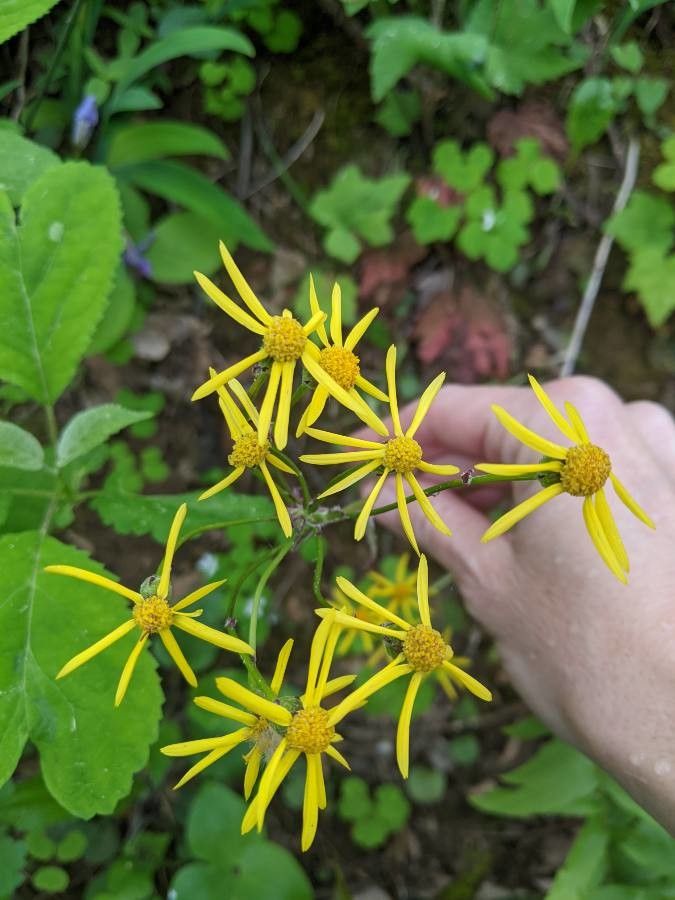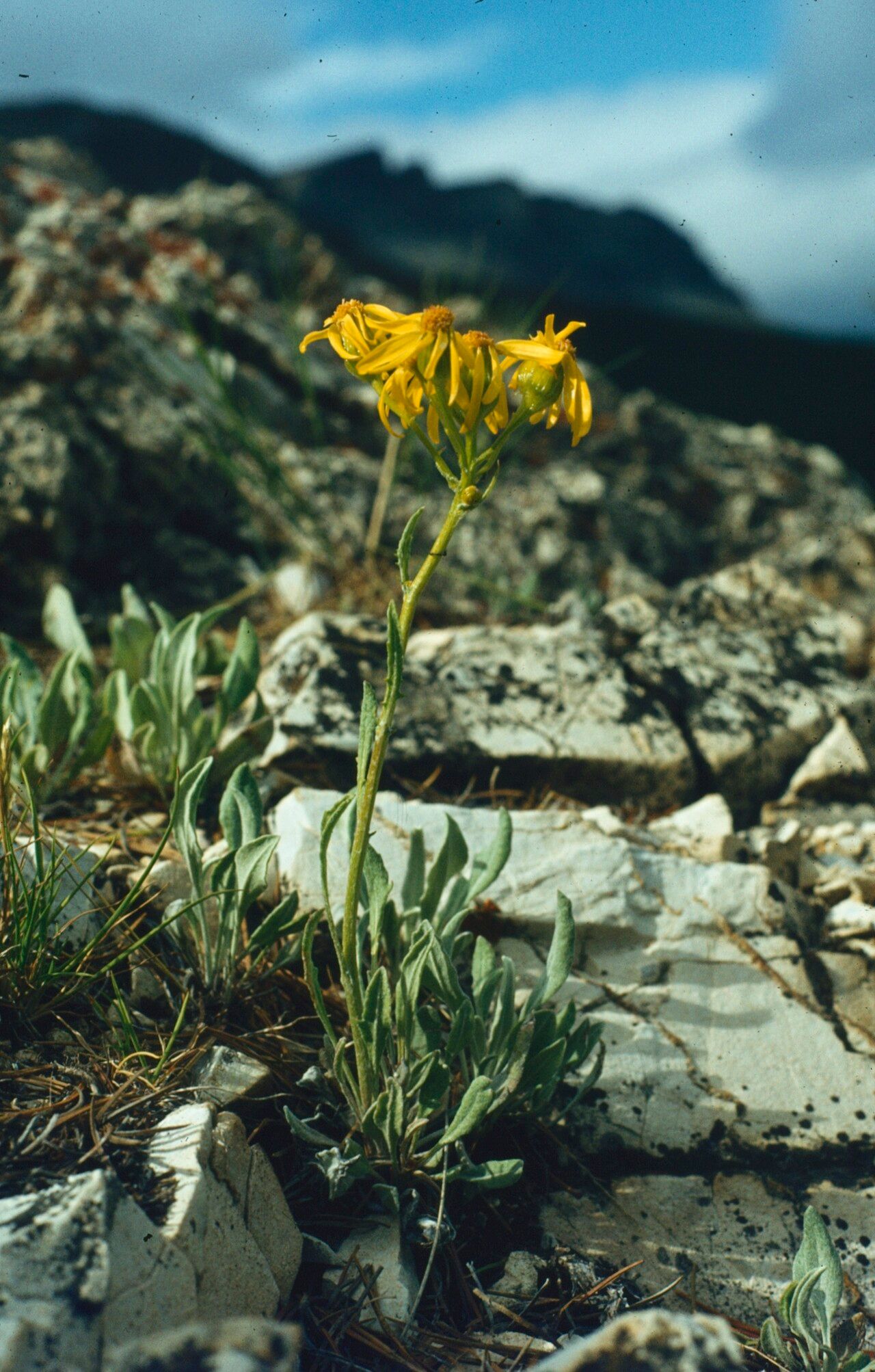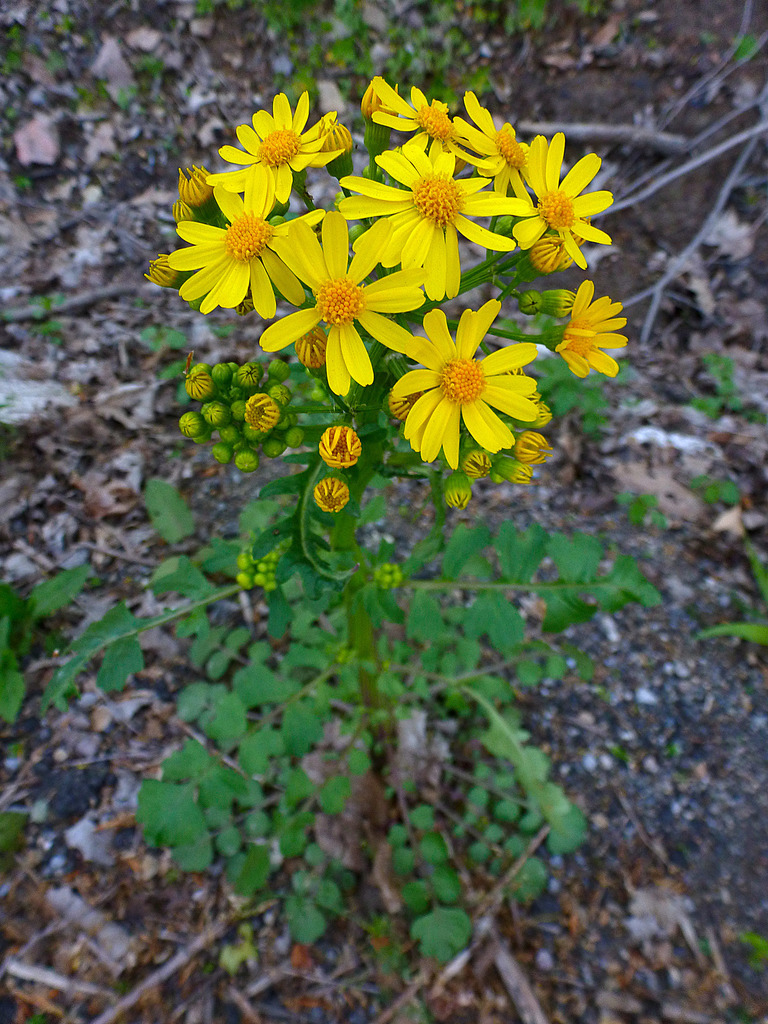
Packera glabella (formerly Senecio glabellus) is one of several plants with the common name butterweed, this one has also been called cressleaf groundsel and yellowtop. It is native to central and southeastern North America. It is toxic when eaten by humans.
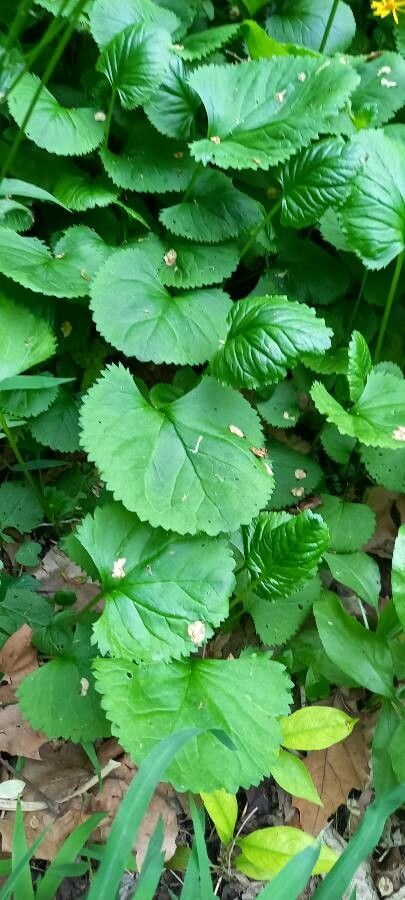
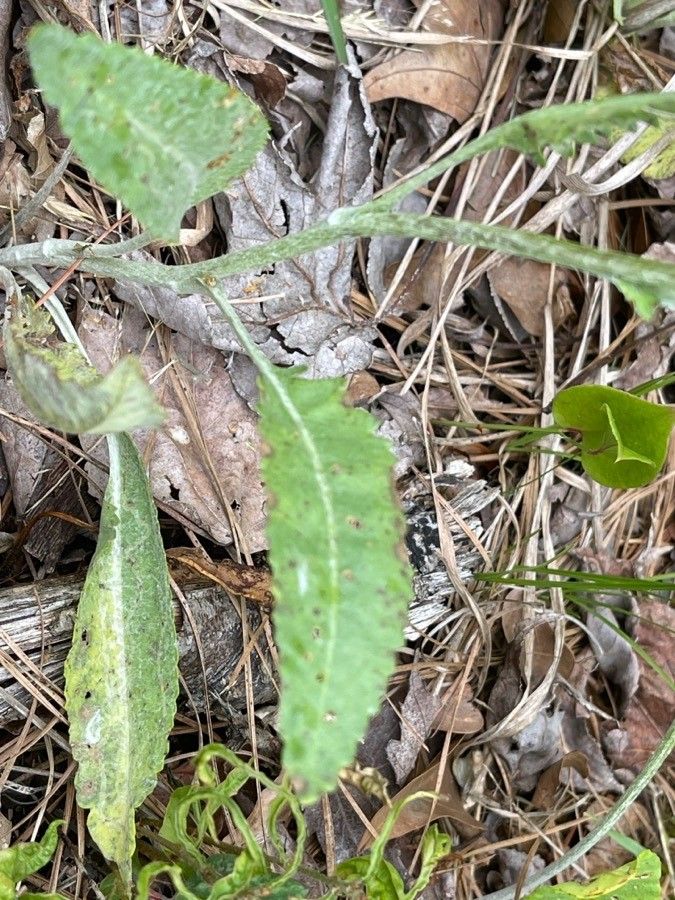
Butterweed, also known as Cressleaf Groundsel, gets its name from its striking, buttery yellow flowers. The alternate name, Cressleaf Groundsel, is derived from its leaves, which resemble those of watercress.
Butterweed is fairly disease-resistant and typically does not suffer from illnesses. That said, it can be vulnerable to pests and pathogens found in its environment. Such infections are generally mild. Regarding maintenance, the plant needs moderate care. Regular pruning is necessary to keep a neat appearance and encourage healthy growth. Applying fertilizer can also boost flowering. Butterweed is appropriate for anyone with outdoor space, such as a garden or patio, and does not demand extensive care experience. When grown indoors it may require more attention.
How to keep Packera Glabella.
Light
Butterweed needs ample light to grow best but can tolerate reduced light conditions. This need stems from its native environment, where it regularly receives strong sunlight. Too little light leads to poor growth, while too much can scorch the leaves.
Water
Butterweed thrives in moist environments and needs consistent hydration, preferring regular moisture. To encourage lush growth, water it weekly. Although it benefits from natural rainfall, additional watering is essential during dry spells to meet its needs throughout the growing season.
Temperature
Butterweed is native to habitats where temperatures generally range from 68 to 100 °F (20 to 38 °C). It favors warmer conditions and may require temperature control in colder seasons to maintain its vitality.
Fertilizer
Butterweed does well with regular, light applications of fertilizer to encourage healthy leaf growth. Fertilize Butterweed about once a month throughout the summer. Nitrogen is vital for foliage, and supplying nitrogen-rich sources helps Butterweed prosper.
Pruning
In early to late spring, prune butterweed to prevent legginess and encourage bushiness. Remove any dead stems and trim flower spikes after they bloom to promote regrowth and minimize self-seeding. Proper pruning also improves air circulation and reduces the risk of disease. For the best results, always use clean, sharp tools.
Botanical profile.
- Plant Type
- Herb
- Life Cycle
- Annual
- Genus
- Packera
- Family
- Asteraceae
- Hardiness Zone
- 6-11
- Mature Height
- 20 cm to 61 cm
- Mature Spread
- 30 cm to 91 cm
- Leaf Color
- Green, Blue, Red
- Leaf Type
- Deciduous
- Flower Color
- Yellow
- Flower Size
- 2.54 cm
- Bloom Time
- Spring
- Planting Time
- Spring, Summer
- Harvest Time
- Late spring, Early summer, Mid summer
Other names.
Reader questions.
How should I water my Butterweed?
To water Butterweed, you have various options for watering tools such as a garden hose with a spray nozzle or a watering can. Butterweed is not very particular about the type of water it receives, as it can thrive on rainwater, tap water, or filtered water. However, it's best to avoid watering this plant from above as it could harm its leaves and flowers and potentially lead to disease. A drip irrigation system can be an effective method for watering Butterweed, as it applies water evenly and directly to the soil. If you have a potted Butterweed, you can use a cup, watering can, or even your tap to water the plant by applying the water directly to the soil.
What are the sunlight requirements for Butterweed?
Butterweed thrives in conditions where it can receive abundant sunlight, mirroring its native habitat's exposure. It requires full sun, defined as over 6 hours of sunlight daily, but can also grow in partial sun, which entails about 3-6 hours of sunlight. It's essential to monitor the movement of sunlight through your garden to select spots that provide an ideal mix of light and shade, ensuring the plants' well-being. Insufficient sunlight leads to poor growth, while excessive exposure can cause leaf scorching.
What is the ideal temperature range for growing Butterweed?
Butterweed thrives in environments with temperatures ranging from 68 to 100 °F (20 to 38 °C). This plant prefers warmer temperatures for optimal growth. Even though Butterweed possesses strong cold resistance, allowing it to withstand colder seasons without special frost protection measures, managing its environment to stay within this ideal temperature range is crucial for maintaining its vitality.
What do I need to do if I give my Butterweed too much water or too little water?
If you notice that your Butterweed plant lacks moisture, the solution is simple: water it more regularly. However, overwatering can be a more serious issue. When Butterweed is overwatered, it can develop diseases that can lead to its decline and death. To avoid this, choose a growing location that gets plenty of sunlight to help dry out the soil and has good drainage to prevent water from pooling. If you overwater Butterweed in a pot, consider changing it to a new pot with better drainage. Make sure to use loose soils and a pot that drains efficiently when repotting an overwatered Butterweed.
How does artificial lighting benefit indoor Butterweed plants?
When natural sunlight is not enough, especially during winter or in less sunny locations, artificial lighting becomes crucial for the optimal growth of indoor Butterweed plants. LED lights are recommended because they can be adjusted to supply specific light wavelengths necessary for the plants. The intensity of artificial light needed varies according to the plant's natural requirements: 30-50W/sq ft for full sun plants, 20-30W/sq ft for partial sun plants, and 10-20W/sq ft for full shade plants. The artificial light should be placed 12-36 inches above the plant and kept on for 8-12 hours per day to mimic natural daylight hours effectively.
How can I protect Butterweed from cold weather?
Butterweed generally does not require special frost protection measures, thanks to its strong cold resistance. However, if winter temperatures are expected to drop below the plant's cold tolerance limit, providing protection against the cold is important. This can be done by covering the plant with soil or straw, and by watering it abundantly before the first freeze in autumn. Ensuring the soil remains moist and freezes in this condition can help prevent drought and water scarcity during winter and early spring, safeguarding the plant's health.
How often do I need to water my Butterweed plant?
To ensure the healthy growth of Butterweed, it is important to water it regularly. In the spring, watering once a week is sufficient. However, as the weather gets warmer, watering two to three times a week may be necessary. It is crucial not to exceed this watering rate as it can harm the plant. Regardless of the frequency, it is important to keep the soil relatively moist but not overly wet. When growing Butterweed in a pot, the watering needs are slightly different. Potted plants tend to dry out faster, so watering should be increased to a few times a week. In contrast, in-ground plants only require watering once a week.
What are the symptoms of incorrect light exposure in Butterweed?
Inadequate or excessive light exposure in Butterweed can lead to several symptoms. Light deficiency often causes smaller new leaves, leggy growth, early leaf drop, cessation of growth, and pale new leaves indicating insufficient chlorophyll and nutrients. Conversely, too much light can result in chlorosis, where leaves lose their green color, sunscald characterized by pale or necrotic spots on plant tissue, leaf curling as a defense against excessive light, wilting from rapid water loss, and leaf scorching seen as brown, crispy leaf edges. These symptoms highlight the importance of balancing light exposure for Butterweed's health.
What should I do if Butterweed is exposed to temperatures below its cold tolerance?
Butterweed is cold-tolerant and best thrives when temperatures are kept above a certain minimum suitable for its growth. If during winter the temperature drops below this minimum yet still above the plant's critical cold tolerance limit, the plant may not show noticeable changes immediately; however, there might be a decrease in sprouting or even a complete lack of sprouting come springtime. In such cases, it is recommended to remove any parts of the plant that have failed to sprout in spring as a way to encourage new growth.
How much water does my Butterweed plant need?
There are different ways to decide how much water your Butterweed needs. One method is to feel the soil and water until the top six inches are moist. Another option is to use a standard measurement, like giving your plant about two gallons per week, taking into account the temperature and dryness of the soil. However, following strict guidelines can lead to overwatering if your plant needs less water. When growing Butterweed in a container, you should water until all the layers of soil are moist. You can test this by sticking your finger in the soil or looking for water draining out of the pot.
What solutions can address Butterweed's light exposure issues?
To address light exposure issues in Butterweed, gradual adaptation is key. For indoor plants needing more sunlight, incrementally moving them to sunnier spots to achieve at least 6 hours of direct daily sunlight is advised. Utilizing south-facing windows and keeping curtains open maximizes natural light, while artificial grow lights can supplement insufficient sunlight, ensuring at least 8 hours of light daily. Outdoors, gradually relocating plants to brighter areas prevents sunburn, allowing them to adjust without stress. Minimizing obstructions, through pruning or transplanting, ensures adequate sunlight for ground-planted Butterweed. Remember that parts of the plant damaged by irregular light exposure might not recover, but new growth will be healthy once conditions improve.
How does high temperature affect Butterweed and what are the solutions?
During summer, it is important to maintain Butterweed's temperature below a certain maximum suitable for its growth. Exceeding this temperature can lead to the leaves becoming lighter in color, prone to curling, susceptible to sunburn, and in severe cases, the entire plant may wilt and dry out. To mitigate high temperature stress, trim away the sunburned and dried parts of the plant, move the plant to a shaded location or use a shade cloth to protect it from midday and afternoon sun. Additionally, watering the plant in the morning and evening to keep the soil moist can help manage the stress caused by high temperatures.