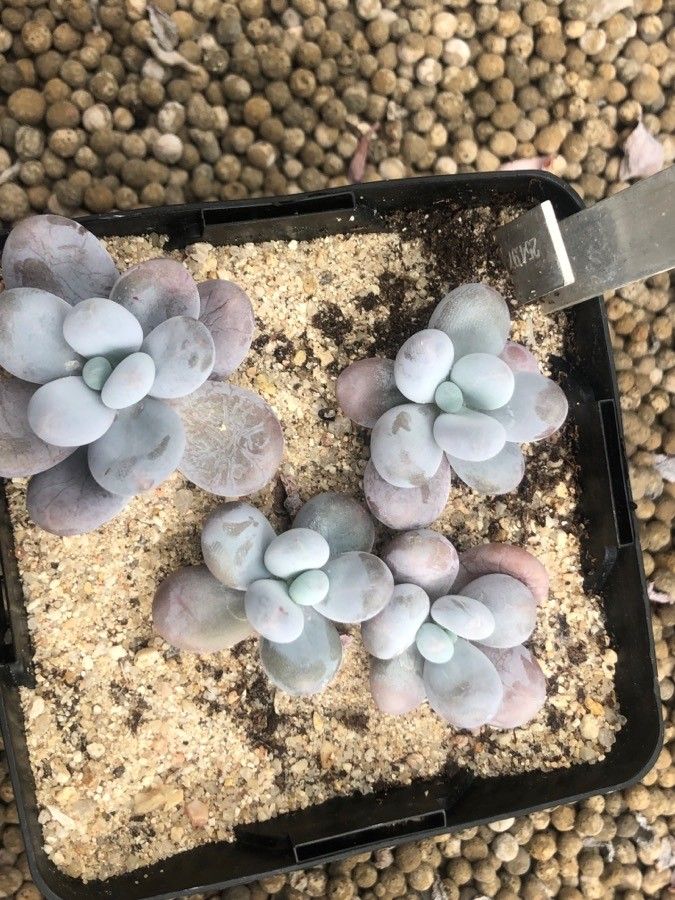
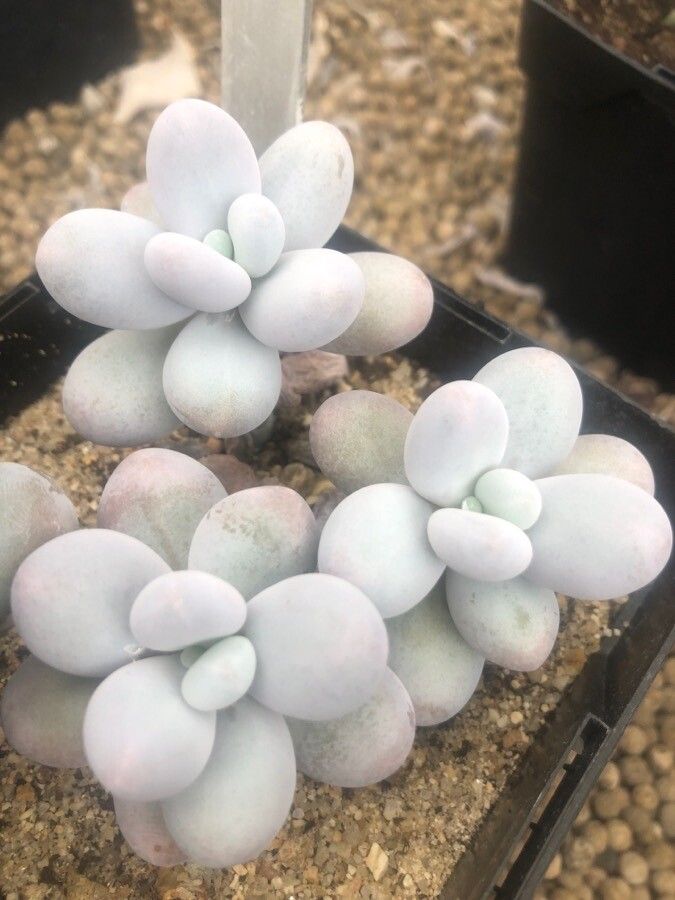
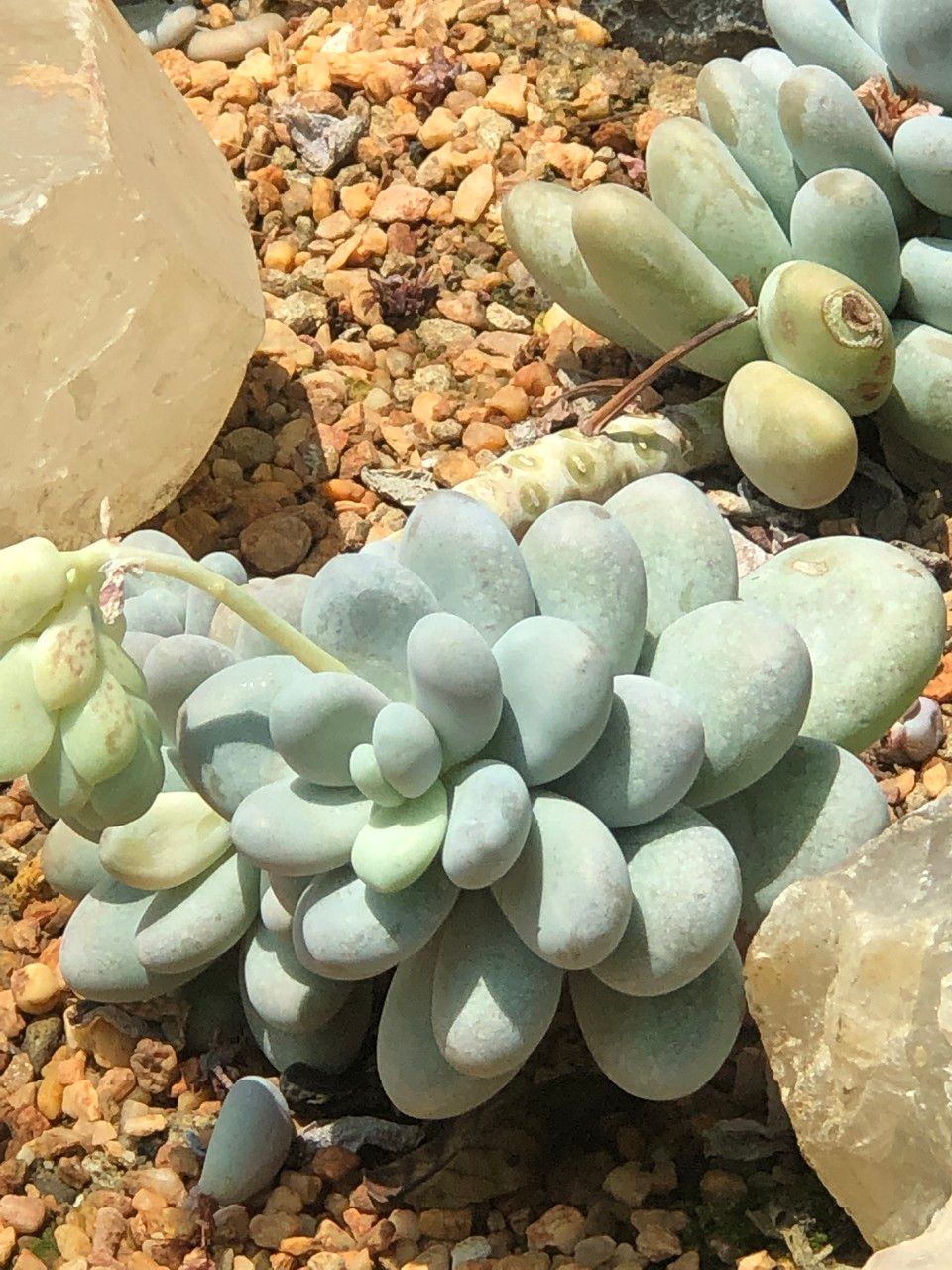
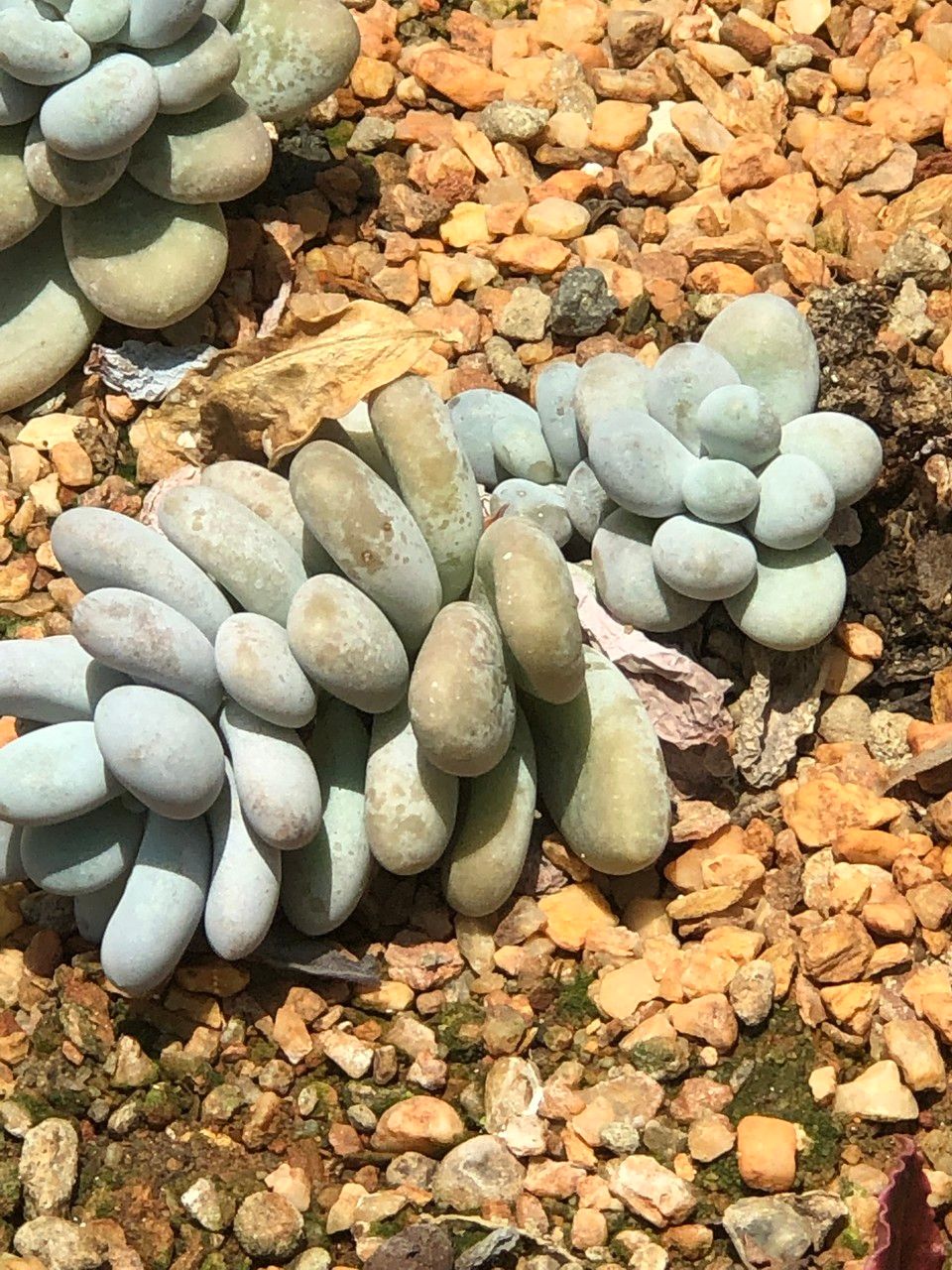
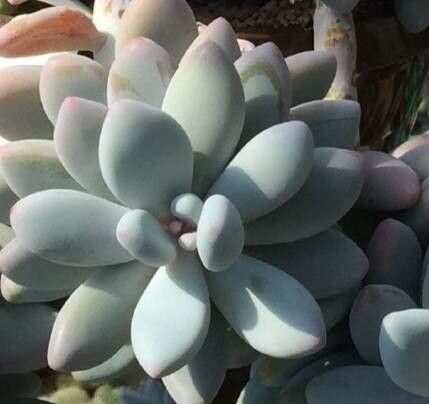
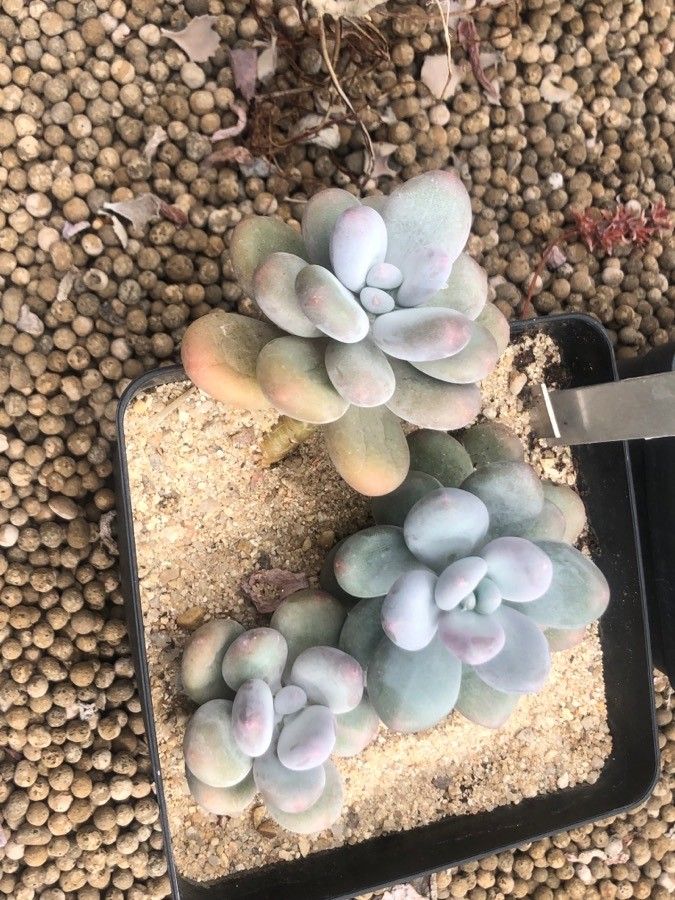
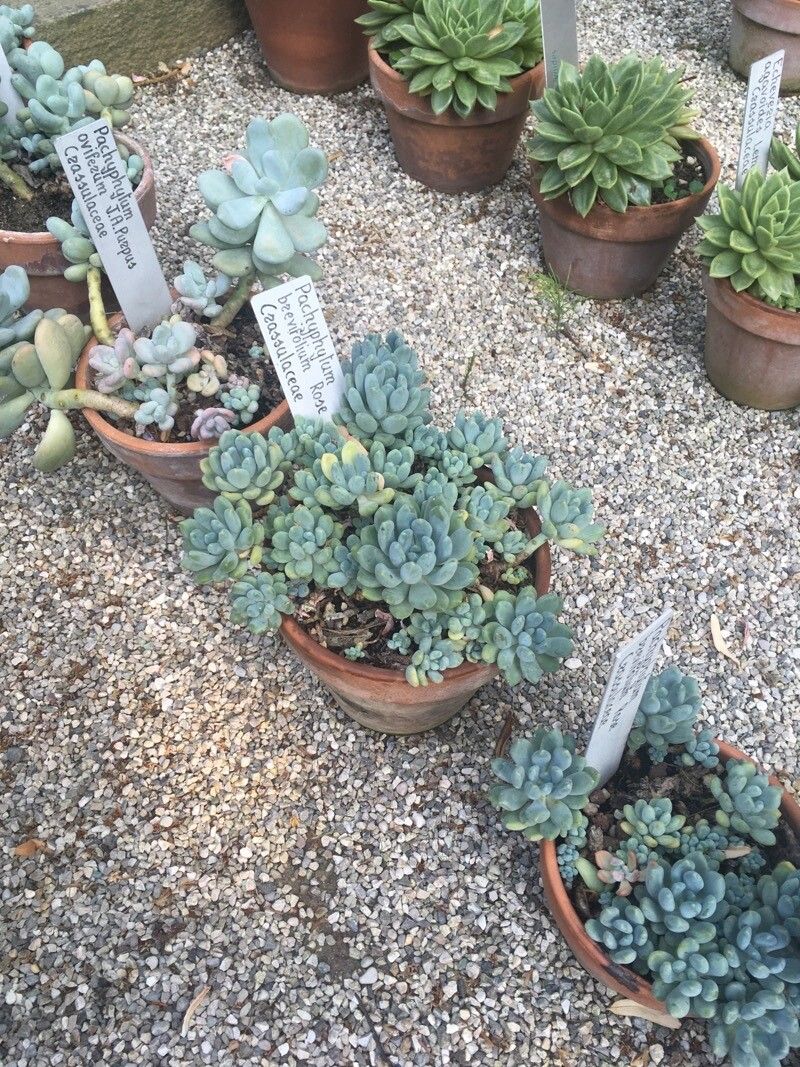
Pachyphytum oviferum, commonly referred to as Moonstones or Sugar Almonds, is a delightful succulent plant native to Mexico. A member of the Crassulaceae family, it is prized as a houseplant for its distinctive appearance and minimal care requirements.
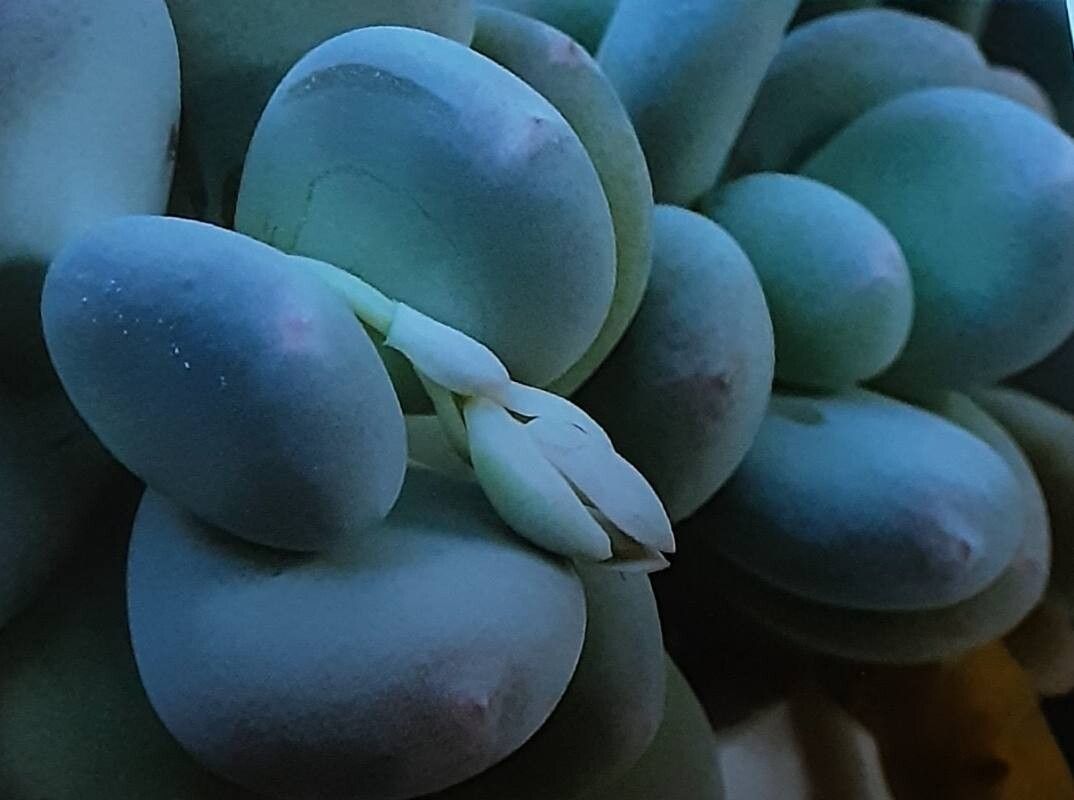
This succulent features thick, fleshy leaves arranged in a rosette pattern. The leaves are a pale blue-green and have a powdery coating that imparts a frosted look. Additionally, they are slightly translucent, allowing light to permeate through.
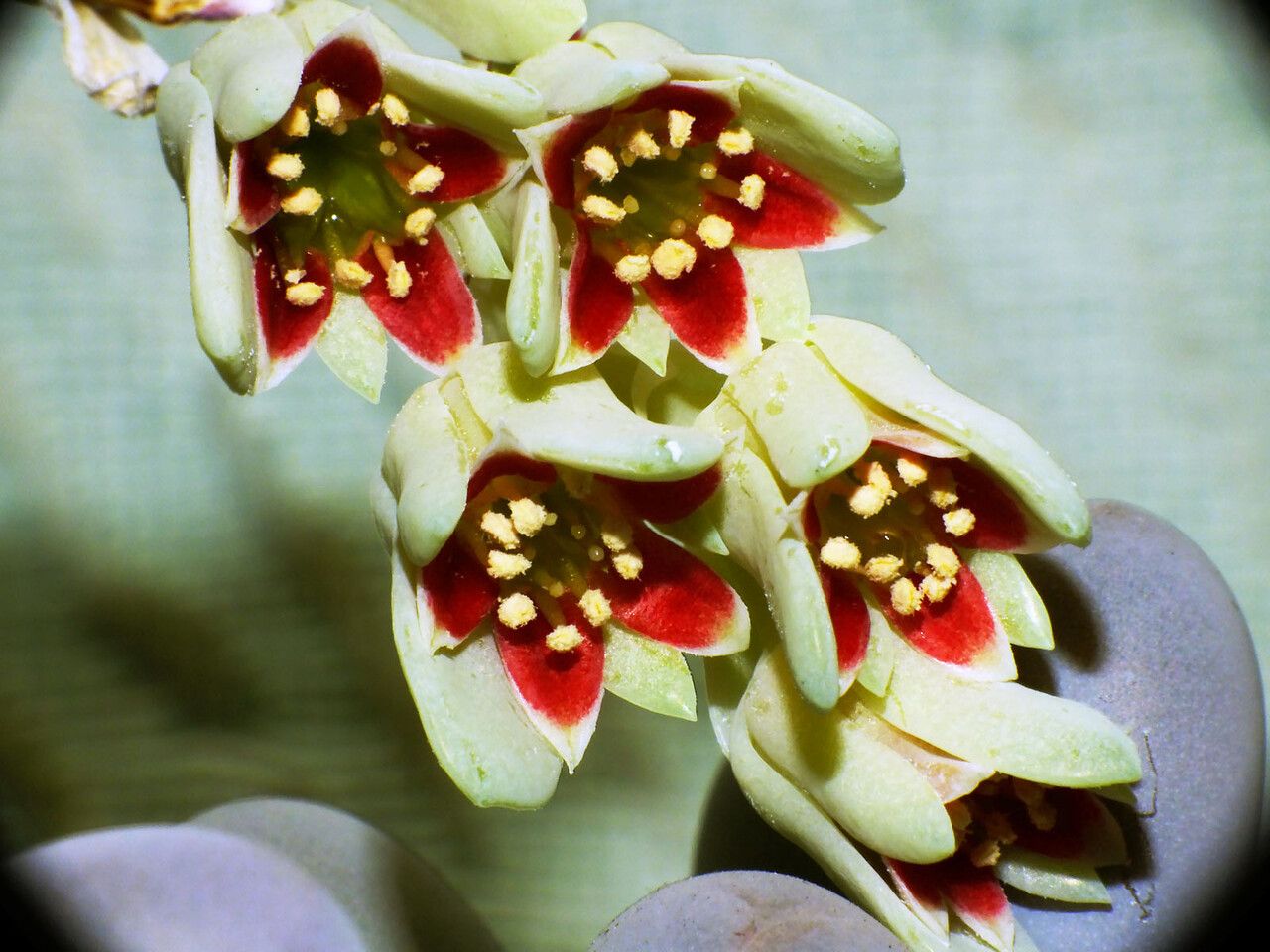
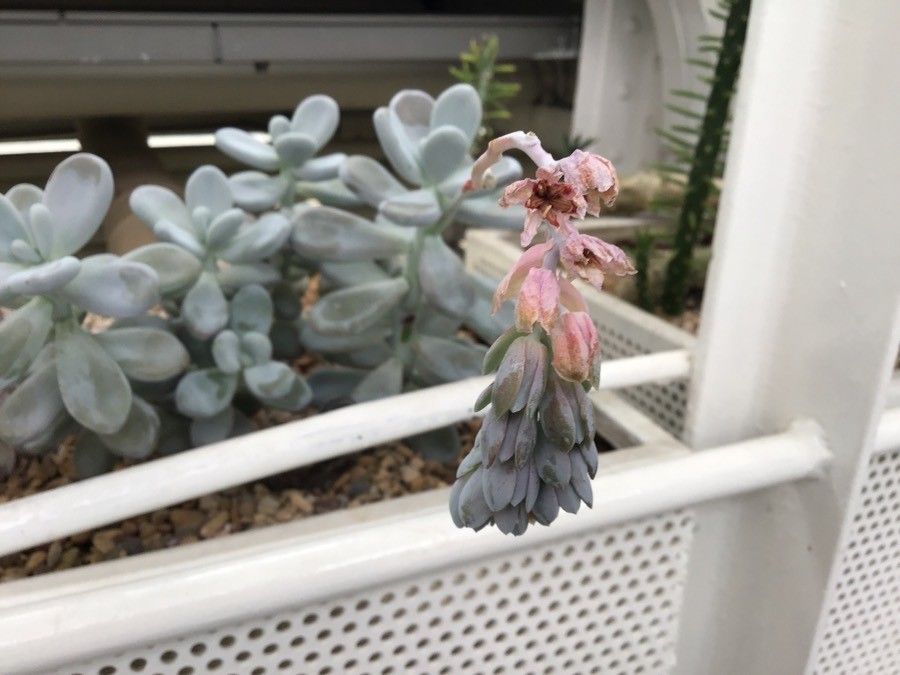
During the summer months, Pachyphytum oviferum blooms with small white or pink flowers atop tall stems. These flowers, bearing five petals each, grow in clusters at the stem's apex.
The plant thrives in bright yet indirect sunlight and requires well-draining soil. It should be watered occasionally during its growing season, which spans from spring to fall. Although it can endure drought conditions, it must be sheltered from frost during the winter.
In summary, Pachyphytum oviferum is a visually appealing succulent with unique characteristics that make it a fantastic addition to any indoor garden or plant collection.
Pink Moonstone Succulents exhibits moderate disease resistance but is relatively sensitive to humidity. High humidity makes it more vulnerable to disease, and it is prone to root rot during dormancy. Regarding care, the plant tolerates drought but requires more water in the growing season. Watering should be greatly reduced or stopped entirely during the dormant period. This succulent is best suited for growers with some experience, as it can be difficult to care for, particularly during dormancy. It is especially appropriate for those who can dedicate time to its care during the winter months.
How to keep Pachyphytum Oviferum.
Light
Pink Moonstone Succulents does best in locations that receive plentiful sunlight for most of the day, though it can tolerate a mix of shade and light. Insufficient light hampers growth, while too much exposure can scorch the leaves. Its sunlight needs remain largely the same across growth stages. It was originally found in ambient environments rich in abundant daylight.
Water
Pink Moonstone Succulents thrive in dry conditions by storing water in their fleshy leaves. They require watering only every 2 to 3 weeks, making them ideal for indoor growth to prevent overhydration. Even with infrequent watering, they maintain a lush appearance as evergreen plants.
Humidity
This plant prefers dry conditions, so don't mist it. However, watering it less often can also thrive in higher humidity.
Temperature
Pink Moonstone Succulents thrive at temperatures from 68 to 100 ℉ (20 to 38 ℃), reflecting the conditions of their native habitat. As a temperate woody plant, they can handle temperature swings but should not be exposed for extended periods to temperatures below 50 ℉ (10 ℃). In winter, it is best to keep Moonstone between 50 and 68 ℉ (10 to 20 ℃) to avoid frost damage.
Fertilizer
Pink Moonstone Succulents require only light applications of fertilizer once or twice a year during the growing season. Do not fertilize in winter or in summer when the plant is dormant. Use less fertilizer for plants that have been repotted and wait a couple of months after repotting before applying any fertilizer. Fertilizing helps maintain healthy growth and promotes blooming.
Pruning
To keep large succulent plants, such as Pink Moonstone Succulents, in good shape, they need to be pruned in the spring and fall. Focus on removing any excess or overly dense branches. For propagation, cut a thick stem with 5 to 6 leaves, treat the cut end with sulfur powder, and allow it to heal. Once healed, plant it in slightly moist soil.
Pot & Repot
When repotting Pink Moonstone Succulents, choose a pot slightly larger than the current one that provides good drainage. Use a gritty, well-draining succulent or cactus mix. Gently remove the plant from its old pot, remove excess soil, and replant it at the same depth. Wait a few days before watering to let any root damage heal. Repot in spring or fall and place it in a brightly lit location.
Toxicity
Pachyphytum oviferum is not toxic to either humans or pets, so it's safe to have it around children and pets.
Further reading →
The toxicity and danger assessments provided are for reference only. We do not assure their accuracy, so it's crucial not to depend on them. Seek professional advice when necessary for accurate guidance.
Botanical profile.
- Plant Type
- Succulent, Herb
- Life Cycle
- Perennial
- Genus
- Pachyphytum
- Family
- Crassulaceae
- Hardiness Zone
- 9-12
- Mature Height
- 10 cm
- Mature Spread
- 30 cm
- Leaf Color
- Green, Blue, Gray, Silver, Purple
- Leaf Type
- Evergreen
- Flower Color
- Pink, White
- Flower Size
- 1.02 cm to 1.52 cm
- Bloom Time
- Mid summer
- Planting Time
- Spring, Summer, Autumn
- Harvest Time
- Late spring, Early summer, Mid summer
- Native Area
- Mexico
Other names.
Reader questions.
How should I water my Pink Moonstone Succulents?
To properly water Pink Moonstone Succulents, wait until spring when new leaves start growing. Only water when the soil is completely dry. Use either tap water or distilled water and avoid watering from above. Instead, water at the base of the plant, evenly and slowly across the soil surface. This ensures consistent moisture without wetting the above-ground parts of the plant. Water until you see excess water draining from the pot's hole.
Why is it important to add fertilizer to my Pink Moonstone Succulents?
Fertilizing Pink Moonstone Succulents is important for adding nutrients to the soil. Although they can store water and nutrients, applying plant food during the growing season helps promote healthy growth. Additionally, fertilizing can stimulate mature specimens to produce beautiful blooms.
What are the sunlight requirements for Pink Moonstone Succulents?
Pink Moonstone Succulents require full sun exposure for more than 6 hours a day to thrive optimally but can also grow in partial sun with about 3-6 hours of sunlight. These plants originally come from environments with substantial daylight and maintaining this balance is crucial for their health. It's important to watch how sunlight moves through your garden to find spots with the perfect balance of light and shade.
What is the ideal temperature range for Pink Moonstone Succulents?
Pink Moonstone Succulents thrive in temperatures between 68°F to 100°F (20°C to 38°C), which reflects their native growth conditions. They can handle some temperature variation but should not be exposed for long periods to temperatures below 50°F (10°C). In winter, it's recommended to keep them in a range of 50°F to 68°F (10°C to 20°C) to avoid frost damage. Since winter is their growing season, maintaining temperatures above 20°C is crucial for their optimal growth. If temperatures drop below 0°C, it's advisable to move them indoors to a well-lit area and adjust watering accordingly, increasing it in higher temperatures and reducing it as temperatures approach freezing. For outdoor overwintering, a protected, sunny location or a temporary greenhouse with adequate moisture can help protect them from cold.
What do I do if I give too much or too little water to my Pink Moonstone Succulents?
Overwatering is a more common problem with Pink Moonstone Succulents than underwatering. It's important to avoid overwatering because it can quickly cause the succulent to die. To prevent overwatering, make sure the soil is completely dry before watering. Many people mistakenly water their succulents too much, especially when they are dormant. In this case, we will focus on how to fix the overwatering problem. If you notice signs of overwatering, it's best to remove the succulent from its current pot. Check the roots for signs of rot or other moisture-related diseases, and remove any affected roots. Some roots may be healthy and just need a simple cleaning. Afterward, repot the succulent in well-draining soil to reduce the risk of future overwatering. Although less common, underwatering can also occur. If this happens, water the plant slightly more often, making sure not to overcorrect and accidentally overwater it.
When should I fertilize my Pink Moonstone Succulents?
Pink Moonstone Succulents only requires a light dose of fertilizer 1-2 times a year during the growing season. It is best to fertilize them in spring and autumn, avoiding winter and summer when they are dormant. When repotting these plants, use less fertilizer and wait a few months before applying any.
How can artificial lighting be used for Pink Moonstone Succulents indoors?
Artificial lighting is essential for Pink Moonstone Succulents indoors when natural sunlight is insufficient, especially during winter or in darker spaces. LED lights, able to provide specific wavelengths needed by plants, are a popular choice. For full sun plants, aim for 30-50W per square foot of artificial light, for partial sun plants 20-30W per square foot, and for full shade plants 10-20W per square foot. Ensure the light source is placed 12-36 inches above the plant and mimic natural daylight hours, usually between 8-12 hours of light per day.
How should Pink Moonstone Succulents be cared for in low temperatures?
Pink Moonstone Succulents prefer temperatures between 20°C and 38°C and require protection in winter to stay above 0°C. Exposure to temperatures below -5°C can lead to water-soaked necrosis, wilting, and eventual leaf loss after a period of seemingly no damage. To mitigate damage from frost, affected areas should be trimmed off. If the plant gets cold-damaged, moving it indoors to a warm location near a south-facing window ensures ample sunlight. Alternatively, setting up a makeshift greenhouse with careful attention to ventilation can protect it from the cold while preventing decay from poor airflow.
How frequently do I need to water my Pink Moonstone Succulents?
Pink Moonstone Succulents have low water needs because they come from a hot and dry region. To care for this plant, let the soil dry completely between waterings. It usually takes 2-4 weeks for the soil to dry, depending on the season. In the spring and summer, when the plant is growing, water every 2-3 weeks. In summer, the soil may dry out faster. However, when the temperature is below 60 degrees or above 85 degrees Fahrenheit, the plant is dormant and does not need water. Wait until the temperature is suitable for growth before watering again.
When is the best time to not fertilize my Pink Moonstone Succulents?
Pink Moonstone Succulents, like most plants, enter a dormancy period where fertilizer applications should be halted. During both summer and winter, when the plant stops growing, it is advisable to discontinue fertilizing. Moreover, it is recommended to refrain from fertilizing for the initial few months after repotting in the spring.
What are the signs of insufficient or excessive sunlight in Pink Moonstone Succulents?
Signs of insufficient sunlight in Pink Moonstone Succulents include lighter-colored new leaves, indicating a lack of chlorophyll and nutrients, leggy or sparse growth, faster leaf drop, and chlorosis. Excessive sunlight can cause symptoms like sunscald, leaf curling as a defense mechanism to reduce water loss, wilting due to increased transpiration, and leaf scorching, characterized by brown, dry edges on leaves. These symptoms affect the plant's photosynthesis and overall health.
What are the symptoms and solutions for Pink Moonstone Succulents in high temperatures?
During the summer, it's vital to keep Pink Moonstone Succulents below 38°C to prevent them from entering a dormant state. Temperatures exceeding 43°C can increase the risk of rot, especially in high humidity. To care for them in high temperatures, remove dry or rotten parts and relocate the plant to a partially shaded spot to shield it from intense midday and afternoon sun. Watering should be halted until the temperature drops to cooler, more favorable conditions.