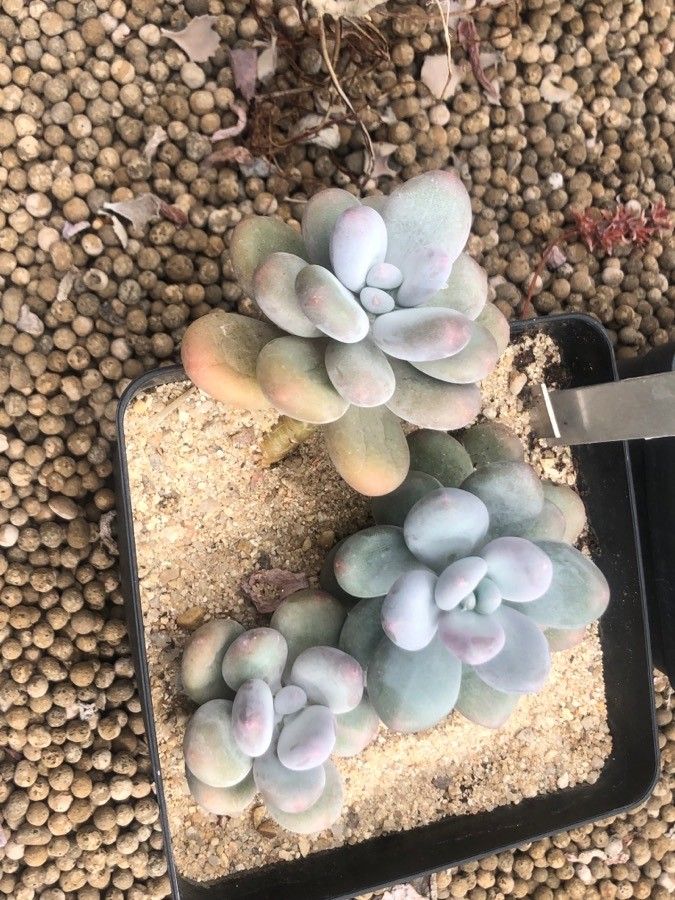
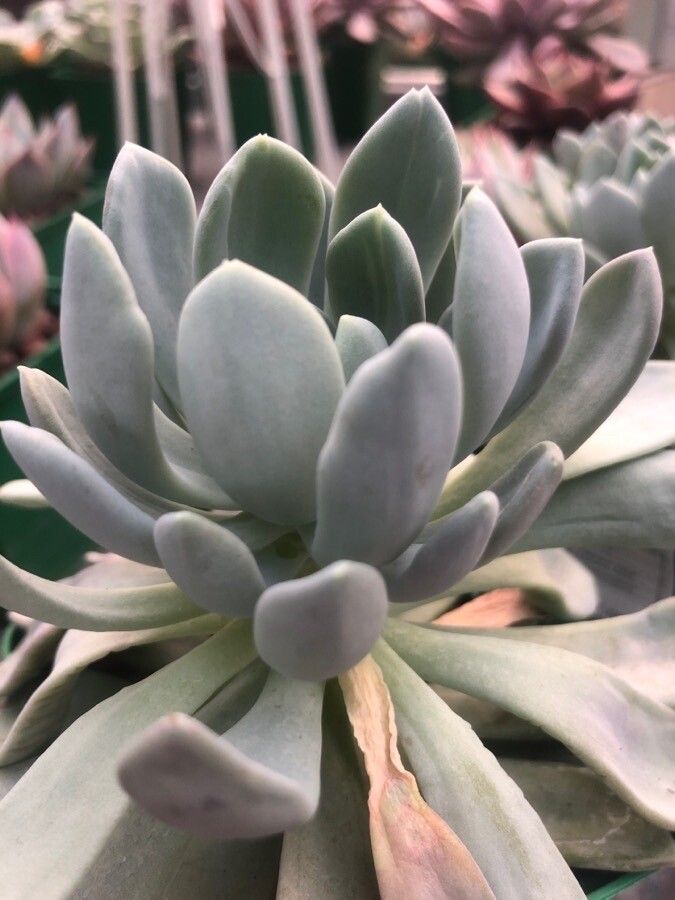
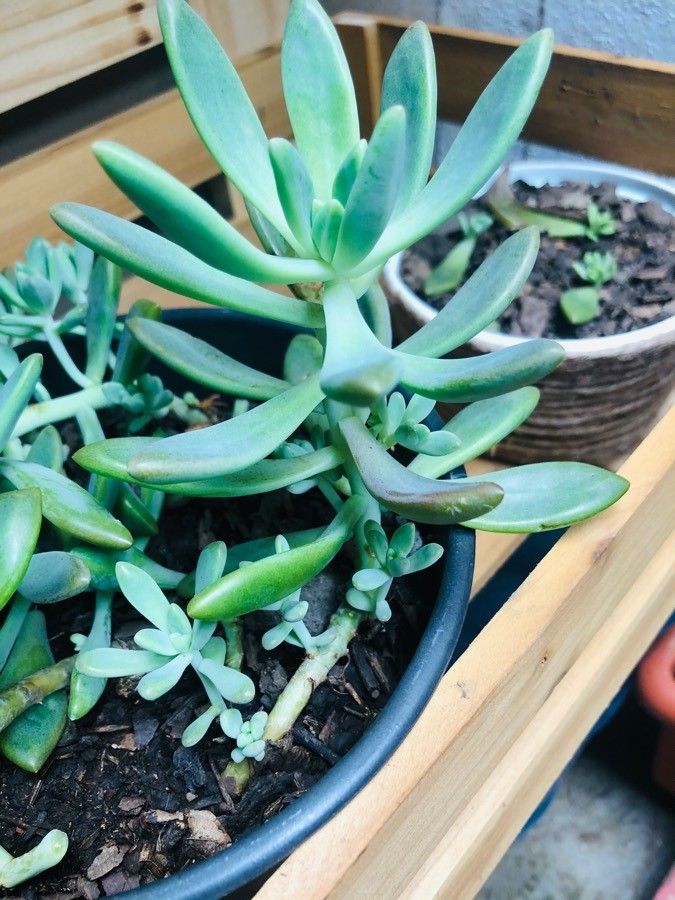
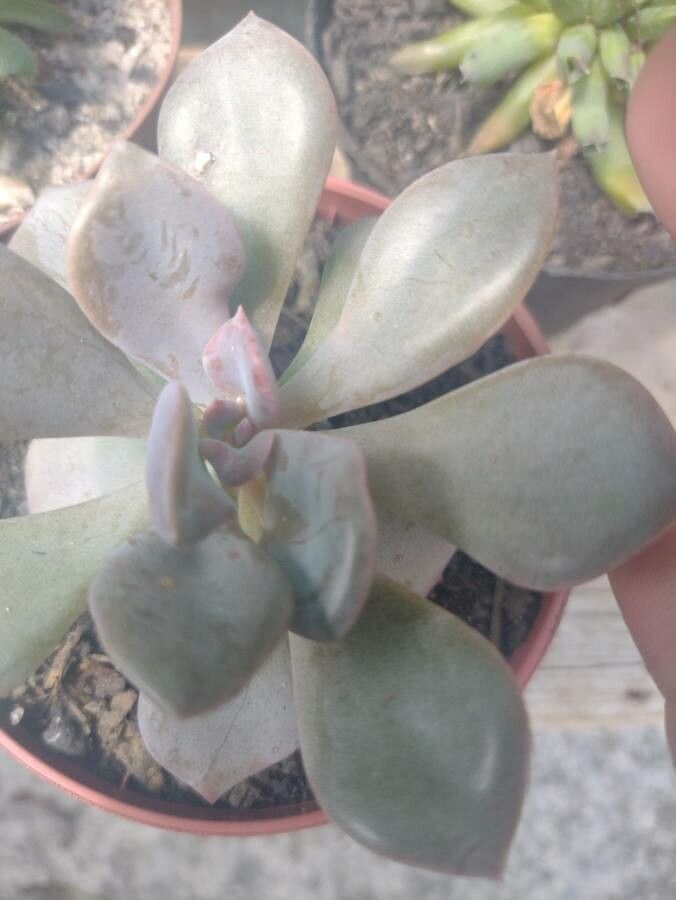
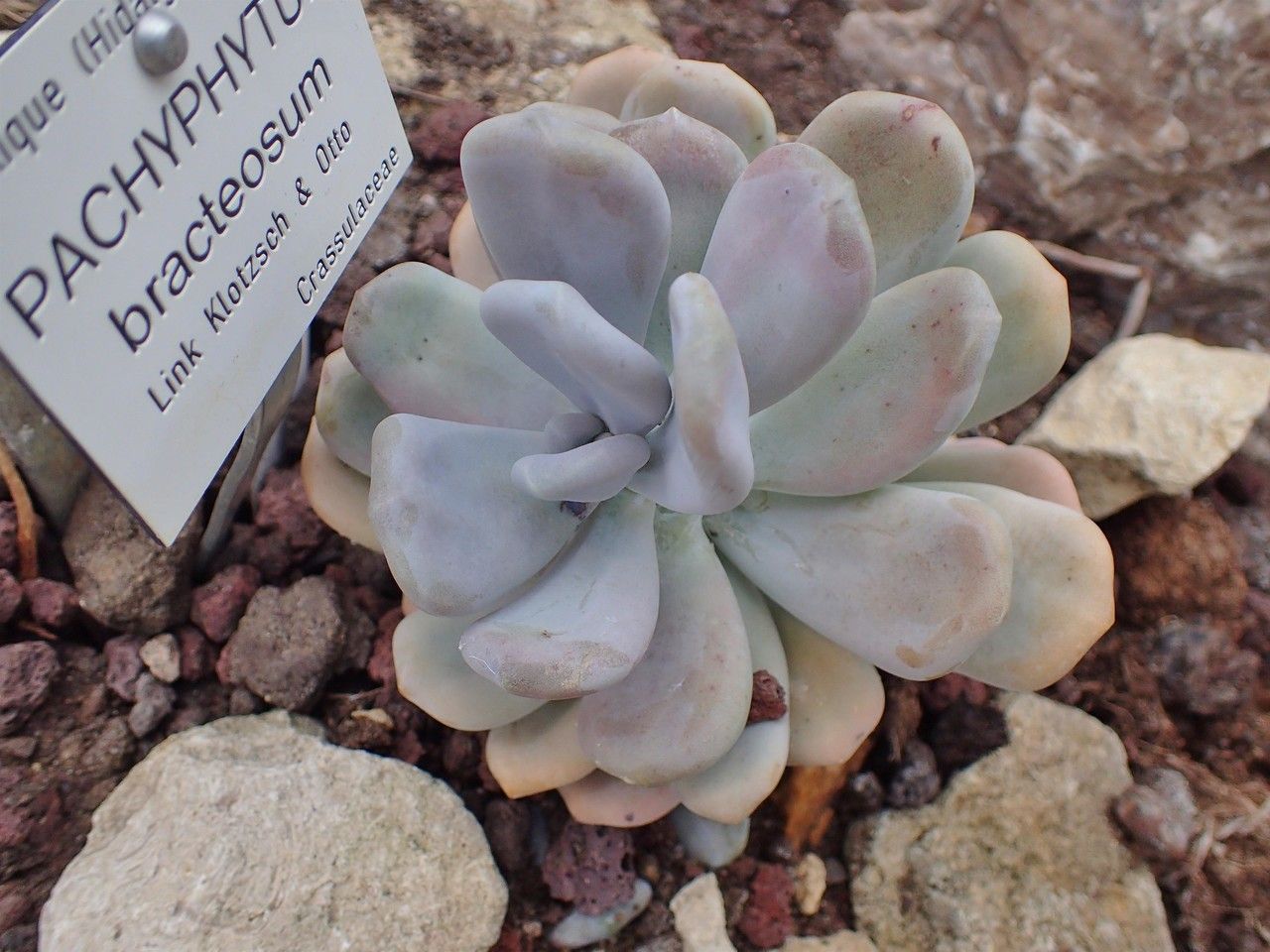
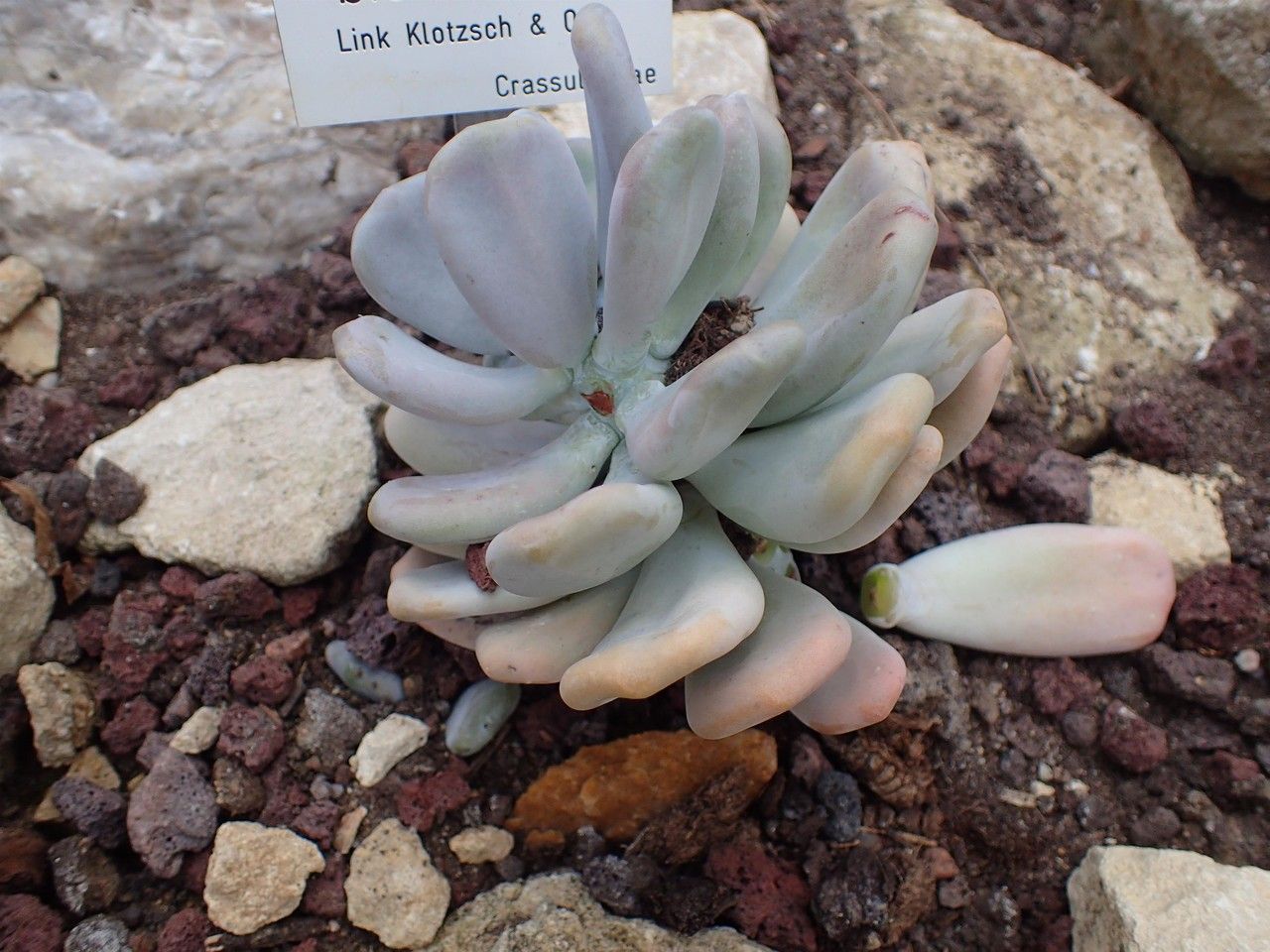
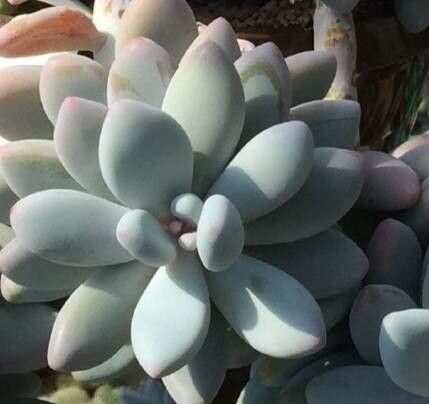
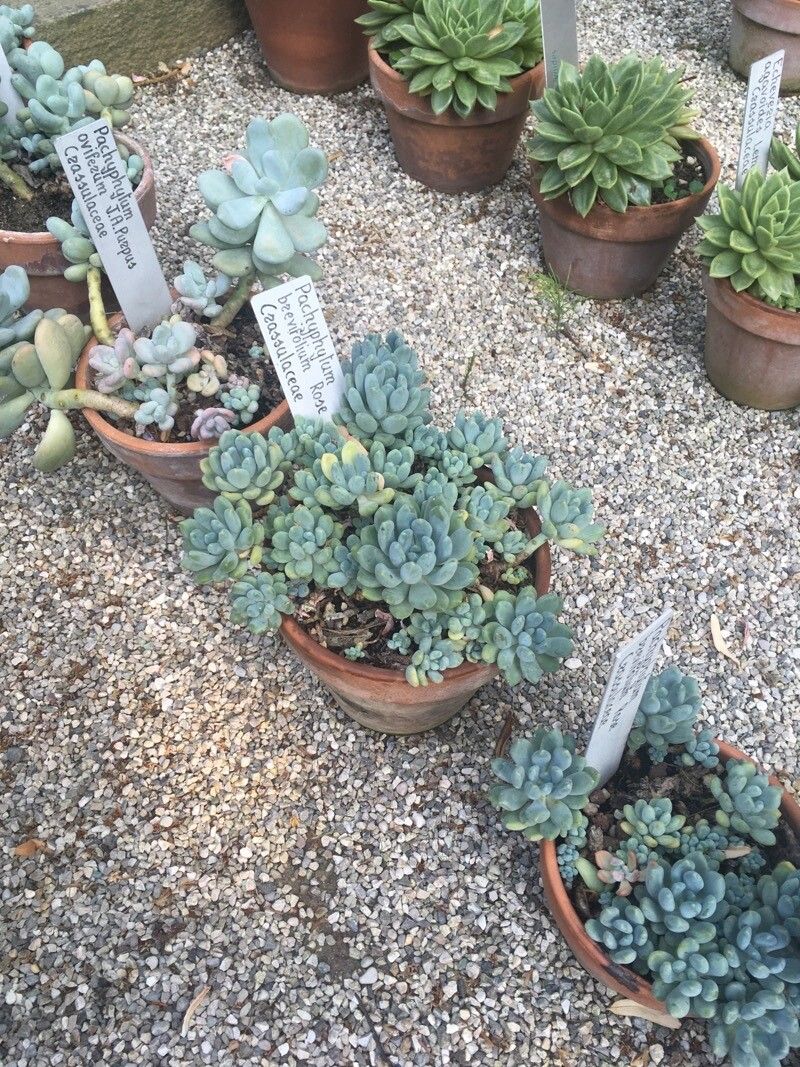
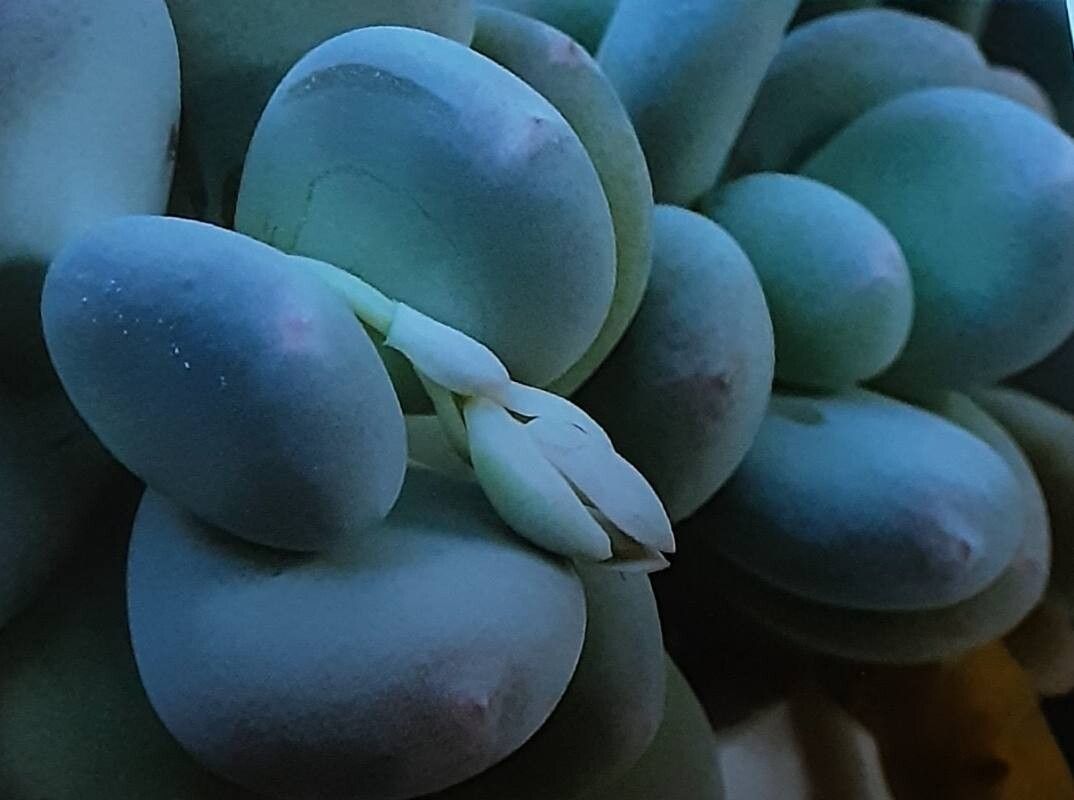
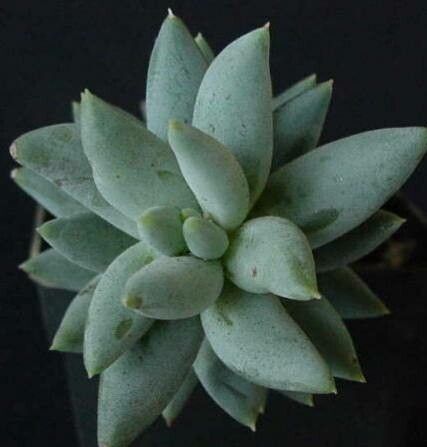
Pachyphytum bracteosum, commonly known as the Silver Squill or Silver Dollar Plant, is a succulent belonging to the Crassulaceae family. Native to Mexico, this plant is easily identifiable by its rosette shape and thick, fleshy leaves covered in a powdery silver coating.
Growing up to 6 inches tall and 8 inches wide, Pachyphytum bracteosum is an ideal indoor plant for small spaces. It thrives in bright but indirect sunlight and requires well-draining soil. Watering should be done sparingly and only during the growing season.
In late spring or early summer, the plant produces small pink or white flowers on tall stems, which attract pollinators such as bees and butterflies.
Caring for Pachyphytum bracteosum is straightforward. It can be easily propagated through leaf cuttings or offsets from the mother plant. Its unique appearance and ease of care have made it a favorite among succulent enthusiasts.
Overall, Pachyphytum bracteosum is an attractive succulent that adds beauty to any indoor space with minimal maintenance requirements.
Silver bracts has moderate disease resistance and is more sensitive to humidity. It is prone to disease when humidity is high and can develop root rot during dormancy. In terms of care, Silver bracts is drought-tolerant but requires more water while actively growing. Watering should be greatly reduced or stopped entirely during the dormant period. Silver bracts is suitable for growers with some experience, though it can be difficult to maintain, particularly during dormancy. It is especially appropriate for people who can dedicate time to its care during the winter months.
How to keep Pachyphytum Bracteosum.
Light
Originating from arid regions, Silver bracts does best in full sun, since its native habitat features strong sunlight and little shade. It can also tolerate partial sun, providing some flexibility in its growth.
Water
Silver bracts need minimal watering, and the amount depends on the weather and the plant's condition. In hot or dormant conditions, water them every 1-2 weeks. During the summer, it's best to water in the evening. Keep an eye on the leaves for any symptoms and check the soil moisture to determine when to water. Adjust your watering schedule based on the type of pot and its air permeability.
Temperature
Although Silver bracts tolerates some heat, it mainly thrives and grows in cooler seasons and becomes dormant in summer. In very hot summer conditions, give it shade to prevent scorching from intense sunlight. Watering should be reduced or stopped during the hottest part of the year to avoid root rot. Silver bracts shows vigorous growth in winter and spring. As long as temperatures do not fall too low, it will continue to grow steadily.
Fertilizer
For Silver bracts, small amounts of fertilizer applied once or twice a year during the growing season are enough. Do not fertilize in winter or in summer when the plant is dormant. Cut back on fertilizer for repotted plants and wait a couple of months after repotting before you start feeding. Fertilizing helps maintain healthy growth and promotes blooming.
Pruning
To maintain the health and compact growth of silver bracts, it's important to prune them in early spring. Use clean, sharp tools to remove any damaged leaves and leggy stems, as this minimizes stress and reduces the risk of infection. Regular pruning also helps prevent overcrowding and encourages healthy overall growth.
Pot & Repot
When repotting Silver bracts, choose a pot just a bit larger than the current one that provides good drainage. Use a gritty, well-draining cactus or succulent mix. Gently remove the plant from its old pot, brush away excess soil, and set it in at the same depth. Wait a few days before watering so any root damage can heal. Repot in spring or fall and place it in a brightly lit spot.
Toxicity
Not toxic according to different sources. However, excessive consumption can still cause stomach upset in people and pets.
Further reading →
The toxicity and danger assessments provided are for reference only. We do not assure their accuracy, so it's crucial not to depend on them. Seek professional advice when necessary for accurate guidance.
Botanical profile.
- Plant Type
- Succulent
- Life Cycle
- Perennial
- Genus
- Pachyphytum
- Family
- Crassulaceae
- Hardiness Zone
- 9-11
- Mature Height
- 20 cm
- Mature Spread
- 20 cm
- Leaf Color
- Pink, Blue
- Leaf Type
- Evergreen
- Flower Color
- Red
- Flower Size
- 1.02 cm to 1.52 cm
- Bloom Time
- Spring, Early summer
- Planting Time
- Spring, Autumn, Winter
- Harvest Time
- Late spring, Summer
- Native Area
- Mexico
Other names.