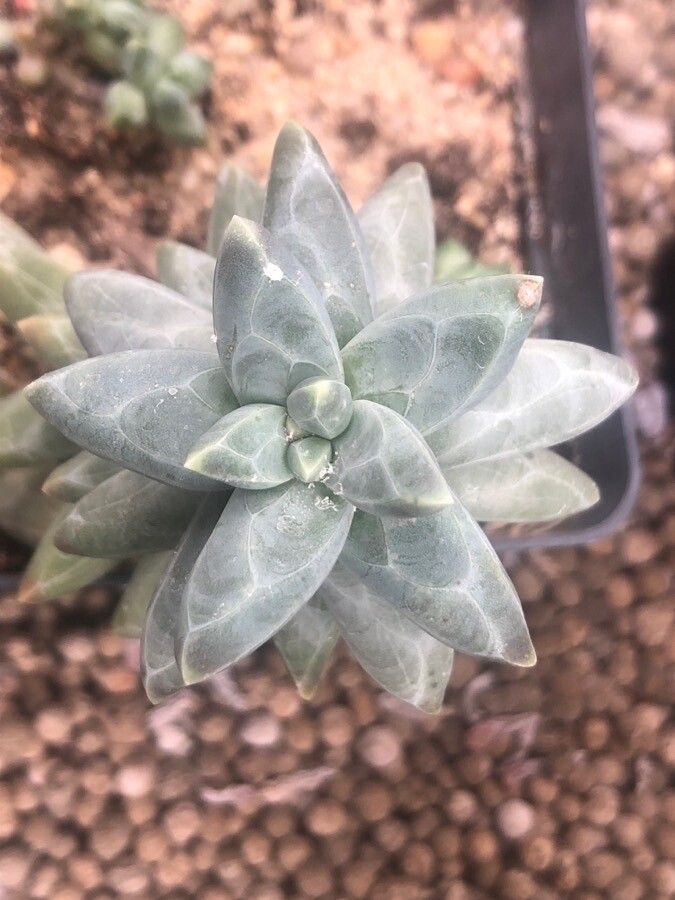
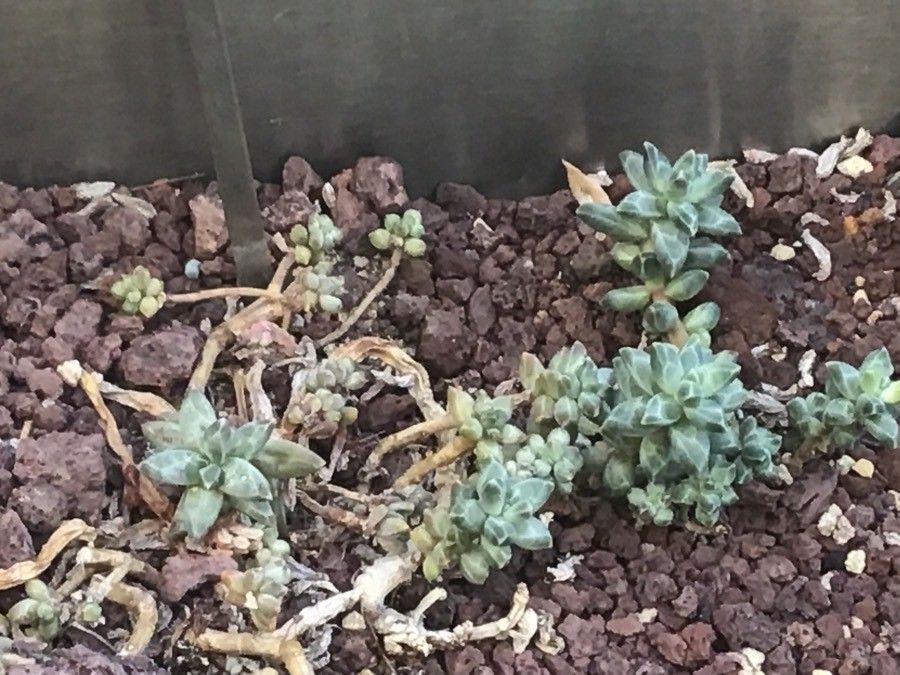
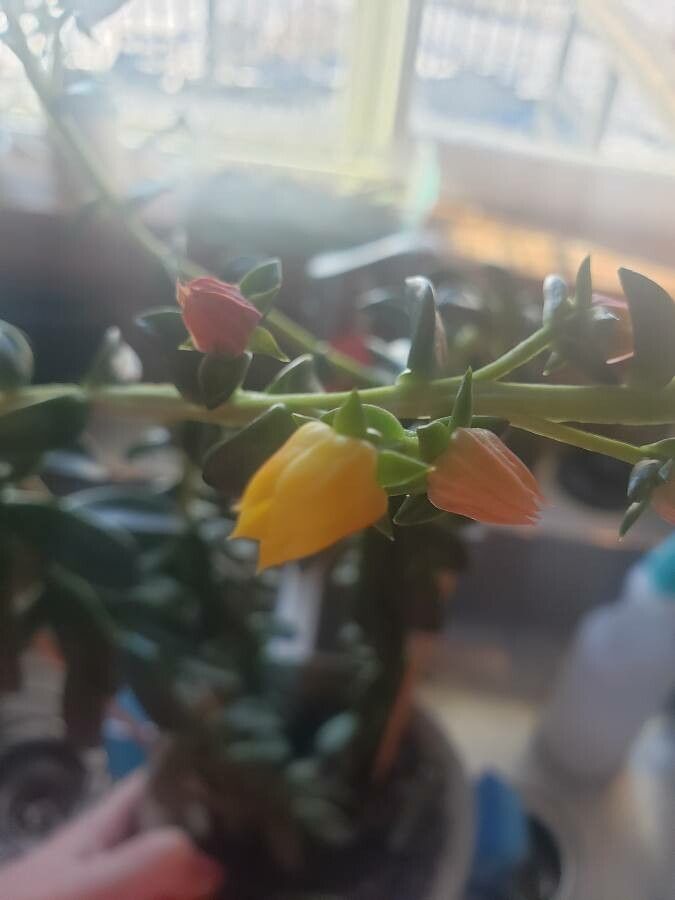
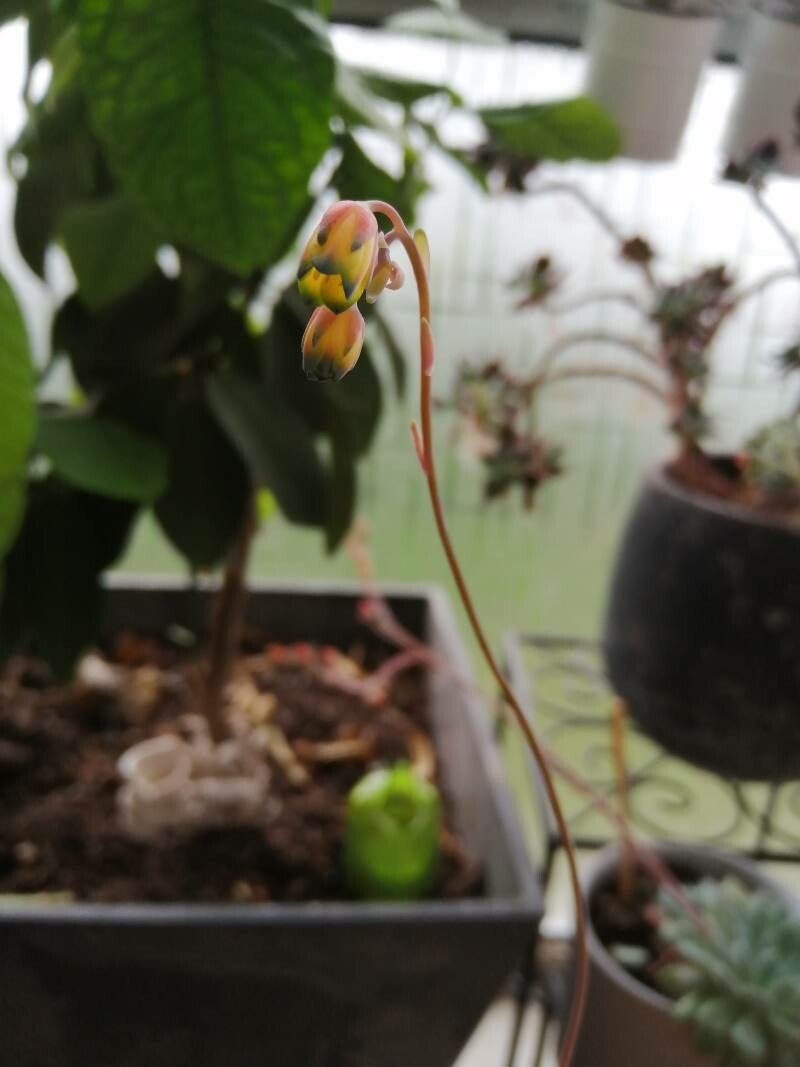
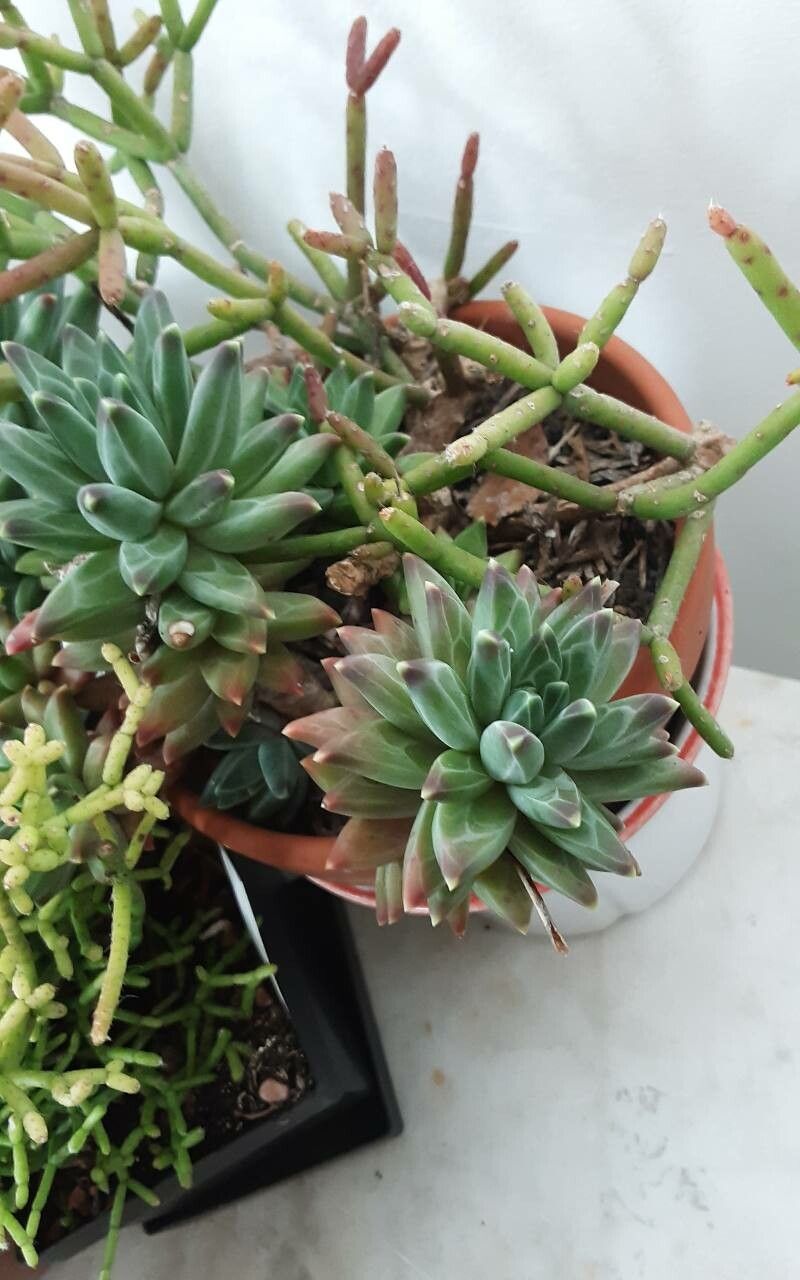
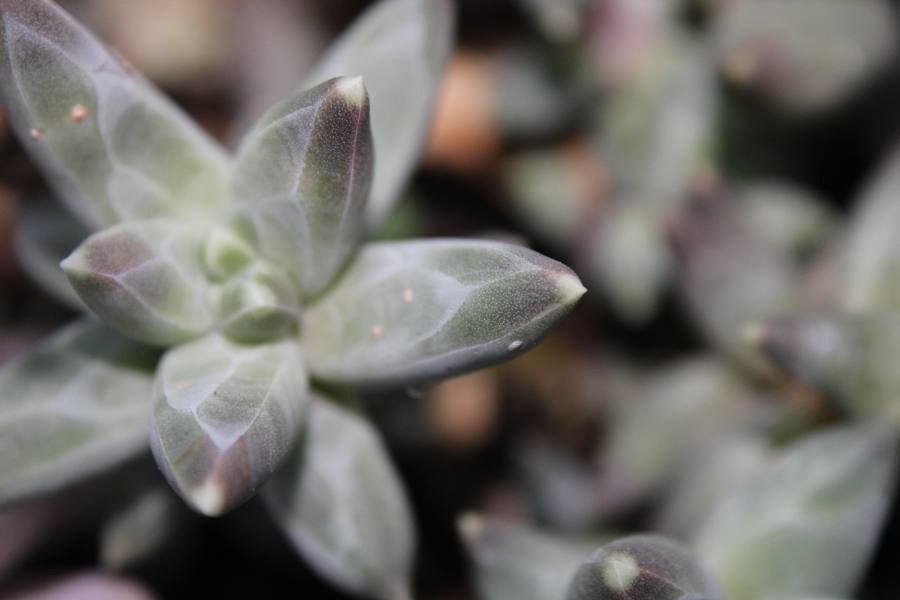
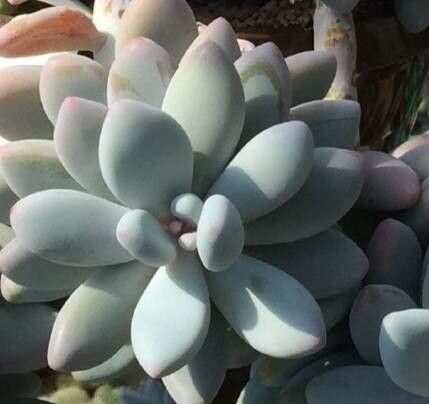
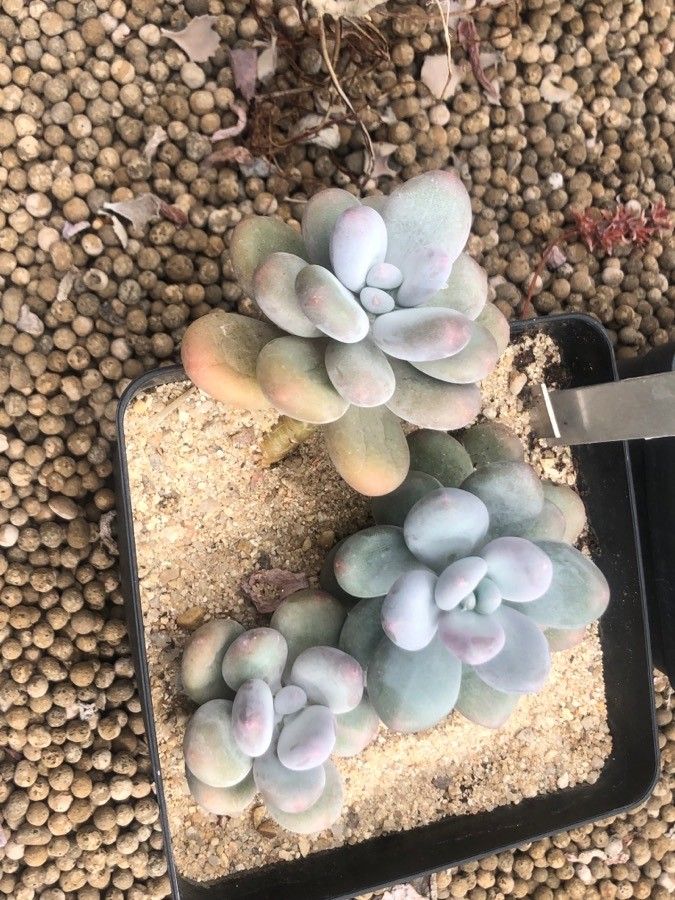
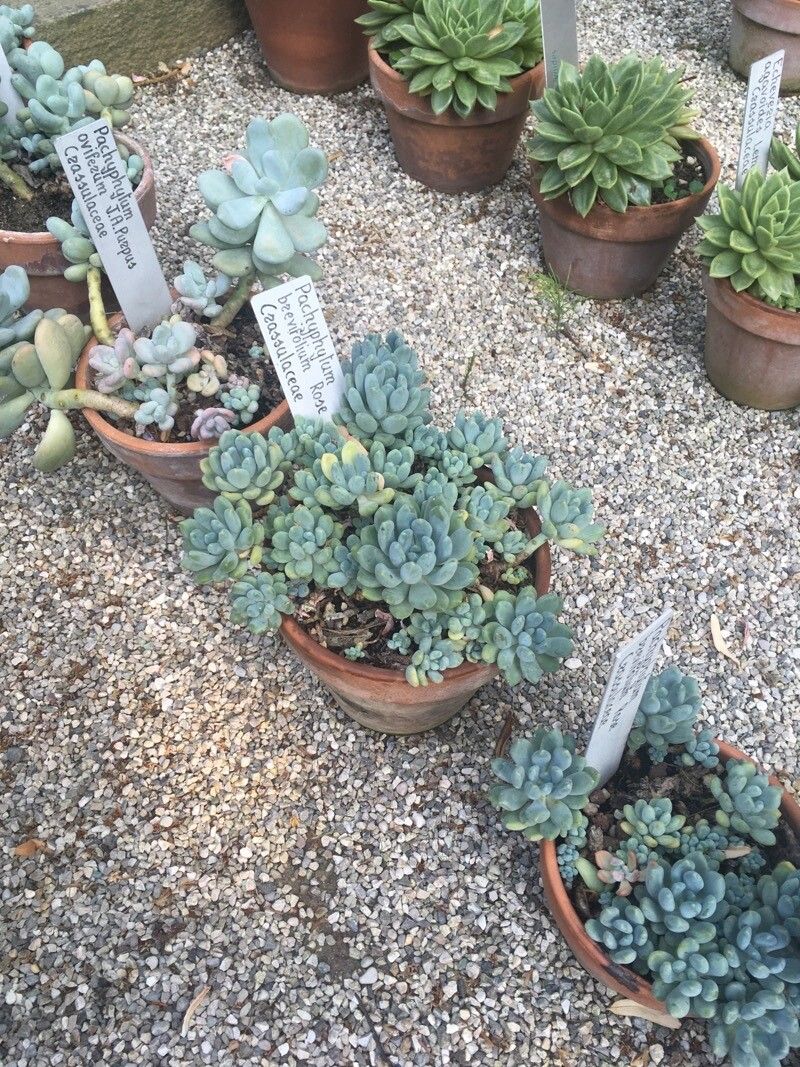
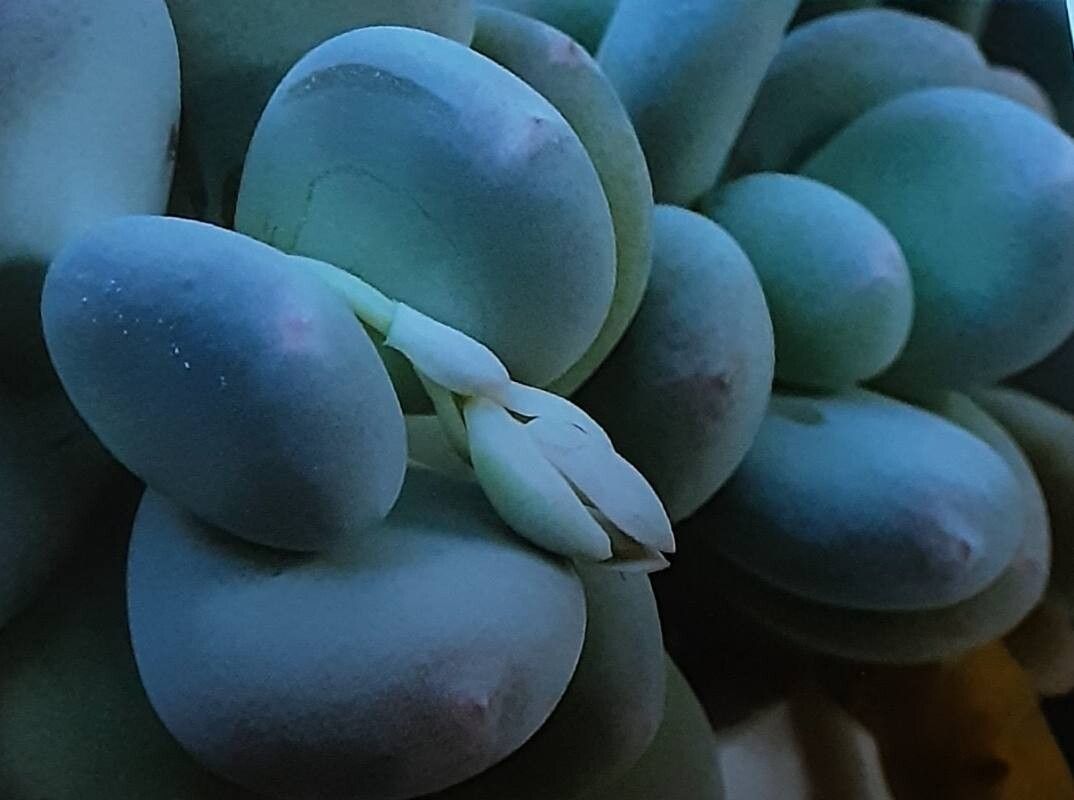
Pachyphytum compactum is a succulent plant belonging to the Crassulaceae family. Native to Mexico, it is commonly known as the "Little Jewel." The plant features a compact, rosette-like growth habit and produces thick, fleshy leaves with a blue-green hue. These leaves are coated in a powdery substance called farina, which helps protect them from sunburn.
Pachyphytum compactum thrives in well-draining soil and bright, indirect sunlight. Although it can tolerate some drought, it should be watered only when the soil has completely dried out. Propagation is straightforward, with new plants easily grown from stem or leaf cuttings.
This succulent is popular among collectors due to its unique appearance and ease of care. It makes an excellent addition to both indoor and outdoor gardens, requiring minimal maintenance while offering an interesting texture and color contrast with surrounding plants.
Overall, Pachyphytum compactum is an attractive succulent with low-maintenance requirements, making it ideal for both novice gardeners and experienced collectors alike.
Little jewel has moderate disease resistance and is more sensitive to humidity. It becomes vulnerable to disease in high-humidity conditions and is likely to develop root rot during dormancy. Regarding care, Little jewel tolerates drought but requires more frequent watering in the growing season. Watering should be greatly reduced or stopped entirely while it is dormant. Little jewel is appropriate for growers with some experience, though it can be challenging to care for, especially during the dormant period. It is particularly well suited to those who can dedicate time to its care in the winter months.
How to keep Pachyphytum Compactum.
Light
Little jewel thrives on ample sunlight and can prosper with moderate exposure to the sun. Its native habitat attests to this sun-loving tendency. However, either an excess or a shortage of sun can harm the plant, causing leaves to wither or growth to become stunted, respectively.
Water
Originating from arid regions, the little jewel plant efficiently stores water, making it highly drought-tolerant. It thrives when watered infrequently, about every 2 to 3 weeks, and needs well-draining soil to prevent root rot and mimic its natural habitat.
Humidity
This plant will thrive in moderate humidity, which is probably the level in your home. However, misting it a few times a week can be very beneficial. Make sure the room has good ventilation.
Temperature
Little jewel is adapted to a native, temperate environment. It prefers temperatures between 68 and 100 °F (20 and 38 ℃). Seasonal temperature adjustments may be necessary to mimic these natural conditions.
Fertilizer
Little jewel needs only light fertilizer applications 1–2 times a year during the growing season. Do not fertilize in winter or during summer dormancy. Use less fertilizer on repotted plants and wait a couple of months after repotting before feeding. Fertilizing helps maintain healthy growth and encourages flowering.
Pruning
To keep large succulent plants like the little jewel in good shape, it's important to prune them in both the spring and fall. This involves removing any excess branches. If you want to propagate the plant, cut a sturdy stem with 5-6 leaves during the spring or fall. After cutting, treat the wound with sulfur powder and allow it to heal before planting in slightly moist soil.
Pot & Repot
When repotting Little Jewel, choose a pot slightly larger than the current one that has good drainage. Use a gritty, well-draining cactus or succulent mix. Gently remove the plant from its old pot, brush off excess soil, and set it in at the same depth. Wait several days before watering to allow any root damage to heal. Repot in spring or fall and place it in a brightly lit spot.
Toxicity
Succulents can make excellent, low-maintenance houseplants for people, but if you have animal family members, they may not always be the best choice. Some types of this fashionable plant may be harmful to cats and canines if consumed. Although we can clearly see that some succulents are poisonous, the majority are not dangerous to our dogs, according to Dr.
Further reading →
The toxicity and danger assessments provided are for reference only. We do not assure their accuracy, so it's crucial not to depend on them. Seek professional advice when necessary for accurate guidance.
Botanical profile.
- Plant Type
- Succulent
- Life Cycle
- Perennial
- Genus
- Pachyphytum
- Family
- Crassulaceae
- Hardiness Zone
- 9-11
- Mature Height
- 15 cm
- Mature Spread
- 10 cm
- Leaf Color
- Light Gray, Pale Green
- Leaf Type
- Evergreen
- Flower Color
- White, Yellow
- Flower Size
- 1.02 cm to 1.52 cm
- Bloom Time
- Mid summer
- Planting Time
- Spring, Summer, Autumn
- Harvest Time
- Late spring, Early summer, Mid summer
- Native Area
- Mexico
Other names.
Reader questions.
What do I need to do if I give too much or too little water to my Little Jewel?
Little jewel and other succulents can survive without much water, so it's rare to find them suffering from underwatering. However, if you forget to water your Little jewel for a month or more, you may notice it looking thirsty or damaged. Signs of underwatering include a lackluster and wrinkled appearance, dried-up leaves that have turned brown and crispy, and completely dried out soil. To revive an underwatered Little jewel, give it plenty of water by submerging the pot in water for 5-10 minutes until the soil feels moist on the surface. On the other hand, overwatering is dangerous for Little jewel and can lead to root rot, which is fatal if not addressed. Root rot occurs when excessive moisture promotes the growth of fungi and bacteria that attack the roots. Symptoms of overwatering include yellow, swollen, and translucent organs that may burst open, as well as browning and falling leaves. To address overwatering, improve air ventilation and adjust the watering frequency to prevent further damage. Saving an overwatered Little jewel can be challenging but not impossible. The key is catching it early and removing the plant from its pot to check the roots and soil. Remove wet soil and rinse the roots in room-temperature water to remove any lurking fungus. Dark brown or black, soft, mushy, or slimy roots indicate root rot. If the majority of the roots are affected, it may be best to propagate a new plant from healthy stems. However, if only a portion of the roots are affected, remove unhealthy roots using a sterilized cutting tool and dip the remaining roots in fungicide. Repot the Little jewel in fresh, well-draining soil. While this may not always save a succulent with root rot, in most cases, the plant can recover and produce new growth in the next growing season.
Why do I have to fertilize my Little jewel plant?
Fertilizing Little jewel provides nutrients to the growing medium, and while it does store water and nutrients, applying plant food during the growing season is beneficial for healthy growth. Fertilizing can also promote the production of blooms in mature specimens during the growing season.
What are the sunlight requirements for Little Jewel (Pachyphytum compactum)?
Little Jewel thrives in areas with full sun exposure, defined as more than 6 hours of direct sunlight daily, and can also flourish under partial sun, which is about 3-6 hours of sunlight. Its natural habitat showcases its preference for extensive sun exposure. However, both too much and too little sunlight can harm the plant, leading to symptoms like withered leaves or stunted growth. It's essential to observe your garden's sunlight patterns and place your Little Jewel in a spot that aligns with its sunlight needs, ensuring a perfect balance of light and shade for optimal growth.
What are the ideal temperature conditions for Little jewel?
Little jewel thrives in temperate conditions, preferring temperatures between 68 to 100 °F (20 to 38 ℃). It requires seasonal temperature adjustments to mimic its native environment. In the winter, when temperatures drop, it's important to move Little jewel indoors to avoid the cold, especially if temperatures fall below 0°C. At temperatures below 20°C, its growth slows, necessitating reduced watering to prevent root rot. For outdoor plants, watering should stop during cold spells. To protect it further, you can utilize a temporary greenhouse or wrap the plant with plastic film or fabric for insulation.
How often should I give water to my Little jewel?
Determining the appropriate watering schedule for Little Jewel plants can vary, as there is no strict rule. To determine when to water, you can check the moisture level of the soil. This can be done by either inserting your finger or using a moisture meter to assess the moisture beneath the surface. When planting the Little Jewel in a deep pot, a stick or chopstick can be used to check the moisture level. If the soil feels slightly damp, it is better to wait a few days and check again. In general, most individuals will need to water the Little Jewel approximately every two weeks during summer and once a month in winter. However, various factors can affect the frequency of watering. The following section provides some considerations that can be helpful in determining the appropriate watering frequency.
When is the ideal time to fertilize my Little jewel?
Little jewel plants require a light dose of fertilizer during the growing season, about 1-2 times per year. It is recommended to fertilize them in the spring and autumn, avoiding the winter and summer when they are dormant. If you have recently repotted your Little jewel, be cautious with the amount of fertilizer you use. It's best to wait a few months after repotting before applying any fertilizer.
How does artificial lighting support the growth of indoor Little Jewel plants?
Indoor Little Jewel plants demand adequate lighting to mimic their natural sun-loving conditions, especially when natural sunlight is insufficient. Artificial lighting serves as an excellent alternative, with LED lights being a popular choice due to their ability to provide specific wavelengths necessary for plant growth. For full sun plants, 30-50W/sq ft of artificial light is recommended, 20-30W/sq ft for partial sun plants, and 10-20W/sq ft for full shade plants. The light source should be placed 12-36 inches above the plant, and to mimic the plant's natural environment, it should be exposed to artificial light for 8-12 hours per day.
How should I care for Little jewel in low temperatures?
In low temperatures, particularly when the thermometer dips below 20°C, Little jewel needs special care to thrive as it's not tolerant of the cold. It should always be kept above 0°C to avoid entering a dormant state or suffering damage. Exposure to temperatures below -5°C might weaken the plant, causing it to wilt and be at risk of root rot. If frostbite occurs, remove the affected areas carefully and check for rotted roots, which should be cut off. The plant can then be propagated through cuttings. It's crucial to move the plant to a warmer indoor setting near a south-facing window to ensure it gets enough sunlight. Supplemental lighting can be used if natural light is insufficient.
What do I need to think about when watering my Little Jewel?
There are various factors that influence how often and how much you should water your Little jewel plant. These factors include the size of the container, type of soil, temperature, and humidity. To begin with, the container and soil you choose will determine the frequency and amount of water required. It is important to use a container with adequate drainage holes so that excess water can escape. Smaller containers have less soil, thus holding less moisture and needing more frequent watering. On the other hand, larger pots retain moisture for longer periods and require less frequent watering. Oversized pots should be avoided to prevent overwatering. When repotting, use a container one size larger than the current one and opt for a shallow container as Little jewel plants have shallow root systems. The watering frequency for Little jewel plants will vary depending on the season. In winter, when growth slows down and evaporation rates are lower, watering should be done less frequently. In contrast, during the active growing seasons of spring and autumn, more frequent watering is needed. Moreover, the general climate of your location plays a role in watering requirements. If you live in a humid area with regular rainfall, watering will be less frequent compared to living in a dry, arid climate. It is important to note that the climatic conditions can change throughout the year, including indoor environments affected by heating and air conditioning. For outdoor planting, once the Little jewel plant has established a root system, it typically doesn't require additional watering beyond natural precipitation and dew. However, during long dry periods, occasional watering might be necessary. In areas where Little jewel plants can only be grown in containers, they can be moved outside during suitable temperatures in spring and summer, and brought indoors when temperatures start to drop. It is important to note that potted Little jewel plants kept outdoors usually require more water due to increased exposure to sunlight, even in shaded areas.
When is it not a good idea to add fertilizer to my Little jewel?
Little jewel, like most plants, goes through a period of dormancy. During this time, it is important to discontinue applying fertilizer. The plant stops growing in both the summer and winter, so it's best to avoid using fertilizer during these seasons. Additionally, it is advisable to refrain from fertilizing for the first few months after repotting in the spring.
What are the signs of inadequate lighting for an indoor Little Jewel?
If your Little Jewel is not receiving enough light, it may exhibit several symptoms indicating light deficiency. These symptoms include smaller new leaves, leggy or sparse growth, faster leaf drop, slower or halted new growth, and lighter-colored new leaves. These signs suggest that the plant is struggling to perform photosynthesis effectively due to insufficient light. Chlorosis, sunscald, leaf curling, wilting, and leaf scorching represent responses to excessive sunlight exposure, revealing the delicate balance required in lighting for the health of Little Jewel.
What should I do if Little jewel is affected by high temperatures?
During hotter months, keep the Little jewel below 38°C to prevent heat stress. Temperatures above 43°C halt its growth, leading to water loss, wilting, and a higher risk of sunburn. If the plant suffers from these symptoms, remove any sunburned or rotten parts immediately. Protect the plant from direct afternoon sunlight until its condition improves and it resumes growth. If the plant has root rot, cease watering until new roots develop, to aid in its recovery.