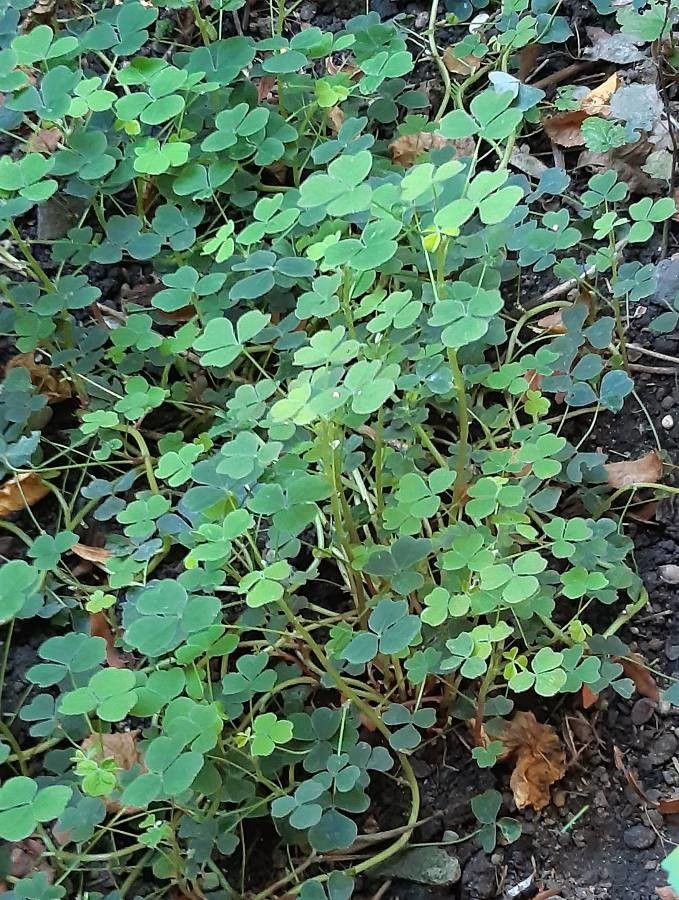
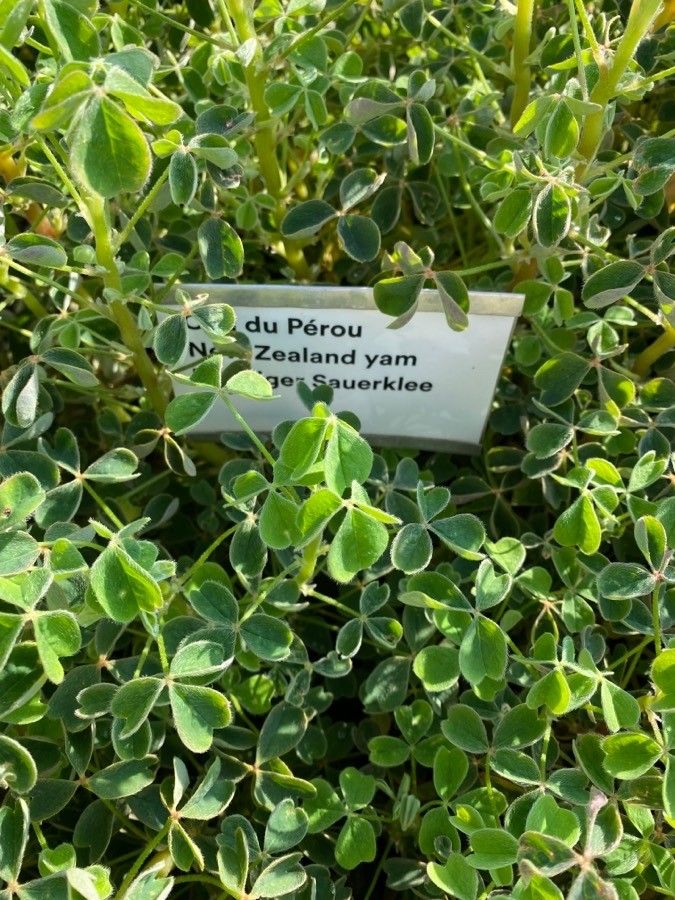
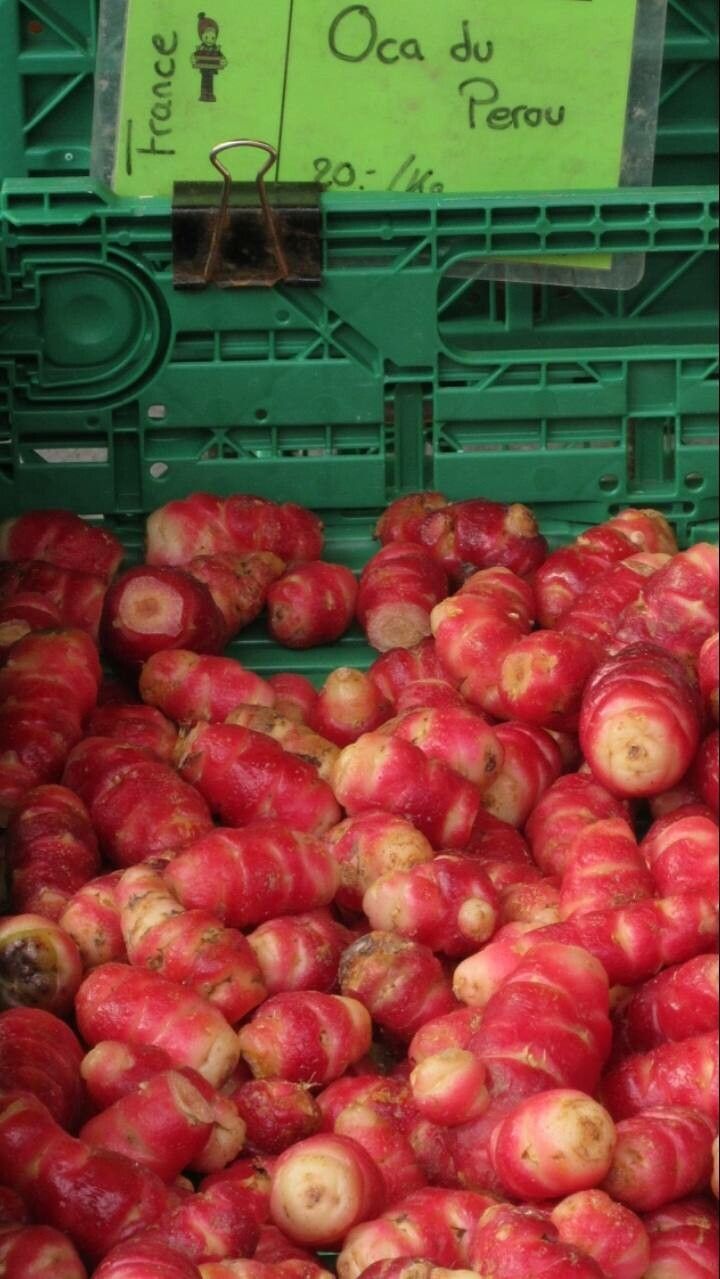
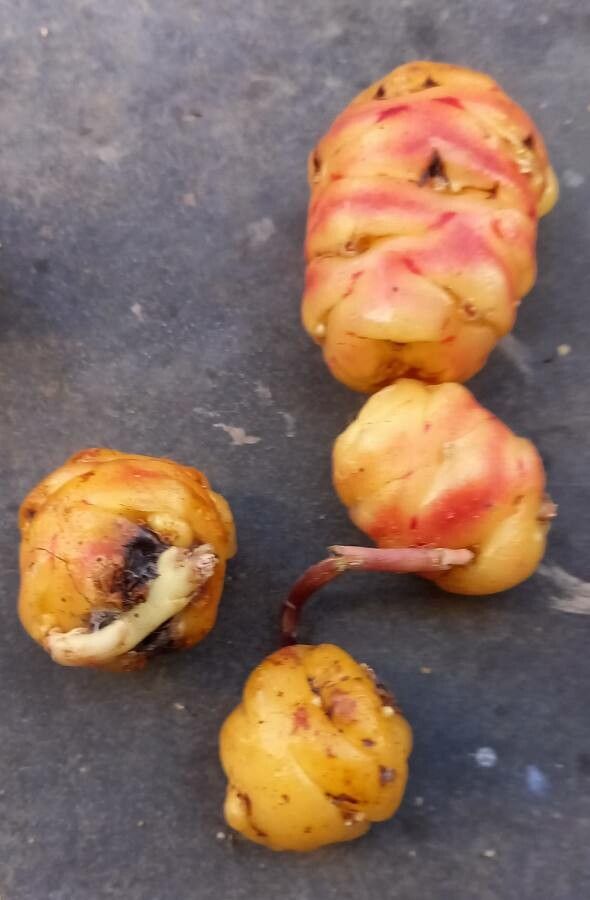
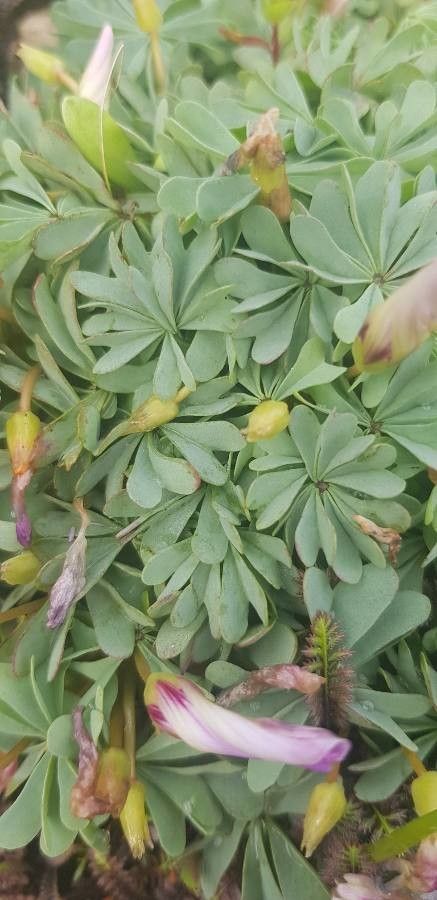
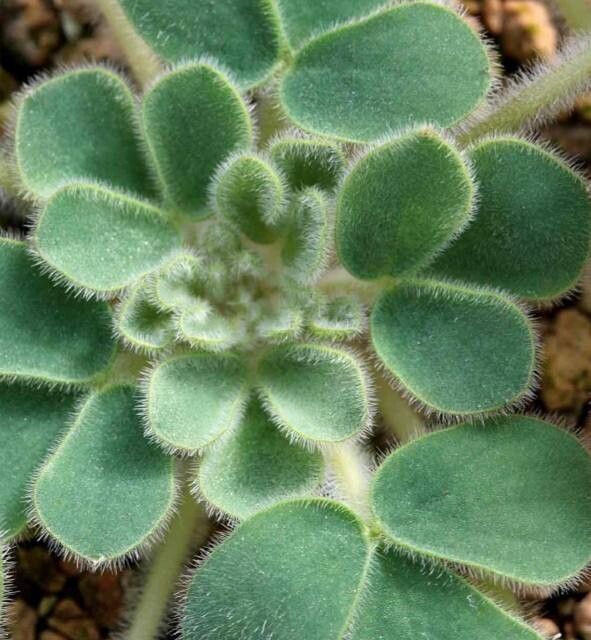
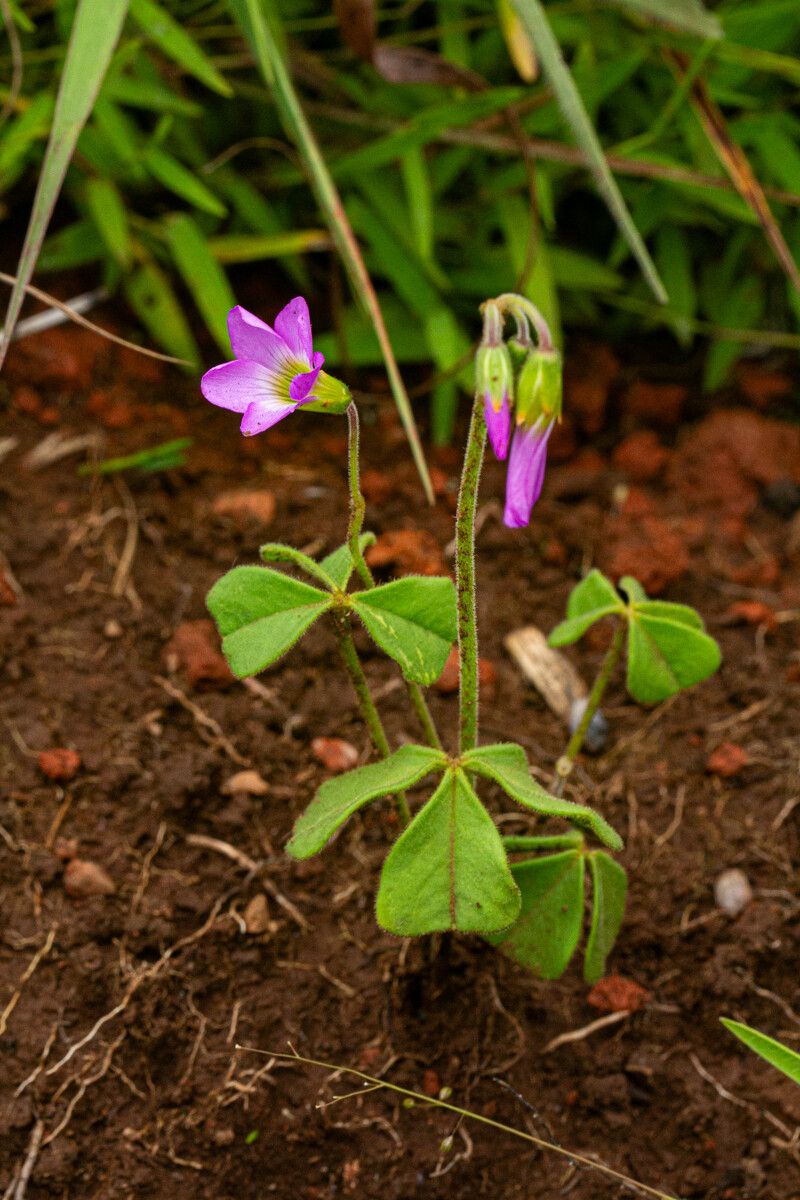
Oxalis tuberosa is a perennial herbaceous plant that overwinters as underground stem tubers. These tubers are known as uqa in Quechua, oca in Spanish, yam in New Zealand and a number of other alternative names. The plant was brought into cultivation in the central and southern Andes for its tubers, which are used as a root vegetable. The plant is not known in the wild, but populations of wild Oxalis species that bear smaller tubers are known from four areas of the central Andean region. Oca was introduced to Europe in 1830 as a competitor to the potato, and to New Zealand as early as 1860. In New Zealand, oca has become a popular table vegetable and is simply called yam or New Zealand yam (although not a true yam). It is available in a range of colours, including yellow, orange, pink, apricot, and the traditional red.
How to keep Oxalis Tuberosa.
Water
Oca plants have moderate water needs. Water them when the top inch of soil feels dry, and allow the soil to dry out between waterings. Make sure the top 2 inches of soil remain moist. While rainwater is ideal for watering oca, tap water can also be used as long as it isn't too hard or too cold.
Pruning
Oca is a tuberous perennial that is prized for its nutritious tubers. To maintain a healthy plant and encourage tuber production, it is important to prune oca in early spring. Start by removing any dead stems and thinning out overcrowded areas. This regular pruning helps improve air circulation, prevent diseases, and enhance the plant's vigor and appearance.
Botanical profile.
- Plant Type
- Herb
- Life Cycle
- Perennial
- Genus
- Oxalis
- Family
- Oxalidaceae
- Mature Height
- 45 cm
Other names.