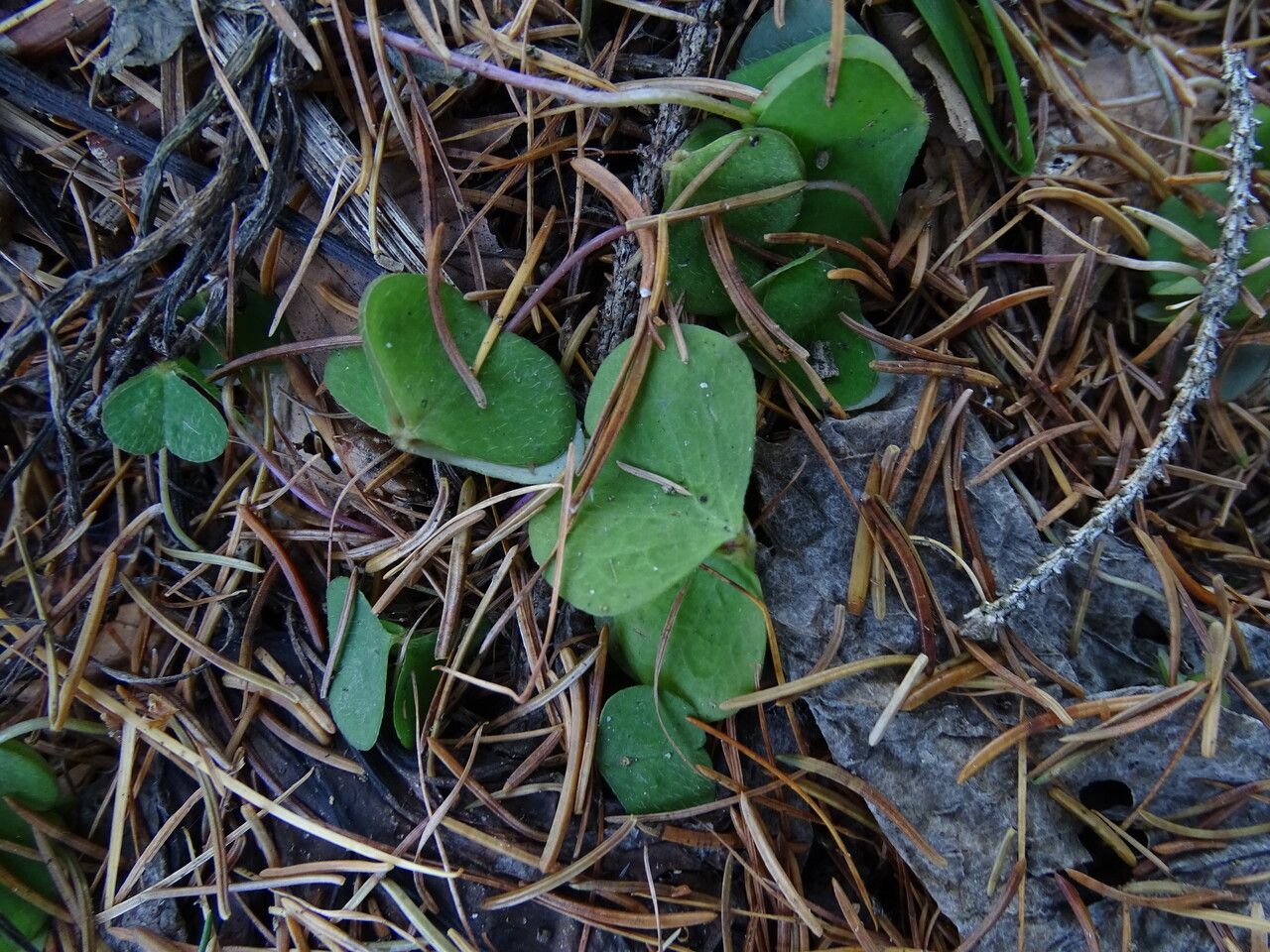
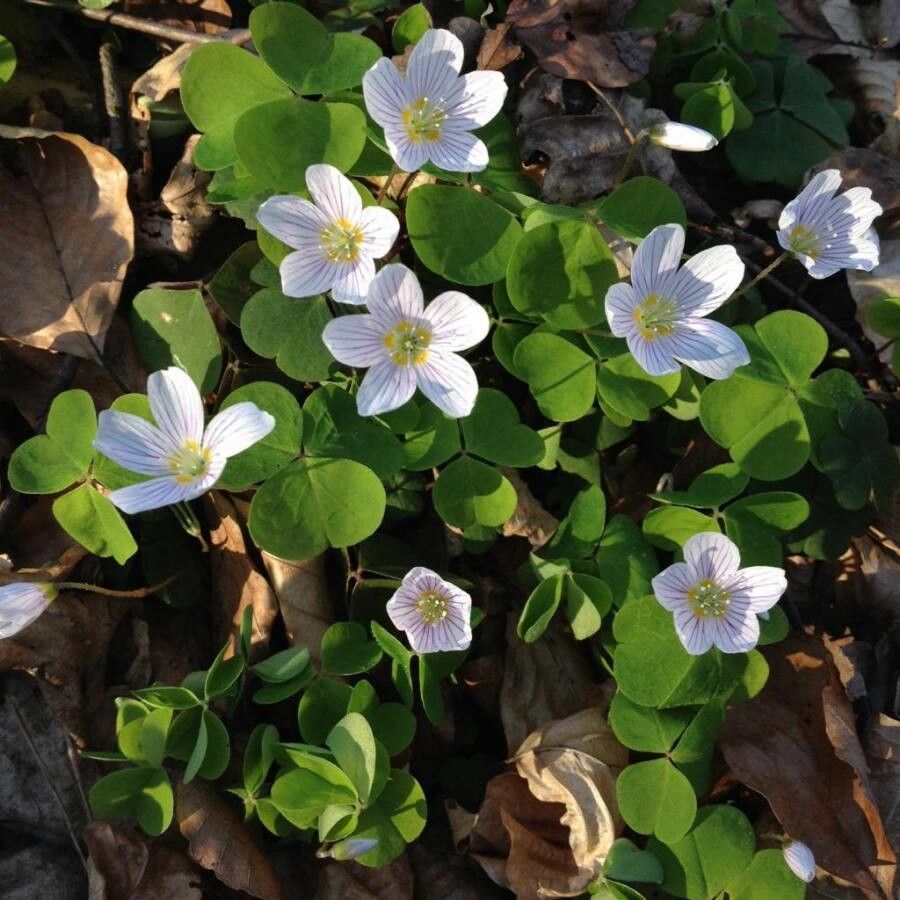
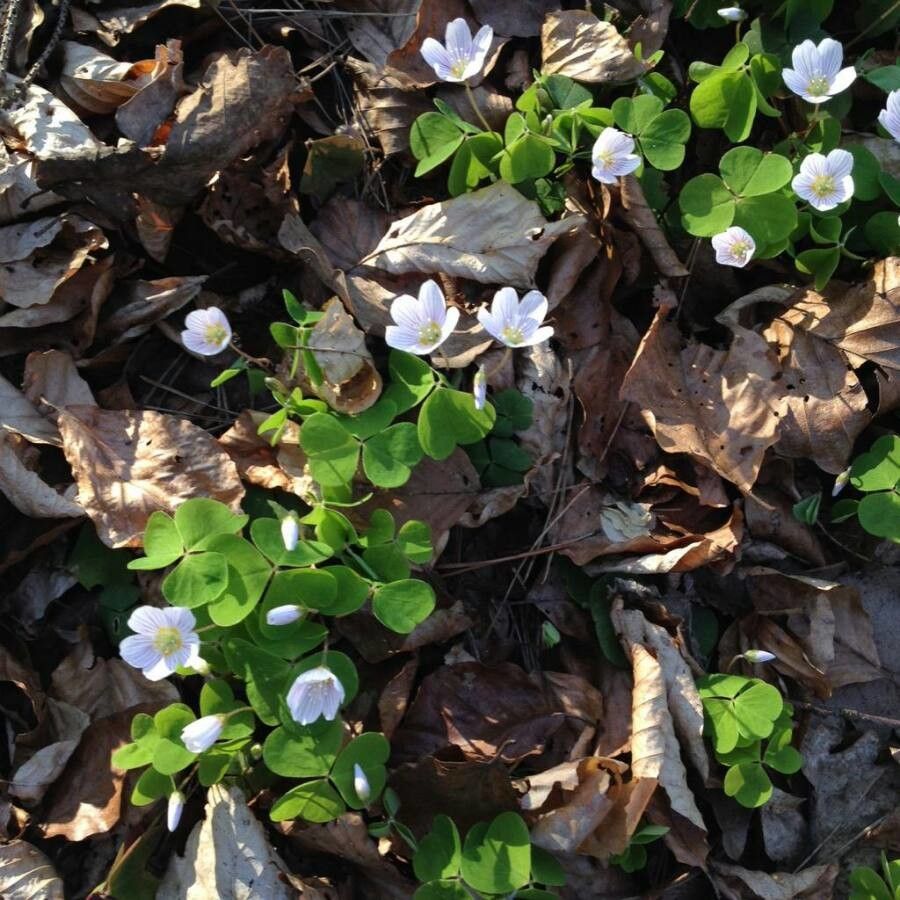
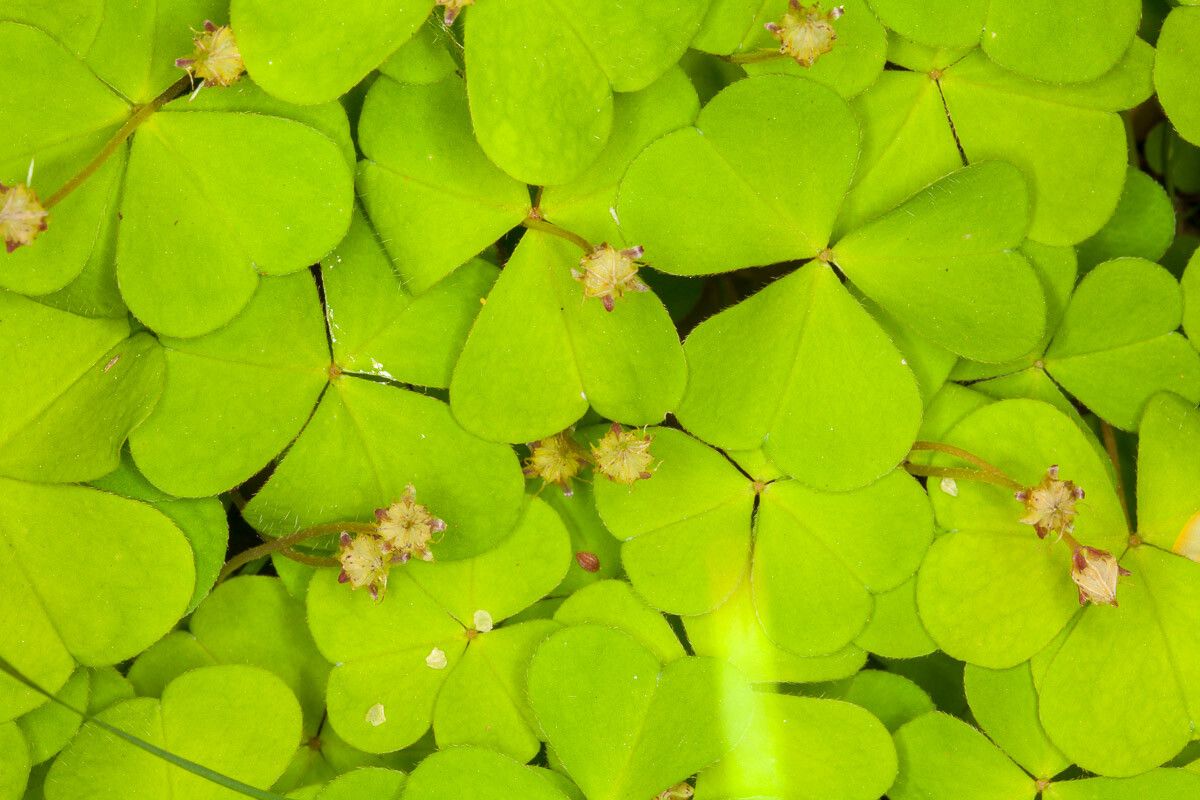
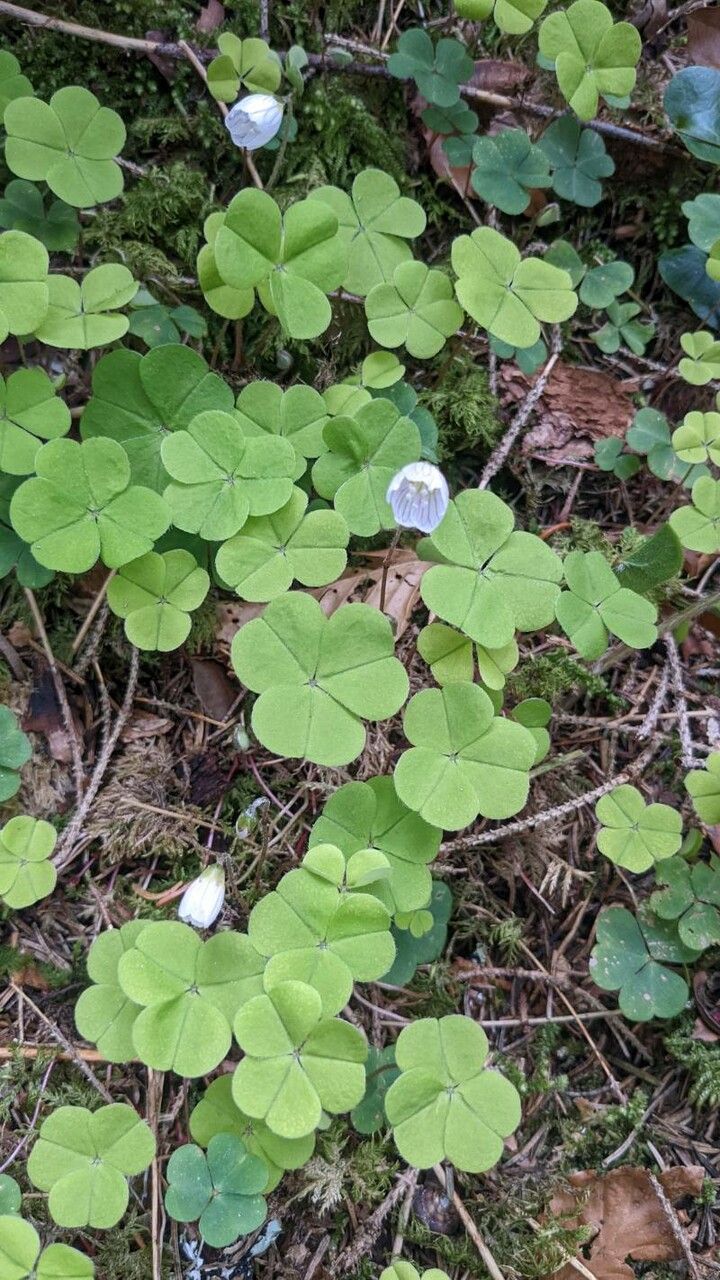
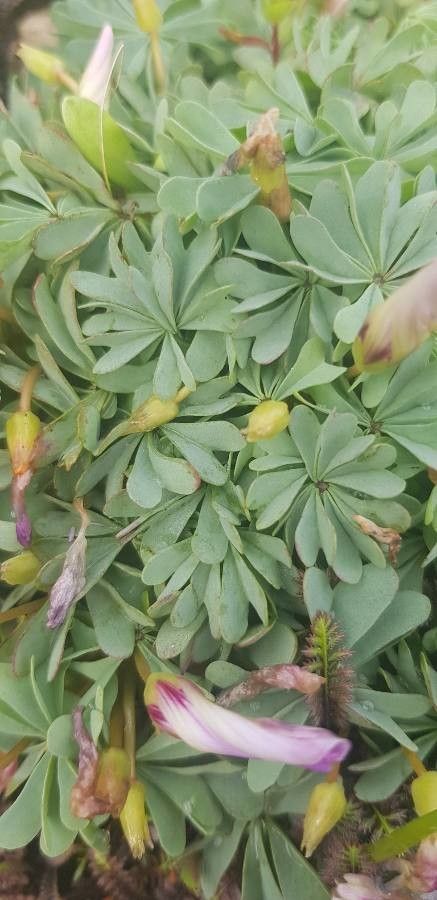
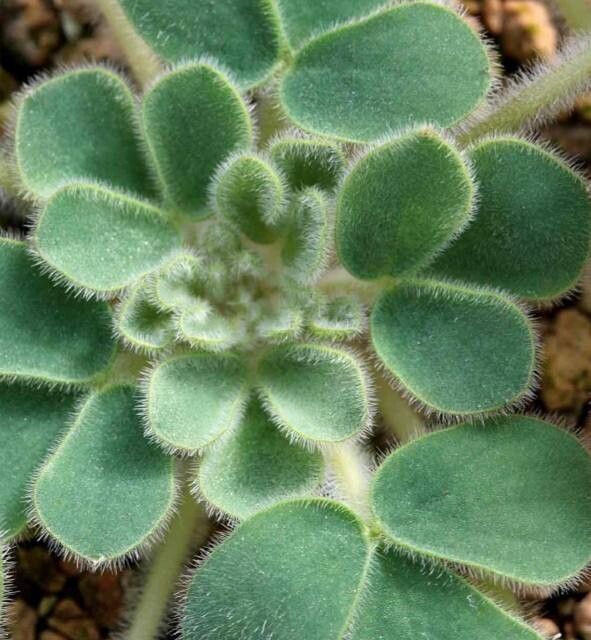
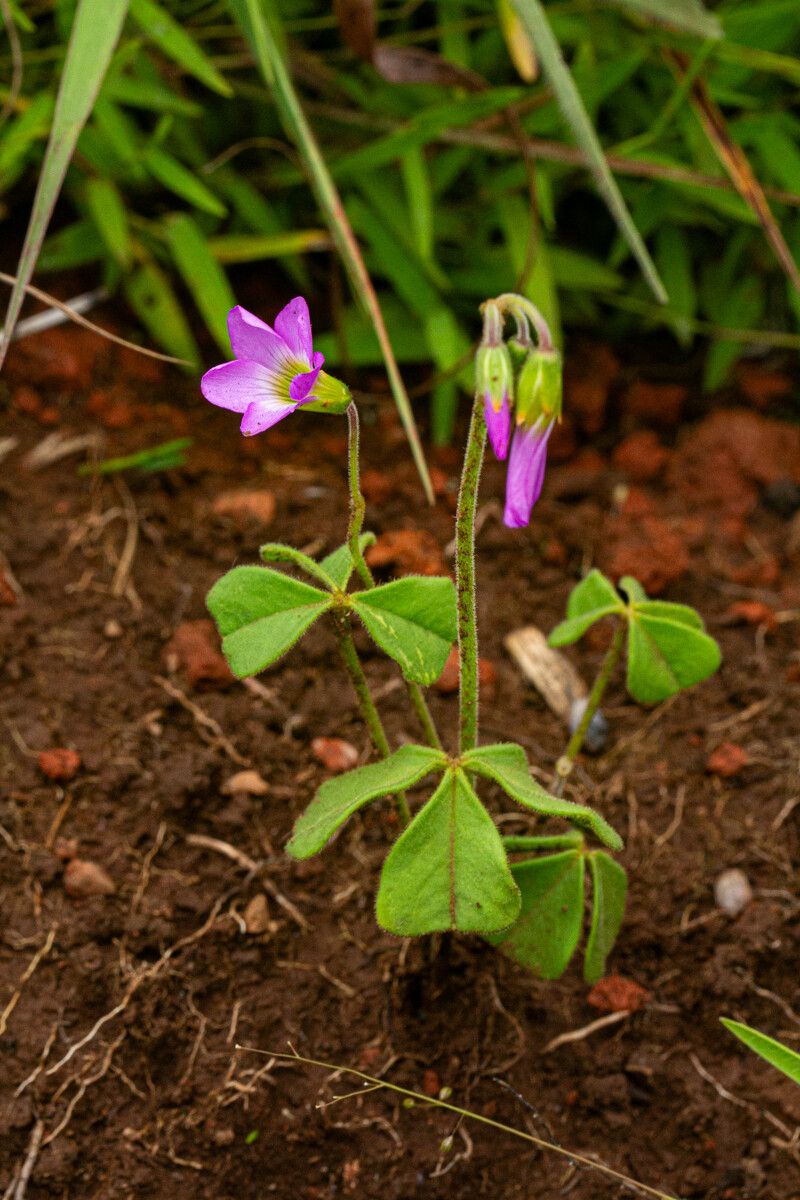
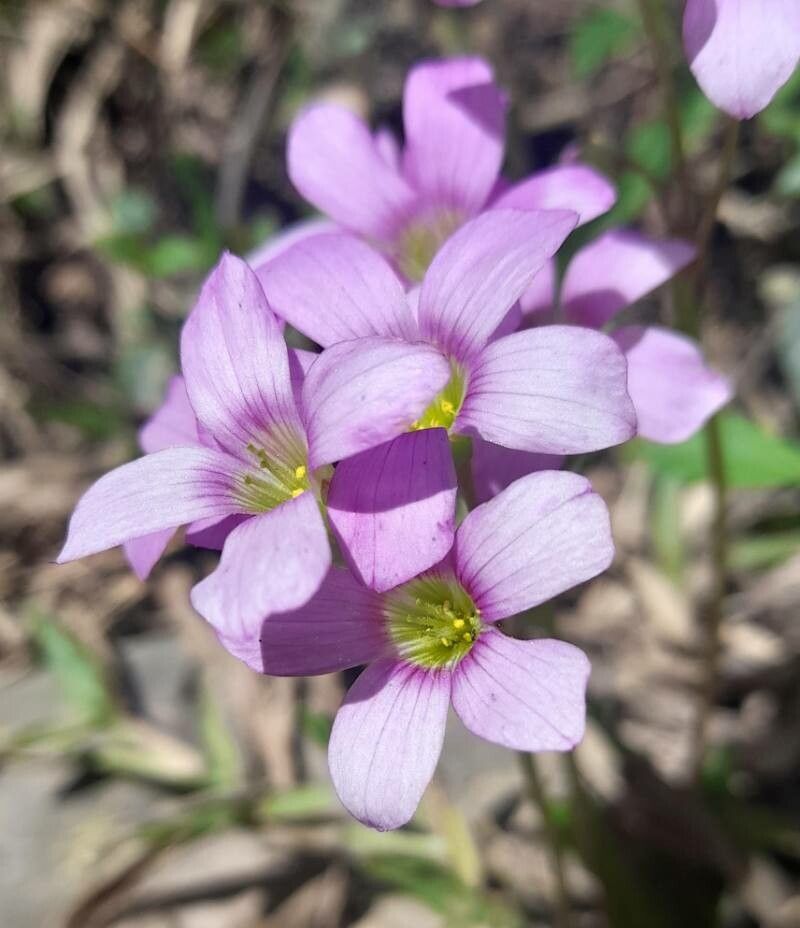
Oxalis acetosella, the wood sorrel or common wood sorrel, is a rhizomatous flowering plant in the family Oxalidaceae, common in most of Europe and parts of Asia. The specific epithet acetosella refers to its sour taste. The common name wood sorrel is often used for other plants in the genus Oxalis. In much of its range it is the only member of its genus and hence simply known as "the" wood sorrel. While common wood sorrel may be used to differentiate it from most other species of Oxalis, in North America, Oxalis montana is also called common wood sorrel. It is also known as Alleluia because it blossoms between Easter and Pentecost, when the Psalms which end with Hallelujah are sung.
Creeping woodsorrel is fairly resistant to diseases and usually does not suffer from them. However, it can be affected by pests and illnesses present in its environment. These issues are typically minor. For care, this plant requires a moderate amount of attention. It should be pruned regularly to keep a neat appearance and to support healthy growth. Fertilizing can also encourage better flowering. Creeping woodsorrel is well suited for anyone with outdoor space, such as a garden or patio, and does not demand extensive experience in plant care. It may need more attention when grown indoors.
How to keep Oxalis Acetosella.
Light
Creeping woodsorrel grows best in places where it gets abundant sunlight throughout the day, though it can also tolerate areas with limited light. Too little sun can weaken its strength and vitality, while too much exposure can negatively affect its growth.
Water
Common wood sorrel thrives in the moist understory of temperate forests and requires moderate watering each week. Its ability to adapt to different moisture levels and its deciduous nature enable it to shed leaves during dry periods. This helps the plant conserve water and enhances its survival in various conditions.
Humidity
This plant will thrive in moderate humidity, which is probably the level in your home. However, misting it a few times a week can be very beneficial. Make sure the room has good ventilation.
Temperature
Creeping woodsorrel flourishes best at temperatures ranging from 5 to 38 degrees Celsius (41 to 100 degrees Fahrenheit). Its ideal growing condition typically involves a steady temperature between 21 and 29 degrees Celsius (70 and 85 degrees Fahrenheit). In the heat of the summer, the plant could profit from sporadic misting of water to maintain leaf hydration in elevated temperatures.
Fertilizer
Usually a single fertilizer application in spring is enough for Creeping woodsorrel, although repeated feedings can increase growth. Apply fertilizer roughly every month to month and a half. Fertilization improves the leaves’ appearance and function, maintaining even color and a healthy texture. It also promotes root development and nutrient uptake for sustained plant health.
Pruning
Common wood sorrel is characterized by its trifoliate leaves and delicate flowers. Light pruning from early to late spring helps to remove dead foliage, improve airflow, and encourage dense growth. Pruning with care helps maintain the plant's shape and promotes healthy development. However, excessive trimming can stress the plant and increase the risk of disease.
Pot & Repot
Repot common wood sorrel every 2-3 years in early spring to refresh the soil and support healthy growth. Use a slightly larger pot to give the roots more space. Ensure the soil remains moist but not waterlogged, and provide dappled light for optimal growing conditions. Handle the plant gently during repotting to protect its delicate foliage.
Botanical profile.
- Plant Type
- Herb
- Life Cycle
- Perennial
- Genus
- Oxalis
- Family
- Oxalidaceae
- Hardiness Zone
- 4-11
- Mature Height
- 10 cm to 34 cm
- Mature Spread
- 46 cm
- Leaf Color
- Green, Purple, Red
- Leaf Type
- Deciduous
- Flower Color
- Yellow
- Flower Size
- 0.51 cm to 0.51 cm
- Bloom Time
- All year round
- Planting Time
- Autumn, Spring
- Harvest Time
- All year round
- Native Area
- Libya, Pakistan, Nigeria, Slovenia, Cameroon, Koppen, Ethiopia, Central African Republic, Tunisia, Peru, Bulgaria, Bangladesh, Laos, Colombia, Afghanistan, Solomon Islands, Kazakhstan, Togo, El Salvador, Eswatini, Egypt, Angola, Austria, Namibia, Jamaica, Uzbekistan, Russia, Cuba, Venezuela, Ghana, Botswana, France, Nepal, Tajikistan, Sudan, Armenia, Greece, Switzerland, Bhutan, Nicaragua, Algeria, Sri Lanka, United Arab Emirates, Mexico, Guatemala, Slovakia, Montenegro, Croatia, Morocco, Uganda, Tanzania, Benin, Germany, Sierra Leone, Belgium, Saudi Arabia, Malawi, Honduras, Cyprus, Panama, Lebanon, Syria, Côte d'Ivoire, Iran, Ecuador, Azerbaijan, Kuwait, Costa Rica, Congo (DRC), Somalia, Lesotho, Rwanda, Eritrea, Yemen, Kenya, Iraq, Equatorial Guinea, Burundi, Liberia, Brazil, Congo, Czech Republic, Guinea, Serbia, Bahamas, Myanmar, Albania, Hungary, Turkmenistan
Other names.
Reader questions.
How should I water my Common wood sorrel?
To properly water the Common wood sorrel, it is recommended to use filtered water that is at room temperature. Tap water may contain harmful particles, making filtered water a better choice. The plant prefers warm temperatures, so using cold water can be a shock to its system. It is advisable to avoid overhead watering, as it can cause issues with the foliage. Instead, apply filtered room temperature water directly to the soil until it is fully soaked. This method benefits the plant by moistening the roots and supporting their growth and nutrient absorption.
Why do I have to put fertilizer on my Common wood sorrel?
The main structure of the common wood sorrel is made up of its leaves. Fertilization is important for maintaining the appearance and function of these leaves. It helps them stay consistently colorful and healthy. Fertilization also benefits the plant below the surface, assisting in the growth of new roots and maintaining the existing ones. This means that fertilization not only keeps the plant healthy currently, but it also improves its ability to absorb nutrients from the soil in the long term.
What are the sunlight requirements for Common Wood Sorrel?
Common Wood Sorrel thrives in a range of sunlight conditions. It prefers locations with moderate solar light and can flourish even in areas with little to no sunlight, thanks to its natural habitat in shaded forests. However, it requires about 3-6 hours of sunlight daily (partial sun) and can also manage in full shade, which is less than 3 hours of sunlight. Overexposure to sunlight may stunt its growth, but extremely low sunlight will not harm its health. Observing how sunlight moves through your garden to find the perfect balance of light and shade is crucial for the plant's wellbeing.
What temperature is best for Common wood sorrel?
The ideal temperature for Common wood sorrel varies depending on the time of year. We can divide it into two seasons: the growing season and the dormancy season. During the growing season, when the plant is sprouting, the temperature should be between 65-80℉ (18-27℃) for optimal growth. If the temperature drops below 15℉ (-10℃), the plant may suffer, with leaves browning and wilting. However, it can survive a short cold snap with some assistance. Similarly, during the warmer months, we need to protect Common wood sorrel from temperatures that are too high. The plant's temperature range should not exceed 95-105℉ (35-40℃) as that could compromise the health of its foliage and blooms. Hotter temperatures can cause wilting, drooping, and even sunburn on the leaves, which can be challenging for the plant to recover from. Fortunately, there are several quick and easy ways to address this issue.
What should I do if I give my Common wood sorrel too much water or too little water?
Both overwatering and underwatering can harm the health of your Common wood sorrel, but overwatering is more common and can cause wilting, yellowing, and diseases like root rot, mold, and mildew. Underwatering is less likely, but it can make the leaves brittle and brown. To care for your Common wood sorrel, it's important to catch signs of overwatering early and reduce watering immediately. Check the soil drainage and replace it with a well-draining potting mix if necessary. If signs indicate underwatering, water more regularly until the signs improve.
When should I fertilize my Common wood sorrel?
If you grow your Common wood sorrel outdoors every year, you will notice new growth in early spring, indicating that it's time to fertilize. Most of the time, a single application of fertilizer in the spring is sufficient. However, if you want to maximize the growth of your Common wood sorrel, you can fertilize it multiple times during the spring and early summer. In this case, you can feed it about once every month to a month and a half.
How can artificial lighting benefit indoor Common Wood Sorrel plants?
Indoor Common Wood Sorrel plants require adequate lighting for optimal growth, especially when natural sunlight is insufficient, such as in winter or in less sunny spaces. Artificial lighting, like LED lights, provides a vital solution by offering the specific wavelengths of light needed by the plants. For different plants' sunlight needs, the required artificial light intensity varies: full sun plants need 30-50W/sq ft, partial sun plants need 20-30W/sq ft, and full shade plants 10-20W/sq ft. The light source should be placed 12-36 inches above the plant, mimicking natural sunlight, and provided for 8-12 hours per day to promote faster, healthier growth.
The temperature needed for the first year or young Common wood sorrel plants.
If you have just planted Common wood sorrel outside for the first time, it may need some extra care during the coldest months. Frost can cause severe damage and prevent the plant from regrowing in spring. To protect it, make sure to keep the temperature above 40℉(5℃). You can achieve this by either bringing the plant indoors or using mulch or fabric barriers to shield it from the cold. During the first year or two, it's best to plant Common wood sorrel in a shadier area as smaller plants have a harder time regulating their temperature in the heat. Limit direct sunlight to no more than five hours a day, especially if the temperature goes above 80℉(27℃). To keep the plant cool in the summer, use shadecloth and water or mist it regularly.
How often do I need to water my Common wood sorrel?
If your Common wood sorrel is in a pot, the best way to determine if it needs water is by feeling the soil with your finger. If the top two to three inches of soil are dry, it's time to water it. If you're growing it outdoors in the ground, you can use a similar method to test the soil. Again, if the top few inches of soil are dry, it's time to water. Typically, during the spring and early fall, watering once a week is sufficient. However, during extremely hot weather, you may need to water it twice or more per week. It's worth noting that mature, well-established Common wood sorrel can tolerate drought well.
When is it not a good idea to fertilize my Common wood sorrel?
During the late fall and winter, the Common wood sorrel enters a dormant phase where it stops growing. It is not recommended to fertilize the Common wood sorrel during this time. However, if you choose to fertilize during the spring and summer, start decreasing the amount of fertilizer as summer approaches because the growth rate of the Common wood sorrel slows down. It is never a good idea to fertilize the Common wood sorrel when the weather is unusually hot or the soil is exceptionally dry. Fertilizing under these conditions can stress the Common wood sorrel and lead to its premature death.
What symptoms indicate light deficiency in Common Wood Sorrel when grown indoors?
When Common Wood Sorrel is grown indoors with insufficient light, several subtle symptoms may appear. These include smaller new leaves compared to mature ones, leggy or sparse growth due to longer spaces between leaves or stems, faster leaf drop as a resource conservation measure, slower or halted growth as the plant enters survival mode, and paler new leaves indicating a lack of chlorophyll. Chlorosis (yellowing leaves), sunscald (damage from intense light), leaf curling, wilting, and leaf scorching are other symptoms that can arise from either too much or too little light. These symptoms highlight the importance of proper light management for healthy plant growth.
How can I keep Common wood sorrel safe from very hot or very cold weather?
To protect Common wood sorrel from frost or cold damage during the growing season, there are a few steps you can take. If you're growing it in a container, simply bring the container indoors with bright, indirect light until temperatures rise above the lower threshold again. For ground-planted Common wood sorrel, using mulch or horticultural fabric to create an insulated barrier around the plant can protect it from frost and cold wind. In temperatures hotter than 80℉(27℃) in the shade, limit the exposure of Common wood sorrel to six hours or less of sunlight per day, preferably in the morning. Adding shade cloth or a fine plastic mesh can reduce the amount of direct sunlight the plant receives during the hottest parts of the day. Installing a misting system that provides a slow release of cooling mist around the base of the plant can also help lower ground temperatures during the day.