Oxalis pes-caprae, commonly known as Bermuda buttercup or sourgrass, is a perennial plant in the Oxalidaceae family. Native to South Africa, it has spread and become naturalized in many parts of the world, including Europe, Australia, and North America.
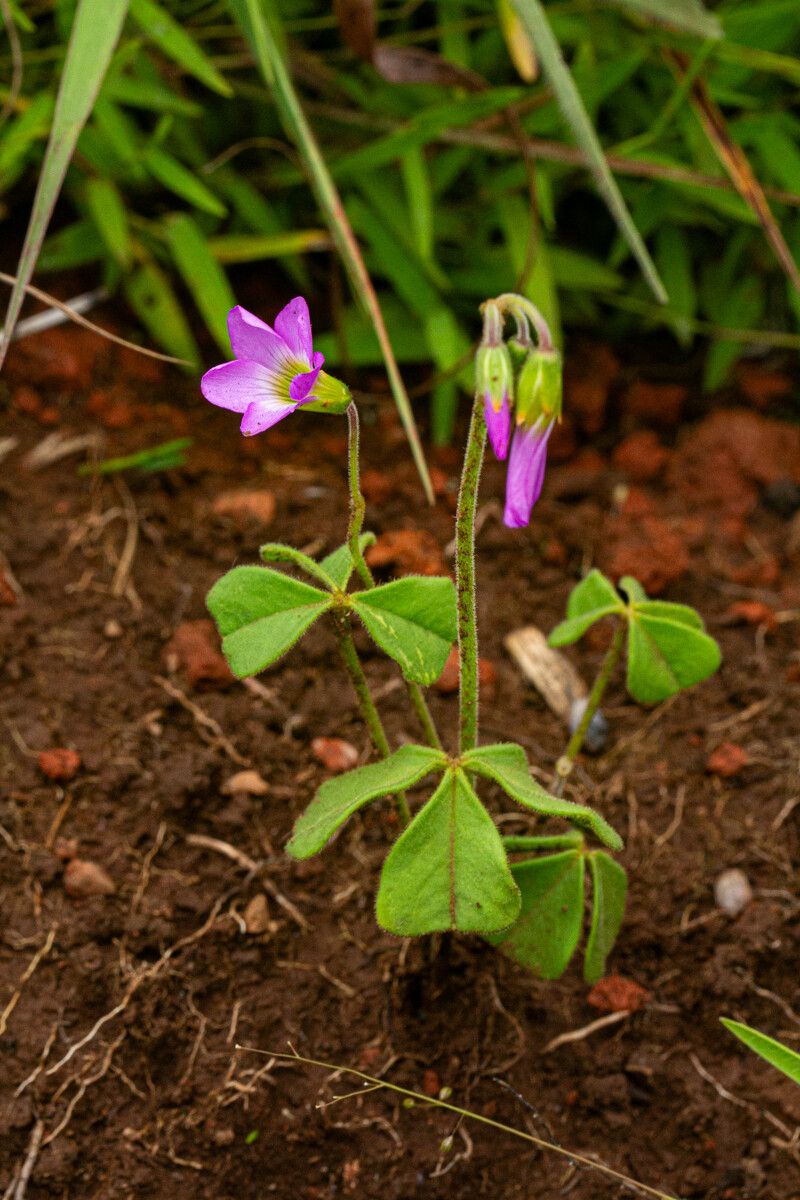
The plant features a bulbous root system that produces multiple stems bearing trifoliate, bright green leaves with heart-shaped leaflets. These leaves are alternately arranged on the stem and have long petioles.
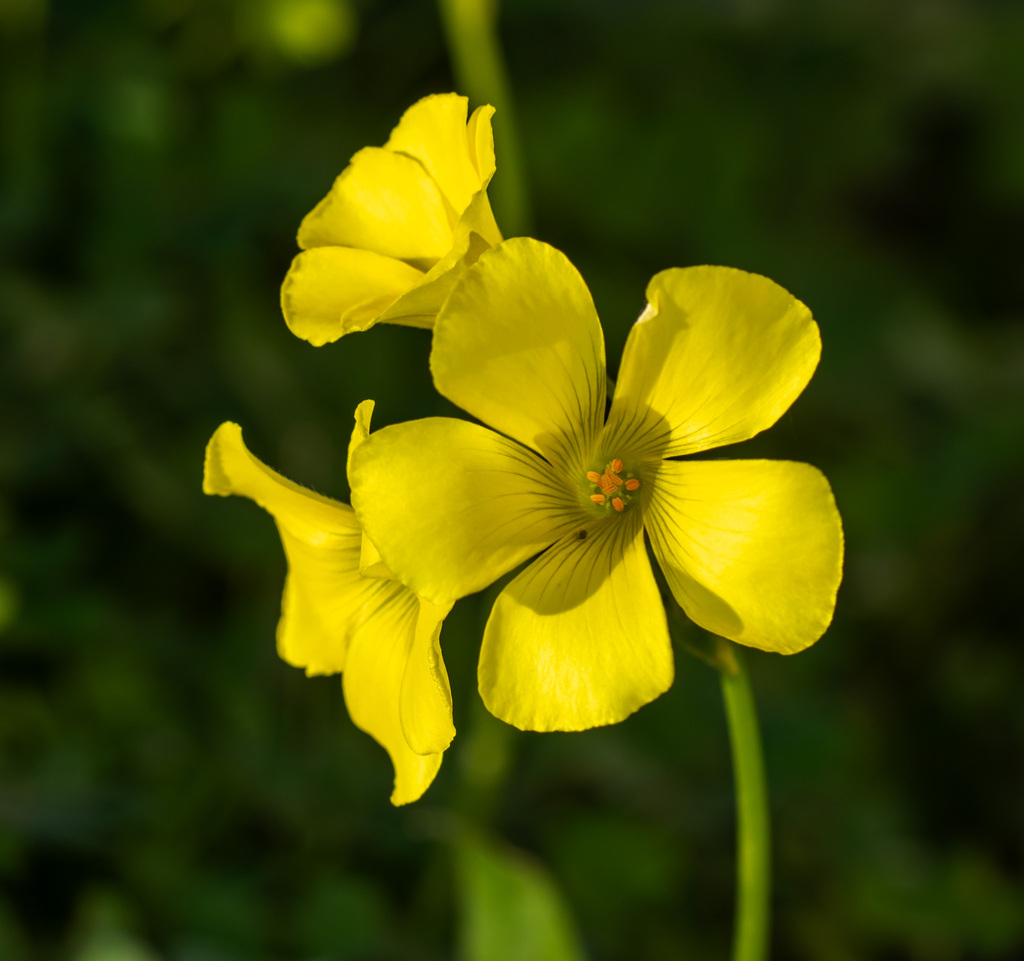
In late winter or early spring, Oxalis pes-caprae blooms with clusters of bright yellow flowers that rise above the foliage on long stalks. Each flower has five petals adorned with distinctive dark markings at their bases.
Several incidents of mass deaths among sheep have been linked to overgrazing in areas abundant with Bermuda buttercup. This plant can be dangerous when consumed in large quantities because it contains high levels of oxalic acid. FUN FACT · FROM THE LIBRARY
Despite its attractive appearance, Bermuda buttercup is considered invasive in many regions due to its rapid spread through underground bulbs, which can crowd out native vegetation.
The plant thrives in well-drained soils and can grow in both full sun and partial shade, although it is adaptable to a wide range of soil types. It is commonly found along roadsides, in lawns, and in disturbed areas such as abandoned fields.
While some gardeners appreciate its vibrant yellow flowers for adding early spring color when few other plants are in bloom, others see it as a nuisance weed. Its invasive nature makes it difficult to control once established, and efforts to remove it can harm nearby plants.
The Bermuda buttercup is a plant native to southern Africa. It has been introduced to regions such as Florida and Bermuda. The plant is named for its bright yellow, cup-shaped flowers, which have a buttery yellow hue.
Bermuda buttercup is fairly disease-resistant and generally not prone to illnesses. However, it can be vulnerable to pests and diseases present in its surroundings. These problems are usually not serious. In terms of maintenance, this plant needs a moderate level of care. It should be pruned regularly to keep a good appearance and support healthy growth. Fertilizing can also help encourage flowering. Bermuda buttercup is suitable for anyone with outdoor space, such as a garden or patio, and does not demand extensive gardening experience. It may need more attention when grown indoors.
How to keep Oxalis Pes Caprae.
Light
The Bermuda buttercup is a sun-loving plant that does best in full sun, though it can tolerate only partial sunlight. Originating from habitats with abundant light, insufficient illumination can impede its growth, while too much sun can cause sunburn.
Water
The Bermuda buttercup thrives when consistently watered on a weekly basis. Although it can tolerate some drought, it grows best in well-draining soil to prevent root rot. To ensure optimal growth, it's important to provide an environment that maintains a balance, avoiding excess water while keeping the plant adequately hydrated.
Humidity
This plant needs special care because it loves high humidity levels of 60-80% or more. The best way to achieve this is by placing a humidifier near the plant. Daily misting is also essential! Make sure the room has good ventilation.
Temperature
the bermuda buttercup originates from South Africa and favors hot, dry conditions. It prefers temperatures ranging from 68 to 100 ℉ (20 to 38 ℃). Sufficient watering and seasonal temperature adjustments are essential for the bermuda buttercup.
Fertilizer
Usually one fertilizer application in spring is enough for Bermuda buttercup, though repeated feedings can optimize growth. Apply fertilizer every month to every month and a half. Fertilizing improves the leaves' appearance and function, encouraging even color and a healthy texture. It also promotes root development and nutrient uptake, supporting the plant's long-term health.
Pruning
The Bermuda buttercup is a low-growing perennial known for its bright yellow flowers and clover-like leaves. To manage its invasive tendencies and encourage healthy, compact growth, it is best to prune the plant from early to late spring. This also helps improve air circulation. Be sure to use sterilized shears during pruning to prevent disease and keep its aggressive spread under control, ensuring a healthier, more manageable plant.
Pot & Repot
When repotting Bermuda buttercup, select a pot 1-2 inches (2.5–5.1 cm) larger with ample drainage. Use a well-draining potting mix. Repot in spring or fall, making sure the root ball is slightly lower than the rim of the flower pot. Water thoroughly after repotting and place in a warm spot with indirect sunlight.
Botanical profile.
- Plant Type
- Herb
- Life Cycle
- Perennial
- Genus
- Oxalis
- Family
- Oxalidaceae
- Hardiness Zone
- 9-11
- Mature Height
- 5 cm to 10 cm
- Mature Spread
- 49 cm
- Leaf Color
- Green, Purple, White, Brown
- Leaf Type
- Evergreen
- Flower Color
- Yellow
- Flower Size
- 2.54 cm
- Bloom Time
- All year round
- Planting Time
- Spring, Summer, Autumn, Winter
- Harvest Time
- Spring, Summer, Fall
- Native Area
- South Africa, Namibia
Other names.
Reader questions.
How should I water my Bermuda buttercup plant?
To properly water the Bermuda buttercup, it is recommended to use filtered water at room temperature. Tap water should be avoided due to potentially harmful particles. The water temperature should be at room temperature or slightly warmer to avoid shocking the plant's system. Overhead watering should be avoided as well, as it can cause issues with the foliage. Instead, focus on thoroughly soaking the soil with filtered room temperature water. This method helps moisturize the roots and aids in nutrient absorption for healthy growth.
Why should I put fertilizer on my Bermuda buttercup?
The Bermuda buttercup relies on its leaves for structure, and fertilization is essential for maintaining their appearance and function. Proper fertilization promotes consistent color and a healthy texture in the leaves. Additionally, it benefits the plant below the surface by stimulating the growth of new roots and supporting existing roots. This not only keeps the plant healthy at present but also enhances its ability to absorb nutrients from the soil in the long run.
What are the sunlight requirements for Bermuda buttercup?
Bermuda buttercup thrives under full exposure to the sun, requiring above 6 hours of sunlight daily, though it can still grow with about 3 to 6 hours of sunlight. This heliophilous plant's growth can be hindered by a deficit of light, whereas excessive exposure might lead to sunburn. When arranging your garden, observe how sunlight moves through the area to ensure plants receive a suitable balance of light and shade for optimal health.
What is the native habitat of the Bermuda buttercup and what are its temperature preferences?
The Bermuda buttercup is native to South Africa and thrives in hot and dry climates. It has a temperature preference ranging between 68 to 100 °F (20 to 38 °C). To ensure the health and growth of the Bermuda buttercup, it's important to maintain adequate hydration and adjust the temperature according to seasonal needs. The plant possesses some degree of cold tolerance and typically does not require protective measures if temperatures remain above its minimum tolerable threshold. However, if temperatures are expected to fall below this threshold, temporary protection measures like wrapping the plant in plastic film, fabric, or other materials should be taken to shield it from the cold. Once the temperature rises, these protections should be removed.
What should I do if I give my Bermuda buttercup too much or too little water?
Overwatering and underwatering can harm your Bermuda buttercup, but overwatering is more common. When this plant gets too much water, its stems and leaves may wilt and turn yellow. Overwatering for a long time can also cause diseases like root rot, mold, and mildew, which can kill the plant. Underwatering is less likely for a Bermuda buttercup, as it can handle drought. However, it can still happen, and you'll notice brittle, brown leaves. It's important to recognize signs of overwatering quickly. Some diseases from overwatering, like root rot, can't be fixed if you wait too long. If you see early signs of overwatering, reduce watering immediately. Also, check the soil drainage. If it's poor, replace it with a loose, well-draining mix. On the other hand, if your Bermuda buttercup isn't getting enough water, just water it more regularly until the signs improve.
When should I fertilize my Bermuda buttercup?
If you grow your Bermuda buttercup outdoors every year, you'll notice new growth in early spring. This is when you should start fertilizing. Typically, one application of fertilizer in the spring is enough for the plant to thrive. However, if you want maximum growth, you can fertilize multiple times throughout spring and early summer. In this case, feed your Bermuda buttercup approximately once every month to a month and a half.
What should I do if natural sunlight is not enough for my indoor Bermuda buttercup plants?
When natural sunlight is insufficient, especially in winter or less sunny spaces, artificial lighting can be a crucial alternative to support optimal growth. For indoor Bermuda buttercup plants, LED lights are recommended because they can be customized to provide the specific wavelengths of light needed. Full sun plants require 30-50W/sq ft, partial sun plants need 20-30W/sq ft, and full shade plants need 10-20W/sq ft of artificial light. The light source should be placed 12-36 inches above the plant, and most plants will benefit from 8-12 hours of light per day to mimic natural daylight hours.
How does the Bermuda buttercup react to low temperatures, and what can be done?
The Bermuda buttercup has moderate tolerance to low temperatures and performs best when the temperature is kept above its suitable growth minimum. During the winter months, it's crucial to ensure the temperature remains above its tolerable growing minimum to prevent damage. If temperatures fall below its growth limit, the plant's leaves may droop, and while they may recover in mild cases, severe conditions can lead to wilting and leaf loss. To mitigate damage from low temperatures, frost-affected parts should be trimmed off. Before encountering low temperatures again, the plant should be wrapped with non-woven fabric or cloth, and a wind barrier should be erected to guard against cold winds.
How often do I need to water my Bermuda buttercup?
If your Bermuda buttercup plant is in a pot, the easiest way to determine if it needs water is by sticking your finger into the soil. If the top two to three inches of soil feel dry, it's time to water it. Similarly, if you have your Bermuda buttercup plant planted outdoors, you can use the same method to check the soil. When the first few inches of soil are dry, it's time to water it. Usually, during spring and early fall, you will need to water this plant about once a week using this method. However, during extremely hot weather, you may have to water it twice a week or more. Nonetheless, mature and well-established Bermuda buttercup plants have a great ability to withstand drought.
When is it not a good idea to use fertilizer on my Bermuda buttercup?
During the late fall and winter, your Bermuda buttercup goes into a dormant phase and stops growing. During this time, it is best not to use fertilizer. In the spring and summer, if you choose to fertilize, start decreasing the amount as summer approaches because the growth rate of the Bermuda buttercup slows down. In general, it's not a good idea to fertilize when the weather is unusually hot or the soil is very dry. Doing so can cause stress to the Bermuda buttercup and lead to its premature death.
What are the symptoms of light deficiency in Bermuda buttercup?
Symptoms of light deficiency in Bermuda buttercup include the development of smaller leaves than previously, leggy or sparse growth, faster leaf drop, slower or halted new growth, and leaves showing lighter colors or irregular patterns indicating a lack of chlorophyll. When placed in inadequate lighting, these symptoms can manifest, affecting the plant's vitality and appearance.
What are the effects of high temperatures on the Bermuda buttercup, and how can they be alleviated?
During the summer, it's essential to keep the Bermuda buttercup's temperature below its suitable growth maximum. Exceeding this maximum temperature can lead to lighter leaf coloration, dry and withered leaf tips, curling leaves, and an increased risk of sunburn. To address issues related to high temperatures, sunburned and dried parts of the plant should be trimmed away. Relocating the plant to a shaded area or employing a shade cloth during midday and afternoon sun exposure can also provide relief. Additionally, watering the plant in the morning and evening helps maintain soil moisture, further mitigating heat stress.