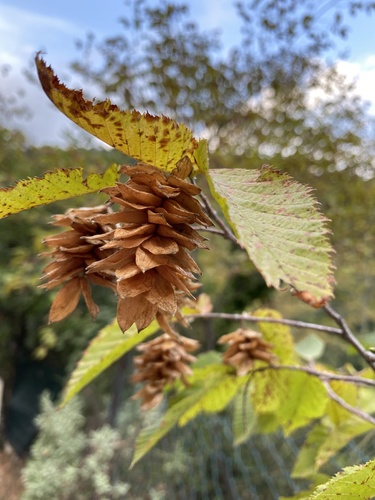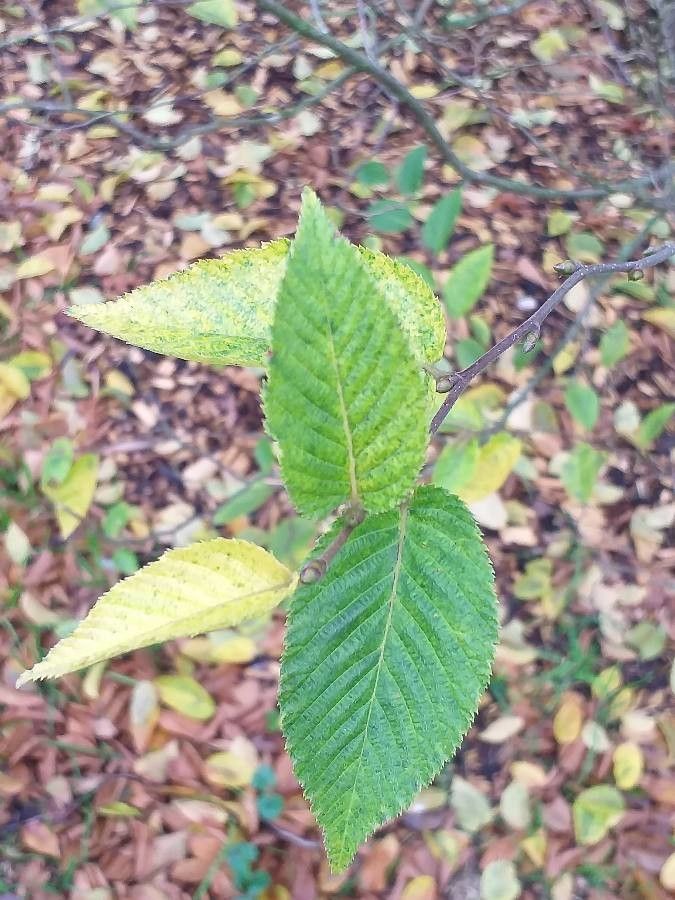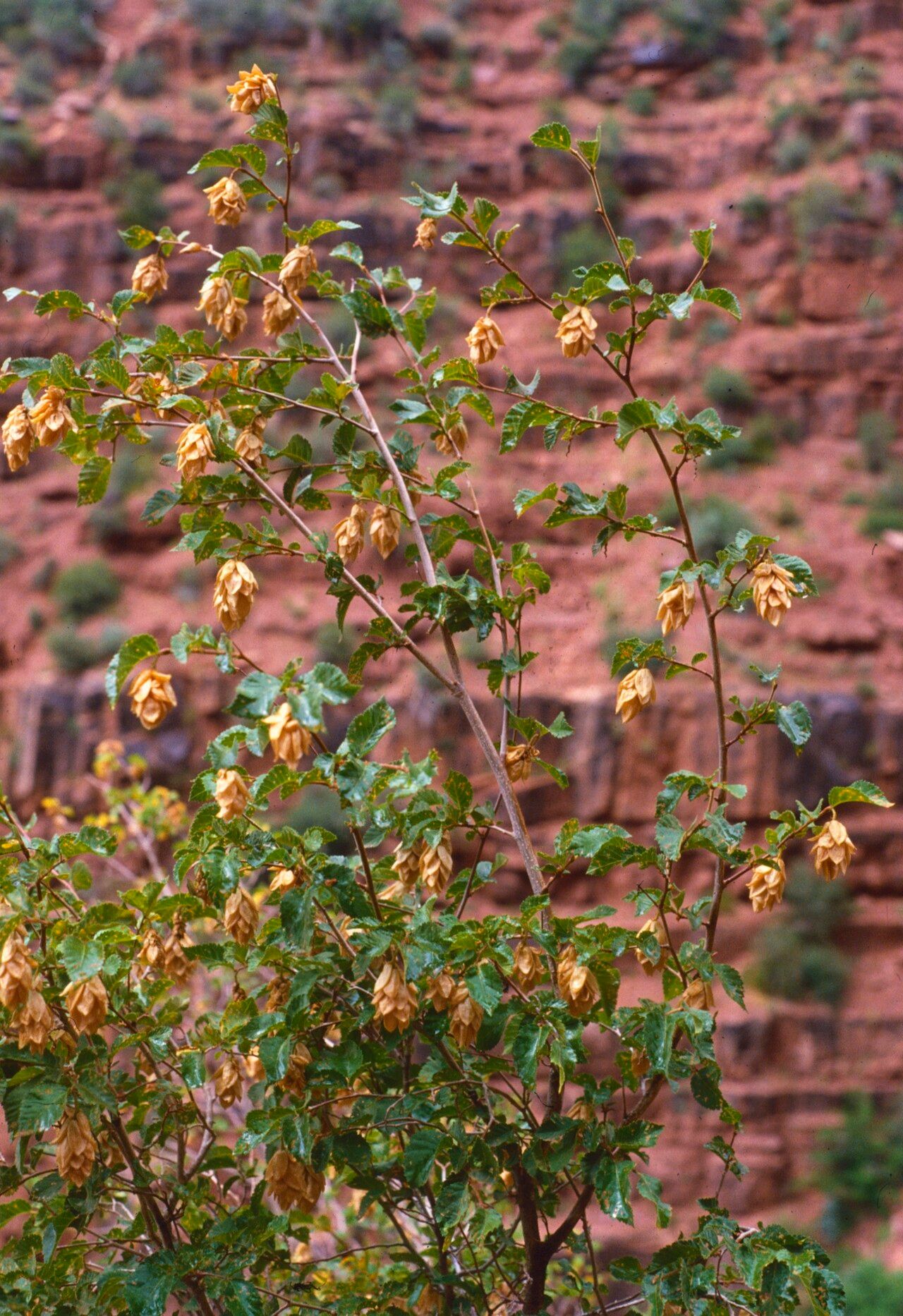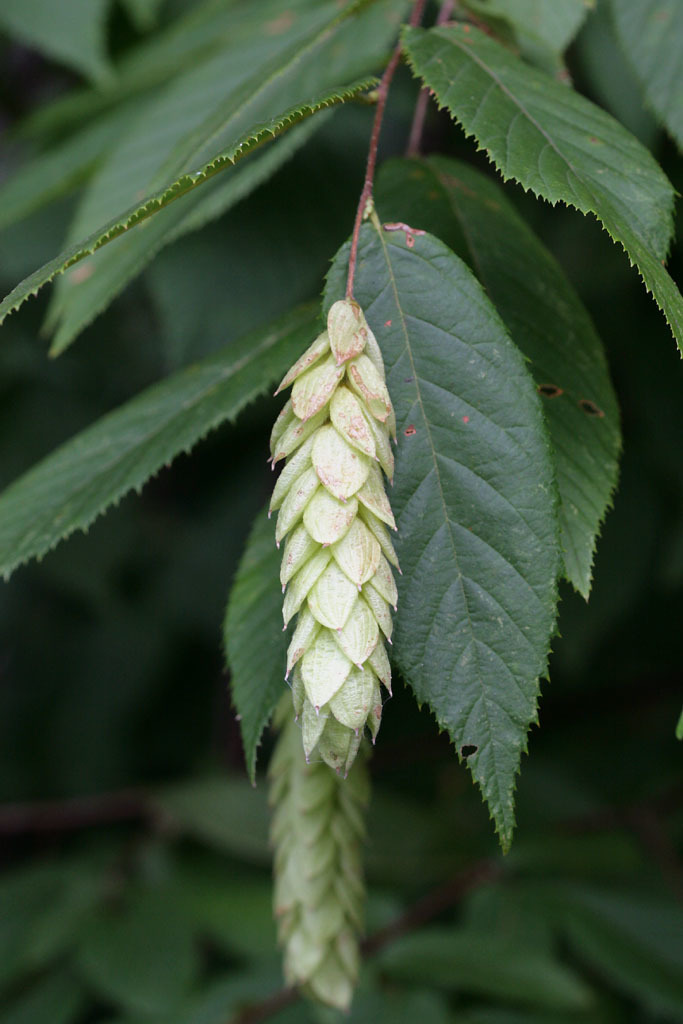
Ostrya virginiana, commonly known as the American hophornbeam or ironwood, is a deciduous tree native to eastern North America. It typically grows to a height of 40-60 feet and features a rounded crown with smooth gray bark. The dark green leaves have serrated edges and turn yellow in the fall. In the spring, the tree produces small greenish flowers that develop into clusters of papery nutlets resembling hops, which gives the tree its common name.
The American hophornbeam is renowned for its hard wood, which is dense and strong like iron. This wood has traditionally been used for tool handles, fence posts, and even railroad ties due to its remarkable durability. Additionally, the tree provides food for wildlife, such as squirrels that consume the nutlets.
This tree thrives in well-drained soils with full sun or partial shade and can tolerate some drought once established. It is resistant to pests and diseases, making it a low-maintenance addition to any landscape.
Overall, Ostrya virginiana is an attractive native tree with unique characteristics that make it both useful and ornamental. It is suitable for various settings, from urban landscapes to natural areas.
American hophornbeam is a species of Ostrya native to eastern North America, which is why it is called "American" hophornbeam. This tree is characterized by its drooping clusters of sac-like seed-bearing pods, which somewhat resemble the fruit of hops, as suggested by its common name.
American hophornbeam shows strong resistance to disease and is typically not susceptible to illnesses. As for care, this species is fairly low-maintenance. When established outdoors it needs only minimal watering, and larger specimens usually do not require pruning. Smaller plants, however, should be trimmed after they finish blooming. American hophornbeam is well suited for anyone with outdoor space, such as a garden or deck, and does not demand extensive experience in plant care.
How to keep Ostrya Virginiana.
Light
The American hophornbeam does best with ample daylight, which promotes healthy growth and development. It can, however, tolerate sites with lower light levels. Too much or too little light can impact its vigor, reflecting the balanced sunlight conditions of its native habitat.
Water
The American hophornbeam thrives in temperate regions with moderate moisture and well-drained soils. Once established, it can tolerate moderate drought, needing water every 1-2 weeks. To ensure optimal leaf development and overall health, it is crucial to monitor watering closely during the growing season.
Temperature
The American hophornbeam is native to temperate environments. It favors temperatures between 41 ℉ (5 ℃) and 95 ℉ (35 ℃). Seasonal adjustments may be required to keep temperatures within that range.
Fertilizer
Fertilize your American hophornbeam in early spring to encourage healthy growth. Regular fertilization boosts its overall health, producing vigorous growth, greater resilience to challenging conditions, and better resistance to diseases and pests. Keep a consistent fertilization schedule for your American hophornbeam to maintain foliage that is vibrant, deeply colored, and lush.
Pruning
The American hophornbeam benefits from light pruning in early spring to improve its shape and health. To encourage a strong structure and reduce the risk of disease, remove any dead or diseased branches and thin out crowded areas to enhance air circulation. Avoid heavy pruning, as it can stress the tree.
Botanical profile.
- Plant Type
- Tree
- Life Cycle
- Perennial
- Genus
- Ostrya
- Family
- Betulaceae
- Hardiness Zone
- 5-9
- Mature Height
- 6.1 m to 10.67 m
- Mature Spread
- 7.62 m to 9.14 m
- Leaf Color
- Green, Yellow, Gold
- Leaf Type
- Deciduous
- Flower Color
- Yellow, Green, Brown, White
- Flower Size
- 2.54 cm to 5.08 cm
- Bloom Time
- Mid spring, Late spring
- Planting Time
- Spring, Autumn
- Harvest Time
- Mid summer, Late summer, Early fall
Other names.
Reader questions.
When should I water my American Hophornbeam?
For the health and growth of the American Hophornbeam (Ostrya virginiana), timely watering is essential. The key indicators to water the plant include dryness of the first one to two inches of soil, wilting or drooping leaves, brown edges on leaves, and stunted growth. These signs suggest the plant needs water. Overwatering or underwatering can lead to poor growth, diseases, or plant death. It's crucial to balance the watering to prevent both soil oversaturation and complete dry-out.
Why should I put fertilizer on my American hophornbeam?
No matter what type of American hophornbeam you have, regular fertilization is essential for its overall health. Providing the right nutrients will promote strong growth, making your plant more resilient to difficult growing conditions and better able to fight off diseases and pests. The foliage of the American hophornbeam is particularly beautiful, so it's important to maintain it. This requires sticking to a regular fertilization schedule tailored to your specific American hophornbeam, which will result in vibrant, lush leaves.
What are the sunlight requirements for the American Hophornbeam?
The American Hophornbeam requires full sun, which is above 6 hours of sunlight per day, to thrive best. It can also tolerate partial sun, consisting of about 3-6 hours of sunlight daily. It's essential to observe the sunlight's movement through your garden to find spots that provide the right balance of light and shade, ensuring the plants' well-being.
What are the essential care tips for an American hophornbeam?
The American hophornbeam, or Ostrya virginiana, thrives in a temperate environment with temperatures ranging from 41°F (5°C) to 95°F (35°C). Due to its strong cold resistance, it generally does not require special frost protection measures in winter. However, if temperatures are expected to drop below the plant's cold tolerance limit, it is advisable to wrap the trunk and branches with non-woven fabric or cloth. Additionally, watering the plant abundantly before the first freeze in autumn helps to ensure the soil remains moist and helps prevent drought and water scarcity during the colder months.
How should I water my American Hophornbeam?
The American Hophornbeam, native to North America, thrives in dry to medium moisture levels and is tolerant of droughts. Use a soil moisture meter to avoid overwatering and opt for deep soak-and-dry techniques. Water the plant at its base to prevent leaf moisture and diseases. Avoid getting water on the foliage and ensure the soil drains well to prevent root rot. Watering should focus on maintaining a balance without over-wetting or drying out the soil.
When should I fertilize my American hophornbeam?
To ensure healthy growth, it is recommended to fertilize your American hophornbeam in late winter or early spring. This provides the necessary nutrients for the tree to thrive once the weather warms up. If you are in a warm climate region, an additional fertilizer feeding in early fall is beneficial. This not only adds nutrients for the next growing season but also helps the tree withstand the winter cold without foliage damage. Fertilizing earlier in the season ensures the new branches have enough time to grow and withstand the cold winter.
How important is sunlight for the growth and development of the American Hophornbeam?
Sunlight is crucial for the growth and development of the American Hophornbeam, allowing it to grow healthily and robustly. While it can survive in locations with less light, optimal light conditions reflect its natural habitat, ensuring its vitality. It's important to strike a balance, as both too much and too little light can adversely affect the plant.
How should I care for my American hophornbeam during low temperatures?
The American hophornbeam is quite cold-tolerant and is best kept at a temperature above its minimum suitable growth threshold. If winter temperatures are expected to fall below its tolerable growing minimum but not dip beneath its growth limit, no immediate changes may be noticed. However, brittleness and dryness in branches might appear by spring, with no new shoots emerging. To counteract this, it is recommended to prune away any dead branches that have not produced new leaves when spring arrives.
How much water does American Hophornbeam really need?
The American Hophornbeam requires moderate water. It's essential to water thoroughly to reach a root depth of 1-2 feet, typically with 1-2 liters per session for a mature plant in a medium-sized pot. Proper hydration manifests in vibrant, healthy leaves, firm stems, and regular growth. Signs of underwatering include wilted leaves and slow growth, while overwatering symptoms are yellowing or browning leaves and susceptibility to diseases. Avoid standing water to prevent issues and promote optimal plant health.
When is not a good time to give fertilizer to my American hophornbeam plant?
There are specific times of the year when you should refrain from fertilizing your American hophornbeam. The first is during the early and mid-winter months when the plant is dormant and does not require feeding. It is also not recommended to fertilize during late spring and summer due to the hotter and dryer weather conditions. These conditions can have a detrimental effect on the plant's response to fertilization. To avoid any issues, it is best to stick to a fertilization schedule that focuses on feeding only during early spring and early fall.
What should be done if natural sunlight is insufficient for the American Hophornbeam?
If natural sunlight is insufficient, especially during winter or in less sunny spaces, artificial lighting can be a vital solution for the American Hophornbeam. LED lights are a popular choice, customizable to provide specific wavelengths needed by plants. For plants requiring full sun, 30-50W/sq ft of artificial light is recommended; for partial sun plants, 20-30W/sq ft; and for full shade plants, 10-20W/sq ft. The light source should be placed 12-36 inches above the plant and turned on for 8-12 hours per day to mimic natural daylight.
What should I do if my American hophornbeam experiences high temperatures?
During the hotter months, ensure the American hophornbeam’s temperature stays below its maximum suitable growth threshold to prevent overheating. If temperatures exceed its maximum tolerable growing threshold, leaves may lighten in color and the tips may become dry and withered. In such cases, trim away sunburned and dried parts of the plant. It's also advisable to move the plant to a shaded location or use a shade cloth to protect it from midday and afternoon sun. Watering in the morning and evening can help keep the soil moist and the plant healthy.