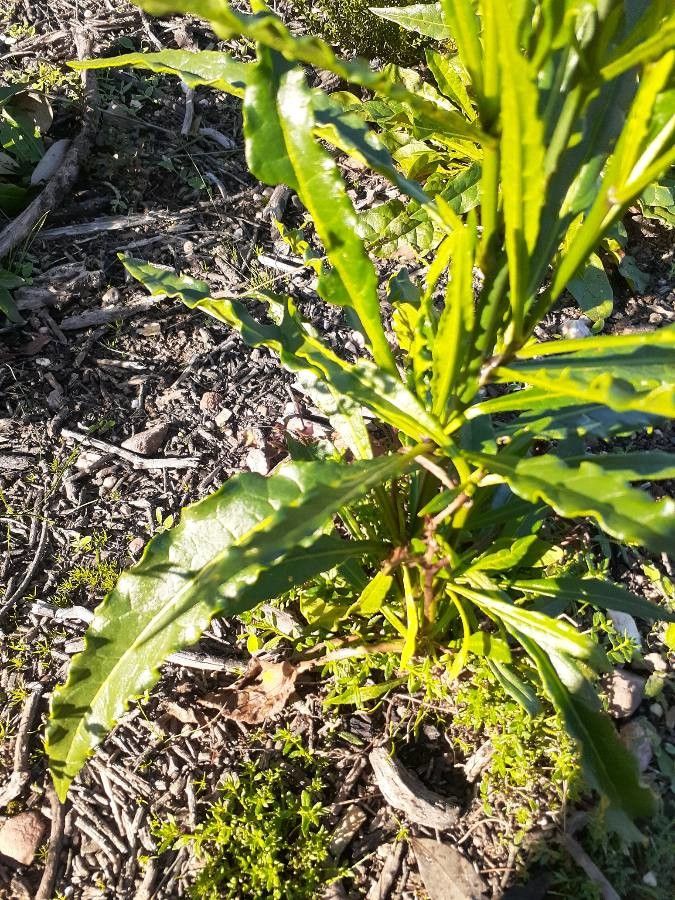
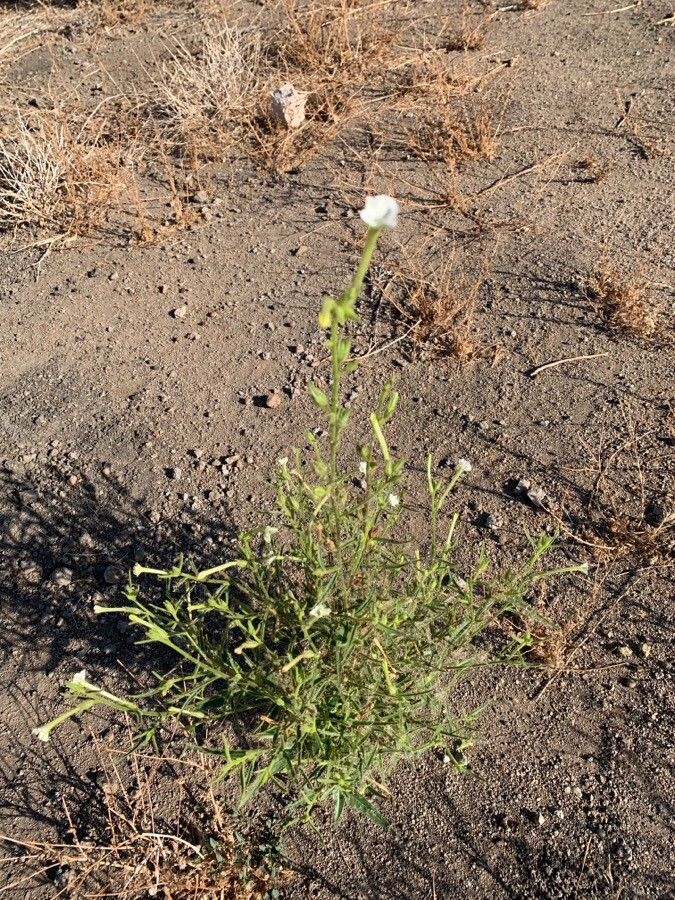
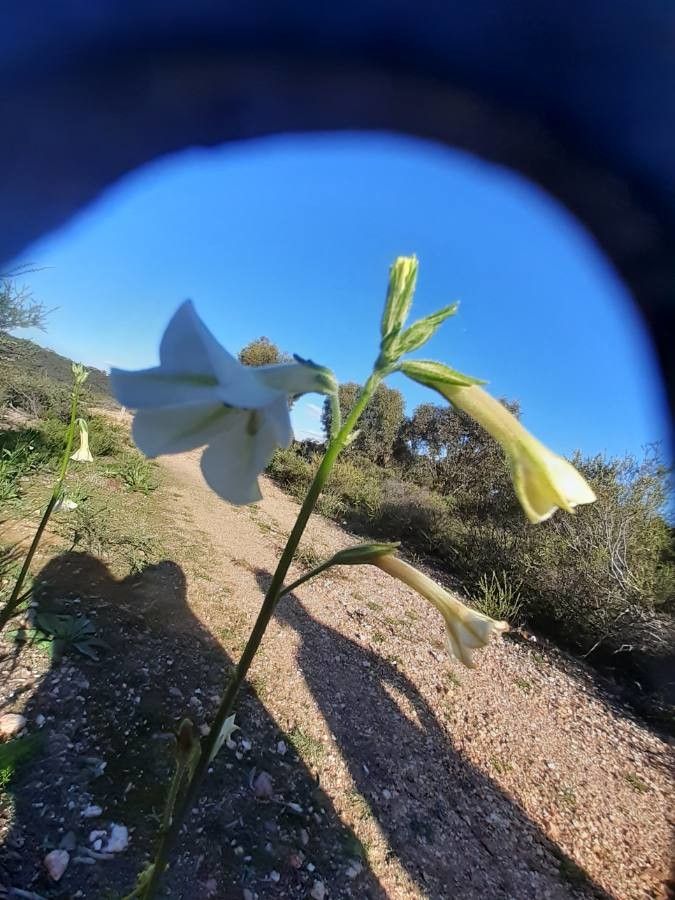
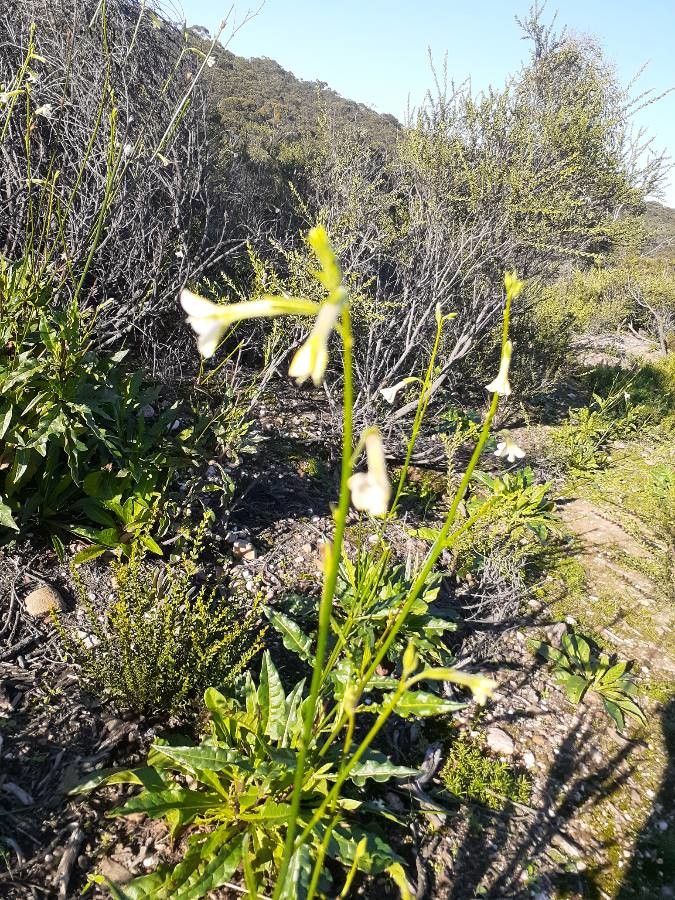
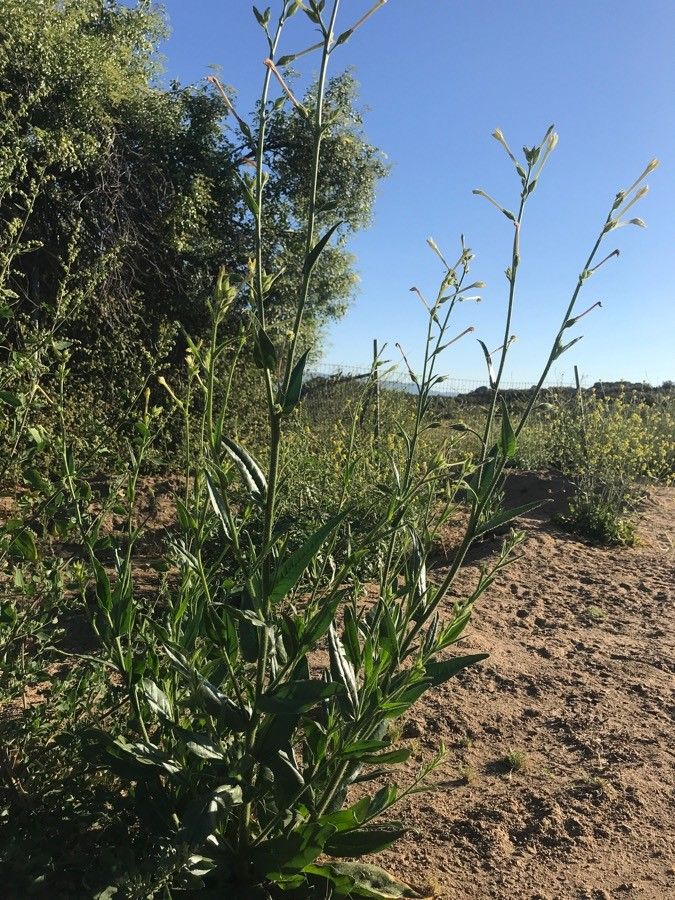
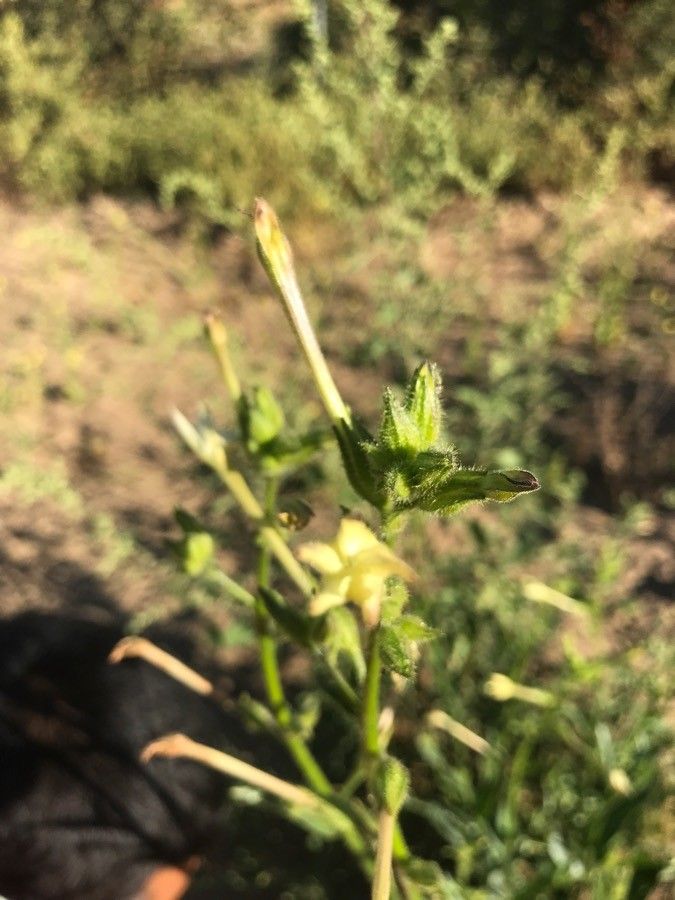
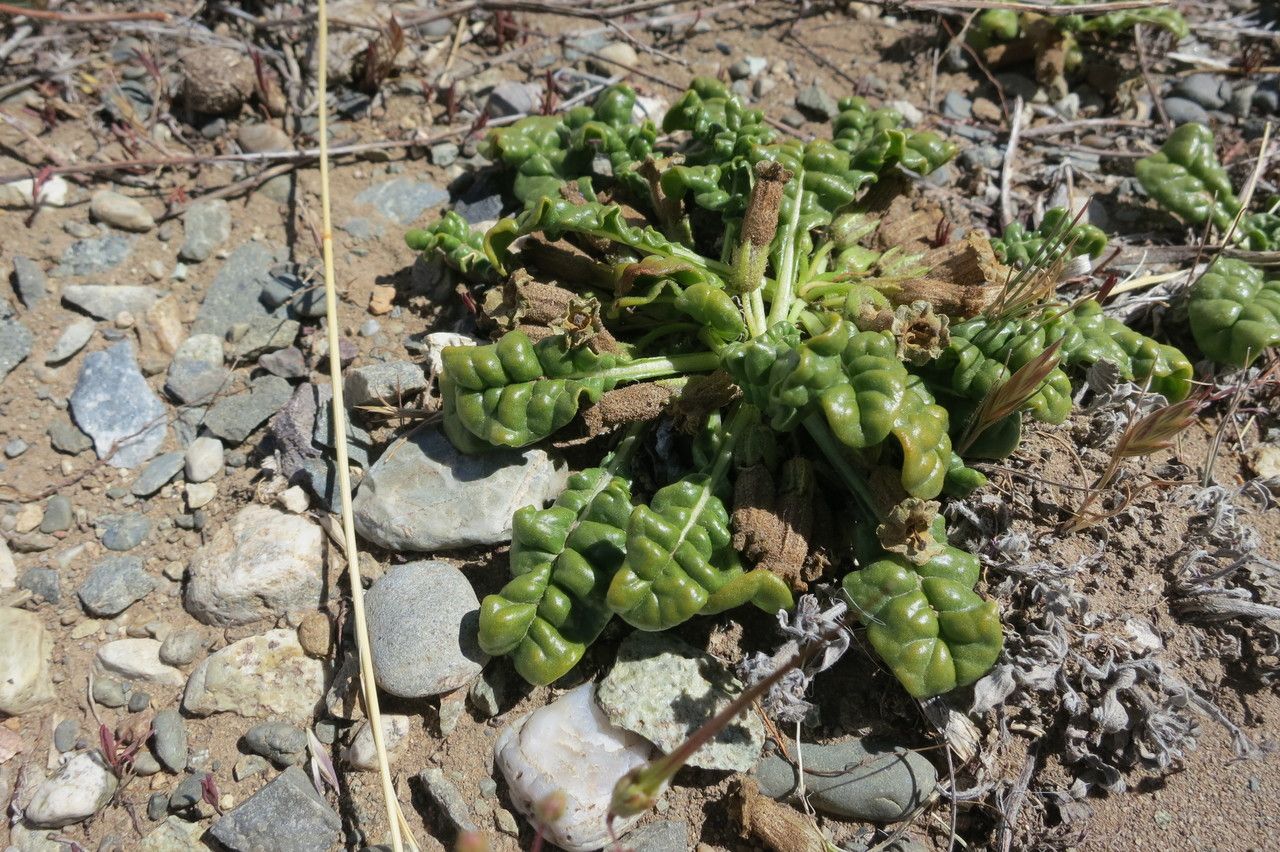
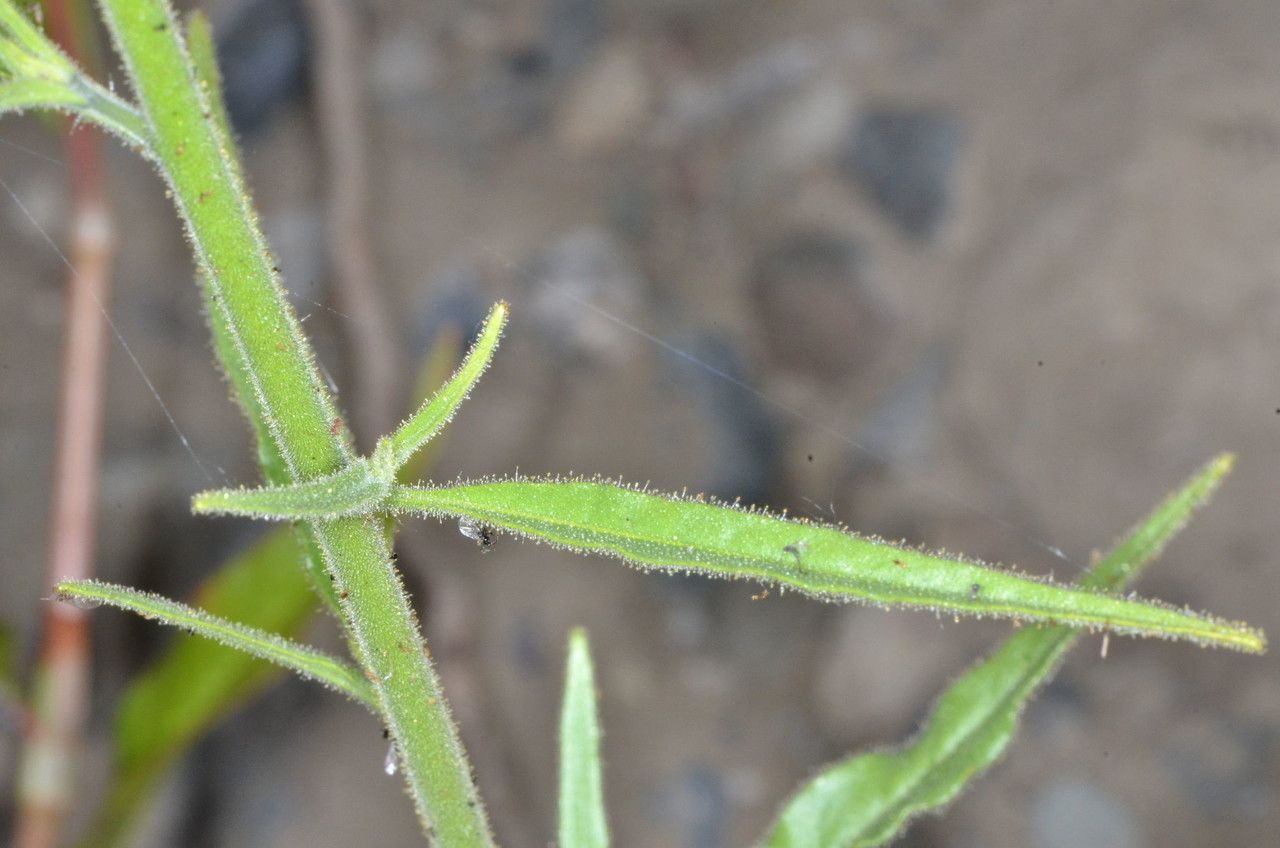
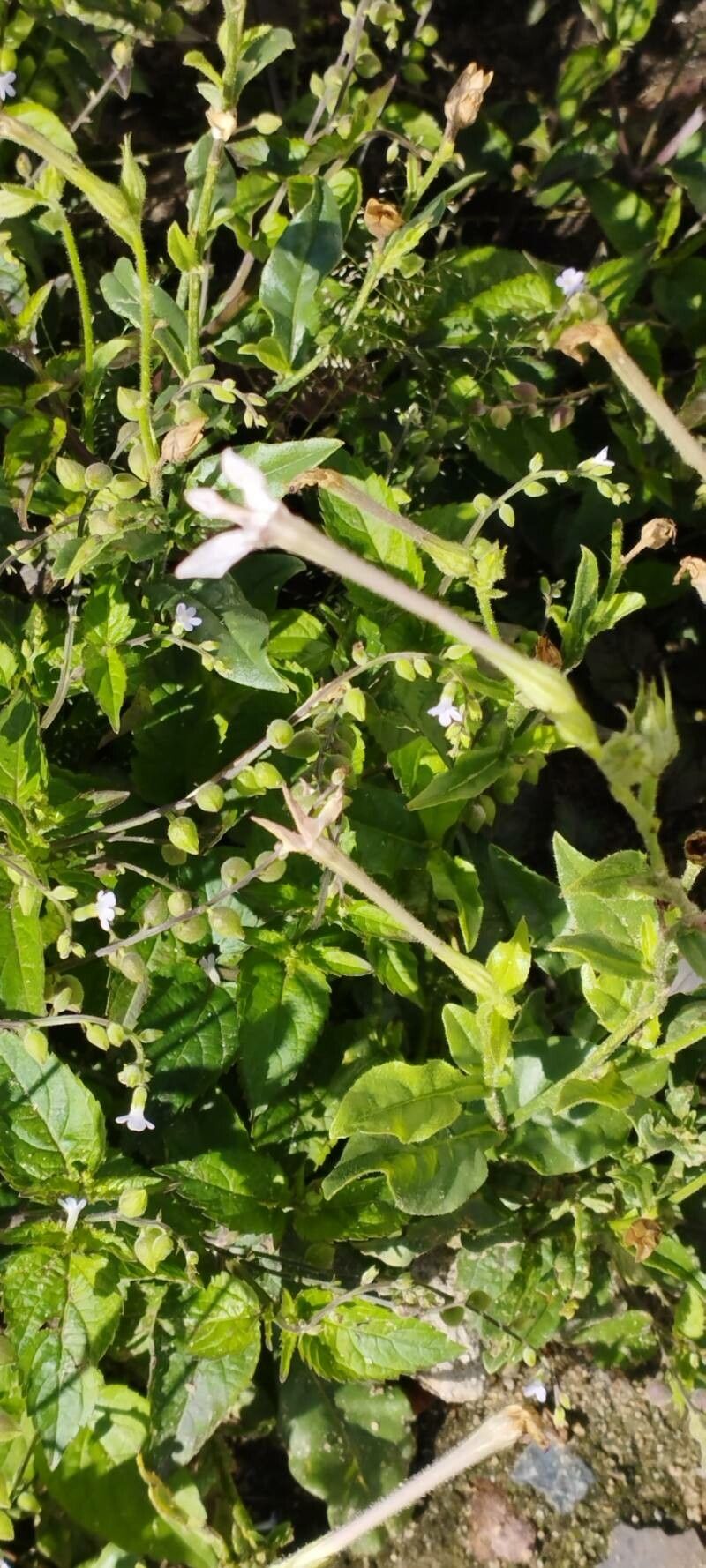
Nicotiana quadrivalvis is a species of wild tobacco known as Indian tobacco. It is endemic to the western United States, where it grows in many types of habitat. It is a bushy, sprawling annual herb growing up to two meters in maximum height. The lower leaf blades are up to 15 centimetres (6 in) long and are borne on short petioles, the upper smaller and sessile on the stem. The inflorescence is an array of several white, greenish, or purple-tinged flowers with tubular throats up to 5 centimeters long. The base of each is enclosed in a ridged calyx of sepals. The flower face may be 5 centimetres (2 in) wide. The fruit is a capsule up to 2 centimetres (3⁄4 in) in length. Native Americans also called it "sacred tobacco," and Nicotiana rustica can also be considered sacred.
Indian tobacco has strong disease resistance and is generally unlikely to develop illnesses. However, it can be affected by pests and diseases present in its surroundings. Such infections are usually mild. For care, this plant requires a moderate amount of maintenance. It should be pruned regularly to maintain a neat appearance and healthy growth. Fertilizing can also help encourage flowering. Indian tobacco is suitable for anyone with outdoor space, such as a garden or patio, and does not demand extensive care experience. It may require more attention when grown indoors.
How to keep Nicotiana Quadrivalvis.
Light
Indian tobacco comes from bright, open habitats and does best in full sun. It can withstand partial shade but prefers direct sunlight for optimal growth. This plant, which may be annual or biennial, is noted for its sun-loving habit.
Temperature
Indian tobacco can adapt to a wide range of temperatures, but its distribution may still be constrained by different combinations of water and heat. It does best in warm summer climates with adequate rainfall or watering. Long stretches of cloudy, rainy weather and prolonged high temperatures increase the chance of Indian tobacco dying. In winter, proper protection against cold can improve the plant's survival rate.
Fertilizer
Indian tobacco responds well to regular, dilute fertilizer applications to encourage healthy leaf development. Fertilize it about once a month during the summer. Nitrogen is important for the foliage, and adding nitrogen-rich inputs helps Indian tobacco thrive.
Pruning
Indian tobacco has distinctive foliage and a particular flowering pattern. To maintain its health, it is best to prune the plant between early and late spring. During pruning, remove any dead wood and thin out overly dense areas. This practice promotes vigorous regrowth, enhances the plant's aesthetic appeal, and improves air circulation.
Botanical profile.
- Plant Type
- Herb
- Life Cycle
- Annual
- Genus
- Nicotiana
- Family
- Solanaceae
- Hardiness Zone
- 5-9
- Mature Height
- 30 cm to 91 cm
- Mature Spread
- 30 cm to 61 cm
- Leaf Color
- Green, Dark Green
- Leaf Type
- Deciduous
- Flower Color
- White, Lavender
- Flower Size
- 3.05 cm to 5.08 cm
- Bloom Time
- Summer, Early fall
- Planting Time
- Spring, Summer, Autumn
- Harvest Time
- Late summer, Fall
Other names.
Reader questions.
What are the sunlight requirements for Indian tobacco?
Indian tobacco, botanically known as Nicotiana quadrivalvis, thrives in various sunlight conditions. It requires 'full sun' exposure, which means the plant should receive above 6 hours of sunlight daily for optimal growth. Additionally, it can grow in 'partial sun' conditions, about 3-6 hours of sunlight a day. It's essential to observe how sunlight moves through your garden, selecting locations that offer the perfect balance of light and shadow to ensure your plants are happy and healthy. This careful consideration in placement can significantly impact the growth and flowering of Indian tobacco.