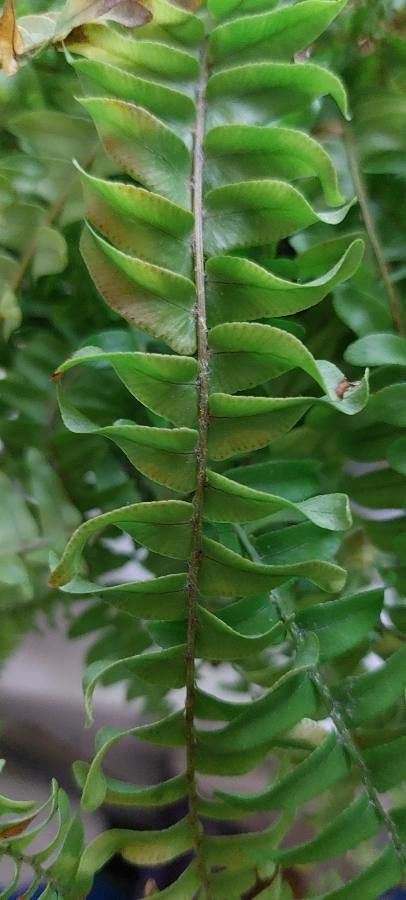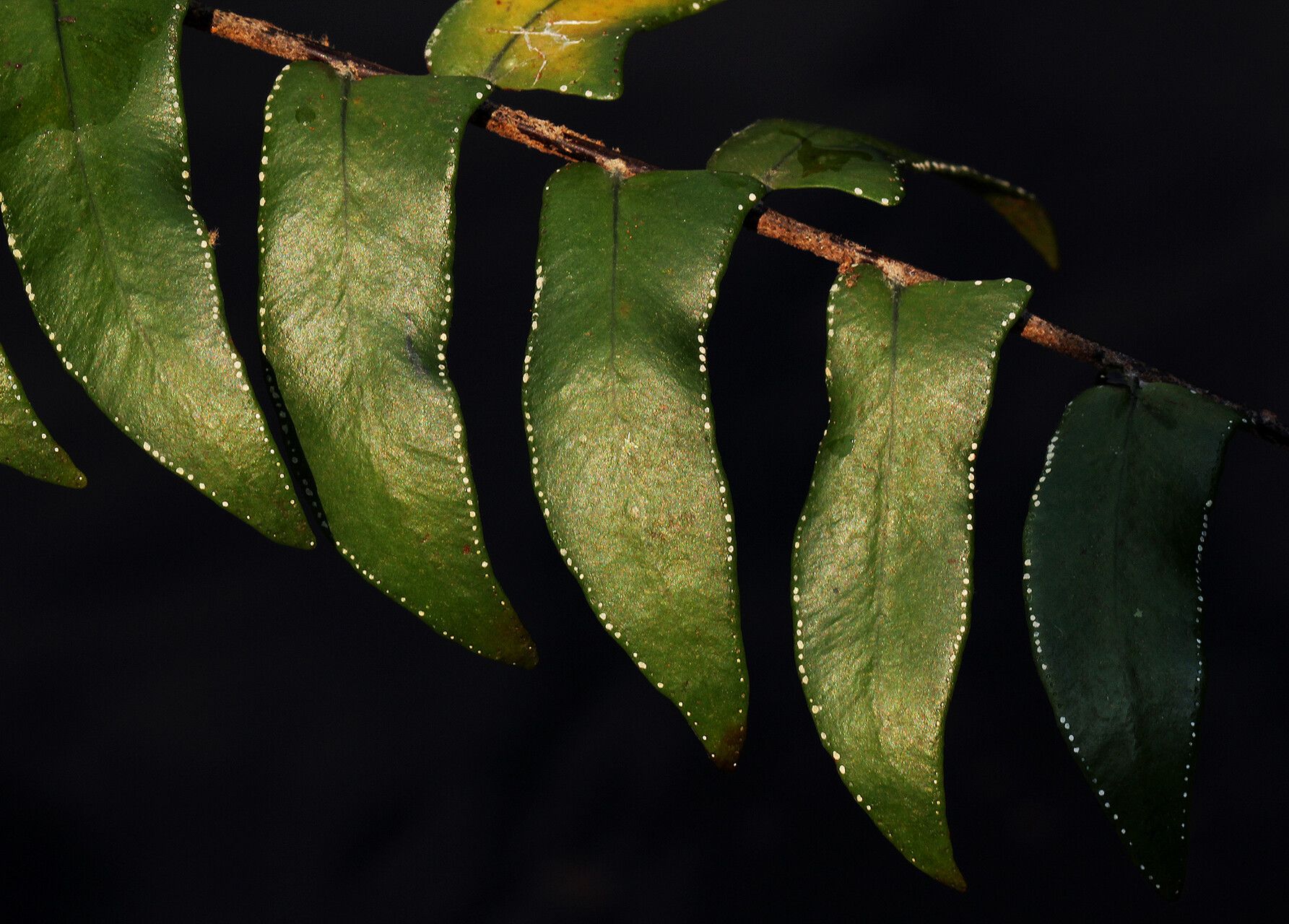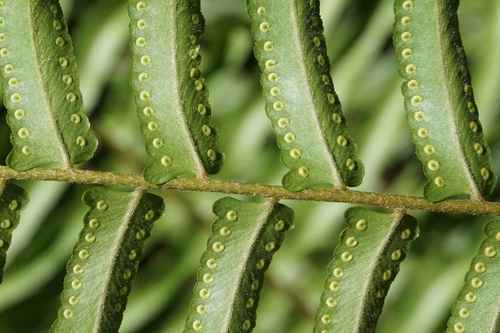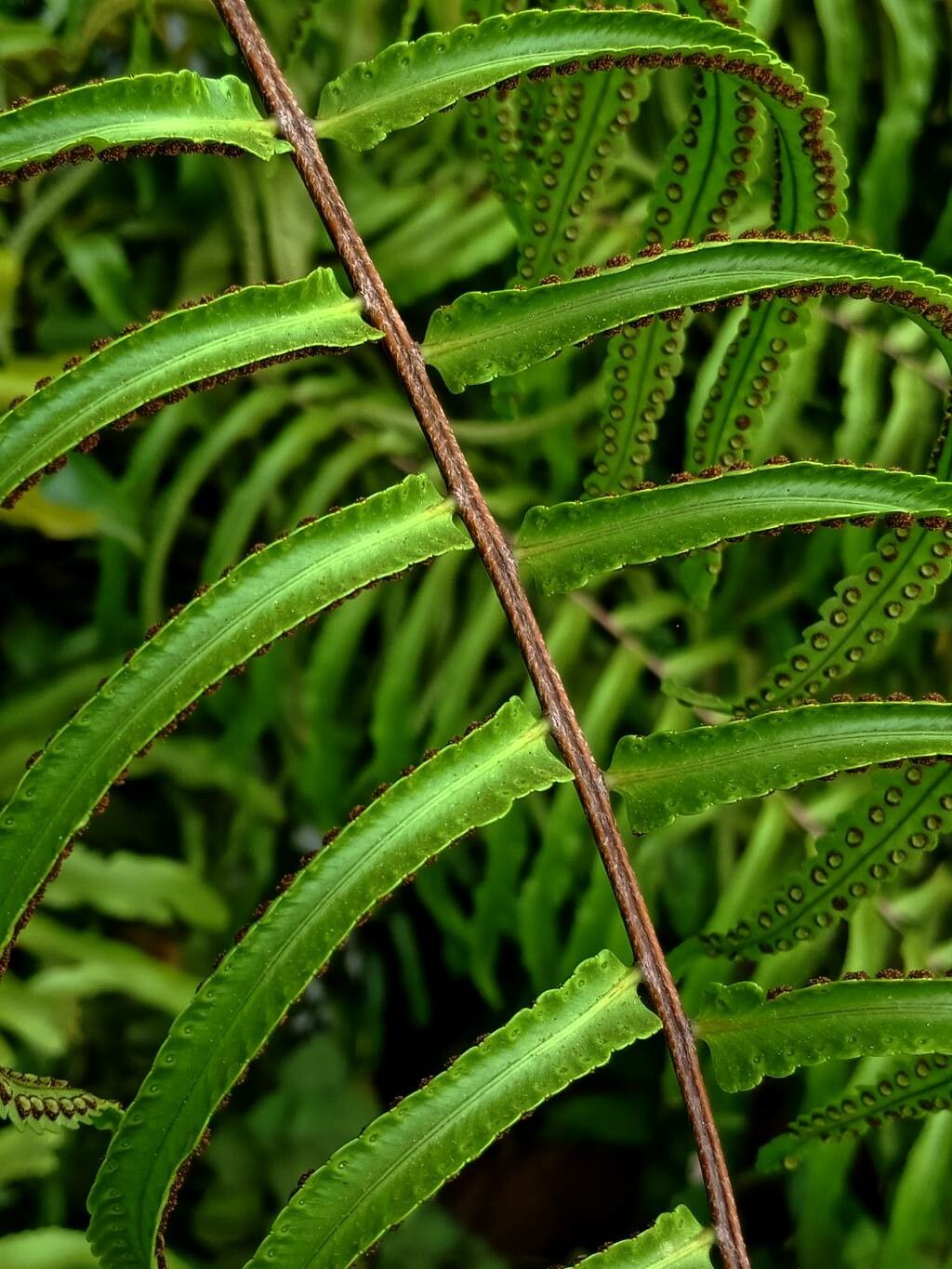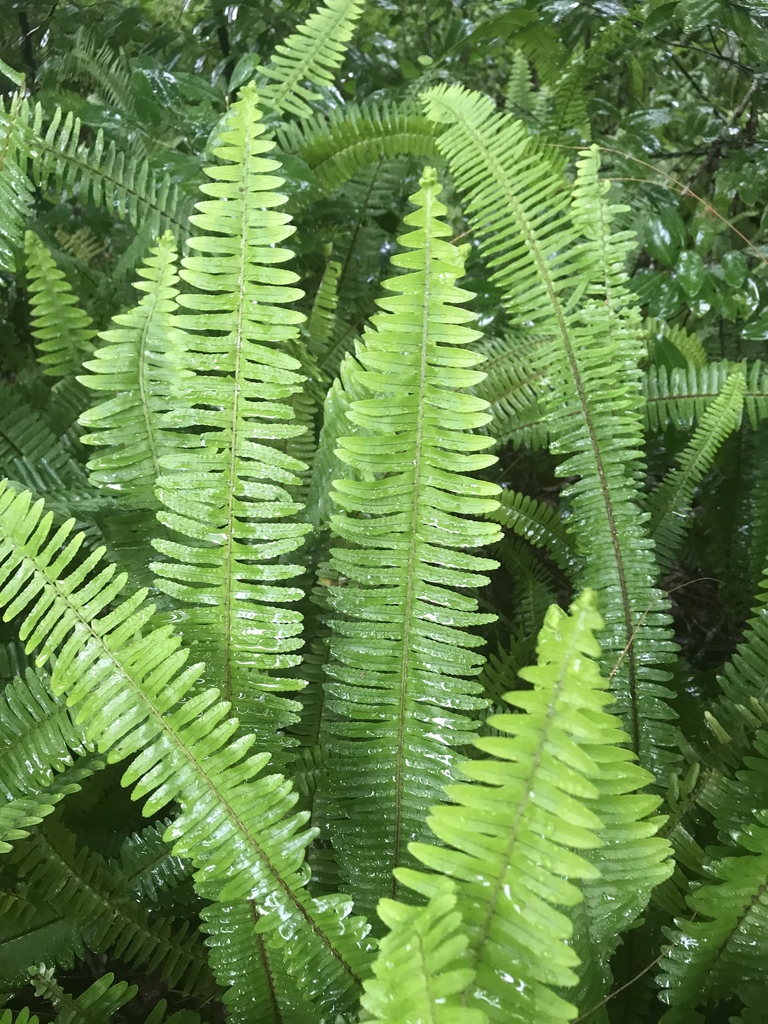
Nephrolepis exaltata, known as the sword fern or Boston fern, is a species of fern in the family Lomariopsidaceae (sometimes treated in the families Davalliaceae or Oleandraceae, or in its own family, Nephrolepidaceae). It is native to the Americas. This evergreen plant can reach as high as 40–90 centimetres (16–35 in), and in extreme cases up to 1.5 metres (4 ft 11 in). It is also known as the Boston swordfern, wild Boston fern, Boston Blue Bell Fern, tuber ladder fern, or fishbone fern.
The Boston swordfern gets its name from its distinctive leaves and an interesting piece of history. If you take a close look at its leaves, you'll notice they gradually narrow from the base to the tip, resembling a sword. This characteristic is why it's called a swordfern. The "Boston" in its name comes from an event in 1984, when the plant was shipped from Philadelphia to Boston. During this time, the leaves transformed, becoming more elegant in appearance. Thus, it became known as the Boston swordfern.
Boston fern typically resists disease well and encounters relatively few insect pests. Its care is considered challenging because it needs a consistently moist atmosphere and frequent watering. At the same time, the roots can rot if the plant is overwatered or kept in a poorly ventilated space. This fern is better suited to someone with some growing experience, since many people can keep it alive for a time. Nevertheless, it may struggle to thrive, and its leaves can dry out and become less healthy as time passes.
How to keep Nephrolepis Exaltata.
Light
The Boston fern does best with moderate sunlight but can cope with either low or abundant light. Its native habitat includes changing light conditions, which encourages adaptability in its growth. Too much sun can discolor the leaves, while too little may slow its development.
Water
The Boston fern, native to humid environments, flourishes in consistently moist, well-drained soil without becoming waterlogged. To keep the plant healthy, it's important to water it regularly, about twice a week. Additionally, misting the leaves helps to mimic its natural tropical conditions, promoting vibrant and healthy fronds. This makes the Boston fern a popular choice for indoor plant enthusiasts.
Humidity
This plant needs special care because it loves high humidity levels of 60-80% or more. The best way to achieve this is by placing a humidifier near the plant. Daily misting is also essential! Make sure the room has good ventilation.
Temperature
The boston fern is native to tropical regions and prefers temperatures of 68 to 100 ℉ (20 to 38 ℃). In the growing season it can tolerate higher temperatures if provided with sufficient moisture and humidity. In cooler months, it may benefit from being moved to a warmer location or given supplemental heat.
Fertilizer
Fertilize your Boston fern every two weeks during the growing season, which is from spring to early autumn. Use a diluted high-nitrogen fertilizer for best results. In the winter, reduce fertilization to once a month. Be careful not to over-fertilize, as this can cause root burn. You can use either liquid or granular fertilizer, making sure to distribute it evenly. Keep an eye on your fern's growth and adjust the feeding schedule as needed.
Pruning
The Boston fern is known for its lush, arching fronds. To keep it healthy and maintain its shape, it's best to prune it in early spring. Be sure to use sterilized tools for clean cuts. Proper pruning will enhance airflow, reduce pests, and promote the plant's overall health, all while ensuring a balanced appearance.
Pot & Repot
When repotting a Boston fern, select a pot 1-2 inches (2.5–5.1 cm) larger with good drainage. Use a well-draining potting mix. Repot in spring or fall, making sure the root ball is slightly lower than the rim of the flower pot. Water thoroughly after repotting and place it in a warm spot with indirect sunlight.
Toxicity
The Boston plant is non-poisonous and safe to have around either humans or pets.
Further reading →
The toxicity and danger assessments provided are for reference only. We do not assure their accuracy, so it's crucial not to depend on them. Seek professional advice when necessary for accurate guidance.
Botanical profile.
- Plant Type
- Fern
- Life Cycle
- Perennial
- Genus
- Nephrolepis
- Family
- Polypodiaceae
- Hardiness Zone
- 9-12
- Mature Height
- 0.4 m to 2.5 m
- Mature Spread
- 61 cm to 91 cm
- Leaf Color
- Green
- Leaf Type
- Evergreen
- Planting Time
- Spring, Summer, Autumn
- Native Area
- Colombia, Bahamas, Cuba, Honduras, Haiti, Bolivia, Brazil, Nicaragua, Ecuador, Dominican Republic, Costa Rica, Jamaica
Other names.
Reader questions.
When Should I Water My Boston Fern?
Timely watering is crucial for the health and growth of a Boston Fern. The primary indicators to water include dryness of the top 1-2 inches of soil, drooping or firmness loss in fronds, browning of frond edges, and curling of fronds. However, it's important to avoid watering too soon or too late to prevent soil waterlogging and root rot or irreversible damage due to prolonged dryness.
Why should I add fertilizer to my Boston fern?
Fertilizing your Boston fern is important for multiple reasons. Firstly, it provides the necessary nutrients for healthy new growth. Secondly, it supports the wellness of existing growth and enhances the plant's ability to withstand diseases and pests.
What are the sunlight requirements for a Boston fern?
The Boston fern needs partial to full sun exposure, amounting to about 3-6 hours of sunlight daily. It can also adapt to conditions with more than 6 hours of sunlight but thrives under moderate exposure. It's vital to observe the movement of sunlight through your garden to choose spots with the ideal balance of light and shade, ensuring your Boston fern's health and happiness.
What is the ideal temperature range for a Boston Fern?
The Boston Fern, native to tropical regions, thrives best in temperatures ranging from 68 to 100°F (20 to 38°C). During the growing season, it can tolerate higher temperatures provided it has enough moisture and humidity. In cooler months, the plant benefits from being moved to a warmer location or receiving supplemental heat. Boston Ferns are extremely sensitive to cold, and exposure to temperatures below 20°C can be harmful, with temperatures approaching 0°C being detrimental to the plant's health.
How Should I Water My Boston Fern?
Boston Fern requires cautious watering to maintain its health. The soil should remain damp but not waterlogged. Bottom watering is recommended to ensure the roots receive adequate moisture without promoting waterlogged conditions or fungal growth. Misting helps increase humidity around the fern, using lukewarm water to avoid shocking the plant's roots. Ensure water is directed at the soil and avoid wetting the center of the fern or leaving the plant in standing water to prevent fungal growth.
When should I fertilize my Boston fern?
The feeding schedule for a Boston fern depends on its location. Although it is not very hungry, the plant does need some extra nutrients. Outdoor ferns should be fertilized once in the spring, while indoor ferns should be fed monthly from spring to summer.
How do different light conditions affect Boston ferns?
Boston ferns are quite adaptable to various light conditions, thriving under moderate solar exposure yet capable of managing in both minimal and generous sunlight. Their ability to adapt originates from their varied original environment. However, excessive sunlight can lead to leaf discoloration, signifying harm, while insufficient light might halt or stagnate its growth.
How should I care for my Boston Fern during the winter?
To care for your Boston Fern during the winter, it is advised to bring outdoor-grown plants indoors, placing them near a bright window but away from direct heat sources like heaters. Maintaining indoor temperatures above 20°C is crucial for the plant's growth during the colder months. Any exposure to temperatures nearing 0°C can severely impact the fern, so keeping it in a warm environment is beneficial.
How Much Water Does Boston Fern Really Need?
The amount of water needed for a Boston Fern depends on plant size, root depth, and pot size, aiming for consistently moist soil without causing waterlogging. For a standard 5-6 inch pot, watering until the top inch of soil becomes moist and ensuring excess water can drain out should suffice. Watch for yellowing or wilting fronds as signs of under-watering and brown frond tips or a soft, black plant base as indicators of overwatering or poor drainage.
When should I not put fertilizer on my Boston fern?
To prevent excessive growth before winter, avoid fertilizing after early autumn. Additionally, refrain from fertilizing Boston fern during hot and dry periods because dry soil does not effectively deliver fertilizer. Fertilization during these times can also stimulate growth that requires more water, which may not be available. It is advisable to apply fertilizer earlier in the season when temperatures are cooler. Lastly, be cautious about unintentionally giving Boston fern a double dose of fertilizer as it can absorb fertilizer from nearby plants or lawns.
What are the recommendations for artificial lighting with Boston ferns?
Indoor Boston ferns require adequate artificial lighting, especially when natural sunlight is lacking, like in winter or less sunny spaces. LED lights are recommended because they can be customized to provide necessary wavelengths of light. The requirements are 30-50W/sq ft for full sun plants, 20-30W/sq ft for partial sun, and 10-20W/sq ft for full shade plants. The artificial light should be placed 12-36 inches above the plant, mimicking natural sunlight, for 8-12 hours per day.
What should I do if my Boston Fern is affected by low temperatures?
If your Boston Fern suffers from low temperature exposure, the first step is to trim off the frost-damaged parts to help the plant recover. Promptly move the plant indoors to a warm area to offer cold protection. Placing the fern near a south-facing window ensures it receives ample sunlight, which is essential for its recovery. Additionally, avoid placing the fern near heaters or air conditioning vents, as this can cause the air around the plant to become excessively dry.