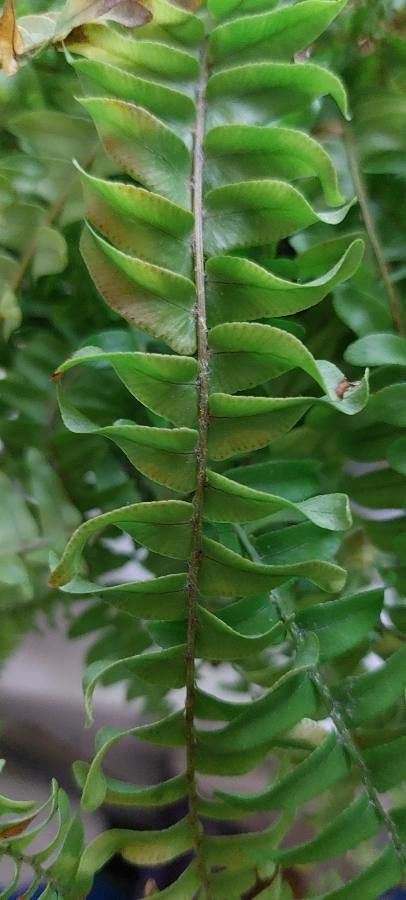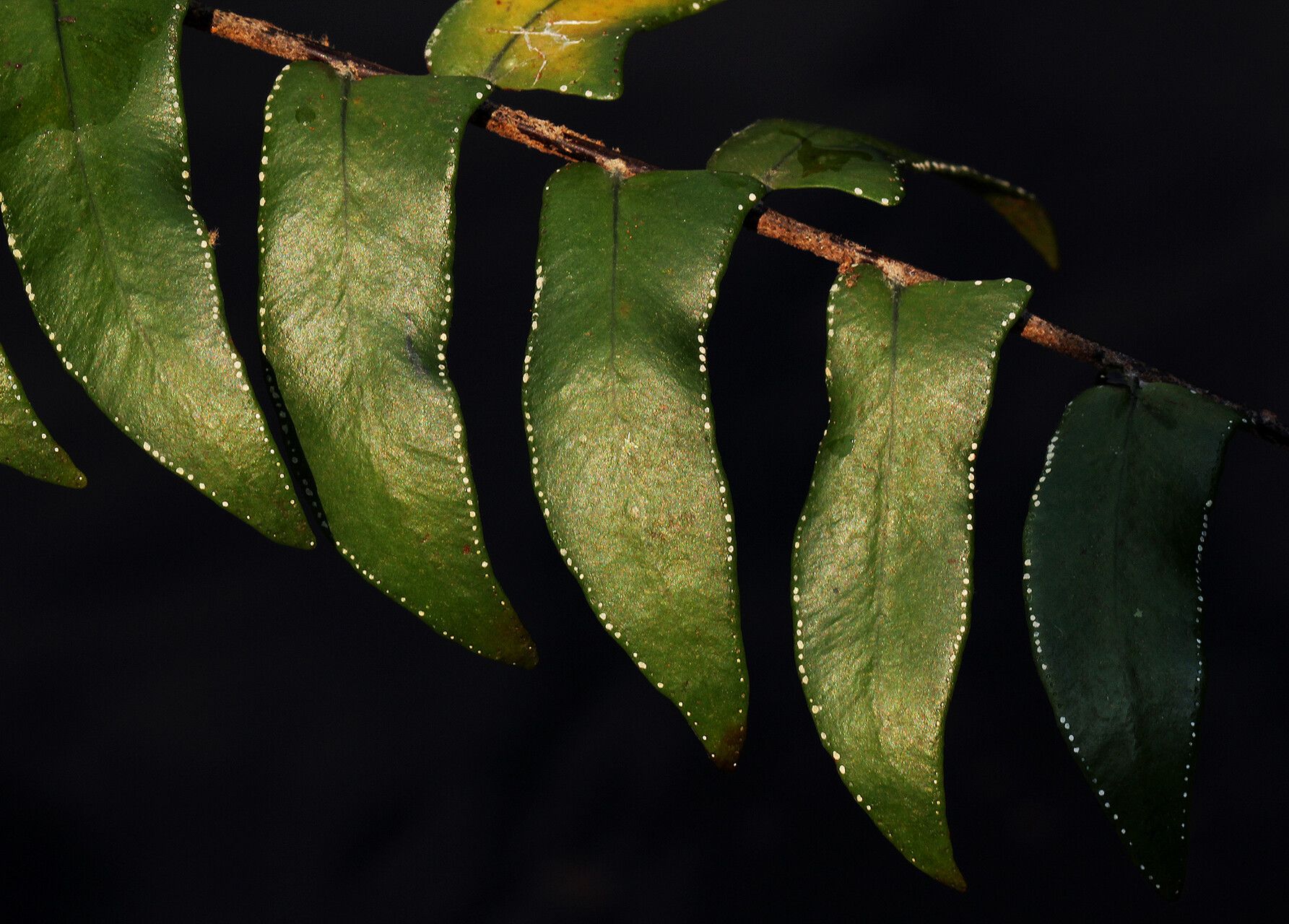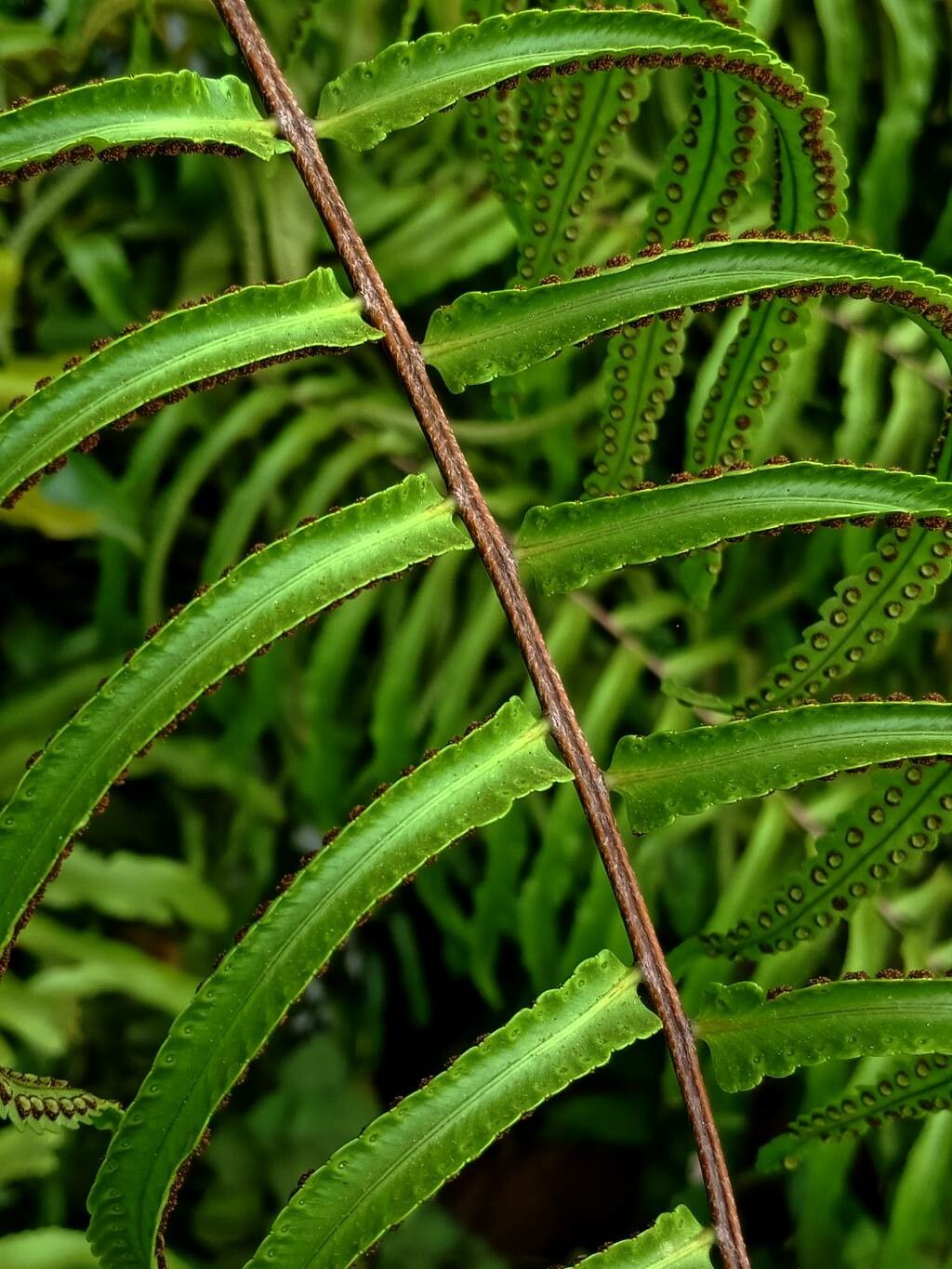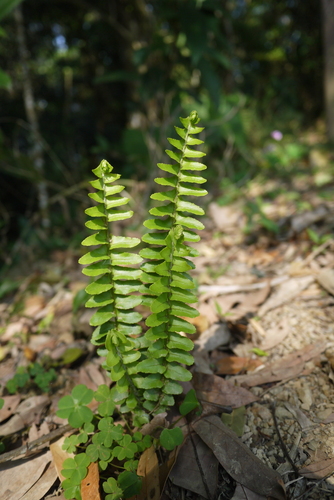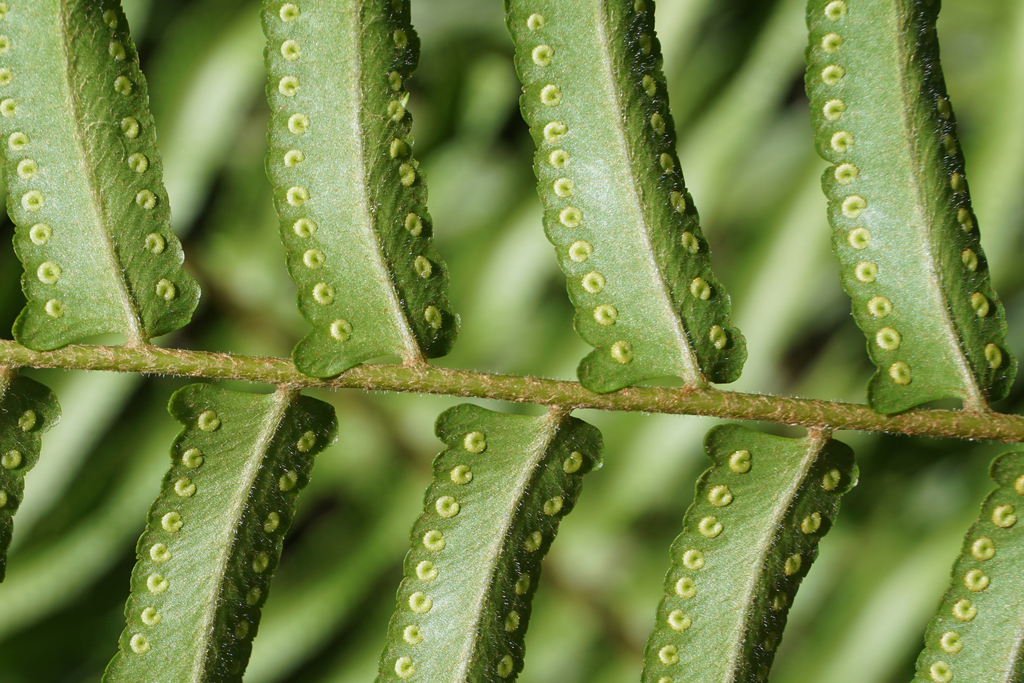
Nephrolepis biserrata, commonly known as the sword fern, is a species of fern in the family Lomariopsidaceae. It is native to tropical and subtropical regions of Africa, Asia, Australia, and the Pacific Islands. The plant features long, dark green fronds that can grow up to 1 meter in length. These fronds are pinnate with serrated edges, giving them a sword-like appearance.
The sword fern is a popular houseplant due to its attractive foliage and ease of care. It thrives in bright but indirect light, moderate humidity levels, and well-draining soil. While it can tolerate some drought, the plant prefers consistent moisture.
Indigenous people have used the plant for centuries for its medicinal properties, particularly for its anti-inflammatory effects, which are beneficial for treating wounds and reducing fever, among other uses.
Nephrolepis exaltata var. bostoniens is a plant known for its cascading foliage. In its early stages, the plant grows upright with graceful elegance. As it matures, the branches begin to droop, making it an ideal candidate for a hanging display. FUN FACT · FROM THE LIBRARY
Overall, Nephrolepis biserrata is an attractive houseplant that requires minimal care, making it an ideal choice for beginners or anyone seeking low-maintenance plants for their home or office.
Giant sword fern is generally resistant to disease and has relatively few insect pests. Its care is considered difficult because it requires a moist environment and frequent watering. However, the roots are susceptible to rot if they are overwatered and the surroundings lack good ventilation. Giant sword fern is appropriate for people with some growing experience, as most can keep it alive for a certain period. Even so, the plant may have difficulty thriving and its leaves can dry out and become less healthy over time.
How to keep Nephrolepis Biserrata.
Light
The giant sword fern favors a blend of sun and shade, yet it can tolerate both full sun and complete shade, making it adaptable to a variety of lighting conditions. Its native habitat enabled it to thrive despite fluctuating light intensities. Too much or too little sunlight can cause stunted growth or faded leaves.
Water
The giant sword fern is native to humid subtropical and tropical regions, where it thrives in consistently moist environments. It prefers soil that remains evenly moist and needs to be watered weekly. Being an evergreen plant, it benefits from regular misting to mimic its natural humidity, which supports its lush foliage.
Humidity
This plant needs special care because it loves high humidity levels of 60-80% or more. The best way to achieve this is by placing a humidifier near the plant. Daily misting is also essential! Make sure the room has good ventilation.
Temperature
The giant sword fern does well at temperatures of 68 to 100 ℉ (20 to 38 ℃). It prefers a warm, humid native environment but can tolerate lower temperatures in winter. For optimal growth through the seasons, set the temperature to 65–80 ℉ (18–27 ℃) in winter and 75–90 ℉ (24–32 ℃) in summer.
Fertilizer
The giant sword fern benefits from a high-nitrogen fertilizer applied monthly during the growing season to improve its foliage density. Use a quarter-strength solution, and during the winter, reduce the application to every other month. Always water the plant thoroughly after fertilizing to prevent root burn. For beginners, slow-release granular fertilizers are recommended, while experienced gardeners might prefer to use liquid fertilizers.
Pruning
To help your giant sword fern thrive, start by pruning it in early spring. Remove any dead or damaged fronds to improve air circulation and stimulate new growth. Regular trimming not only helps maintain the plant's shape and control its size, but also reduces the risk of pests and diseases. This encourages a healthier and denser plant throughout the growing season.
Pot & Repot
When repotting a Giant sword fern, select a pot 1–2 inches (2.5–5.1 cm) larger with plenty of drainage. Use a well-draining potting mix. Repot in spring or fall, making sure the root ball is positioned slightly lower than the rim of the flower pot. Water thoroughly after repotting and place the plant in a warm spot with indirect sunlight.
Toxicity
It will always appear green as long as you find an area with light shade and moist soil. The macho fern appears to be one of the least poisonous possibilities for ferns. Fortunately, cats cannot be poisoned by the fern. This doesn't imply that they should constantly consume vast amounts of the plant, but if they eat a few fern leaves every now and then, nothing bad should happen to them.
Further reading →
The toxicity and danger assessments provided are for reference only. We do not assure their accuracy, so it's crucial not to depend on them. Seek professional advice when necessary for accurate guidance.
Botanical profile.
- Plant Type
- Fern
- Life Cycle
- Perennial
- Genus
- Nephrolepis
- Family
- Polypodiaceae
- Hardiness Zone
- 10-11
- Mature Height
- 1.37 m
- Mature Spread
- 1.83 m
- Leaf Color
- Green
- Leaf Type
- Evergreen
- Planting Time
- Spring, Summer
- Native Area
- Sri Lanka, Burkina Faso, Belize, India, Mexico, Guatemala, Madagascar, Dominican Republic, Nigeria, Fiji, Uganda, Tanzania, Benin, Sierra Leone, Indonesia, Cameroon, Mozambique, Ethiopia, Suriname, Central African Republic, Malawi, Honduras, Peru, Philippines, Bangladesh, Laos, Panama, China, Colombia, Japan, Togo, El Salvador, Senegal, Côte d'Ivoire, Ecuador, Costa Rica, Gambia, Congo (DRC), Angola, Malaysia, Vanuatu, Kenya, Jamaica, Zimbabwe, Cuba, Argentina, Cambodia, Equatorial Guinea, Liberia, Venezuela, Brazil, Ghana, Congo, South Africa, Zambia, Sudan, Guinea, Bolivia, Vietnam, Myanmar, Guyana, Nicaragua, Thailand, Gabon
Other names.
Reader questions.
What should I do if I give my Giant sword fern too much or too little water?
The Giant sword fern can be overwatered if it sits in water or if the planter lacks drainage holes. This can prevent the roots from getting nutrients and moisture and can lead to diseases. Signs of overwatering are wilted and yellow leaves, drooping stems, or soft and mushy stems. However, it's important to check for other causes since it's hard to give this plant too much water. On the other hand, the Giant sword fern can also be underwatered if not monitored closely. In dry conditions, it can quickly turn brown and crispy. In extreme cases, it may appear completely dried up, but if there are still healthy roots, the plant can be saved. Cut off the dry and dead stems, water thoroughly, and return the plant to its usual spot. With proper care, it can bounce back and start growing new fronds, although it may take several months to reach its previous size.
Why should I put plant food on my Giant sword fern?
Fertilizing your Giant Sword Fern is important for a few reasons. Firstly, it supplies your plant with essential nutrients that are necessary for healthy new growth. Additionally, these extra nutrients also benefit the health of the existing leaves and can enhance your plant's ability to defend against diseases and pests.
What are the sunlight requirements for the Giant Sword Fern?
The Giant Sword Fern exhibits adaptability to various lighting conditions due to its preference for a mix of sun and shade. It can tolerate full illumination as well as complete shade, making it versatile for different lighting environments. However, too much or too little sunlight might result in stunted growth or faded leaves, suggesting that while adaptable, the plant has optimal light conditions that should be adhered to for best results.
What is the best temperature for Giant sword fern?
To help your tropical plants thrive, it's best to maintain a temperature range of 75℉ to 90℉ (25-32℃). While different species can tolerate temperatures outside this range, sticking within a few degrees of these limits will ensure optimal growth. However, there are extreme temperature limits to be aware of. Anything below 50℉ (10℃) or above 95℉ (35℃) can hinder growth and cause issues with the leaves and stems. Low temperatures are particularly damaging, as even a light frost can lead to the death of your tropical plants. In fact, cellular death can occur rapidly, with some species dying within 12 to 24 hours.
How should I water my Giant sword fern correctly?
To properly care for your Giant sword fern, it is important to provide consistently moist soil, replicating its natural habitat. This may require watering every one or two days to prevent the plant from drying out. Watch out for even slight dryness on the top layer of soil as an indication that watering is needed. When watering, make sure to thoroughly soak the soil until water drains out of the pot's bottom. Afterward, be sure to remove any excess water to prevent the pot from sitting in a puddle. By following these steps, you can ensure that the soil remains adequately hydrated.
When should I fertilize my Giant sword fern for the best results?
The feeding schedule for Giant sword fern depends on its location. Although it doesn't have a high appetite, it does need some extra nutrients. Outdoor plants only need fertilizing in the spring, while indoor plants should be fed monthly from spring to summer.
How does one compensate with artificial lighting for indoor plants not receiving enough sunlight?
When natural sunlight is inadequate, especially during winter or in less sunny spaces, artificial lighting becomes essential for indoor plants. LED lights are recommended due to their ability to provide specific wavelengths needed by the plants. For full sun plants, 30-50W/sq ft of artificial light is needed; partial sun plants require 20-30W/sq ft, and full shade plants need 10-20W/sq ft. The light source should be placed 12-36 inches above the plant, and it's necessary to mimic natural daylight hours, typically providing 8-12 hours of light per day to promote healthier and faster plant growth.
Does the giant sword fern need different temperatures at different stages of growth?
The Giant sword fern does not need temperature changes to go through different growing phases, but it is still important to remain consistent. Fluctuating temperatures can slow down its growth, regardless of its current phase, so it is best to keep it in a controlled environment. The optimal temperature range of 75℉ to 90℉ (25-32℃) is crucial to maintain, with a preference for staying above the lower limit. While temperatures above 90℉ (32℃) are not ideal, the tropical plant can handle it reasonably well. However, temperatures below 50℉ (10℃), and especially below 40℉ (5℃), will start to harm this plant that thrives in heat.
What do I need to think about when I water my Giant sword fern?
The frequency of watering your Giant sword fern is influenced by the humidity levels in the air. Higher humidity means less frequent watering. Avoid placing the plant near heating or cooling vents as it will dry out quickly. Keep the fern in a location protected from drafts. It prefers dappled and indirect sunlight and temperatures between 55-80 degrees F (13-27 degrees C). Avoid placing it in a warm and sunny spot on a windowsill as it may become dehydrated quickly. Rainwater or distilled water are best for this plant, although tap water works fine in most places. Tap water may cause brown leaf tips due to mineral and chemical content. Avoid using small pots as they dry out quickly. Provide the fern with more space in a larger pot. Consider using a self-watering planter to keep the soil consistently moist. This will save you from constantly watering the fern and provide a constant supply of water to the roots.
When is it best to not add fertilizer to my Giant sword fern?
Avoid fertilizing after early autumn, as this can lead to excessive growth before winter. Additionally, refrain from fertilizing Giant sword fern during hot and dry periods, as dry soil doesn't effectively deliver nutrients and the resulting growth will demand more water that may not be accessible. It is advisable to use fertilizer earlier in the season when temperatures are cooler. Lastly, be careful not to inadvertently give ferns a double-dose of fertilizer, as they can absorb nutrients from nearby plants or lawns.
What symptoms indicate a Giant Sword Fern's poor adaptation to its lighting environment?
In a suboptimal lighting environment, a Giant Sword Fern may showcase several symptoms. Delayed growth or complete cessation of new leaf production can occur when the plant enters survival mode due to insufficient light. Chlorosis, or the yellowing of leaves, signals excessive sunlight or the breakdown of chlorophyll, affecting photosynthesis. Sunscald, leaf curling, wilting, and leaf scorching are other signs of poor light adaptation, each indicating damage from too much sunlight exposure or the plant's strategies to minimize water loss and damage.
Does the Giant sword fern require different temperatures during different seasons?
The giant sword fern doesn't require different temperatures for different seasons. The key to taking care of it throughout the year is maintaining an optimal temperature range. To achieve this, it's recommended to keep the plant indoors where you have control over the temperature, regardless of the climate outside. Light is also crucial for tropical species, including the giant sword fern. These plants prefer partial side-level sun exposure, meaning they should receive dappled or filtered light. The best option when growing them indoors is bright but indirect light. Exposing the plant to excessive direct sunlight can harm its leaves and hinder its growth potential.