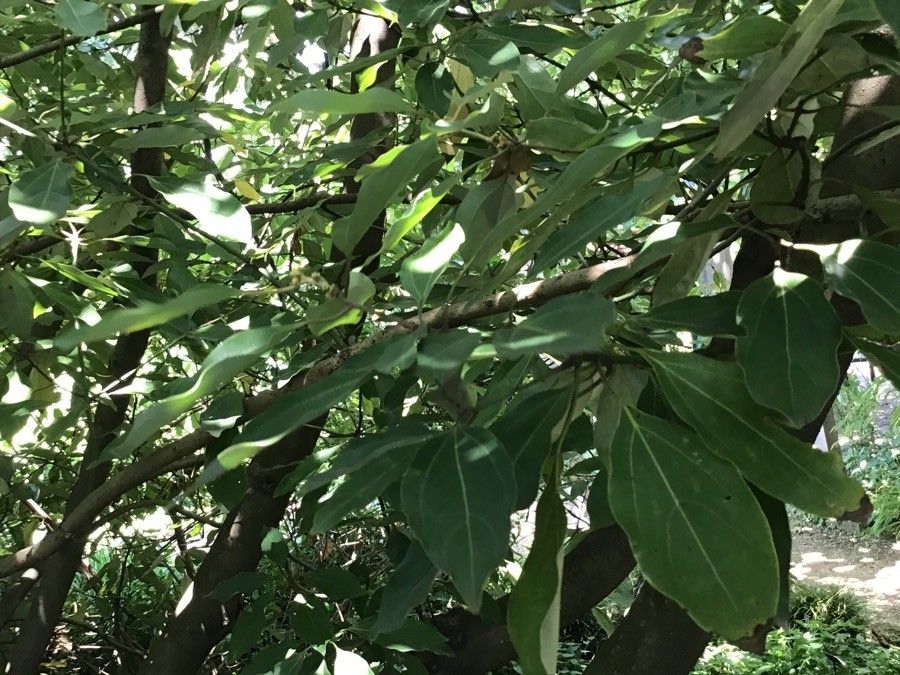
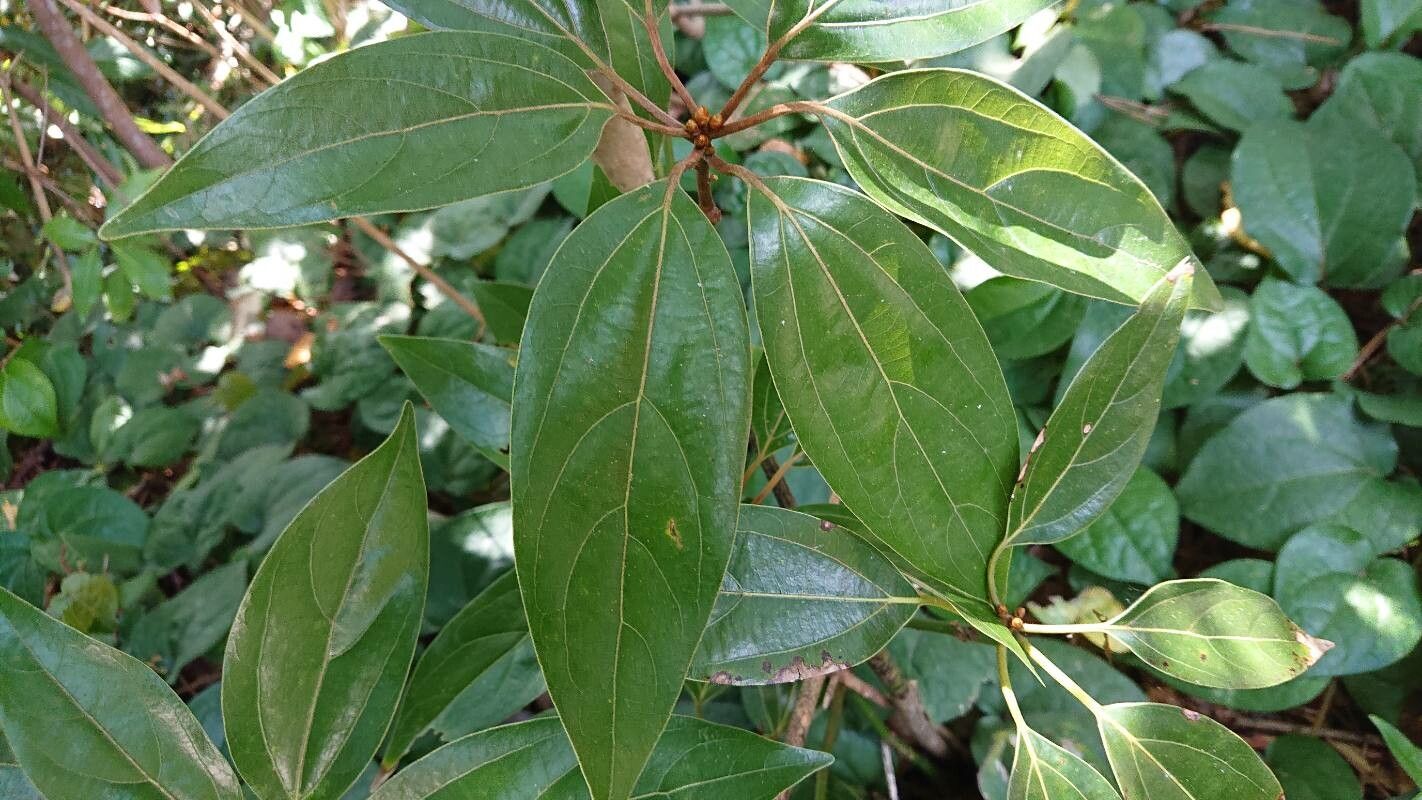
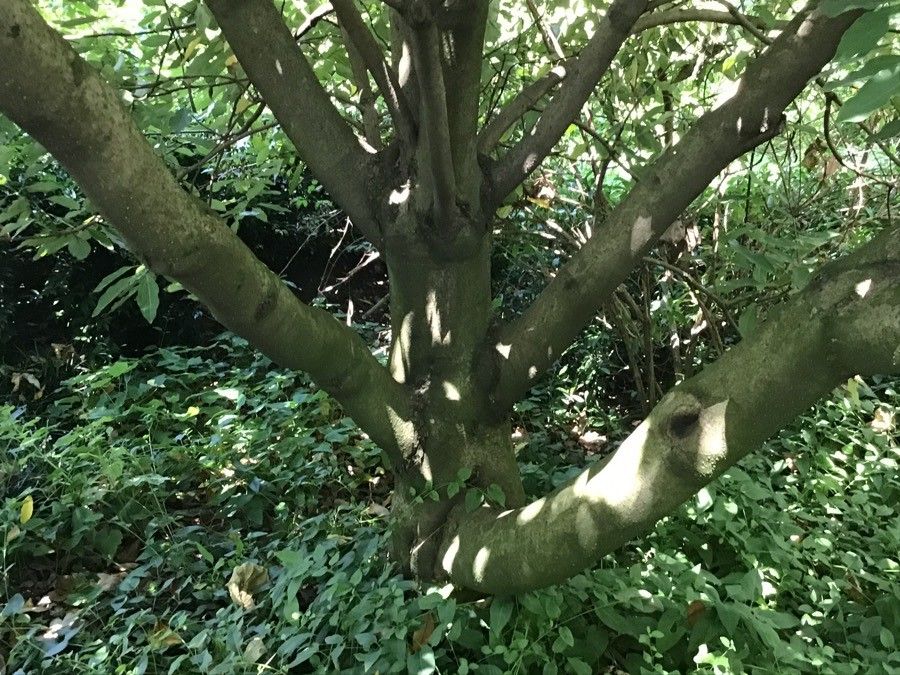
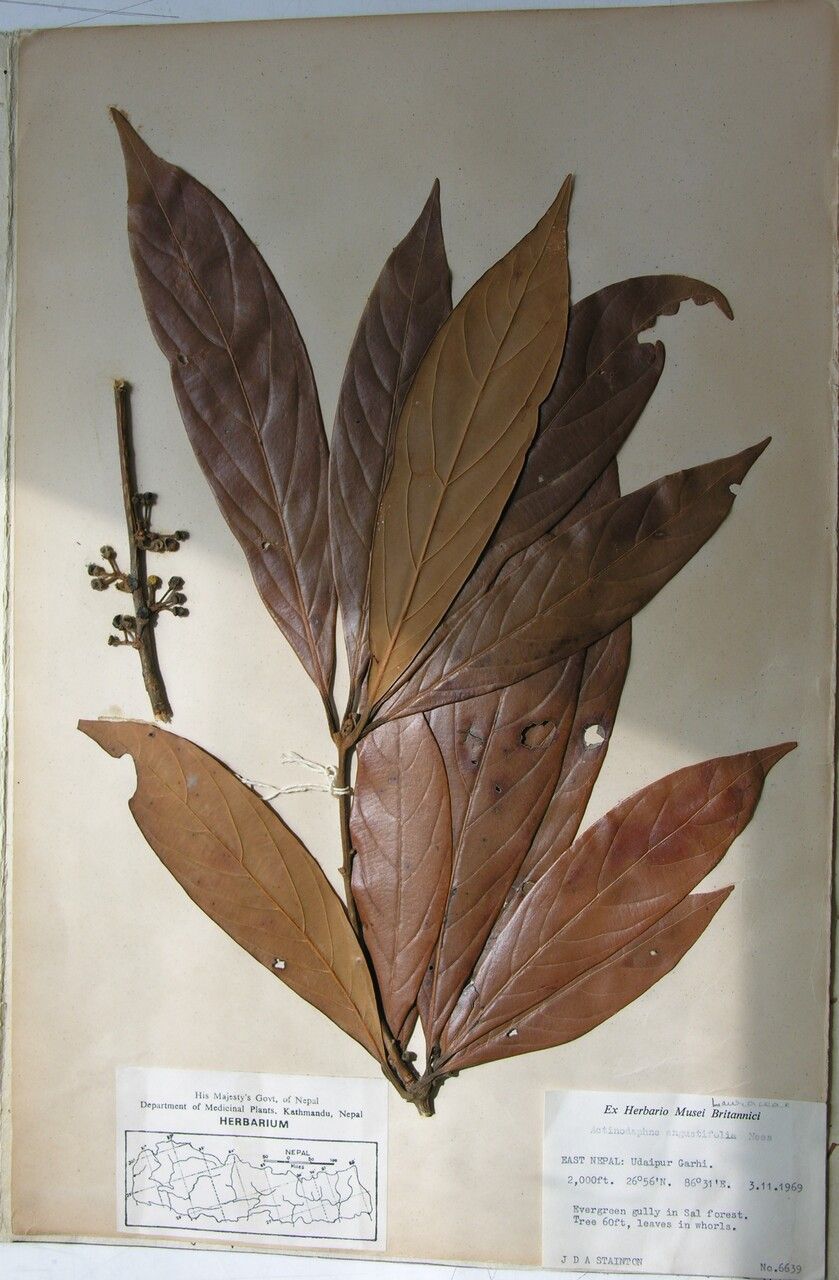
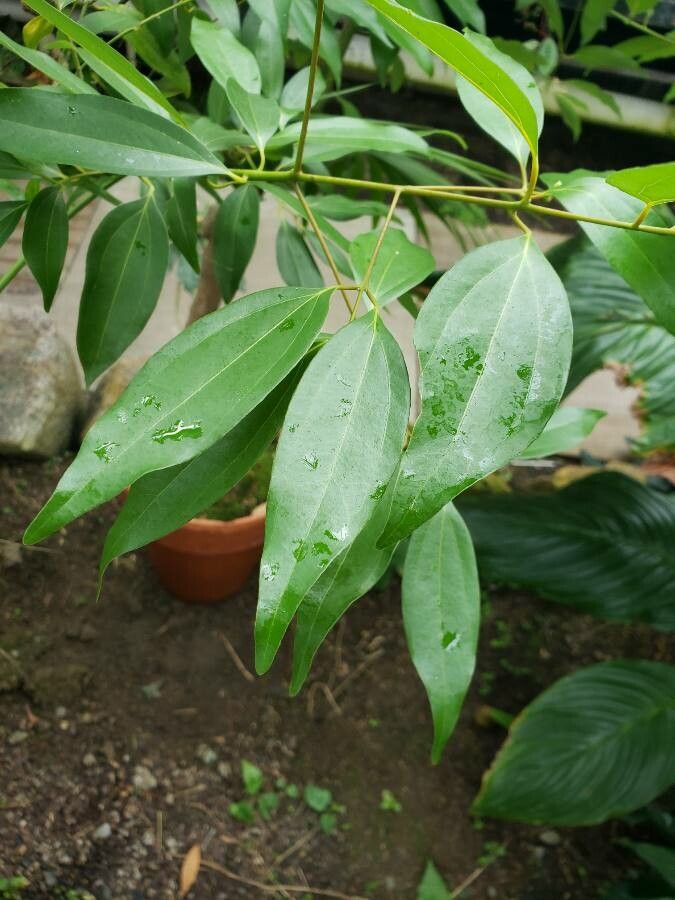
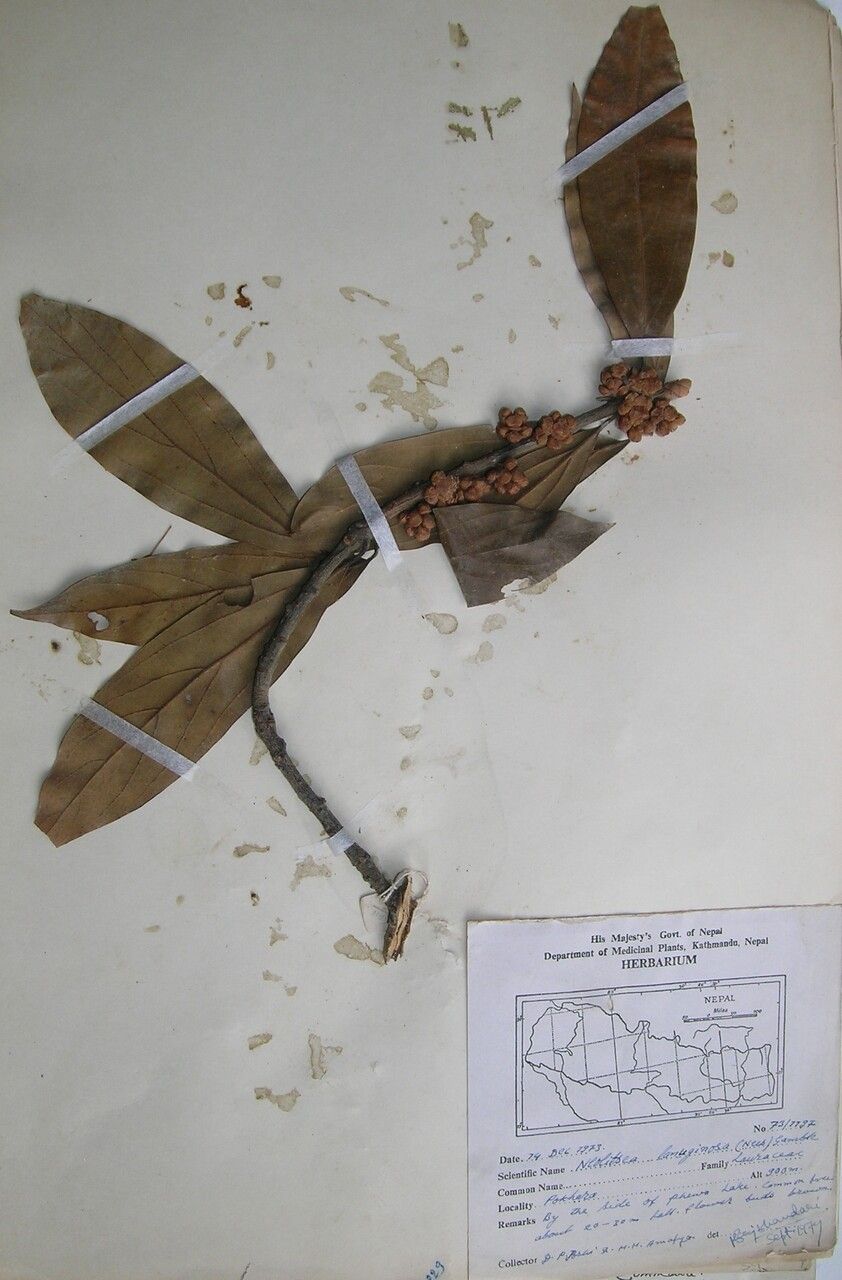
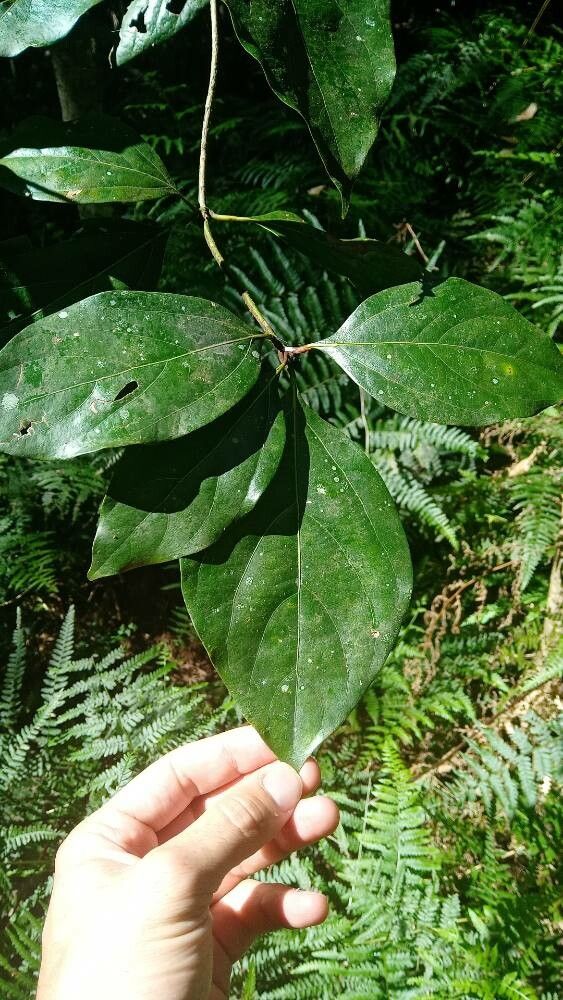
Neolitsea sericea is a species of tree in the family Lauraceae. It is found in China, Taiwan (Orchid Island, Green Island), south Korea, and Japan. Its natural habitat is on forest margins and slopes, and it is often found in well-progressed secondary forests.It is a medium-size tree, growing up to 10 m (33 ft) tall. Its leaves are evergreen, and distinctly whitened on the back. It produces yellow flowers in the fall, and its fruit is a red berry.Neolitsea sericea contains two varieties, Neolitsea sericea var. sericea and Neolitsea sericea var. aurata. The latter may also be considered as its own species, Neolitsea aurata.
Shiro-damo is resistant to disease and generally not susceptible to illnesses. In terms of care, this plant is fairly low-maintenance. When grown outdoors, it needs only minimal watering, and larger plants usually do not require pruning. Smaller plants, however, should be pruned after they finish blooming. Shiro-damot is suitable for anyone who has an outdoor area, such as a garden or a deck, and it does not demand much experience in plant care.
How to keep Neolitsea Sericea.
Light
Shiro-damo does best with strong sunlight but tolerates light that is slightly filtered or diffused, mirroring its natural habitat. Too much or too little sun can hinder both the plant's growth and its overall health.
Water
Shiro-damo, which comes from areas with varying humidity levels, has a moderate tolerance to drought. It thrives best when the soil maintains consistent moisture, so it should be watered every 2-3 weeks. This evergreen plant retains its leaf moisture throughout the year. Its waxy leaf coating further aids in retaining water by reducing transpiration.
Temperature
Shiro-damo is native to temperate climates and prefers temperatures between 59 and 100.4 °F (15 to 38 ℃). During extreme seasonal changes, adjustments to these conditions may need to be made to help it thrive.
Fertilizer
Fertilize your Shiro-damo in early spring to encourage healthy growth. Consistent feeding improves overall health, producing vigorous growth, better tolerance of harsh conditions, and increased resistance to diseases and pests. Keep a regular fertilization schedule for your Shiro-damo to preserve vibrant, deep-colored foliage and a lush appearance.
Pruning
Shiro-damo is known for its glossy, evergreen leaves and aromatic qualities. To encourage healthy growth, prune it during the dormant period from early to late winter. Be sure to remove any dead or diseased branches, and thin out densely packed areas to improve air circulation. Use clean, sharp tools to minimize the risk of infections.
Botanical profile.
- Plant Type
- Tree
- Life Cycle
- Perennial
- Genus
- Neolitsea
- Family
- Lauraceae
- Hardiness Zone
- 8-11
- Mature Height
- 10.06 m
- Mature Spread
- 6.1 m
- Leaf Color
- Dark Green, Olive Drab
- Leaf Type
- Evergreen
- Flower Color
- Yellow, Green
- Flower Size
- 0.25 cm to 0.51 cm
- Bloom Time
- Late spring, Early summer, Mid summer
- Planting Time
- Autumn
- Harvest Time
- Mid summer, Late summer
- Native Area
- South Korea, Japan, China
Other names.
Reader questions.
What are the sunlight requirements for Shiro-damo?
Shiro-damo requires full sunlight exposure to thrive, typically above 6 hours of sunlight daily. However, it can also tolerate partial sun, which means about 3-6 hours of sunlight. It's important to observe the sunlight's movement in your garden to ensure your Shiro-damo plants receive the right balance of light and shade, mimicking their native environment for optimal growth and happiness.
What is the ideal temperature range for Shiro-damo?
Shiro-damo, or Neolitsea sericea, thrives in a temperate climate with an ideal temperature range between 59 to 100.4 °F (15 to 38 °C). It can tolerate some degree of cold, generally not requiring additional measures if the temperature stays above -5°C. However, in regions experiencing temperatures below -5°C, it's crucial to implement temporary cold protection measures such as wrapping the plant in plastic film, fabric, or other materials, which should be removed once temperatures increase.
How does artificial lighting benefit indoor plants like Shiro-damo?
Artificial lighting is crucial for indoor plants, especially when natural sunlight is insufficient, such as in winter or less sunny spaces. It promotes faster, healthier growth by providing the necessary wavelengths of light. For Shiro-damo, which thrives in full to partial sunlight, artificial lights like LED can be customized to meet their specific needs. Depending on the plant's sunlight requirements, 30-50W/sq ft is recommended for full sun plants, 20-30W/sq ft for partial sun plants, and 10-20W/sq ft for full shade plants. The artificial light source should be placed 12-36 inches above the plant for 8-12 hours a day to mimic natural sunlight conditions.
How does Shiro-damo react to low temperatures?
Shiro-damo has a moderate tolerance to low temperatures, performing best when the temperature remains above 15°C. It can withstand winters as long as temperatures don't fall below -5°C. Drooping leaves might occur if temperatures plunge below -10°C, which can lead to recovery in mild situations or result in wilting and leaf drop in more severe cases. To mitigate damage from low temperatures, affected parts should be trimmed off, the plant wrapped with non-woven fabric or cloth, and a wind barrier erected to protect it from cold winds.
What are the symptoms of insufficient or excessive sunlight exposure in Shiro-damo?
Shiro-damo shows several symptoms when it doesn't get adequate sunlight or is exposed to excessive sunlight. Insufficient sunlight can lead to smaller new leaves, leggy or sparse growth, faster leaf drop, slower or no new growth, and lighter-colored or chlorotic (yellowing) leaves. Excessive sunlight exposure can cause chlorosis, sunscald (pale or necrotic spots on leaves), leaf curling (as a defense mechanism to reduce exposed surface area), wilting (due to increased water loss), and leaf scorching (brown, dry edges on leaves). Both conditions affect the plant's ability to photosynthesize and overall health.
What should be done if Shiro-damo experiences high temperatures?
During the summer, it's essential to ensure that Shiro-damo does not endure temperatures exceeding 38°C. Exposure to temperatures above 43°C can lead to lighter leaf color, dry and withered leaf tips, curled leaves, and increased susceptibility to sunburn. Counteracting the effects of high temperatures involves trimming away sunburned or dried parts of the plant, relocating it to a shaded area during midday and the afternoon, or using a shade cloth for protection. Additionally, maintaining soil moisture through watering in the morning and evening is vital.
How can I manage sunlight exposure for Shiro-damo indoors and outdoors?
Managing sunlight exposure for Shiro-damo involves several strategies, depending on the setting. Indoors, gradually moving the plant to a sunnier location each week until it receives at least 6 hours of direct sunlight daily is beneficial. Using a south-facing window and keeping curtains open during the day maximizes sunlight exposure. For large or non-movable plants, consider artificial lighting, keeping lamps on for at least 8 hours daily. Outdoors, similarly, gradually moving plants to sunnier spots and avoiding sudden changes in light intensity helps prevent sunburn. For affected parts by insufficient sunlight, it's crucial to note that those may not recover, but new growth following increased light exposure will be healthy. Additionally, reducing obstructions such as pruning obstructive branches and transplanting smaller plants to more sunny locations can improve sunlight access.