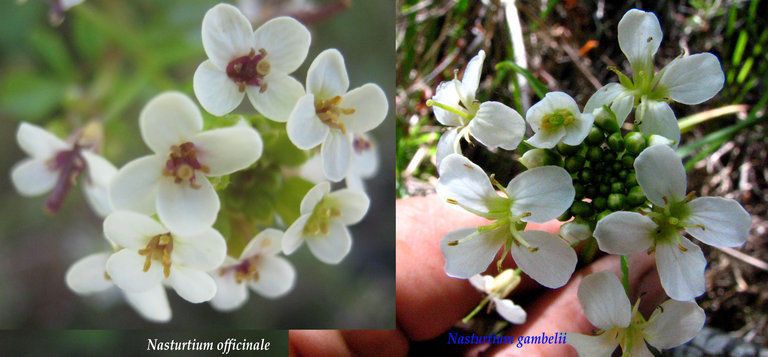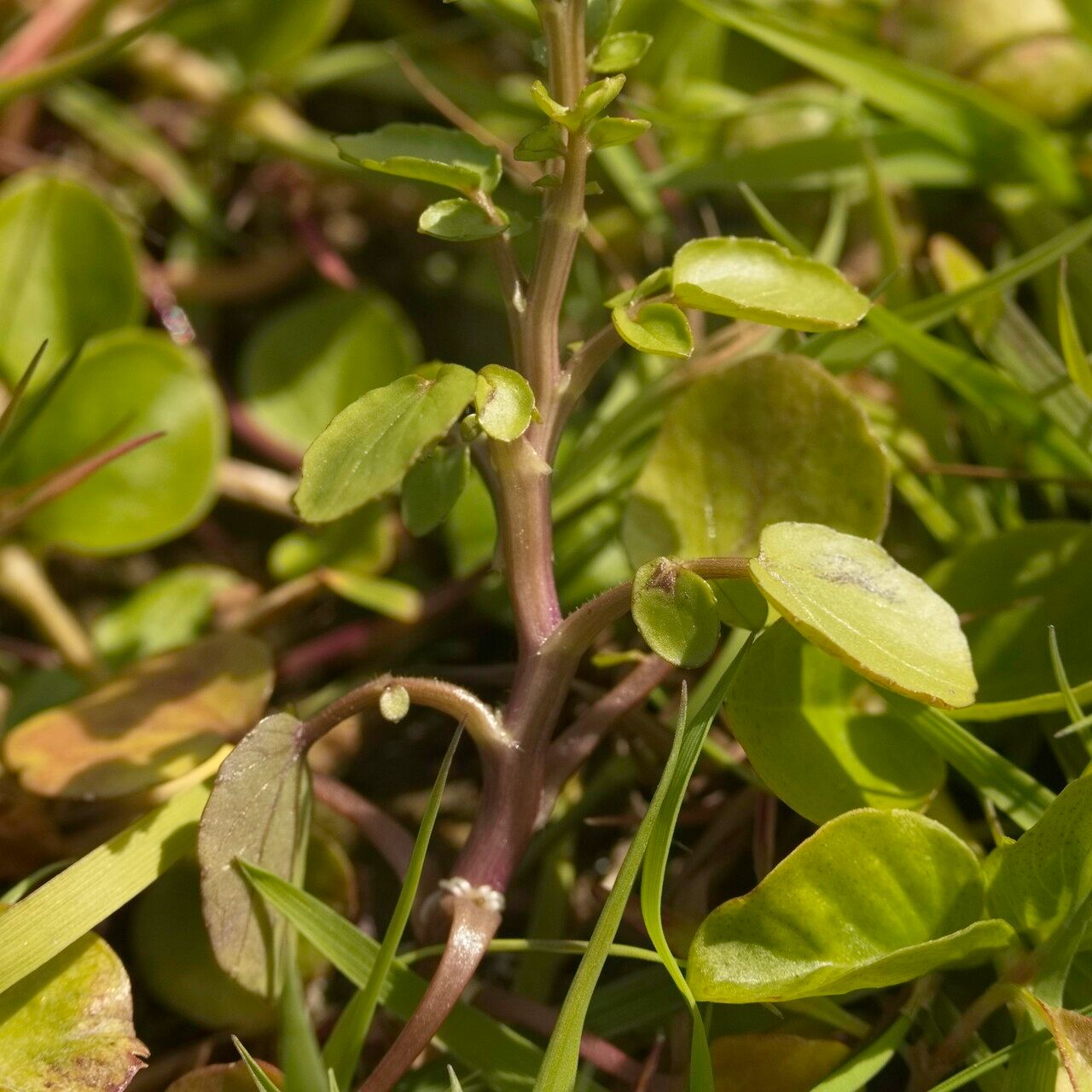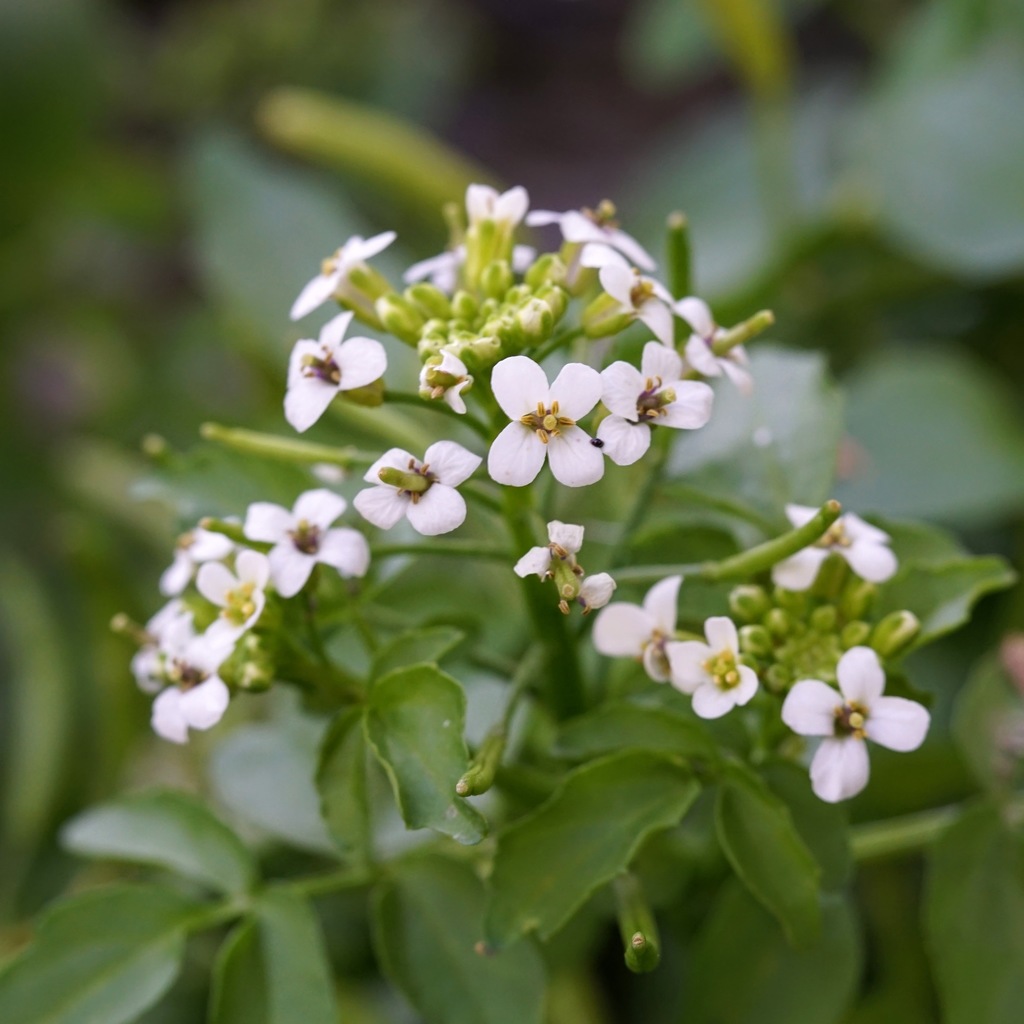
Watercress or yellowcress (Nasturtium officinale) is a species of aquatic flowering plant in the cabbage family Brassicaceae. Watercress is a rapidly growing, perennial plant native to Europe and Asia. It is one of the oldest known leaf vegetables consumed by humans. Watercress and many of its relatives, such as garden cress, mustard, radish, and wasabi, are noteworthy for their piquant flavors. The hollow stems of watercress float in water. The leaf structure is pinnately compound. Small, white, and green inflorescences are produced in clusters and are frequently visited by insects, especially hoverflies, such as Eristalis flies.
Watercress shows moderate resistance to disease but can be prone to problems like leaf spot. Its vulnerability to insect pests differs by variety, though most cultivars are not highly pest-resistant. For care, watercress requires consistent watering and feeding, plus regular removal of yellowing leaves. It’s important to address pests and diseases as they arise and to harvest the crop promptly. Watercress is best for people who can invest some time and effort in ongoing maintenance.
How to keep Nasturtium Officinale.
Light
Watercress requires a steady, plentiful supply of sunlight during its growing period and does best when provided with abundant light. Native to areas that receive sun for much of the day, it can withstand lower light levels, though this may restrict its growth. Too much shade can result in long, weak stems and a reduced number of leaves.
Water
Watercress thrives in consistently moist conditions and needs to be watered twice a week to maintain this moisture level. It is typically grown outdoors and does best in environments that mimic its natural habitat along streambanks, making it an excellent choice for water gardens or riparian plantings.
Humidity
This plant needs special care because it loves high humidity levels of 60-80% or more. The best way to achieve this is by placing a humidifier near the plant. Daily misting is also essential! Make sure the room has good ventilation.
Temperature
The ideal temperature range for watercress is from 32℉ (0℃) to 100.4℉ (38℃). However, it can withstand low temperatures down to 23℉ (-5℃) and high temperatures up to 104℉ (40℃). The plant flourishes in cool, moist conditions and prefers temperatures near 64.4℉ (18℃). In winter, set temperatures to about 46.4℉ (8℃), and in the summer months, maintain around 75.2℉ (24℃).
Fertilizer
To maximize the yield and flavor of Watercress, provide ample nitrogen throughout the entire growth cycle, from before planting through harvest. Well-watered and fertilized plants produce abundant, healthy leaves and minimize bitterness. Before planting, enrich the soil with organic matter such as compost or manure, ideally 2 to 8 weeks in advance.
Pruning
Watercress thrives in moist environments and benefits from pruning between early and late spring. Trimming the stems encourages branching and reduces overcrowding, which in turn enhances the plant's vitality and yield. Making clean cuts minimizes stress and reduces the risk of disease, promoting a healthy and productive garden.
Pot & Repot
When repotting Watercress, select a pot 1-2 inches (2.5–5.1 cm) larger with ample drainage. Use a well-draining potting mix. Repot in spring or fall, making sure the root ball sits slightly lower than the rim of the flower pot. Water thoroughly after repotting and place in a warm spot with indirect sunlight.
Botanical profile.
- Plant Type
- Herb
- Life Cycle
- Perennial
- Genus
- Nasturtium
- Family
- Brassicaceae
- Hardiness Zone
- 3-11
- Mature Height
- 20 cm to 40 cm
- Mature Spread
- 20 cm
- Leaf Color
- Green
- Leaf Type
- Evergreen, Deciduous
- Flower Color
- White
- Flower Size
- 0.10 cm to 0.25 cm
- Bloom Time
- Mid spring, Late spring, Early summer
- Planting Time
- Spring, Autumn
- Harvest Time
- Early summer, Mid summer
- Native Area
- Libya, Egypt, Turkey, Austria, Sweden, Pakistan, Morocco, Uzbekistan, Russia, Iraq, Germany, Jordan, Ethiopia, Romania, Belgium, Portugal, France, Netherlands, Tajikistan, Tunisia, Czech Republic, Bulgaria, Armenia, Poland, Greece, Ukraine, Lebanon, China, Afghanistan, Syria, Kyrgyzstan, Kazakhstan, Italy, Spain, Switzerland, Denmark, Israel, Iran, Albania, Ireland, United Kingdom, Hungary, Algeria, Azerbaijan, Turkmenistan
Other names.
Reader questions.
How should I water my Watercress plant?
The Watercress has specific preferences for both the amount and method of watering. Using the proper watering technique is crucial to avoid damaging your tomatoes. The best way to water Watercress is by applying the water directly to the soil, in a slow and gentle manner. It's important not to pour all the water at once or use overhead watering. While watering slowly, it's also important to water deeply to ensure the soil is adequately moist for the growth of Watercress.
Why should I add fertilizer to my Watercress?
Watercress, which is grown for its edible leaves, has specific nutrient requirements. Nitrogen, phosphorus, and potassium are important nutrients for plants, with nitrogen being especially crucial for foliage. However, Watercress often struggles to obtain sufficient nitrogen from the soil to produce a satisfying harvest. As a result, many gardeners opt to supplement the plant's nitrogen levels by heavily feeding it with additional nitrogen sources.
What are the sun requirements for Watercress?
Watercress thrives in different sunlight conditions but has specific needs for optimal growth. Full sun, characterized by above 6 hours of sunlight daily, is ideal for vigorous growth and health. Partial sun, about 3-6 hours of sunlight, can also support its growth, albeit potentially at a slightly reduced rate. It is crucial to observe the movement of sunlight through your garden to choose spots that offer a balance of light and shade, ensuring your Watercress plants grow happily and healthily.
What is the optimal temperature range for watercress growth?
The optimal temperature range for watercress (Nasturtium officinale) is between 32°F (0°C) to 100.4°F (38°C). The plant has a moderate tolerance for temperature fluctuations, capable of enduring low temperatures up to 23°F (-5°C) and high temperatures of up to 104°F (40°C). Watercress flourishes in cool, moist environments, with a preference for average temperatures around 64.4°F (18°C). Seasonally, it's advised to adjust temperatures to around 46.4°F (8°C) in the winter and to maintain approximately 75.2°F (24°C) during the summer months. To promote ideal growing conditions during winter, ensure temperatures stay above freezing to prevent damage to the plant. Additional protections, such as relocating watercress indoors or using a temporary greenhouse, may be required when outdoor temperatures approach 23°F (-5°C).
What should I do if I give my Watercress plant too much water or not enough water?
If you've overwatered your Watercress and are worried about disease, act quickly. The best solution is to remove the plant from its current location and let the roots dry before replanting in well-drained soil. If growing in pots, consider switching to a pot with better drainage. On the other hand, if you're underwatering, simply increase the frequency of watering.
When should I fertilize my Watercress?
To help your Watercress grow well, there are a few key points to keep in mind during the growing season. Firstly, when preparing the ground for planting, make sure to add nutrient-rich organic material like compost or manure to the soil. This should be done at least 2 to 8 weeks before planting. At the time of planting, it is recommended to amend the soil again using the same method. Once the seedlings emerge and grow to around 2 inches tall, it is time for the next round of fertilizer. From there on, you can continue to feed your Watercress regularly with rich organic matter or a commercial fertilizer until you harvest. A good schedule to follow is to fertilize every two to three weeks. Additionally, it is beneficial to add a layer of compost or manure around the plant to provide a steady supply of nutrients.
What are the essential growing conditions for Watercress in terms of light?
Watercress craves a constant and ample supply of sunlight throughout its growing phase, thriving best under generous illumination. It originates from environments with abundant sunlight exposure yet can also grow in lesser light, which might slow its growth. In cases of excessive shade, Watercress may develop lengthy, weak stems and produce fewer leaves. For indoor plants lacking natural sunlight, especially during winter or in less sunny spaces, artificial lighting becomes crucial. LED lights, mimicking natural sunlight, are recommended, with full sun plants needing 30-50W/sq ft, partial sun plants 20-30W/sq ft, and full shade plants 10-20W/sq ft. The light should be placed 12-36 inches above the plant and kept on for 8-12 hours per day to simulate natural daylight hours optimally.
How does watercress react to low temperatures, and what should be done?
Watercress exhibits moderate tolerance to low temperatures, thriving best within its suitable growth temperature range. It is crucial during winter to keep the plant above the tolerable minimum temperature. Exposure to temperatures below its growth limit can lead to leaves darkening, potential water-soaked necrosis, wilting, dropping, and eventually turning brown in severe cases. To address frost damage, affected parts should be trimmed away. Moving watercress indoors to a warmer environment or setting up a temporary greenhouse can provide necessary cold protection. Placing the plant near a south-facing window can ensure ample sunlight during indoor growth stages. Supplemental lighting may be utilized if natural light is insufficient.
How often should I give water to my Watercress plant?
Watercress needs a lot of water throughout the growing season. In the spring and summer, it's important to water it regularly, starting with once or twice a week. As the season goes on, you should increase the frequency, possibly up to twice a day during hot summer days. After the main growth phases, you can cut back on watering to once a week until the end of the season.
When is it not a good idea to fertilize my Watercress?
When using nitrogen-rich fertilizers, be cautious about applying them near other vegetable plants. These plants should focus on producing fruit, not foliage. Otherwise, you might end up with lots of leaves but very few vegetables. Avoid getting any type of fertilizer on the leaves of your Watercress, as it will burn them. It is best to apply the fertilizer a couple of inches away from the base of the plant. If your Watercress is facing issues like disease, pests, or drought, hold off on fertilizing until those problems are resolved. Fertilizer can help healthy plants, but it can harm them if applied to unhealthy ones.
What symptoms indicate insufficient light for Watercress when grown indoors?
Watercress exhibits several symptoms when it suffers from insufficient light, often subtle and easily overlooked. Small leaves, leggy or sparse growth, faster leaf drop, slower or no new growth, and lighter-colored new leaves are common signs of light deficiency. These symptoms suggest that the plant isn't receiving enough light, leading to a reduction in chlorophyll and essential nutrients, weakened structure, and delayed growth. Contrary, issues like chlorosis, sunscald, leaf curling, wilting, and leaf scorching signal excessive light exposure, harming photosynthesis and plant health.
What are the effects of high temperatures on watercress, and how can they be mitigated?
During the summer months, it's important to ensure that watercress is kept below its maximum tolerable temperature for growth. Exceeding this threshold can slow down plant growth, cause leaves to lighten in color, and increase susceptibility to sunburn. To address issues arising from high temperatures, sunburned or dried parts of the plant should be trimmed away. Relocating the plant to a shaded area, particularly to avoid the afternoon sun, is advisable. Additionally, watering the plant both in the morning and evening helps maintain soil moisture, essential for watercress during hotter weather.