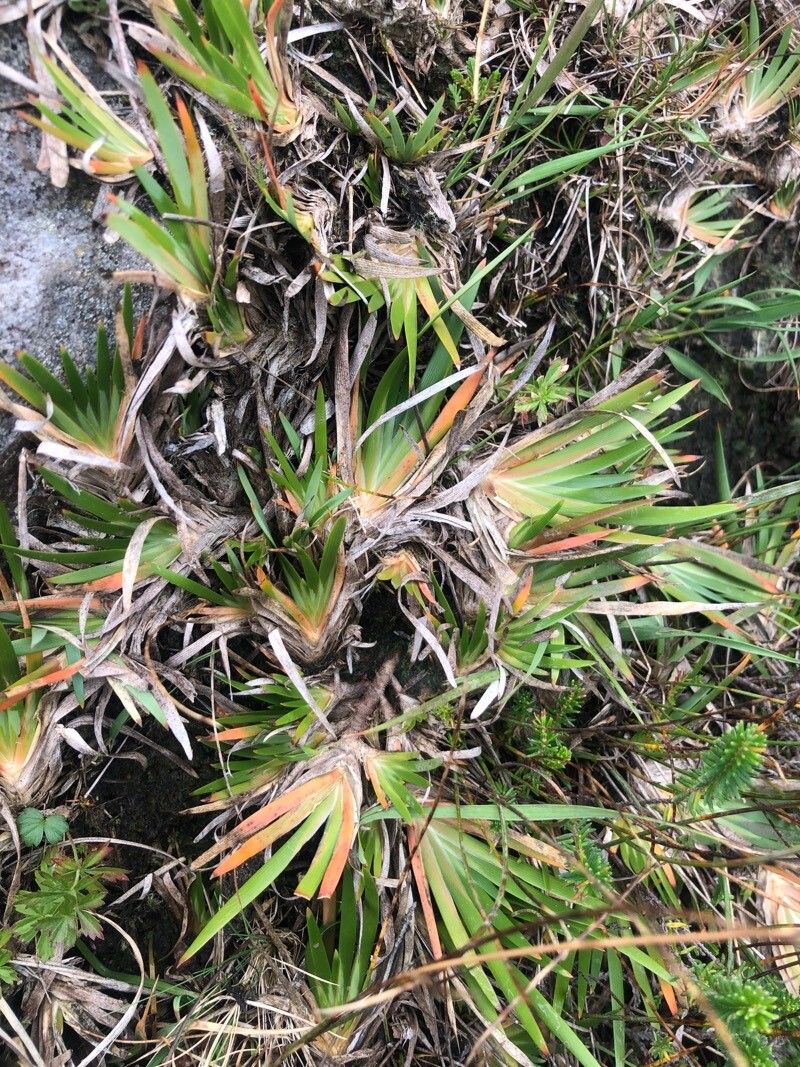
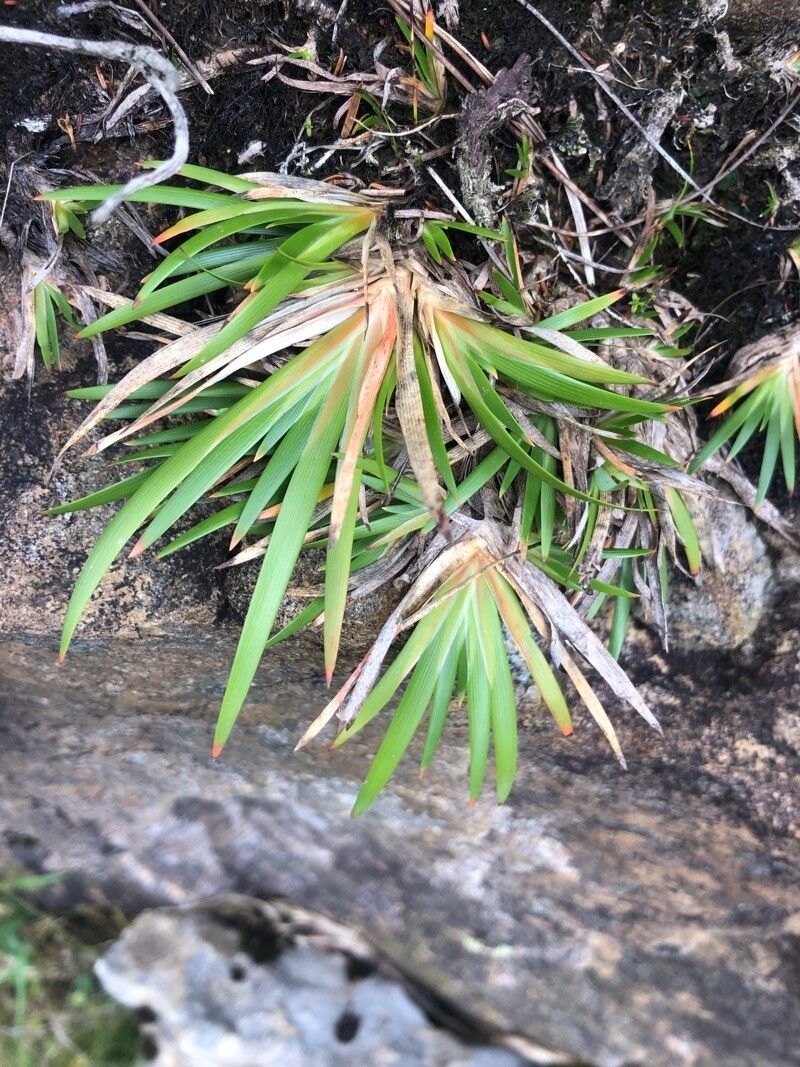
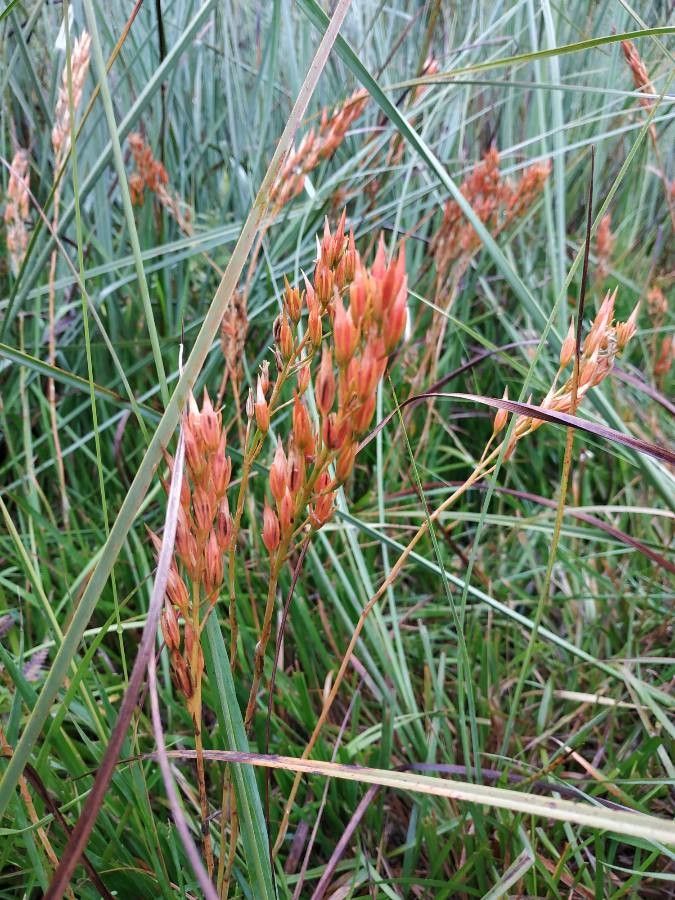
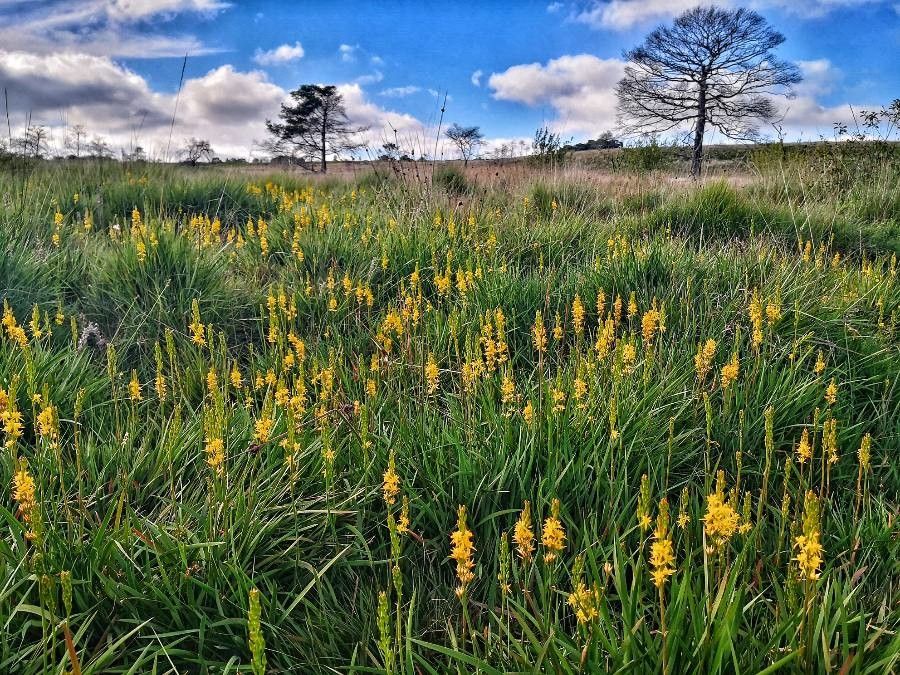
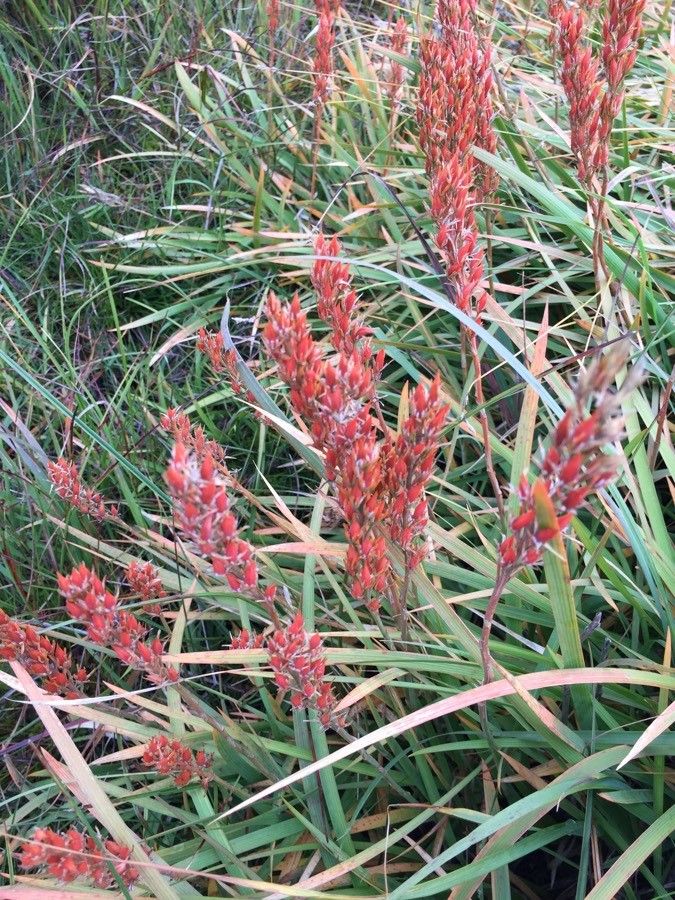
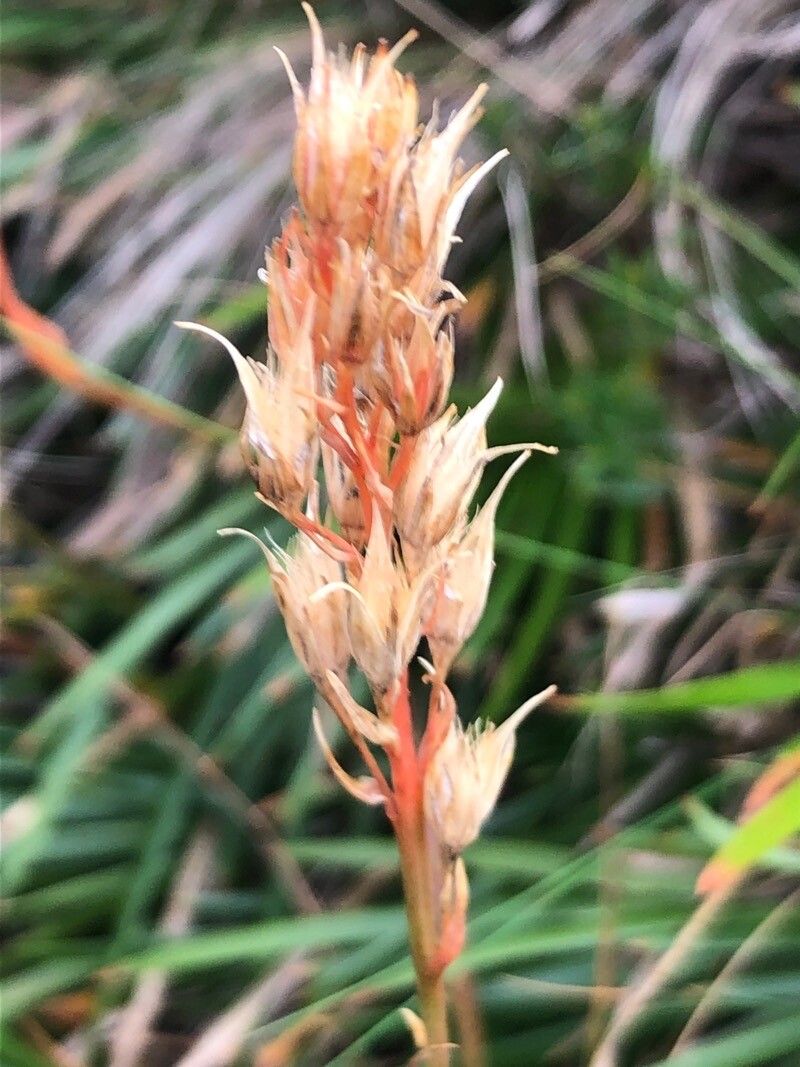
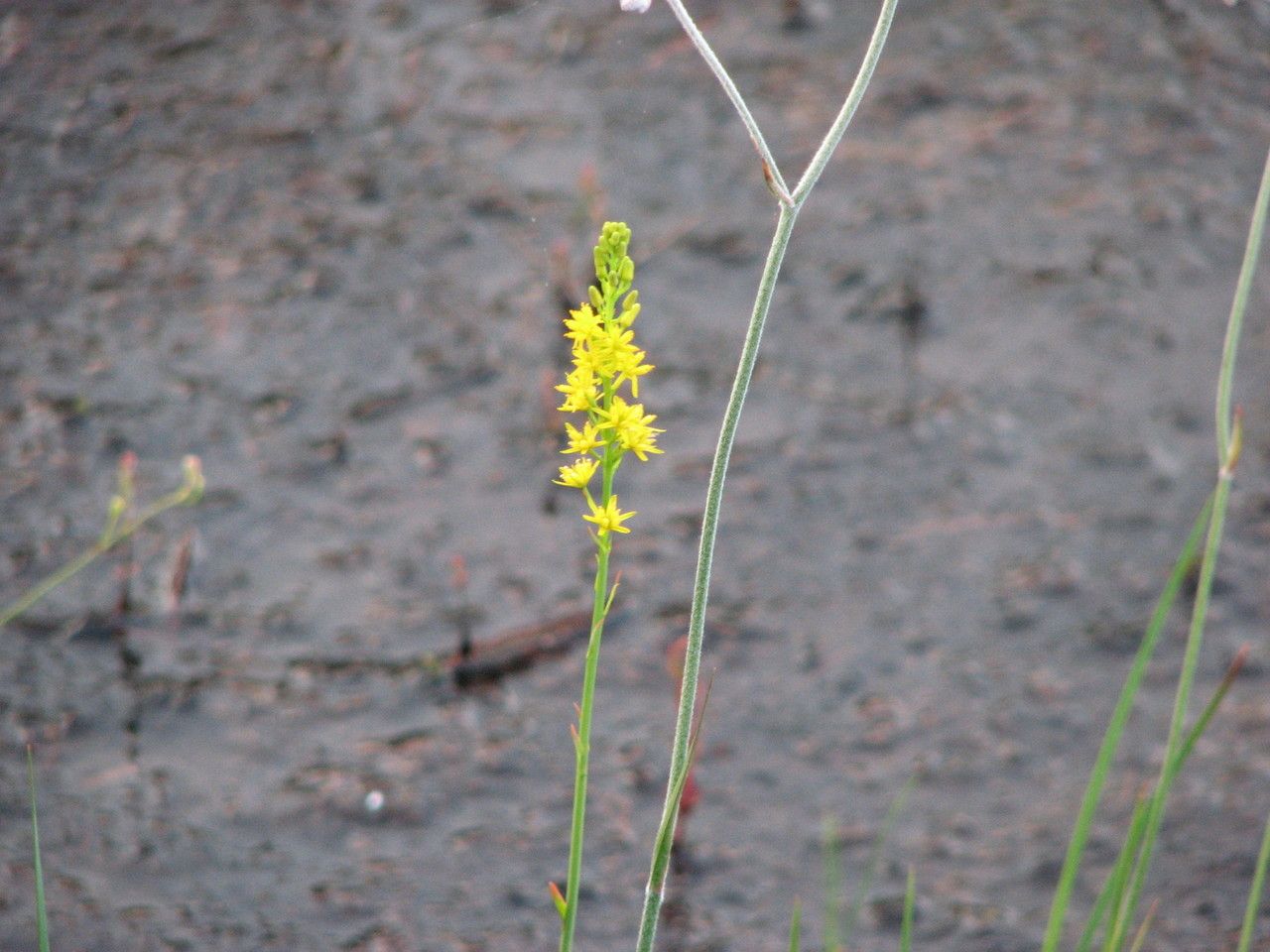
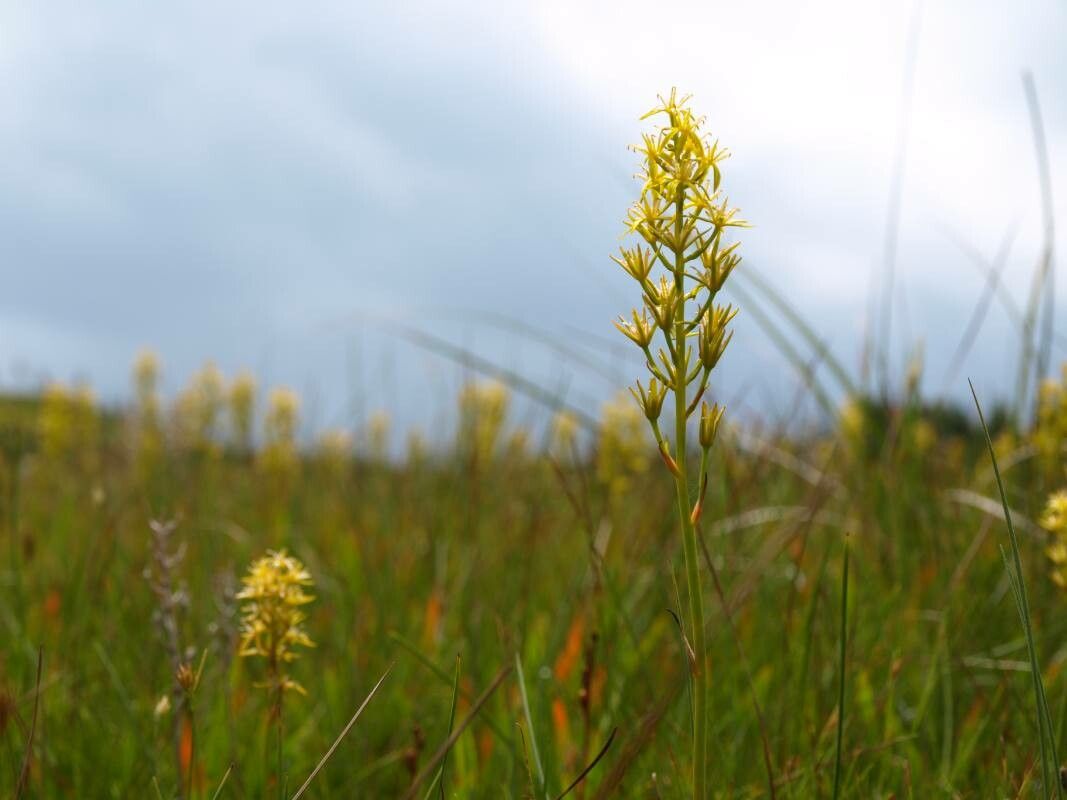
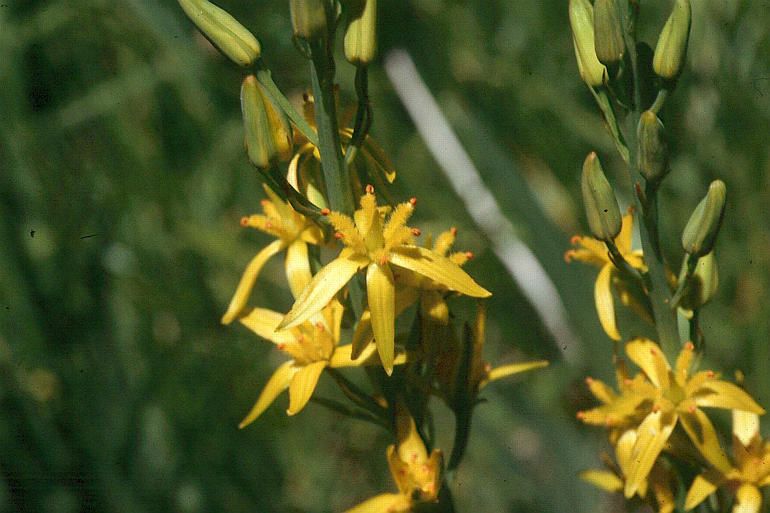
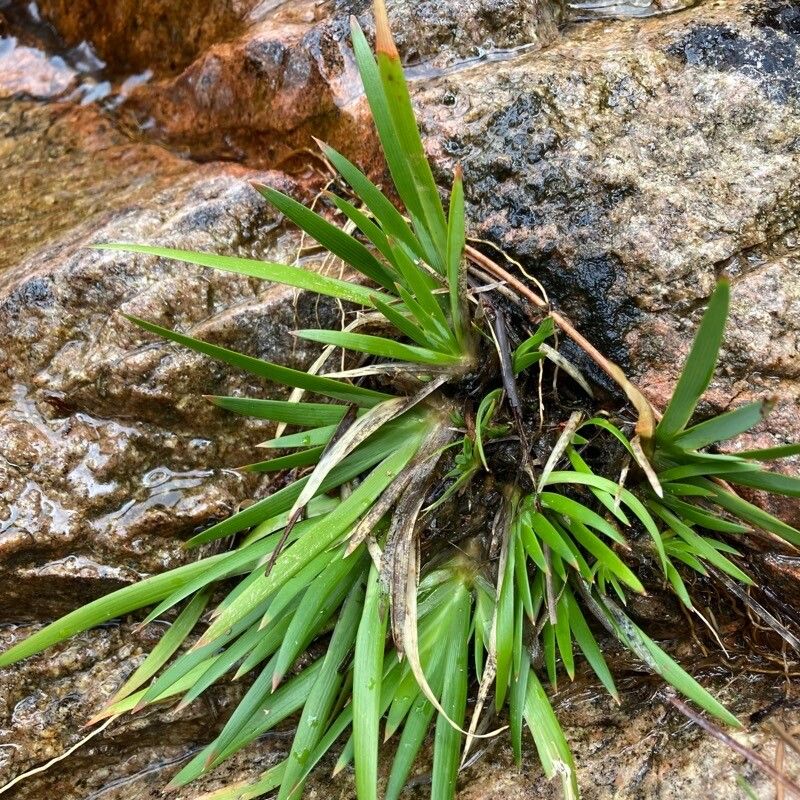
Narthecium ossifragum, commonly known as bog asphodel, Lancashire asphodel or bastard asphodel, is a species of flowering plant in the family Nartheciaceae. It is native to Western Europe, found on wet, boggy moorlands up to about 1,000 m (3,300 ft) in elevation. It produces spikes of bright yellow flowers in summer. The bright orange fruits have been used as a colourant to replace saffron by Shetland Islanders. Despite the plant's English name "bog asphodel", it is not particularly closely related to the true asphodels. In addition to other forms of pollination, this plant is adapted to rain-pollination. The Latin specific name ossifragum means "bone-breaker", and refers to a traditional belief that eating the plant caused sheep to develop brittle bones. The probable origin of this story is that sheep eating a calcium-poor diet are likely to develop bone weakness, and N. ossifragum favours acidic low-calcium soils.
Bog asphodel is fairly disease-resistant and generally not liable to illness. However, it can be vulnerable to pests and diseases found in its surroundings, and such infections are usually mild. In terms of care, the plant is medium-maintenance: it should be pruned regularly to maintain a neat appearance and healthy growth. Fertilizing can also help encourage flowering. Bog asphodel is suitable for anyone with outdoor space, such as a garden or patio, and does not require much plant-care experience. When grown indoors, though, it may need more attentive care.
How to keep Narthecium Ossifragum.
Light
Bog asphodel naturally occurs in habitats such as forest understories or rocky areas, where it grows in natural shade. It prefers partial sun but can also tolerate full sun or full shade, demonstrating its adaptable and hardy nature.
Water
Bog asphodel flourishes in moist environments and needs to be watered weekly to stay hydrated. It thrives in wet conditions and can even tolerate flooding, which makes it a great choice for rain gardens or areas that replicate its natural marshy habitat. When grown outdoors, it can take advantage of natural rainfall.
Temperature
Bog asphodel is a plant suited to its native growing conditions, where temperatures typically range from 41 to 77 °F (5 to 25 ℃). The plant prefers cooler weather, particularly in temperate regions. Care should be taken to maintain these temperatures in the appropriate seasons for the best growth.
Fertilizer
Early spring, as the Bog asphodel emerges from dormancy and starts active growth, is the best time to apply fertilizer. Fertilizing supplies important nutrients that support healthy growth. Although the Bog asphodel has relatively low fertilizer requirements, an annual application can improve its survival and produce better, longer-lasting flowers.
Pruning
Bog asphodel thrives in moist, acidic environments and benefits from pruning between early to late spring. To keep the plant healthy, remove dead leaves, trim the stalks after blooming to encourage new growth, and always use sanitized tools to prevent infections. Regular pruning enhances the plant's vigor, improves its appearance, and helps maintain its natural shape.
Botanical profile.
- Plant Type
- Herb
- Life Cycle
- Perennial
- Genus
- Narthecium
- Family
- Nartheciaceae
- Hardiness Zone
- 5
- Mature Height
- 10 cm to 40 cm
- Mature Spread
- 10 cm to 20 cm
- Leaf Color
- Green
- Leaf Type
- Evergreen
- Flower Color
- Yellow
- Flower Size
- 1.78 cm
- Bloom Time
- Early summer, Mid summer
- Planting Time
- Spring, Autumn
- Harvest Time
- Late summer, Early fall, Mid fall
- Native Area
- Russia, Norway, Germany, Sweden, Spain, Czech Republic, Denmark, Netherlands, France, Ireland, United Kingdom, Belgium, Portugal
Other names.
Reader questions.
How should I water my Bog asphodel?
To properly water the Bog asphodel plant, it is recommended to use filtered water at room temperature. Tap water can contain harmful particles, so filtered water is preferable. The water should be at room temperature or slightly warmer to avoid shocking the plant that is adapted to a warm environment. It is also advisable to avoid overhead watering, as it can cause issues with the foliage. Instead, water the plant by saturating the soil with the filtered room temperature water. This will benefit the plant by ensuring the roots are moistened and can continue to spread through the soil to gather necessary nutrients.
What are the ideal temperature conditions for Bog asphodel?
Bog asphodel, or Narthecium ossifragum, thrives in cooler weather, preferring temperatures typically between 41 to 77 °F (5 to 25 °C). This makes it well-suited for growth in temperate regions. To ensure the plant's best growth, it's important to maintain these temperature ranges throughout the respective seasons. Bog asphodel is also highly cold-tolerant, not requiring additional frost protection during winter. However, to prepare for winter's dry conditions, it's advised to water the plant generously before the first freeze in autumn, helping the soil to stay moist and prevent drought stress.
What should I do if I give my Bog asphodel too much water or too little water?
Both overwatering and underwatering can harm the health of your Bog asphodel, but overwatering is more commonly problematic. Too much water can cause wilting and yellowing of the stems and leaves, as well as diseases like root rot, mold, and mildew that can kill the plant. The Bog asphodel has good tolerance for drought, so underwatering is less likely. However, when it happens, the leaves may become brittle and brown. It's important to notice signs of overwatering early and take action promptly. Some diseases caused by overwatering, such as root rot, may become irreversible if not addressed in time. If you observe early signs of overwatering, reduce your watering schedule and check if the soil drains well. Replace it with a loose, well-draining potting mix if necessary. Conversely, if your Bog asphodel shows signs of insufficient water, increase your watering frequency until the signs disappear.
How does Bog asphodel react to extremely low temperatures?
Bog asphodel is remarkably cold-tolerant and can withstand winter temperatures above -25°C. If temperatures fall below this threshold, while there might not be noticeable damage during the winter, the plant might show decreased sprouting or fail to sprout at all come spring. To manage this issue, any parts of the plant that have not sprouted by spring should be removed to encourage new growth.
How frequently do I need to water my Bog asphodel plant?
If your Bog asphodel is in a pot, the best way to determine if it needs water is by checking the soil. Stick your finger into the soil and if the top two to three inches are dry, it's time to water. If you're growing your Bog asphodel outdoors in the ground, you can use a similar method to test the soil. Once the first few inches of soil have dried out, it's time to water. Normally, during spring and early fall, watering once a week is sufficient. However, in extremely hot weather, you may need to water twice or more per week. Despite this, mature and well-established Bog asphodel plants can withstand drought well.
How should Bog asphodel be cared for in high temperatures?
Bog asphodel does not fare well in high temperatures, particularly above 25°C, at which point its growth could halt, and the risk of rot increases. To mitigate heat stress, it's advisable to trim any sunburned or dry parts of the plant. Moving the plant to a shady location during the intense midday and afternoon sun or using a shade cloth can help protect it. Additionally, watering the plant in the cooler parts of the day, such as morning and evening, will help keep the soil appropriately moist.
How much water does my Bog asphodel plant need?
To water your Bog asphodel effectively, don't hold back on the amount of water you give. Wait until the top two to three inches of soil are dry, and then water the plant thoroughly. Make sure to soak the soil completely, allowing excess water to flow out through the drainage holes in the pot. If you don't see any excess water draining, it means you haven't watered enough. However, be cautious not to let water accumulate in the soil, as this can harm the plant. On the other hand, if water doesn't drain through the pot, it could be a sign of poorly draining soil, which is bad for the plant's health. If the plant is outside, receiving around 1 inch of rain per week should be enough.
How do I water my Bog asphodel when it's small and when it's growing?
The water needs of the Bog asphodel can change depending on its growth stages. In the first few years or after transplanting it to a new location, you should give it more water than usual. During these stages, the plant focuses on growing new roots, which require extra moisture for optimal performance. Once the plant matures, it will require less water. Another growth stage that may require more water is during the bloom period, as flower development utilizes a significant amount of moisture.
How do I water my Bog asphodel in different seasons?
The Bog asphodel has different water needs depending on the season. In the hottest months of the year, especially during the height of summer, this plant will require more frequent watering. It may even need to be watered more than once per week if the soil dries out quickly. However, the opposite is true during the winter. During this time, the plant enters a dormant phase and requires much less water than usual. In fact, you may not need to water it at all during the winter months. If you do choose to water it, make sure to do so no more than once per month. Excessive watering during winter could increase the likelihood of the Bog asphodel contracting a disease.
What's the difference between watering my Bog asphodel inside and outside?
If you're a gardener who doesn't live in temperate or tropical regions, growing the Bog asphodel is most commonly done indoors. However, it's important to know that when the Bog asphodel is grown in a container, the soil can dry out faster compared to ground soil. Additional drying elements like air conditioning units can also increase the plant's water needs. On the other hand, if you choose to plant it outside and receive regular rainfall, you may not need to water the Bog asphodel very often. But if you grow it indoors, you'll have to water it more frequently as relying on rainwater to hydrate the soil won't be possible.