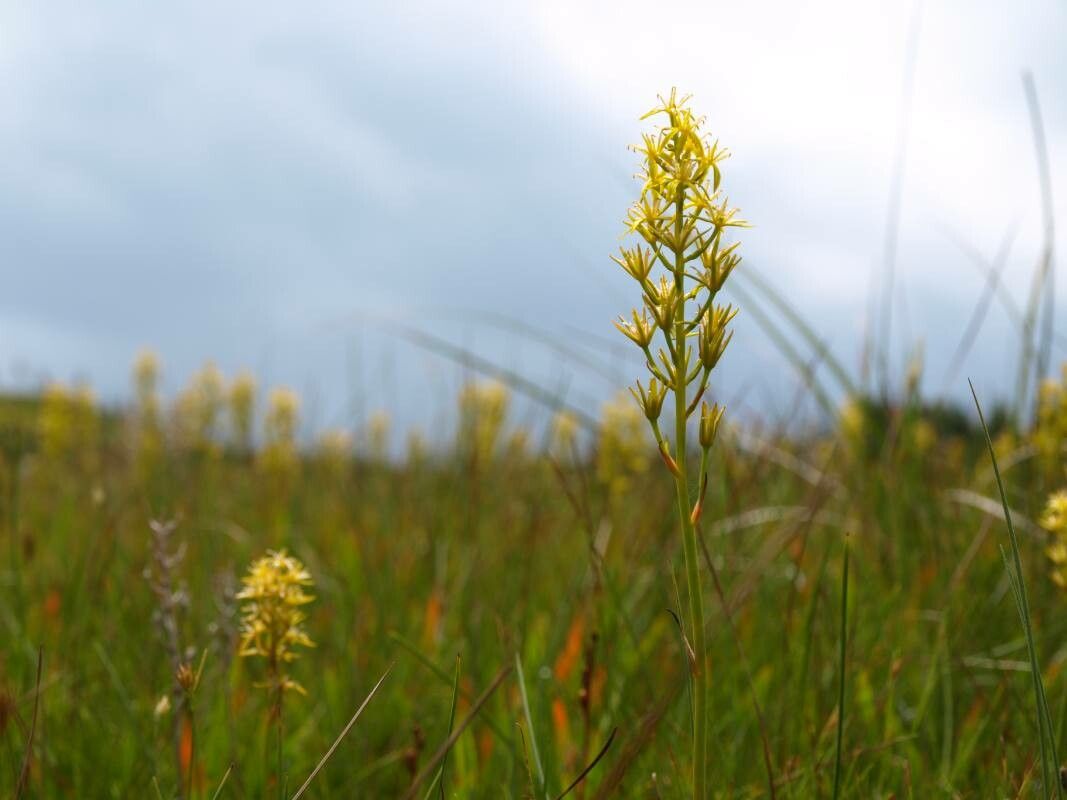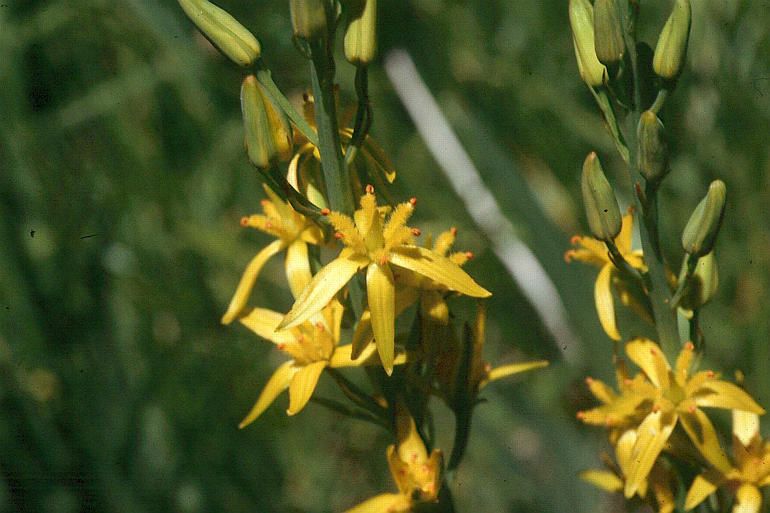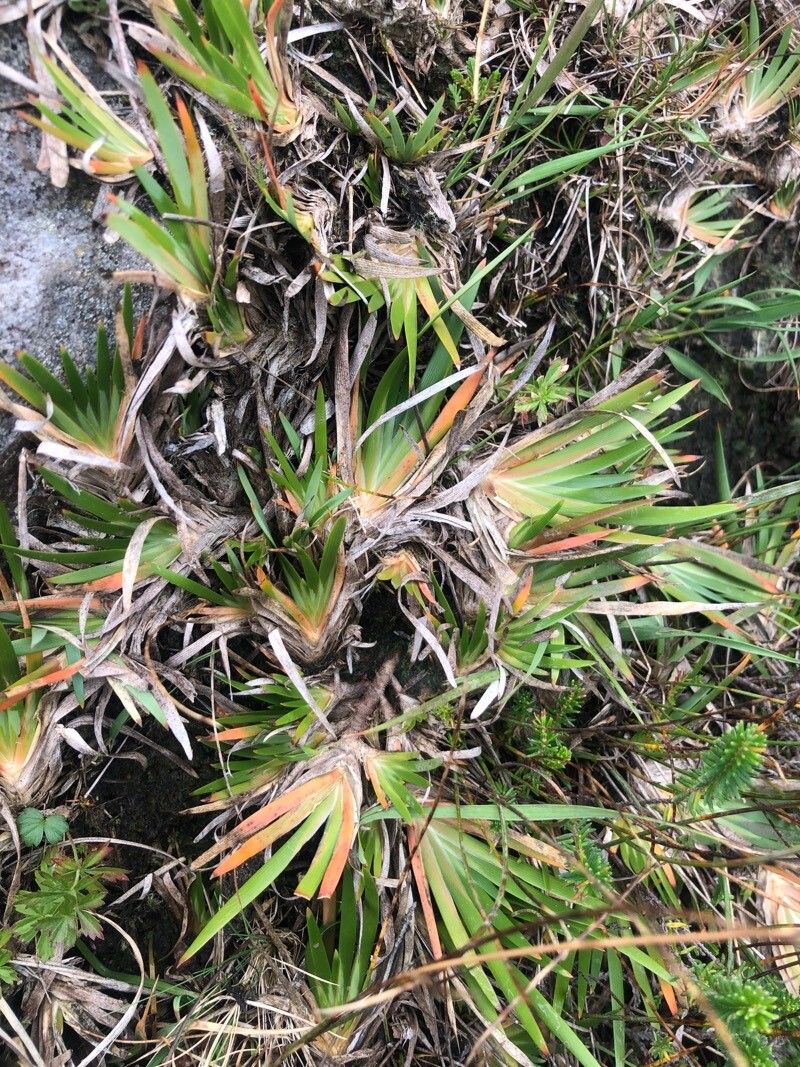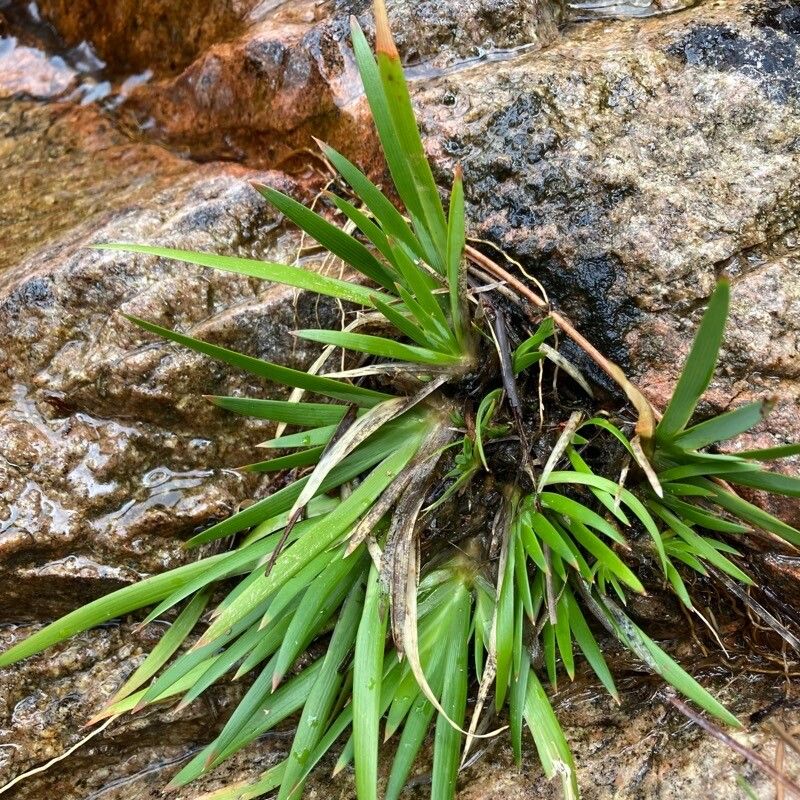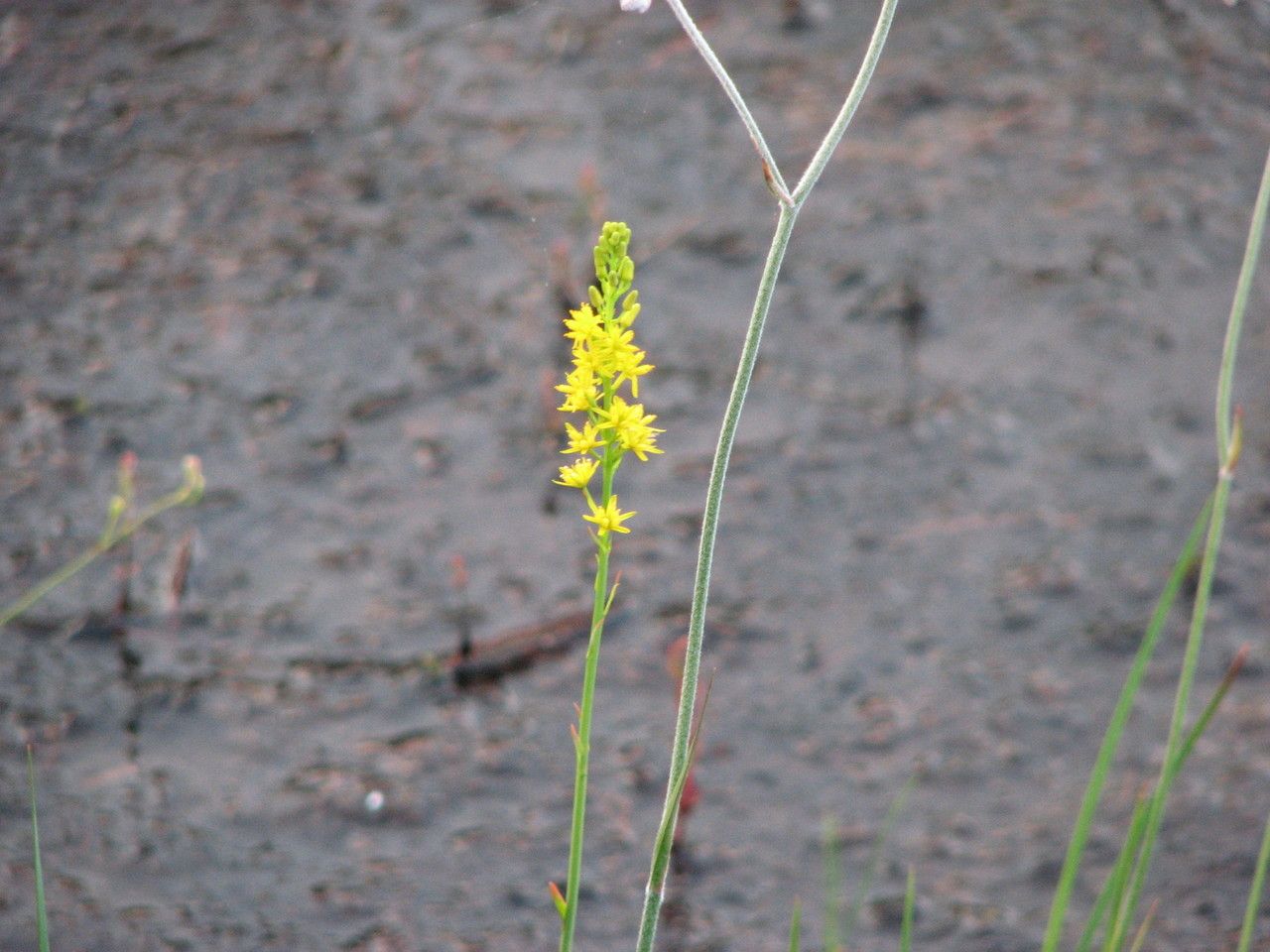
Narthecium americanum is a species of flowering plant in the Nartheciaceae known by the common names yellow asphodel and bog asphodel. It is native to New Jersey in the United States. It is now apparently limited to that state, having likely been extirpated from Delaware, North Carolina, and South Carolina.This rhizomatous perennial herb produces an erect stem 25 to 45 centimeters tall. It has narrow linear leaves up to 20 centimeters long by just a few millimeters wide around the base of the stem. Smaller leaves occur higher on the stem. The inflorescence is a dense raceme of yellow flowers that bloom in June and July. The fruit is a papery, beaked capsule a centimeter long or slightly longer. It contains yellow seeds.This plant lives in the Pine Barrens of New Jersey, where it grows along three tributaries of the Mullica River, including the Wading and Batsto Rivers. It grows in bogs, wet savannas, swamps, and other wet habitat types. It may experience flooding, but it does not persist in standing water. It is more abundant in openings in the canopy than in shaded areas. Associated plant species include Oclemena nemoralis, Calamagrostis pickeringii, Calamovilfa brevipilis, Juncus caesariensis, Lophiola americana, Muhlenbergia torreyana, Platanthera integra, Pogonia ophioglossoides, Rhynchospora oligantha, Schizaea pusilla, and Tofieldia racemosa. Sphagnum mosses are also common in the habitat.Degradation of the habitat is now the most important threat to the species. Habitat was lost when it was converted to agricultural uses, such as cranberry bogs, but direct habitat loss is not a major threat now. Most of the populations are now protected in the Pine Barrens. However, habitat degradation does occur via alteration of the local hydrology and the process of succession. Any lowering of the water table in the Pine Barrens is likely to impact the ecosystem, which requires a water table near the surface. Fire suppression is a likely cause of succession, characterized by the overgrowth of large and woody vegetation. This increases shade in the habitat, which negatively affects this and many other species in the herb layer. Other threats include off-road vehicles and picking and collecting of plants. Beaver dams may cause flooding of patches of habitat, which kills the plant.
Yellow asphodel has strong disease resistance and is typically not prone to illness. Still, it can be affected by pests and diseases present in its environment. Such infections are generally mild. Regarding care, this plant requires medium maintenance. It should be pruned regularly to keep a neat appearance and healthy growth, and fertilizing can help encourage flowering. Yellow asphodel is appropriate for anyone with an outdoor area, like a garden or patio, and does not demand extensive plant-care experience. It may need extra attention when cultivated indoors.
How to keep Narthecium Americanum.
Light
The yellow asphodel is a perennial herbaceous plant that loves the sun and is native to open environments, commonly flourishing in meadows and grasslands. It prefers full sunlight but can also withstand conditions of partial sunlight.
Temperature
The Yellow Asphodel can accommodate a broad span of temperature changes, but a combination of heat and water conditions may still restrict it in terms of its dispersion. It flourishes most under higher temperatures during the summer months, provided there is sufficient rain or irrigation. Lengthy spells of cloudy and wet weather, coupled with extended periods of high heat, could heighten the risk of the Yellow Asphodel perishing. During winter months, adequate safeguarding against low temperatures can enhance the plant's chance of survival.
Fertilizer
Providing one dose of fertilizer in spring is typically enough for Yellow asphodel, but growth can be maximized with frequent feedings. Apply food every month to six weeks. The fertilization process boosts leaf quality and performance, encouraging a consistent color and a healthy texture. Furthermore, it encourages root development and the uptake of nutrients, contributing to the plant's health over time.
Botanical profile.
- Plant Type
- Herb
- Life Cycle
- Perennial
- Genus
- Narthecium
- Family
- Nartheciaceae
- Hardiness Zone
- 5
- Leaf Type
- Evergreen