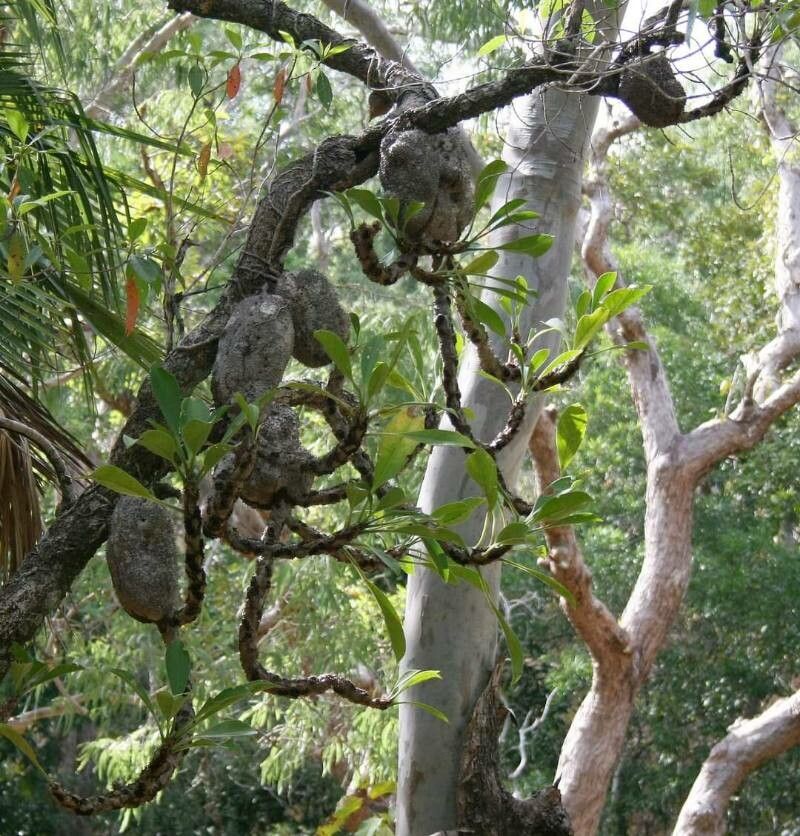
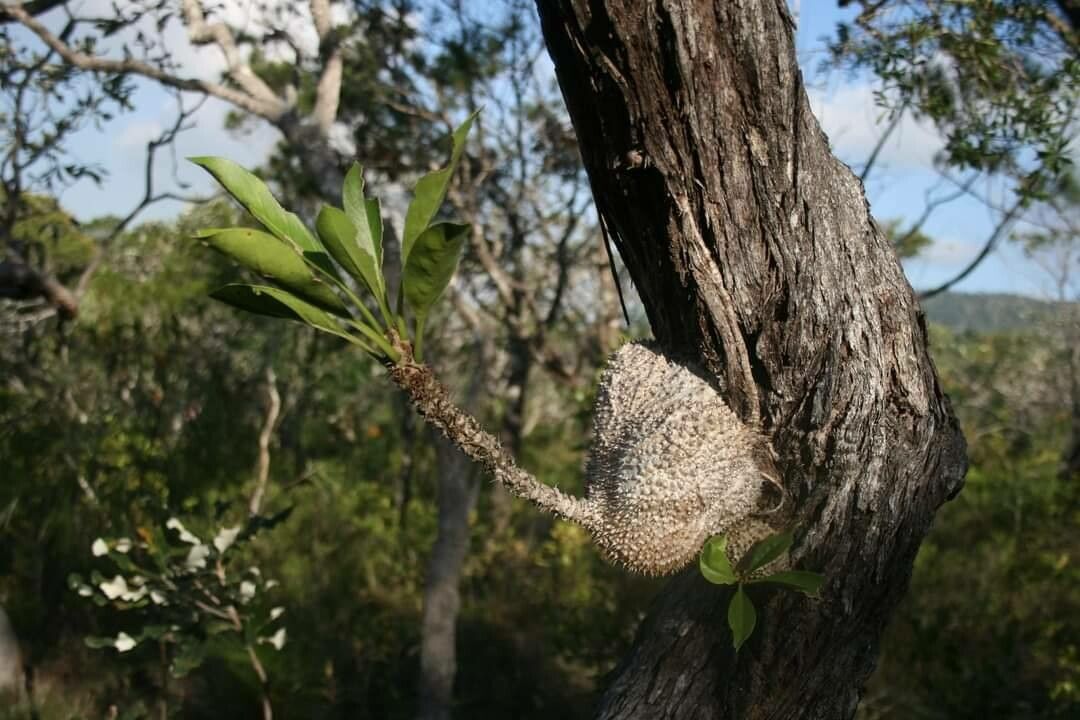
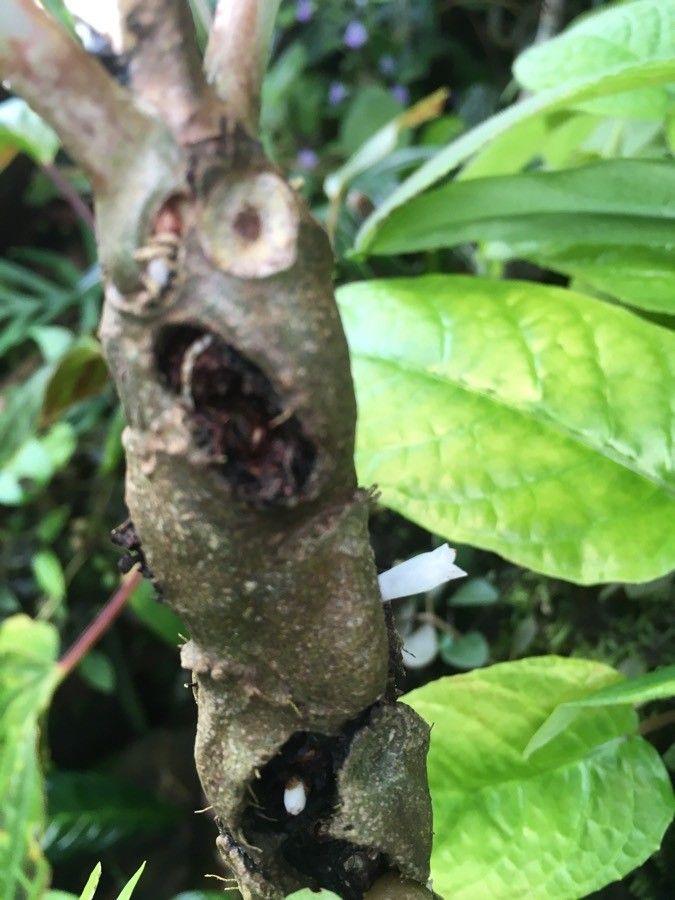
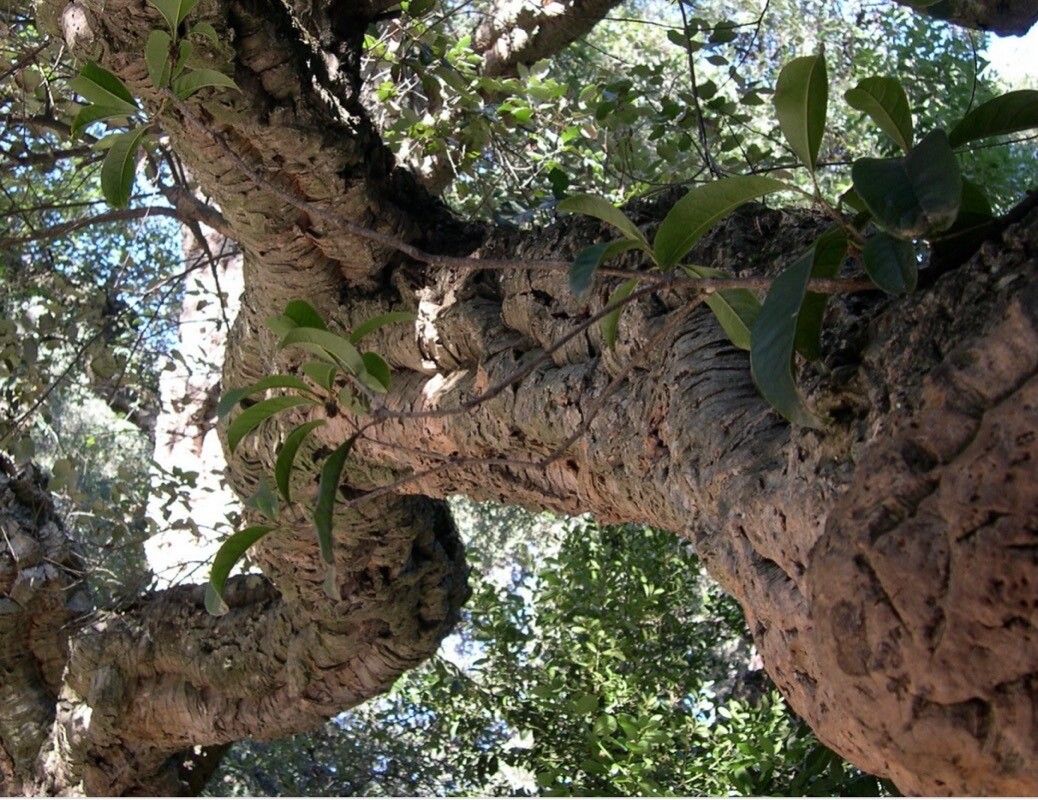
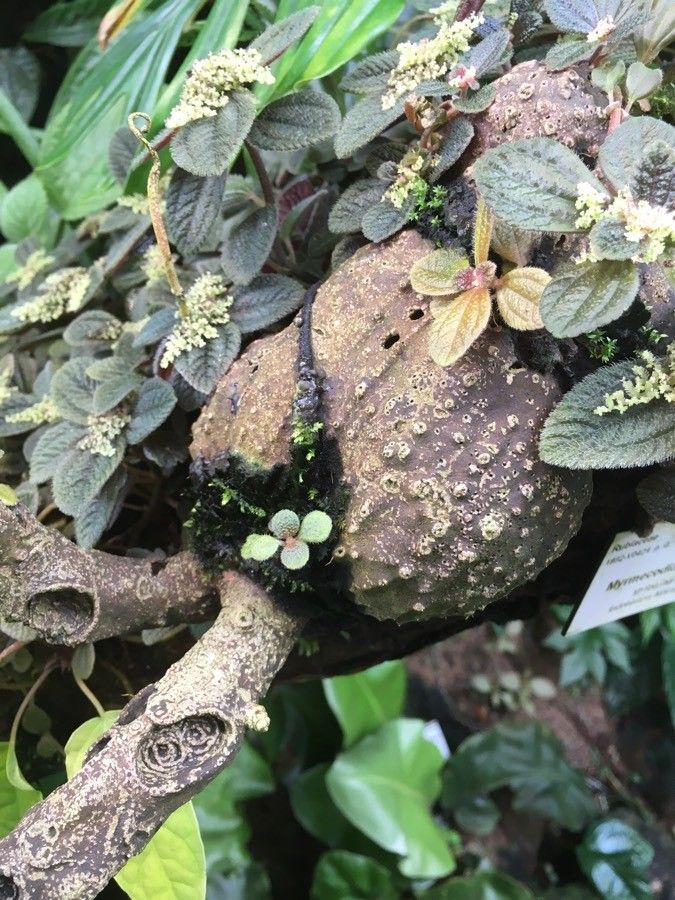
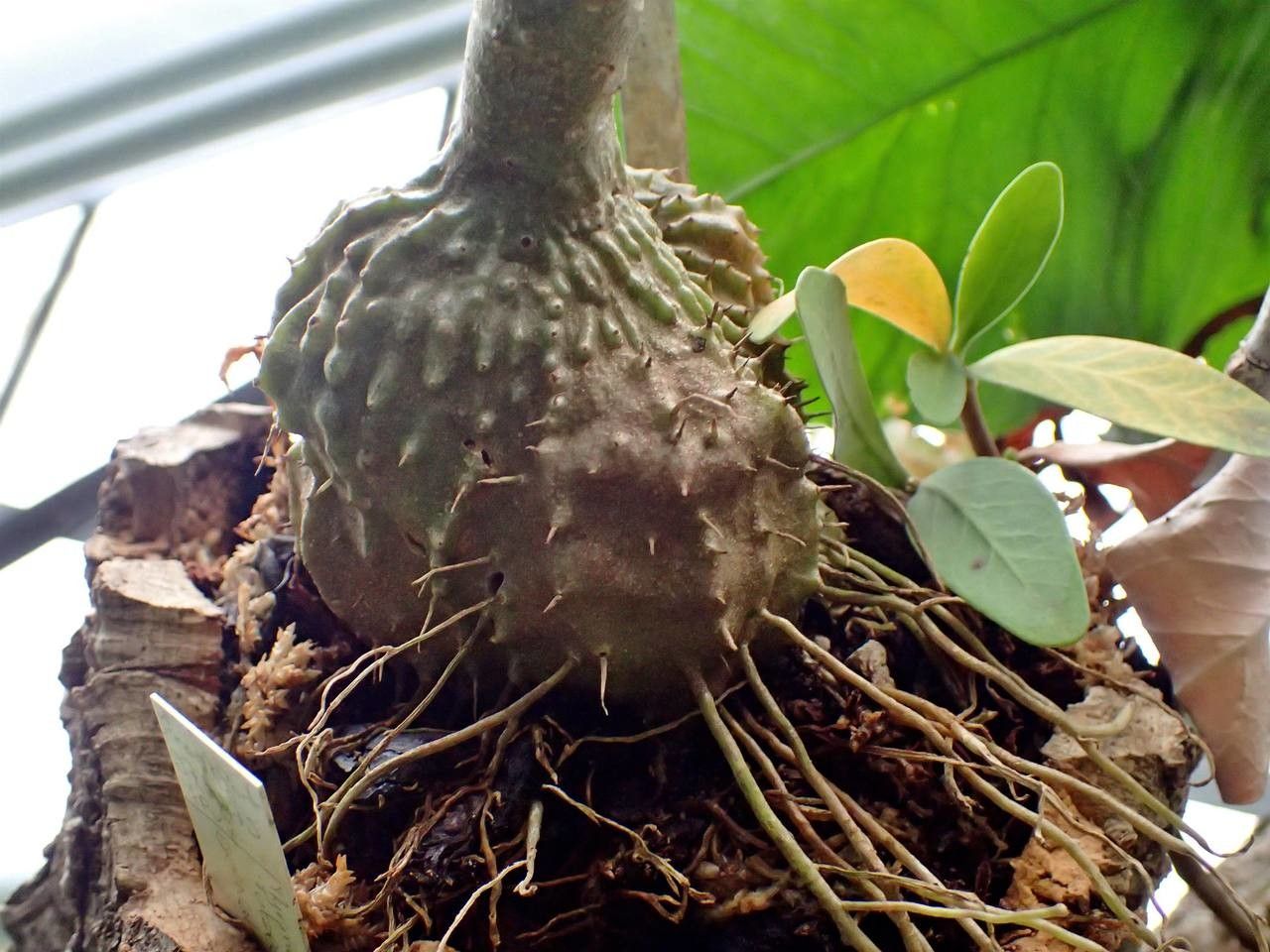
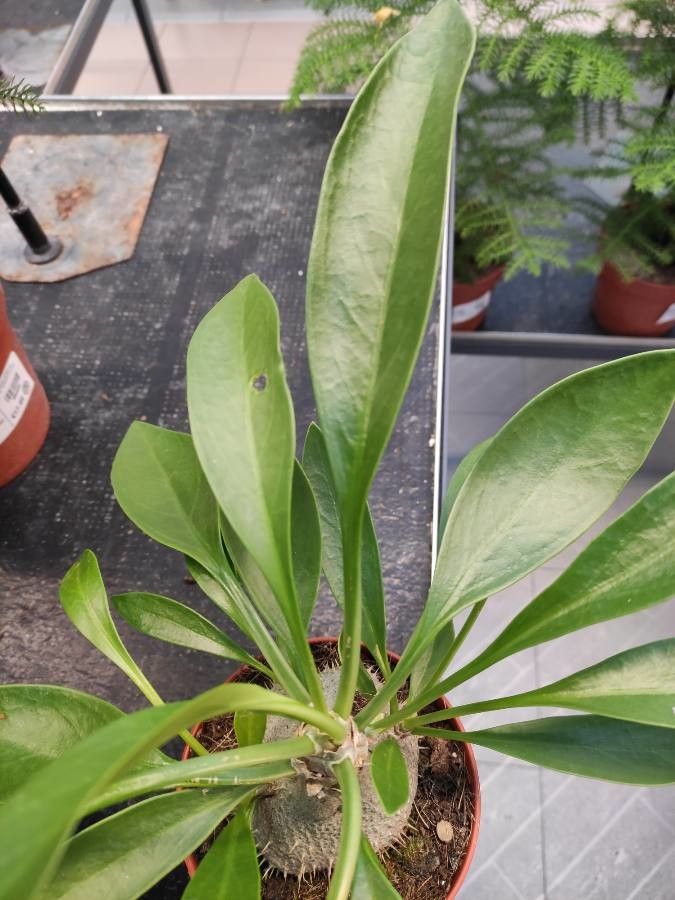
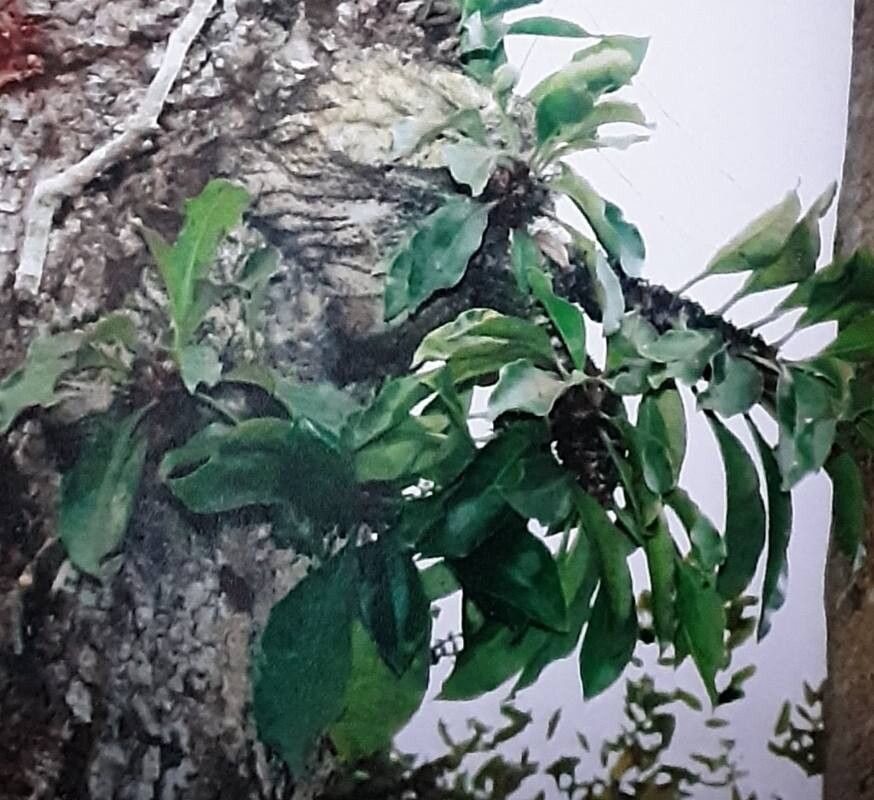
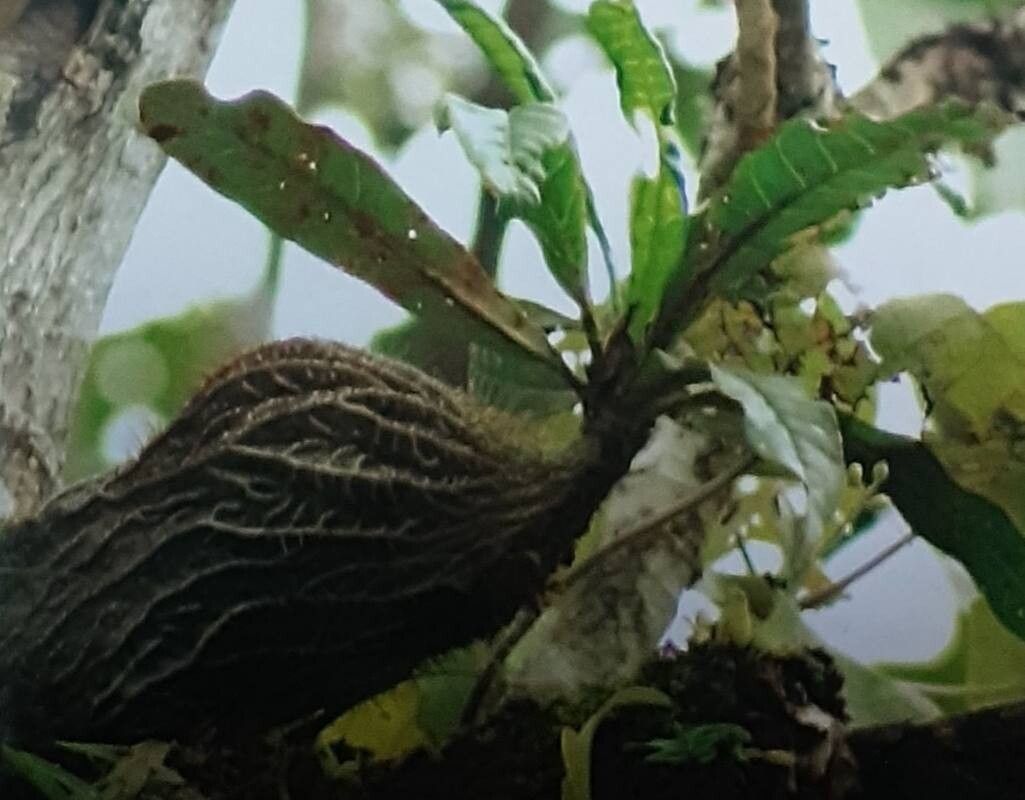
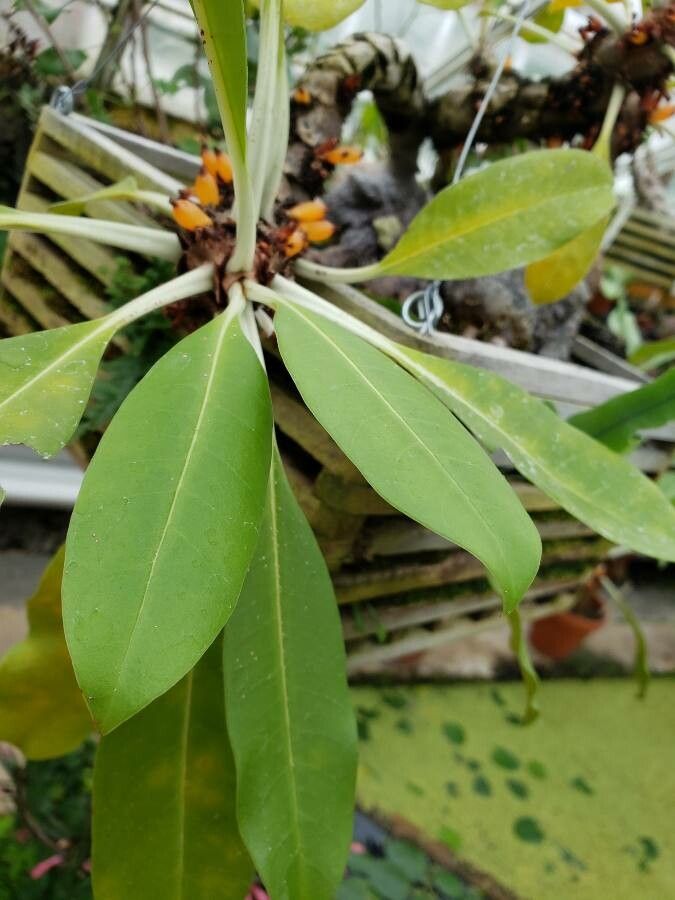
Myrmecodia tuberosa, the ant plant, is an epiphytic plant. The species has a symbiotic relationship with some ant species where ants use the hollow body of the plant as shelter, defend the plant from other insects, and provide nutrients to the plant through their waste.
Myrmecodia tuberosa has moderate disease resistance and is more sensitive to humidity and overwatering. It becomes more prone to illness when kept in low light and overwatered. Regarding care, Myrmecodia tuberosa is drought-tolerant and can endure long periods without watering. It requires little fertilizer and only occasional pruning. Because of this, it is appropriate for people at any experience level, particularly those who prefer to spend less time on plant care and who may occasionally be away from home for extended periods. It is a good option for people who do not want to devote much time to plant care but still want a plant that is easy to maintain.
How to keep Myrmecodia Tuberosa.
Light
Myrmecodia tuberosa comes from habitats with dappled light, such as the understory of forests or rocky locations that provide natural shade. It prefers partial sun but can also tolerate full sun.
Water
Myrmecodia tuberosa thrives in environments with high humidity. While it can tolerate short periods of drought, it prefers consistent moisture. To mimic its natural conditions, water the plant every 1-2 weeks. When grown indoors, it's important to use well-draining soil to prevent root rot, as the plant is sensitive to overwatering.
Temperature
Myrmecodia tuberosa does best in warm conditions and needs relatively high temperatures during the growing season to support growth and metabolic activity. It favors plenty of sunlight, proper moisture levels, and good air circulation. It can be harmed by very low temperatures and by excessive watering. Likewise, maintaining a balance to prevent excessively high heat and overly dry conditions is important.
Fertilizer
For Myrmecodia tuberosa, light fertilizer applications once or twice a year during the growing season are sufficient. Do not fertilize in winter and summer, when the plant is dormant. Reduce fertilizer for repotted specimens and wait a couple of months after repotting before applying fertilizer. Fertilizing promotes healthy growth and encourages flowering.
Pruning
Myrmecodia tuberosa is an epiphytic plant that provides a habitat for ants. To maintain its shape and health, it is best to prune the plant in early spring. Be sure to use clean tools to prevent any infections. Pruning during this time aligns with the plant's growth cycle, enhancing air circulation and sunlight exposure. For detailed care instructions, you can refer to resources such as the Royal Horticultural Society.
Pot & Repot
When repotting Myrmecodia tuberosa, choose a pot that is just a bit bigger than the current one and has adequate drainage. Fill it with a gritty, fast-draining succulent or cactus substrate. Gently take the plant out of its old container, remove excess soil, and set it into the new pot at the same depth. Hold off watering for several days so any damaged roots can recover. Repot during spring or autumn, and keep the plant in a well-lit spot.
Botanical profile.
- Plant Type
- Shrub, Succulent
- Life Cycle
- Perennial
- Genus
- Myrmecodia
- Family
- Rubiaceae
- Hardiness Zone
- 10-12
- Mature Height
- 30 cm to 61 cm
- Mature Spread
- 20 cm to 40 cm
- Leaf Color
- Dark Green
- Leaf Type
- Evergreen
- Flower Color
- White
- Flower Size
- 0.51 cm to 1.02 cm
- Bloom Time
- All year round
- Planting Time
- Spring, Summer, Autumn
- Harvest Time
- All year round
- Native Area
- Malaysia, Indonesia, Vietnam, Philippines, Singapore, Thailand
Other names.