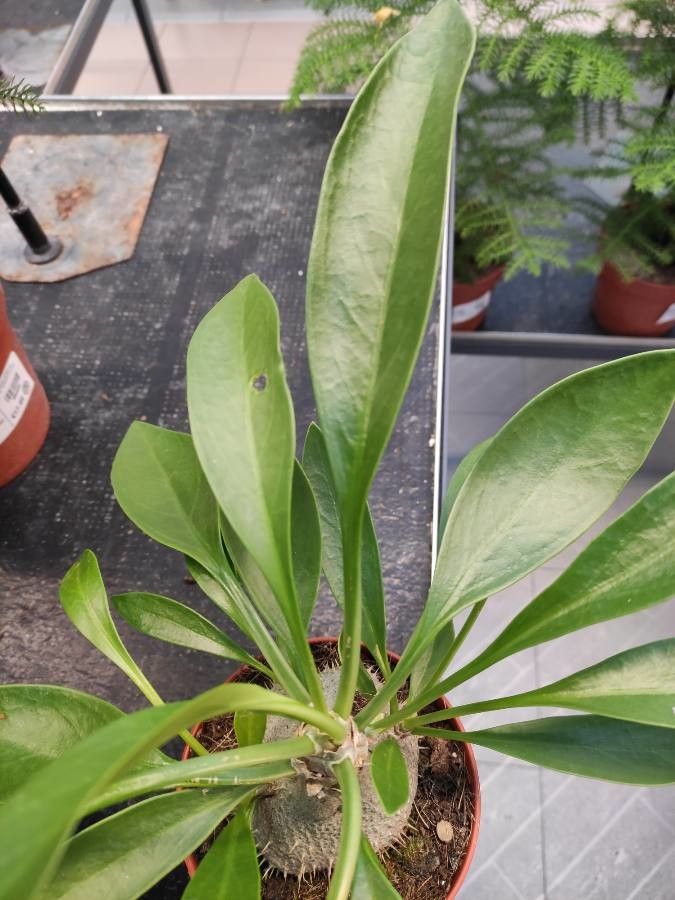
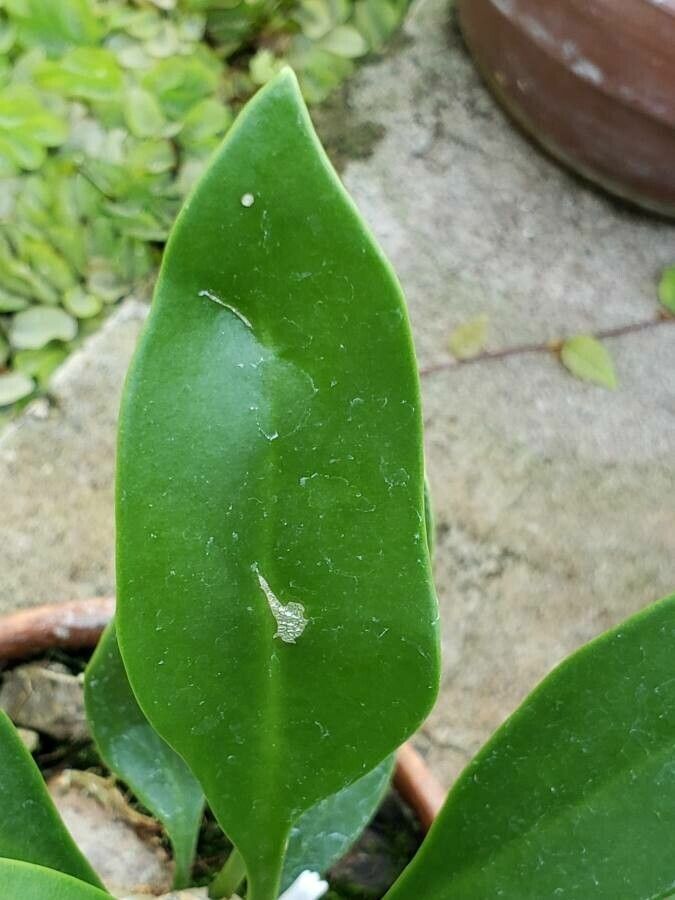
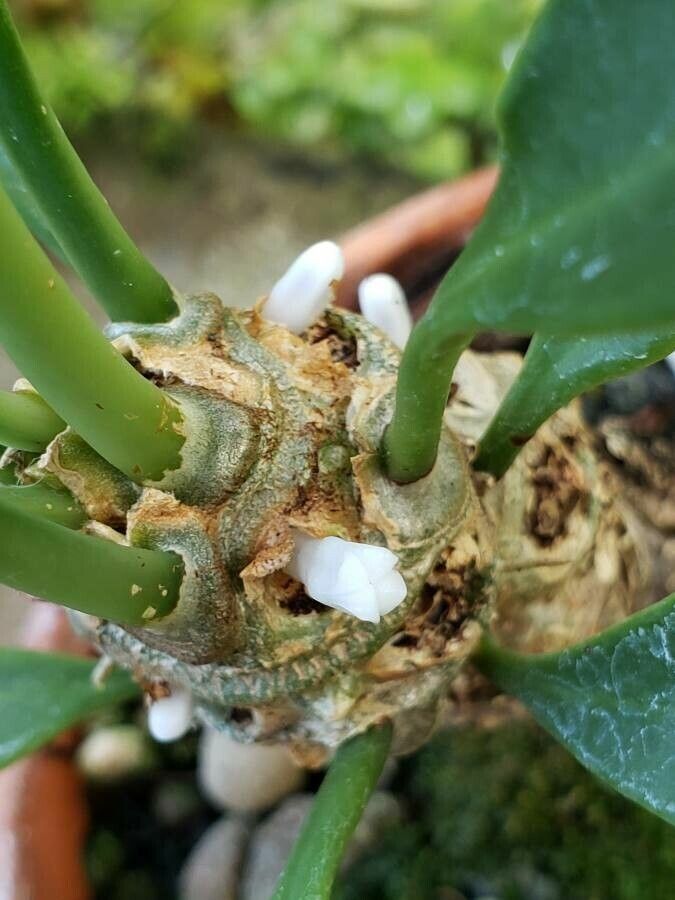
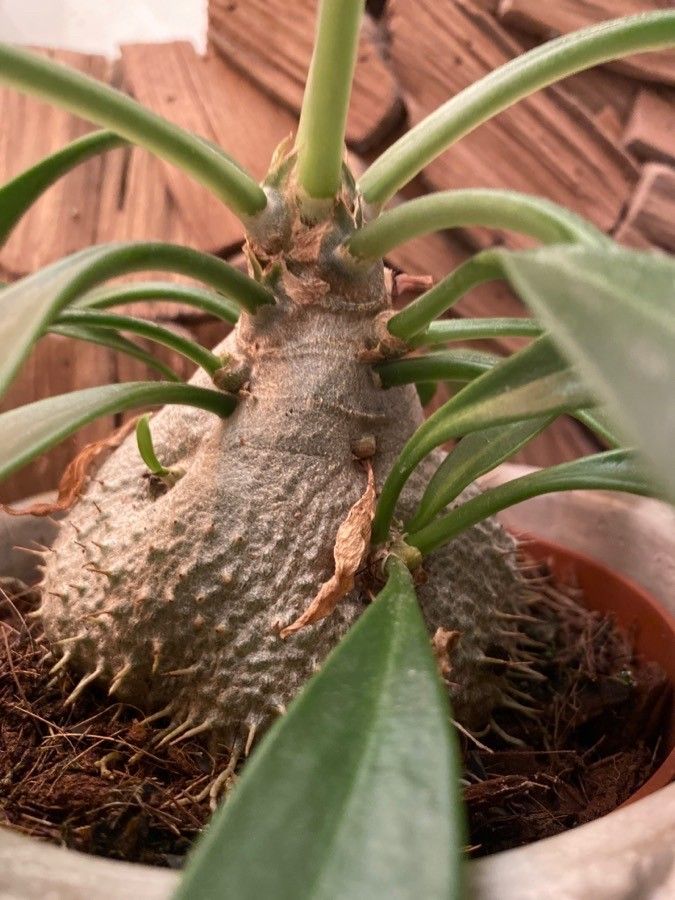
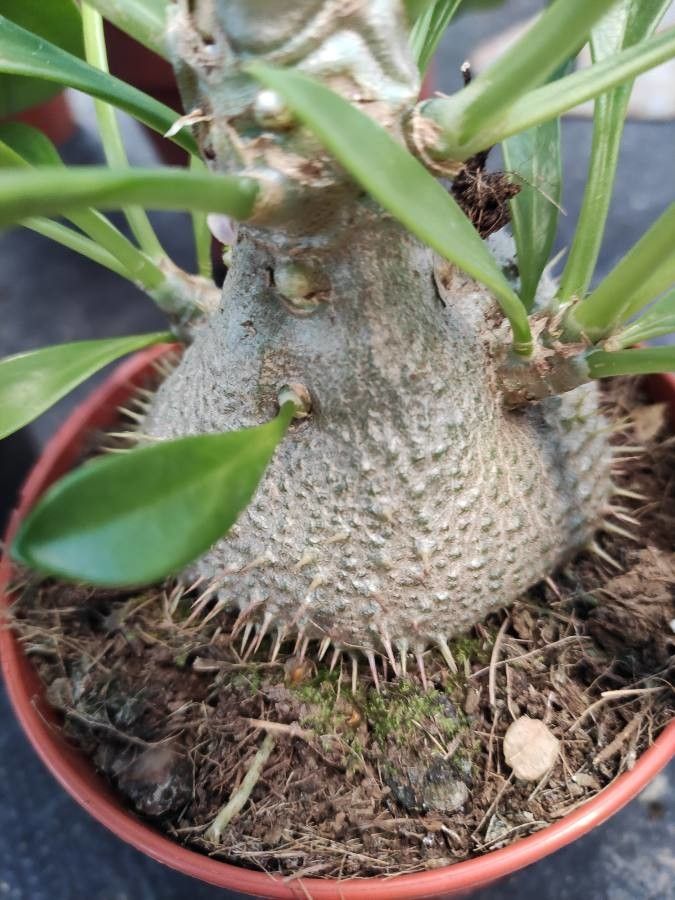
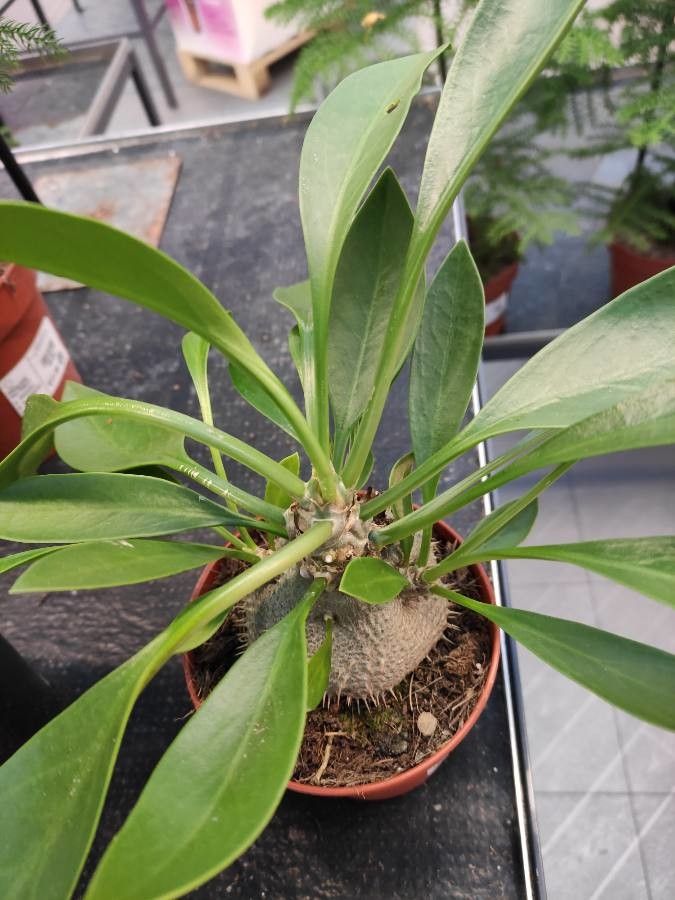
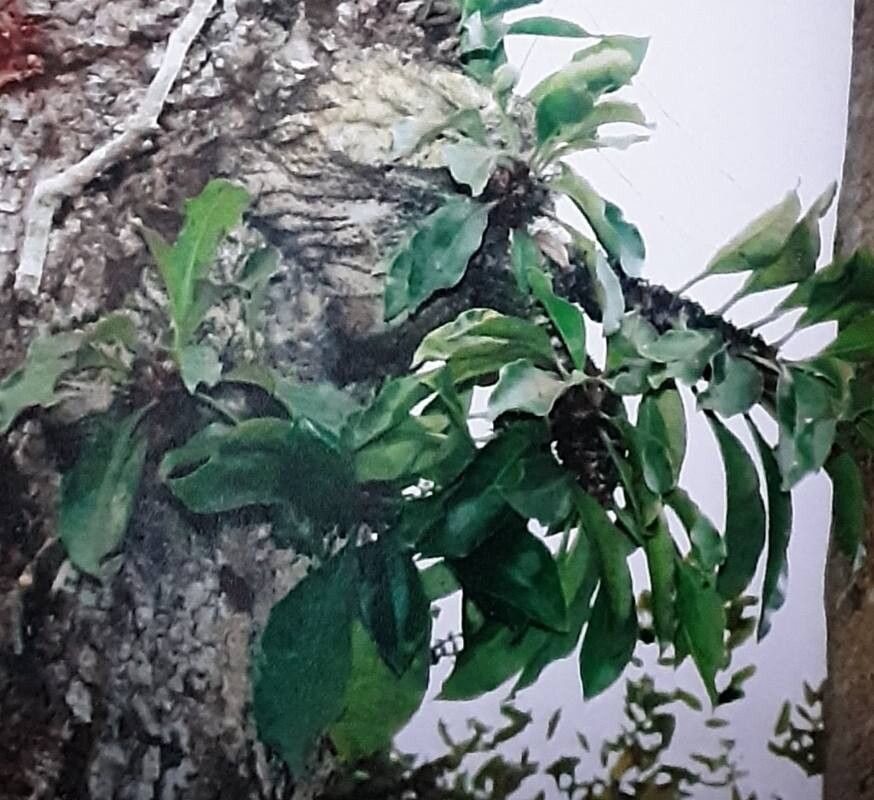
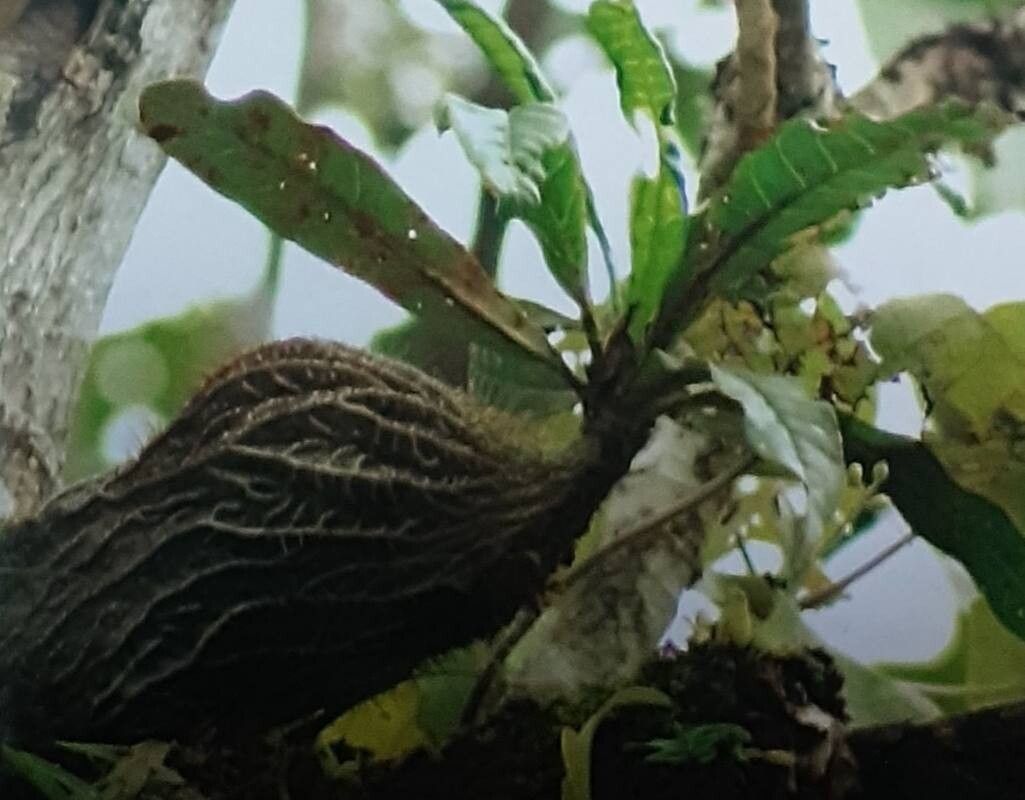
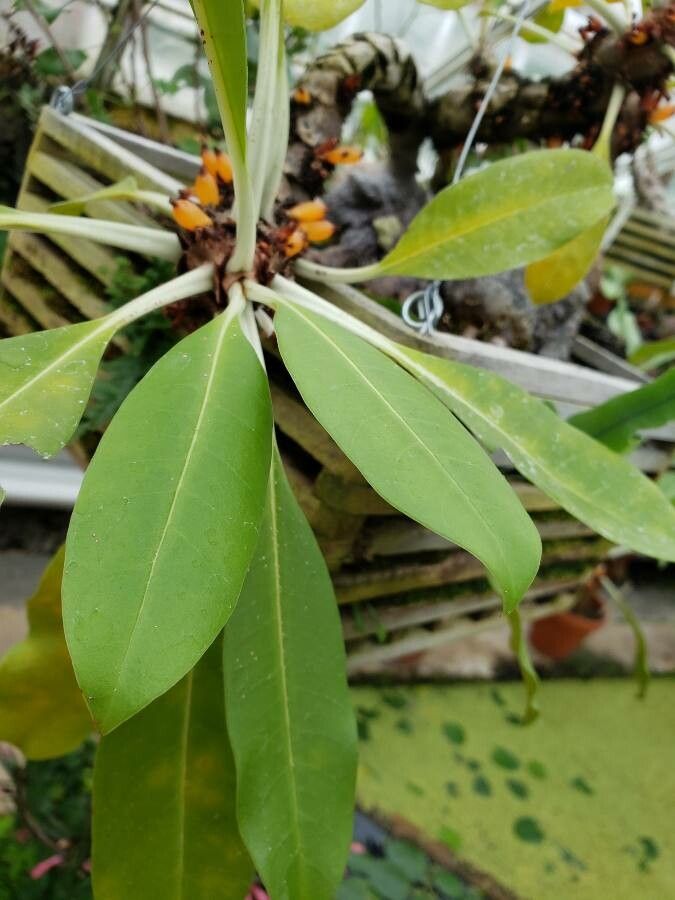
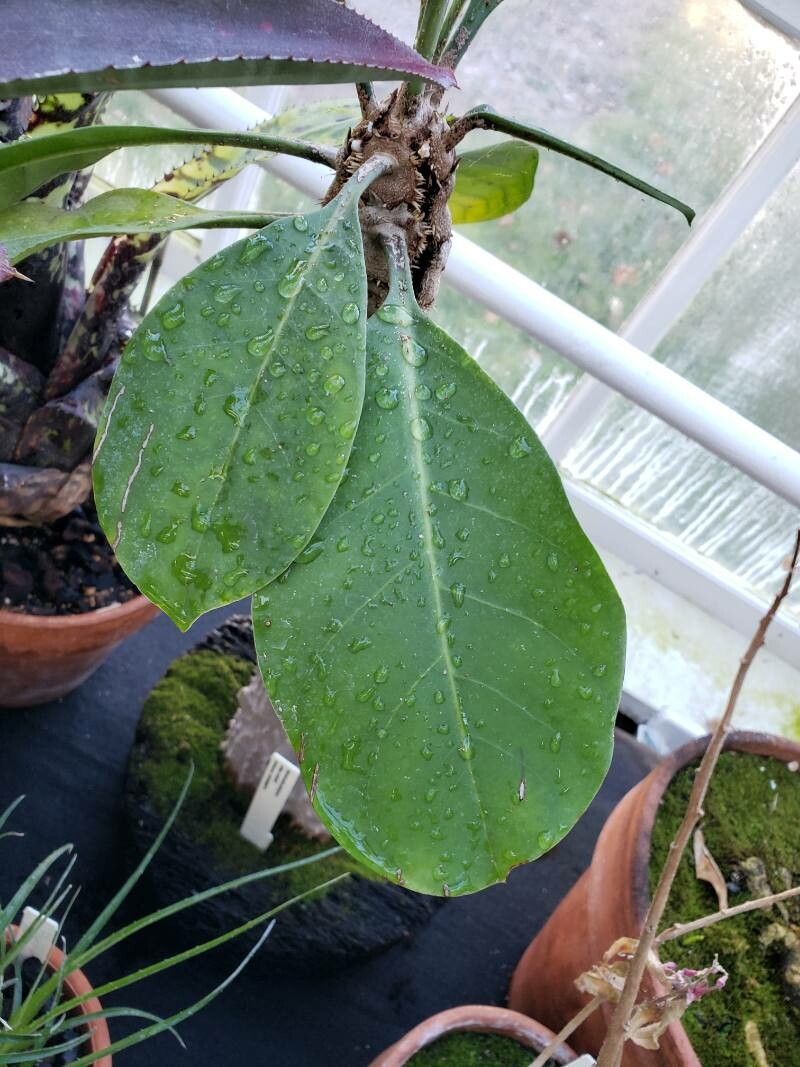
Myrmecodia beccarii, ant-house plant, is an epiphytic plant on Melaleuca trees and others with spongy bark in the wetlands and mangroves of tropical north Queensland, Australia from Cooktown to Mission Beach. The prickly, swollen stems develop natural hollows which are invaded by the golden ant (Iridomyrmex cordatus) in a symbiotic arrangement. The ants patrol the plant, removing leaf-eaters, while their excreta is absorbed by the plant for nutrition.The flowers are white and tubular, to 10 mm, and the fruit is white/translucent containing a single seed. These seeds are transported to other trees by the mistletoebird (Dicaeum hirundinaceum).The Apollo jewel butterfly (Hypochrysops apollo apollo) lays its eggs on the plant, and because they smell like ant's eggs, the ants carry the eggs inside the plant, where they develop to the butterfly stage. Hypochrysops is a genus of "blues", butterflies in the family Lycaenidae, which is notorious for its myrmecophily. Accordingly, it is likely that the larvae that hatch from the eggs feed either on food begged from the ants, or on ant larvae, or possibly both. In either event, the butterfly finally emerges and flies off.
Ant-house plant has a high degree of disease resistance and is generally not likely to get sick. Still, if it is grown in a poor environment it can become more vulnerable to disease. It also attracts few insect pests. Regarding care, this plant has moderate needs. It requires ample sunlight, since insufficient light can make it more prone to disease and cause spindly growth. Because it is often kept indoors, it may need to be relocated regularly to a brighter spot. It does not need frequent watering. Overall, Ant-house plant is appropriate for most people, though it is best for those who can provide strong light conditions.
How to keep Myrmecodia Beccarii.
Light
Ant-house plant originates from habitats such as forest understories or rocky areas, where it grows under natural shade. It prefers partial sun but can adapt to full sun or full shade, reflecting its versatile and hardy nature.
Temperature
The ant-house plant comes from tropical areas, where the climate is typically warm and humid. As a result, it is adapted to high temperatures and humidity. It dislikes abrupt temperature changes and prefers a stable temperature environment, so avoiding indoor temperature fluctuations is important. It generally does not tolerate cold and requires higher temperatures to grow. If the ambient temperature falls too low, the plant may stop growing or even die.
Fertilizer
Fertilizing is essential for the care of the Ant-house plant. Consistent feeding during the growing season preserves the energy needed for its showy leaves and supports overall growth. Failing to fertilize can lead to unhealthy leaves, reduced ornamental value, and stunted or weak growth that is more likely to break.
Pot & Repot
When repotting Ant-house plant, select a pot 1–2 inches (2.5–5.1 cm) larger with good drainage. Use a well-draining potting mix. Repot in spring or fall, making sure the root ball sits slightly lower than the rim of the flower pot. Water thoroughly after repotting and place in a warm spot with indirect sunlight.
Botanical profile.
- Plant Type
- Shrub
- Life Cycle
- Perennial
- Genus
- Myrmecodia
- Family
- Rubiaceae
- Hardiness Zone
- 10-12
- Mature Height
- 30 cm to 49 cm
- Mature Spread
- 20 cm to 40 cm
- Leaf Color
- Forest Green
- Leaf Type
- Evergreen
- Flower Size
- 0.51 cm to 1.02 cm
- Bloom Time
- All year round
- Planting Time
- Spring
- Harvest Time
- All year round
Other names.
Reader questions.
What are the sunlight requirements for the Ant-house plant (Myrmecodia beccarii)?
The Ant-house plant (Myrmecodia beccarii) thrives in areas that receive full sun, meaning it should receive above 6 hours of sunlight daily. It's important to observe the movement of sunlight through your garden to ensure that you find the best spot for your Ant-house plant that provides a perfect balance of light and shade, ensuring the plant's happiness and health.
What is the Ant-house plant?
The Ant-house plant, known botanically as Myrmecodia beccarii, does not have information on essentials or symptoms provided in the data. It seems to be a unique plant, potentially notable for its associations or characteristics related to ants, given its common name, but specific details including care instructions, symptoms of ill health, or additional interesting facts were not included in the provided dataset.