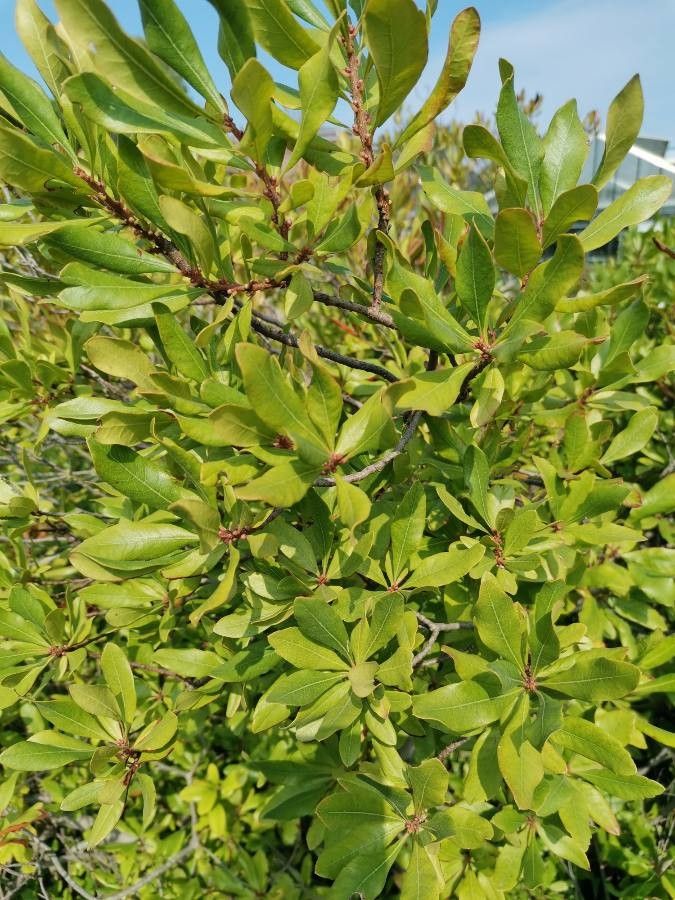
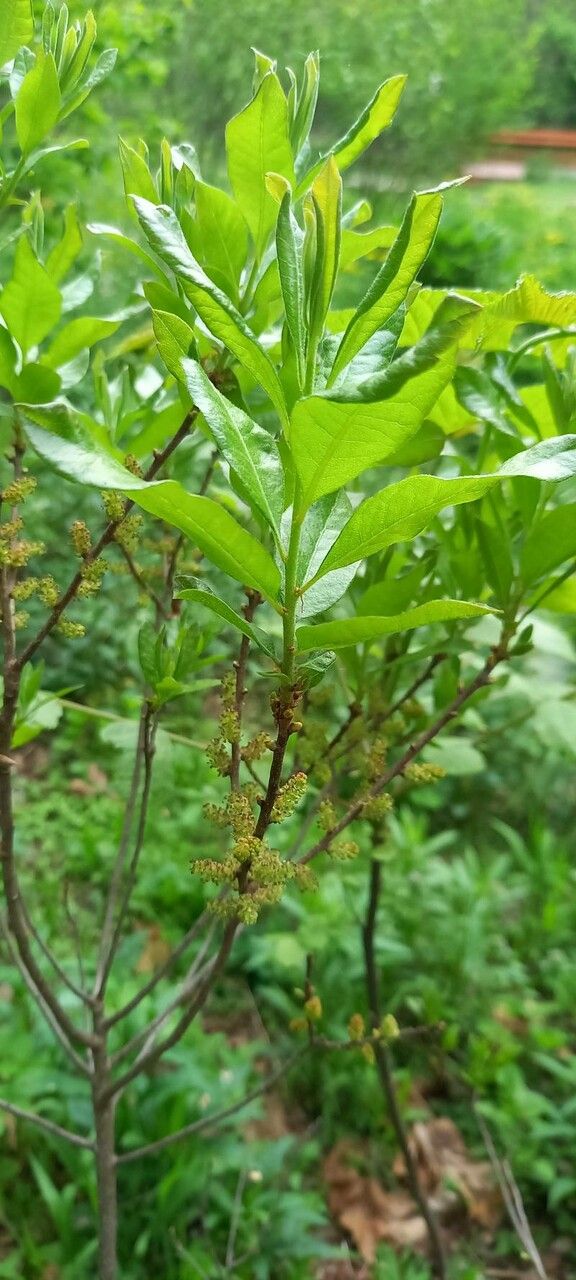
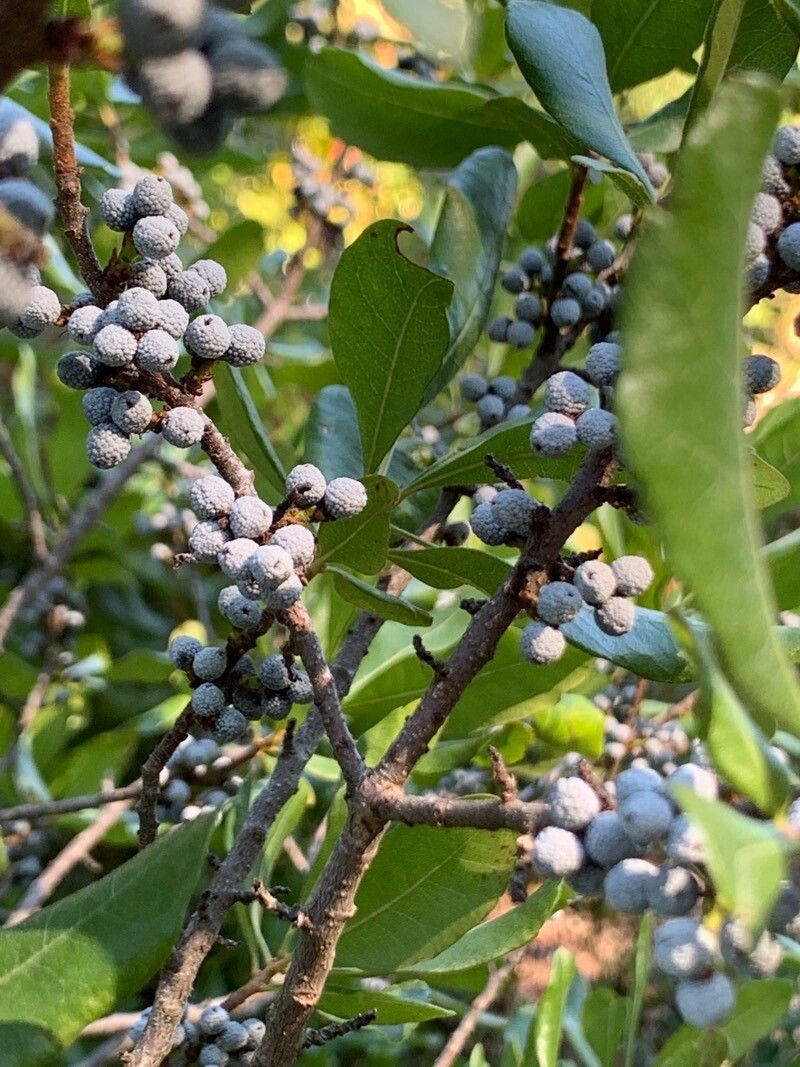
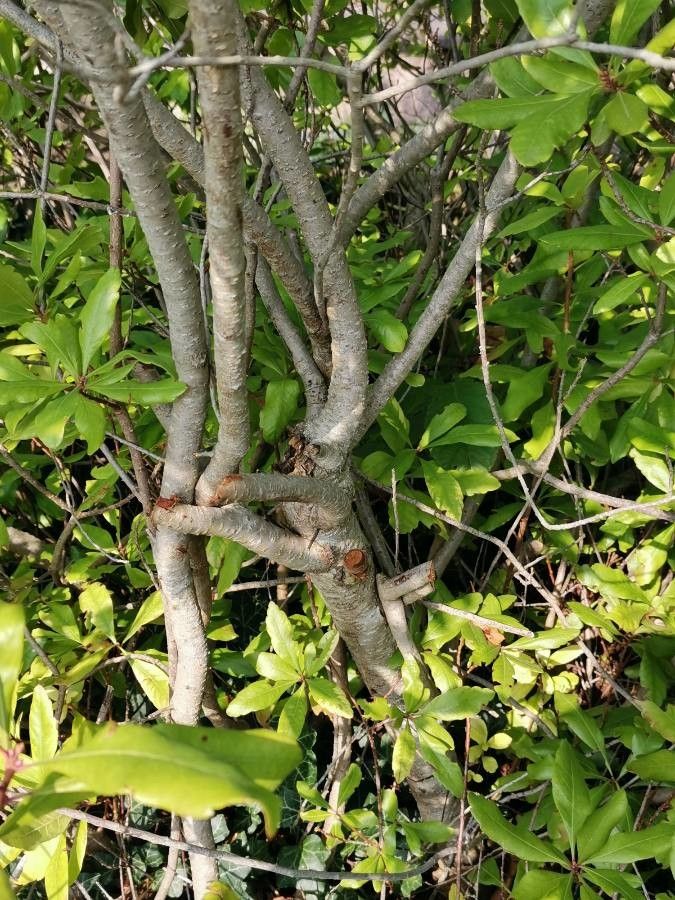
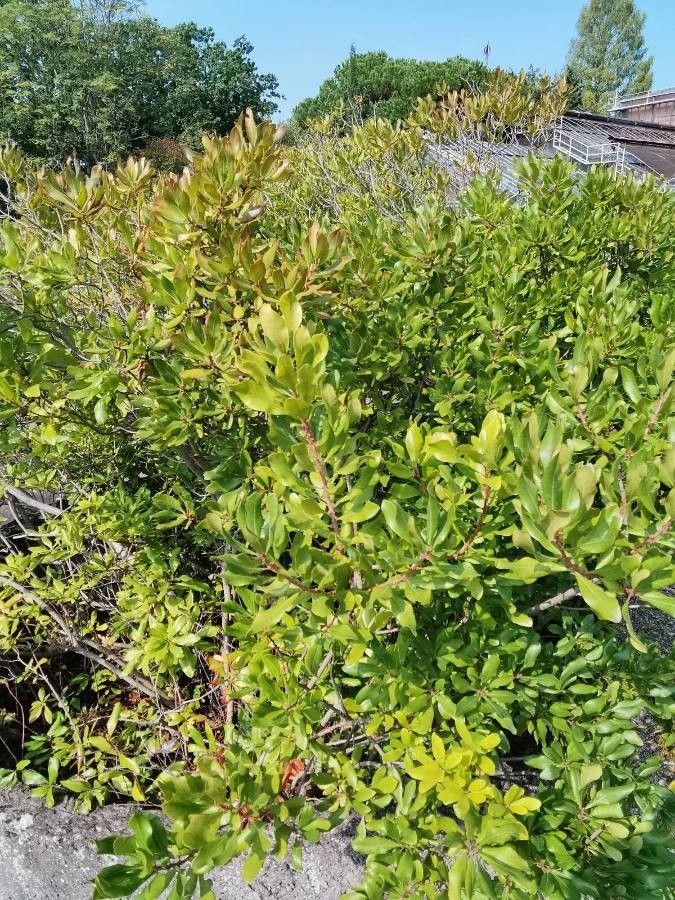
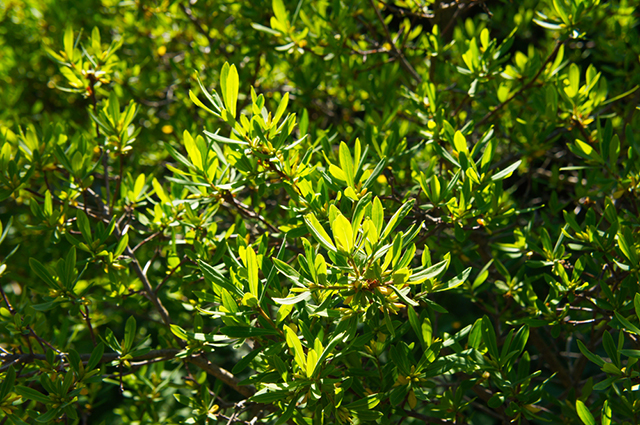
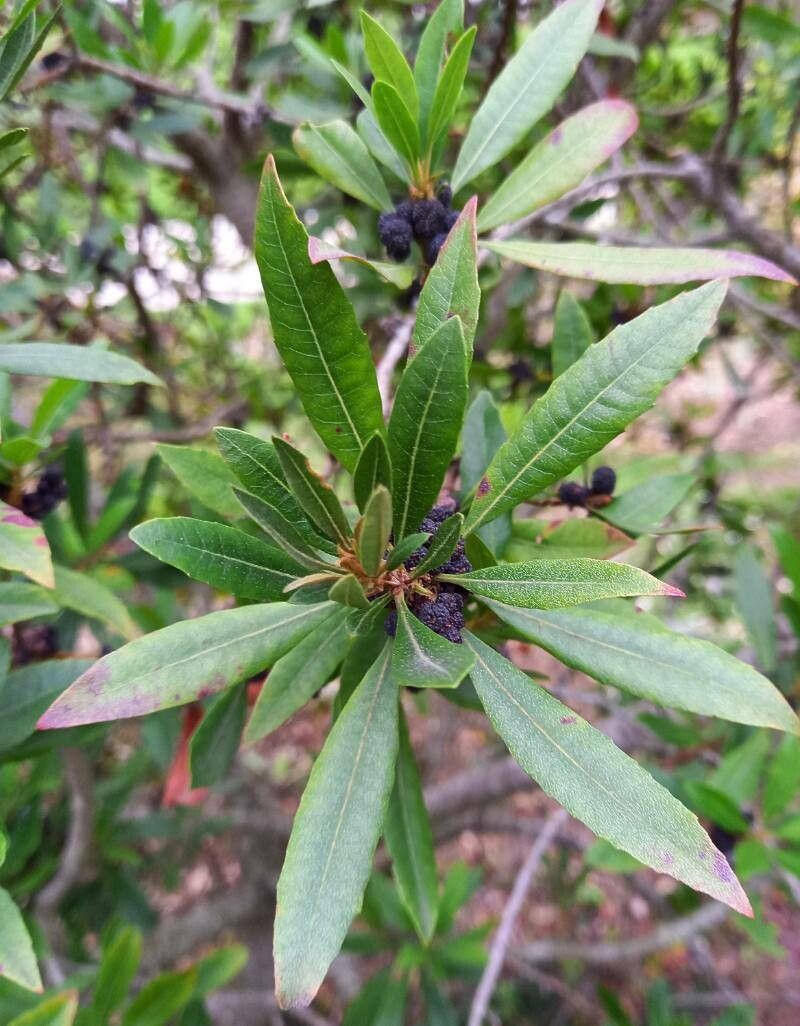
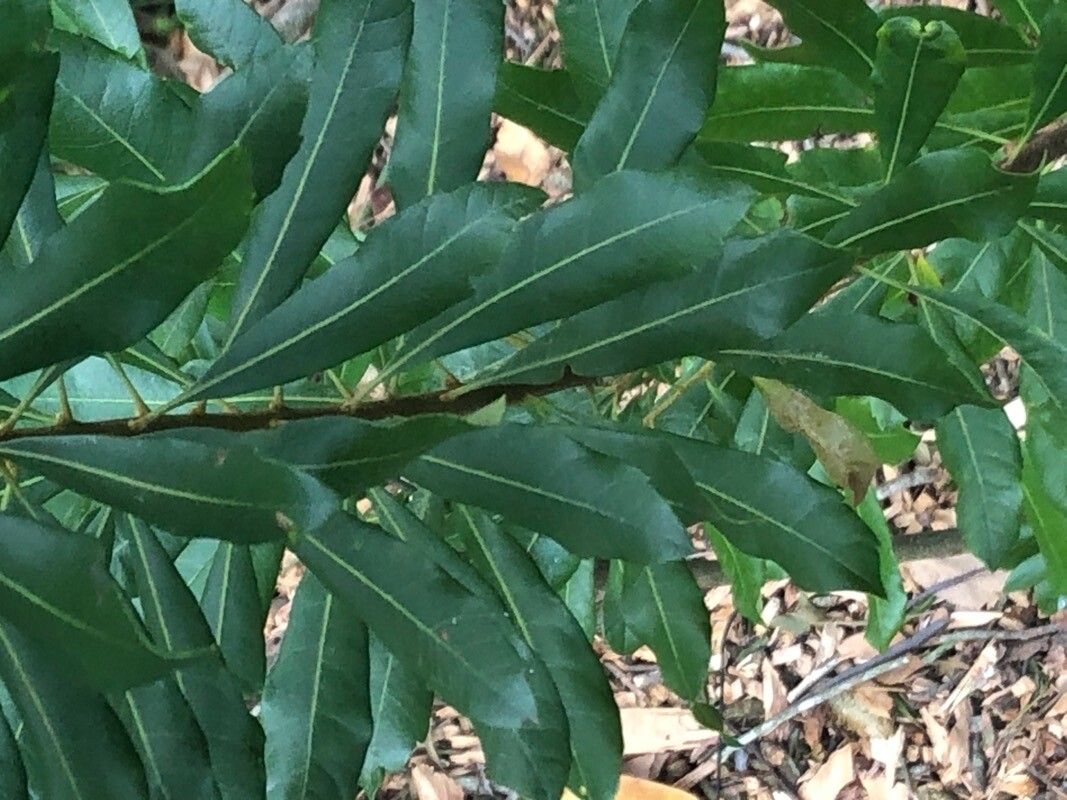
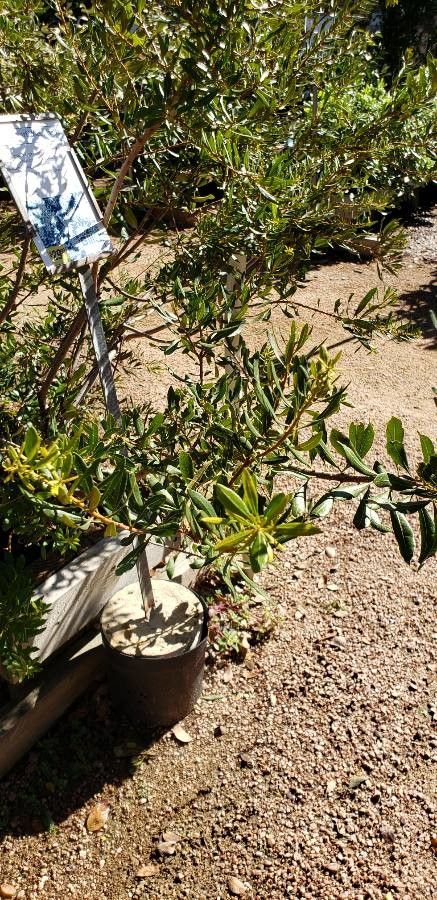
Myrica pensylvanica, the northern bayberry, is a species of Myrica native to eastern North America, from Newfoundland west to Ontario and Ohio, and south to North Carolina. It is also classified as Morella pensylvanica. Myrica pensylvanica is a deciduous shrub growing to 4.5 m tall. The leaves are 2.5–7 cm long and 1.5-2.7 cm broad, broadest near the leaf apex, serrate, and sticky with a spicy scent when crushed. The flowers are borne in catkins 3–18 mm long, in range of colors from green to red. The fruit is a wrinkled berry 3–5.5 mm diameter, with a pale blue-purple waxy coating; they are an important food for yellow-rumped warblers. This species has root nodules containing nitrogen-fixing microorganisms, allowing it to grow in relatively poor soils.
Northern bayberry is fairly disease-resistant and typically does not get sick. For care, this plant is fairly low-maintenance. When grown outdoors it needs little water, and larger specimens usually do not require pruning. Smaller plants, however, should be trimmed after they finish blooming. Northern bayberryt is appropriate for anyone with an outdoor area, like a garden or deck, and does not demand much prior care experience.
How to keep Myrica Pensylvanica.
Light
For optimal growth, northern bayberry mainly needs full sun, though it can tolerate moderately shady conditions. Native to sunny habitats, its developing fruits thrive in those conditions. Excessive shade can hinder growth, whereas too much sun does not cause damage.
Water
This shrub will tolerate wet or boggy conditions and drought well. Generally, Bayberry does not need watering as it is quite adaptable.
Temperature
Northern bayberry grows best in temperate climates and prefers temperatures from 41 to 95 ℉ (5 to 35 ℃). It comes from areas with a range of temperature patterns but generally favors cooler conditions during its growing season. In hot summer periods, it is advisable to provide shade and generous watering to prevent the plant from drying out.
Fertilizer
Apply fertilizer to your Northern bayberry in early spring to encourage healthy growth. Consistent fertilization improves overall health, producing robust growth, greater tolerance of adverse conditions, and enhanced resistance to pests and diseases. Follow a regular fertilizing routine for your Northern bayberry to maintain vibrant, deeply colored foliage and a lush appearance.
Pruning
Bayberry does not require pruning to support healthy, sturdy growth. In fact, pruning is generally avoided to prevent disturbing its naturally attractive form. If you want to rejuvenate your shrub, trim away about a third of its old growth every year for 3 years.
Pot & Repot
When repotting Northern bayberry, choose a pot 1-2 inches (2.5-5.0 cm) larger with ample drainage. Use a well-draining potting mix. Repot in spring or fall, ensuring that the root ball sits slightly lower than the rim of the flower pot. Water thoroughly after repotting and place it in a warm spot with indirect sunlight.
Botanical profile.
- Plant Type
- Shrub
- Life Cycle
- Perennial
- Genus
- Myrica
- Family
- Myricaceae
- Hardiness Zone
- 5-9
- Mature Height
- 4.57 m
- Mature Spread
- 2.44 m to 4.57 m
- Leaf Color
- Green, Blue
- Leaf Type
- Semi-evergreen, Deciduous
- Flower Color
- Yellow, Green, Orange
- Flower Size
- 0.25 cm to 1.78 cm
- Bloom Time
- Mid spring, Late spring
- Planting Time
- Spring, Autumn
- Harvest Time
- Early spring, Mid spring, Mid summer, Late summer, Fall, Winter
- Native Area
- Eastern North America
Other names.