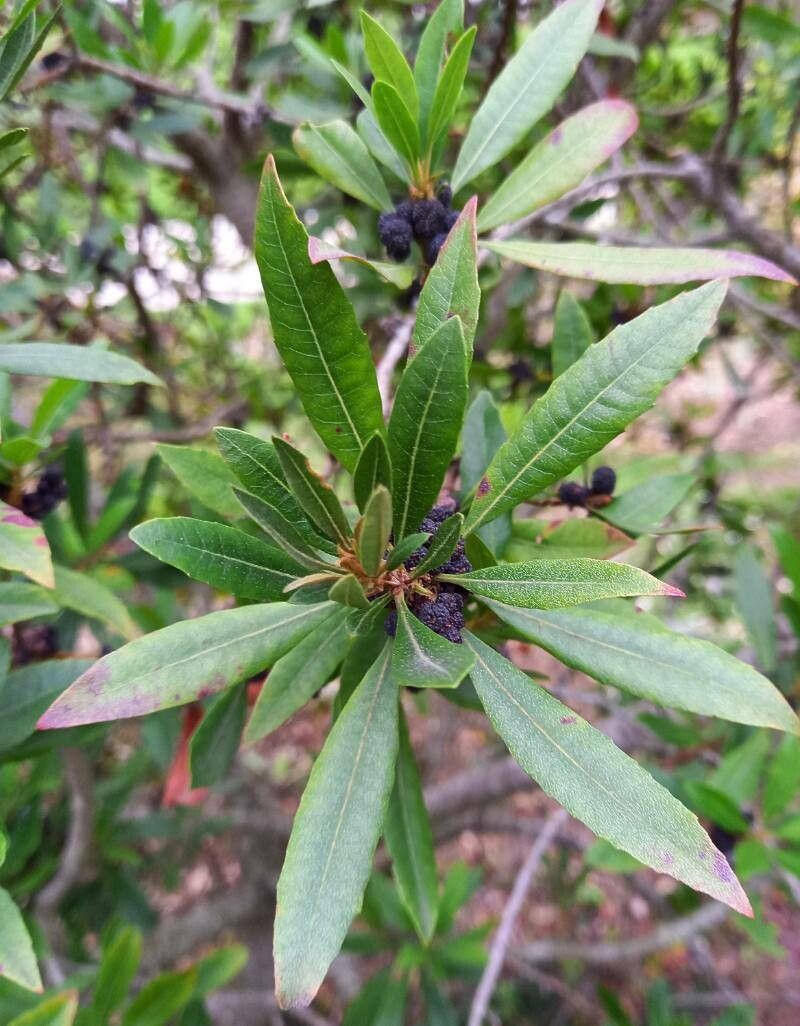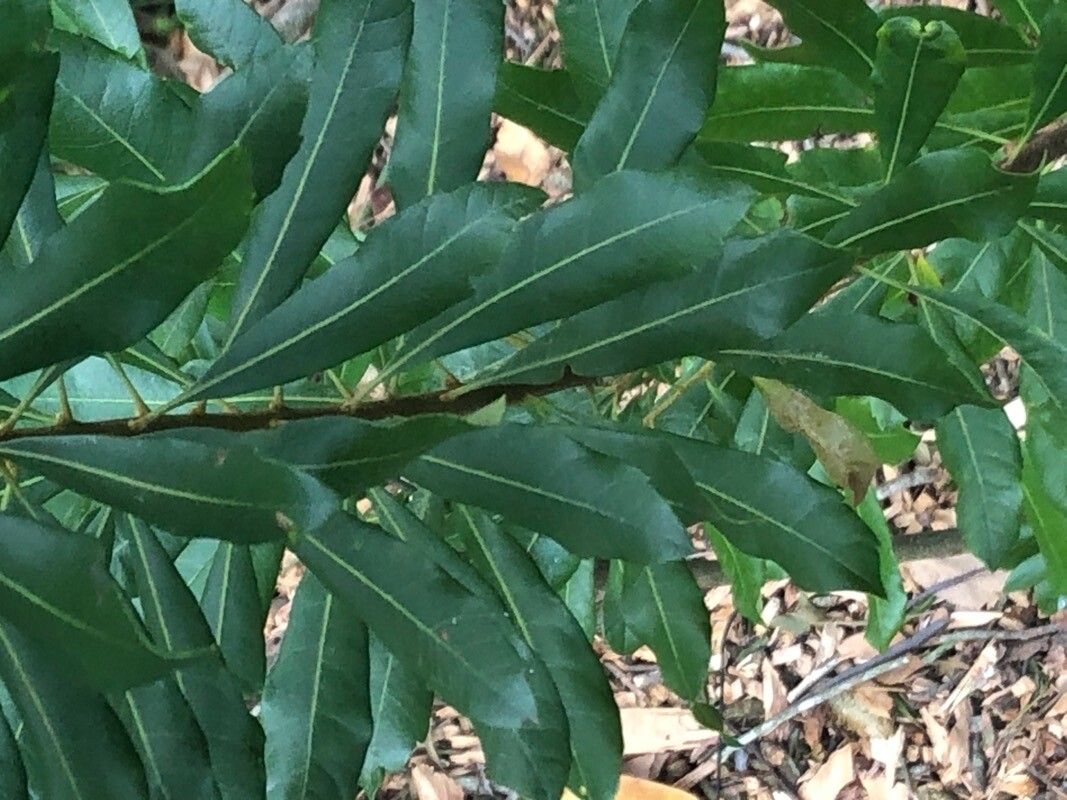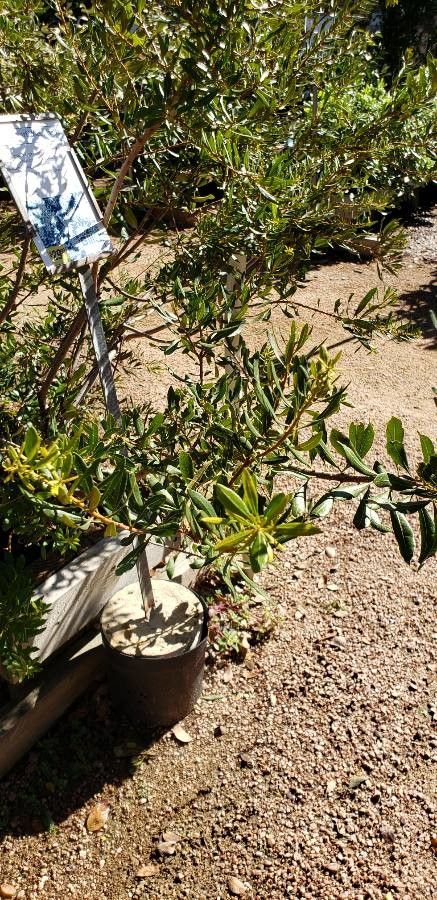
Myrica cerifera, commonly known as wax myrtle, is a small to medium-sized evergreen tree or shrub native to the southeastern United States. It can grow up to 20 feet tall and features a dense, rounded crown with dark green leaves that release a pleasant aroma when crushed. In the spring and summer, the plant produces small greenish-yellow flowers, followed by clusters of waxy blue-gray berries in the fall and winter. These berries are a vital food source for birds and other wildlife.
Wax myrtle is a popular ornamental plant in landscaping because of its attractive foliage, tolerance for various soil types, and adaptability to both full sun and partial shade conditions. Additionally, its extensive root system makes it effective for erosion control.
For centuries, Native Americans have utilized this plant for medicinal purposes, such as treating colds, coughs, fevers, and other ailments. They also used the leaves to make tea, while early settlers used the wax from its berries to create candles.
Overall, Myrica cerifera is a versatile plant with both ornamental and practical uses, making it an important part of many ecosystems throughout the southeastern United States, where it naturally thrives.
Botanical profile.
- Plant Type
- Shrub
- Life Cycle
- Perennial
- Genus
- Myrica
- Family
- Myricaceae
- Hardiness Zone
- 7-11
- Mature Height
- 14.02 m
- Mature Spread
- 7.62 m
- Leaf Color
- Green, Blue
- Leaf Type
- Evergreen
- Flower Color
- Yellow, Tan
- Flower Size
- 0.51 cm to 1.78 cm
- Bloom Time
- Mid spring, Late spring, Early summer
- Planting Time
- Spring, Autumn, Winter
- Harvest Time
- Early spring, Mid summer, Late summer, Fall, Winter
- Native Area
- Colombia, Bahamas, Belize, Cuba, Honduras, Mexico, Guatemala, Nicaragua, Costa Rica, Panama, Jamaica