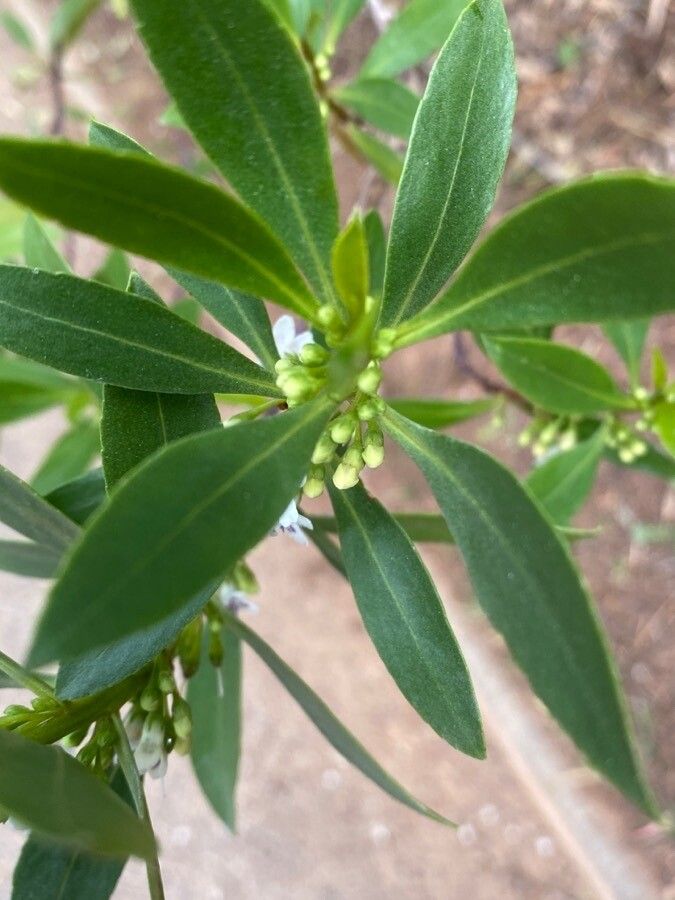
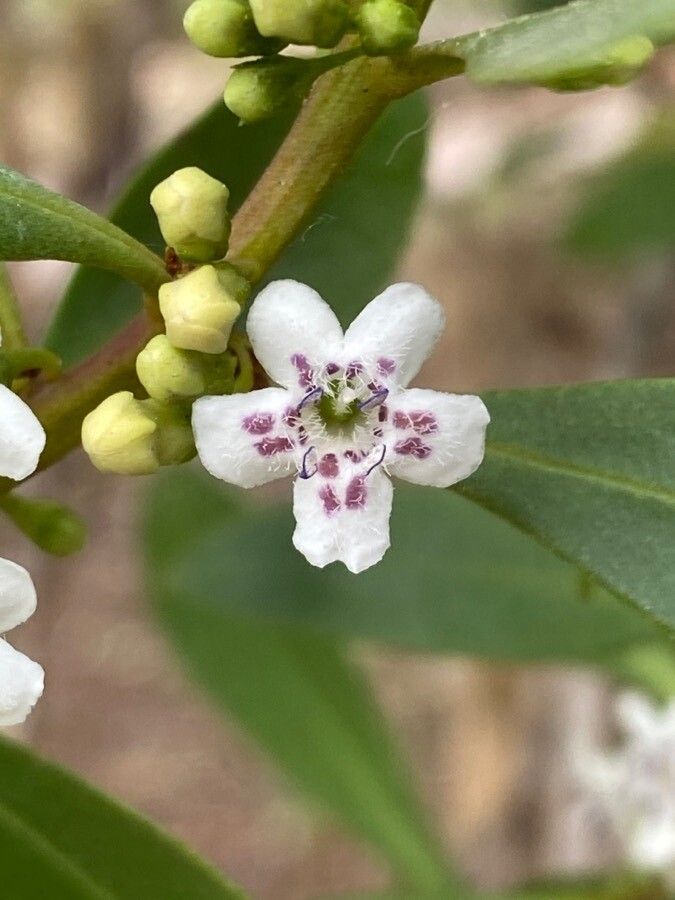
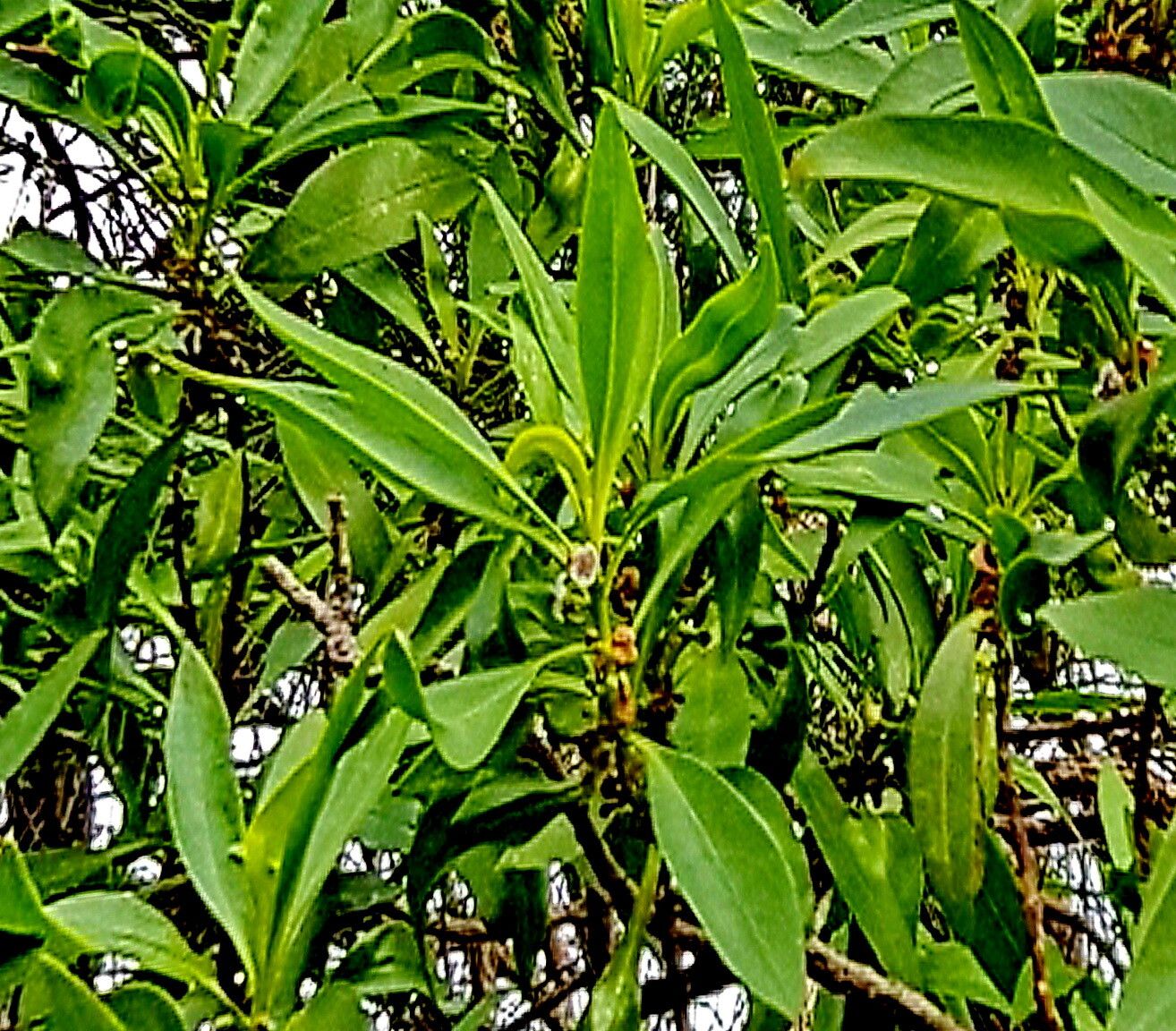
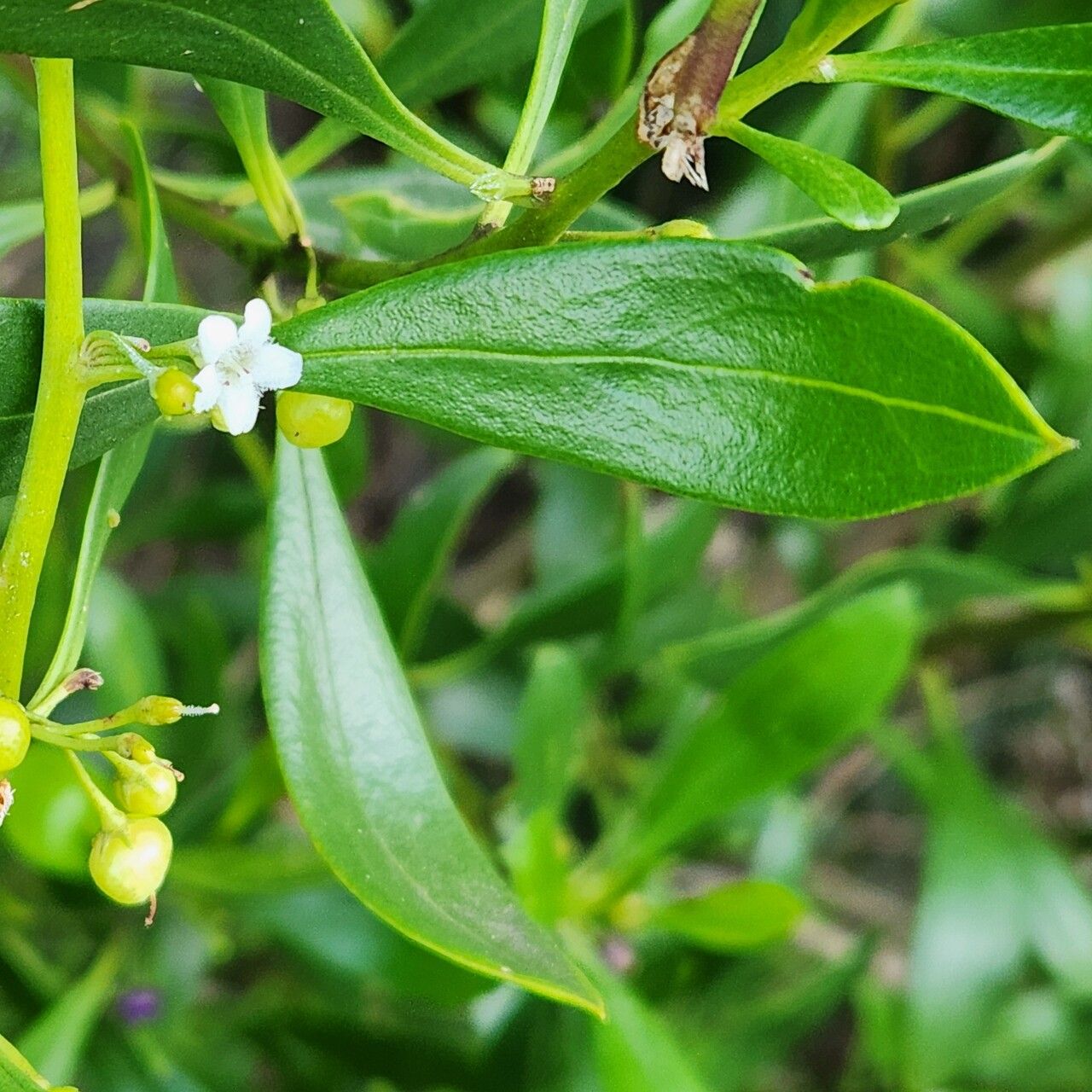
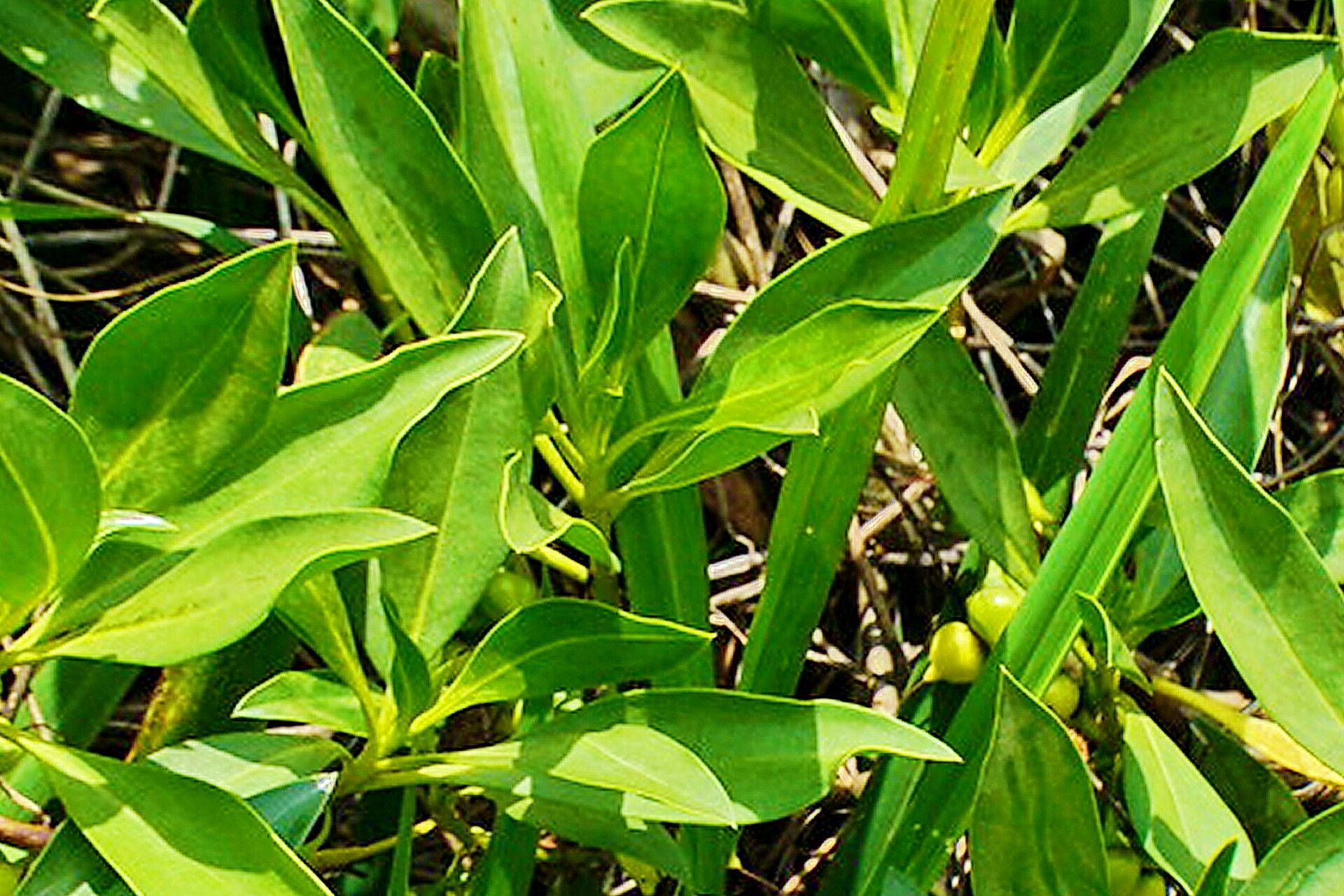
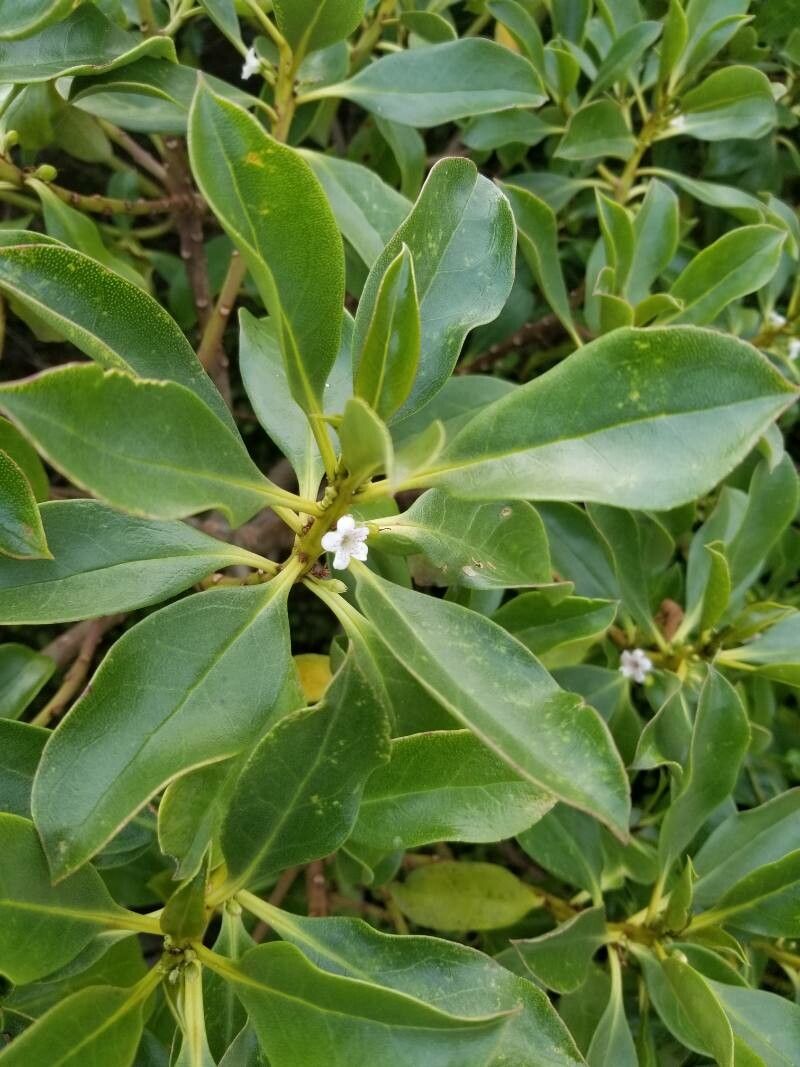
Myoporum insulare, commonly known as common boobialla, native juniper, is a species of flowering plant in the figwort family Scrophulariaceae and is endemic to coastal areas of Australia. It is a shrub or small tree which grows on dunes and coastal cliffs, is very salt tolerant and widely used in horticulture.
Native juniper is fairly disease-resistant and is generally not prone to ailments. Regarding care, this plant is relatively low-maintenance. When grown outdoors it needs minimal watering, and larger plants typically do not require pruning. However, smaller plants should be pruned after they have finished blooming. Native juniper is suitable for anyone with an outdoor space, such as a garden or deck, and does not require much experience in plant care.
How to keep Myoporum Insulare.
Light
Native juniper does best when it gets full sunlight throughout the day. Its natural habitat is an open area where light is unblocked. It needs plenty of sun at every stage of growth. Both too much and too little light can affect its healthy development.
Water
Native juniper, originally from coastal regions, thrives with infrequent watering of only every 2 to 3 weeks. Known for its resilience and suitability for outdoor environments, this plant stores water in its foliage, making it an excellent choice for xeriscaping and gardens in areas with unpredictable rainfall.
Temperature
Native juniper originates from areas where temperatures range from 59 to 100.4°F (15 to 38°C). It prefers that temperate climate but can adjust seasonally if necessary. Keep native juniper in a location that closely matches its natural temperature conditions.
Fertilizer
Fertilize your Native juniper in early spring to encourage healthy growth. Regular feeding improves overall vigor, producing robust growth, greater tolerance of harsh conditions, and stronger resistance to pests and diseases. Keep to a consistent fertilization schedule for your Native juniper to maintain foliage that is vibrant, richly colored, and lush in appearance.
Pruning
The native juniper is a hardy shrub known for its glossy leaves and white flowers. To shape the plant and promote growth, prune it from early to late winter. Be sure to remove any dead wood and thin out the branches to improve air circulation. Regular pruning helps control the size of the shrub and enhances flowering. Always use clean tools during pruning to prevent the spread of disease.
Botanical profile.
- Plant Type
- Shrub
- Life Cycle
- Perennial
- Genus
- Myoporum
- Family
- Scrophulariaceae
- Hardiness Zone
- 8-11
- Mature Height
- 3.05 m to 4.88 m
- Mature Spread
- 3.05 m to 4.88 m
- Leaf Color
- Green, Blue
- Leaf Type
- Evergreen
- Flower Color
- White
- Flower Size
- 0.76 cm
- Bloom Time
- Spring, Early summer, Mid summer
- Planting Time
- Spring, Summer, Autumn
- Harvest Time
- Summer, Early fall, Mid fall
Other names.
Reader questions.
What are the sunlight requirements for Native Juniper?
Native Juniper requires more than 6 hours of sunlight to thrive, ideally experiencing full sweeps of the sun's rays throughout the day. It is essential to select locations in your garden that provide a perfect balance of light and shade to ensure the plant’s health. Observing how sunlight moves through your garden can help in choosing the best spots for planting.
What is the native environment of the Native Juniper?
The Native Juniper is native to environments where temperatures range from 59 to 100.4°F (15 to 38°C). It thrives in temperate climates but can adapt seasonally if necessary. It's important to keep the Native Juniper in an area that closely mirrors its natural thermal habitat to ensure its well-being.
How does artificial lighting support Native Juniper growth indoors?
When natural sunlight is inadequate, especially during winter or in less sunny spaces, artificial lighting becomes crucial for promoting optimal growth in indoor plants. Choosing the right type of artificial light, such as LED lights, is important as they can be customized to provide the specific wavelengths needed by plants. For full sun plants, 30-50W/sq ft of artificial light is recommended, with the light source placed 12-36 inches above the plant and turned on for 8-12 hours per day to mimic natural sunlight conditions.
Does the Native Juniper have any cold tolerance?
Yes, the Native Juniper has some degree of cold tolerance. Generally, it does not require any special care when temperatures are above -5°C. However, if temperatures are expected to drop below -5°C, protective measures such as wrapping the plant with plastic film, fabric, or other materials should be taken to guard against the cold. These protections should be removed once the temperature rises again to avoid any potential negative impact on the plant.
What symptoms indicate light deficiency in Native Juniper?
Symptoms of light deficiency in Native Juniper include smaller new leaves, leggy or sparse growth, faster leaf drop, slower or no new growth, and lighter-colored new leaves. Conditions of excessive sunlight exposure can cause chlorosis (yellowing leaves), sunscald, leaf curling, wilting, and leaf scorching. These symptoms highlight either a need for more or less sunlight, depending on the severity and type of symptoms observed.
How should Native Juniper be cared for in low temperature conditions?
Native Juniper has a moderate tolerance to low temperatures and thrives best when the temperature is above 15°C. During winter, it is advisable to keep it above -5°C. Should temperatures fall below -10°C, the leaves may begin to droop; they can recover in mild cases, but in severe instances, the leaves will wilt and eventually fall off. To protect the plant, trim off any frost-damaged parts and, before encountering low temperatures again, wrap the plant with materials like non-woven fabric or cloth and construct a wind barrier to shield it from cold winds.
How can you address light deficiency or excess in Native Juniper?
To address light deficiency, gradually move plants to sunnier locations each week until they receive at least 6 hours of direct sunlight daily. Use south-facing windows and consider artificial lighting for additional support. Outdoors, select the best sun exposure spot, avoiding sudden changes to prevent sunburn. If sunlight is obstructed, consider pruning or relocating smaller plants to sunnier spots, ensuring ample sunlight and good drainage. Notably, parts of the plant damaged by insufficient sunlight may not recover, but new growth should be healthy with improved light conditions.
How does high temperature affect Native Juniper, and what are the solutions?
Native Juniper should be kept below 38°C during the summer to avoid heat stress. When temperatures exceed 43°C, the plant can experience symptoms such as lighter leaf color, dry and withered leaf tips, curling of the leaves, and increased susceptibility to sunburn. To mitigate these issues, trim away any sunburned or dried-up parts of the plant. Relocate the plant to a shadier location or use a shade cloth to protect it from intense midday and afternoon sun. Watering the plant in the morning and evening can help keep the soil moist and support the plant's health under high temperature conditions.