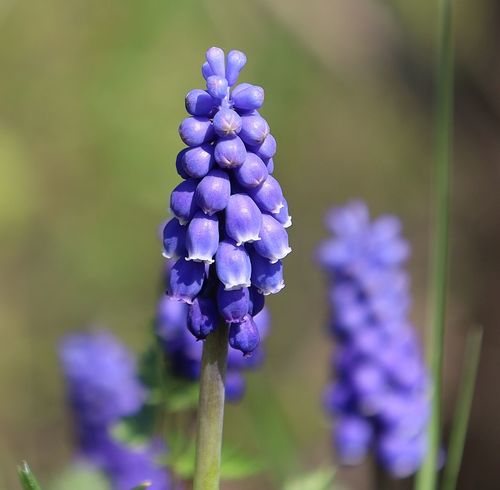
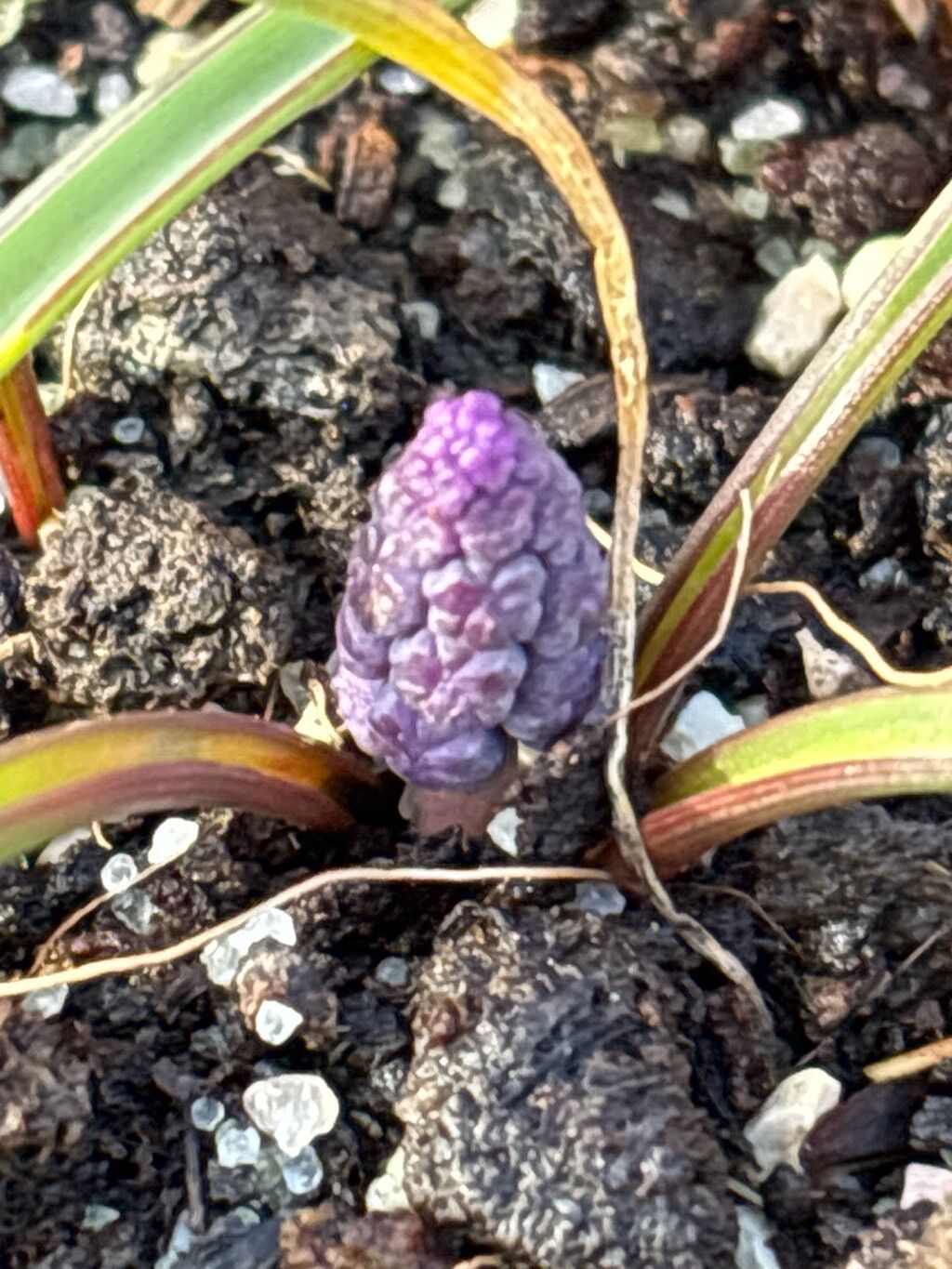
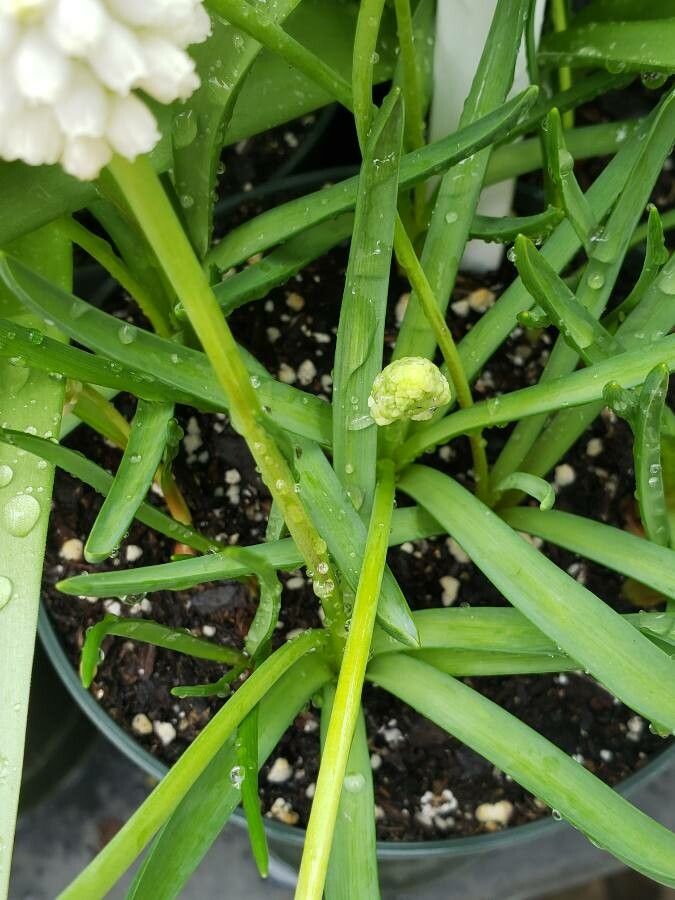
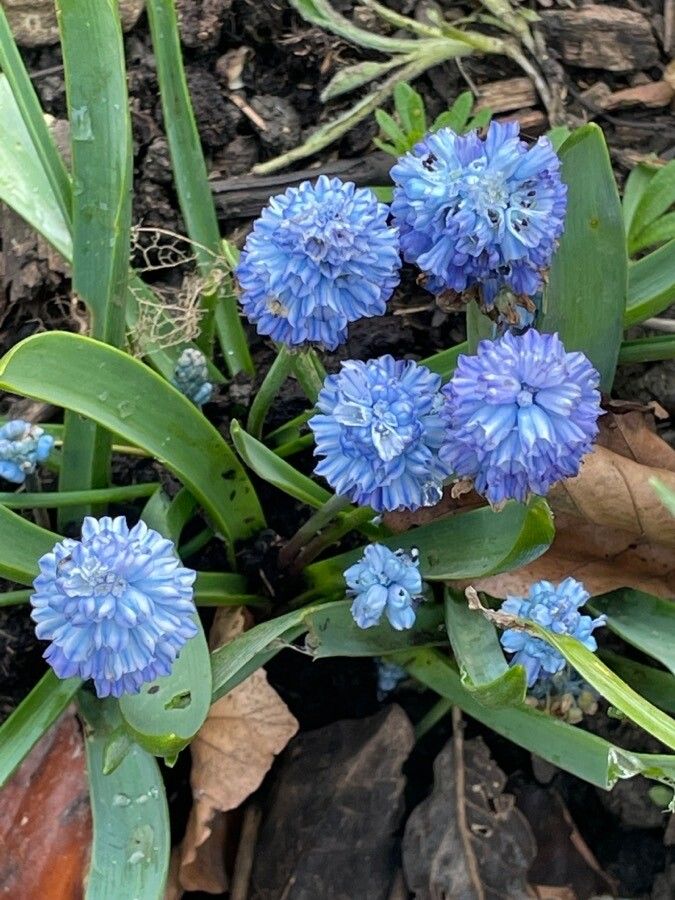
Muscari racemosum is a perennial bulbous flowering plant in the asparagus family Asparagaceae. The members of the genus are commonly known as grape hyacinths. Originally from south-west Turkey where it grows in rocky places, it is sometimes grown as an ornamental plant. It may be found in the horticultural literature under the synonym Muscari muscarimi.M. racemosum resembles M. macrocarpum (with which it has been placed in the Muscarimia group of the genus Muscari). It is a robust plant, with large bulbs which have thick fleshy roots. Each bulb produces several greyish-green leaves. Flowers are borne in a spike or raceme. Individual flowers are 7–9 mm long, grey-white when fully open, sometimes with a bluish tone; they have a distinct scent of musk. This is the species from which the genus gets its name (Muscari is from the Greek muschos, meaning musk).
Grape hyacinth is fairly resistant to disease and generally not prone to illnesses. Still, it can be vulnerable to leaf spots if light and ventilation are poor or if it is overwatered. Its care level is considered easy, since it primarily needs regular watering and little else. It is suitable for people who lack the time and energy to provide frequent care.
How to keep Muscari Racemosum.
Light
The grape hyacinth originates in open habitats that receive sunlight all day, which promotes vigorous growth and flowering. As it moves through its growth stages, occasional shade is tolerable. Excessive shade can hinder blooming, while sudden bursts of sunlight can scorch the leaves.
Temperature
Grape hyacinth is native to temperate regions and grows best when temperatures range from 68 to 95 degrees Fahrenheit (20 to 35 degrees Celsius). In climates outside this range, seasonal adjustments may be required.
Fertilizer
The best time to fertilize a Grape hyacinth is in early spring, as it comes out of dormancy and starts active growth. Fertilizing supplies essential nutrients for healthy development. Although Grape hyacinth has fairly low fertilizer requirements, applying fertilizer annually can improve its survival and encourage better, longer-lasting blooms.
Pot & Repot
It’s best to repot Grape hyacinth in early spring. Choose a pot that is wider than it is deep and provides good drainage. Use a loamy, well-draining potting mix enriched with compost. Carefully remove old soil from the bulb and plant it at a depth equal to the bulb’s height. Water well after repotting and place the pot in a sunny spot. Avoid excessive watering to prevent the bulb from rotting.
Botanical profile.
- Plant Type
- Herb
- Life Cycle
- Perennial, Annual
- Genus
- Muscari
- Family
- Asparagaceae
- Hardiness Zone
- 4-9
- Mature Height
- 15 cm to 30 cm
- Mature Spread
- 6 cm to 10 cm
- Leaf Color
- Green
- Leaf Type
- Deciduous
- Flower Color
- Purple
- Flower Size
- 0.25 cm to 0.25 cm
- Bloom Time
- Spring
- Planting Time
- Winter, Spring, Autumn
- Harvest Time
- Late spring, Early summer, Mid summer
- Native Area
- Libya, Egypt, Turkey, Austria, Slovakia, Montenegro, Pakistan, Croatia, Morocco, Uzbekistan, Russia, Iraq, Germany, Romania, Portugal, France, Tajikistan, Tunisia, Czech Republic, Cyprus, Bulgaria, Poland, Armenia, Greece, Ukraine, Lebanon, Serbia, Afghanistan, Syria, Kyrgyzstan, Italy, Spain, Switzerland, Iran, Albania, Azerbaijan, Algeria, Hungary, Turkmenistan