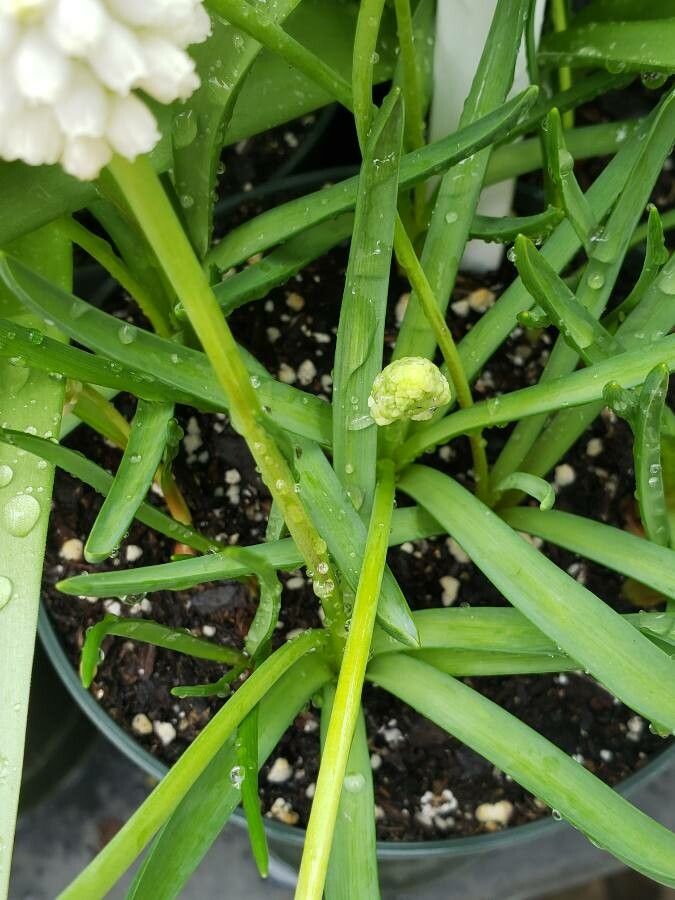
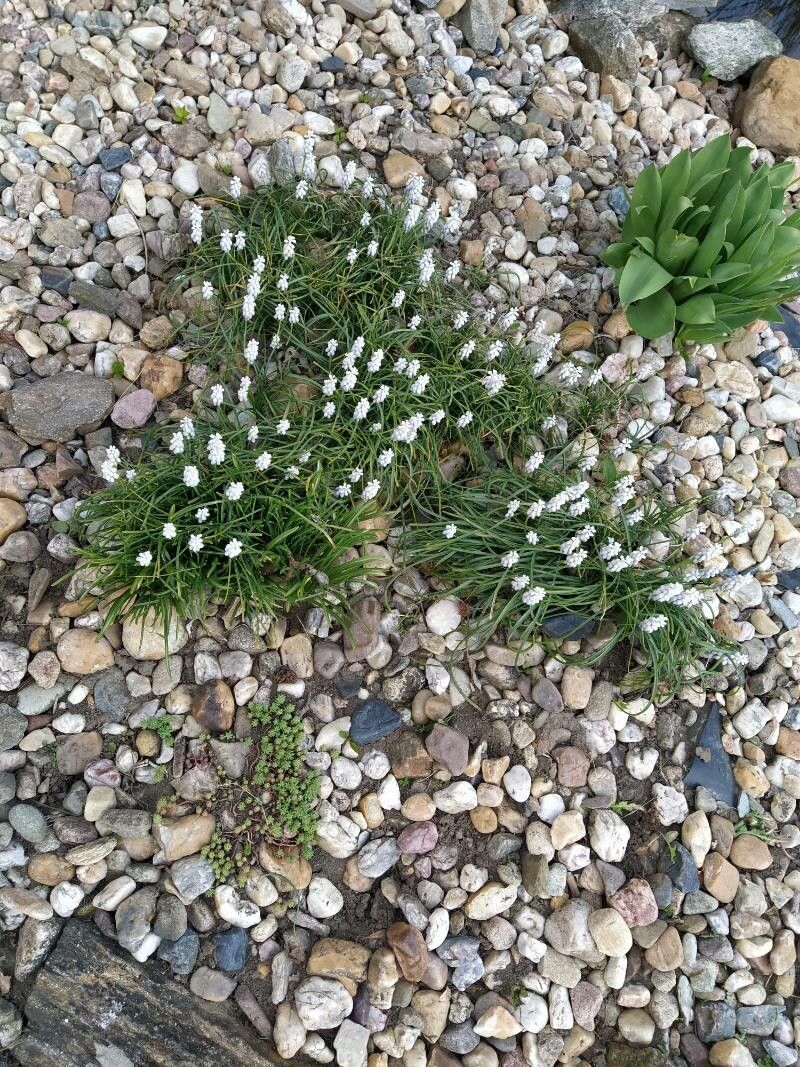
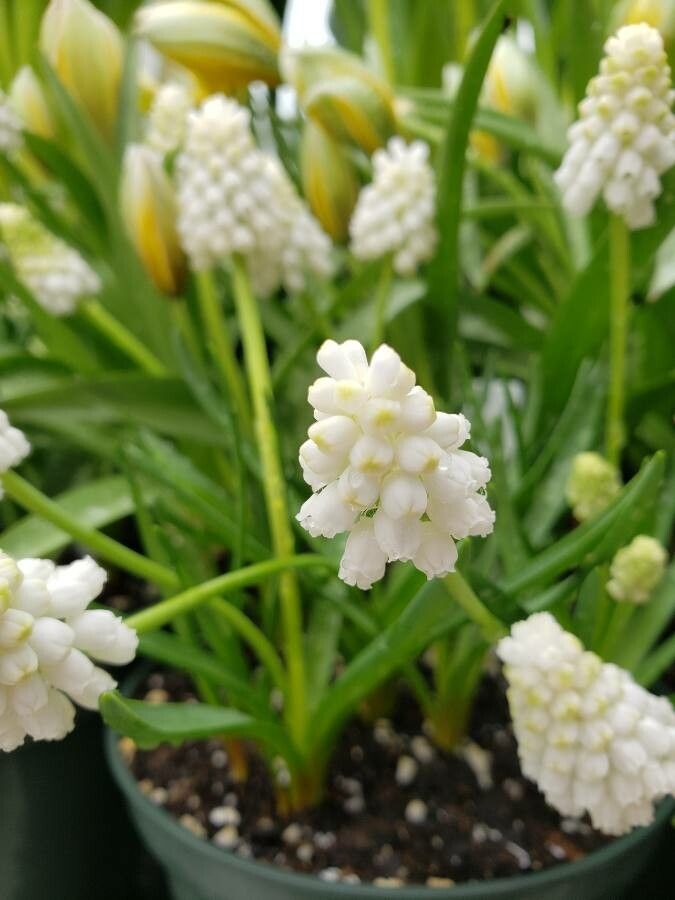
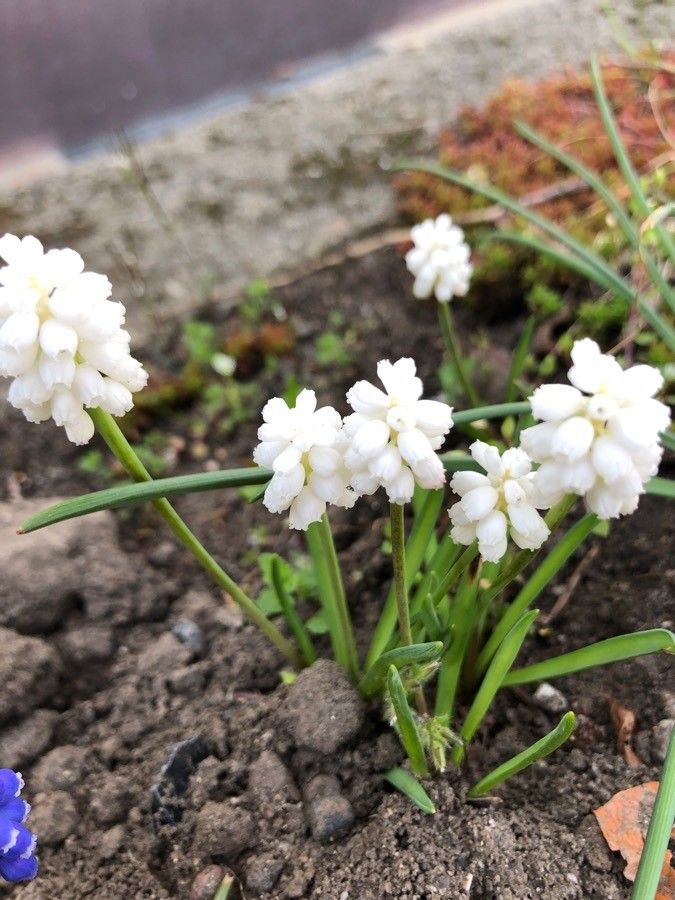
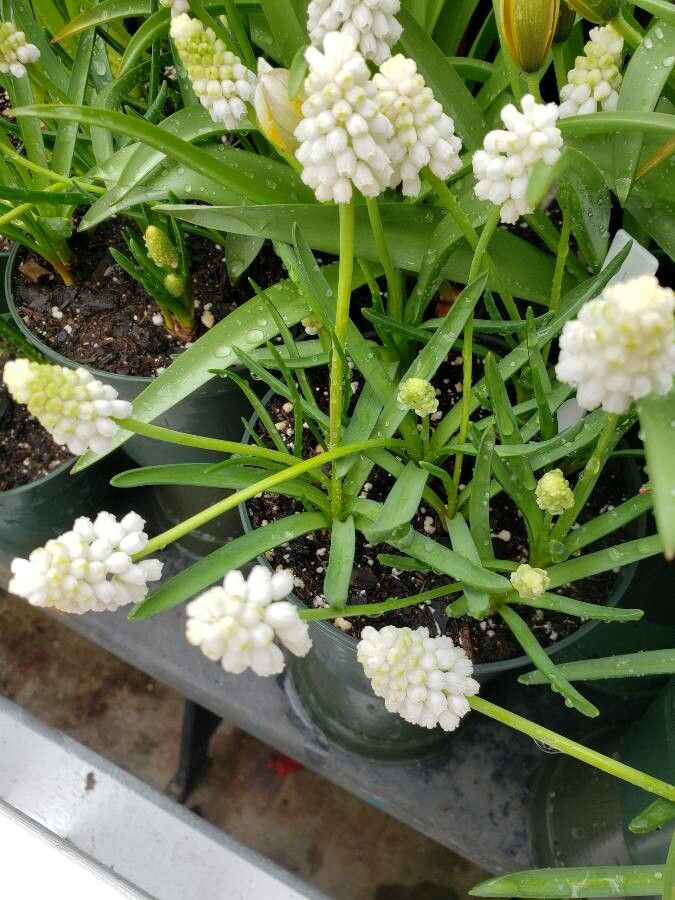
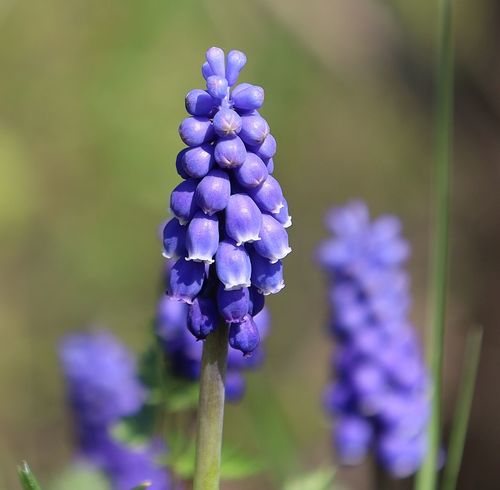
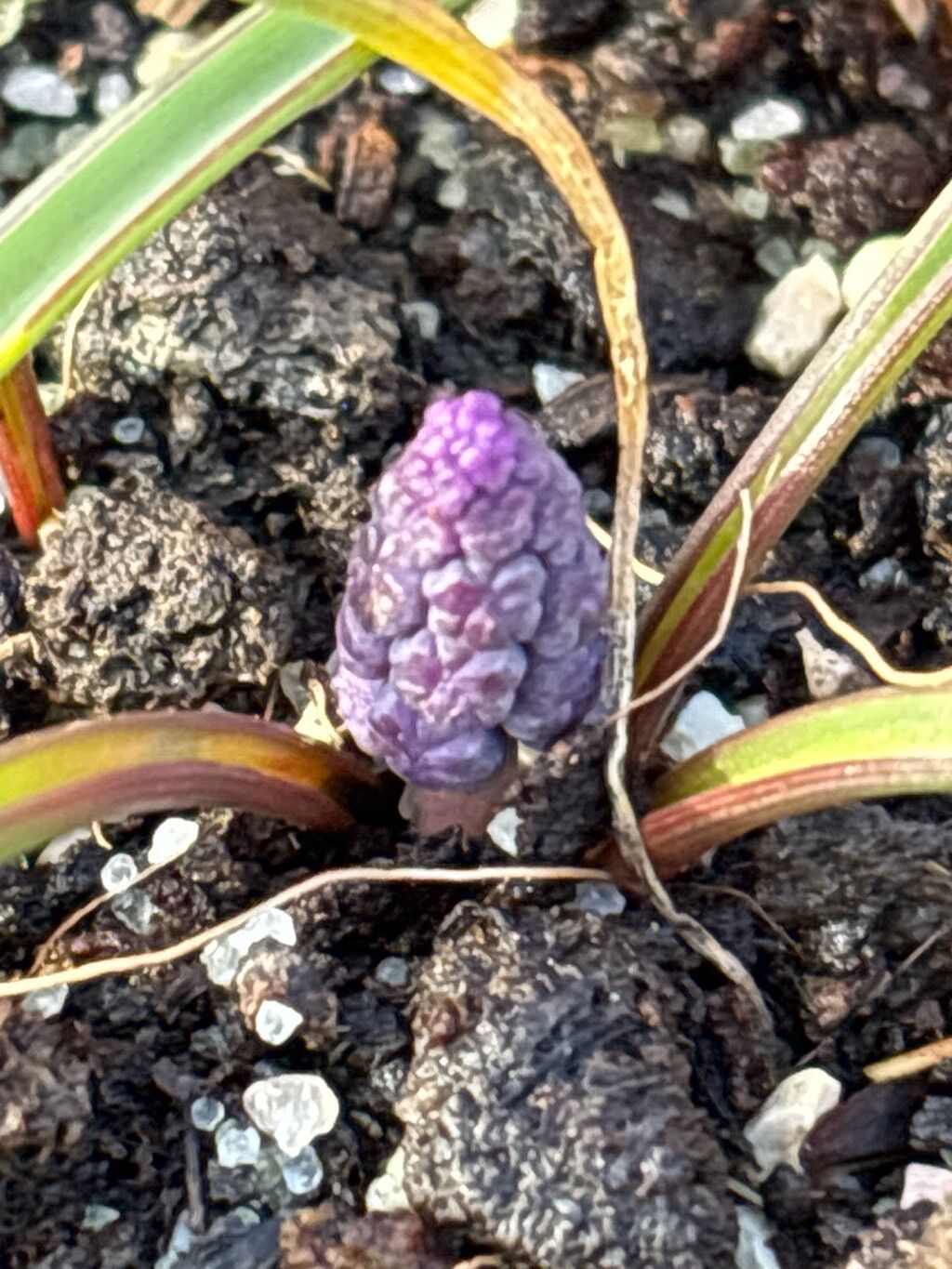
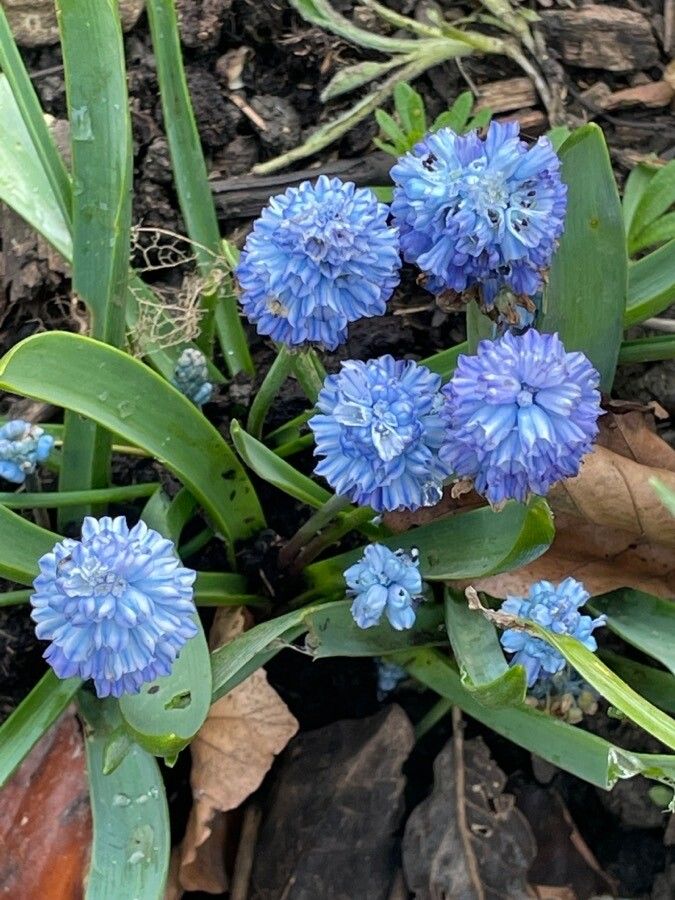
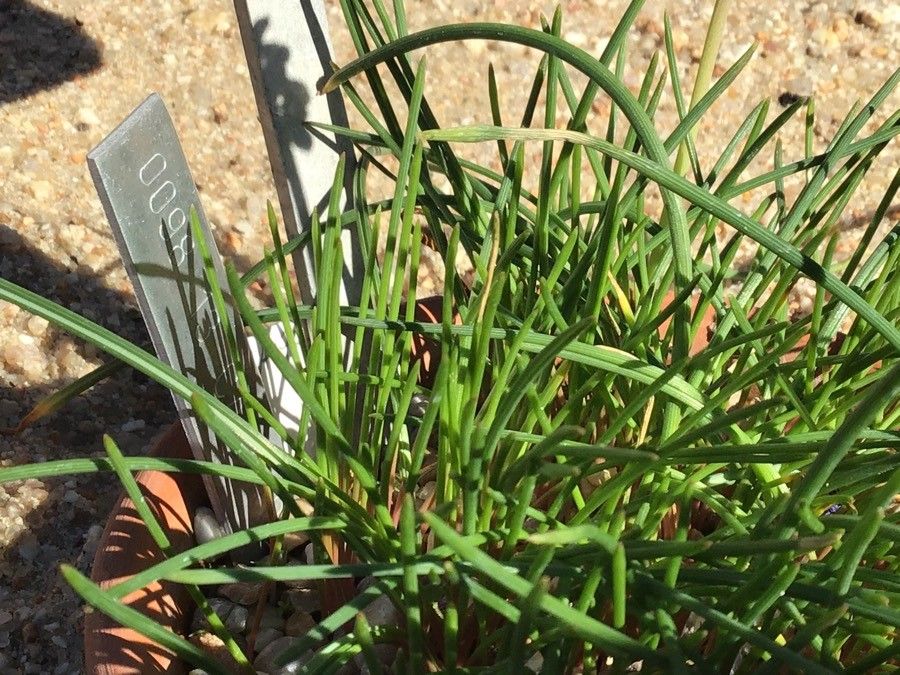
Muscari aucheri, Aucher-Éloy grape hyacinth, is a species of flowering plant in the squill subfamily Scilloideae of the asparagus family Asparagaceae. It is a perennial bulbous plant, one of a number of species and genera known as grape hyacinths. Originally from Turkey, where it grows in grassy alpine areas, it is sometimes grown as an ornamental plant. The synonym M. tubergenianum (also spelt M. tubergianum) may be found in the horticultural literature.The Latin specific epithet aucheri honours the French pharmacist and botanist Pierre Martin Rémi Aucher-Éloy (1792-1838) (one of numerous plants named for him).
The blue grape hyacinth is fairly resistant to disease and usually not prone to illnesses. However, it can be vulnerable to pests and diseases present in its environment. These problems are typically not severe. In terms of care, this plant needs moderate maintenance. It should be pruned regularly to maintain a neat appearance and healthy growth. Fertilizing can also aid in encouraging flowering. Blue grape hyacinth is suitable for anyone with outdoor space, such as a garden or patio, and does not demand extensive care experience. It may need more attention when grown indoors.
How to keep Muscari Aucheri.
Light
The blue grape hyacinth is a sun-loving perennial herbaceous plant native to open habitats, commonly found in meadows and grasslands. It prefers full sun but can also tolerate partial sun.
Water
The blue grape hyacinth thrives in temperate zones and prefers soil that is consistently moist but not waterlogged, requiring watering about once a week. Morning dew provides additional humidity, which encourages lush growth, making this plant ideal for garden borders and rockeries.
Temperature
Blue grape hyacinth can adjust to a wide variety of temperature conditions, but its distribution may still be limited by different combinations of water and heat conditions. It does best in warm summer climates with sufficient rainfall or watering. Extended periods of cloudy, rainy weather, as well as prolonged high temperatures, can increase the likelihood of Blue grape hyacinth dying. In winter, providing proper protection against cold can improve the plant's survival rate.
Fertilizer
The best time to fertilize a Blue grape hyacinth is in early spring, as it is coming out of dormancy and beginning active growth. Fertilization supplies essential nutrients needed for healthy growth. Although Blue grape hyacinth has fairly low fertilizer requirements, applying fertilizer annually can boost its survival and encourage better, longer-lasting flowers.
Pruning
The blue grape hyacinth showcases vibrant clusters of blue flowers and benefits greatly from strategic pruning. To maintain their health and enhance their beauty, prune these plants between early and late spring. Be sure to remove the spent flowers, but avoid cutting the green leaves, as they play a crucial role in storing nutrients. Consistent pruning encourages blooming and helps prevent disease, ensuring a healthy and visually appealing garden display.
Pot & Repot
Blue grape hyacinths are perfect for gardens and should be repotted every 2-3 years during their dormant period in the spring. When repotting, use a slightly larger pot filled with well-draining soil. Be sure to water moderately to prevent rot, which will help ensure a vibrant display of blooms the following spring.
Botanical profile.
- Plant Type
- Herb
- Life Cycle
- Perennial
- Genus
- Muscari
- Family
- Asparagaceae
- Hardiness Zone
- 4-8
- Mature Height
- 20 cm
- Mature Spread
- 10 cm
- Leaf Color
- Green, Gray, Silver
- Leaf Type
- Deciduous
- Flower Color
- Blue
- Flower Size
- 0.51 cm to 0.76 cm
- Bloom Time
- Early spring, Mid spring
- Planting Time
- Autumn, Winter
- Harvest Time
- Late spring, Early summer
- Native Area
- Turkey
Reader questions.
What are the sunlight requirements for Blue Grape Hyacinth (Muscari aucheri)?
Blue Grape Hyacinth (Muscari aucheri) thrives under specific sunlight conditions to ensure its growth and happiness. For optimal growth, the plant requires 'Full sun', which is defined as receiving above 6 hours of sunlight a day. However, it can also manage in 'Partial sun' conditions, where it gets about 3-6 hours of sunlight daily. It's essential to observe how sunlight moves through your garden throughout the day to choose spots offering the ideal balance of light and shade that best suits the plant's needs.
What is the common name of Muscari aucheri?
The common name of Muscari aucheri is Blue Grape Hyacinth.
What is the botanical name of the Blue Grape Hyacinth?
The botanical name of the Blue Grape Hyacinth is Muscari aucheri.