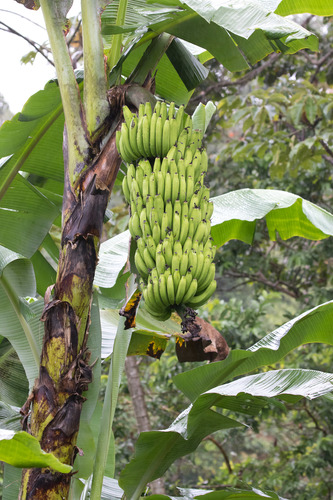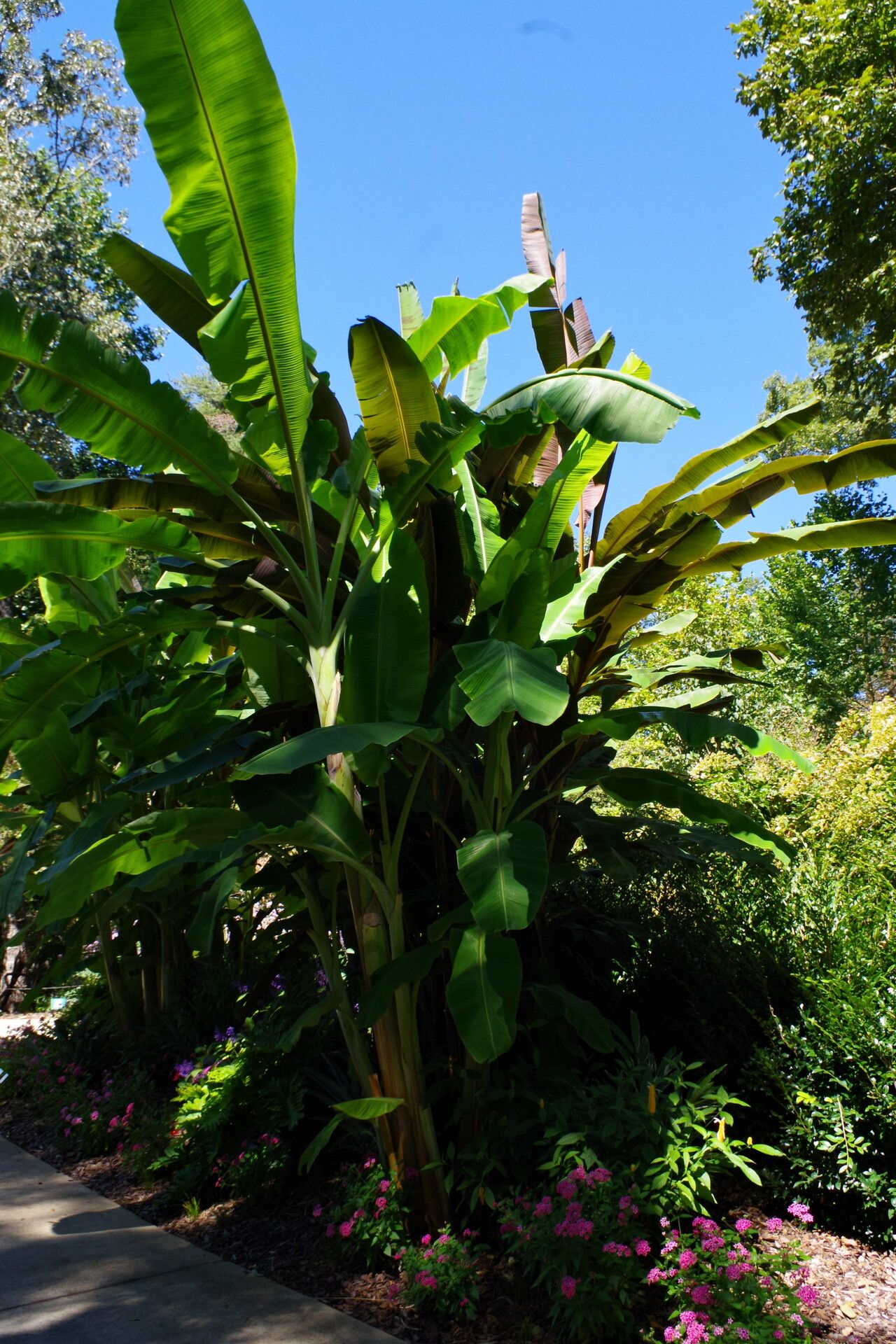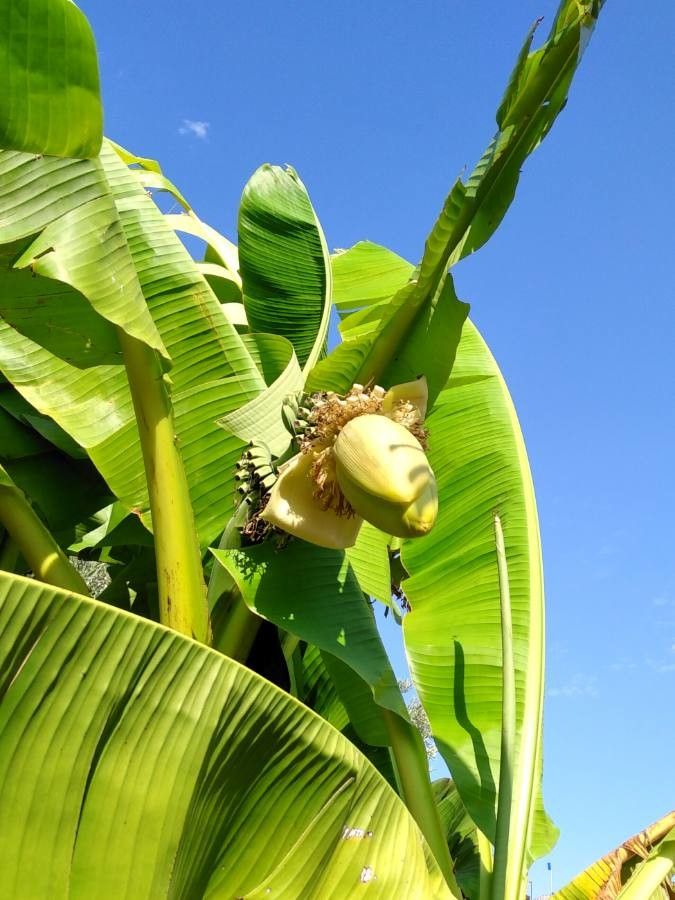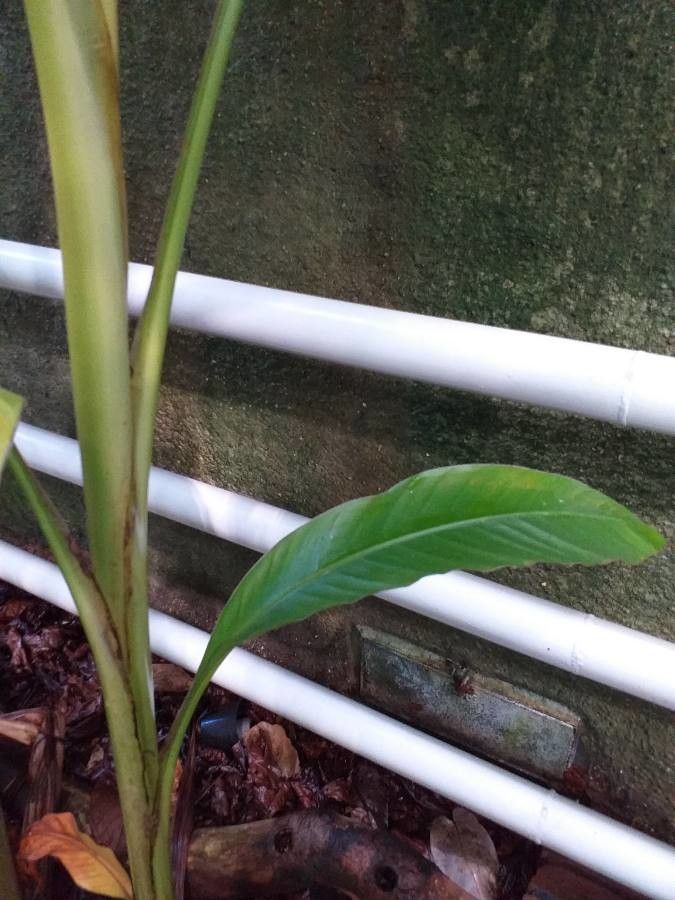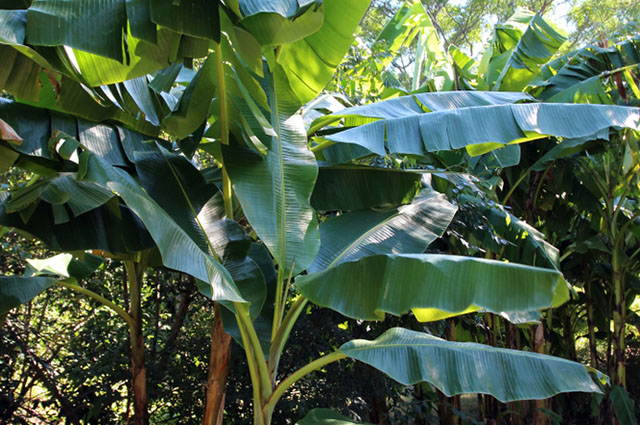
Darjeeling Banana Tree (Musa sikkimensis), also known as the Red Tiger, is a rather uncommon plant that originated in the northeastern Himalayan woods. While the fruit is edible, the Darjeeling banana is mostly grown for its distinctive foliage, which has a beautiful cinnamon-red hue on the leaf undersides and eye-catching red-striped patterns on the leaf tops. Musa sikkimensis, like other ornamental banana species, is a fast-growing herbaceous perennial that dies back after fruiting and sprouts anew from the root structure, which can take up to three years.
Darjeeling banana is fairly resistant to disease and typically does not suffer from illnesses. Nevertheless, it can be affected by pests and diseases found in its environment. Such infections are generally mild. Regarding care, this plant needs moderate attention. It should be pruned on a regular basis to keep a neat appearance and encourage healthy growth. Applying fertilizer can also support flowering. Darjeeling banana is appropriate for anyone who has outdoor space, like a garden or patio, and does not demand extensive gardening experience. It may need extra care if grown indoors.
How to keep Musa Sikkimensis.
Light
The Darjeeling banana naturally grows in habitats like forest understories or rocky sites, where it is subject to natural shade. It favors partial sun but can tolerate full sun or full shade, which shows its versatility and hardiness.
Water
The Darjeeling banana, native to the Himalayan region, flourishes in moist environments. To keep it healthy, it needs regular watering, ideally on a weekly schedule. While it is usually grown outdoors, applying mulch around the plant can help preserve soil moisture, especially during its active growing season.
Humidity
This plant will thrive in moderate humidity, which is probably the level in your home. However, misting it a few times a week can be very beneficial. Make sure the room has good ventilation.
Temperature
Darjeeling banana has good temperature adaptability, able to withstand higher heat and wide temperature swings. In hot conditions, attention should be paid to watering and providing suitable shade to avoid sunburn. Conversely, Darjeeling banana is less tolerant of cold; while it can endure some chill, very low temperatures can cause frost damage.
Fertilizer
The Darjeeling banana plant needs adequate nutrients to achieve optimal fruit production. Fertilize in early spring to promote new growth and flower development. Ongoing fertilization keeps the plant healthy, encourages more flavorful fruit, and prevents nutrient deficiency problems like yellowing leaves and reduced fruit yield.
Pruning
The Darjeeling banana plant thrives when regularly pruned, especially from early to late spring. To ensure healthy growth and manage its size, focus on key techniques such as removing damaged leaves and excess shoots. Pruning not only enhances the plant's vigor but also improves air circulation and light penetration. Additionally, it stimulates new growth by removing spent blooms.
Pot & Repot
To manage the rapid growth of your Darjeeling banana plant, repot it every two years, preferably in the spring. Use a large container with good drainage, and make sure to water it consistently after repotting. Handle the plant gently to help it recover, as it is both robust and sensitive.
Botanical profile.
- Plant Type
- Herb
- Life Cycle
- Perennial
- Genus
- Musa
- Family
- Musaceae
- Hardiness Zone
- 5-9
- Mature Height
- 3.96 m
- Mature Spread
- 2.13 m
- Leaf Color
- Green, Red
- Leaf Type
- Evergreen
- Flower Color
- Yellow, Orange
- Flower Size
- 10.16 cm to 15.24 cm
- Bloom Time
- Summer, Early fall
- Planting Time
- Summer
- Harvest Time
- Late summer, Fall
- Native Area
- Bhutan, Bangladesh, India