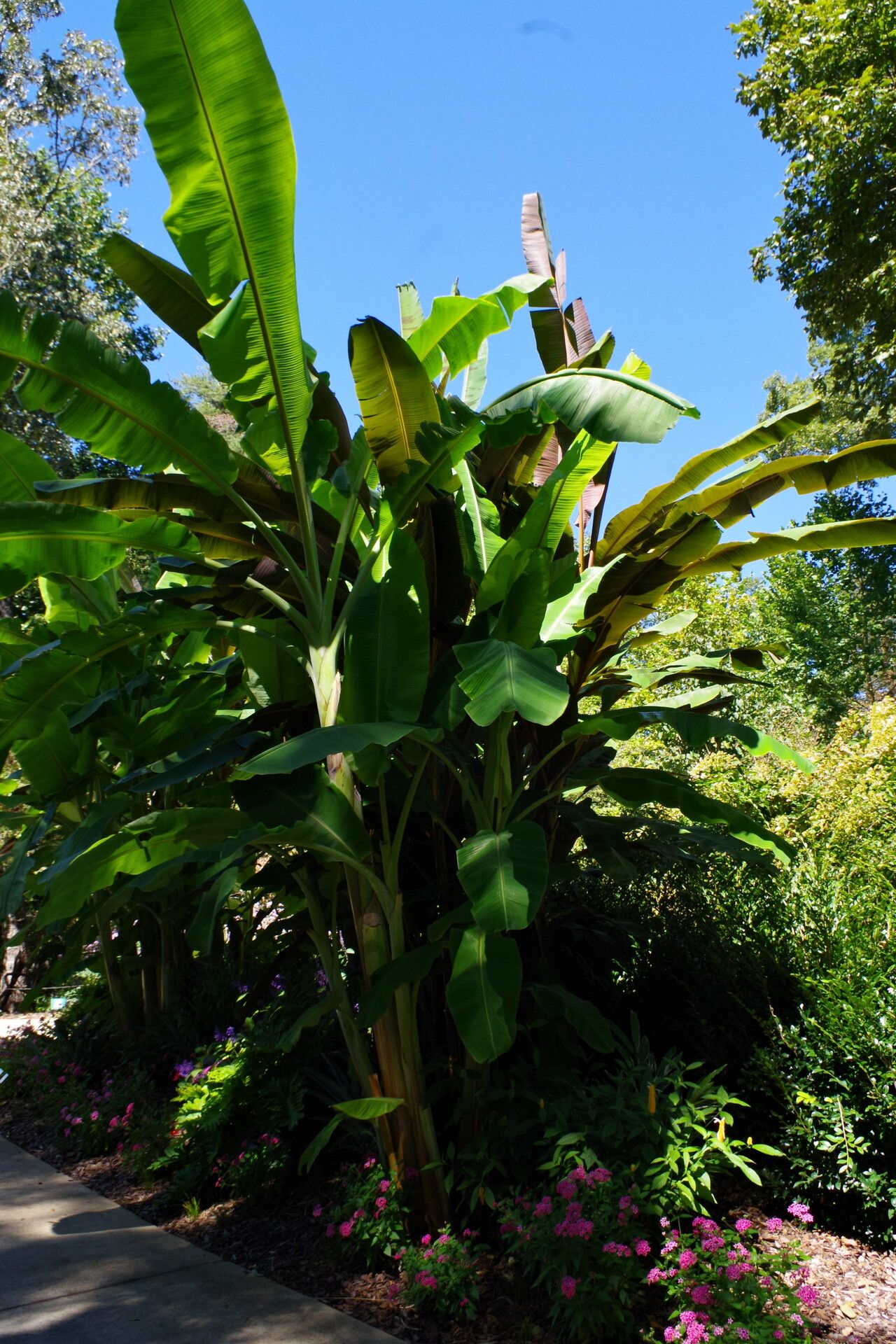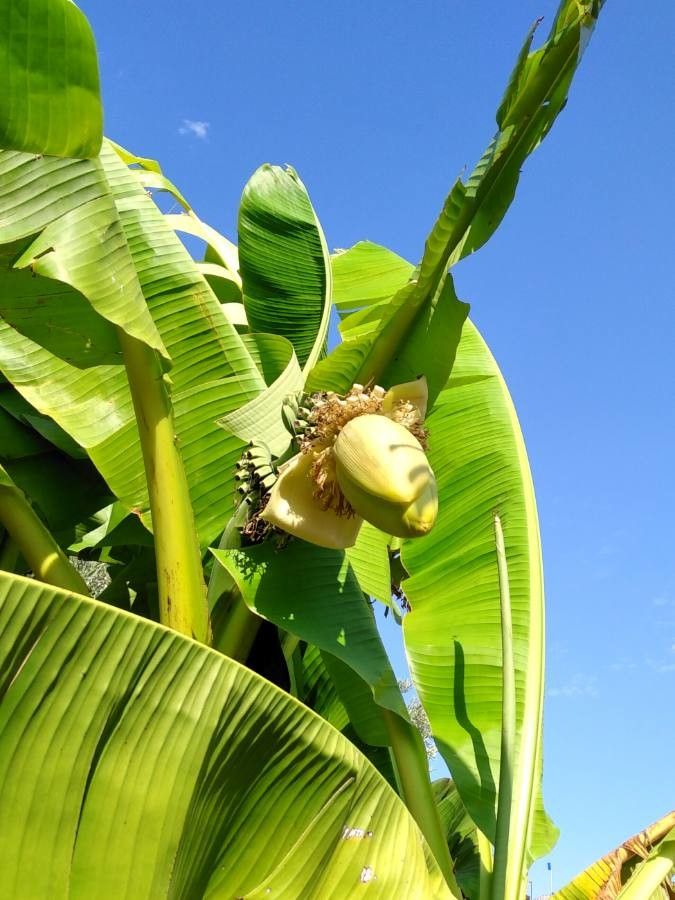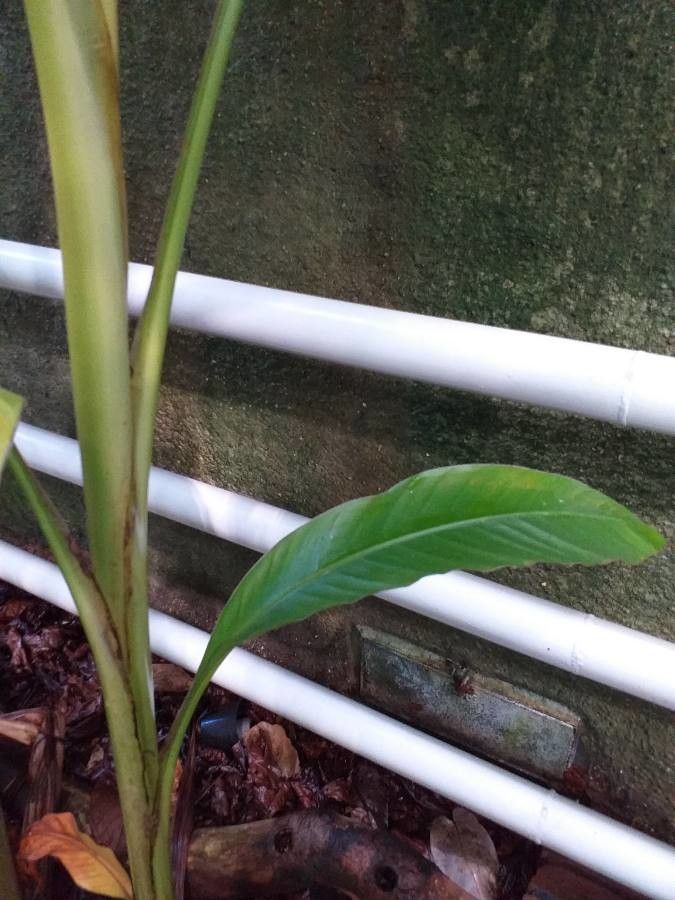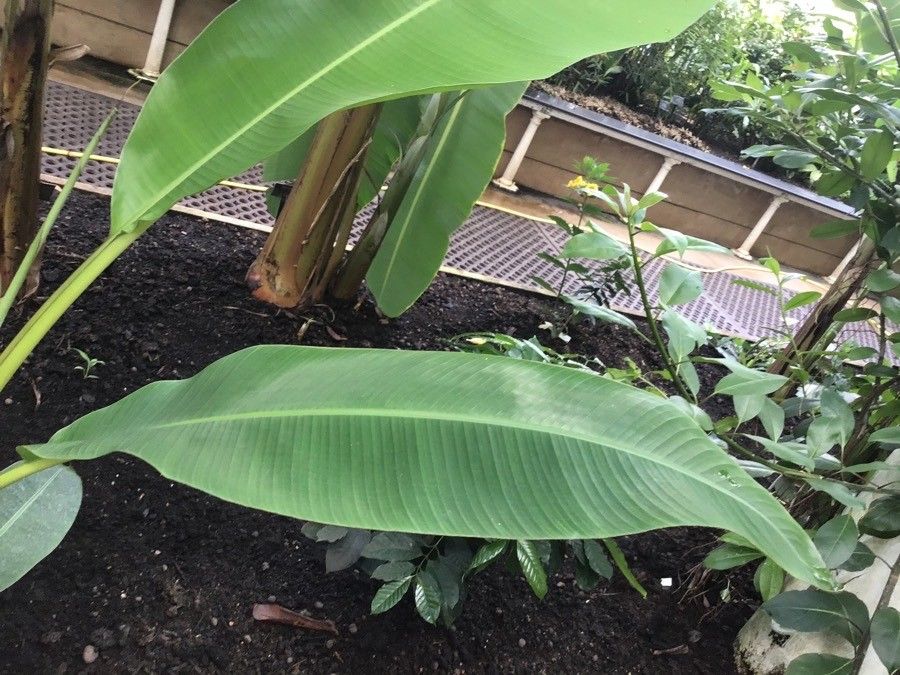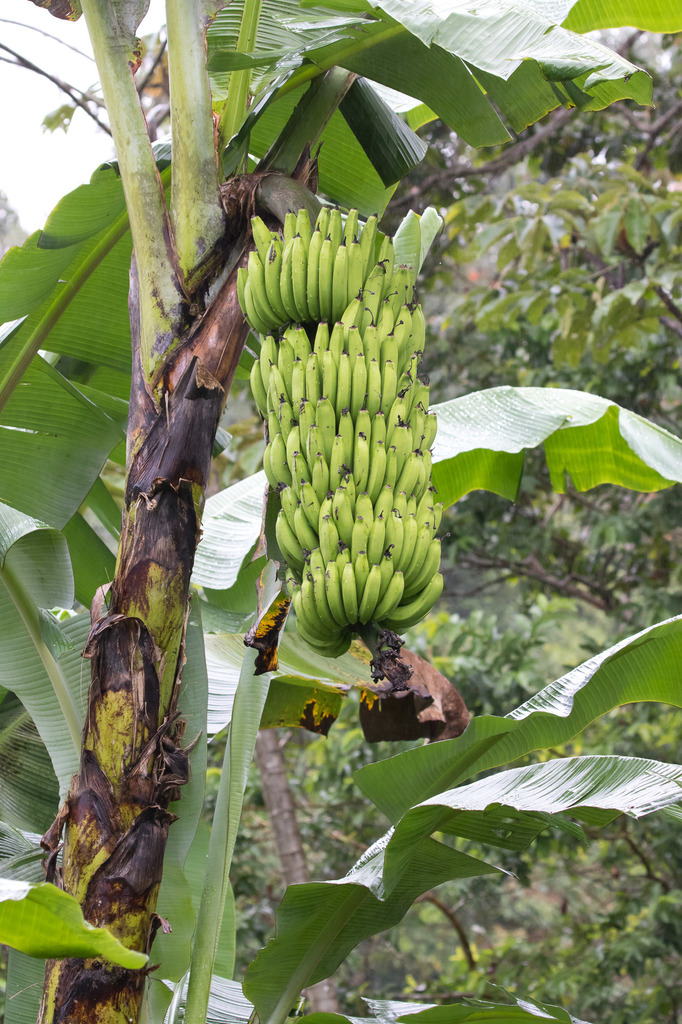
Musa acuminata, commonly known as the Wild Banana or Edible Banana, is a banana species native to Southeast Asia. This perennial plant can grow between 10 and 20 feet tall and produces large, elongated fruits that are consumed worldwide. It features large leaves, which can reach up to 9 feet in length and 2 feet in width, arranged spirally around the stem. Musa acuminata is a crucial crop in many tropical regions due to its high nutritional content. The fruit is rich in essential vitamins such as vitamin C, vitamin B6, and potassium, and provides dietary fiber, making it an excellent energy source for humans. For optimal growth, the plant requires warm temperatures between 20-30°C (68-86°F) and high humidity levels. It thrives in well-drained soils rich in organic matter but can also grow in sandy soils if provided with adequate water. The cultivation of Musa acuminata is widespread due to its importance as a fruit-producing plant, serving as a major income source for many farmers in tropical regions. Beyond its fruit, the leaves are used as food wrappers or plates, and the stem fibers are often employed in making ropes and textiles. Overall, Musa acuminata is an important crop due to its nutritional value and economic significance, making it one of the most widely cultivated plants globally.
Edible Banana: This plant is a species native to Southeast Asia, and it serves as the basis for many modern banana-based desserts. To distinguish it from inedible varieties, it is referred to as the "edible banana."
Banana plants are fairly disease-resistant and typically not prone to illness. Still, they can be affected by pests and diseases that exist in their environment. Such infections tend to be mild. Regarding care, this plant requires a moderate level of maintenance. It should be pruned on a regular basis to preserve a neat appearance and healthy growth. Applying fertilizer can also aid in encouraging flowering. Banana is well suited for anyone with outdoor space, like a garden or patio, and does not demand extensive gardening experience. When kept indoors, it may need more attention.
How to keep Musa Acuminata.
Light
Banana plants need plenty of sunlight to grow optimally, reflecting their native habitat where sun is plentiful. They can tolerate some shade, though that may impede their development. Too much sun can scorch the leaves, while too little light can reduce growth and fruit production.
Water
Edible bananas, which originate from tropical regions, thrive in environments with high moisture. They prefer soil that remains consistently moist and need to be watered weekly to prevent waterlogging. Being evergreen plants, it is important to maintain a regular watering schedule throughout the year to ensure healthy growth and lush foliage.
Temperature
The banana plant originates from tropical areas where temperatures range from 20 to 38 ℃ (68 to 100.4 ℉). It prefers a warm environment with high humidity for growth. During hot summer periods, the banana plant needs sufficient water and adequate shade to avoid leaf scorching. In cold winters, it is best to keep the plant indoors where temperatures stay above 13℃ (55.4℉).
Fertilizer
Use organic fertilizers (e.g., fish emulsion or compost) instead of chemical fertilizers for banana. Give young plants higher nitrogen and phosphorus in spring. Incorporate compost or fertilizer into the soil before or after planting. For mature plants, supplement in spring with either a balanced fertilizer or one addressing specific deficiencies. Nutrient deficiency causes small leaves, short branches, yellow or bronze leaves, acidic fruits, premature fruit drop, and splitting.
Pruning
To ensure healthy growth and improve fruit quality, edible banana plants require early summer pruning. Remove dead leaves and spent flower stalks to enhance airflow and direct energy toward new growth. Maintain a single trunk by managing suckers, keeping only one strong shoot. This will promote overall plant health.
Pot & Repot
When repotting Banana, select a pot 1–2 inches (2.5–5.1 cm) larger with ample drainage. Use a well-draining potting mix. Repot in spring or fall, making sure the root ball sits slightly lower than the rim of the flower pot. Water thoroughly after repotting and place the plant in a warm spot with indirect sunlight.
Toxicity
The banana plant is not toxic to humans or pets. In fact, the flowers and fruit are edible in many regions worldwide. Many consider this plant a safe alternative, especially for households with pets.
Further reading →
The toxicity and danger assessments provided are for reference only. We do not assure their accuracy, so it's crucial not to depend on them. Seek professional advice when necessary for accurate guidance.
Botanical profile.
- Plant Type
- Herb
- Life Cycle
- Perennial
- Genus
- Musa
- Family
- Musaceae
- Hardiness Zone
- 9-11
- Mature Height
- 4.88 m
- Mature Spread
- 1.83 m to 3.05 m
- Leaf Color
- Green
- Leaf Type
- Evergreen
- Flower Color
- Yellow, Purple
- Flower Size
- 10.16 cm to 20.32 cm
- Bloom Time
- Mid spring, Late spring, Summer, Early fall
- Planting Time
- Spring
- Harvest Time
- All year round
- Native Area
- Southeast Asia
Other names.
Reader questions.
When should I water my edible banana?
Timely watering is essential for the health and growth of edible bananas. Ideally, the leaves should be vibrant green; yellowing or browning can indicate underwatering. The soil should remain moist but not soaked; if the top 1-2 inches of soil are dry, it's time to water. Wilted leaves typically suggest that the plant needs water, which should revive the leaves. Slow growth may also signal the need for water. Both overwatering and underwatering can harm the plant, leading to issues like root rot or stunted growth.
Why should I add fertilizer to my banana plant that produces edible fruit?
If the soil is rich in your area, fertilizing may not be required. However, if the soil lacks nutrients, Edible banana plants will struggle to produce enough leaves, flowers, and fruits. Conducting a soil test is the most effective method to identify which nutrients are abundant and which ones are deficient. Nutrient deficiency in Edible banana plants can result in small leaves and short branches, yellowing or bronze foliage, and fruits that are more acidic and less palatable. Certain nutrient deficiencies can also cause premature fruit drop or splitting.
What are the sun requirements for an edible banana plant?
The edible banana plant (Musa acuminata) thrives in conditions that mimic its native habitat, requiring full sun, which means above 6 hours of direct sunlight, for optimal growth. However, it can also survive in partial sun, receiving about 3-6 hours of sunlight. It's crucial to observe the movement of sunlight through your garden to find the ideal balance of light and shade, ensuring the plants' wellbeing and happiness.
What is the ideal temperature range for growing an edible banana plant?
The edible banana plant, known botanically as Musa acuminata, thrives in tropical regions and prefers a temperature range between 20 to 38°C (68 to 100.4°F). It loves a warm environment with high humidity for optimal growth. Special care should be taken in extreme weather conditions, such as providing adequate water and shade during hot summers and keeping the plant indoors in winters where temperatures exceed 13°C (55.4°F) to protect it from the cold.
How should I water my edible banana?
When watering edible bananas, it's important to focus on providing humidity similar to their native tropical environment and avoiding both underwatering and overwatering. Water deeply, ensuring moisture reaches the roots but allow the topsoil to dry before watering again. A watering can with a long, thin spout is recommended for watering at the base and avoiding foliage. Use a moisture meter to accurately gauge soil moisture levels. Focusing watering on the plant's base and ensuring it reaches the roots, while avoiding the foliage to prevent disease, is crucial.
When should I fertilize my Edible banana plant?
To support strong leaf and root development in young Edible banana plants, it is recommended to provide them with higher nitrogen and phosphorus fertilizer. The best time to apply fertilizer is during the spring of the first growing season. It is also beneficial to mix compost or another fertilizer into the soil before or immediately after planting. For mature plants, it is advisable to supplement with a balanced fertilizer or a fertilizer that targets specific soil deficiencies in your area every few years during the spring and summer. However, it is important to avoid fertilizing Edible banana plants in the autumn or winter.
What are the essential environmental conditions for growing an edible banana plant?
An edible banana plant needs ample sunlight to thrive, mirroring the abundant solar exposure of its native habitat. While it can tolerate some shade, too little sunlight may impede growth and fruit production, and overexposure can cause leaf scorching. During periods of insufficient natural sunlight, such as in winter or in less sunny spaces, the use of artificial lighting becomes crucial for maintaining optimal growth. LED lights are recommended for their ability to mimic the specific wavelengths needed by plants. The required intensity varies depending on the type of plant, with full sun plants needing 30-50W/sq ft, partial sun plants 20-30W/sq ft, and full shade plants 10-20W/sq ft of artificial light. Proper distance and duration of light exposure are also important to simulate natural sunlight conditions effectively.
How should I care for my edible banana plant in winter?
During the colder months, it's crucial to maintain a warm environment for the edible banana plant. It is extremely sensitive to cold temperatures, which can cause significant harm. To protect your plant, it is recommended to bring it indoors before the autumn cold sets in and keep it near a bright window. Ensure the indoor temperature stays above 20°C, but keep the plant away from direct heat sources like heaters to avoid drying out the air excessively around it. Temperatures approaching 0°C are harmful, so maintaining warmth is essential for the plant's survival during winter.
How much water does edible banana really need?
Edible banana plants, originating from humid tropical regions, need ample water. The amount varies by factors such as plant and pot size. For a healthy plant in a 25-30cm diameter pot, water until it flows from the drainage holes. Watch for growth and leaf color changes as signs of proper watering or the need for adjustment. A deep watering is necessary due to the plant's deep roots, aiming to avoid both overwatering, which leads to root rot, and underwatering, which retards growth and darkens leaves. The right balance of watering and adequate drainage are key.
When is it not a good idea to add fertilizer to my Edible banana plant?
To ensure healthy growth of Edible banana plants, it's important not to apply fertilizer after pruning, while the plant is dealing with disease or insects, or when it's already experiencing stress. Keep in mind that fertilizer is effective in correcting nutrient deficiencies in the soil, but it won't address other underlying issues that might negatively impact the Edible banana. Before applying fertilizer, it's always advisable to accurately diagnose the problem to avoid mistakenly using fertilizer when another factor could be causing the problem. Additionally, refrain from fertilizing Edible banana plants during winter or during excessively hot and dry periods in the summer.
What are common symptoms of inadequate lighting in edible banana plants?
Edible banana plants show specific symptoms when they suffer from inadequate lighting, including leggy or sparse growth, smaller leaves, slower or no new growth, lighter-colored new leaves, chlorosis, sunscald, leaf curling, wilting, and leaf scorching. These symptoms reflect the plant's struggle with insufficient light, leading to reduced chlorophyll and essential nutrients, which impairs its growth and overall health.
What are the symptoms of low temperature exposure in edible banana plants, and how can I remedy this?
Edible banana plants show intolerance to cold by exhibiting symptoms when the temperature drops below 20°C, and it is crucial to keep them above 0°C to avoid damage. Exposure to temperatures below -5°C may cause the leaves to lighten in color and, after frost damage, turn brown or black with signs of wilting and drooping. To remedy frost damage, you should trim off the damaged parts and move the plant to a warmer indoor setting immediately. Positioning the plant near a south-facing window can help ensure it receives ample sunlight, but avoid placing it too close to heaters or air conditioning vents to prevent the air from becoming too dry around it.