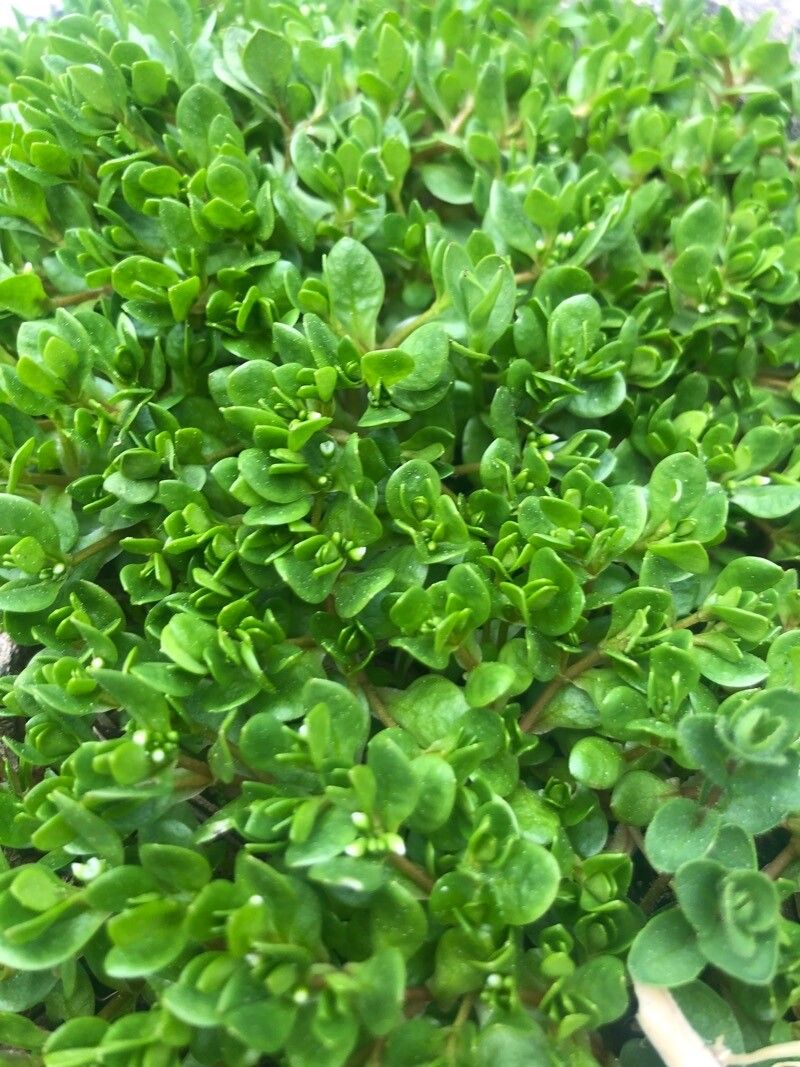
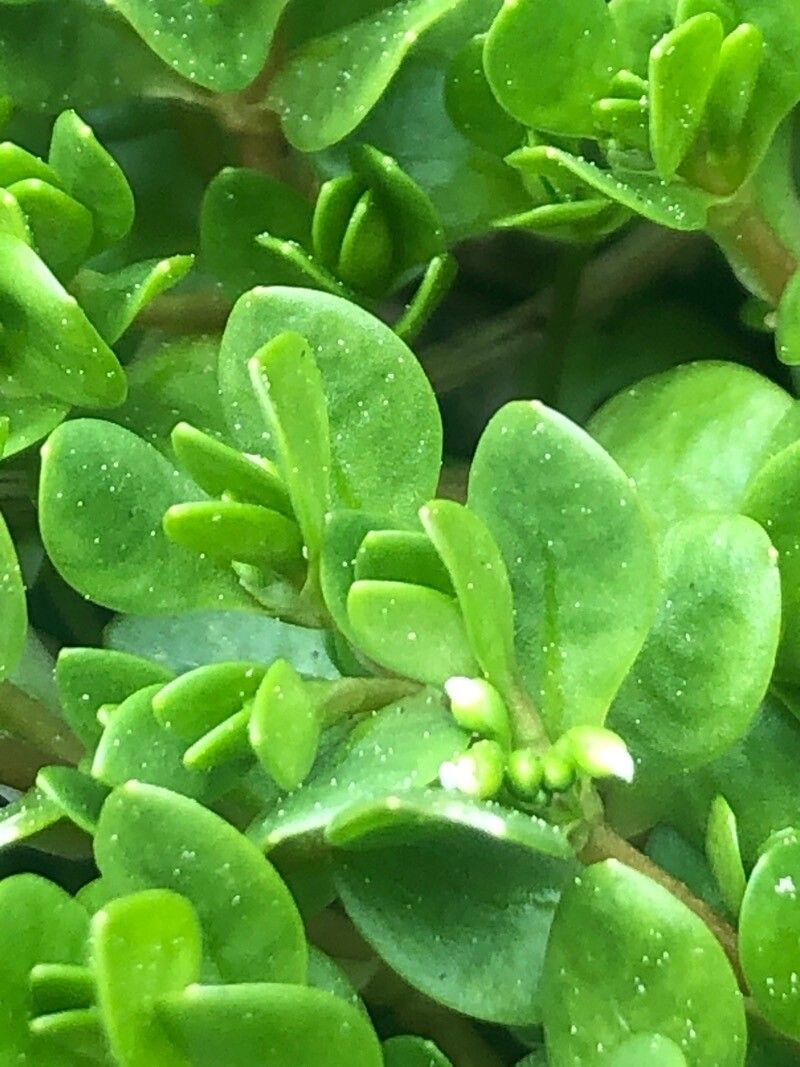
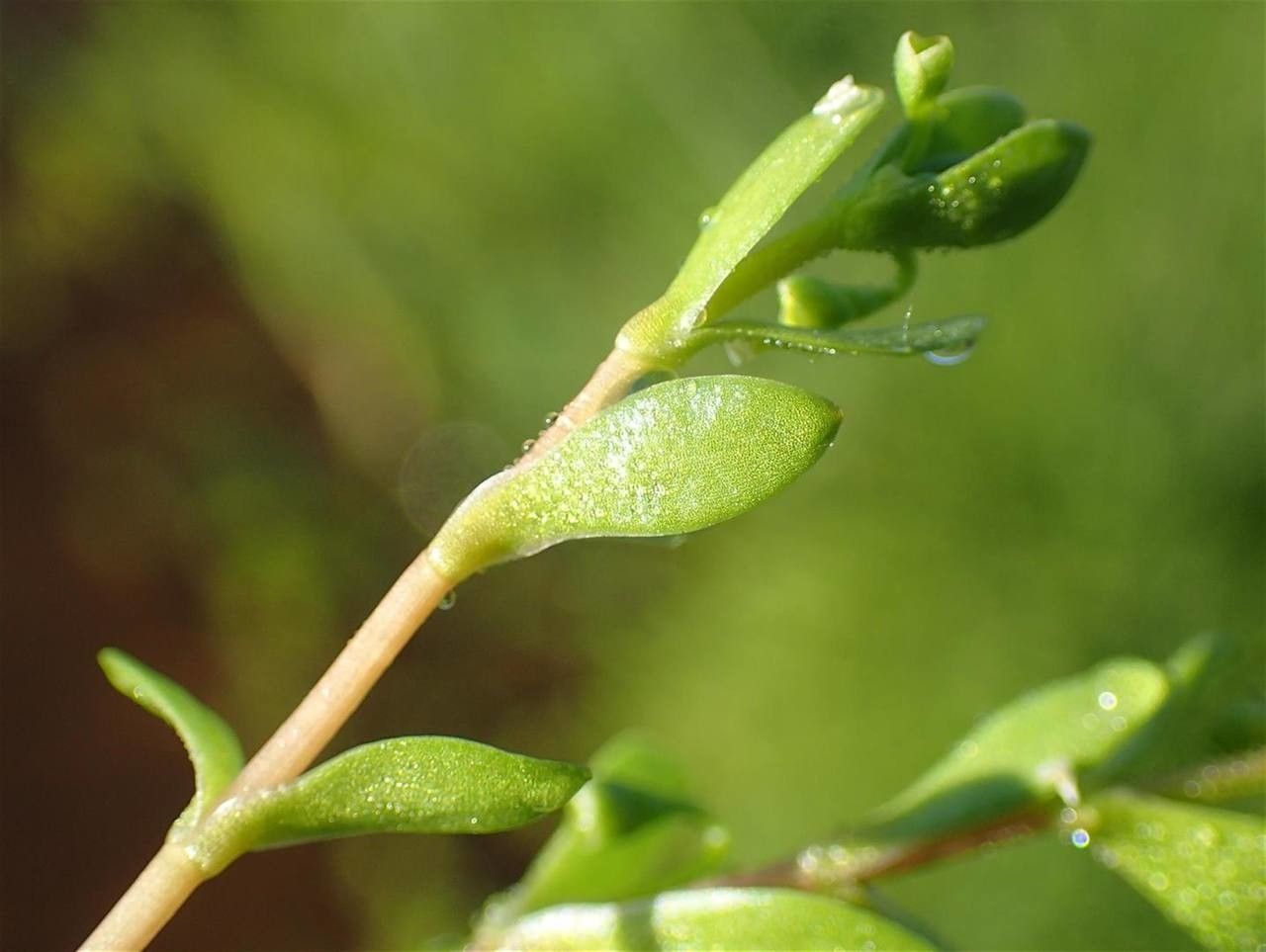
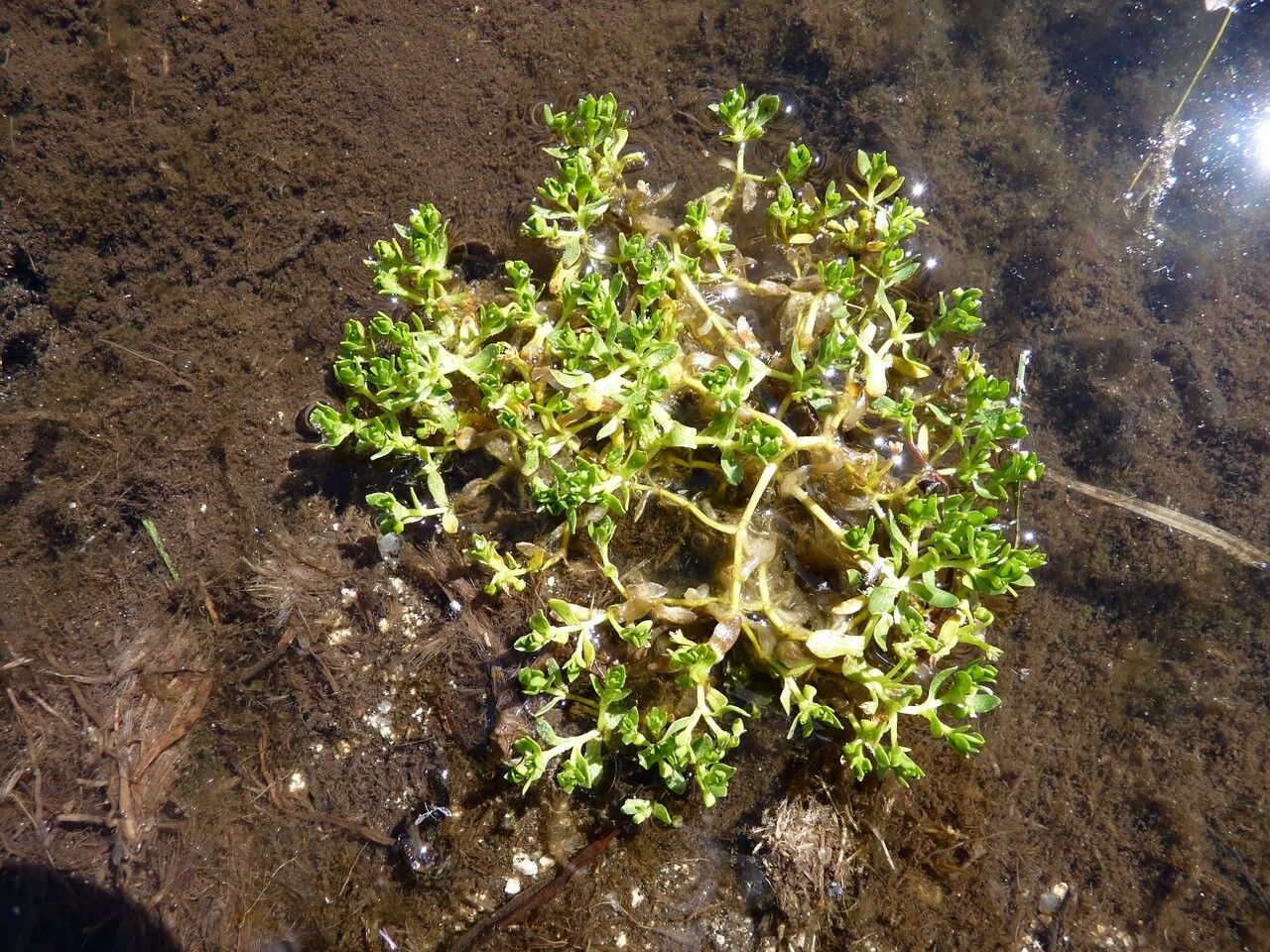
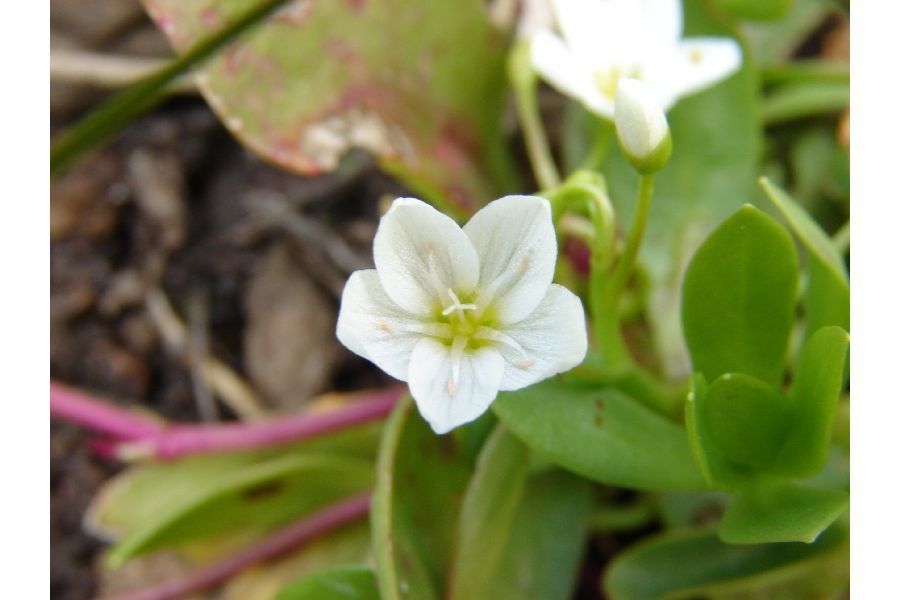
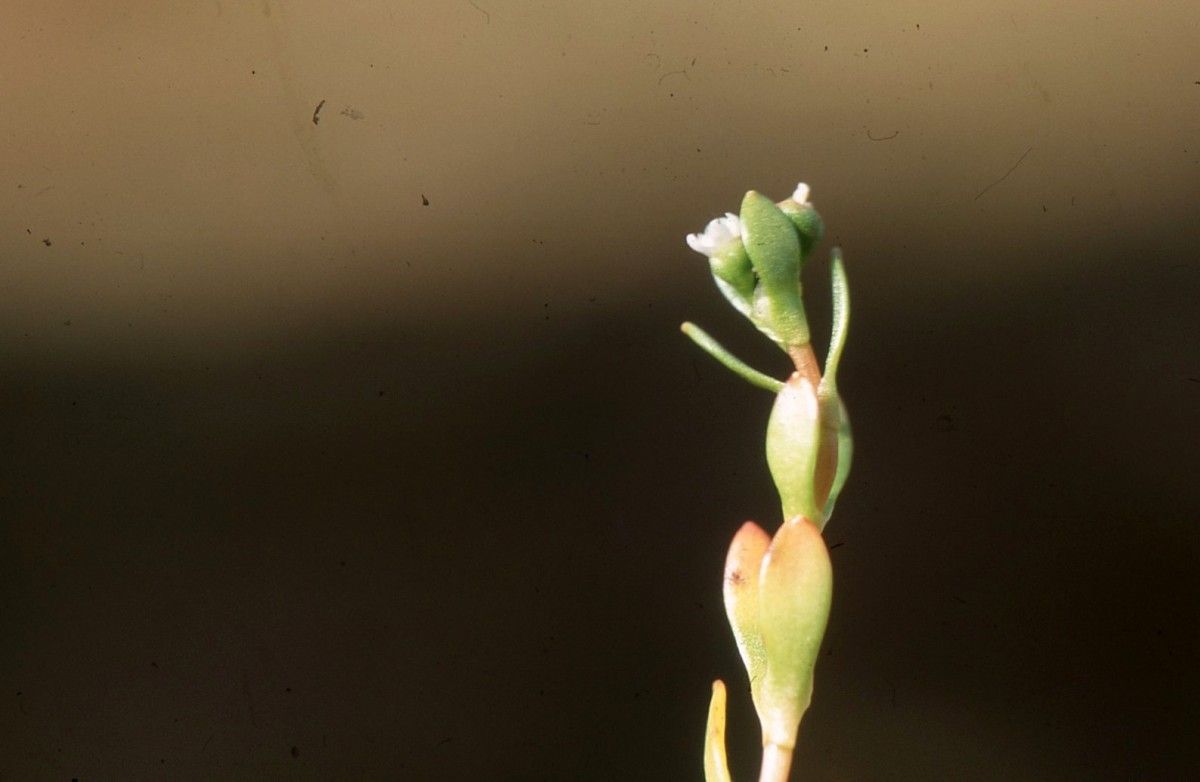
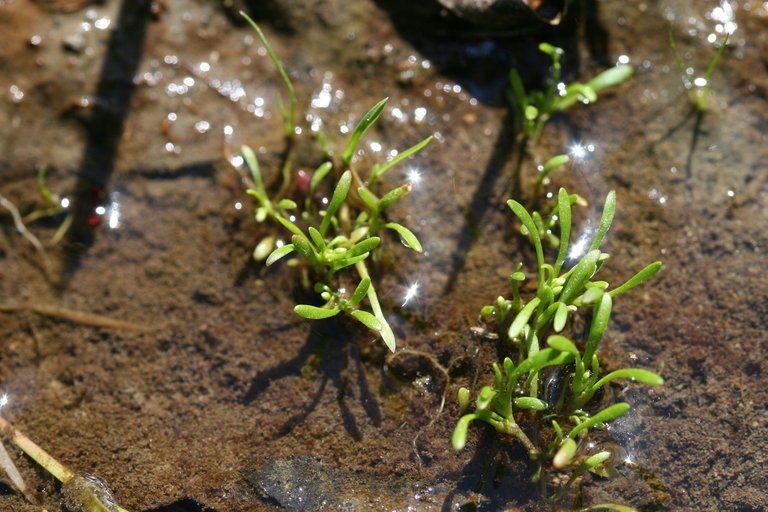
Montia fontana, commonly known as water chickweed or annual water miner's lettuce, is a small flowering plant in the Montiaceae family. Native to North America, it thrives in wetlands, marshes, and along streams. The plant features a succulent stem that can grow up to 20 cm in height and small, oval-shaped leaves arranged oppositely on the stem.
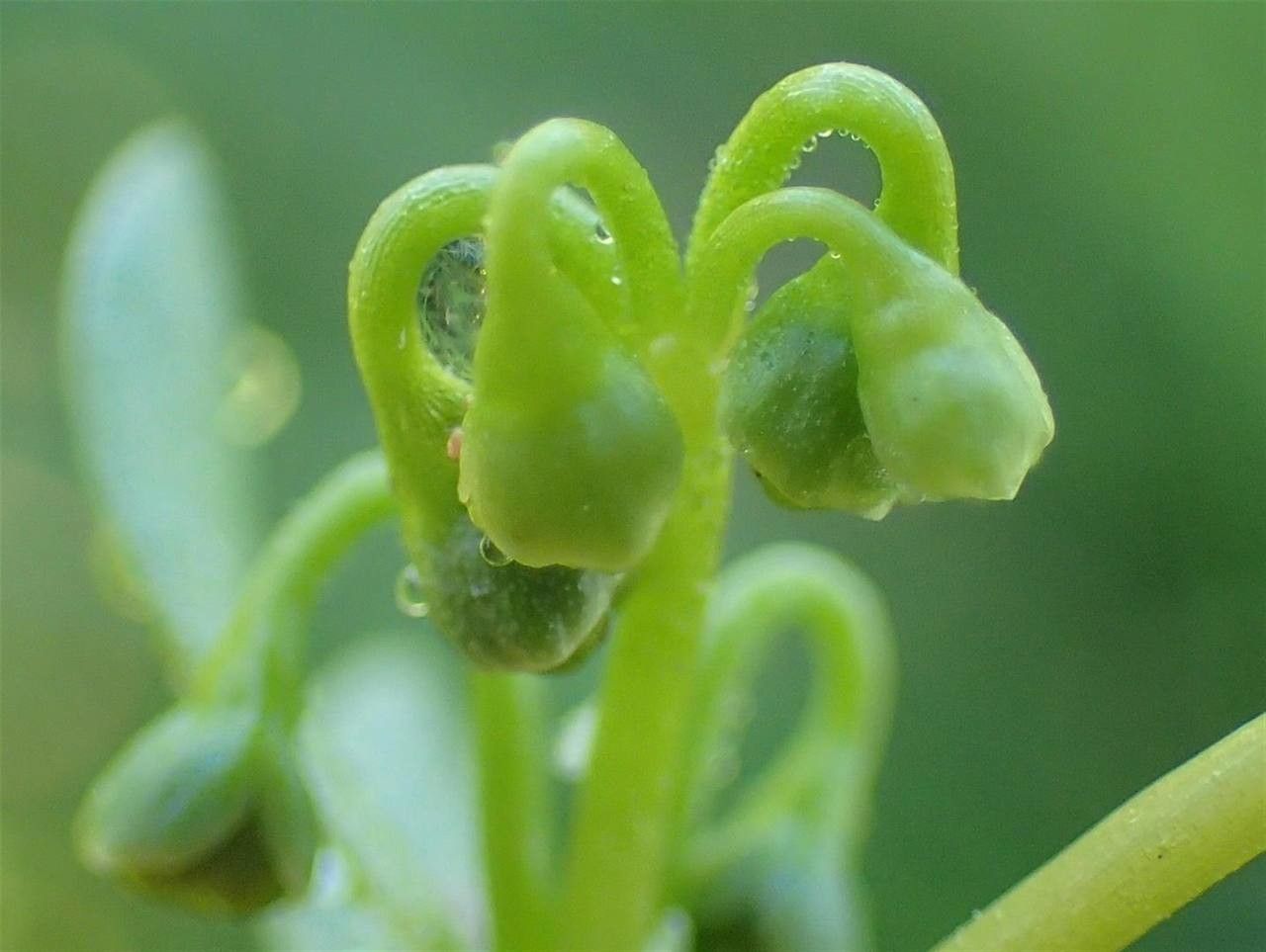
The flowers of Montia fontana are small and white, each with five petals. They bloom between April and August, producing tiny seeds that disperse via wind or water. As an annual herbaceous plant, Montia fontana completes its life cycle within a year.
Native Americans have used Montia fontana for centuries as a medicinal herb to treat various ailments such as coughs, colds, sore throats, and stomach problems. Additionally, its leaves are edible and can be consumed raw or cooked, similar to spinach.
The plant prefers moist soil conditions but can tolerate some drought once established. It grows well in partial shade and can also thrive in full sun, provided it receives sufficient moisture.
Overall, Montia fontana is an attractive wildflower that adds beauty to wetland areas. With its medicinal benefits and edible leaves, it makes an interesting and useful addition for gardeners seeking something unique.
Blinks has strong disease resistance and is generally not prone to illnesses. Nonetheless, it can be vulnerable to pests and diseases present in its environment. These infections are typically mild. As for care, this plant requires a moderate level of maintenance. It needs frequent pruning to retain a good appearance and support healthy growth. Fertilizing can also assist in encouraging flowering. Blinks is well suited for anyone with outdoor space, such as a garden or patio, and does not demand extensive experience in plant care. It may need more attention when cultivated indoors.
How to keep Montia Fontana.
Light
Blinks grows best with unobstructed exposure to sunlight but can also tolerate moderately shaded areas. Native to regions rich in daylight, it flourishes in bright conditions. However, excessive continuous light exposure can stunt its growth and cause its foliage to look withered.
Water
Blinks thrive in consistently moist environments and require weekly watering to prevent waterlogging. As an outdoor plant near water sources, they tolerate varying moisture levels. This is especially true during their growing season when their water needs increase to support vigorous growth.
Temperature
Blinks can tolerate a wide span of temperatures, but its distribution may still be restricted by particular combinations of moisture and heat. It grows best in warm summer climates with sufficient rainfall or watering. Long periods of cloudy, rainy weather, as well as prolonged high temperatures, can increase the chance of Blinks dying. In winter, protecting it from cold can enhance the plant's survival rate.
Fertilizer
Blinks respond well to regular, light applications of fertilizer to encourage healthy leaf growth. You should feed Blinks about once a month during the summer. Nitrogen is vital for foliage, and supplying nitrogen-rich sources helps Blinks thrive.
Pruning
Blinks has small, fleshy leaves and delicate white flowers. To encourage compact growth and better airflow—which helps reduce the risk of disease—you should prune it lightly between early and late spring. Avoid heavy pruning; instead, focus on regular, gentle trimming to maintain optimal health. For exact techniques, refer to expert gardening guides.
Botanical profile.
- Plant Type
- Herb
- Life Cycle
- Annual, Perennial
- Genus
- Montia
- Family
- Montiaceae
- Hardiness Zone
- 5-9
- Mature Height
- 5 cm to 10 cm
- Mature Spread
- 49 cm
- Leaf Color
- Light Green
- Leaf Type
- Semi-evergreen
- Flower Color
- White
- Flower Size
- 0.20 cm
- Bloom Time
- Spring
- Planting Time
- Spring
- Harvest Time
- Late spring, Early summer, Mid summer
Other names.
Reader questions.
How should I water my Blinks?
Blinks can be watered using various tools such as a garden hose with a spray nozzle or a watering can. They are not too particular about the type of water they receive, as rainwater, tap water, or filtered water all suffice. It's generally not recommended to water Blinks from above to avoid harming the leaves and flowers or increasing the risk of disease. A drip irrigation system is often the best way to water Blinks, as it evenly and directly supplies water to the soil. When watering a container-grown Blinks, you can use a cup, watering can, or tap water to directly apply water to the soil.
What are the sun requirements for Blinks?
Blinks requires full sun, defined as receiving over 6 hours of sunlight a day, or partial sun, about 3-6 hours of sunlight. It is crucial to observe how sunlight moves through your garden to ensure the chosen spots provide the perfect mix of light and shade, guaranteeing the plants' well-being.
What do I do if I give my Blinks too much or too little water?
The solution for underwatering Blinks is simple: water it more regularly when you notice it lacks moisture. On the other hand, overwatering can be more dangerous, as it may lead to diseases and even death of the plant. To prevent overwatering, choose a suitable location for your Blinks that receives enough sunlight to dry the soil and has good drainage to prevent waterlogging. If you overwater a potted Blinks, consider changing the pot to one with better drainage and using loose soil when repotting.
What are the essentials for growing Blinks indoors?
Blinks thrive best when exposed to unhindered sunlight but can also endure moderate-shadowed areas. Originating from environments rich in daylight, Blinks grow best in bright settings. Excessive exposure to light, however, can stunt growth and result in withered foliage. For indoor growth, during seasons or in spaces with insufficient natural light, artificial lighting is essential. LED lights are recommended for their ability to mimic the specific wavelengths needed by plants. For full sun plants, 30-50W/sq ft of artificial light is needed, partial sun plants require 20-30W/sq ft, and full shade plants 10-20W/sq ft. The artificial light source should be placed 12-36 inches above the plants and be left on for 8-12 hours per day to mimic natural daylight hours.
How frequently should I water my Blinks?
To keep Blinks healthy, it's important to water it regularly. In the spring, watering once a week should be sufficient. However, as the weather gets warmer, you may need to water it two to three times a week. Be careful not to water it excessively, as this can harm the plant. Regardless of how often you water, make sure the soil remains moist but not wet. When watering Blinks in a pot, you'll need to do it more frequently. Potted soil tends to dry out faster than ground soil due to the heat. In most cases, watering a container-grown Blinks a few times a week is recommended, compared to just once a week for an in-ground plant.
What symptoms indicate inadequate light for Blinks?
Indoor Blinks with insufficient light may show symptoms such as smaller new leaves, leggy or sparse growth, faster leaf drop, delayed or halted growth, paler new leaves, chlorosis (yellowing leaves due to chlorophyll breakdown), sunscald, leaf curling (as a defense mechanism against excessive sunlight), wilting, and leaf scorching. These symptoms highlight the plant's struggle to adapt to low-light conditions and the negative impacts of too much direct sunlight.
How much water does my Blinks require?
Determining the right amount of water for your Blinks can be done in a few ways. Some gardeners prefer to assess soil moisture by touching it, suggesting that watering should continue until the top six inches of soil feel damp. Another method is to use a specific measurement, such as giving your Blinks approximately two gallons of water per week. However, this guideline may result in overwatering if your plant requires less. When growing Blinks in containers, a different approach is needed. In this case, water should be provided until all layers of dry soil are moistened. You can check for moisture by inserting your finger into the soil or by observing a slight trickle of excess water from the pot's drainage holes.
What solutions can help Blinks struggling with light conditions?
To remedy light issues for Blinks, gradually move plants to sunnier locations to receive at least 6 hours of direct sunlight a day, utilizing a south-facing window for indoor plants. For plants too large or not easily movable, consider using artificial light for at least 8 hours daily. Outdoors, it's important to adapt plants gradually to brighter conditions to prevent sunburn. Removing obstructions, like pruning trees that block sunlight, can help outdoor plants receive more light. Transplanting small plants during their dormant period to a sunnier location with good drainage is also advisable. While parts of the plant that have already been affected by poor light may not recover, new growth should be healthy with proper light exposure.
How can I know if I'm giving enough water to my Blinks?
Avoiding overwatering can be somewhat challenging for Blinks. These plants have deep roots that need weekly moisture, but they are highly prone to root rot and browning if overwatered. Underwatering is less of a concern as Blinks can survive without supplemental watering for some time, although extended periods without water will cause wilting and dry leaves.
How do I water my Blinks throughout the year?
You can expect your Blinks plant's water needs to increase as the season progresses. In spring, watering once per week should be sufficient. However, as the summer heat arrives, you will likely need to water your Blinks plant more frequently, potentially up to three times per week. This is especially important if your Blinks plant is growing in a container, as the soil in containers tends to dry out faster in warm weather compared to ground soil. As autumn approaches and the temperature cools down, your Blinks plant may require less water as the sun is not as intense as it was during summer.
How do I water my Blinks when they are growing at different stages?
Throughout the year, Blinks go through different growth stages, each with its own water requirements. When starting Blinks from seeds, provide more water during the germination phase, ensuring the soil remains consistently moist. As Blinks grow above the soil, they will require slightly less water than during the seedling phase. Once they reach maturity, watering once a week is sufficient. However, during flower development, a slightly higher amount of water may be needed to support the process.
How is watering Blinks inside different from watering them outside?
Most Blinks are typically grown outdoors instead of indoors for several reasons. Firstly, these plants tend to grow quite tall. Secondly, Blinks require more daily sunlight than most indoor locations can offer. If you do happen to find a suitable indoor growing spot, you'll likely need to water your Blinks more frequently compared to outdoor growth. This is partly due to indoor locations being drier, often because of HVAC units. Another reason is that soil in containers can dry out relatively quickly, unlike soil in the ground.