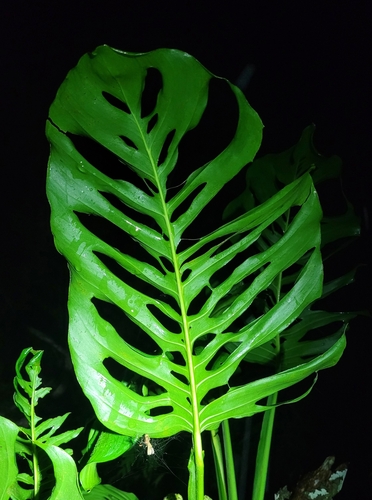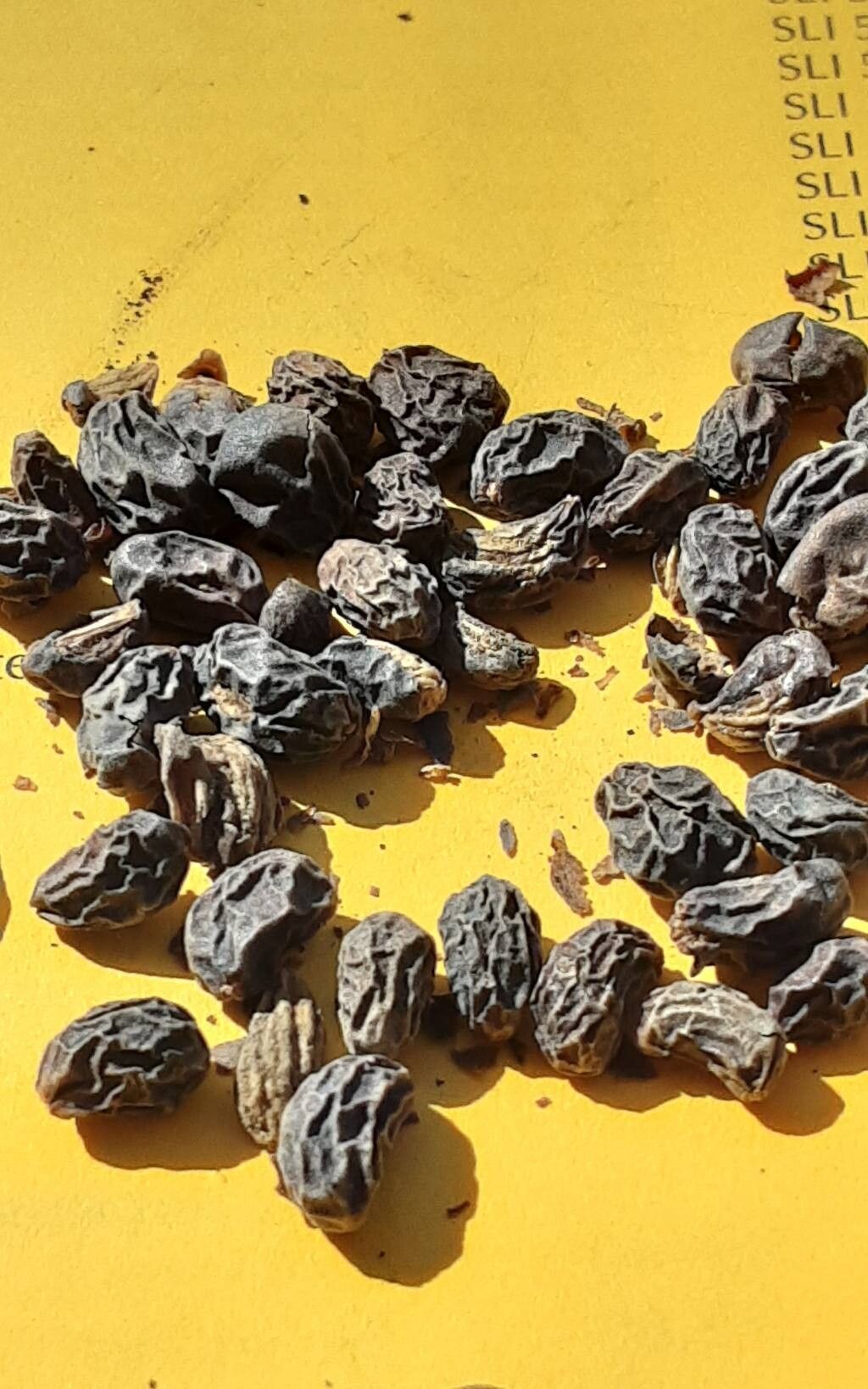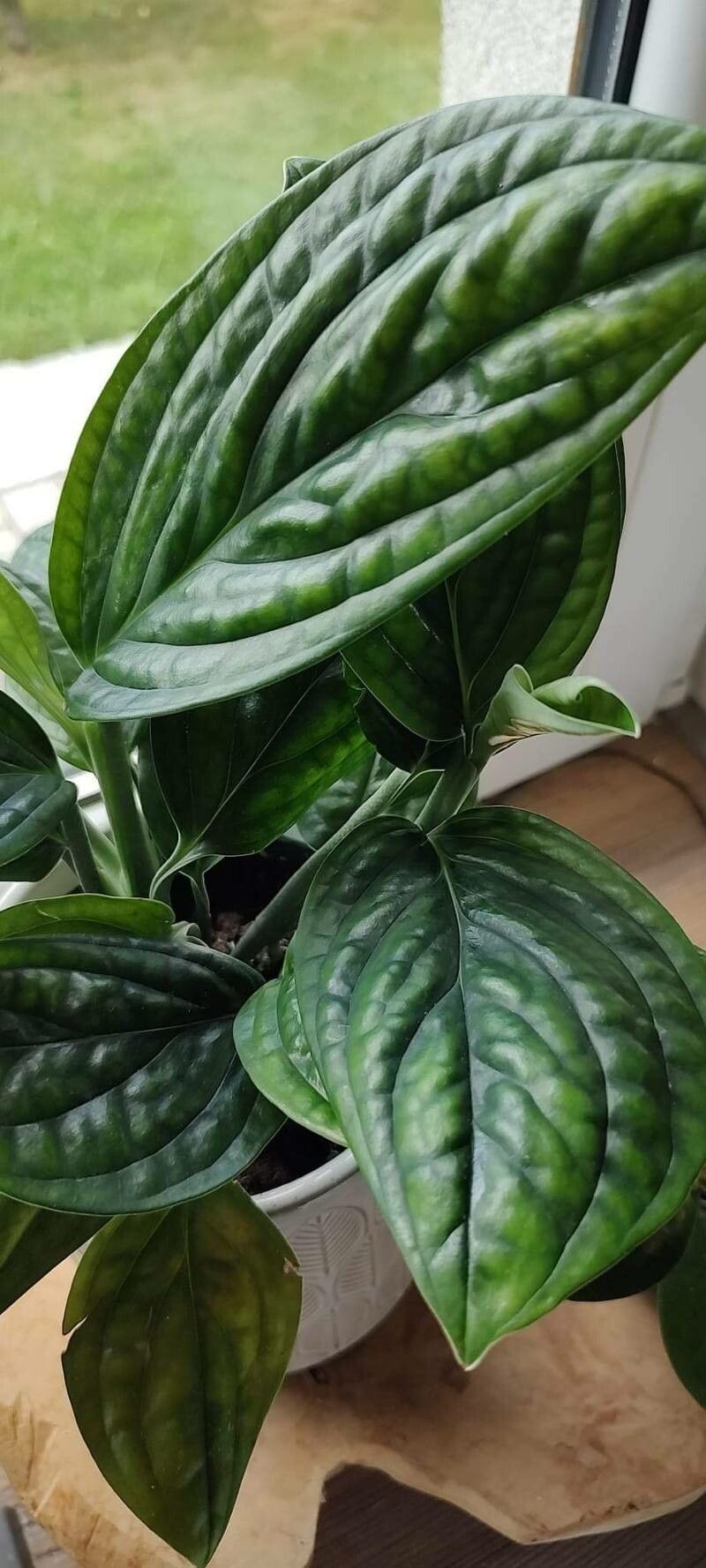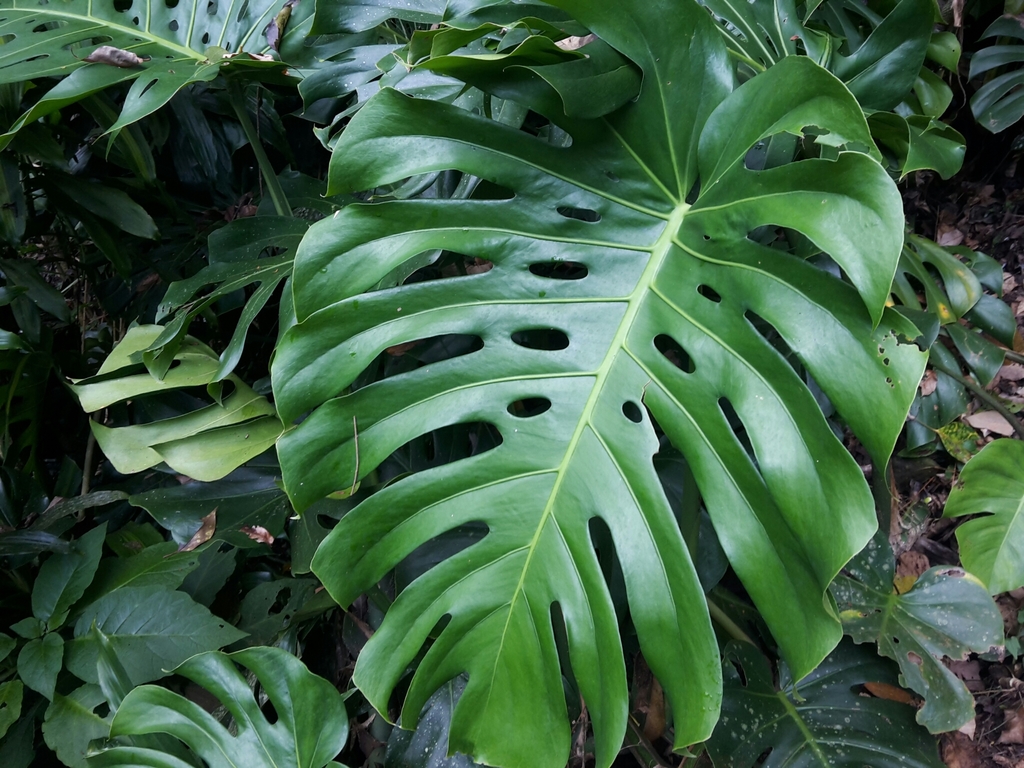
Monstera Deliciosa, commonly known as the Swiss Cheese Plant, is a popular tropical plant native to the rainforests of Central and South America. As a member of the Araceae family, it is renowned for its large, glossy leaves that feature distinctive holes or splits. In its natural habitat, the plant can grow up to 20 feet tall, although it typically reaches 6 to 8 feet when grown indoors.
This easy-to-care-for plant thrives in bright, indirect light but can also tolerate low light conditions. It prefers well-draining soil and should be watered when the top inch of soil feels dry to the touch.
One unique feature of Monstera Deliciosa is its aerial roots, which allow it to climb trees or other structures in its natural environment. Indoors, these roots can be trained onto moss poles or other supports for added visual interest.
This plant has evergreen leaves and is highly tolerant of shade, making it a popular choice for indoor foliage. It is commonly used as a potted ornamental in Europe, America, and Japan to decorate living rooms and windowsills. FUN FACT · FROM THE LIBRARY
Monstera Deliciosa also produces edible fruit, which has earned it another common name: Fruit Salad Plant. However, it generally takes several years for a mature plant to produce fruit.
Overall, Monstera Deliciosa is an excellent addition to any home or office space, offering striking foliage and easy care requirements.
The fruit salad plant is known for its distinctive and beautiful leaves. It also produces unusual fruits that resemble green hexagonal scales, similar to the outer layer of corn. When these scales fall off, they release a strong, sweet aroma reminiscent of fruit. The taste of the fruit is similar to a fruit salad, which is quite fitting given that the species name "deliciosa" also means "delicious." This is why it has earned the name "fruit salad plant."
The Swiss cheese plant has strong resistance to disease and is generally not susceptible to illnesses. However, it can be prone to leaf spots if light and ventilation are poor and if it is overwatered. Its care level is considered easy, since it mainly needs regular watering and little other attention. The Swiss cheese plant is suitable for people who don't have the time or energy to devote to frequent care.
How to keep Monstera Deliciosa.
Light
The Swiss cheese plant prefers moderate light and can tolerate lower-light conditions. Native to places where it grew beneath the dappled shade of larger plants, too much light can scorch its leaves. Conversely, too little light can hinder growth and leaf development.
Water
The Swiss cheese plant thrives in humid, tropical environments and can tolerate moderate drought conditions. To maintain its lush foliage, it requires consistent moisture and should ideally be watered weekly. While it is primarily grown indoors, this plant benefits from high humidity. To encourage vibrant growth and larger leaves, consider misting it regularly or using a humidifier.
Humidity
This plant needs special care because it loves high humidity levels of 60-80% or more. The best way to achieve this is by placing a humidifier near the plant. Daily misting is also essential! Make sure the room has good ventilation.
Temperature
The swiss cheese plant comes from the tropical rainforests of Central and South America, where temperatures range from 68 to 86 ℉ (20 to 30 ℃). In cultivation it prefers temperatures between 68 and 105 ℉ (20 to 41 ℃) and can tolerate lows as low as 50 ℉ (10 ℃). During winter, it is recommended to keep the plant away from cold drafts.
Fertilizer
The Swiss cheese plant needs the most fertilizer during its active growth period, mainly in spring, summer, and early fall. Fertilizing provides essential nutrients the soil may lack, supporting healthy root and stem development and the attractive foliage that is a defining trait of this plant.
Pruning
To keep your Swiss cheese plant healthy and bushy, it's important to prune it regularly from early to late spring. Use clean tools to make cuts just above the leaf nodes, and remove any damaged parts of the plant. This will promote good health and prevent the plant from becoming too leggy. Additionally, always wear gloves while pruning to protect your skin from sap irritation.
Pot & Repot
Repot your Swiss cheese plant in spring or summer when temperatures are warm enough, picking a slightly larger pot with adequate drainage. Water thoroughly after repotting and situate it in a spot with bright, indirect light. Consider adding a moss pole for support as the plant grows.
Botanical profile.
- Plant Type
- Herb, Vine
- Life Cycle
- Perennial
- Genus
- Monstera
- Family
- Araceae
- Hardiness Zone
- 10-13
- Mature Height
- 3.05 m to 20.12 m
- Mature Spread
- 6.1 m
- Leaf Color
- Green, White
- Leaf Type
- Evergreen
- Flower Color
- White, Cream
- Flower Size
- 15.24 cm to 30.48 cm
- Bloom Time
- Late spring, Early summer, Mid summer
- Planting Time
- Spring, Summer, Autumn, Winter
- Harvest Time
- Summer
- Native Area
- Honduras, Mexico, Guatemala, Nicaragua, Costa Rica, Panama
Other names.
Reader questions.
When Should I Water My Swiss Cheese Plant?
Watering your Swiss Cheese Plant is crucial for its growth, health, and disease resistance. It requires watering when the top 1 to 2 inches of soil feels dry to the touch. Wilting or drooping leaves, dull or yellowing foliage, a lighter pot weight, brown and dry roots, and environments with low humidity or high heat can also indicate it's time to water. However, watering too early or too late can lead to issues like root rot or stunt the plant's growth. Recognizing these signs will help maintain the optimal watering schedule, supporting the plant's development and extending its lifespan.
Why should I add fertilizer to my Swiss cheese plant?
All plants, including the Swiss cheese plant, need soil nutrients for their growth. However, it's not guaranteed that the soil will have all the necessary nutrients. Fertilization and soil amendments ensure that the plants in your garden get the basic nutrients they need and the specific nutrients they require. For the Swiss cheese plant, fertilizer is important for healthy root and stem development. It also helps the plant achieve fantastic foliage, which is a key ornamental feature.
What are the sunlight requirements for a Swiss cheese plant?
The Swiss cheese plant, or Monstera deliciosa, prefers a moderate amount of light, showing tolerance for lower light conditions. It thrives best in environments that mimic its natural habitat under the canopy of larger plants, where it would receive dappled sunlight. The plant requires partial sun, about 3-6 hours of sunlight per day, but can tolerate full shade, which is less than 3 hours of direct sunlight. It's important to observe how sunlight moves through your garden or indoor space to find spots that offer a balance of light and shade, ensuring the plant's health and happiness. Excessive light may cause leaf scorching, while insufficient light can stunt growth and leaf development.
What is the origin and preferred temperature range for the Swiss cheese plant?
The Swiss cheese plant, or Monstera deliciosa, originates from the tropical rainforests of Central and South America where conditions are warm and humid. In its natural habitat, the temperature ranges from 68 to 86°F (20 to 30°C). For cultivation purposes, it prefers temperatures between 68 and 105°F (20 to 41°C) and can adapt to temperatures as low as 50°F (10°C). During the winter months, it's important to protect the plant from cold drafts by keeping it in a warm environment, maintaining temperatures above the minimum tolerable for growth. Because of its preference for warmth, the plant is extremely sensitive to cold and needs to be brought indoors in autumn if grown outside, placing it near a bright window but away from direct heat sources.
How Should I Water My Swiss Cheese Plant?
Watering a Swiss Cheese Plant correctly involves maintaining appropriate moisture levels and using the right technique. Bottom-watering, where the pot is placed in a tray of water, allows the plant to absorb moisture from the bottom up, minimizing leaf disease risk. Alternatively, water directly at the base with a can having a narrow spout to avoid wetting the foliage too much. Utilizing a moisture meter can indicate when the plant needs water. It's important to focus on the roots and base rather than the foliage, avoid overwatering, and not to rely solely on misting for humidity. Let the top inch of soil dry out before re-watering using these methods.
When should I fertilize my Swiss cheese plant?
During the active growth phase, which usually occurs in spring, summer, and early fall, a Swiss cheese plant needs the most fertilizer. After winter, you should feed the plant every two to four weeks until fall. As the fall months approach, gradually decrease the fertilization rate until you stop completely for the winter, when the plant experiences less active growth.
What type of artificial lighting is recommended for Swiss cheese plants?
When natural sunlight is insufficient for Swiss cheese plants, especially in indoor settings, artificial lighting can provide an excellent alternative to support their growth. LED lights are highly recommended due to their ability to be customized to the specific wavelengths needed by plants. For full sun plants, 30-50W/sq ft of artificial light is needed, partial sun plants require 20-30W/sq ft, and full shade plants need 10-20W/sq ft. The artificial light source should be placed 12-36 inches above the plant to mimic natural sunlight, and the duration should mimic natural daylight hours, with most plants needing 8-12 hours of light per day.
What are the symptoms of exposure to temperatures outside the Swiss cheese plant's preferred range?
Swiss cheese plants display distinctive symptoms when exposed to temperatures outside their preferred range. When temperatures fall below the plant's tolerance level, the leaves may begin to lighten in color. Following frost damage, the affected foliage gradually turns brown or black, and the plant might exhibit wilting and drooping. On the other end of the spectrum, during periods of high temperature above the plant's comfort zone, the leaves can also lighten in color and become more susceptible to sunburn. These conditions indicate that the plant is not in an ideal environment for its growth and requires immediate attention to prevent further damage.
How Much Water Does Swiss Cheese Plant Really Need?
Swiss Cheese Plant, native to tropical rainforests, enjoys filtered light and high humidity. Its extensive roots require deep watering every 1-2 weeks, with about 1-2 liters of water for a mature plant. Optimal watering achieves lush, vibrant leaves and moderately moist soil - letting the top few inches dry out between sessions. Signs of underwatering include wilting, drooping, or yellow leaves, while overwatering can result in yellow, mushy foliage and fungus. Adjust watering based on these signs and improve humidity with misting or trays of water, ensuring the use of well-draining soil and avoiding cold water shock.
When is it not a good idea to put fertilizer on my Swiss cheese plant?
For most of the year, including spring, summer, and most of the fall, it is important to regularly feed your Swiss cheese plant. However, there are a few exceptions to this. If you notice that your plant has already received too much fertilizer or if you have fertilized it incorrectly, resulting in fertilizer burn or another issue, you will need to address those problems before resuming a regular feeding schedule. During the winter, it is best to avoid fertilizing your Swiss cheese plant. If you have it indoors in a cold area, the plant will go into a dormant phase. Feeding the plant during this dormant phase is unnecessary and actually detrimental to its growth, as it is likely to cause fertilizer burn.
What are the symptoms of inadequate light in Swiss cheese plants?
Swiss cheese plants may not show immediate signs of light deficiency, but several symptoms can indicate inadequate light conditions. These include leggy or sparse growth, where the spaces between leaves or stems become longer, giving the plant a stretched-out appearance. New leaves might grow smaller than the previous ones, and the plant may experience slower or no new growth as it enters a survival mode due to poor light. Other symptoms include faster leaf drop, chlorosis (where leaves lose their green color and turn yellow due to the breakdown of chlorophyll), sunscald (damage from intense sunlight exposure), leaf curling (a defense mechanism to minimize water loss), wilting (from loss of turgor pressure), and leaf scorching (brown, dry edges on leaves due to excessive sunlight).
How should you care for a Swiss cheese plant in case of temperature stress?
In case of temperature stress, specific measures should be taken to care for a Swiss cheese plant. For frost damage or exposure to temperatures lower than what the plant can tolerate, trim off the frost-damaged parts and immediately move the plant to a warm, indoor environment. It's best placed near a south-facing window to ensure it gets ample sunlight, but avoid placing it near heaters or air conditioning vents to prevent excessive dryness. In instances of high temperature or sunburn, trim away the sunburned and dried-out parts of the plant, and relocate it to an area that provides afternoon shade. Additionally, watering the plant in the morning and evening can help keep the soil moist and support its recovery and growth in extreme temperatures.