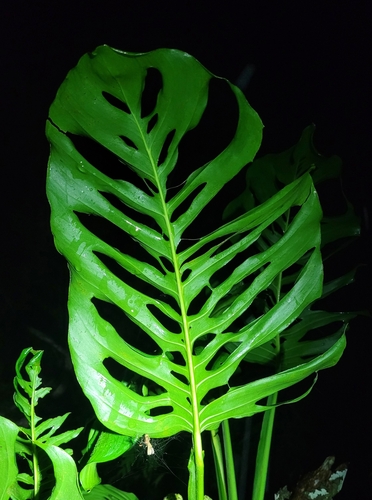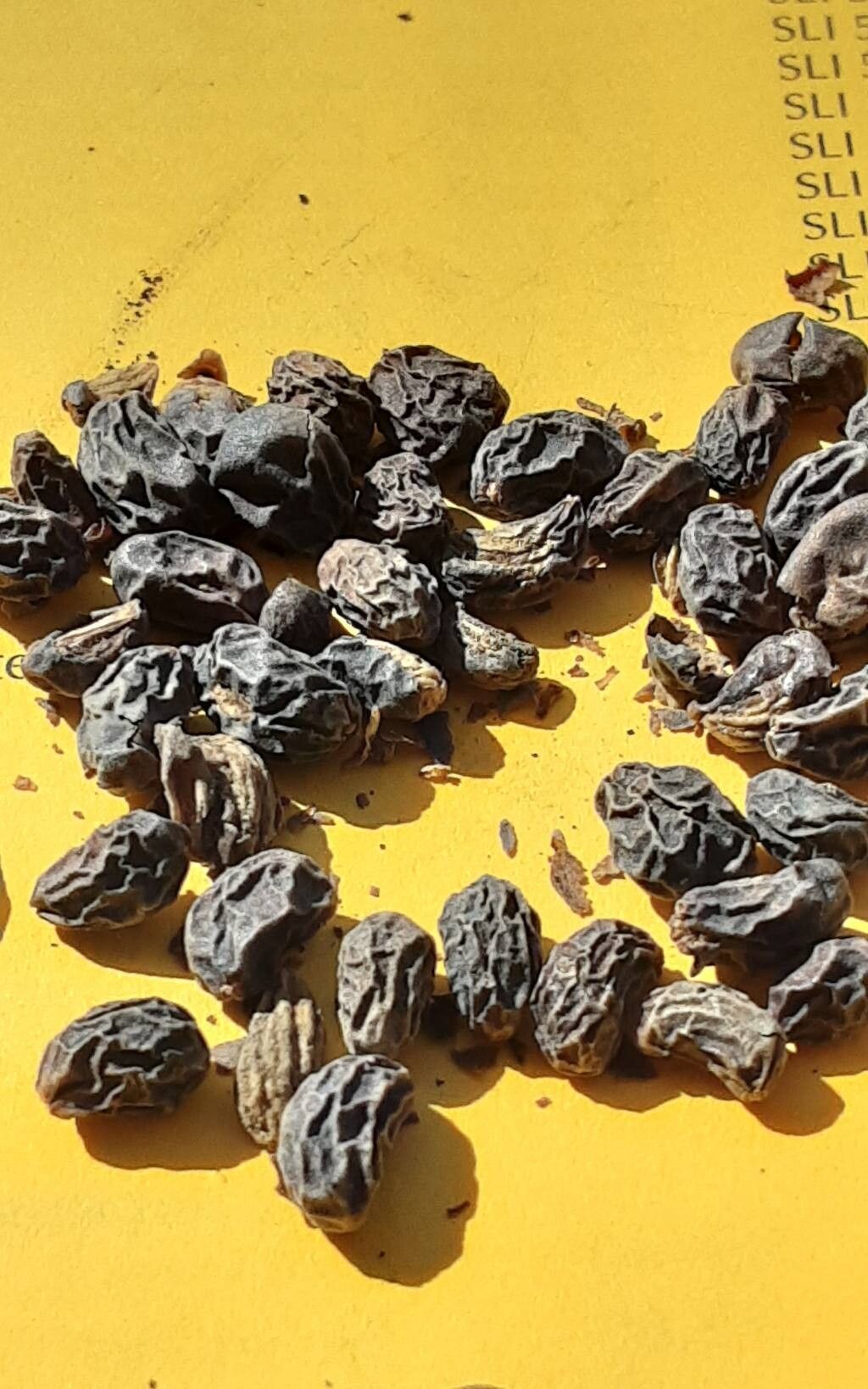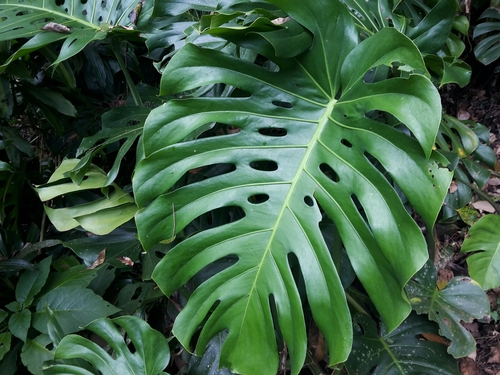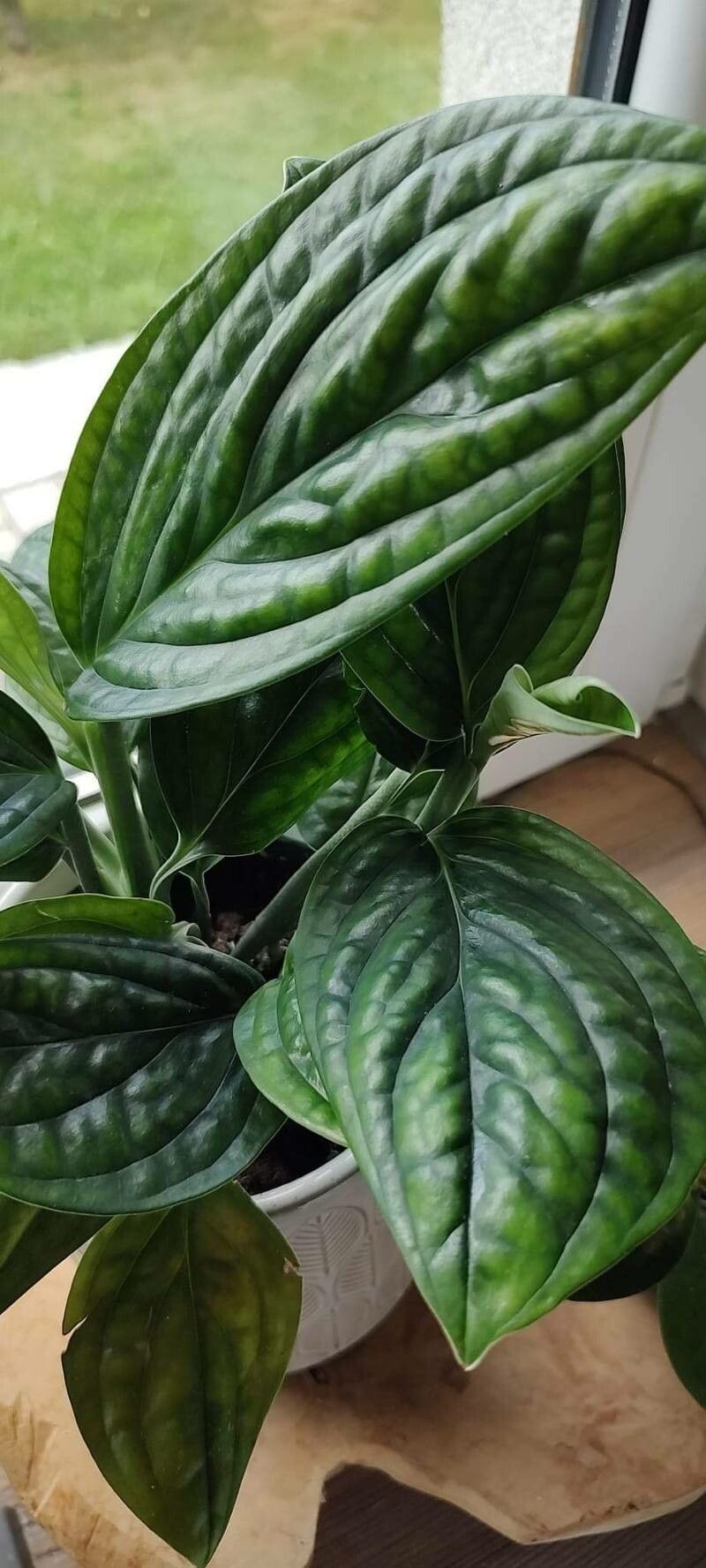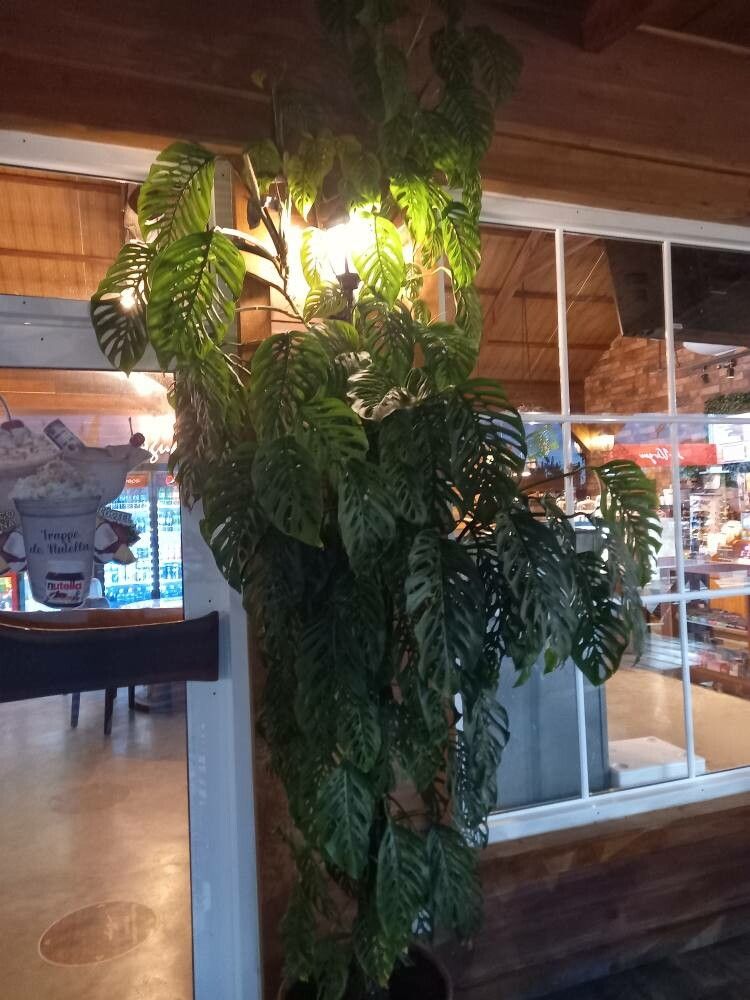
Monstera acuminata, or shingle plant, is a species of flowering plant in the family Araceae which is widespread from Mexico to Central America. It is abundant in central Petén and extends north to San Luis Potosí, making it the northernmost species of Monstera.
Monstera acuminata displays strong resistance to disease and is generally not susceptible to illnesses. In terms of care, the plant is relatively low-maintenance. When grown outdoors, it needs minimal watering, and larger specimens usually do not require pruning. Smaller specimens, however, should be pruned after they have bloomed. Monstera acuminata is appropriate for anyone with outdoor space, such as a garden or deck, and does not require much plant-care experience.
How to keep Monstera Acuminata.
Light
Monstera acuminata originates from habitats like forest undergrowth or rocky terrains, where it is naturally shielded from the sun. It thrives best in partial sunlight, but it is also capable of adjusting to complete sunlight or total shade, showcasing its flexible and robust characteristics.
Temperature
Monstera acuminata is a native of tropical areas, which are generally hot and moist. Consequently, it is well suited for warm and humid conditions. It doesn't do well with abrupt shifts in temperature and prefers consistent indoor climates, so preventing indoor temperature fluctuations is crucial. It often can't withstand cooler temperatures and needs a warmer environment to grow. If the temperature of its environment falls below a certain level, the plant could stop growing or even perish.
Fertilizer
Fertilizing a Monstera acuminata is best done in early spring when the plant is just coming out of dormancy. This promotes its overall growth and the development of its flowers. Fertilization improves the leaves, stems, and branches, as well as contributing to the production of large, colorful, and durable flowers. It is also beneficial in facilitating nutrient transfer from roots to flowers, thereby enhancing the plant's health and its ability to withstand diseases.
Botanical profile.
- Plant Type
- Vine
- Life Cycle
- Perennial
- Hardiness Zone
- 11-12
- Mature Height
- 1 cm to 36 cm
- Mature Spread
- 0.91 m to 2.13 m
- Leaf Color
- Green
- Leaf Type
- Evergreen
- Flower Color
- White, Yellow
- Flower Size
- 10.16 cm to 15.24 cm
- Bloom Time
- Summer, Early fall
- Planting Time
- Spring, Summer, Autumn
- Harvest Time
- Late summer, Fall
- Native Area
- Belize, Honduras, Mexico, Guatemala, Nicaragua