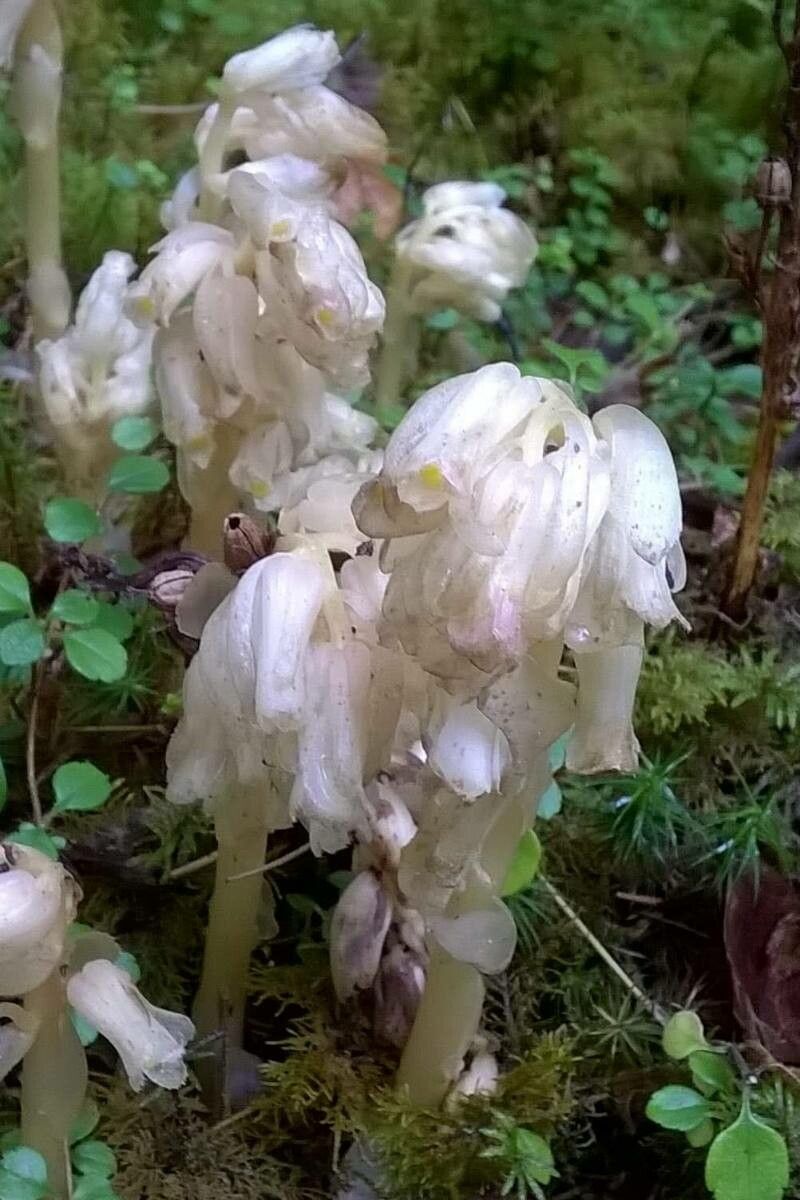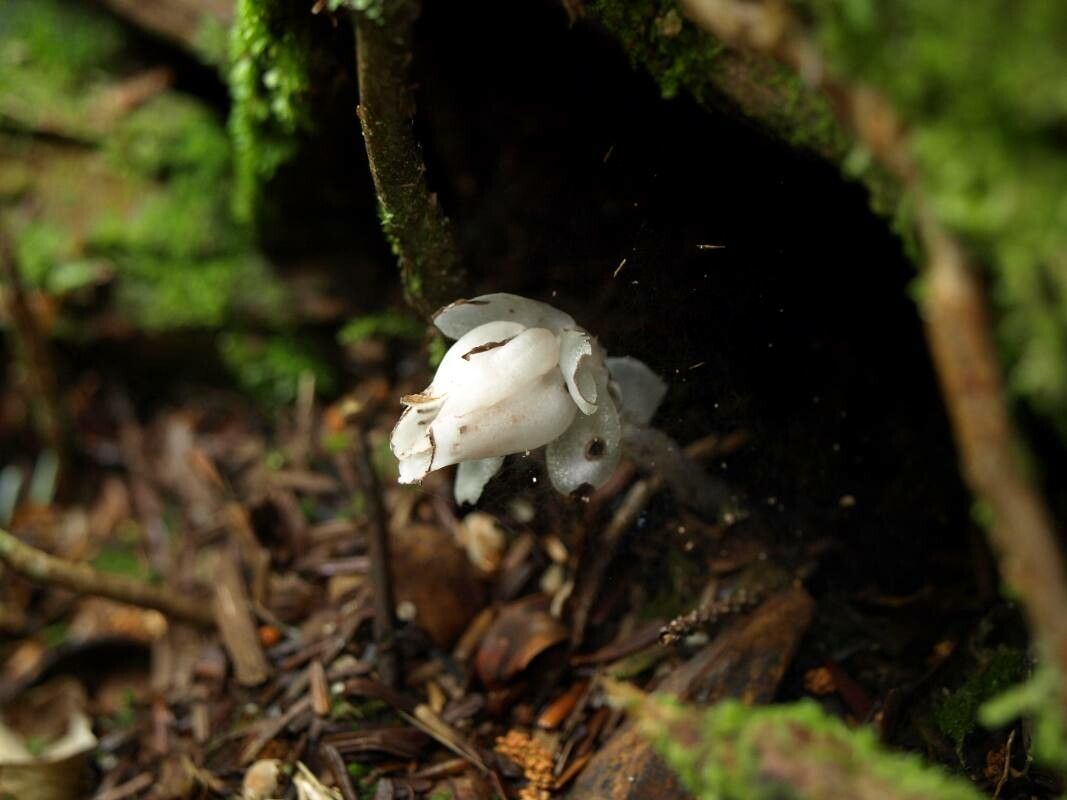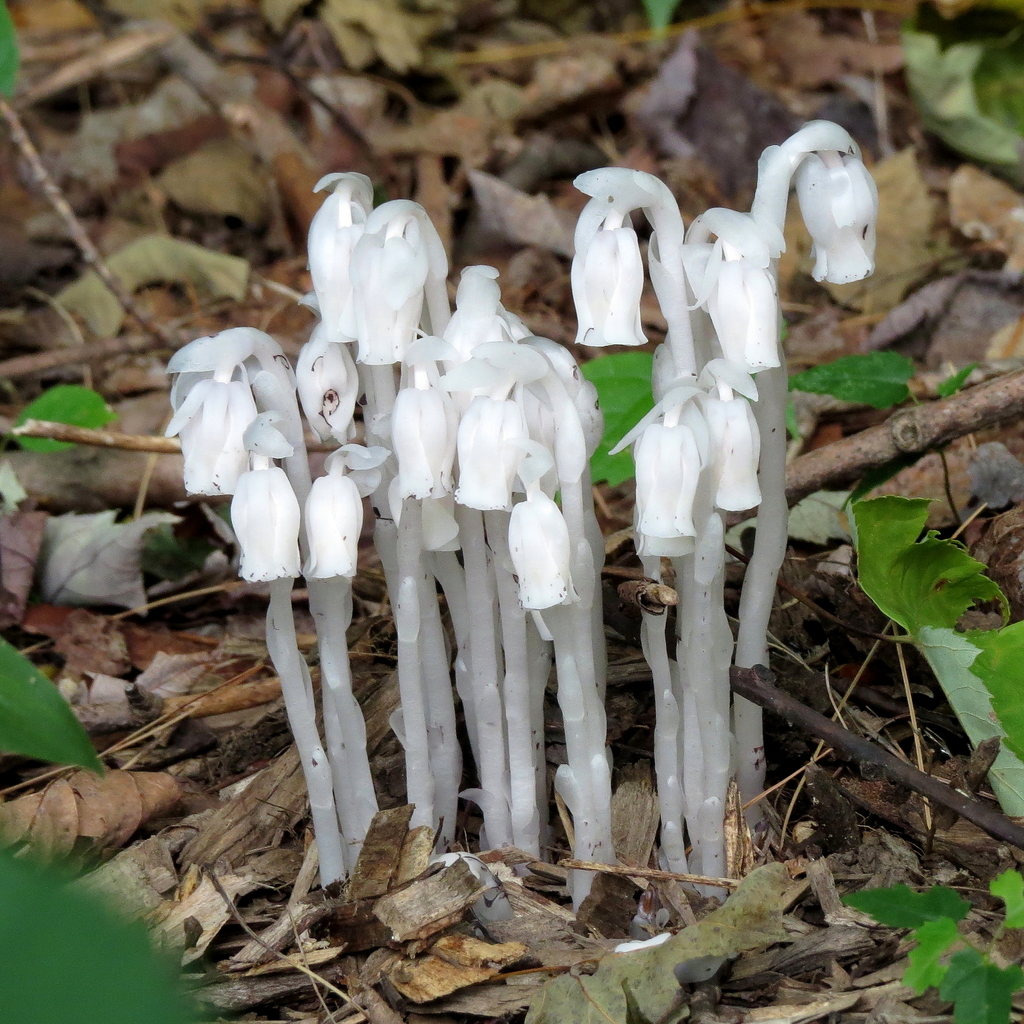
Monotropa uniflora, commonly known as the ghost plant or Indian pipe, is a unique and fascinating member of the Ericaceae family. This perennial herb thrives in shady, moist areas of North America, Europe, and Asia.
What sets this plant apart is its lack of chlorophyll, which means it cannot produce its own food through photosynthesis like most plants. Instead, it relies on a symbiotic relationship known as mycorrhizal association to obtain nutrients from fungi in the soil.
The ghost plant features an erect stem that can grow up to 30 cm tall, topped with small, white, bell-shaped flowers with five petals. These flowers bloom from June to September.
Native Americans have used the Indian pipe for centuries for its medicinal properties, particularly its anti-inflammatory effects. However, it is important to note that ingesting large quantities of this plant can be toxic.
Overall, Monotropa uniflora is an intriguing species due to its unique adaptations, allowing it to thrive without chlorophyll or sunlight exposure, unlike most other plants.
The plant, commonly known as the Indian pipe, gets its name from its distinctive shape. It features a prominent bend near the tip and has an expanded, flower-like end on a single stem.
The ghost plant is fairly disease-resistant and typically doesn't suffer from illnesses. However, it can be vulnerable to pests and pathogens present in its environment, though such issues are usually mild. In terms of care, the plant requires moderate maintenance. Regular pruning is needed to keep a neat appearance and support healthy growth. Fertilizing can also help encourage flowering. The ghost plant is suitable for anyone with outdoor space, like a garden or patio, and does not demand extensive care experience. It may need more attention when grown indoors.
How to keep Monotropa Uniflora.
Light
Ghost plant prefers shaded environments because it naturally inhabits forest understories. It requires very little sunlight to grow. Only minimal sun exposure is sufficient for its growth and survival.
Water
The ghost plant flourishes in shaded, moist soil, and it prefers damp conditions, although it can tolerate moderate drought. To maintain its moisture balance, particularly during its active growth phase, it should be watered weekly. As an indoor plant that thrives in lower light conditions, it is important to carefully monitor the soil moisture levels and adjust watering based on changes in humidity.
Humidity
This plant needs special care because it loves high humidity levels of 60-80% or more. The best way to achieve this is by placing a humidifier near the plant. Daily misting is also essential! Make sure the room has good ventilation.
Temperature
The ghost plant is native to cool, moist, shaded habitats where temperatures do not rise above 35 ℉ (1.7 ℃). However, during winter they can tolerate temperatures as low as 5 ℉ (-15 ℃). In spring, it’s best to raise temperatures gradually to prevent shocking the plant.
Fertilizer
Early spring, when the Ghost plant is coming out of dormancy and starting active growth, is the optimal time to fertilize. Fertilizing supplies essential nutrients needed for healthy growth. Although the Ghost plant has relatively low fertilizer requirements, giving it fertilizer once a year can improve its survival and encourage better, longer-lasting flowers.
Pruning
The ghost plant flourishes in wooded areas and requires minimal pruning, primarily to remove dead or damaged stems. It's important to avoid disturbing the root area because the plant relies on symbiotic relationships with fungi. With proper care, you can enhance air circulation and promote healthy growth, making the ghost plant a visually appealing addition to your garden.
Pot & Repot
When repotting Ghost plant, select a pot 1–2 inches (2.5–5.1 cm) larger that provides ample drainage. Use a well-draining potting mix. Repot in spring or fall, ensuring the root ball is positioned slightly lower than the rim of the flower pot. Water thoroughly after repotting and place in a warm spot with indirect sunlight.
Botanical profile.
- Plant Type
- Herb
- Life Cycle
- Perennial
- Genus
- Monotropa
- Family
- Ericaceae
- Hardiness Zone
- 4-9
- Mature Height
- 5 cm to 30 cm
- Mature Spread
- 5 cm
- Leaf Color
- White
- Leaf Type
- Deciduous
- Flower Color
- White
- Flower Size
- 0.51 cm to 1.52 cm
- Bloom Time
- Mid summer
- Planting Time
- Spring
- Harvest Time
- Mid summer
- Native Area
- Nepal, Belize, India, Honduras, Mexico, Bangladesh, Pakistan, Panama, China, Russia, Colombia, Myanmar, Japan, Koppen, El Salvador, Nicaragua, Bhutan, South Korea, Costa Rica
Other names.
Reader questions.
How should I water my Ghost plant?
When watering the Ghost plant, it's best to use filtered water at room temperature. Tap water may contain harmful particles, so filtered water is a safer option. The Ghost plant is accustomed to a warm environment, so using cold water can be a shock to its system. To avoid any problems with the foliage, it's recommended to avoid overhead watering. Instead, just apply filtered room temperature water directly to the soil until it's completely soaked. This method helps moisten the roots and allows them to spread through the soil and absorb the necessary nutrients.
Why should I put fertilizer on my Ghost plant?
Fertilization plays a vital role in the Ghost plant's growth both above and below ground. While Ghost plants generally have low fertilization needs and can survive without it, annual fertilization can greatly benefit the plant. It not only helps the plant thrive but also promotes the production of longer-lasting flowers. Therefore, those who want their Ghost plant to look its best should prioritize annual fertilization.
What are the sunlight requirements for a Ghost plant?
The Ghost plant, or Monotropa uniflora, has specific sunlight requirements suited to its natural understory habitat. It thrives under full shade conditions, which means it does well with less than 3 hours of direct sunlight daily. Partial sun, or about 3-6 hours of sunlight, is also acceptable. Given its preference for shady environments, minimal exposure to natural sunlight is sufficient for its growth and survival. However, it's crucial to observe how sunlight moves through your garden to find spots that offer a balance of light and shade ideal for the plant, ensuring its happiness and health.
What is the native environment of the Ghost Plant?
The Ghost Plant, known botanically as Monotropa uniflora, thrives in its native cool, moist, and shaded environments where the temperature does not exceed 35°F (1.7°C). These conditions are essential for its growth and health, emulating the type of habitat where it naturally prospers.
What should I do if I give too much or too little water to my Ghost plant?
Both overwatering and underwatering can negatively affect the health of your Ghost plant, but overwatering is more common. Overwatering can cause the stems and leaves to wilt and turn yellow. It can also lead to diseases like root rot, mold, and mildew, which can be fatal for your plant. On the other hand, underwatering is less likely to occur because the Ghost plant can tolerate drought reasonably well. However, if underwatering does happen, the leaves may become brittle and brown. It is important to recognize the signs of overwatering early when caring for your Ghost plant. Some diseases, like root rot, may not be reversible if you wait too long. If you notice early signs of overwatering, reduce your watering schedule immediately and check the soil drainage. If the soil drains poorly, replace it with loose, well-draining potting mix. In contrast, if your Ghost plant shows signs of receiving too little water, simply water it more regularly until the signs improve.
When should I fertilize my Ghost plant?
The best time to fertilize a Ghost plant is from late winter to early spring, as this is when the plant transitions from dormancy to active growth. Fertilizing during this time promotes healthy growth and sets the plant up for a successful season. Although it is generally recommended to fertilize a Ghost plant in the early spring, it is also acceptable to do so in the fall. However, it is best to avoid fertilizing during summer and winter for the Ghost plant.
How can artificial lighting support the growth of indoor Ghost plants?
For indoor Ghost plants, when natural sunlight is insufficient, artificial lighting is a vital solution, especially in winter or less sunny spaces. Effective indoor lighting promotes faster, healthier growth. It is recommended to use LED lights, which can be customized to deliver specific light wavelengths needed by plants. The lighting needs vary by plant type: 30-50W/sq ft for full sun plants, 20-30W/sq ft for partial sun plants, and 10-20W/sq ft for full shade plants. The ideal placement is 12-36 inches above the plant to mimic natural sunlight, and most plants benefit from 8-12 hours of light per day.
How does the Ghost Plant tolerate winter temperatures?
The Ghost Plant has a strong cold resistance, allowing it to tolerate temperatures as low as 5°F (-15°C) during the winter season. It does not usually require special frost protection measures unless winter temperatures are expected to drop below -30°C. In such extreme cases, cold protection can be provided by covering the plant with soil or straw. Additionally, watering the plant abundantly before the first freeze in autumn helps ensure the soil remains moist and enters a frozen state, which prevents drought and water scarcity for the plant throughout winter and early spring.
How frequently should I give water to my Ghost plant?
If you have your Ghost plant in a pot, the best way to check if it needs water is to stick your finger into the soil. If the top two to three inches of soil are dry, it's time to water it. If your Ghost plant is planted outside, you can use the same method to test the soil. Once the top few inches of soil are dry, you should water it. In the spring and early fall, you'll probably need to water it once a week using this method. However, during very hot weather, you might need to water it two or more times per week. Despite this, mature and well-established Ghost plants can handle drought surprisingly well.
When should I not put fertilizer on my Ghost plant?
To properly care for your Ghost plant, remember to only fertilize it during late winter and early spring. This plant has low fertilization needs, so a single annual feeding is sufficient. Avoid fertilizing it during spring, summer, and fall to prevent overfertilization and its complications. However, if you missed fertilizing in spring, you can fertilize it in the fall. Additionally, refrain from fertilizing the Ghost plant during winter as it is in a dormant phase and does not produce new growth.
What are the symptoms of insufficient light in Ghost plants?
When Ghost plants don't receive enough light, particularly indoors, they may show subtle symptoms that indicate a deficiency. These symptoms include smaller new leaves, leggy or sparse growth, faster leaf drop, slower or no new growth, and lighter-colored new leaves. Conditions like chlorosis, where leaves turn yellow due to a breakdown of chlorophyll, sunscald, leaf curling, wilting, and leaf scorching can also occur. These signs underline the importance of providing adequate light to maintain the plant's health and vitality.
What should be done if the Ghost Plant experiences temperatures below -25°C or above 35°C?
When temperatures fall below -25°C, the Ghost Plant may show no noticeable changes during winter but can experience a decrease in sprouting or even fail to sprout during spring. In such instances, it's recommended to remove any parts of the plant that have failed to sprout. Conversely, during summer, if temperatures exceed 35°C and especially if they reach above 38°C, the plant's leaves may become lighter, curl, or suffer from sunburn, potentially causing the plant to wilt and dry. To combat these issues, trim away the sunburned and dried-up parts and move the plant to a location with shade from the midday and afternoon sun, or use a shade cloth. Additionally, watering the plant in the morning and evening helps keep the soil moist and supports the plant's health.