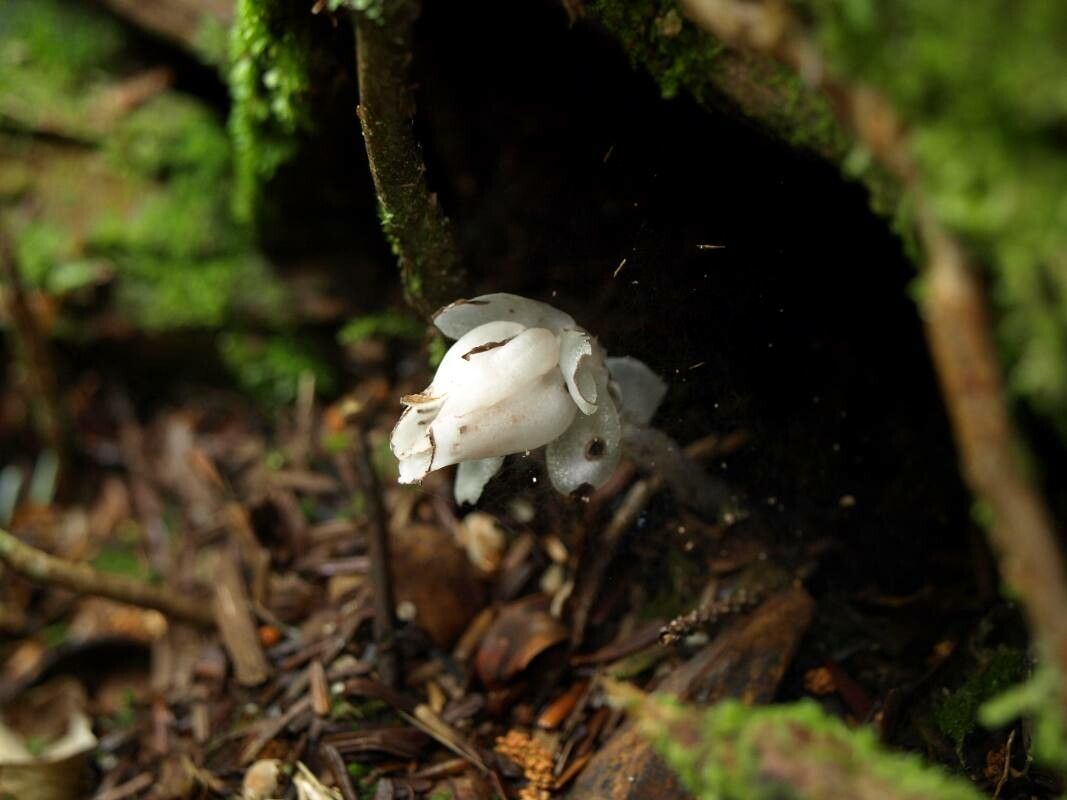
Monotropastrum humile is a species of myco-heterotrophic plant of the family Ericaceae, distributed throughout eastern Asia, from the Himalayas to the Islands of Japan.
The ghost plant is fairly disease-resistant and typically doesn't suffer from illnesses. However, it can be vulnerable to pests and pathogens present in its environment, though such issues are usually mild. In terms of care, the plant requires moderate maintenance. Regular pruning is needed to keep a neat appearance and support healthy growth. Fertilizing can also help encourage flowering. The ghost plant is suitable for anyone with outdoor space, like a garden or patio, and does not demand extensive care experience. It may need more attention when grown indoors.
How to keep Monotropastrum Humile.
Light
The ghost plant hails from the undergrowth of tropical forests, flourishing in complete shade with occasional access to speckled sunlight. It is capable of adapting to surroundings with little direct sunlight.
Water
The ghost plant flourishes in shaded, moist environments, needing constant moisture and weekly watering. While it can tolerate some drought, regular misting, especially during growth periods, helps maintain the humidity it prefers. Suited for low-light conditions, the ghost plant is often grown indoors to mimic its natural habitat.
Temperature
The Ghost plant is indigenous to habitats that regularly encounter temperatures from 68 to 95 °F (20 to 35 ℃). The plant flourishes optimally when the temperature is kept between these numbers. Throughout the changing seasons, it is advisable to continuously check and modify the temperature according to its preferred conditions.
Fertilizer
Typically, a one-time application of fertilizer in spring is enough for a Ghost plant, although it can benefit from more frequent feedings for optimal growth. Nutrient supplementation should occur every month to a month and a half. This process not only boosts the look and operation of the leaves by maintaining their color and texture, but also fosters the development of roots and the uptake of nutrients to ensure the plant's health in the long run.
Pruning
The ghost plant thrives in shaded woodlands and depends on fungi for its growth. To keep it healthy, prune it from early to late spring, concentrating on removing dead or damaged parts to improve air circulation. Be careful not to over-prune, as this can stress the plant, which is crucial for maintaining vibrant blooms and ensuring its longevity.
Botanical profile.
- Plant Type
- Herb
- Life Cycle
- Perennial
- Genus
- Monotropastrum
- Family
- Ericaceae
- Hardiness Zone
- 9
- Mature Height
- 10 cm to 20 cm
- Mature Spread
- 2 cm to 5 cm
- Leaf Color
- White
- Leaf Type
- Deciduous
- Flower Color
- White
- Flower Size
- 1.02 cm to 1.52 cm
- Bloom Time
- Late spring, Early summer
- Planting Time
- Autumn
- Harvest Time
- Mid summer, Late summer
- Native Area
- Russia, Nepal, India, Indonesia, Vietnam, Myanmar, Japan, Koppen, Bhutan, Laos, South Korea, Thailand, China
Other names.
Reader questions.
What is the ideal temperature range for a Ghost plant?
The Ghost plant, scientifically known as Monotropastrum humile, thrives in environments with temperatures ranging between 68 to 95 °F (20 to 35 °C). This range is considered optimal for the plant's growth. It's important to monitor and adjust the environmental temperature across different seasons to ensure it stays within this ideal range. Although the Ghost plant has some degree of cold tolerance and doesn’t usually require special care for temperatures above 0°C, precautions should be taken if temperatures are expected to drop below freezing point by employing temporary protective measures.
How does the Ghost plant react to low temperatures?
The Ghost plant shows a moderate tolerance to low temperatures, thriving best when temperatures stay above 20°C. During the winter months, it is crucial to keep the plant's environment above 0°C. Exposure to temperatures below -5°C can cause the leaves to droop, and while they may recover in mild cases, severe cold can lead to wilting and eventual leaf drop. To protect the plant from frost damage, it's recommended to trim off frost-damaged parts and, before exposure to low temperatures again, wrap the plant with protective materials like non-woven fabric or cloth and construct a wind barrier to shield it from cold winds.
What should be done if a Ghost plant is exposed to high temperatures?
During the warmer summer months, it's vital to ensure that the Ghost plant's temperature does not exceed 35°C. Temperatures higher than 38°C can lead to lighter leaf color, dry and withered leaf tips, curling of the leaves, and increased susceptibility to sunburn. To mitigate these effects, trim away any sunburned or dried-up parts of the plant. Moving the plant to a shadier location or using a shade cloth can help protect it from the harsh midday and afternoon sun. Additionally, watering the plant in the morning and evening will help keep the soil adequately moist.