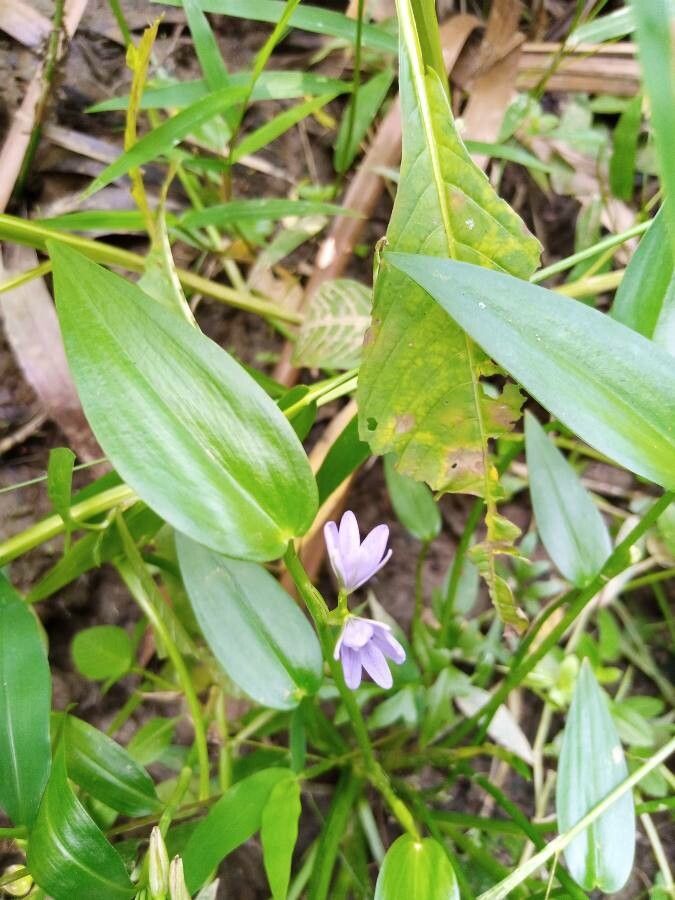
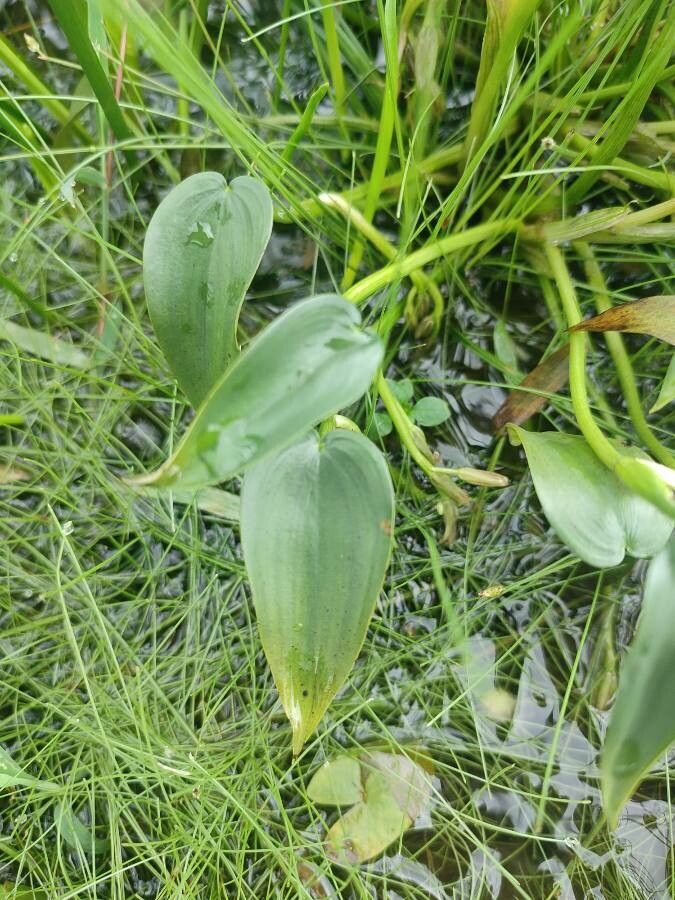
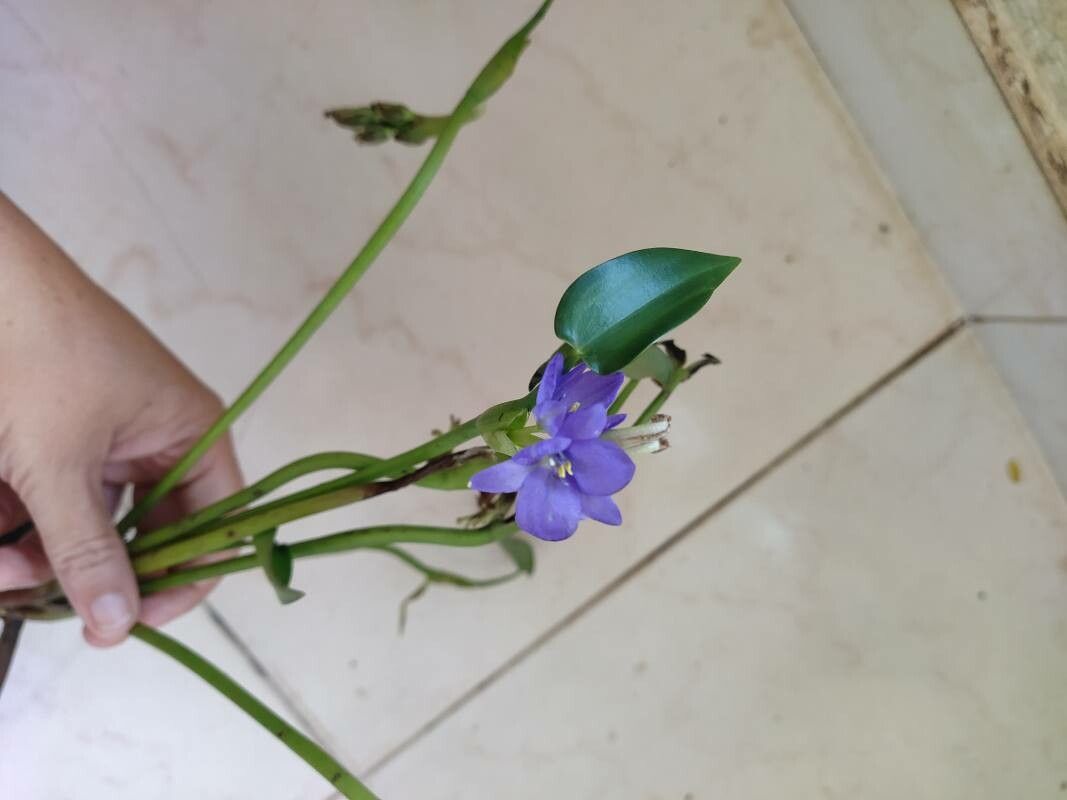
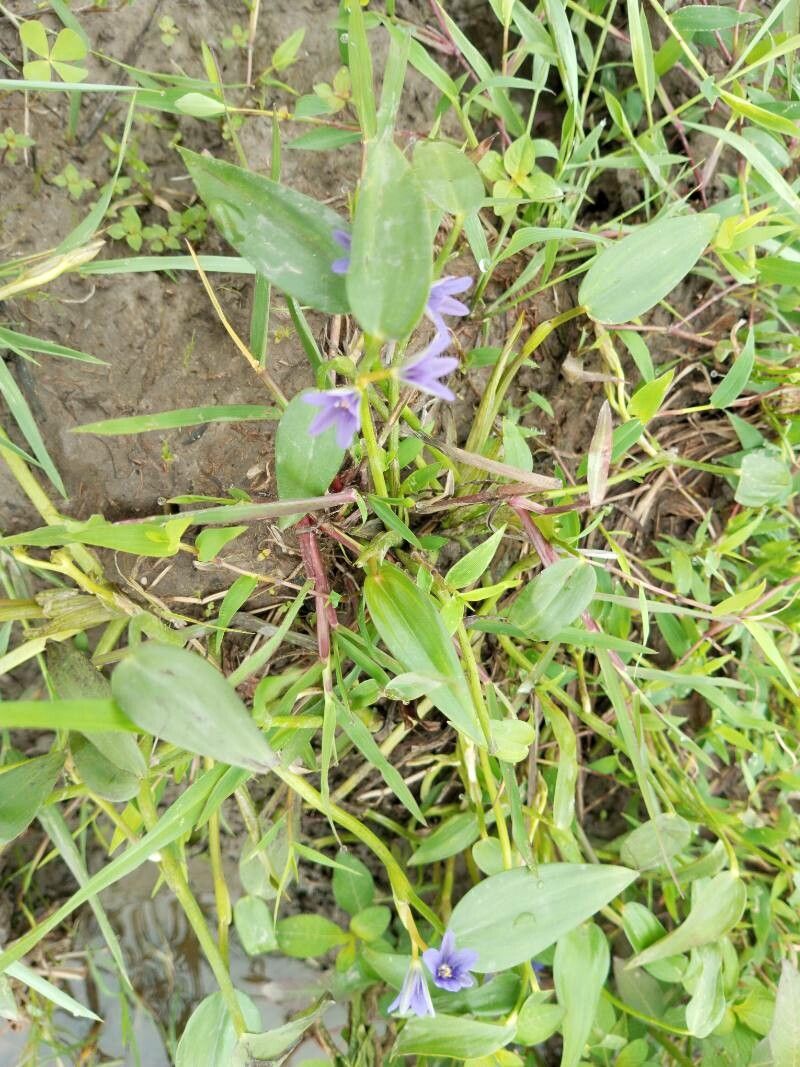
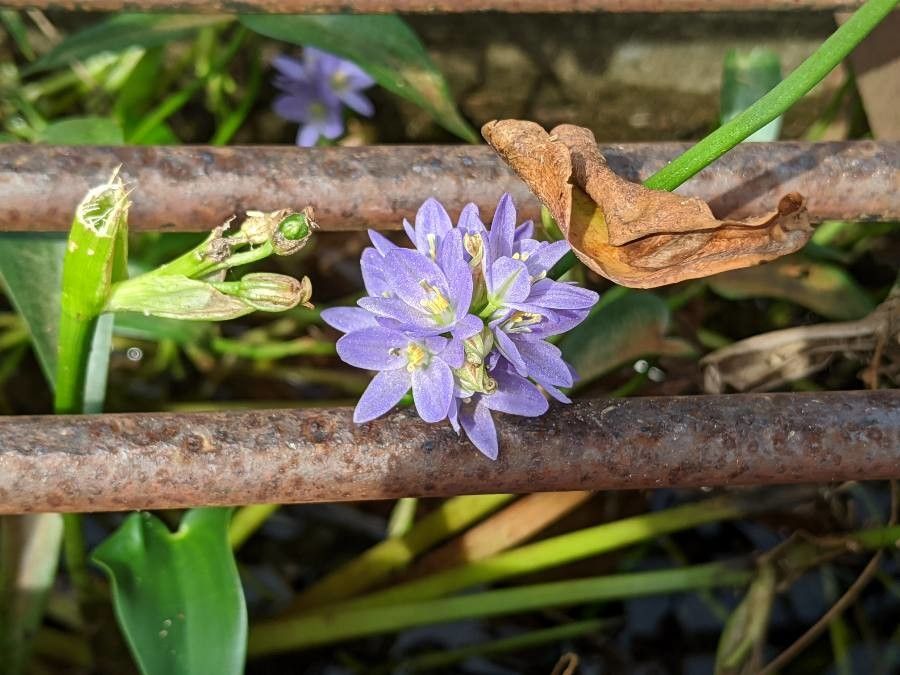
Monochoria vaginalis is a species of flowering plant in the water hyacinth family known by several common names, including heartshape false pickerelweed and oval-leafed pondweed. It is native to much of Asia and across many of the Pacific Islands, and it is known in other areas as an introduced species. It is often an invasive noxious weed, and is listed on the United States Federal Noxious Weed List. An aquatic plant, it is invasive in rice paddies and other water bodies. This is an annual or perennial herb growing in water from a small rhizome. It is quite variable in morphology. The shiny green leaves are up to about 12 centimeters long and 10 wide and are borne on rigid, hollow petioles. The inflorescence bears 3 to 25 flowers which open underwater and all around the same time. Each has six purple-blue tepals just over a centimeter long. The fruit is a capsule about a centimeter long which contains many tiny winged seeds.
Heartshape false pickerelweed has strong disease resistance and is generally unlikely to suffer from illnesses. Still, it can be affected by pests and diseases present in its environment. Such infections are typically minor. Regarding care, this plant needs medium maintenance. It should be pruned regularly to preserve a neat appearance and support healthy growth. Fertilizing can also aid in encouraging flowering. Heartshape false pickerelweed is appropriate for anyone with outdoor space, like a garden or patio, and does not demand extensive care experience. It may need more attention when cultivated indoors.
How to keep Monochoria Vaginalis.
Light
Heartshape false pickerelweed comes from habitats with abundant sunlight, such as the shallow margins of ponds and lakes. It prefers full sun, although it can also tolerate partial sun.
Water
Thriving in moist, humid conditions, the heartshape false pickerelweed is native to tropical aquatic environments and is often found in wetlands. When cultivated outdoors, it needs weekly watering to mimic its natural habitat. This plant is resilient during heavy rains, using downpours to support its growth cycle.
Temperature
Heartshape false pickerelweed is a plant that does well in conditions where temperatures fall between 68 and 95 °F (20 to 35 °C). It comes from areas with comparable temperate climates. As seasons change, it is helpful to alter the ambient temperature to imitate its natural habitat.
Pruning
Heart-shaped false pickerelweed features large, heart-shaped leaves and thrives in wetland environments. To maintain its health, prune the plant from early to late spring to remove any dead foliage and encourage new growth. Trimming overgrown stems improves the plant's shape and increases airflow, which contributes to its overall well-being. Remember to sterilize your tools to prevent the spread of infections.
Botanical profile.
- Plant Type
- Herb
- Life Cycle
- Perennial, Annual
- Genus
- Monochoria
- Family
- Pontederiaceae
- Hardiness Zone
- 10
- Mature Height
- 6 cm to 49 cm
- Mature Spread
- 30 cm to 61 cm
- Leaf Color
- Green, Dark Green
- Leaf Type
- Semi-evergreen
- Flower Color
- Purple, Blue
- Flower Size
- 3.05 cm to 6.35 cm
- Bloom Time
- Summer, Early fall, Mid fall
- Planting Time
- Spring, Summer, Autumn
- Harvest Time
- Late summer, Fall, Early winter
Other names.
Reader questions.
What are the sunlight requirements for Heartshape false pickerelweed?
Heartshape false pickerelweed thrives in environments that offer full sun, which means above 6 hours of direct sunlight daily, but it can also grow well in partial sun conditions, receiving about 3-6 hours of sunlight. This adaptability makes it suitable for both bright, tropical environments and slightly shaded areas. It's important to observe how sunlight moves through your garden to choose spots that provide the perfect balance of light and shade for these plants, ensuring their healthy growth.
What is the ideal temperature range for Heartshape false pickerelweed?
Heartshape false pickerelweed thrives in temperatures ranging from 68 to 95 °F (20 to 35 °C). It is a heat-loving plant native to temperate climates. To ensure its growth, it is recommended to adjust the ambient temperature to closely mimic its natural environment, especially with changing seasons. During winter, it is beneficial for the plant to be kept in conditions above 20°C, while temperatures nearing 5°C can be harmful. In colder months, it's advised to bring the plant indoors near a bright window but away from direct heat sources to maintain appropriate warmth.
How can artificial lighting be used for indoor Heartshape false pickerelweed plants?
When natural sunlight is insufficient for Heartshape false pickerelweed plants, especially during winter or in less sunny spaces, artificial lighting becomes essential for optimal growth. LED lights are recommended due to their ability to be customized to provide specific wavelengths needed by plants. Full sun plants need 30-50W/sq ft, partial sun plants require 20-30W/sq ft, and full shade plants should have 10-20W/sq ft of artificial light. The light source should be placed 12-36 inches above the plant, mimicking natural sunlight as closely as possible, and plants generally need 8-12 hours of light per day.
How does Heartshape false pickerelweed react to low temperatures?
Heartshape false pickerelweed is not tolerant of low temperatures and requires the temperature to be maintained above 20°C. Exposure to temperatures below 5°C can be detrimental, and frost can cause the leaves to lighten in color before turning brown or black. These conditions can also lead to wilting and drooping. If the plant suffers from frost damage, the damaged parts should be trimmed off, and the plant should be moved indoors to a warm environment. To protect the plant from cold, it should be placed near a south-facing window for sunlight, while also ensuring it is not near heaters or air conditioning vents that could dry out the air excessively.
What are the symptoms of insufficient light for Heartshape false pickerelweed?
When Heartshape false pickerelweed does not receive enough light, it may show several symptoms, including smaller new leaves, leggy or sparse growth, faster leaf drop, slower or no new growth, and lighter-colored or pale new leaves. Conditions such as chlorosis, sunscald, leaf curling, wilting, and leaf scorching can also occur, indicating either too much or too little light. These symptoms help in identifying whether the plant is receiving inadequate light or suffering from overexposure.
What should be done if Heartshape false pickerelweed is exposed to high temperatures?
During the summer, it's important to ensure that the Heartshape false pickerelweed is kept below 35°C to prevent heat stress. Exposure to temperatures above 41°C can cause the leaves to lighten and increase the risk of sunburn. To address heat stress, trim away sunburned and dried parts of the plant. Then, move the plant to a location that provides shade during the midday and afternoon sun. Make sure to water the plant in the morning and evening to maintain soil moisture and help it cope with the high temperatures.
What are some solutions to insufficient light for Heartshape false pickerelweed?
To address insufficient light for Heartshape false pickerelweed, gradually move plants to sunnier locations until they receive at least 6 hours of direct sunlight daily. For indoor plants that can't be easily moved, consider using a desk or ceiling lamp for at least 8 hours a day or invest in professional plant grow lights. Outdoors, adapting plants gradually to brighter spots can prevent sunburn. Minimizing obstructions and transplanting to sunnier locations with good drainage can also improve light exposure. Note that parts of the plant damaged by insufficient sunlight may not recover, but new growth should be healthy once light exposure increases.