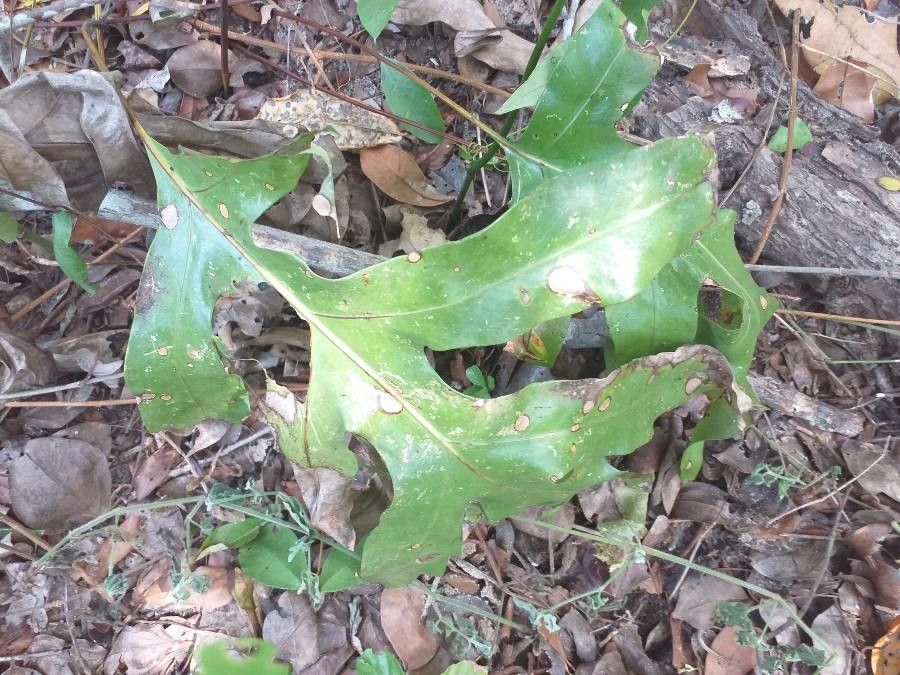
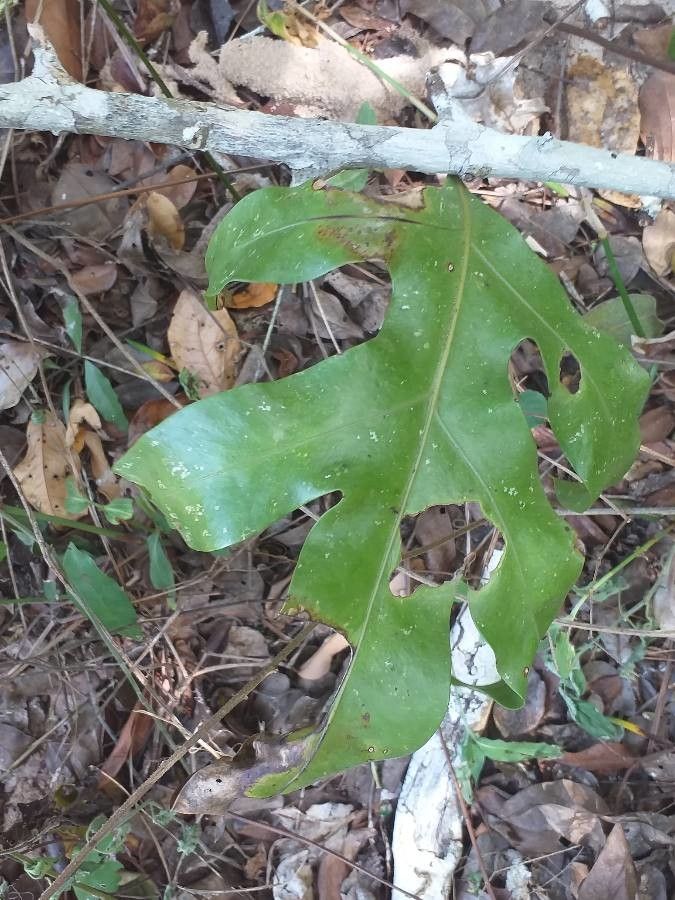
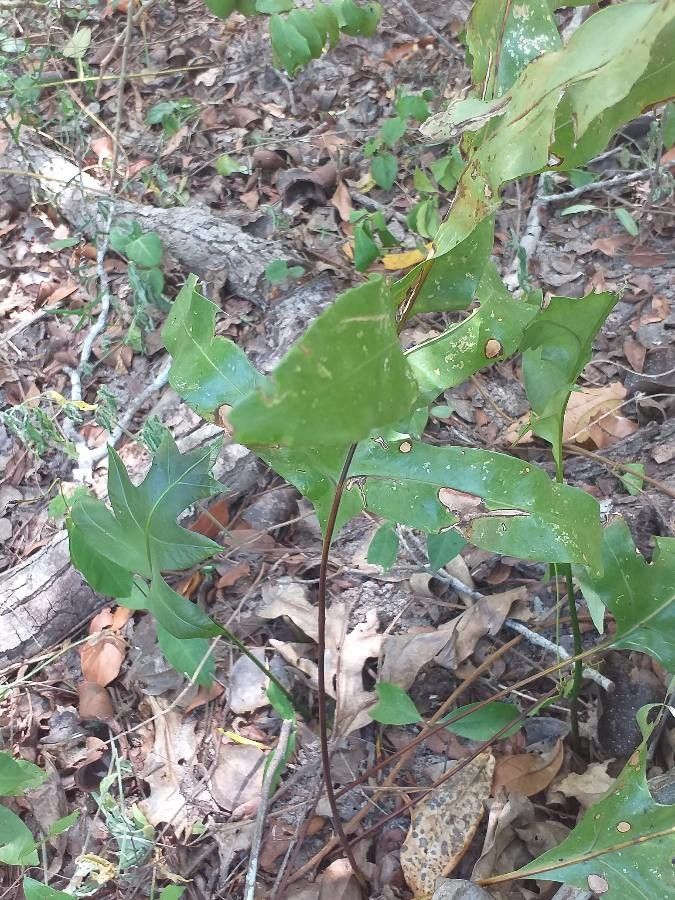
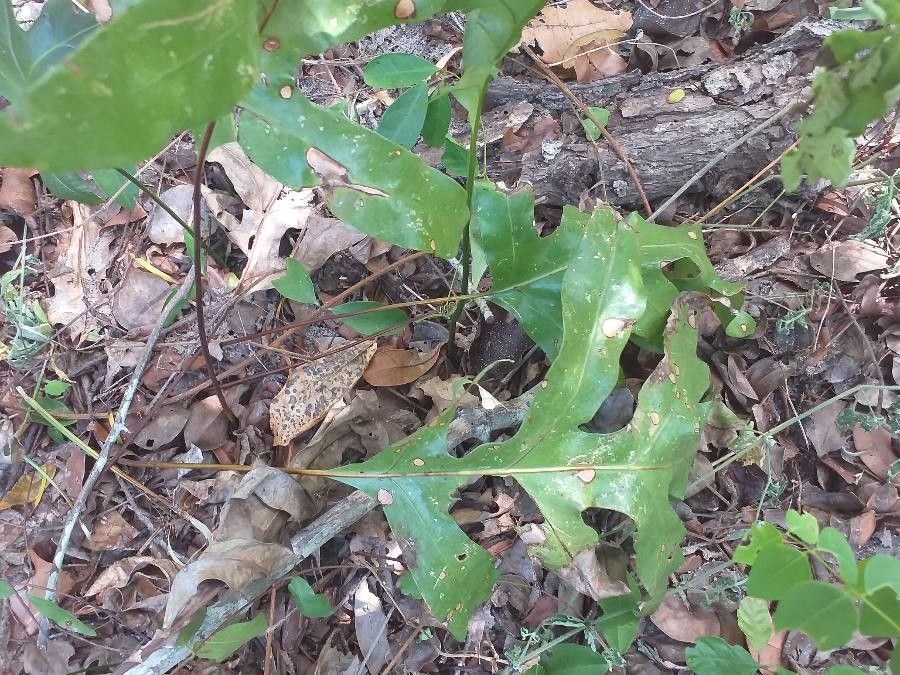
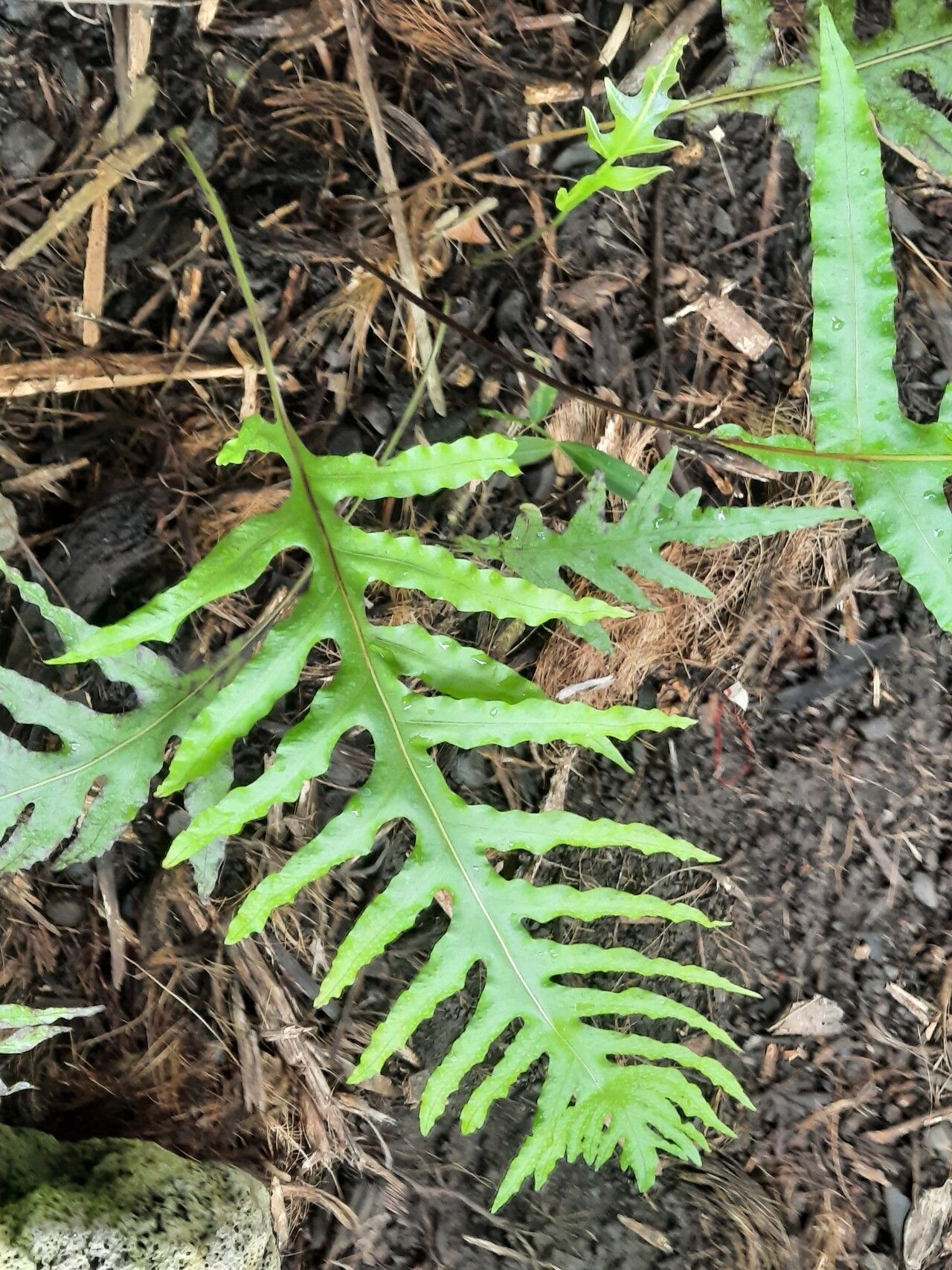
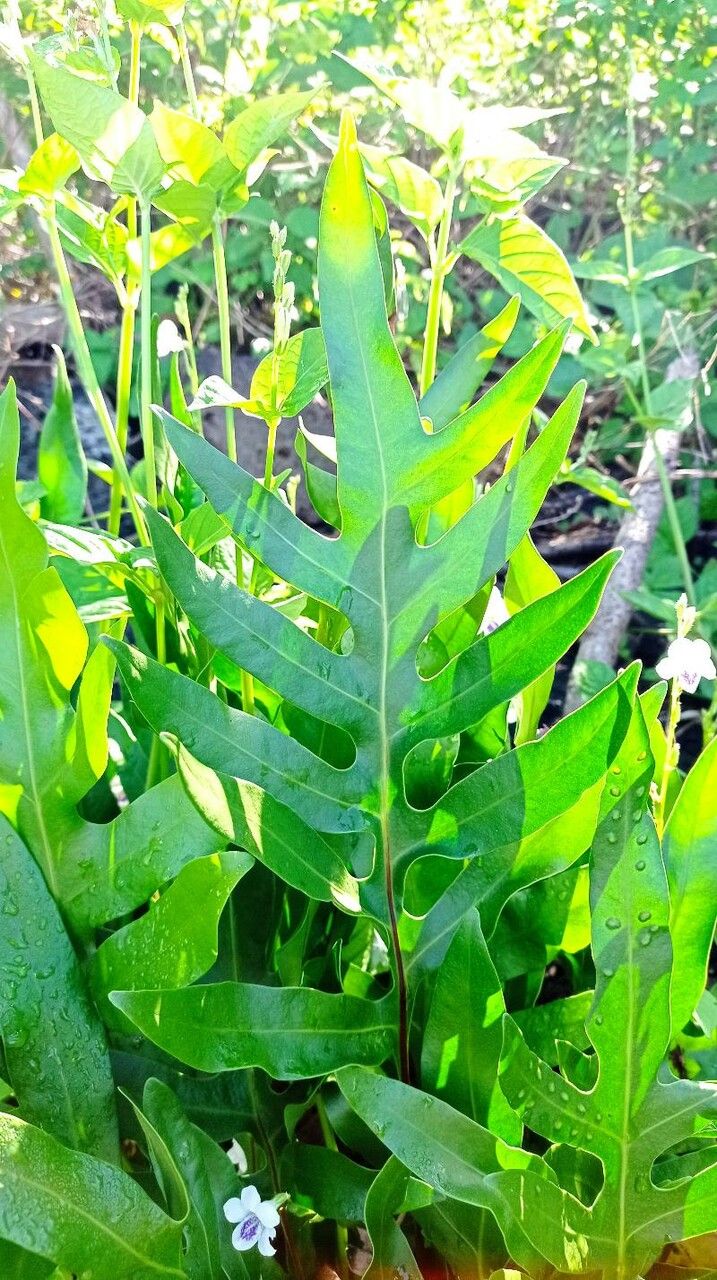
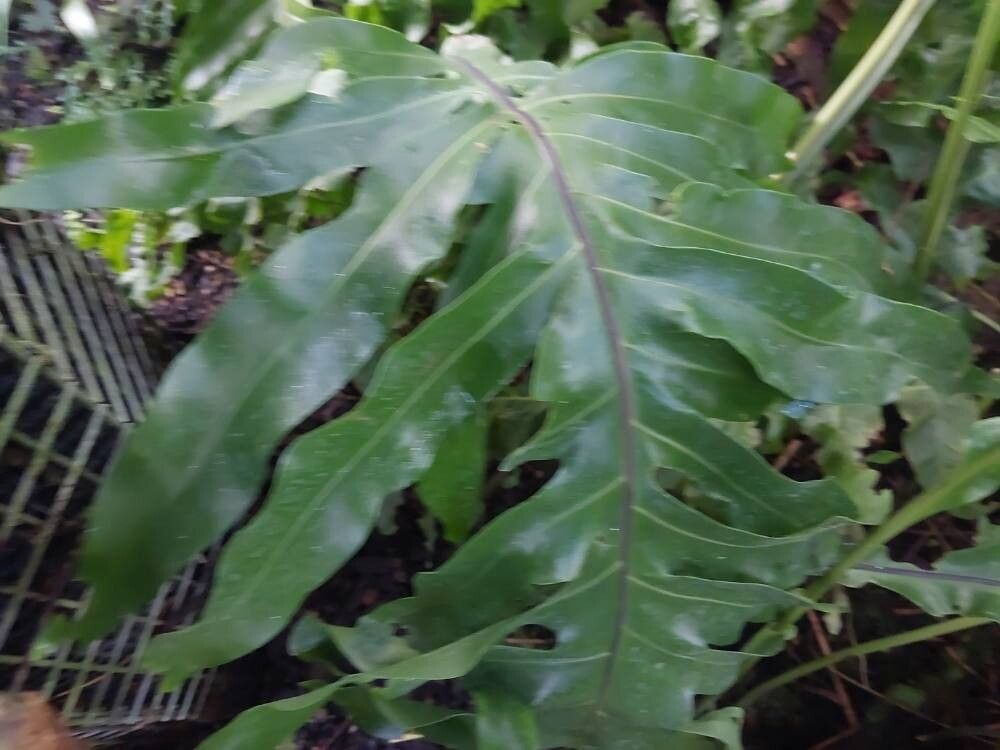
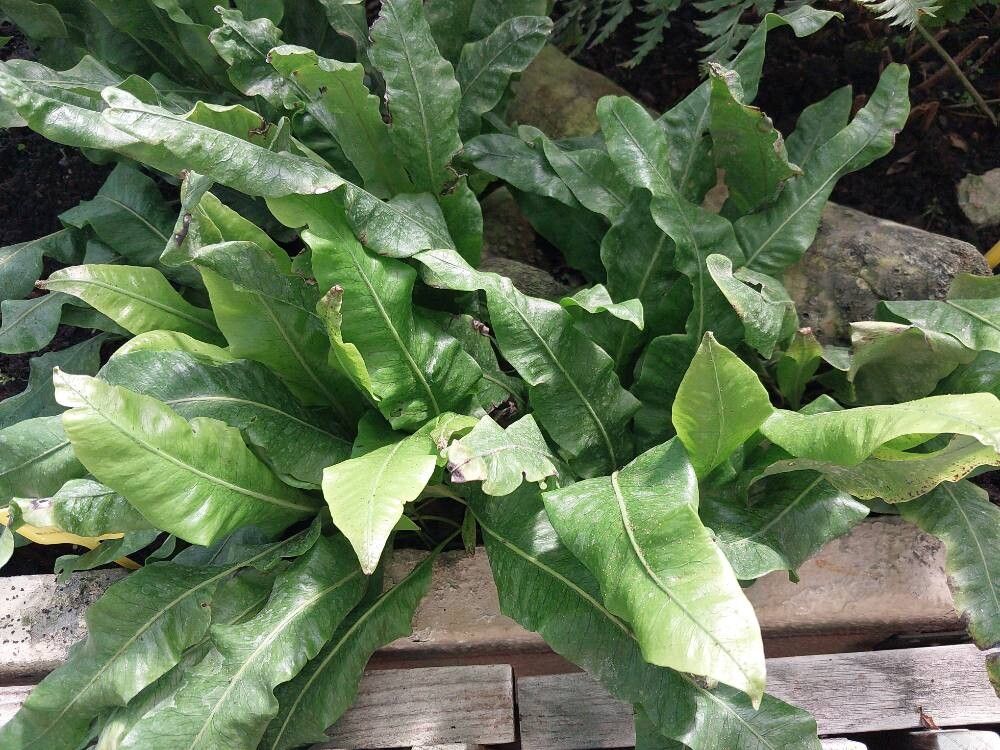
Microsorum scolopendria, synonym Phymatosorus scolopendria, commonly called monarch fern, musk fern, maile-scented fern, breadfruit fern, or wart fern is a species of fern within the family Polypodiaceae. This fern grows in the wild in the Western Pacific rim from Australia to New Caledonia to Fiji and throughout the South Pacific to French Polynesia. It was introduced in Hawaii in the late 1910s and has subsequently naturalized rapidly. It is found on all main islands. Its Hawaiian name lauaʻe is thought to have originally referred to the native fern Microsorum spectrum.The scientific name M. scolopendria has been misapplied to Microsorum grossum (and their synonyms in Phymatosorus).
Monarch fern generally has good resistance to disease and encounters relatively few insect pests. Its care is considered difficult because it requires a consistently moist environment and frequent watering. However, the roots are susceptible to rot if the plant is overwatered or the surroundings lack good ventilation. Monarch fern is suitable for people with some growing experience, as most people can keep it alive for a certain amount of time. Still, the Monarch fern may have difficulty thriving and its leaves can dry out and become less healthy over time.
How to keep Microsorum Scolopendria.
Light
Monarch fern flourishes in locations with low sunlight exposure, although it can still live in places with a restricted quantity of sun. Its roots are in shadowy environments, therefore too little or too much light can impede its development. A dimly lit environment is better for its strong growth.
Humidity
This plant needs special care because it loves high humidity levels of 60-80% or more. The best way to achieve this is by placing a humidifier near the plant. Daily misting is also essential! Make sure the room has good ventilation.
Temperature
The monarch fern is indigenous to tropical climates and is comfortable with temperatures that fall between 68 and 100 ℉ (20 to 38 ℃). It profits from being misted in the summer months to keep the moisture levels and regulate the heat. In the winter season, it is recommended to relocate the plant from areas with chilly drafts to avoid harm.
Pot & Repot
When transplanting a Monarch fern, select a pot that is 1-2 inches (2.5–5 cm) larger and has adequate drainage function. Utilize a potting mix that drains well. The ideal times for repotting are spring or autumn, making sure the root ball is a bit lower than the container's edge. Thoroughly water once repotted and position in a warm location with indirect sunlight.
Botanical profile.
- Plant Type
- Fern
- Life Cycle
- Perennial
- Genus
- Microsorum
- Family
- Polypodiaceae
- Hardiness Zone
- 10-11
- Mature Height
- 30 cm to 61 cm
- Mature Spread
- 30 cm to 61 cm
- Leaf Color
- Green
- Leaf Type
- Evergreen
- Planting Time
- Spring
- Native Area
- Sri Lanka, India, Angola, Vanuatu, Madagascar, Nigeria, Kenya, Uganda, Tanzania, Zimbabwe, Fiji, Benin, Sierra Leone, Indonesia, Cambodia, Equatorial Guinea, Liberia, Mozambique, Cameroon, Ghana, Ethiopia, Central African Republic, South Africa, Sudan, Philippines, Guinea, China, Vietnam, Myanmar, Togo, Côte d'Ivoire, Thailand, Gabon
Other names.