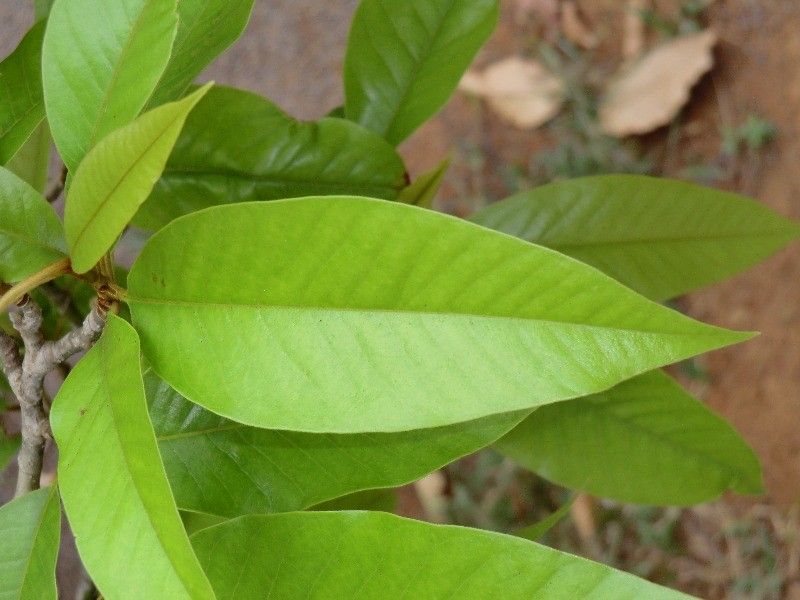
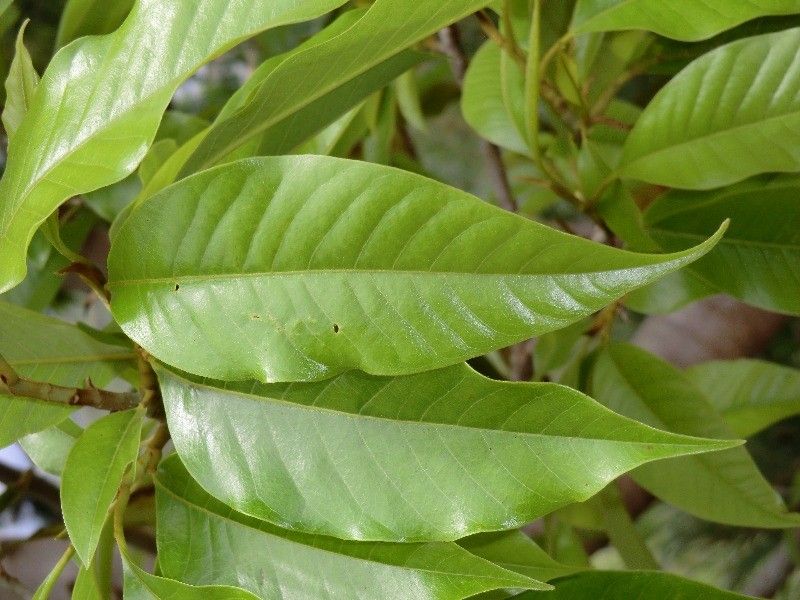
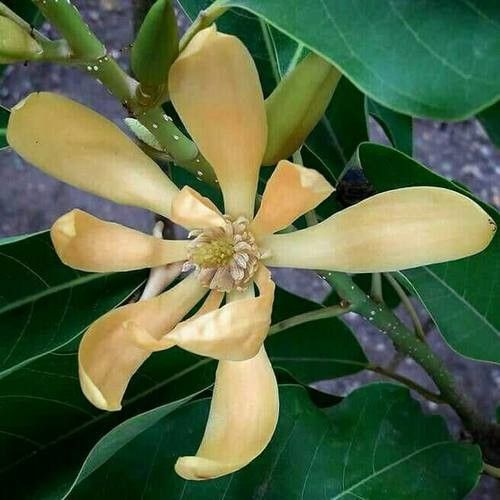
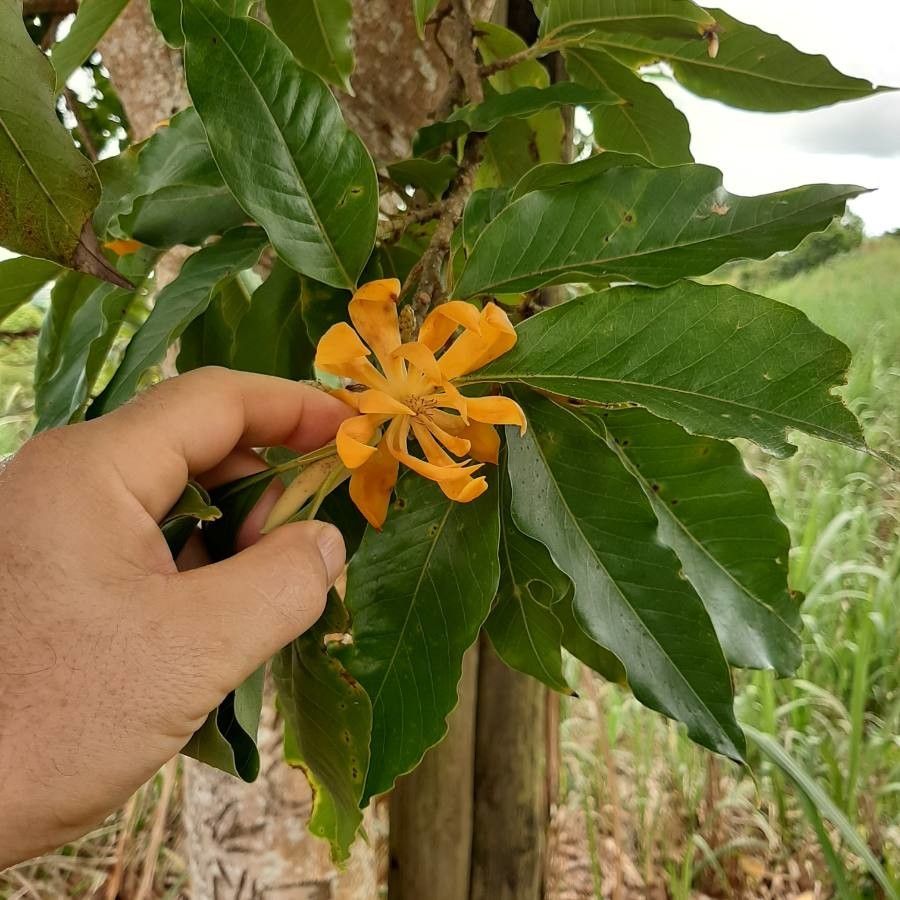
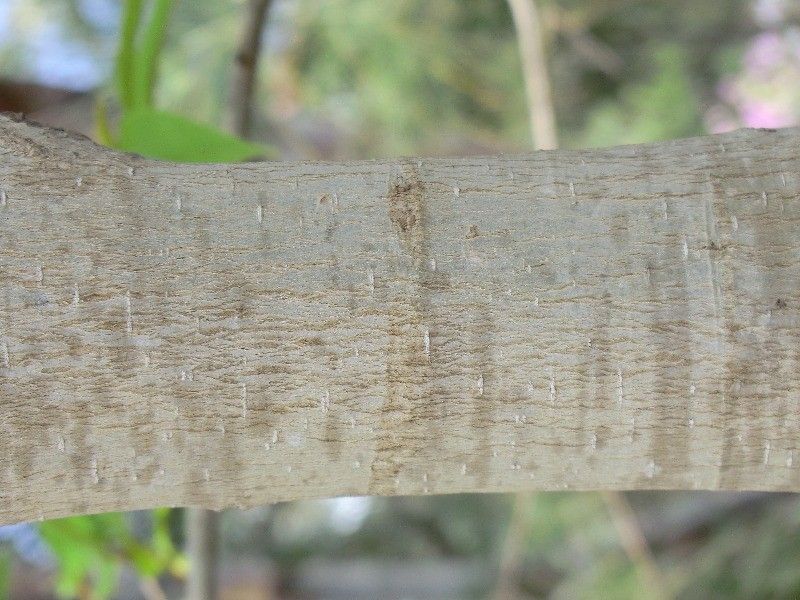
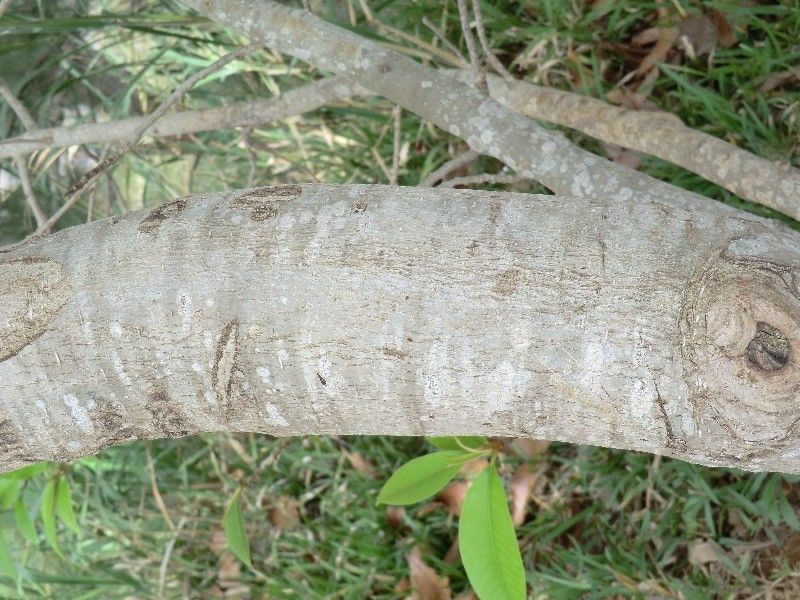
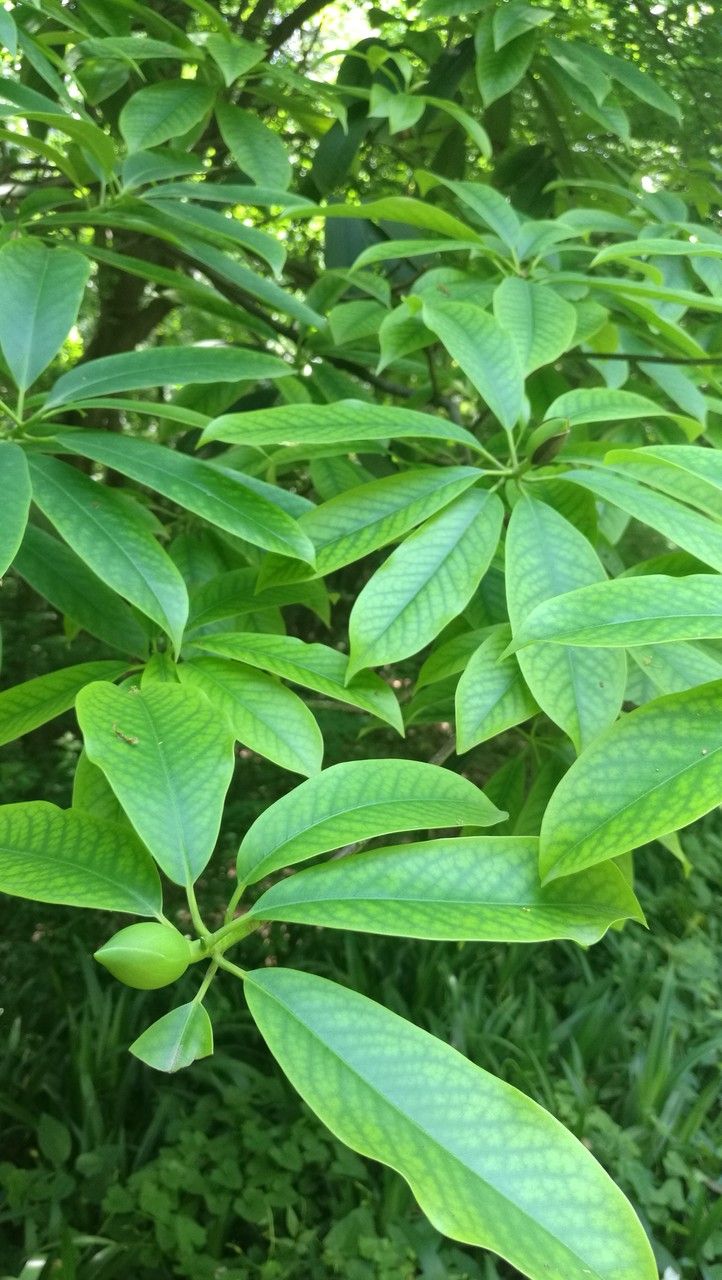
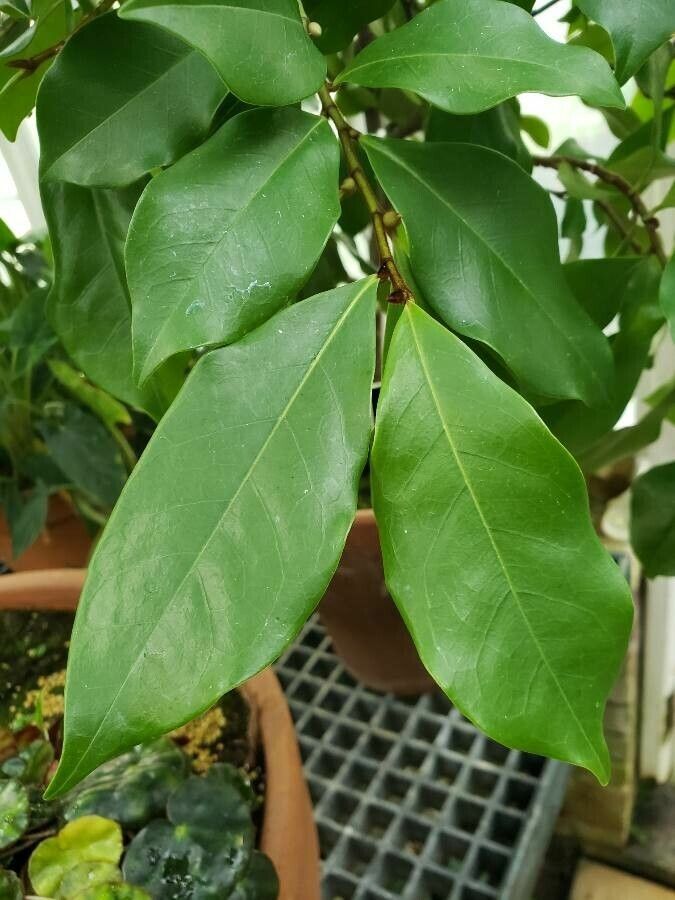
Michelia champaca, commonly known as the champak or joy perfume tree, is a tropical evergreen tree from the Magnoliaceae family. Native to Southeast Asia, it can reach heights of up to 50 feet. The plant features glossy green leaves and produces fragrant yellow or orange flowers that bloom in clusters from spring through summer. The flowers of Michelia champaca are prized for their sweet, exotic fragrance, making them popular in perfumes, incense, and traditional medicine. The plant has a long-standing use in Ayurvedic medicine due to its numerous medicinal properties. Michelia champaca thrives in well-drained soil rich in organic matter and prefers partial shade to full sun exposure. While it is relatively easy to grow, it requires regular watering during the growing season. Overall, Michelia champaca is a beautiful ornamental plant with significant cultural importance across Southeast Asia. Its fragrant flowers are integral to traditional practices such as weddings and religious ceremonies.
Champak is well resistant to disease and is typically not susceptible to illnesses. With regard to care, this plant is fairly low-maintenance. When grown outdoors it needs only minimal watering, and larger plants usually do not require pruning. Smaller plants, however, should be pruned after they have finished blooming. Champakt is appropriate for anyone with an outdoor area, such as a garden or deck, and does not need much prior plant-care experience.
How to keep Michelia Champaca.
Light
Champak performs best in strong, unshaded sunlight but can tolerate partial light. In its natural environment it grows with uninterrupted sun, which supports healthy growth. Too much light or insufficient light can cause developmental problems, including stunted growth and dull flowers.
Temperature
Champak naturally occurs in environments with temperatures between 68 and 100 °F (20 to 38 ℃). It prefers warm climates. In colder periods, adjusting its surrounding temperature to match this preference can improve its health and vigor.
Fertilizer
The best time to fertilize a Champak is in early spring, as it comes out of dormancy. This encourages overall growth and flower development. Fertilizing improves the foliage, stems, and branches and promotes flowers that are large, vibrant, and long-lasting. It also helps move nutrients from the roots to the flowers and enhances the plant’s health and resistance to disease.
Botanical profile.
- Plant Type
- Tree
- Life Cycle
- Perennial
- Genus
- Michelia
- Family
- Magnoliaceae
- Hardiness Zone
- 9-12
- Mature Height
- 10.06 m
- Mature Spread
- 4.88 m
- Leaf Color
- Green
- Leaf Type
- Evergreen
- Flower Color
- Yellow
- Flower Size
- 7.62 cm to 10.16 cm
- Bloom Time
- Late spring, Early summer, Mid summer
- Planting Time
- Spring, Autumn
- Harvest Time
- Mid summer, Late summer, Fall
- Native Area
- Nepal, Sri Lanka, India, Malaysia, Indonesia, Cambodia, Vietnam, Myanmar, Bhutan, Bangladesh, Laos, Thailand
Other names.