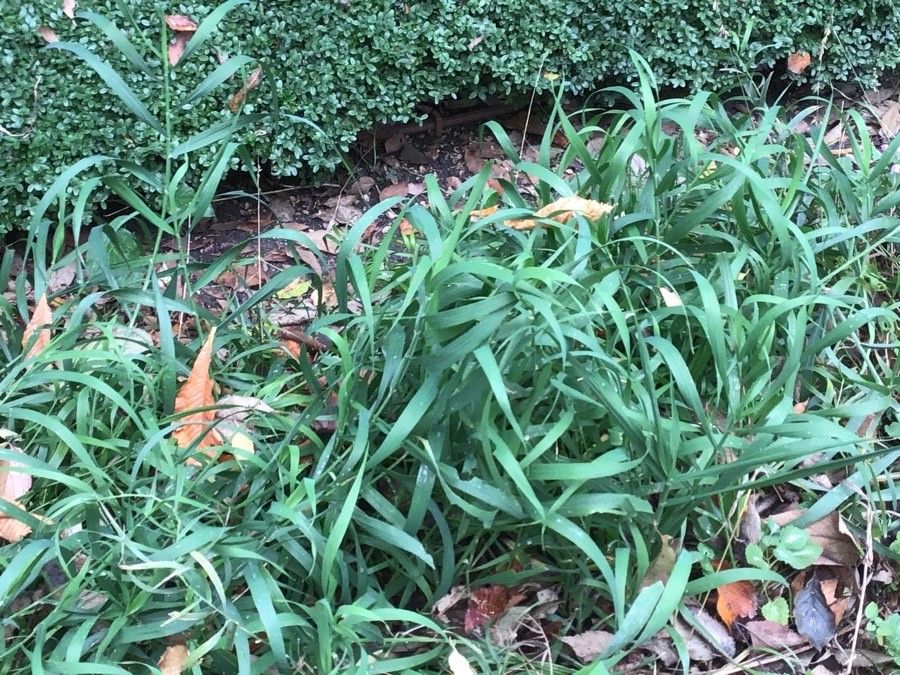
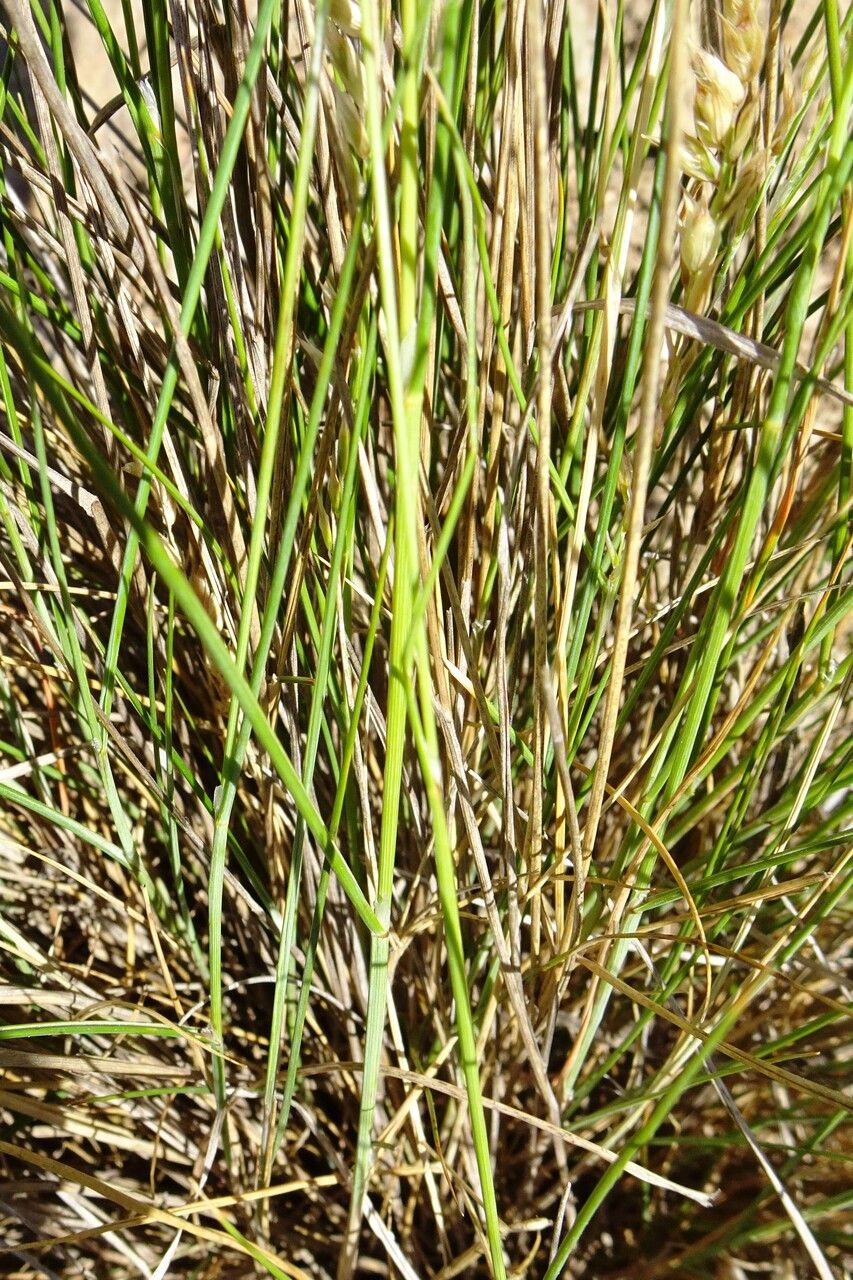
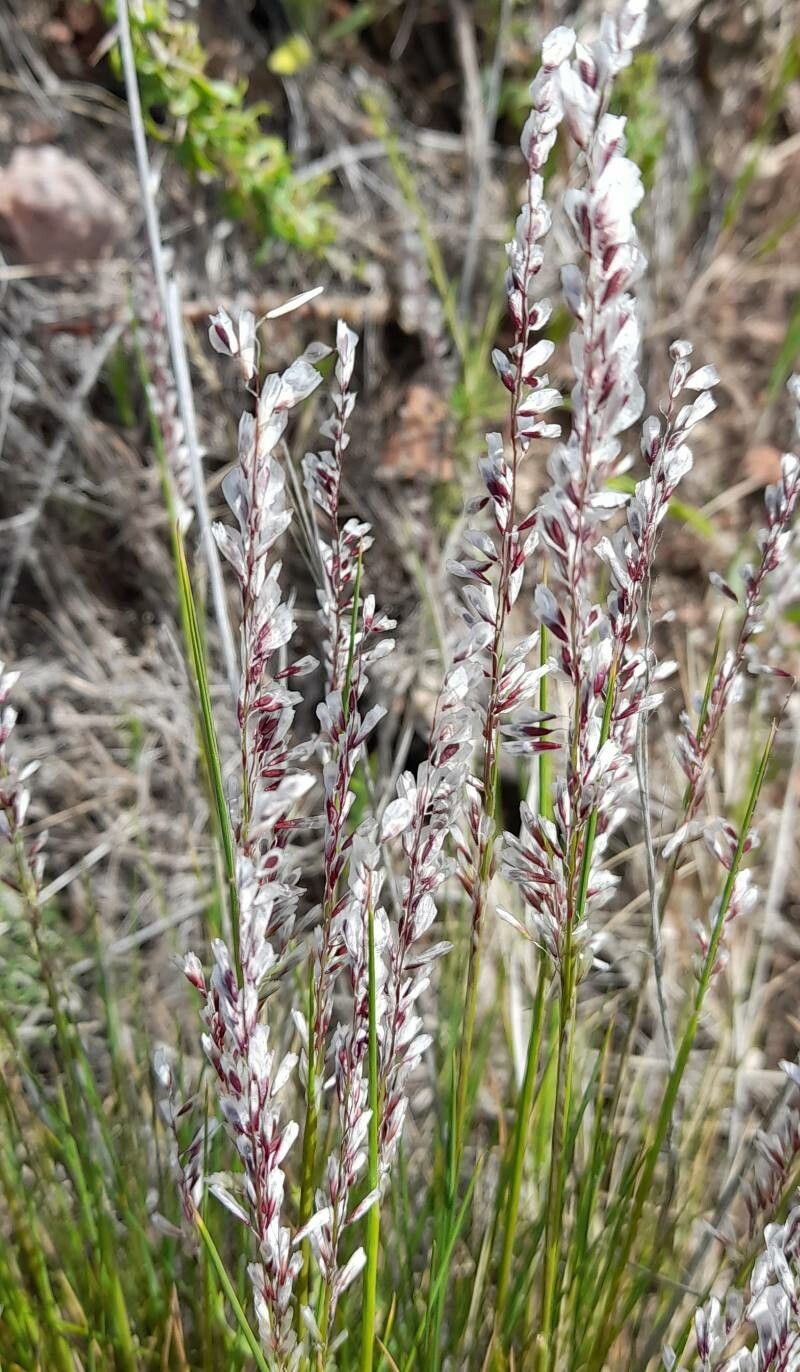
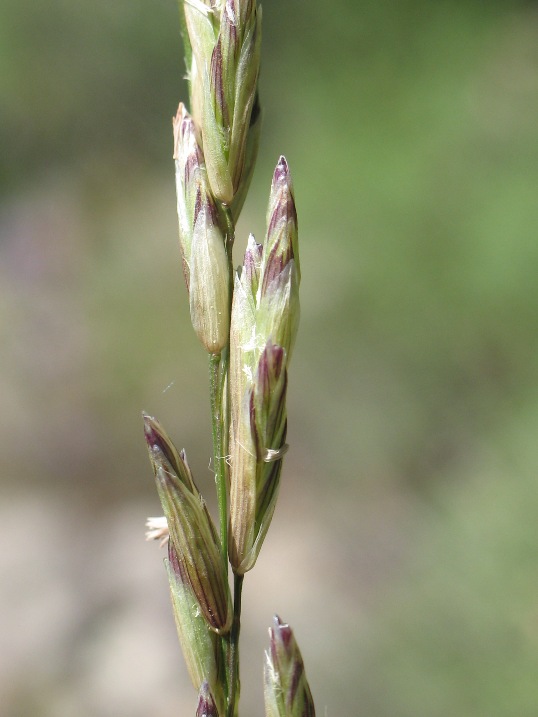
Melica torreyana, commonly known as Torrey's melic grass, is a perennial grass native to the western United States. It typically grows in open woodlands and meadows at elevations ranging from 1,000 to 10,000 feet. This plant has a clumping growth habit and can reach heights of up to three feet.
The leaves of Melica torreyana are narrow, flat, and pointed. They are typically green but may turn yellow or brown as they age. In the spring and summer months, the plant produces long stems that bear clusters of small flowers.
Melica torreyana is an important food source for many wildlife species, including deer, elk, and small mammals such as rodents. It also provides habitat for a variety of insects, including butterflies.
Native American tribes have used the plant for medicinal purposes, such as treating headaches and stomach ailments. Additionally, its long stems have been utilized for basket weaving.
Overall, Melica torreyana is an important native grass species that provides both ecological benefits and cultural significance to the western United States ecosystem.
Torrey's melicgrass is fairly disease-resistant and is generally unlikely to develop illnesses. In terms of care, this plant is relatively low-maintenance. When grown outdoors it needs minimal watering, and larger specimens usually do not require pruning. Smaller plants, however, should be pruned after they have finished blooming. Torrey's melicgrass is suitable for anyone who has an outdoor area, such as a garden or deck, and does not require extensive experience to care for.
How to keep Melica Torreyana.
Fertilizer
Torrey's melicgrass needs extra nutrients to encourage healthy new growth. In spring, applying compost around the plant's base will effectively supply the nutrition it requires. Fertilizing helps support robust growth and improves the plant's ability to withstand diseases and pests.
Pruning
Torrey's melicgrass is characterized by its slender leaves and delicate flower spikes. To promote growth and maintain health, prune the plant in early spring to remove any dead foliage. Light pruning helps improve air circulation and control pests, contributing to the plant's appearance and strength. Regular maintenance ensures vibrant foliage and an abundance of flowers.