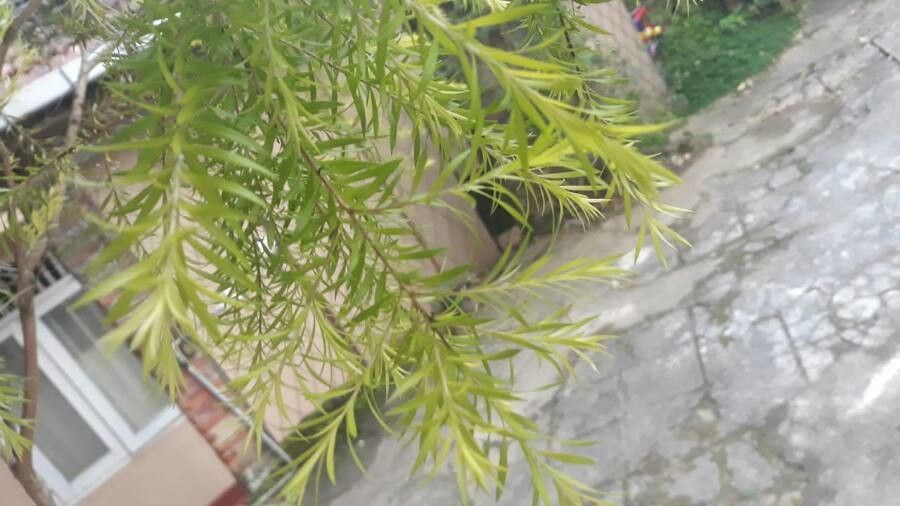
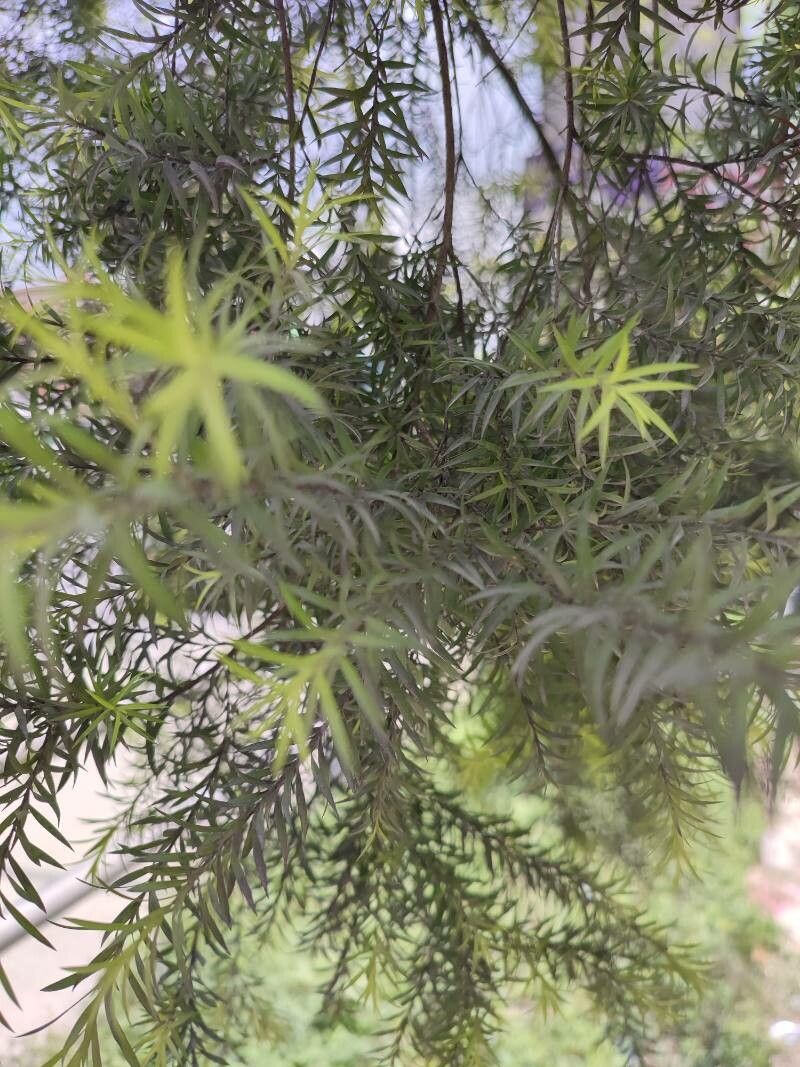
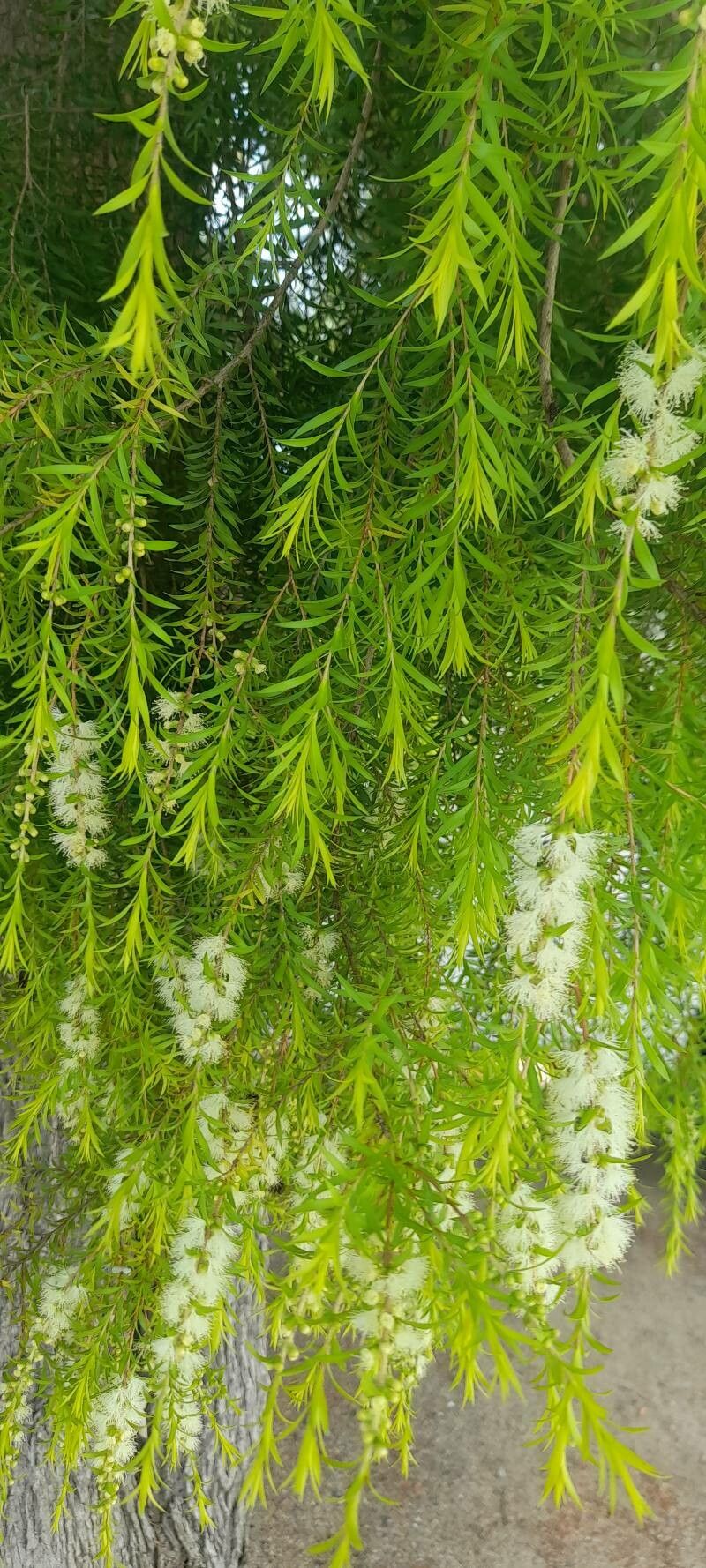
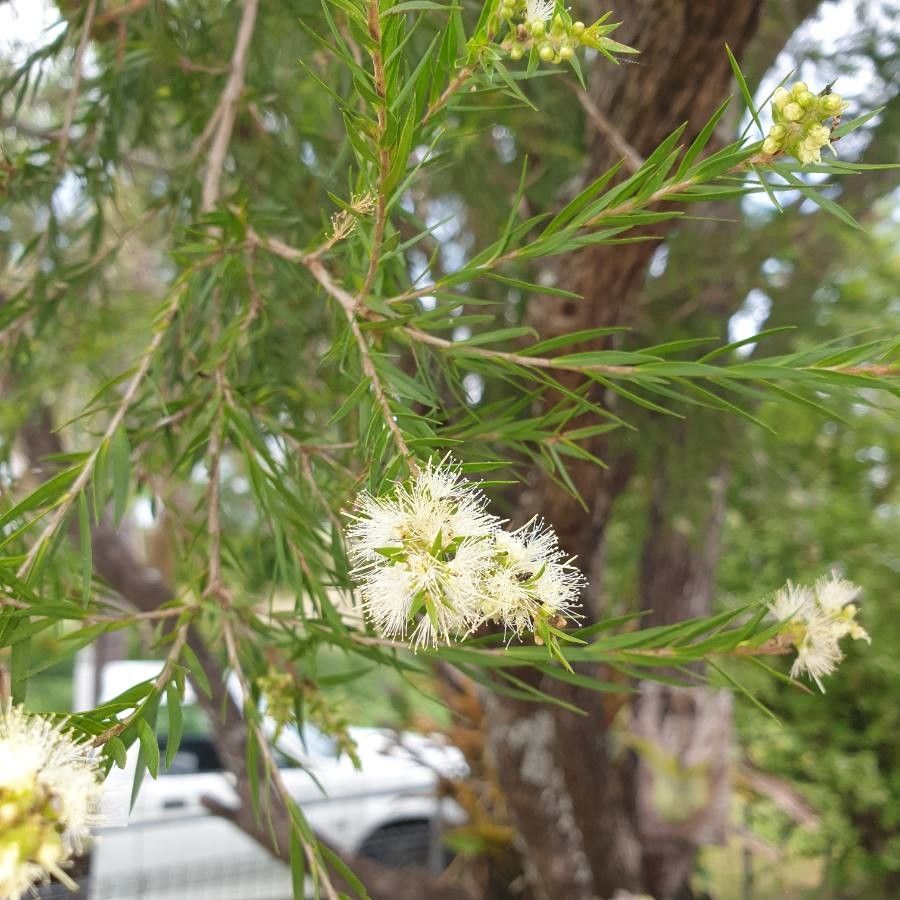
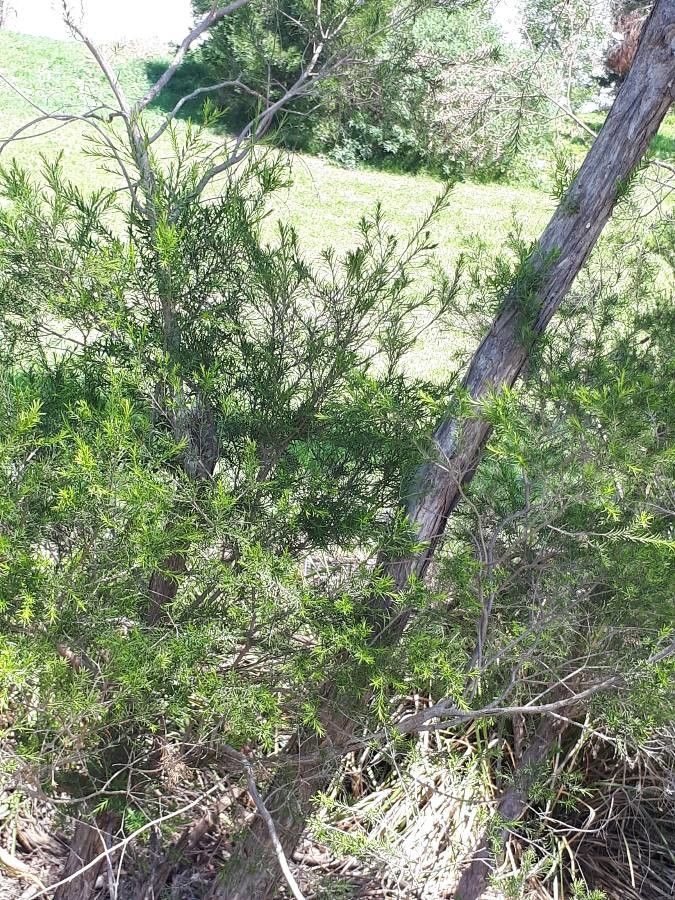
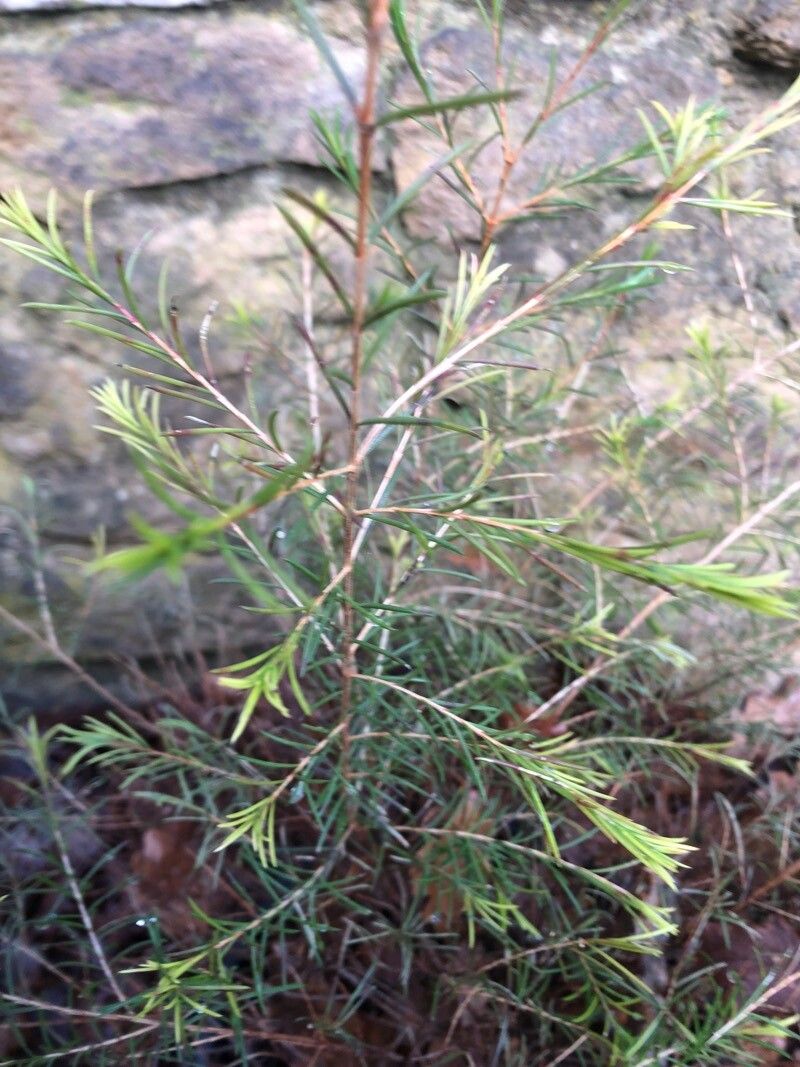
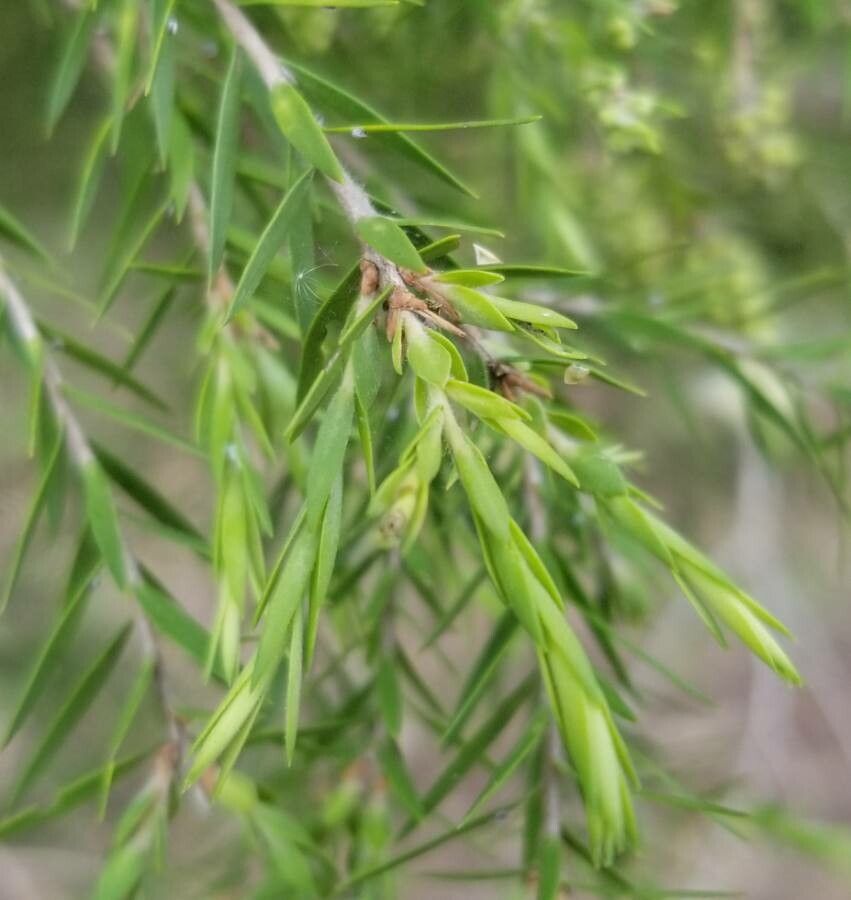
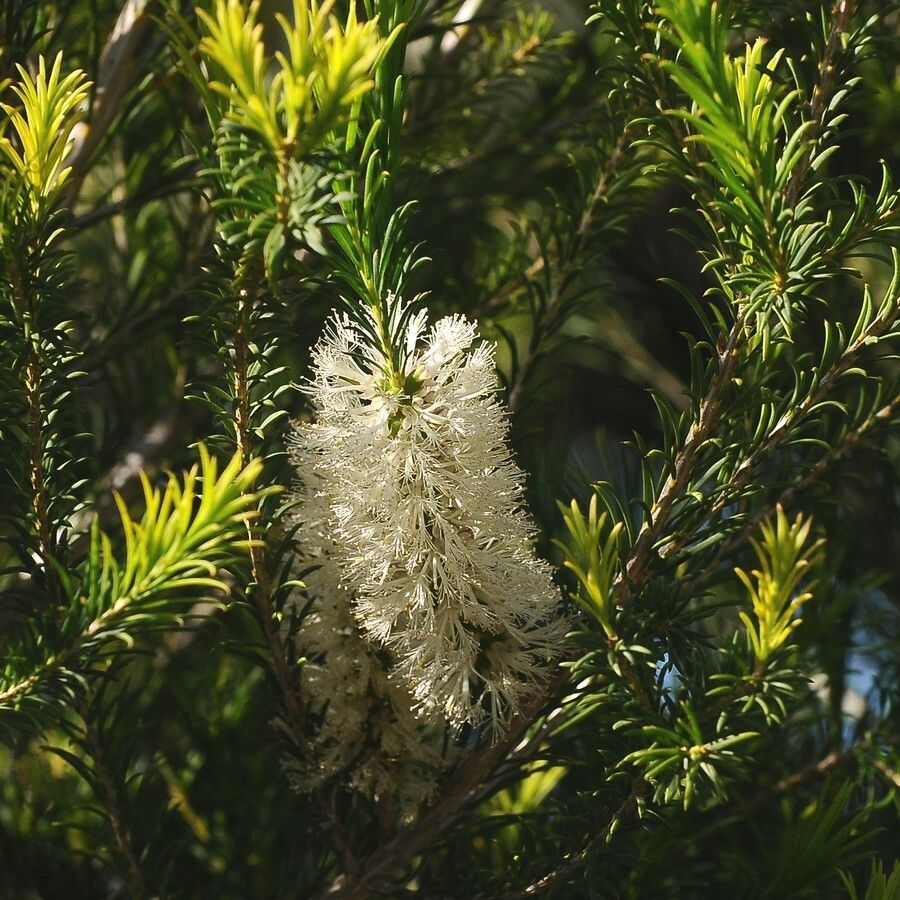
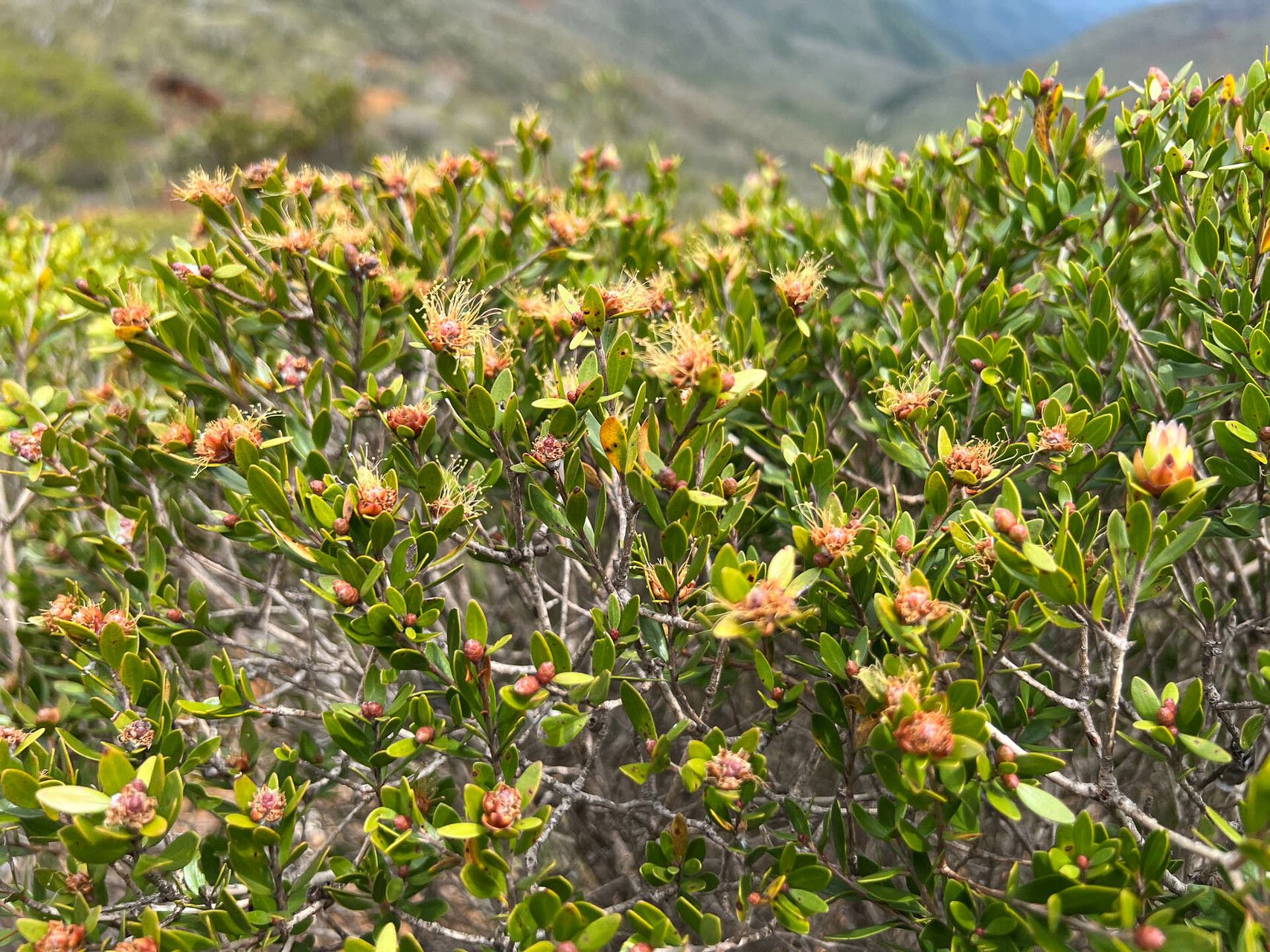
Melaleuca bracteata, commonly known as the black tea tree, is a small evergreen tree or shrub native to Australia. Belonging to the Myrtaceae family, it can grow up to 6 meters in height. This plant features a dense and bushy growth habit with narrow, pointed, dark green leaves.
In spring and summer, the black tea tree produces clusters of small white flowers, which are followed by woody capsules containing numerous tiny seeds. The bark of the plant is dark brown or blackish-grey with a papery texture.
Melaleuca bracteata thrives in well-drained soils and can grow in full sun or partial shade. While it can tolerate drought conditions, regular watering is essential during its establishment period. The plant is also resistant to pests and diseases.
The essential oil extracted from Melaleuca bracteata has antiseptic properties, making it useful for treating skin infections, wounds, cuts, burns, insect bites, and respiratory problems like coughs and colds.
Overall, Melaleuca bracteata is an attractive ornamental plant with medicinal properties, making it an excellent addition to gardens or landscapes where both beauty and functionality are desired.
Black tea-tree exhibits good resistance to disease and is generally unlikely to suffer from illnesses. In terms of upkeep, this plant is fairly low-maintenance. When grown outdoors it needs only minimal watering, and larger specimens typically do not require pruning. Smaller plants, on the other hand, should be pruned after they finish blooming. Black tea-tree is well suited to anyone with an outdoor area, such as a garden or a deck, and does not demand extensive gardening experience.
How to keep Melaleuca Bracteata.
Light
The Black tea-tree does best when exposed to uninterrupted sunlight. In its native environment it grew well beneath an open sky and direct sunlight. Although the plant tolerates different light levels, a long lack of intense sun can hinder its robust growth and lead to reduced vigor.
Water
Black tea tree thrives in environments with varying moisture levels. For optimal health, it should be watered every 1-2 weeks. The plant prefers moderately humid soil and benefits from a watering schedule that mimics its natural pattern of sporadic rainfall. This approach encourages deep root growth and enhances resilience in outdoor gardens.
Temperature
Black tea-tree originates from regions with moderate climates and grows best at temperatures between 59 and 100 °F (15 and 38 ℃). Only small seasonal adjustments are necessary to keep it within this range. Precautions should be taken during extreme weather.
Fertilizer
Timing is essential for fertilizing the Black tea-tree. Apply fertilizer in early spring and continue doing so each month until early summer. Fertilizer promotes attractive blooms and supplies energy during both dormant and active growth phases.
Pruning
For better health and appearance, black tea-tree should be pruned seasonally in late spring after it has finished flowering. Focus on removing dead or diseased wood, thinning the branches to improve air circulation, and shaping the plant. This approach encourages healthy growth and avoids the stress that can result from heavy pruning during periods of active growth, ensuring the black tea-tree remains vigorous and visually appealing.
Pot & Repot
To support root growth, repot the black tea-tree every 2-3 years into a larger pot. Place it in indirect light and ensure the soil remains moist but not waterlogged. Using a well-draining pot is essential for the plant’s health. After transplanting, care is simple: just water regularly and conduct light maintenance.
Botanical profile.
- Plant Type
- Shrub
- Life Cycle
- Perennial
- Genus
- Melaleuca
- Family
- Myrtaceae
- Hardiness Zone
- 8-11
- Mature Height
- 2.13 m to 4.88 m
- Mature Spread
- 4.88 m
- Leaf Color
- Green, Blue
- Leaf Type
- Evergreen
- Flower Color
- White
- Flower Size
- 0.51 cm to 0.76 cm
- Bloom Time
- Late spring, Early summer, Mid summer
- Planting Time
- Spring
- Harvest Time
- Mid summer
Other names.
Reader questions.
How should I water my Black tea-tree properly?
Your Black tea-tree is not too particular about how you water it. You can use any common watering tool, such as watering cans, hoses, or even cups. Just make sure to water the soil directly, evenly moistening all areas to ensure the entire root system receives the water it needs. Using filtered water is helpful as tap water may contain harmful particles. Additionally, using water at or slightly above room temperature is best, as very cold or hot water may shock the Black tea-tree. However, this plant typically responds well to any type of water you provide.
Why should I put fertilizer on my Black tea-tree?
To ensure your Black tea-tree produces beautiful blooms, it is important to fertilize it. Fertilizing in early spring is especially beneficial for encouraging excellent flowers during that season. Additionally, fertilizer provides the tree with extra energy to store during dormant growth phases. Adding nutrients during fall planting or late spring will help the tree store more energy to utilize for active growth.
What are the sunlight requirements for Black tea-tree?
Black tea-tree thrives best with unabated exposure to the sun, flourishing under an open sky and unfiltered solar radiation in its native habitat. It requires full sun, defined as more than 6 hours of sunlight daily, but can also grow under partial sun, which is about 3-6 hours of sunlight. However, a prolonged absence of strong solar exposure could impair its vigorous growth and result in weakened vitality. It's essential to watch how sunlight moves through your garden to select spots that provide the perfect balance of light and shade, ensuring the plants' happiness.
What is the ideal temperature range for Black tea-tree?
The Black tea-tree thrives best in environments with moderate temperatures, ideally between 59 to 100°F (15 to 38°C). It has some cold tolerance and can generally withstand temperatures above -5°C without requiring additional measures. However, during extreme weather conditions, minimal adjustments might be needed to maintain this temperature range to ensure the plant's health.
What should I do if I give my Black tea-tree too much or too little water?
For outdoor plants, especially newly planted ones or seedlings, lack of watering can be a problem. It's important to keep watering them consistently for a few months when the tree is small or recently planted. This is because once the roots are established, the Black tea-tree can rely on rain most of the time. When your Black tea-tree is in a pot, overwatering is more likely to occur. If you accidentally overwater your plant, you should take immediate steps to address the issue. First, stop watering the plant right away to minimize the effects of overwatering. Then, remove the Black tea-tree from its pot to check its roots. If none of the roots have developed root rot, you can return the plant to its container. However, if you find signs of root rot, you should trim away the affected roots and consider using a fungicide to prevent further damage. Finally, repot the Black tea-tree in well-draining soil. On the other hand, if your Black tea-tree is underwatered, you simply need to water it more frequently. Underwatering is usually an easy problem to fix. When a plant is underwatered, its leaves may droop, dry out, and fall off. However, with sufficient watering, the leaves will quickly regain their fullness. So, it's important to adjust your watering frequency when you notice underwatering occurring.
When should I put fertilizer on my Black tea-tree?
To effectively fertilize Black tea-tree, timing is crucial. Applying fertilizer too early while the tree is still dormant will lead to inefficiency as the rainwater will wash it away, resulting in wastage and pollution. The first dose of fertilizer should be applied in early spring, followed by monthly fertilization until early summer.
How can artificial lighting be used for Black tea-tree indoors?
When natural sunlight is insufficient, especially in winter or less sunny spaces, artificial lights offer a crucial solution for Black tea-tree's growth. For optimal growth indoors, it's recommended to use LED lights as they can be customized to provide specific wavelengths needed by the plant. Full sun plants require 30-50W/sq ft, partial sun plants need 20-30W/sq ft, and full shade plants need 10-20W/sq ft of artificial light. The light source should be placed 12-36 inches above the plant, mimicking natural sunlight, and kept on for 8-12 hours per day depending on the plant species' needs.
How should Black tea-tree be protected in temperatures below -5°C?
If the temperature is expected to drop below -5°C, it is necessary to take temporary measures to protect the Black tea-tree from the cold. This may involve wrapping the plant with plastic film, fabric, or other suitable materials to shield it. Once the temperature rises back to a safer range, these protective measures should be removed promptly to avoid any potential harm to the plant.
How frequently do I need to water my Black tea-tree?
If you live in an area with regular rainfall, most outdoor plants can grow normally without additional watering. However, if your area lacks rainfall, it's important to water your plants adequately every 2 weeks in spring and fall. In the summer, when plants need more water, you should water them more frequently. In the winter, when growth slows down and plants need less water, you should water them sparingly, and in some cases, not at all. If your Black tea-tree is young or newly planted, it's important to water it more frequently to help it establish and grow into a more adaptable and drought-tolerant plant. For potted plants, there are two main ways to determine how often to water your Black tea-tree. The first way is to set a predetermined watering schedule, such as once a week or once every other week. However, this approach may not always work because it doesn't consider the unique growing conditions of your Black tea-tree. Another way to determine watering frequency is by checking the soil moisture. It's best to wait until the first two to four inches of soil, about ⅓ to ½ depth of the pots, have dried out completely before watering again. This approach allows you to adjust your watering frequency based on the season, as the plant's water needs may be different during the summer when they're highest.
When is the best time to not put fertilizer on my Black tea-tree?
To ensure optimal blooming, it is important to be mindful of the nitrogen levels in the fertilizer for Black tea-tree. Excessive nitrogen can result in an abundance of leaves but few blooms. It is recommended to select a fertilizer that has a lower nitrogen content compared to other nutrients. Furthermore, avoid fertilizing the tree after early autumn as this can lead to excessive growth before winter. Additionally, refrain from fertilizing during hot and dry periods since dry soil does not facilitate effective fertilizer delivery, and stimulating growth during these times may demand more water than is available. It is preferable to apply fertilizer earlier in the season when temperatures are cooler. Lastly, be cautious of unintentionally providing a double-dose of fertilizer to the Black tea-tree, as it can absorb nearby fertilizers meant for other plants or lawns.
What are the symptoms of light deficiency in Black tea-tree?
When placed in suboptimal lighting, Black tea-tree may show several symptoms indicating light deficiency. These include smaller new leaves, leggy or sparse growth, faster leaf drop, slower or halted growth, lighter-colored or irregularly patterned new leaves indicating a lack of chlorophyll, chlorosis, sunscald, leaf curling, wilting due to water loss, and leaf scorching. These symptoms collectively suggest the plant's struggle under insufficient light conditions.
What are the symptoms of cold damage in Black tea-tree, and how can it be treated?
Black tea-tree has a moderate tolerance to low temperatures but requires specific care during winters to remain above -5°C. When the temperature falls below -10°C, the leaves may start to droop, and in severe cases, wilt and eventually fall off. To treat cold damage, trim off the frost-damaged parts. Before encountering low temperatures again, wrap the plant with non-woven fabric or cloth and construct a wind barrier to protect it from cold winds.