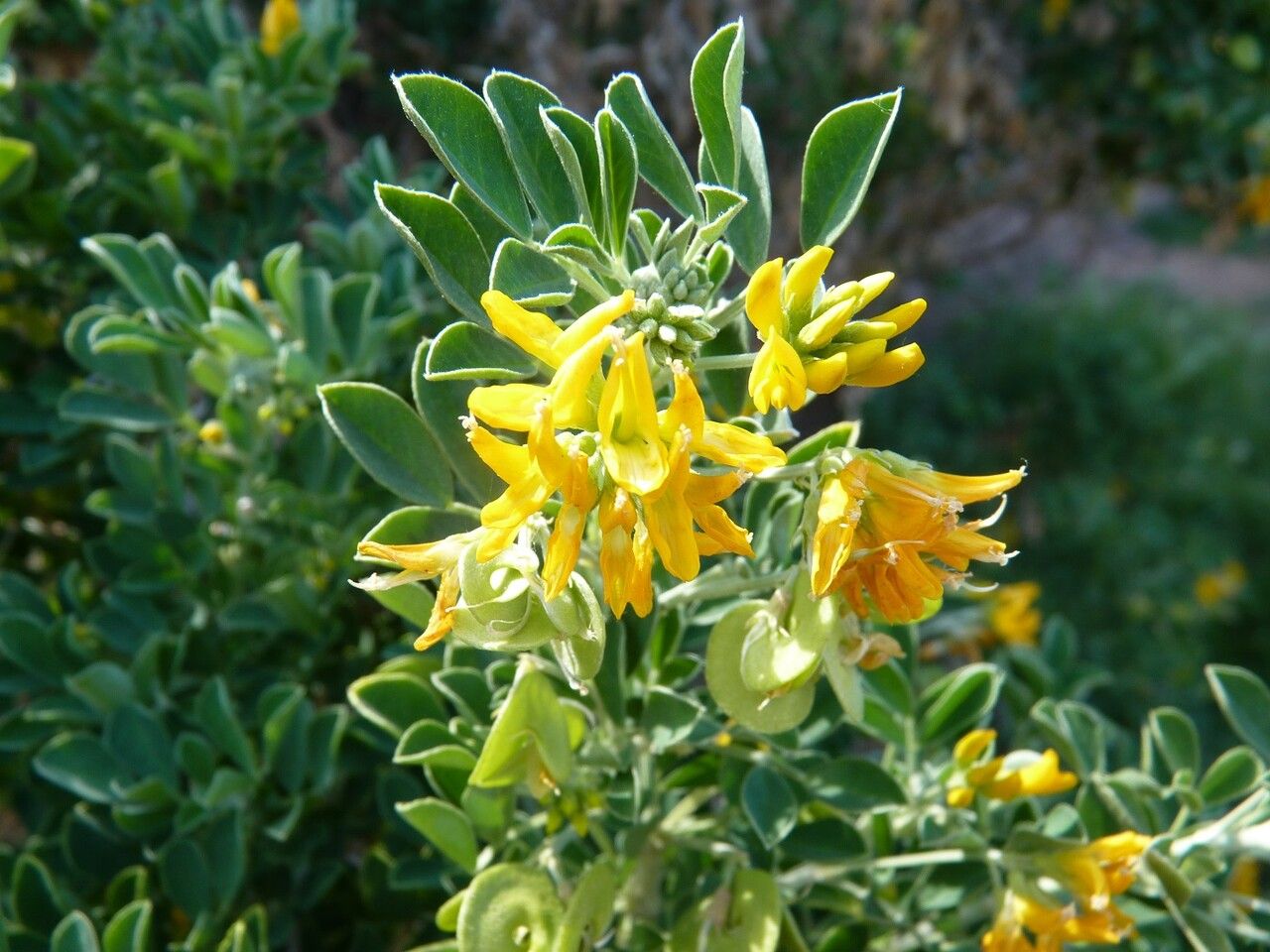
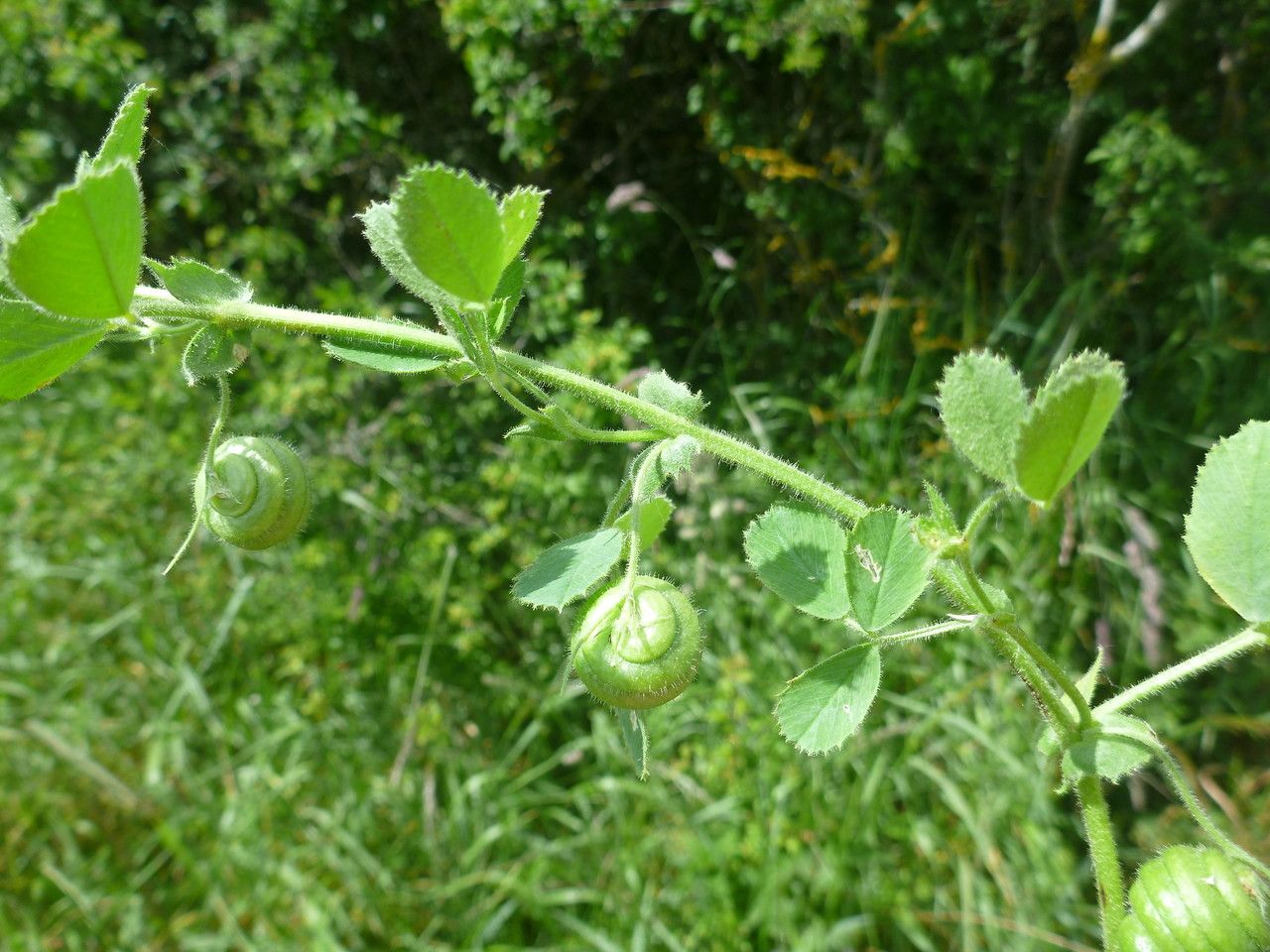
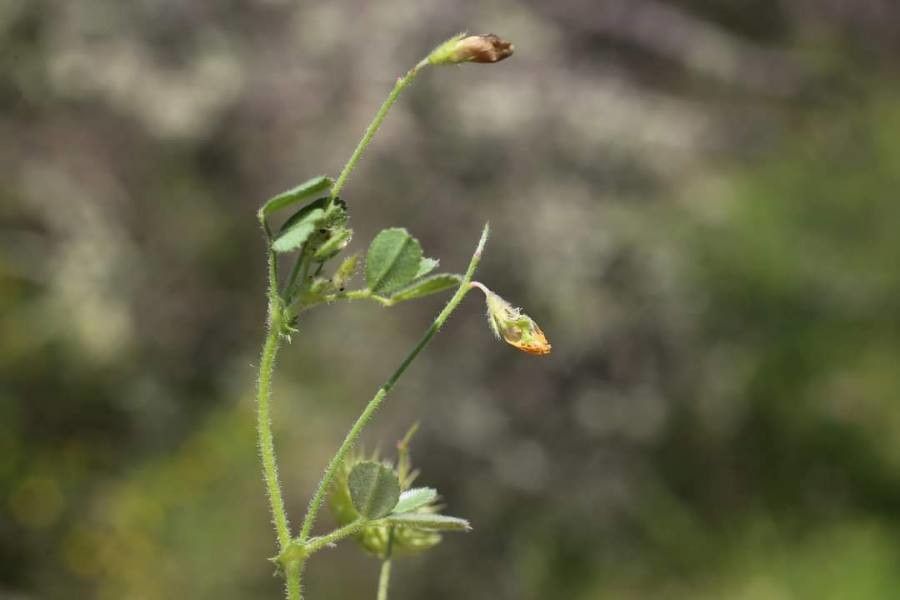
Medicago coronata, commonly known as crown medic or coronate alfalfa, is a flowering plant species in the legume family. Native to the Mediterranean region and parts of Asia, it has also been introduced to other parts of the world as a forage crop.
The plant can grow up to 60 cm tall and features trifoliate leaves with toothed leaflets. Its small yellow flowers are arranged in clusters on long stalks that rise above the foliage. The fruit is a small pod containing one or two seeds.
Crown medic is a vital forage crop, suitable for grazing or hay production. It has a high protein content and demonstrates better drought tolerance compared to other legumes, such as clover.
Medick is often mistaken for clover. According to a story, while Napoleon was once marching across a grassland, he noticed a medick. Intrigued, he bent down to pick it up. At that moment, a bullet was fired, and by bending down, Napoleon avoided it and survived. Because of this incident, medick has come to be recognized as a symbol of luck. FUN FACT · FROM THE LIBRARY
Beyond its role as a forage crop, crown medic possesses medicinal properties. It contains compounds like saponins, which have been shown to exhibit anti-inflammatory effects.
Overall, Medicago coronata is a significant plant species with valuable agricultural and medicinal uses.
Crown medick is fairly disease-resistant and generally not prone to illnesses. However, it can be affected by pests and diseases present nearby, and these problems are usually not severe. In terms of care, this plant requires a moderate level of maintenance. It should be pruned regularly to keep a good appearance and promote healthy growth. Fertilizing can also help encourage flowering. Crown medick is suitable for anyone with an outdoor area, such as a garden or patio, and does not demand extensive experience in plant care. It may need more attention when grown indoors.
How to keep Medicago Coronata.
Light
Crown medick is native to bright, open areas and flourishes in full sun. It tolerates partial sun but prefers direct sunlight for optimal growth. This plant, which can be annual or biennial, is known for its sun-loving nature.
Temperature
Crown medick can adjust to a wide range of temperatures, but its distribution may still be restricted by various combinations of water and heat conditions. It grows best in warm summer climates with sufficient rainfall or watering. Extended periods of cloudy, rainy weather or prolonged high temperatures can raise the chance of Crown medick dying. In winter, proper protection from cold can increase the plant's survival rate.
Fertilizer
Crown medick benefits from regular, low-strength fertilizer applications to encourage healthy leaf development. You should apply fertilizer about once a month during the summer. Nitrogen is important for foliage, and adding nitrogen-rich sources helps Crown medick thrive.
Botanical profile.
- Plant Type
- Herb
- Life Cycle
- Annual
- Genus
- Medicago
- Family
- Fabaceae
- Hardiness Zone
- 7-10
- Mature Height
- 20 cm to 61 cm
- Mature Spread
- 30 cm to 49 cm
- Leaf Color
- Green, Light Green
- Leaf Type
- Deciduous
- Flower Color
- Yellow
- Flower Size
- 0.25 cm to 0.51 cm
- Bloom Time
- Mid spring, Late spring, Early summer
- Planting Time
- Spring, Summer, Autumn
- Harvest Time
- Summer
- Native Area
- Libya, Egypt, Turkey, Montenegro, Cyprus, Bulgaria, Greece, Croatia, Lebanon, Serbia, Iraq, Syria, Italy, Spain, Iran, Albania, Turkmenistan, France