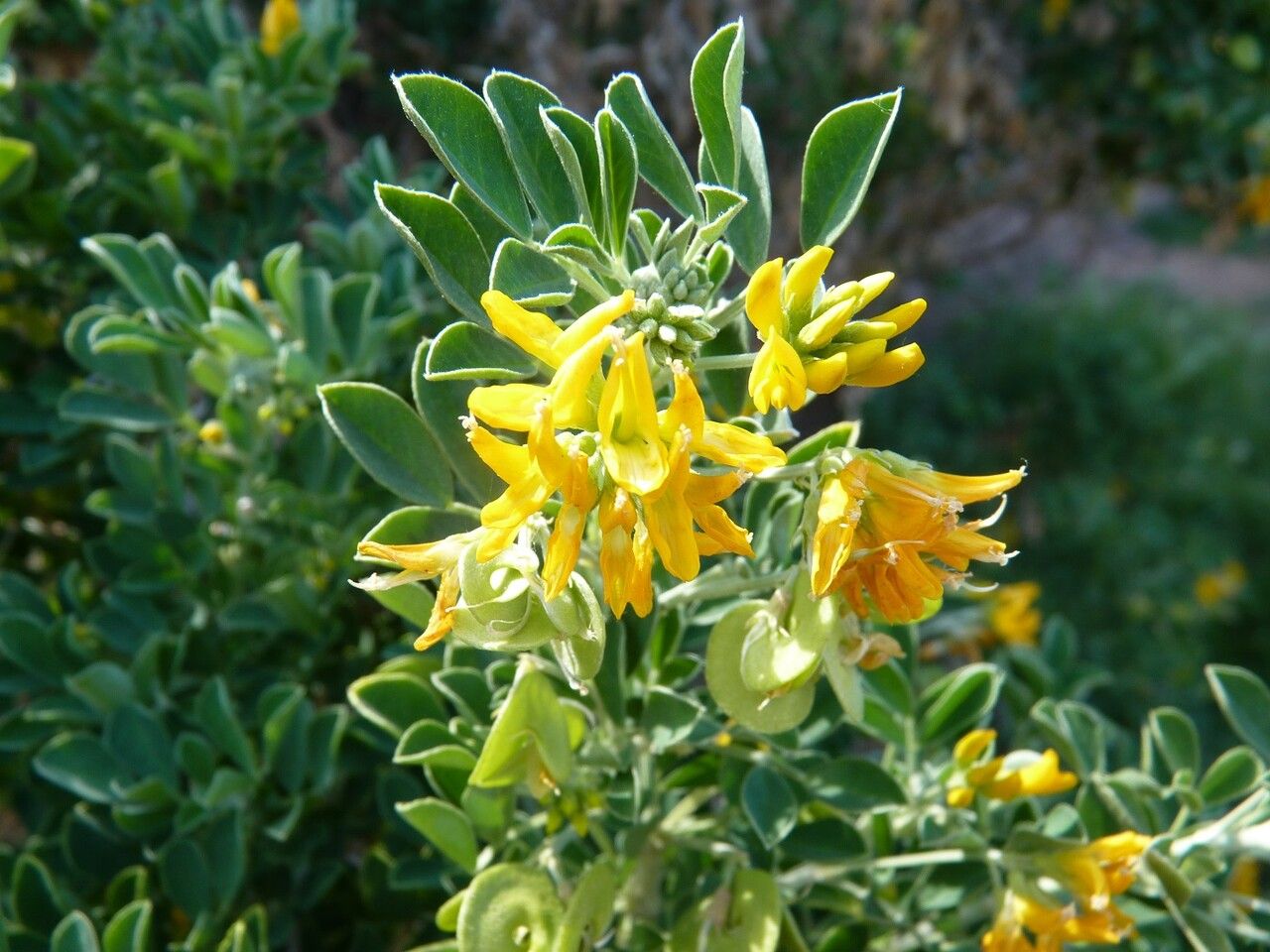
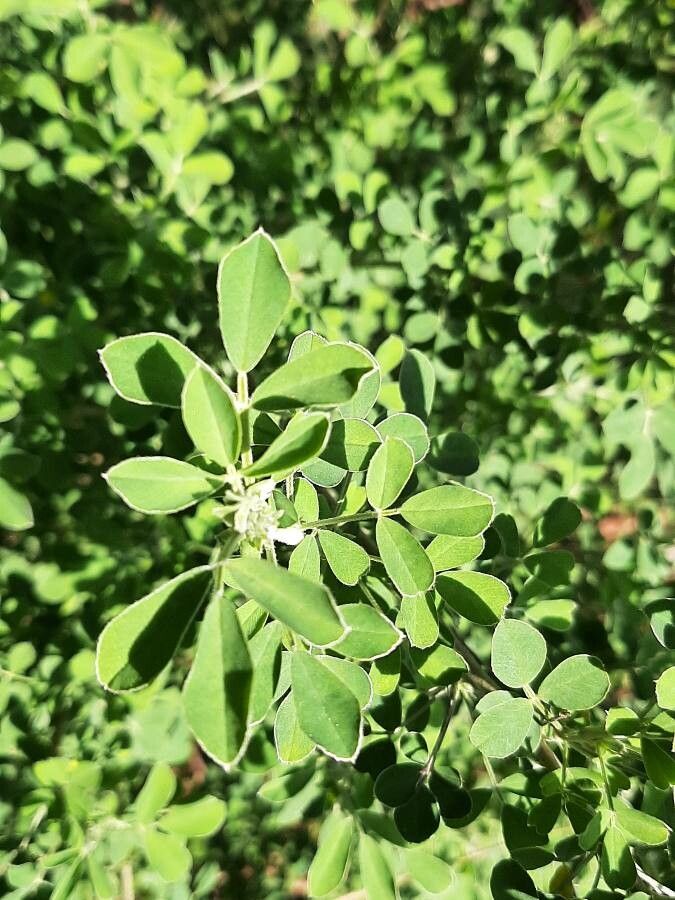
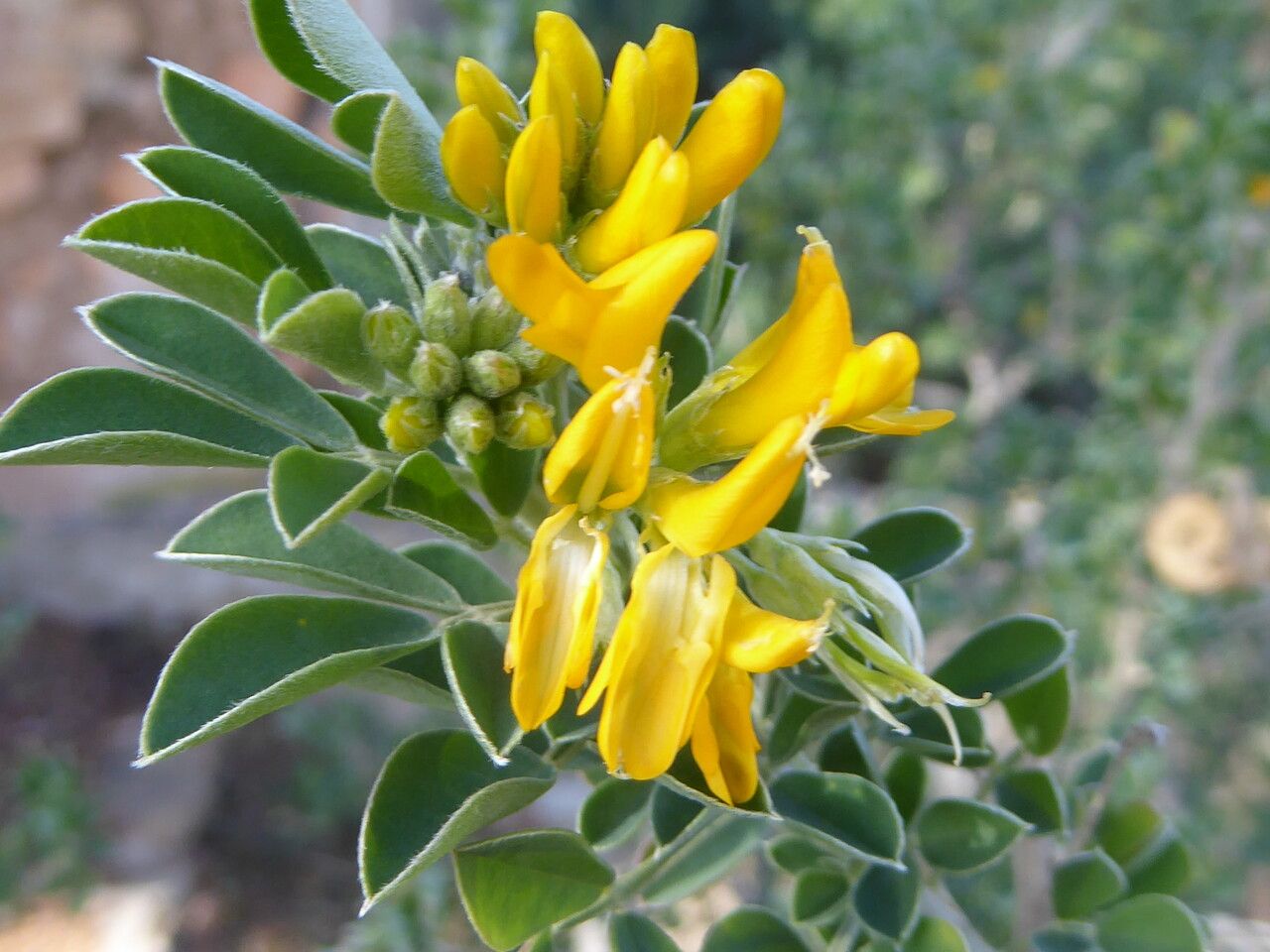
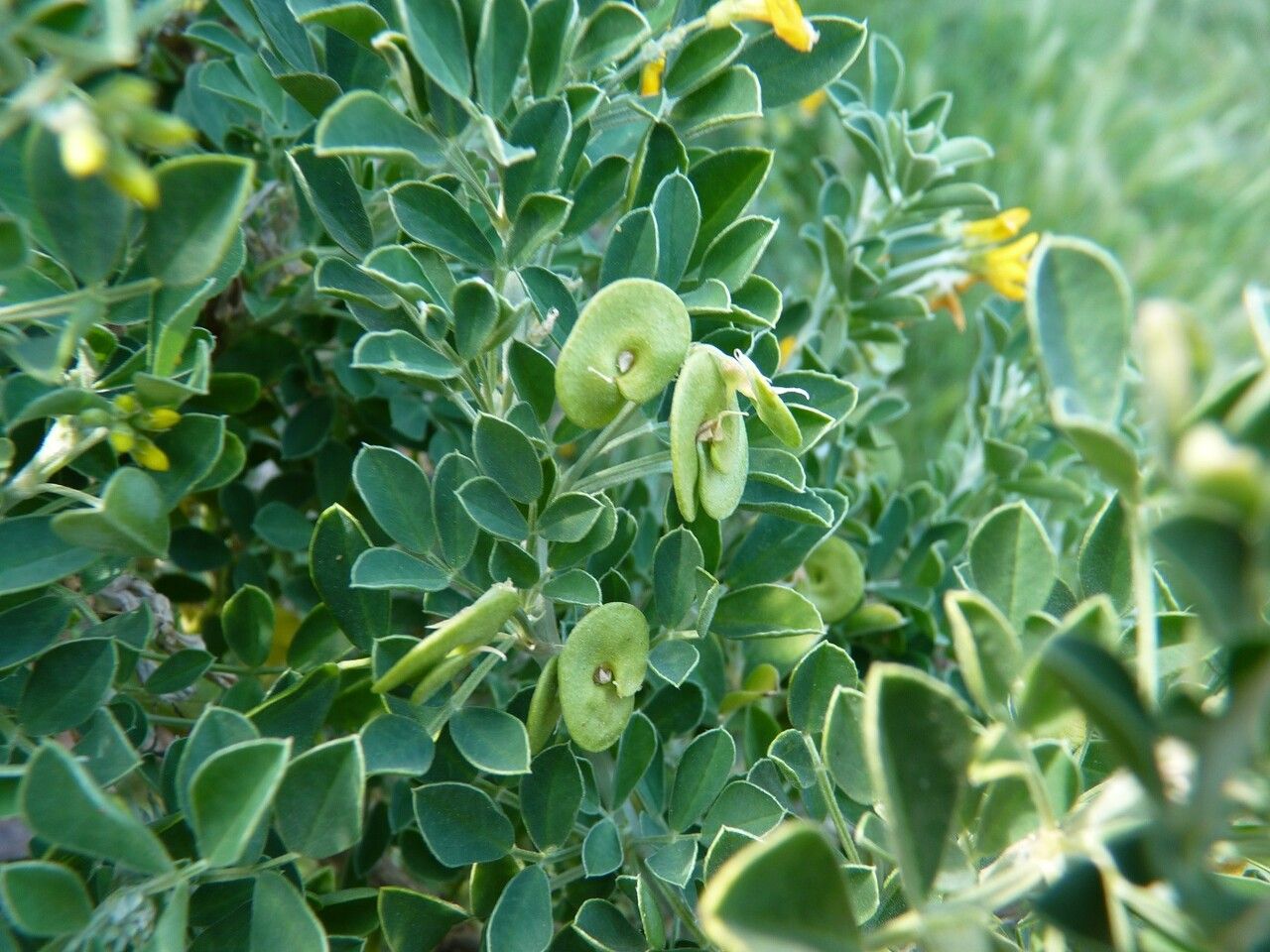
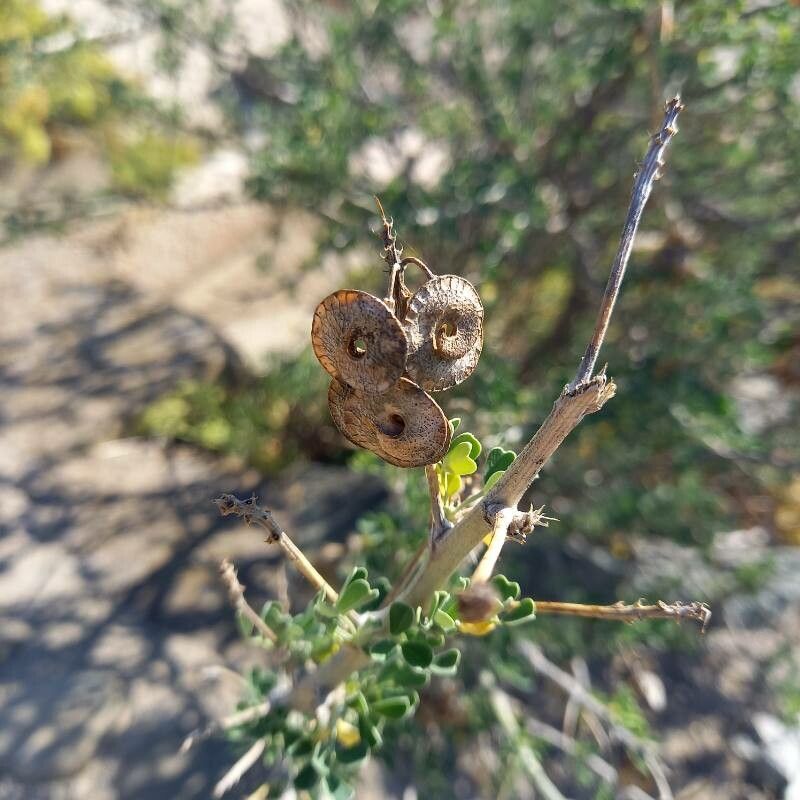
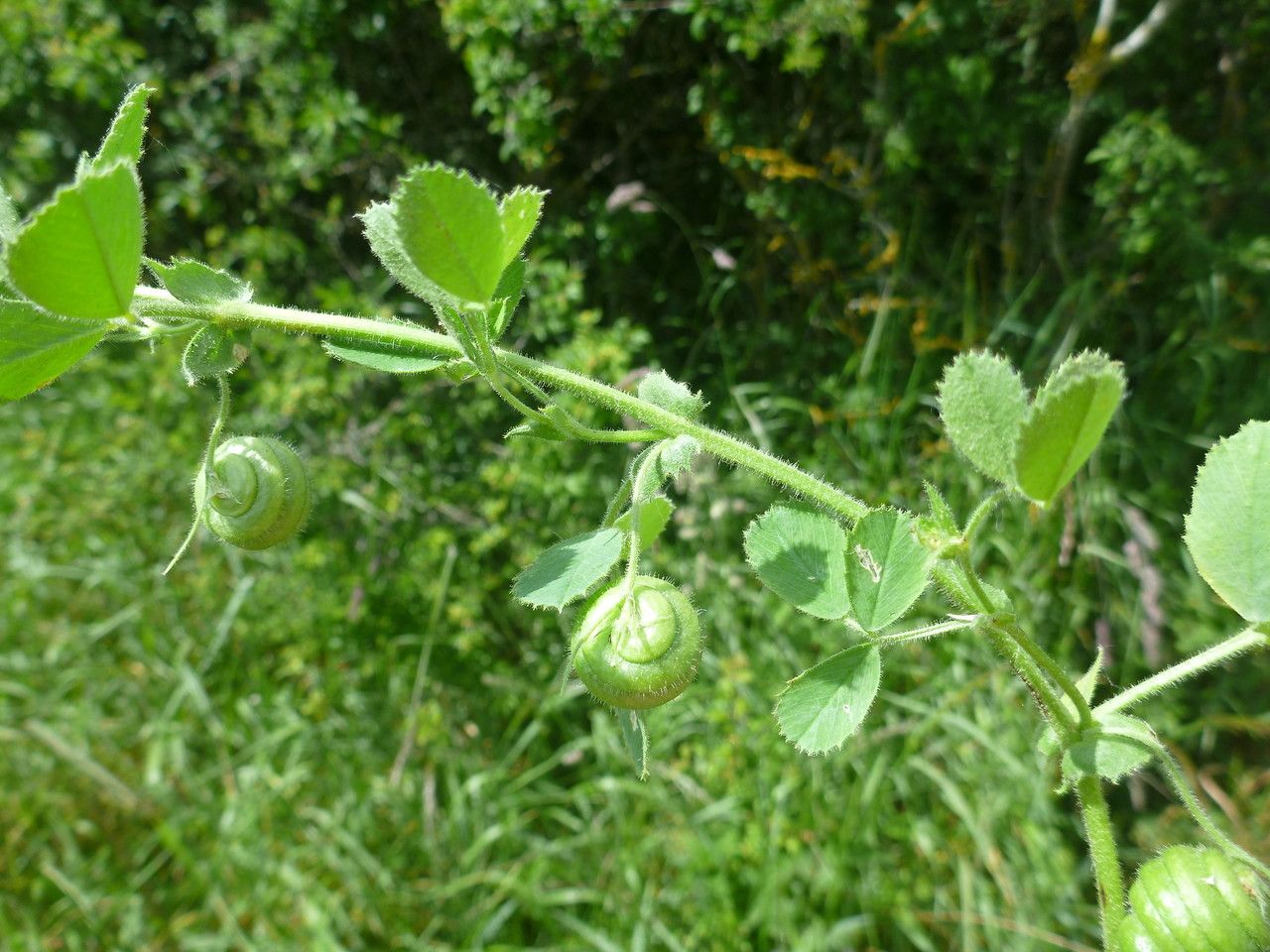
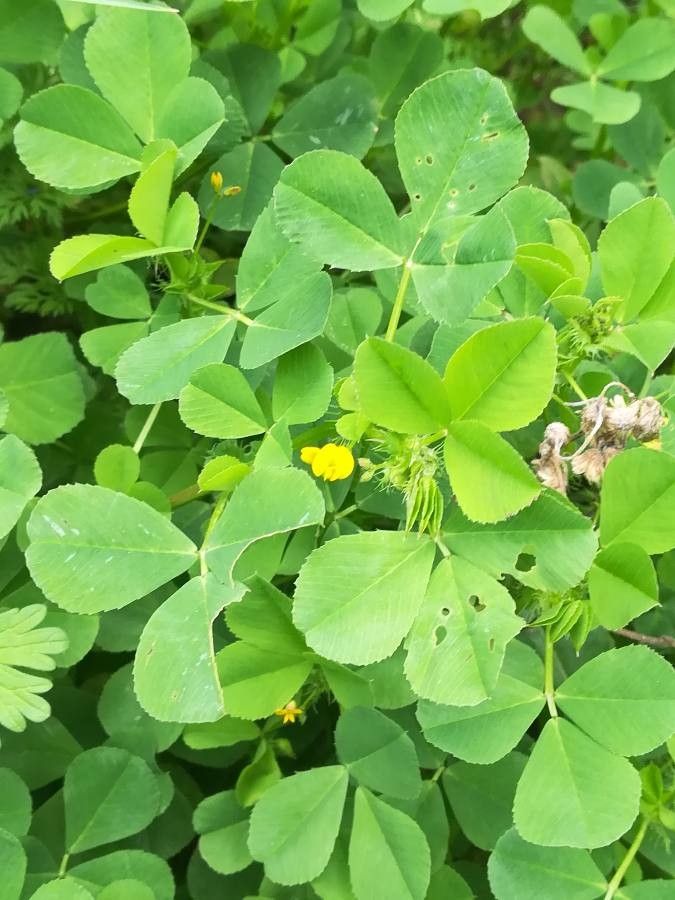
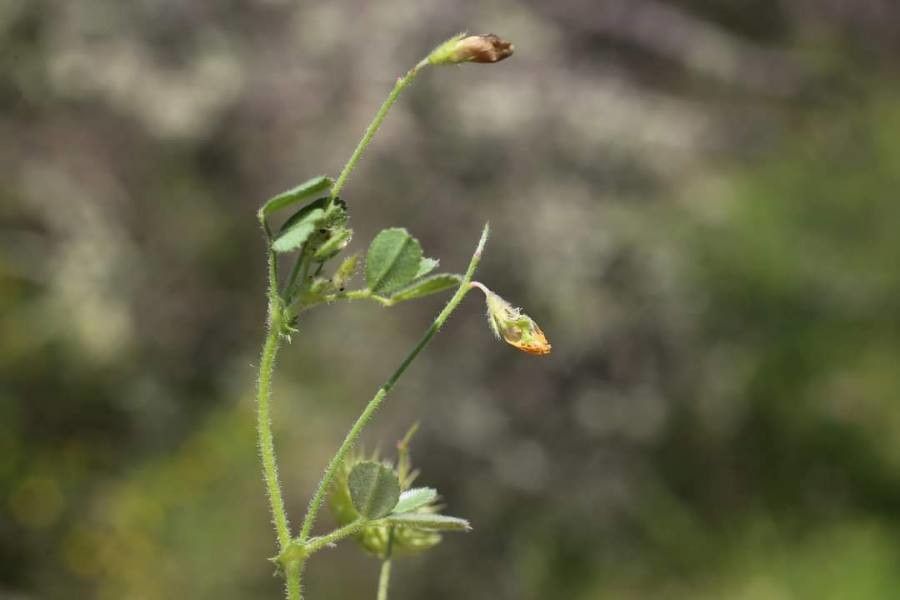
Medicago arborea, commonly known as the tree medick or moon trefoil, is a small evergreen shrub in the legume family. Native to the Mediterranean region, this plant thrives in various habitats such as rocky slopes, scrublands, and forests. It can grow up to 2 meters tall and features a dense crown of small, gray-green leaves.
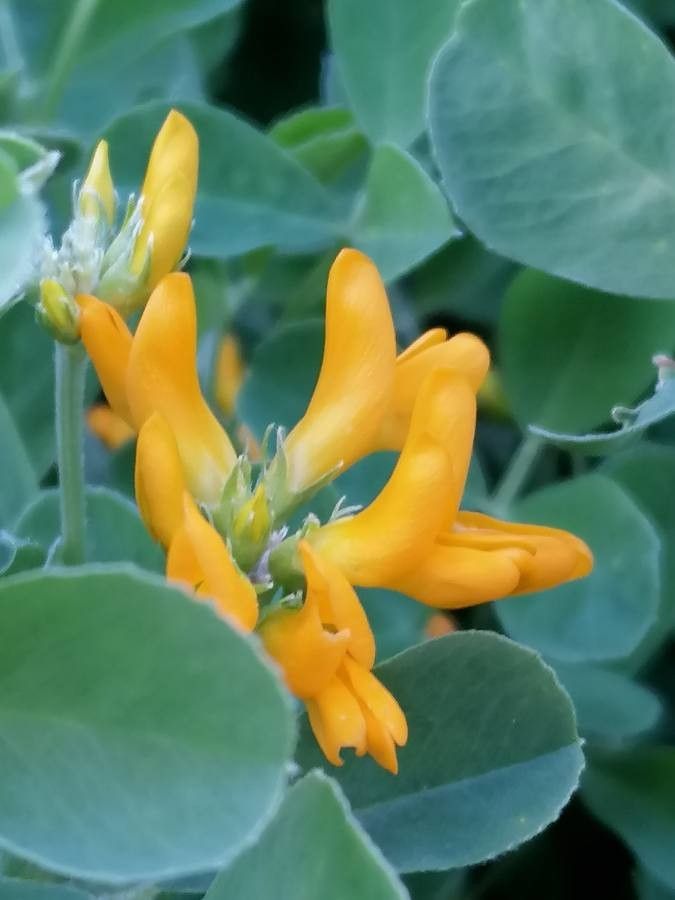
The tree medick produces yellow flowers that bloom from spring through summer. These flowers are arranged in clusters at the ends of long stems and are followed by small pods containing seeds. The plant's deep root system allows it to withstand drought conditions.
Medicago arborea is noted for its medicinal properties. It contains compounds such as flavonoids and saponins, which have anti-inflammatory effects. Traditionally, it has been used to treat various ailments, including respiratory infections, digestive disorders, skin conditions, and rheumatism.
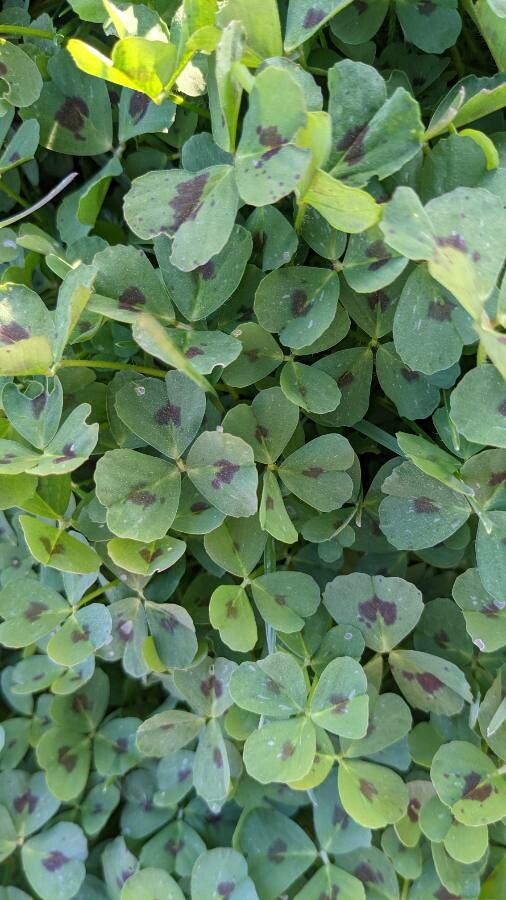
Medick is often mistaken for clover. According to a story, while Napoleon was once marching across a grassland, he noticed a medick. Intrigued, he bent down to pick it up. At that moment, a bullet was fired, and by bending down, Napoleon avoided it and survived. Because of this incident, medick has come to be recognized as a symbol of luck. FUN FACT · FROM THE LIBRARY
Ecologically, the tree medick is important as it provides food for bees and other pollinators through its nectar-rich flowers. Its deep root system aids in preventing soil erosion on slopes and improves soil fertility through nitrogen fixation.
In summary, Medicago arborea is a vital plant species with both ecological and medicinal significance. It contributes to Mediterranean flora biodiversity conservation efforts and has been used for health benefits from ancient times to modern medicine.
Tree medick shows strong resistance to disease and is generally not susceptible to illnesses. In terms of care, this plant is fairly low-maintenance. When grown outdoors it needs only minimal watering, and larger specimens typically do not require pruning. Smaller plants, however, should be trimmed after they finish blooming. Tree medick is suitable for anyone who has outdoor space, like a garden or a deck, and does not demand much experience in plant care.
How to keep Medicago Arborea.
Light
Tree medick prefers sites where it gets uninterrupted sun for most of the day. If it is not given enough sunlight, it can exhibit stunted growth and generally poorer health. Since it comes from habitats with substantial daily sun, it shows no ability to tolerate a lack of sunlight.
Water
Adapted to the dry conditions of the Mediterranean climate, the tree medick flourishes with minimal watering, needing only to be watered every 2 to 3 weeks. When grown outdoors in coastal environments, occasional misting can improve the health of its foliage without overly saturating the soil.
Humidity
This plant needs special care because it loves high humidity levels of 60-80% or more. The best way to achieve this is by placing a humidifier near the plant. Daily misting is also essential! Make sure the room has good ventilation.
Temperature
Tree medick originates from a climate with average temperatures of 59 to 95 °F (15 to 35 ℃) and grows best in these warm conditions. The plant adapts well to seasonal changes, but care should be taken to avoid temperatures below its preferred levels.
Fertilizer
Proper timing is essential when fertilizing Tree medick. Begin fertilizing in early spring and continue once a month through early summer. Fertilizer encourages attractive blooms and supplies energy during both dormant and active growth periods.
Pruning
Tree medick benefits greatly from annual pruning, which should be done in late spring after it has finished blooming. To improve air circulation and encourage healthier growth, remove any dead branches. Shape the plant lightly to maintain its structure, using clean and sharp tools. Make cuts at a 45-degree angle to promote healthy growth and prevent the plant from becoming leggy.
Botanical profile.
- Plant Type
- Shrub
- Life Cycle
- Perennial
- Genus
- Medicago
- Family
- Fabaceae
- Hardiness Zone
- 7-10
- Mature Height
- 0.91 m to 3.96 m
- Mature Spread
- 2.13 m
- Leaf Color
- Green
- Leaf Type
- Evergreen
- Flower Color
- Yellow
- Flower Size
- 1.02 cm to 1.52 cm
- Bloom Time
- Spring, Summer
- Planting Time
- Spring, Summer, Autumn
- Harvest Time
- Summer, Fall
Other names.
Reader questions.
How should I water my Tree medick plant?
Your Tree medick is not particular about how you water it. So, you can use any common watering tool like a watering can, hose, or even a cup to moisten its soil. It's important to water the plant directly on the soil, making sure to evenly moisten all areas of the root system. Using filtered water is recommended since tap water may contain harmful particles. Also, it is best to use water that is at or slightly above room temperature, as colder or hotter water may shock the Tree medick. However, this plant usually responds well to any type of water you give it.
Why should I put fertilizer on my Tree medick?
Fertilizing a Tree medick is essential for various reasons. Firstly, it will help the plant produce beautiful blooms. To ensure excellent flowers in the spring, it is recommended to fertilize in early spring. Secondly, fertilizer provides the Tree medick with ample energy to store in the ground during its dormant growth phases. Adding extra nutrients during fall planting or late spring will help the plant accumulate more energy for when active growth resumes.
What are the sunlight requirements for Tree medick?
Tree medick requires full sun, which equates to more than 6 hours of sunlight daily to thrive optimally. It's essential to observe your garden throughout the day to identify spots that offer a mix of light and shade, ensuring plants like Tree medick receive enough sunlight for health and growth. Inadequate sunlight can lead to symptoms of stunted growth and diminished health as this plant is adapted to environments with significant daily sun exposure.
What is the native climate for Tree medick?
Tree medick is native to climates that average between 59 to 95 °F (15 to 35 °C), where it thrives best. These warm temperatures suit the plant well, allowing it to adjust to seasonal changes effectively. Although Tree medick possesses strong cold resistance and special frost protection measures are typically not necessary during winter, care should be taken to ensure temperatures do not fall below its preferred range.
What should I do if I give my Tree medick plant too much or too little water?
For outdoor plants, especially newly planted ones or seedlings, they are susceptible to lack of watering. It is important to consistently water them for a few months when they are small or newly planted. Once the roots are established, Tree medick can typically rely on rainfall. When Tree medick is planted in pots, overwatering is more likely. If you accidentally overwater your Tree medick, take immediate action to fix the situation. First, stop watering your plant to minimize the impact. Then, remove the Tree medick from its pot to check the roots. If there is no root rot, you can return the plant to its container. If there are signs of root rot, trim the affected roots and apply a fungicide. Repot the Tree medick in well-draining soil. In the case of underwatering, simply water the plant more frequently. Underwatering is usually easily fixed - the leaves will droop and dry out, but they will regain fullness after sufficient watering. Adjust your watering frequency as soon as you notice underwatering.
When should I fertilize my Tree medick to get the best results?
Timing is crucial when it comes to fertilizing Tree medick. If fertilizer is applied too early while the Tree medick is still dormant, it won't be effective and will be washed away by rainwater, resulting in waste and pollution. To ensure effective fertilization, the first application should be done in early spring, followed by monthly applications until early summer.
How does artificial lighting support indoor Tree medick plants?
Indoor Tree medick plants benefit significantly from artificial lighting, especially when natural sunlight is scarce, such as during winter or in less sunlit areas. Adequate lighting is crucial for their growth. It's recommended to use artificial lights like LEDs, which can be customized to provide specific light wavelengths needed by plants. For full sun plants like Tree medick, 30-50W/sq ft of artificial light is advisable. The light source should be placed 12-36 inches above the plant and turned on for 8-12 hours daily to mimic natural daylight hours, ensuring faster and healthier growth.
How should Tree medick be cared for during cold winters?
During colder winters, especially if temperatures are expected to drop below -15°C, Tree medick requires protection against the cold. This can be achieved by wrapping the trunk and branches with non-woven fabric or cloth to insulate the plant. Additionally, it's recommended to water the plant abundantly before the first freeze in autumn. This ensures the soil remains moist and enters a frozen state, helping to prevent drought and water scarcity for the plant during the winter and early spring.
How often should I water my Tree medick plant?
Most outdoor plants can grow naturally with rainfall. However, if your area lacks rainfall, you should water your plants adequately every 2 weeks in the spring and fall. In the summer, you'll need to water more frequently. During the slower growth of winter, you can water less or even not at all. Young or newly planted Tree medick plants require more frequent watering to help them establish and become more adaptable to drought. For potted plants, there are two main ways to determine watering frequency. The first way is to follow a set schedule, watering once a week or once every other week. However, this may not always work as it doesn't consider the specific growing conditions for your Tree medick. The frequency of watering can also change based on the season, with higher water needs during the summer. An alternative approach is to check the soil moisture before watering. Wait until the top two to four inches of soil or about ⅓ to ½ depth of the pots have dried out completely before giving more water.
When is the best time to not fertilize my Tree medick?
To ensure proper growth and blooming of Tree medick, it is important to be mindful of the type and timing of fertilizer used. When selecting a fertilizer, avoid those with high nitrogen content as they can promote leaf growth at the expense of blooms. Instead, opt for fertilizers with lower levels of nitrogen compared to other nutrients. It is also crucial to refrain from fertilizing Tree medick after early autumn, as this can lead to excessive growth just before winter. Additionally, avoid fertilizing during hot and dry periods, as dry soil less effectively delivers nutrients and the resulting growth may require more water than is available. Ideally, fertilization should occur earlier in the season when temperatures are cooler. Lastly, be cautious of inadvertently over-fertilizing Tree medick by considering the absorption of nearby applied fertilizers.
What are the common symptoms of light deficiency in Tree medick?
Tree medick may exhibit various symptoms when deprived of adequate sunlight, including smaller new leaves, leggy or sparse growth, premature leaf drop, halted growth, and pale or irregularly colored new leaves. These symptoms are indicative of the plant struggling in low-light conditions, conserving resources for survival rather than growth. Conditions like chlorosis, sunscald, leaf curling, wilting, and leaf scorching may also occur due to excessive sunlight or sudden exposure after a period of light deficiency, reflecting the plant's sensitivity to its lighting environment.
What are the signs of low temperature stress in Tree medick, and how can it be managed?
Tree medick shows cold tolerance and generally thrives at temperatures above 15°C. If temperatures fall below -15°C, during winter, there might not be visible changes, but by spring, the branches could become brittle and dry, and no new shoots will emerge. The recommended solution for managing this low temperature stress is to prune away any dead branches in the spring that have failed to produce new leaves, encouraging healthy growth and recovery.