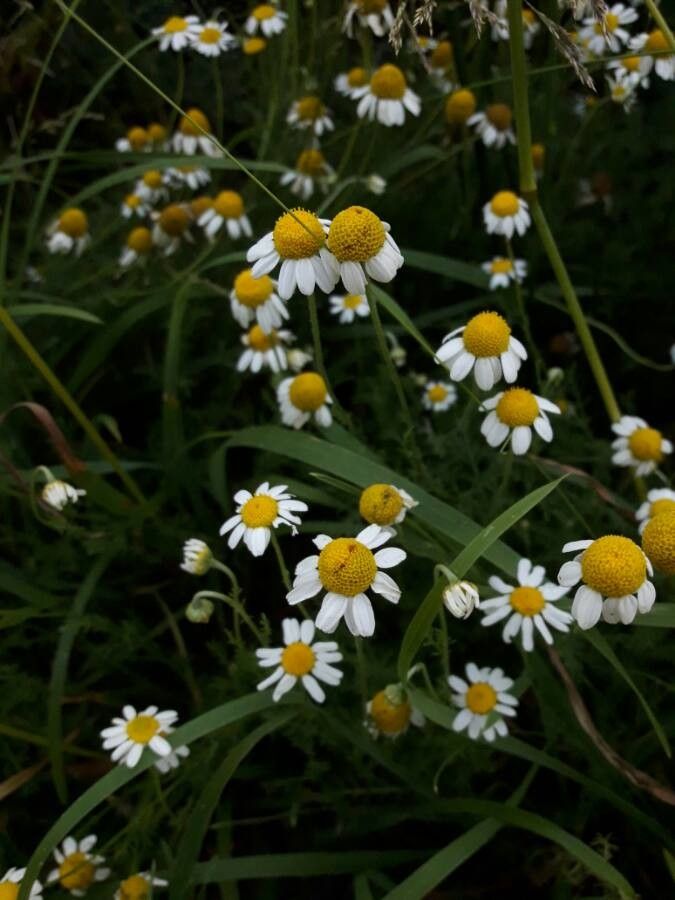
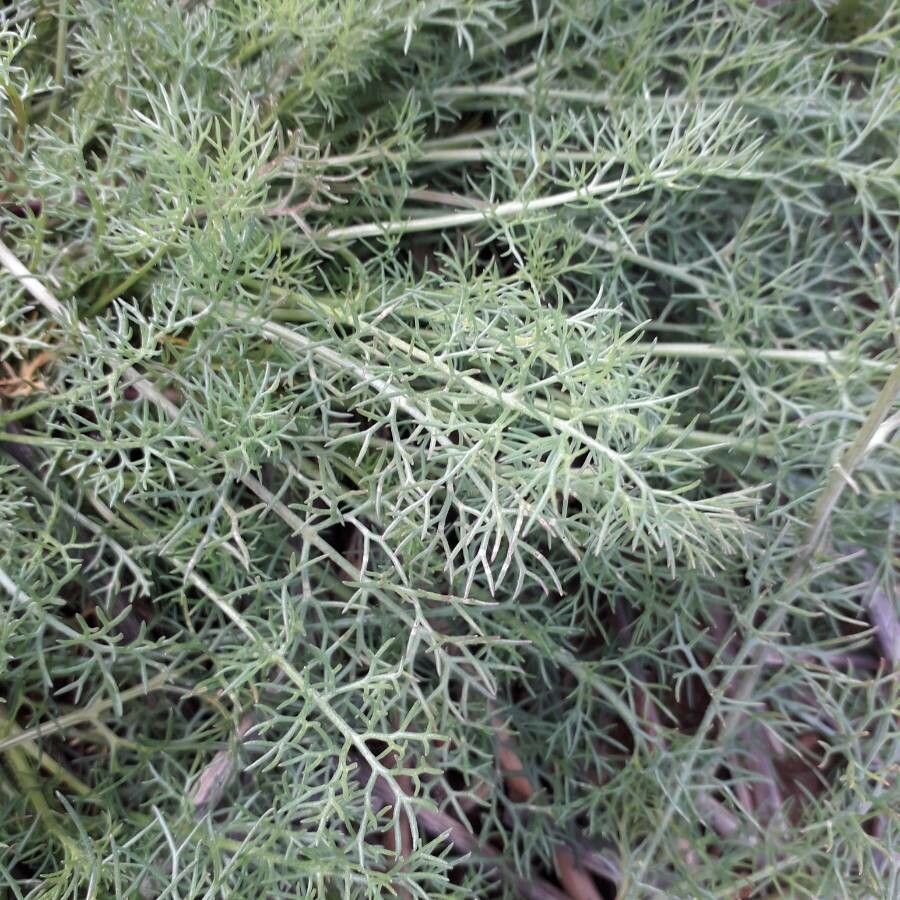
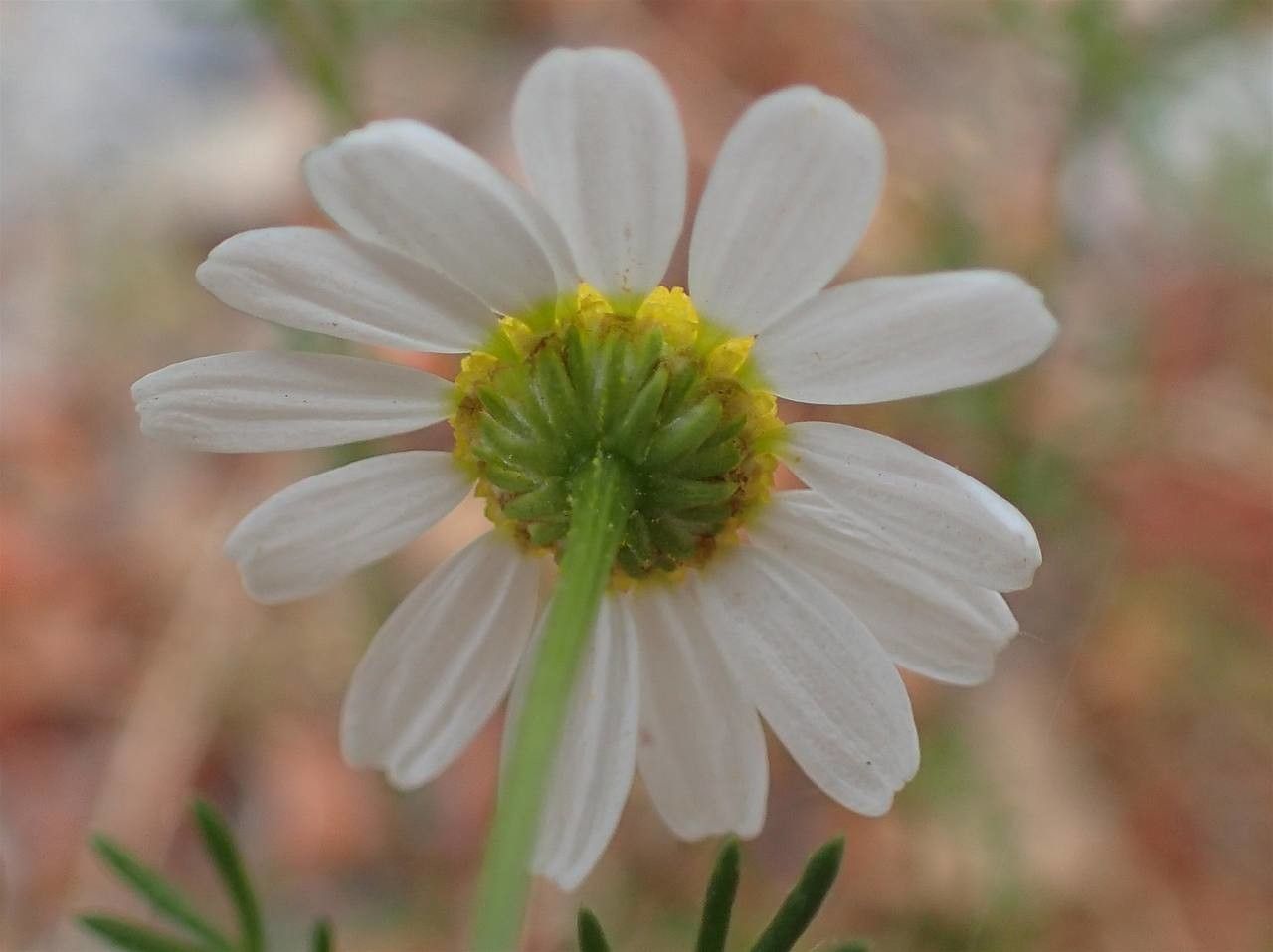
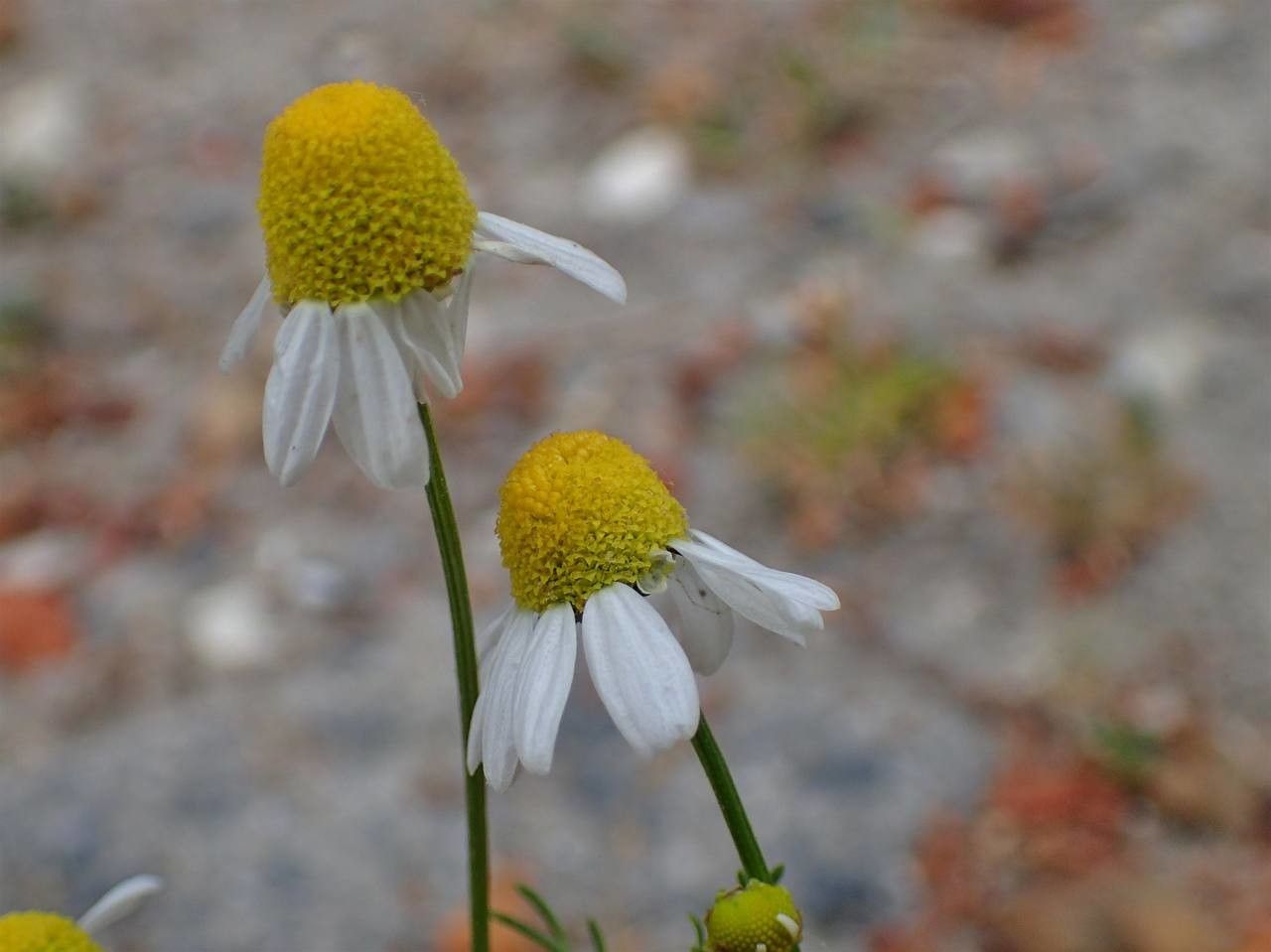
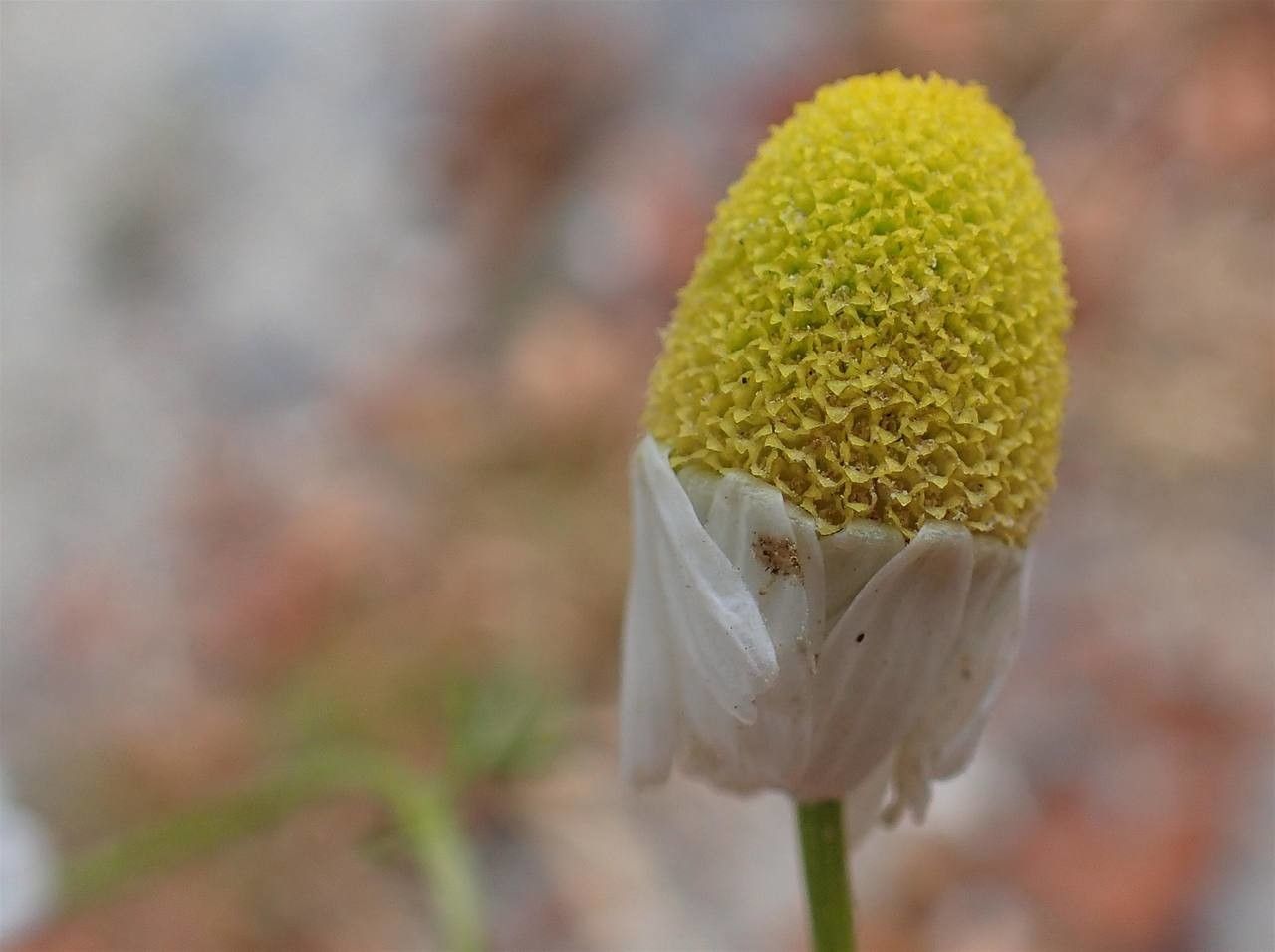
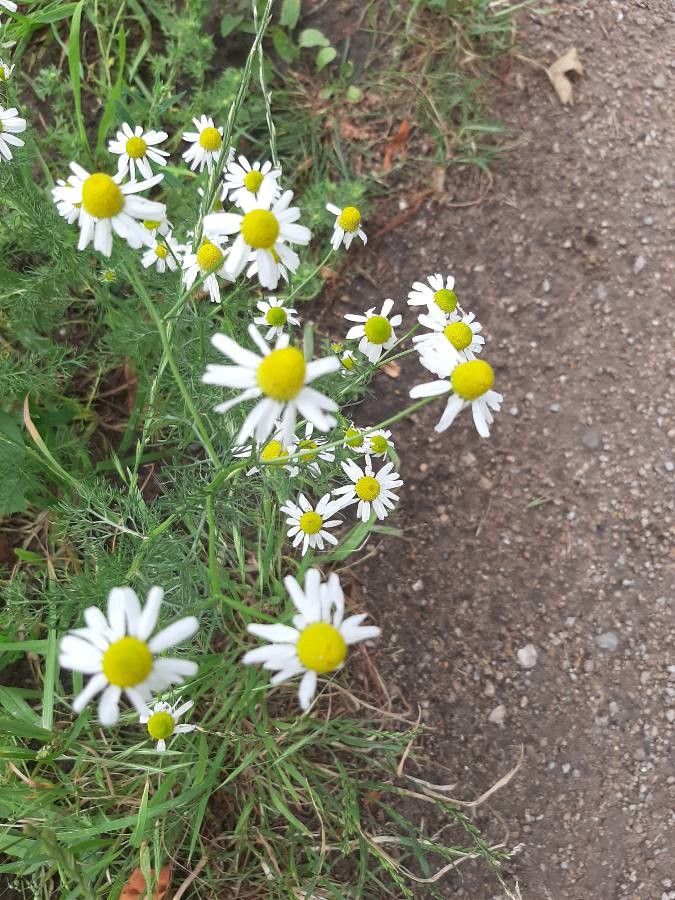
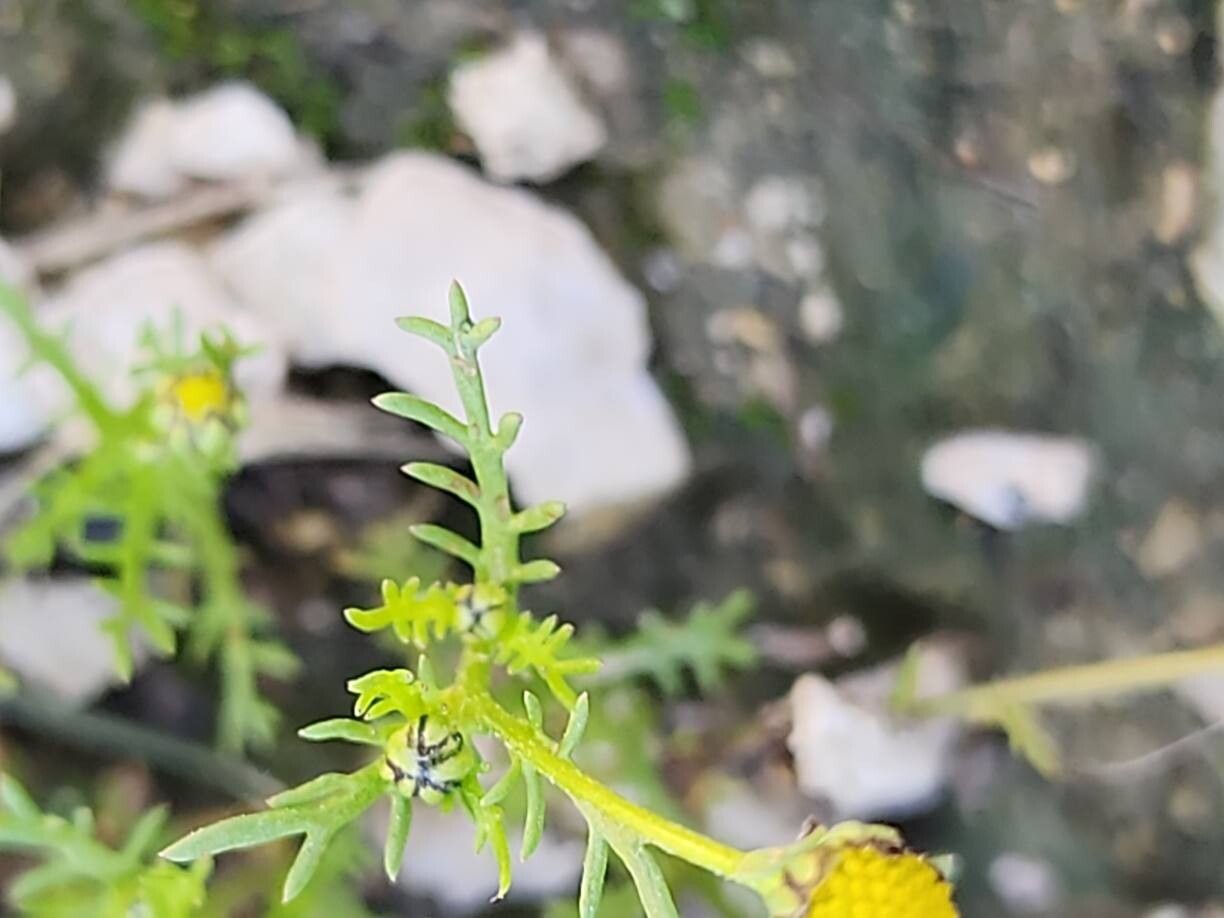
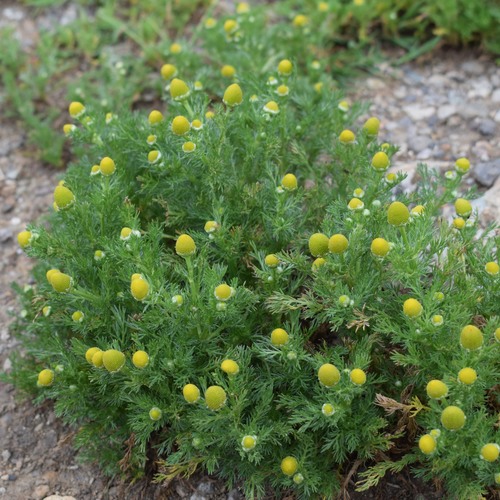
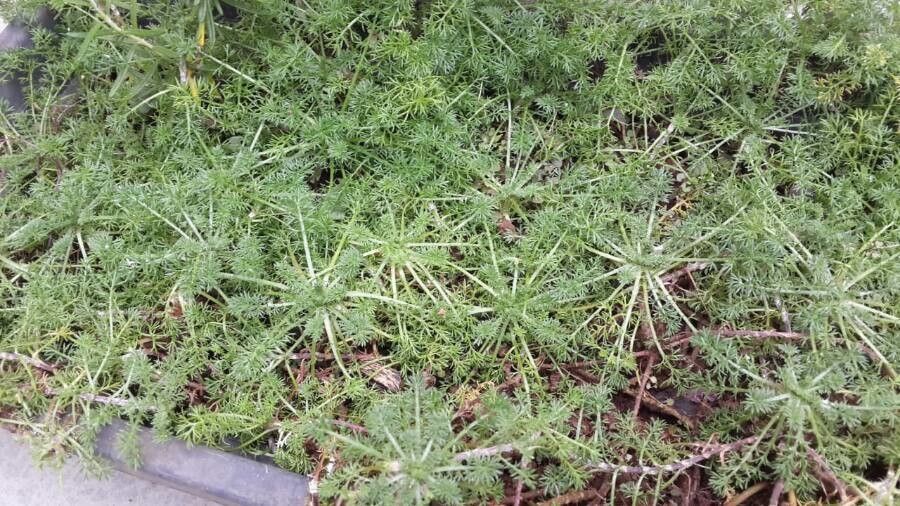
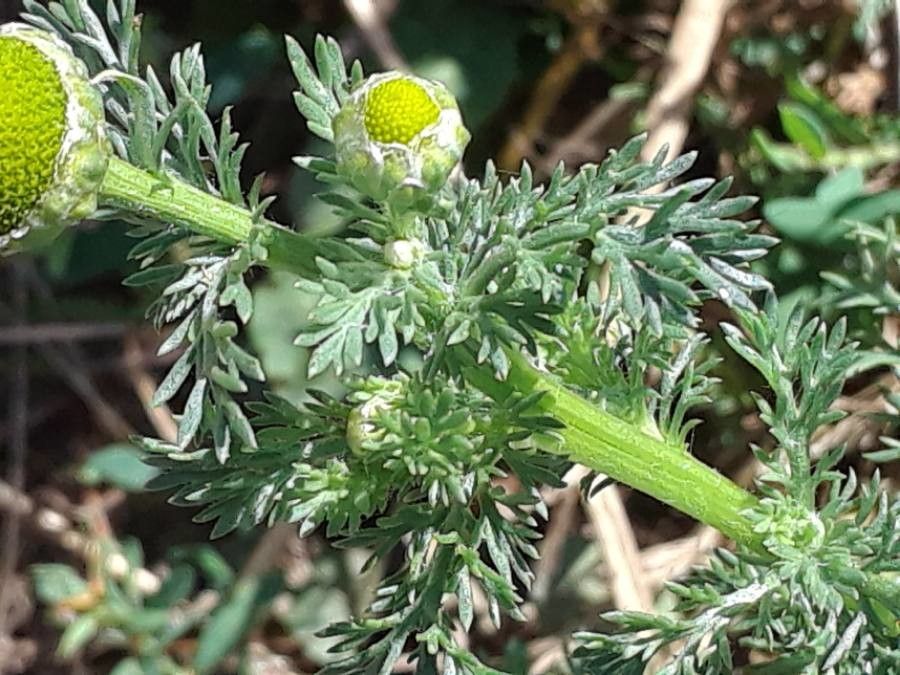
Matricaria chamomilla (synonym: Matricaria recutita), commonly known as chamomile (also spelled camomile), German chamomile, Hungarian chamomile (kamilla), wild chamomile, blue chamomile, or scented mayweed, is an annual plant of the composite family Asteraceae. Commonly, the name M. recutita is applied to the most popular source of the herbal product chamomile, although other species are also used as chamomile. Chamomile is known mostly for its use against gastrointestinal problems; additionally, it can be used to treat irritation of the skin.
German chamomile is fairly disease-resistant and is generally not prone to illnesses. However, it can be vulnerable to pests and diseases present in its environment. Such infections are typically not serious. In terms of care, this plant needs a moderate amount of maintenance. It should be pruned regularly to preserve a tidy appearance and support healthy growth. Fertilizing can also help encourage flowering. German chamomile is appropriate for anyone with outdoor space, like a garden or patio, and does not demand extensive care experience. It may need more attention if grown indoors.
How to keep Matricaria Chamomilla.
Light
German chamomile thrives best in locations that enjoy plenty of daily sunlight, due to its origins in open spaces. Although it can tolerate a quieter midday sun, its growth could be impeded in environments lacking sufficient light. However, an overexposure can also inflict stressful conditions.
Water
German chamomile thrives in temperate regions and is well-suited for areas with moderate moisture and occasional dry spells. It prefers to be watered consistently, about twice a week, while avoiding waterlogging. Although it benefits from natural rainfall, it requires supplemental watering during extended dry periods to support flowering and keep the soil moisture balanced.
Humidity
This plant will thrive in moderate humidity, which is probably the level in your home. However, misting it a few times a week can be very beneficial. Make sure the room has good ventilation.
Temperature
German chamomile originates from temperate weather conditions and is most content within a temperature spectrum of 68 to 95 °F (20 to 35 ℃). During periods of intense temperatures, minor modifications may be required to secure the plant's longevity and development.
Fertilizer
When the majority of blossoms on the German chamomile have fully unfurled, it's an appropriate time to recommence fertilization. Start a new fertilization cycle every three to four weeks as the climate allows, corresponding with the period of maximum flowering. Once the German chamomile begins to generate fewer fresh blossoms, cease fertilizing. There is no requirement for additional fertilization when the plant has reached its bloom production limit.
Pruning
Pruning German chamomile from early to late spring can boost its vigor and improve blooming. Remove any dead stems and shape the plant to enhance airflow and reduce the risk of disease. Make sure to use clean, sharp tools for more effective pruning. This will promote a healthier plant structure and extend the flowering period.
Pot & Repot
While transferring German chamomile to another pot, opt for a container that is 1-2 inches (2.5-5 cm) wider in diameter with adequate drainage. Employ a potting mix with excellent draining properties, and think about incorporating perlite for additional draining capacity. Carry out the repotting activity in the spring or the start of summer, then hydrate the plant completely and place it in a shaded spot for the initial period.
Botanical profile.
- Plant Type
- Herb
- Life Cycle
- Annual, Biennial
- Genus
- Matricaria
- Family
- Asteraceae
- Hardiness Zone
- 4-9
- Mature Height
- 30 cm to 40 cm
- Mature Spread
- 25 cm to 30 cm
- Leaf Color
- Green
- Leaf Type
- Deciduous
- Flower Color
- White, Yellow
- Flower Size
- 1.78 cm to 2.54 cm
- Bloom Time
- Late spring, Early summer, Mid summer
- Planting Time
- Spring
- Harvest Time
- Mid summer
- Native Area
- Egypt, Turkey, Sweden, India, Austria, Slovakia, Montenegro, Pakistan, Slovenia, Morocco, Croatia, Belarus, Uzbekistan, Russia, Iraq, Germany, Romania, Belgium, Moldova, Portugal, Netherlands, France, Tajikistan, Tunisia, Czech Republic, Cyprus, Bulgaria, Poland, Greece, Ukraine, Serbia, Lebanon, China, Norway, Afghanistan, Syria, Kyrgyzstan, Kazakhstan, Italy, Spain, Switzerland, Denmark, Mongolia, Finland, Iran, Albania, Ireland, United Kingdom, Hungary, Algeria, Azerbaijan
Other names.
Reader questions.
How should I water my German chamomile plant in the best way?
When watering German chamomile, you have several options for tools to use such as a garden hose with a spray nozzle or a watering can. This plant is not too particular about the type of water it receives, whether it's rainwater, tap water, or even filtered water. It's generally best to avoid watering German chamomile from overhead as this can cause damage to the leaves and flowers and increase the risk of disease. Setting up a drip irrigation system is often the most effective way to water this plant since it provides even and direct water to the soil. If you're growing German chamomile in a container, you can follow a similar watering approach but use a cup, watering can, or tap to directly water the soil.
Why is it necessary to fertilize my German chamomile?
Plants, like German chamomile, need nutrients to survive. This is well-known by most gardeners, regardless of their experience level. Without food, German chamomile will die out shortly after the first pollination. Therefore, it is important to provide the right type and amount of nutrients to keep German chamomile healthy and blooming throughout the season. Fertilizer is particularly beneficial for this plant as it helps build a strong and extensive root system. The plant's root system is naturally thin and vulnerable to damage, so fertilizer is crucial. By fertilizing at planting, German chamomile can develop a solid root structure that not only adds stability, but also enhances its flower production. Timed correctly, fertilization can significantly prolong German chamomile's flowering period.
What are the sun requirements for German chamomile?
German chamomile requires full sun or partial sun to thrive optimally. Full sun means the plant should receive above 6 hours of sunlight daily, while partial sun refers to about 3-6 hours of sunlight. It's crucial to observe how sunlight moves through your garden to choose spots that provide an ideal balance of light and shade, ensuring the plants grow healthy and strong.
What are the essential care tips for German Chamomile?
German chamomile thrives in temperate climates, preferring temperatures between 68 to 95 °F (20 to 35 °C). It has a notable cold resistance, meaning it generally does not require special frost protection measures during winter. However, if temperatures are anticipated to fall below the plant's growth limit, it's crucial to protect it from the cold. This protection can be provided by covering the plant with soil or straw. To prepare for winter, it is also advisable to water the plant abundantly before the first freeze of autumn, ensuring the soil remains moist. This preparation helps prevent drought and water scarcity during the colder months and into early spring.
What should I do if I give my German chamomile too much or too little water?
If you notice that your German chamomile plant is dry, you can solve the problem by watering it more regularly. Overwatering, on the other hand, can be a bigger issue that can lead to diseases and even death for the plant. To prevent this, make sure to choose a growing location with good sunlight and drainage. If you overwater your potted German chamomile, consider changing it to a pot with better drainage. When repotting, use loose soils and a pot that drains efficiently.
When should I fertilize my German chamomile plant?
German chamomile experiences significant growth early in the growing season, once the risk of the last frost has passed. It is recommended to fertilize German chamomile during this period, specifically during planting. The fertilizer should be applied when the plant is initially placed in the ground or in planters, regardless of the chosen planting method. This single dose of fertilizer will suffice until later in the year when the blooms are fully developed. Once the growing season is underway and the majority of the German chamomile blooms have reached their maximum size, it is time to resume fertilizing. As the blooms reach their peak output, it is advisable to fertilize every three to four weeks, based on weather conditions. However, once the German chamomile begins producing fewer new blooms, fertilization should be discontinued since additional blooms cannot be produced.
How much and what type of sunlight is ideal for German chamomile?
Ideally, German chamomile does well in areas that receive generous sunlight throughout the day, reflecting its natural preference for open habitats. Although it can tolerate less intense midday sun, insufficient light can prevent it from flourishing, and excessively harsh sunlight may cause stress. Attention should be given to their light exposure to maintain a conducive growing environment.
How does low temperature affect German Chamomile and what are the solutions?
German chamomile is quite cold-tolerant and generally thrives when the temperature remains above its minimum suitable growth threshold. If the temperature during winter stays above its minimum tolerable growth figure, the plant should not face any significant issues. Nonetheless, if temperatures drop below its growth limit, you might not notice immediate changes, but there could be a decrease in sprouting or no sprouting at all when spring arrives. The recommended solution for affected plants in spring is to remove any parts that have failed to sprout.
How often should I give water to my German chamomile?
To keep your German chamomile healthy, it's important to water it regularly. During the growing season, start by watering once a week. As the weather gets warmer, you may need to increase watering to two or three times a week. However, be careful not to exceed this rate as it can harm the plant. Keep in mind that the soil should be moist but not wet, regardless of how often you water. Watering German chamomile in a pot is slightly different. Potted soil tends to dry out faster, so you'll need to water more frequently. Typically, plan to water a container-grown German chamomile a few times a week, compared to just once a week for a plant in the ground.
When is it not a good idea to put fertilizer on my German chamomile?
Regular fertilizing is important for German chamomile, but it can be applied at the wrong time. There are certain situations where it is necessary to hold back on fertilizing. These situations are usually related to climate and other factors that can be controlled. When there is something wrong with the plant, soil, or climate, it is best to wait until things improve and the plant has recovered. For example, if there are severe or unexpected changes in the weather, such as a cold snap in the middle of summer, it's best to wait until it warms up again before fertilizing. Similarly, if the soil becomes too dry or compacted to absorb fertilizer properly, it's best to wait until the conditions improve. When temperatures are extremely high, like in the 90-degree Fahrenheit range during the hottest parts of the day, it's also best to avoid applying fertilizer. Hot temperatures can break down the fertilizer too quickly, so it's important to wait for cooler temperatures. Additionally, any pests or diseases should be treated and cleared up before re-fertilizing.
Can artificial lighting be used for German chamomile, and how?
Yes, artificial lighting can be utilized for German chamomile, especially when natural sunlight is insufficient, like during winter or in less sunny locations. Selecting the correct type of artificial light is crucial, with LED lights being a popular choice due to their ability to provide specific light wavelengths needed by plants. The general guideline for artificial light intensity is 30-50W/sq ft for full sun plants, 20-30W/sq ft for partial sun, and 10-20W/sq ft for full shade plants. The light source should be placed 12-36 inches above the plant, and the duration should mimic natural daylight hours, typically 8-12 hours per day.
What are the effects of high temperature on German Chamomile and how can they be mitigated?
During the summer, it's important for the well-being of German chamomile that the temperature be kept below its maximum suitable growth threshold. If temperatures climb above its maximum tolerable growth limit, the plant's leaves may lighten in color, become prone to curling, suffer from sunburn, and in severe cases, the entire plant might wilt and dry up. To mitigate these issues, you should trim away any sunburned and dried parts of the plant. Moving the plant to a shaded area during the midday and afternoon sun, or employing a shade cloth, can also help. Additionally, watering the plant in the morning and evening to maintain soil moisture is advised.