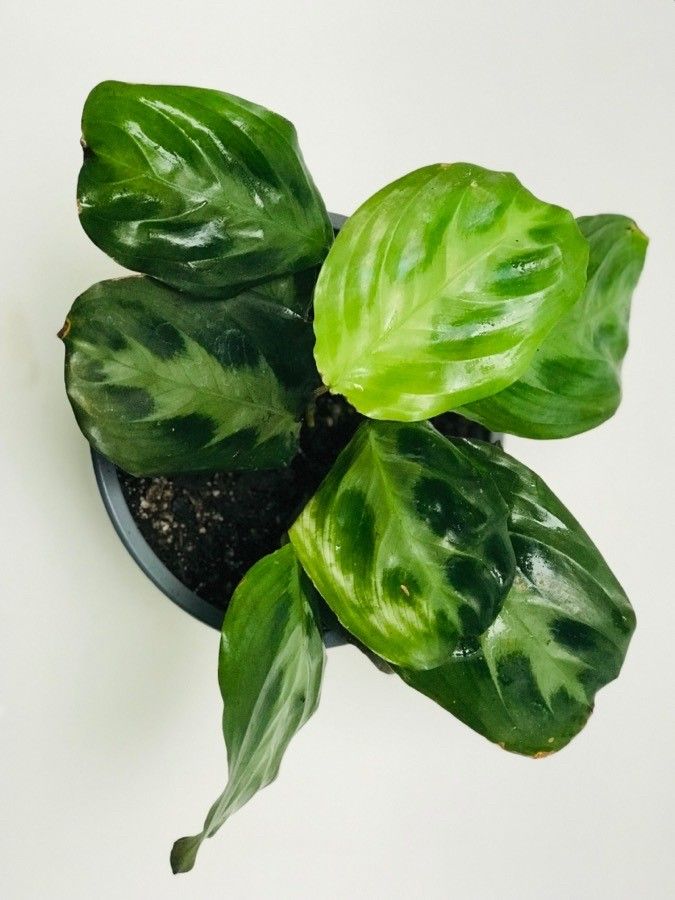
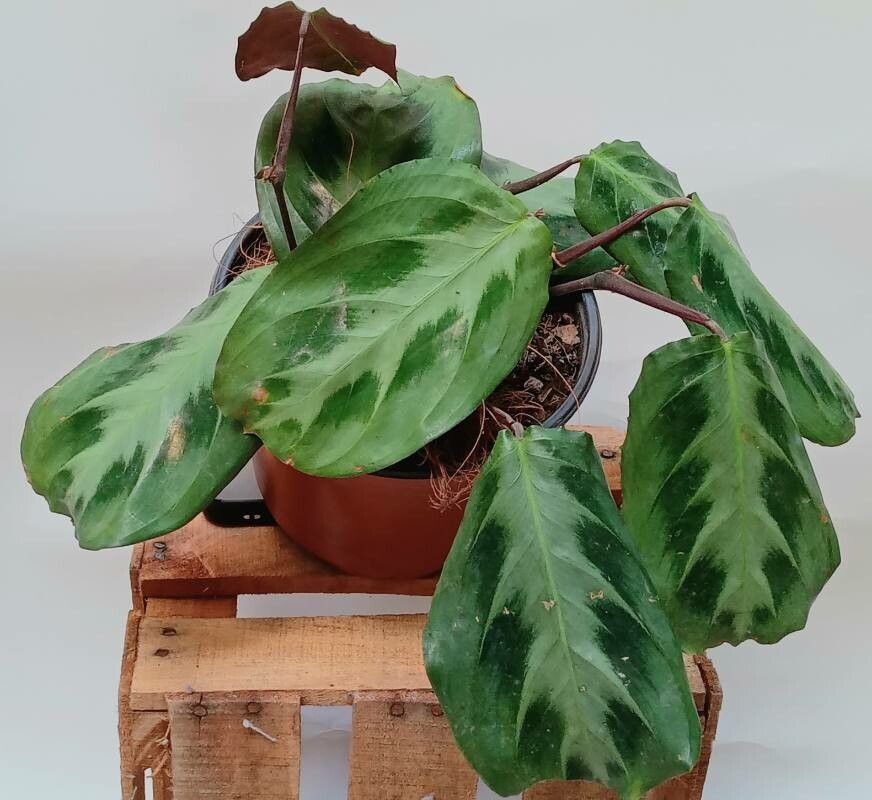
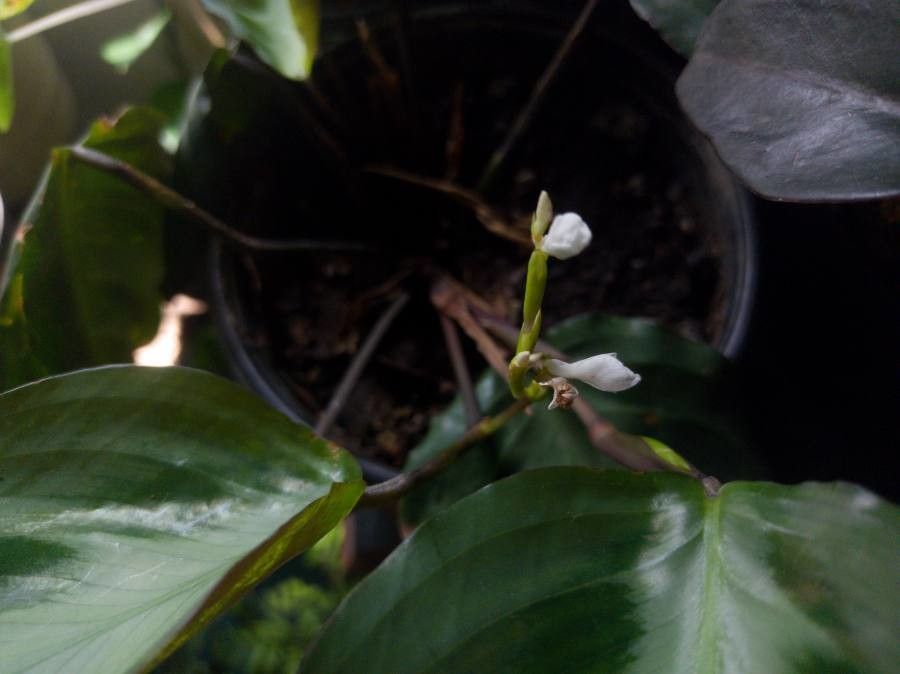
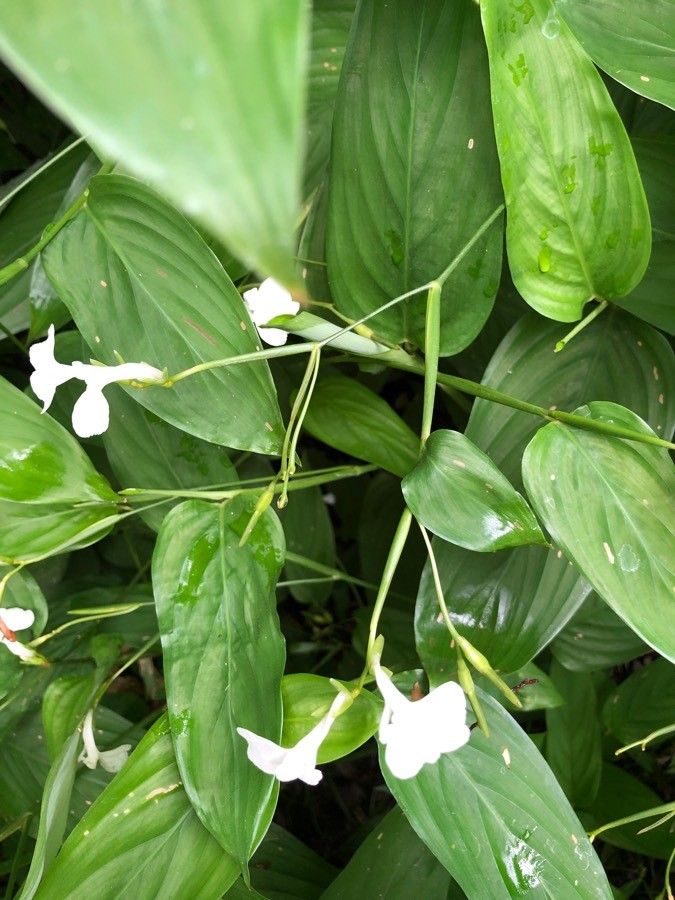
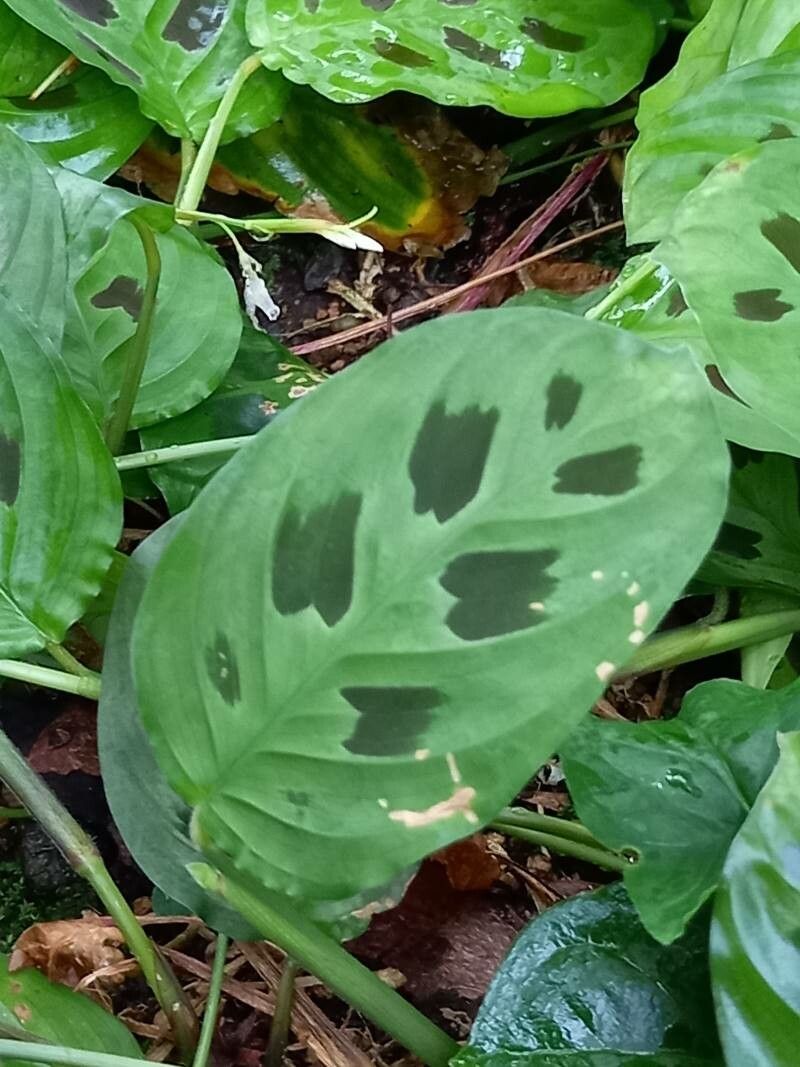
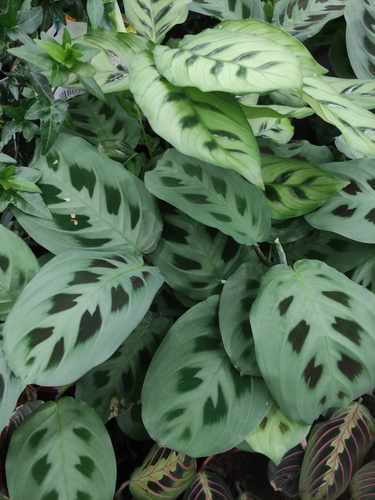
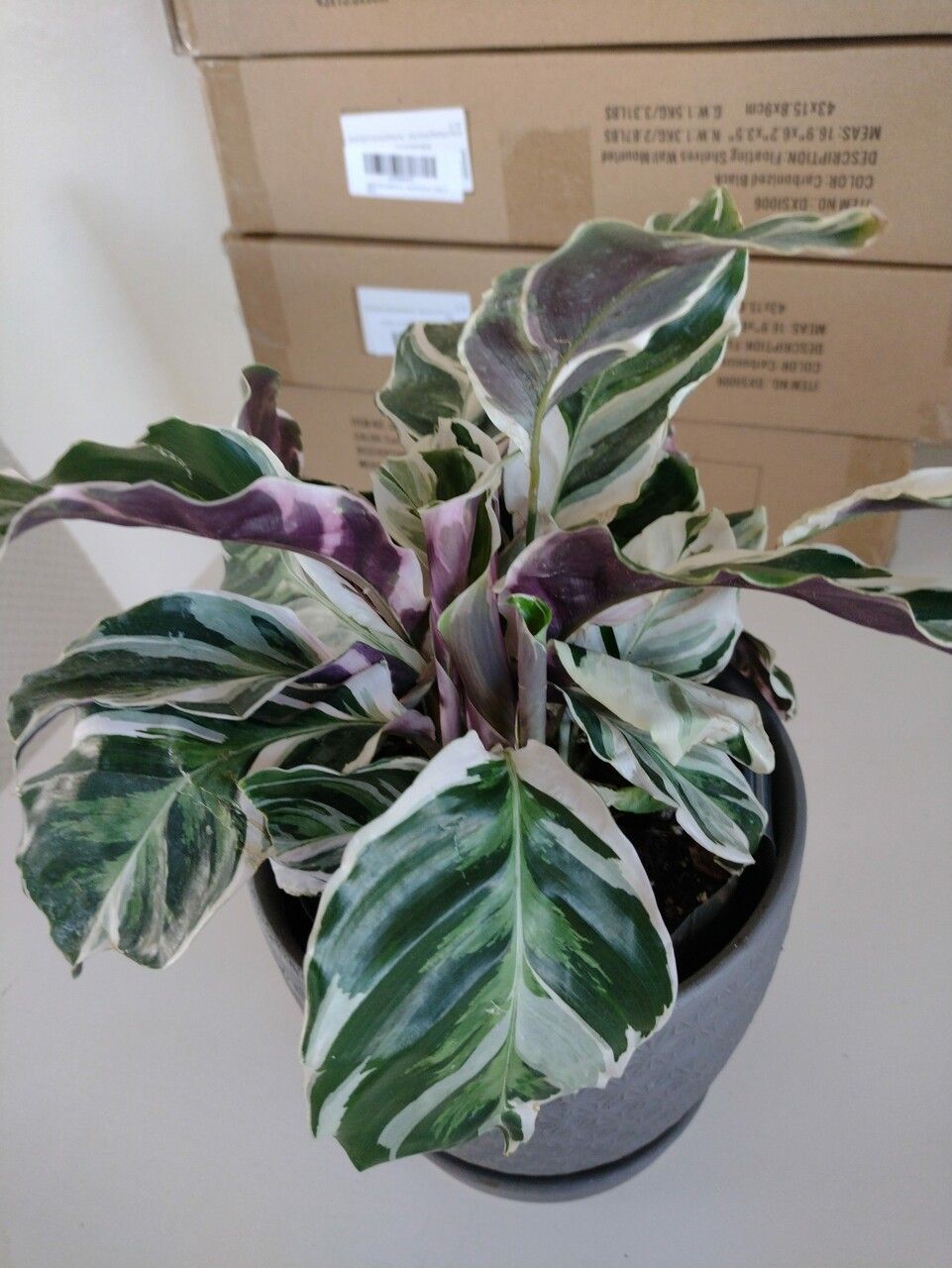
Zebra-plant has moderate resistance to disease but can be susceptible to leaf spot disease. Its leaves can curl and dry out when humidity is low. This plant is regarded as difficult to care for because it requires high humidity and good ventilation to grow properly, conditions that can be hard to achieve in typical indoor settings. Zebra-plant is appropriate for people who can provide the high humidity it needs, but even experienced growers may struggle to get it to thrive. Novices might be able to keep it alive, yet it may not perform well.
How to keep Maranta Cristata.
Light
The zebra plant is native to habitats such as forest understories or rocky areas that provide natural shade. It prefers full shade but can tolerate partial sun.
Water
The Zebra plant thrives in high humidity and needs soil that is consistently moist, which requires watering every week. It's important to mist the plant regularly during its active growing season to maintain the necessary humidity levels. This is because the Zebra plant originates from the understory of tropical rainforests and cannot tolerate prolonged drought.
Temperature
Zebra-plant comes from tropical areas, where the weather is usually warm and humid. Consequently, it is suited to high heat and moisture. It dislikes abrupt temperature shifts and prefers a steady thermal environment, so preventing temperature fluctuations indoors is important. It typically cannot tolerate cold and needs warmer conditions to thrive. If the ambient temperature falls too low, the plant may stop growing or even die.
Fertilizer
Proper fertilization is essential for the Zebra-plant's health and appearance. Fertilize the Zebra-plant in summer, applying fertilizer monthly throughout the season. Nutrients fuel growth and help maintain the plant's parts. Fertilization enhances the Zebra-plant's flower display, ensuring the best blooms.
Pruning
To keep your zebra plant thriving, it's important to prune it regularly between early and late spring. Remove any damaged leaves and leggy growth during this time. Making clean cuts will improve air circulation and allow more light to penetrate the plant, which encourages bushy growth and overall health. As a result, you'll enjoy a more vibrant display, and the plant will recover more quickly in optimal conditions.
Pot & Repot
When repotting a Zebra-plant, select a pot slightly larger than the current one that has good drainage. Repot during spring or fall and use a potting mix that drains well. Set the plant at the same depth it was before. After repotting, water thoroughly and place the plant in a warm spot with bright, indirect light. Avoid excessive watering to prevent root rot.
Botanical profile.
- Plant Type
- Herb
- Life Cycle
- Perennial
- Genus
- Maranta
- Family
- Marantaceae
- Hardiness Zone
- 11-12
- Mature Height
- 30 cm to 61 cm
- Mature Spread
- 30 cm to 46 cm
- Leaf Color
- Dark Green, Light Green
- Leaf Type
- Evergreen
- Flower Color
- White
- Flower Size
- 1.02 cm to 2.03 cm
- Bloom Time
- Summer, Early fall
- Planting Time
- Spring, Summer, Autumn
- Harvest Time
- Late summer, Fall
- Native Area
- Brazil
Other names.
Reader questions.
What are the sunlight requirements for a Zebra-plant (Maranta cristata)?
The Zebra-plant, or Maranta cristata, thrives in full shade, which means it requires less than 3 hours of sunlight daily. It's crucial to observe the movement of sunlight through your garden carefully, selecting locations that offer an ideal mix of light and shade. This careful placement ensures the well-being of your Zebra-plant by providing it with the perfect living conditions.
What is the common name for Maranta cristata?
The common name for Maranta cristata is Zebra-plant.