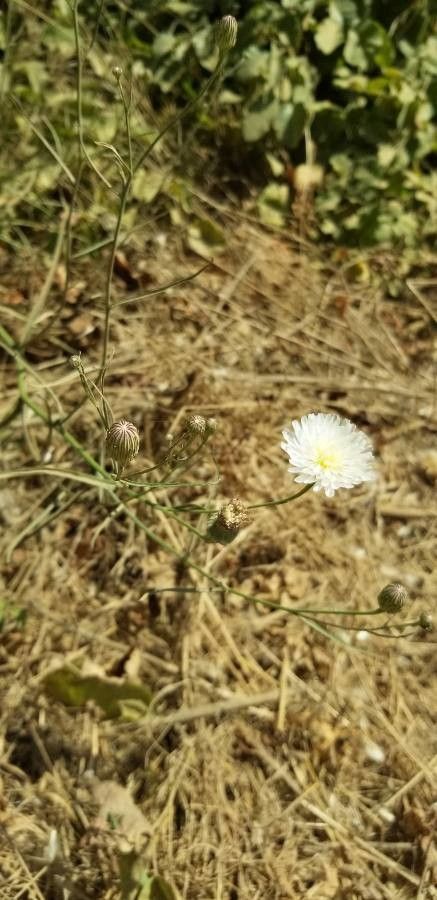
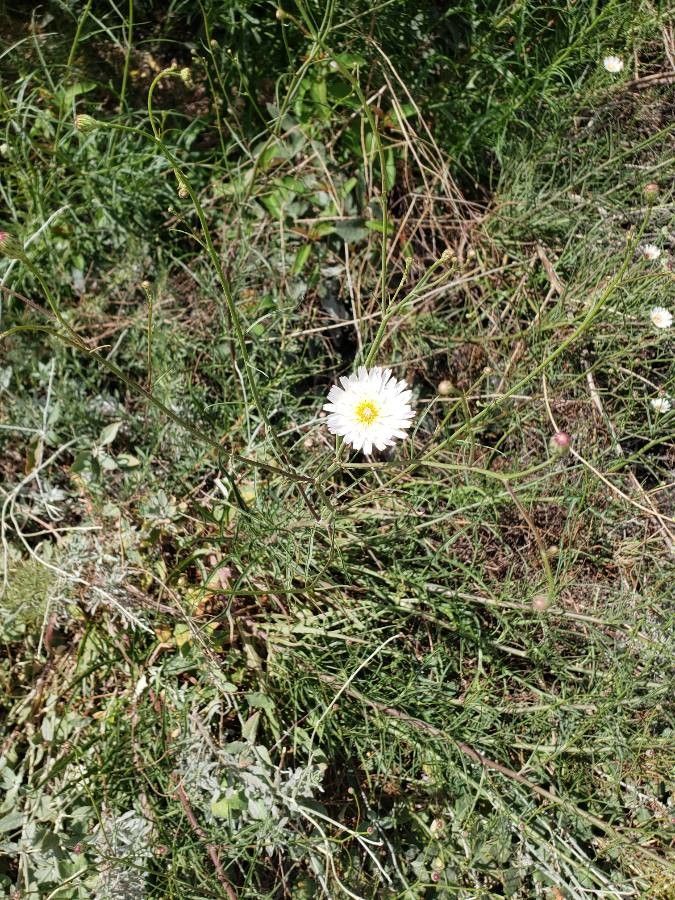
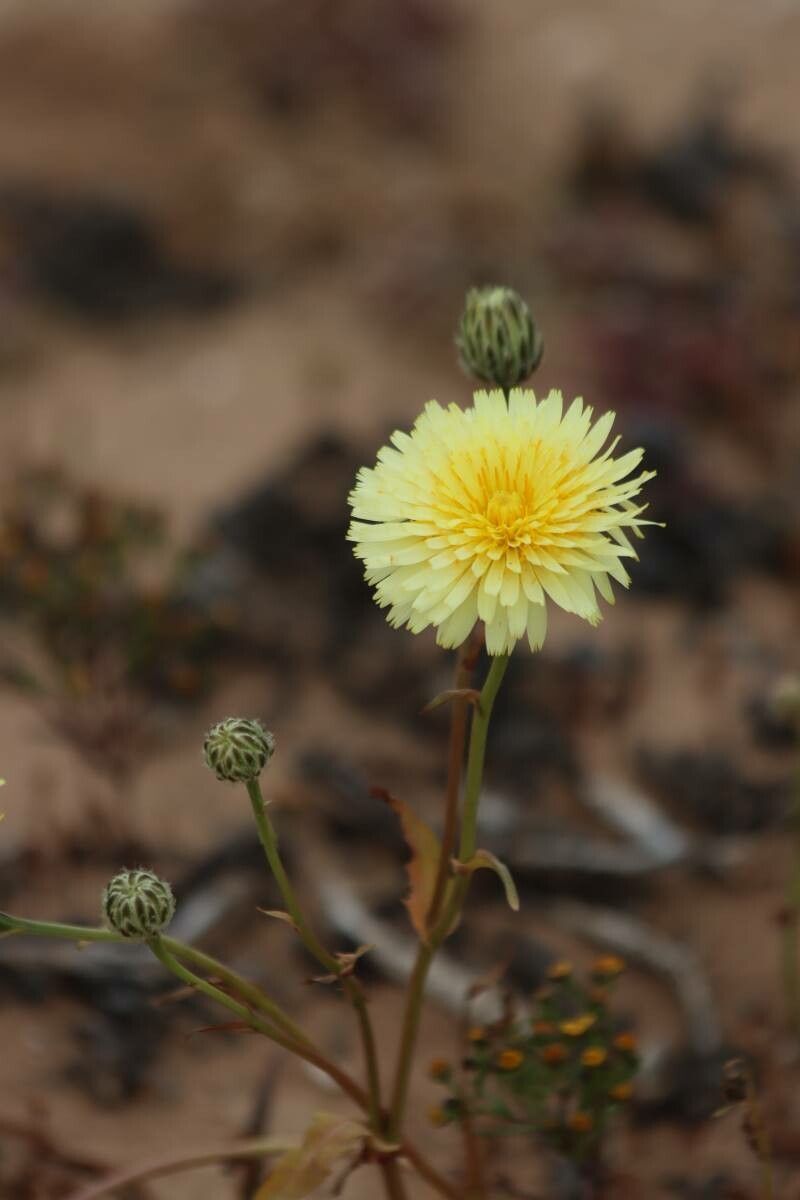
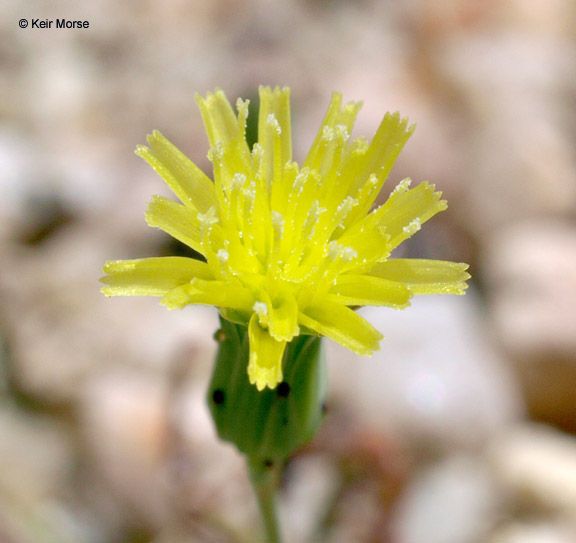
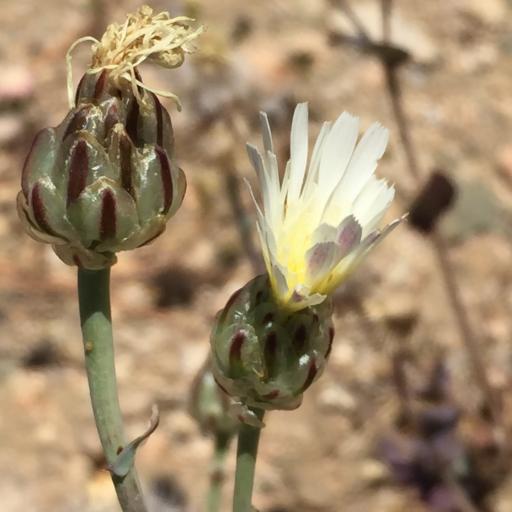
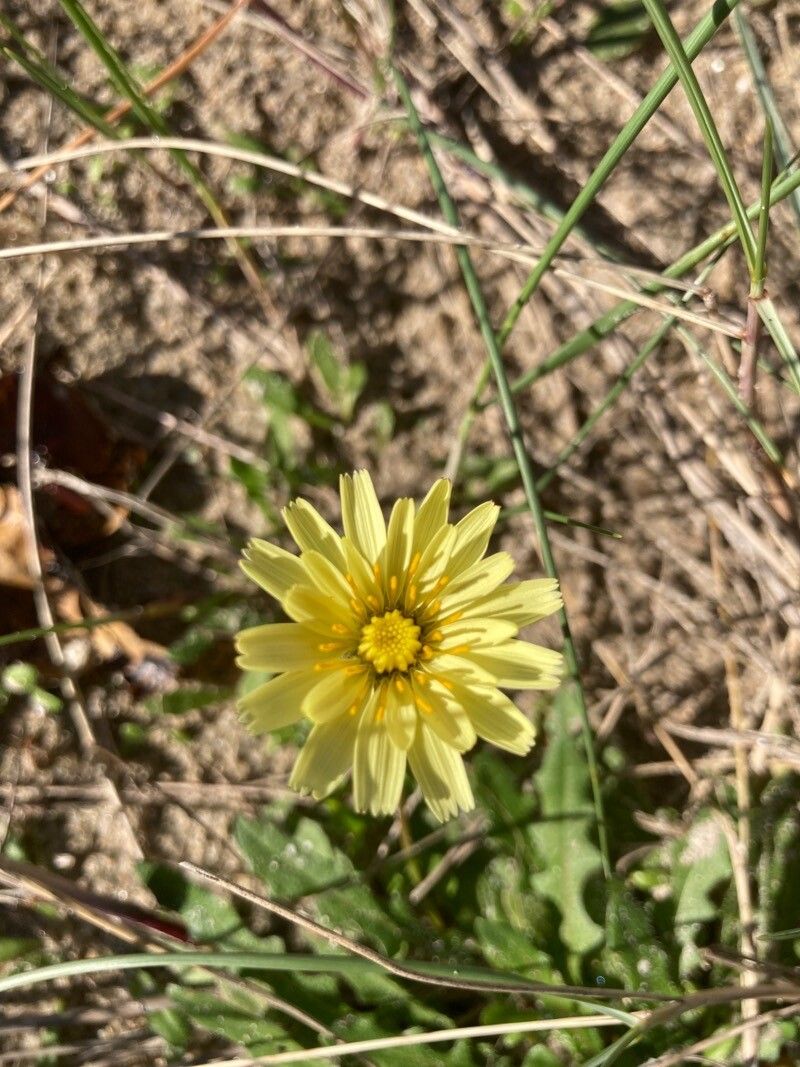
Malacothrix saxatilis, commonly known as the desert dandelion, is a perennial herbaceous plant in the Asteraceae family. Native to the southwestern United States and northern Mexico, it thrives in arid regions such as deserts, rocky slopes, and sandy washes.
The plant reaches up to 30 cm in height and features a basal rosette of deeply lobed leaves. These leaves are covered with fine hairs, which help reduce water loss through transpiration. The bright yellow flowers of Malacothrix saxatilis resemble dandelions but are smaller in size.
The desert dandelion blooms from February to May, depending on location and climate conditions. During this period, it provides an essential source of nectar for bees, butterflies, and other pollinators.
Native Americans have traditionally used Malacothrix saxatilis for medicinal purposes, such as treating stomach ailments and making poultices for wounds or skin irritations.
Overall, Malacothrix saxatilis is a vital plant species in arid regions. It plays an important ecological role as a pollinator attractor and holds cultural significance due to its medicinal uses by Native Americans.
The cliff desert dandelion is fairly disease-resistant and generally does not readily develop illnesses. However, it can be affected by pests and diseases present in its environment. These problems are typically not serious. In terms of upkeep, this plant requires moderate maintenance. It should be pruned regularly to keep a tidy appearance and support healthy growth. Fertilizing can also help encourage flowering. The cliff desert dandelion is suitable for anyone with outdoor space, such as a garden or patio, and does not demand extensive gardening experience. It may call for more care if grown indoors.
How to keep Malacothrix Saxatilis.
Light
Cliff desert dandelion is a sun-loving, perennial herbaceous plant native to open habitats and commonly found in meadows and grasslands. It prefers full sun but can also tolerate partial sun.
Water
The cliff desert dandelion is well-suited to arid, rocky environments, as it requires minimal moisture and is highly adaptable to drought conditions. It thrives best when watered moderately once a week and flourishes in direct sunlight. This makes it an excellent choice for xeriscaping or for rock gardens that emphasize water conservation.
Temperature
Cliff desert dandelion can tolerate a wide range of temperatures, but its distribution may still be restricted by specific combinations of water and heat. It performs best in warm summer conditions with adequate rainfall or watering. Extended periods of cloudy, rainy weather or prolonged high temperatures can increase the plant's risk of dying. In winter, appropriate protection from the cold can boost its chances of survival.
Fertilizer
Early spring, when the Cliff desert dandelion is coming out of dormancy and starting active growth, is the best time to fertilize. Fertilization supplies essential nutrients for healthy growth. Although the Cliff desert dandelion has relatively low fertilizer needs, an annual application can improve its survival and encourage better, longer-lasting flowers.
Pruning
The cliff desert dandelion displays a rosette of basal leaves accompanied by yellow blooms. For optimal growth and resilience, prune the plant from early to late spring by removing old stems and dead flowers. Be sure to use clean, sharp tools to minimize stress and encourage healing, and avoid cutting diseased or damaged parts.
Botanical profile.
- Plant Type
- Herb
- Life Cycle
- Perennial
- Genus
- Malacothrix
- Family
- Asteraceae
- Hardiness Zone
- 7-10
- Mature Height
- 0.2 m to 2.13 m
- Mature Spread
- 0.91 m to 1.52 m
- Leaf Color
- Green, Light Green
- Leaf Type
- Semi-evergreen
- Flower Color
- Yellow
- Flower Size
- 3.05 cm to 5.08 cm
- Bloom Time
- Mid spring, Late spring, Early summer
- Planting Time
- Spring, Summer, Autumn
- Harvest Time
- Summer
- Native Area
- Canada
Other names.
Reader questions.
What are the sunlight requirements for Cliff desert dandelion?
Cliff desert dandelion (Malacothrix saxatilis) thrives in full sun, requiring above 6 hours of sunlight daily, but it can also tolerate partial sun conditions with about 3-6 hours of sunlight. It's essential to observe how sunlight moves through your garden to find spots that offer the ideal balance of light and shade, ensuring your plants' wellbeing. In environments with insufficient natural sunlight, especially during winter or in less sunny spaces, artificial lighting serves as a crucial alternative to promote faster and healthier growth.
What essential care does Cliff desert dandelion need?
As a sun-loving perennial herbaceous plant originating from open habitats like meadows and grasslands, Cliff desert dandelion requires adequate lighting for optimal growth, favoring full to partial sunlight conditions. When natural sunlight is inadequate, artificial lighting can be an effective solution. LED lights are recommended due to their ability to be customized to specific wavelengths needed by plants. For plants requiring full sun, 30-50W/sq ft of artificial light is necessary, 20-30W/sq ft for partial sun plants, and 10-20W/sq ft for full shade plants. The light source should be placed 12-36 inches above the plant, mimicking natural sunlight as closely as possible, and most plants will need 8-12 hours of light per day.
What are the symptoms of inadequate lighting in Cliff desert dandelion?
Cliff desert dandelion may exhibit several symptoms when exposed to inadequate lighting, including smaller new leaves, leggy or sparse growth, faster leaf drop, slowed or halted growth, and lighter-colored or pale new leaves indicating a lack of chlorophyll. Additionally, chlorosis, sunscald, leaf curling, wilting, and leaf scorching can occur under poor light conditions or excessive sunlight exposure, negatively affecting the plant's photosynthesis process and overall health.
How can you address lighting issues for indoor and outdoor Cliff desert dandelion?
To address lighting issues for Cliff desert dandelion, gradually increase exposure to sunlight. For indoor plants, move them to a sunnier location each week until they receive at least 6 hours of direct sunlight daily, utilizing a south-facing window for maximum sunlight and considering artificial lighting for additional support. For outdoor plants, similarly transition them to sunnier spots while avoiding abrupt changes in light intensity to prevent sunburn. Reduction of obstructions and strategic transplanting during dormant periods can also improve light access. Note that parts of the plant affected by insufficient sunlight may not recover, but new growth will be healthy following increased light exposure.