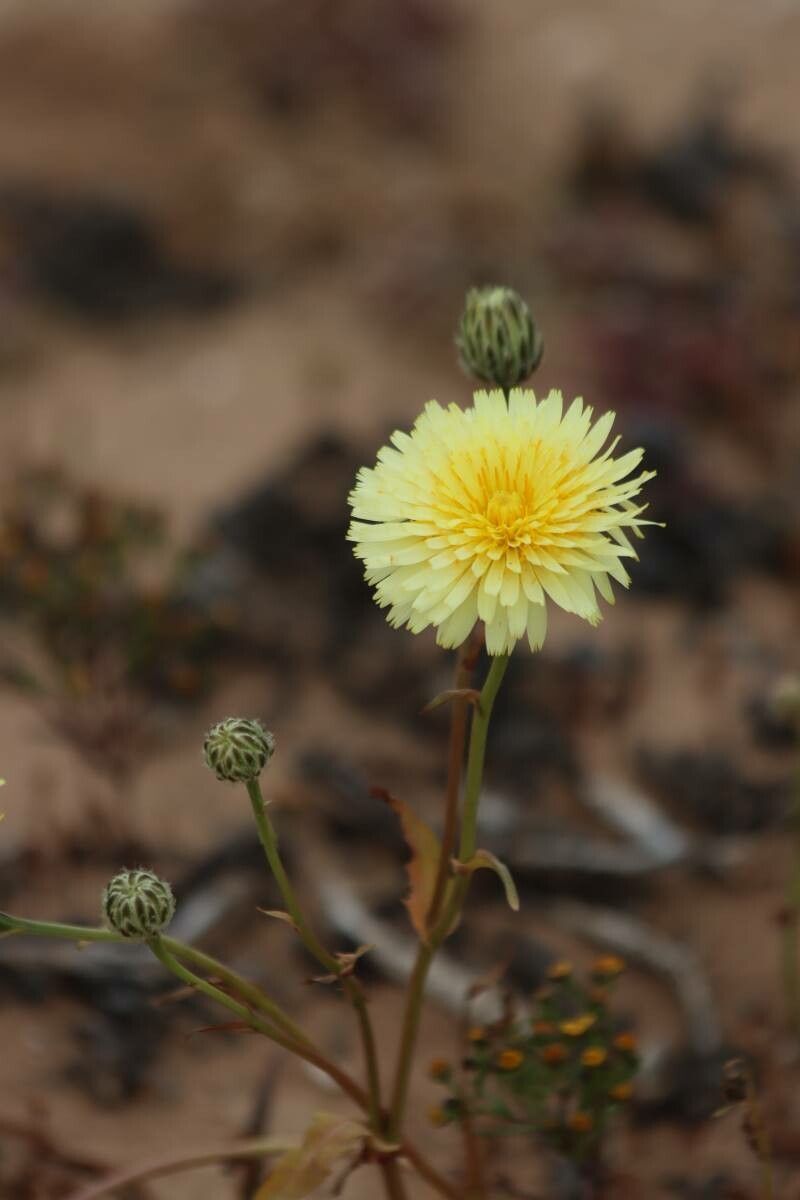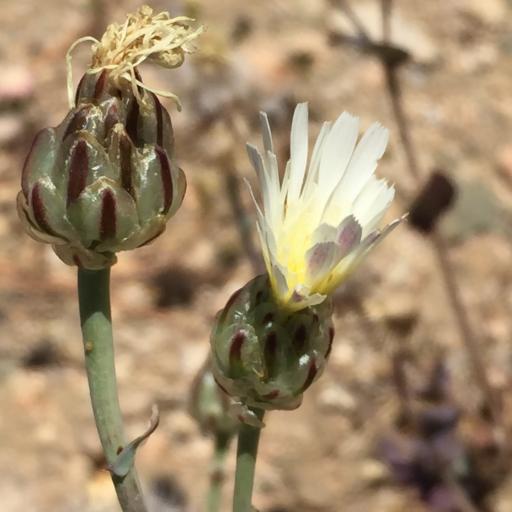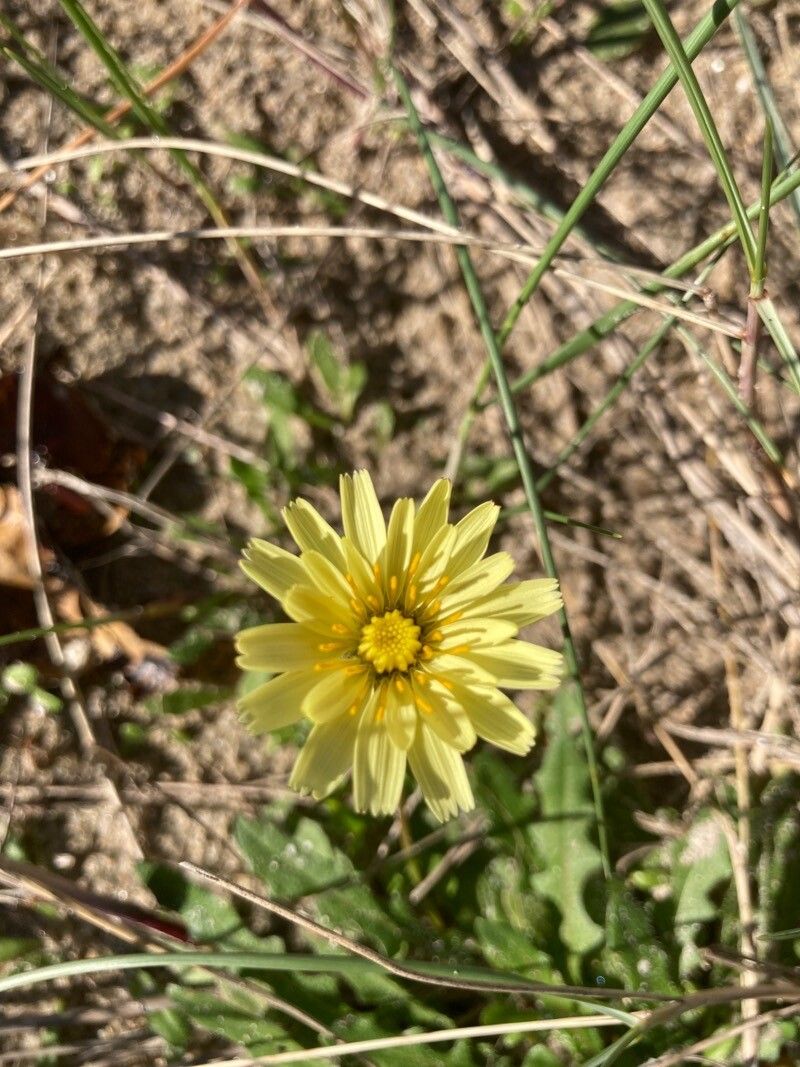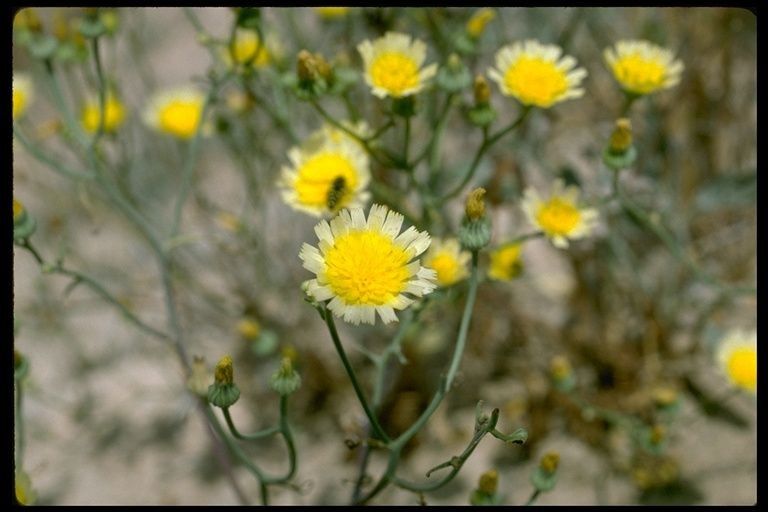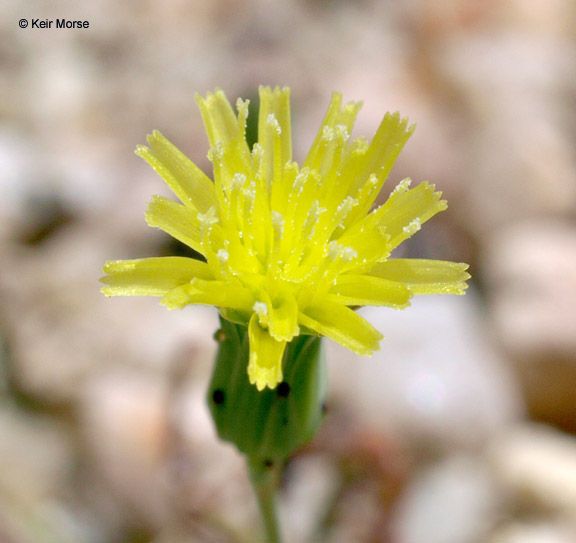
Malacothrix clevelandii is a species of flowering plant in the family Asteraceae known by the common name Cleveland's desertdandelion. It is native to parts of the southwestern United States and Baja California, where it can be found most often in chaparral, including cleared and disturbed areas such as slopes recently burned by wildfire. The plant is also found in southern South America where it is an introduced species. It is an annual herb producing a flowering stem up to about 35 centimeters in maximum height. The toothed leaves are largest at the base of the plant, and reduced farther up. The inflorescence is an array of flower heads each bearing rings of pale yellow ray florets roughly half a centimeter long. Its specific epithet clevelandii honors 19th-century San Diego-based plant collector and lawyer Daniel Cleveland.
Cleveland's desertdandelion is fairly disease-resistant and generally not prone to problems. However, it can be vulnerable to pests and diseases present in its environment. When such infections occur, they are usually mild. Regarding care, this plant has moderate maintenance needs. It should be pruned regularly to keep a neat appearance and support healthy growth. Fertilizing can also encourage flowering. Cleveland's desertdandelion is appropriate for anyone with an outdoor area, like a garden or patio, and does not require extensive care experience. When grown indoors it may need more attentive care.
How to keep Malacothrix Clevelandii.
Light
Cleveland's desertdandelion comes from sunny, open habitats and does best in full sun. While it can tolerate some partial shade, it prefers direct sunlight for optimal growth. This plant, which may be annual or biennial, is known for its sun-loving habit.
Water
Cleveland's desert dandelion is well adapted to arid conditions, requiring minimal moisture and showing impressive drought tolerance. For optimal growth, it should be watered twice a week, mimicking its natural dry habitat. This plant thrives in open spaces and blooms persistently even with limited rainfall, illustrating the connection between its flowering cycles and water availability.
Temperature
Cleveland's desertdandelion can tolerate a wide range of temperatures, but its range may still be restricted by different combinations of moisture and heat. It does best in warm summer conditions with enough rainfall or watering. Prolonged periods of cloudy, rainy weather or extended high temperatures make the plant more likely to die. In winter, protecting it from the cold can increase its survival rate.
Fertilizer
When most of Cleveland's desertdandelion blooms have fully opened, resume fertilizing. Around the time the blooms are at peak output, begin fertilizing again every three to four weeks, weather permitting. Then, once Cleveland's desertdandelion starts producing fewer new blooms, stop fertilizing; there's no need to fertilize when the plant can no longer produce additional blooms.
Pruning
Cleveland's desert dandelion showcases vibrant yellow flowers and benefits from pruning between early and late spring. To promote bushier growth, lightly trim away spent blooms and leggy stems. Removing dead foliage is also important to enhance air circulation and reduce the risk of disease. Be sure to use sharp, clean tools to prevent injury and avoid spreading diseases.
Botanical profile.
- Plant Type
- Herb
- Life Cycle
- Annual
- Genus
- Malacothrix
- Family
- Asteraceae
- Hardiness Zone
- 8-10
- Mature Height
- 10 cm to 40 cm
- Mature Spread
- 10 cm to 30 cm
- Leaf Color
- Green
- Leaf Type
- Semi-evergreen
- Flower Color
- Yellow
- Flower Size
- 1.02 cm to 2.03 cm
- Bloom Time
- Mid spring, Late spring, Early summer
- Planting Time
- Spring, Summer
- Harvest Time
- Summer
- Native Area
- Mexico