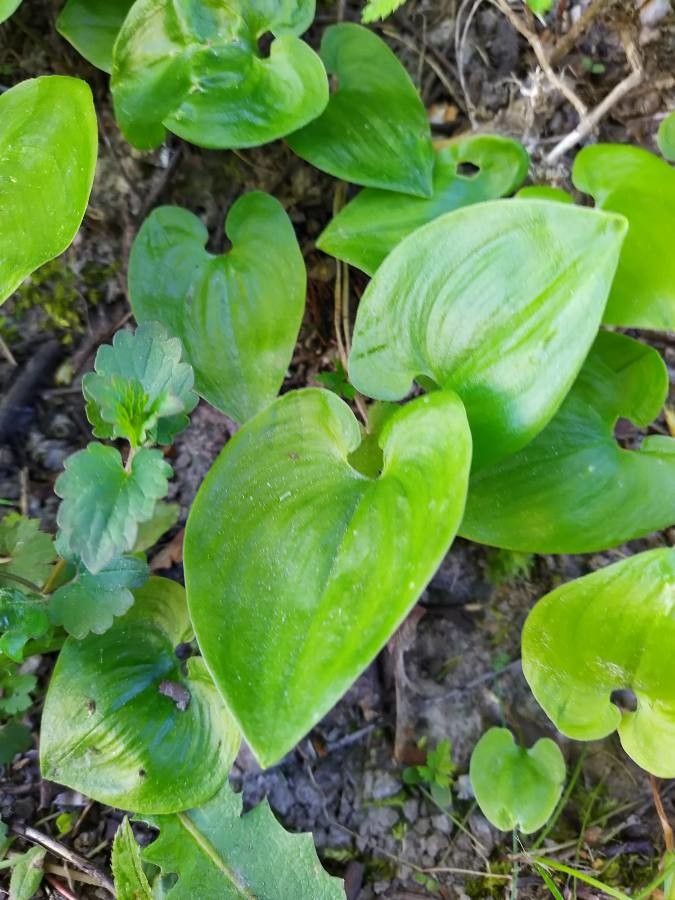
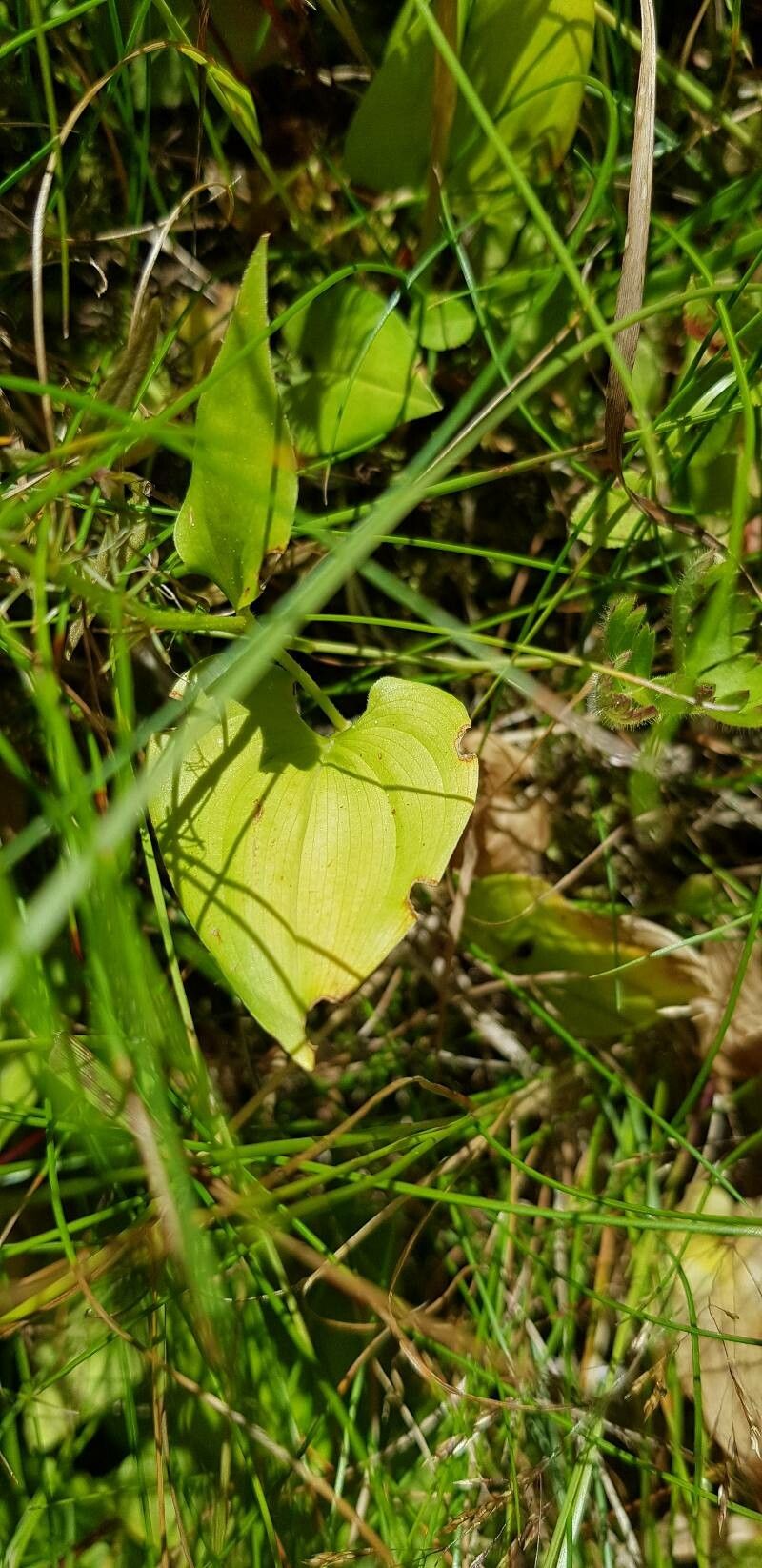
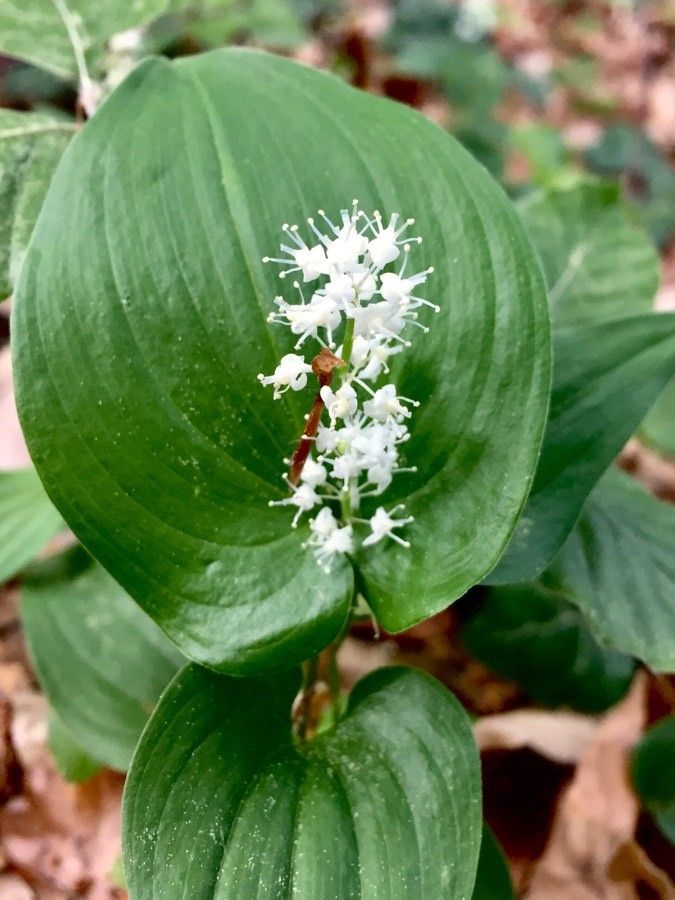
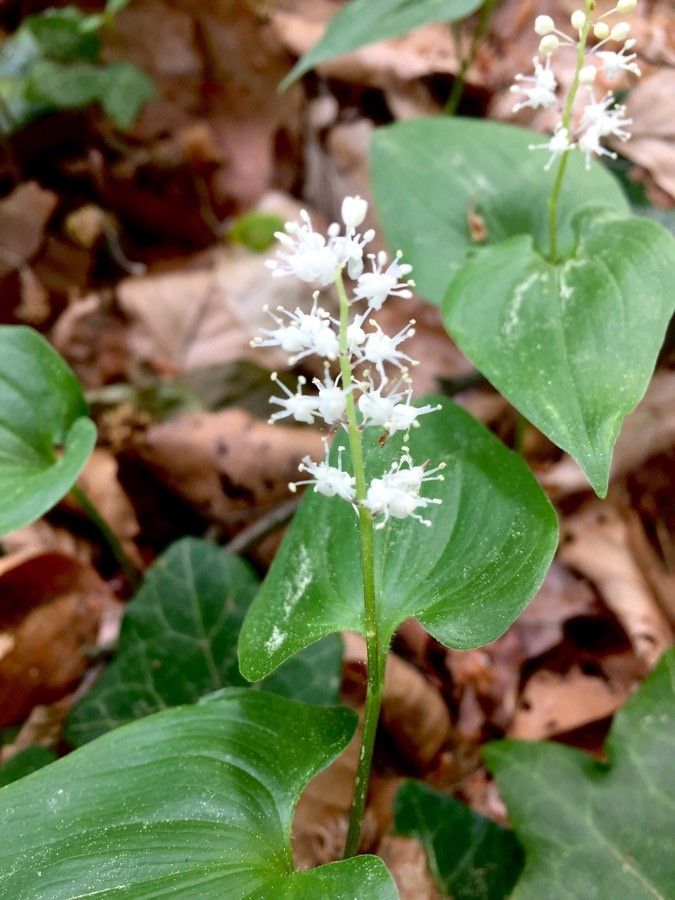
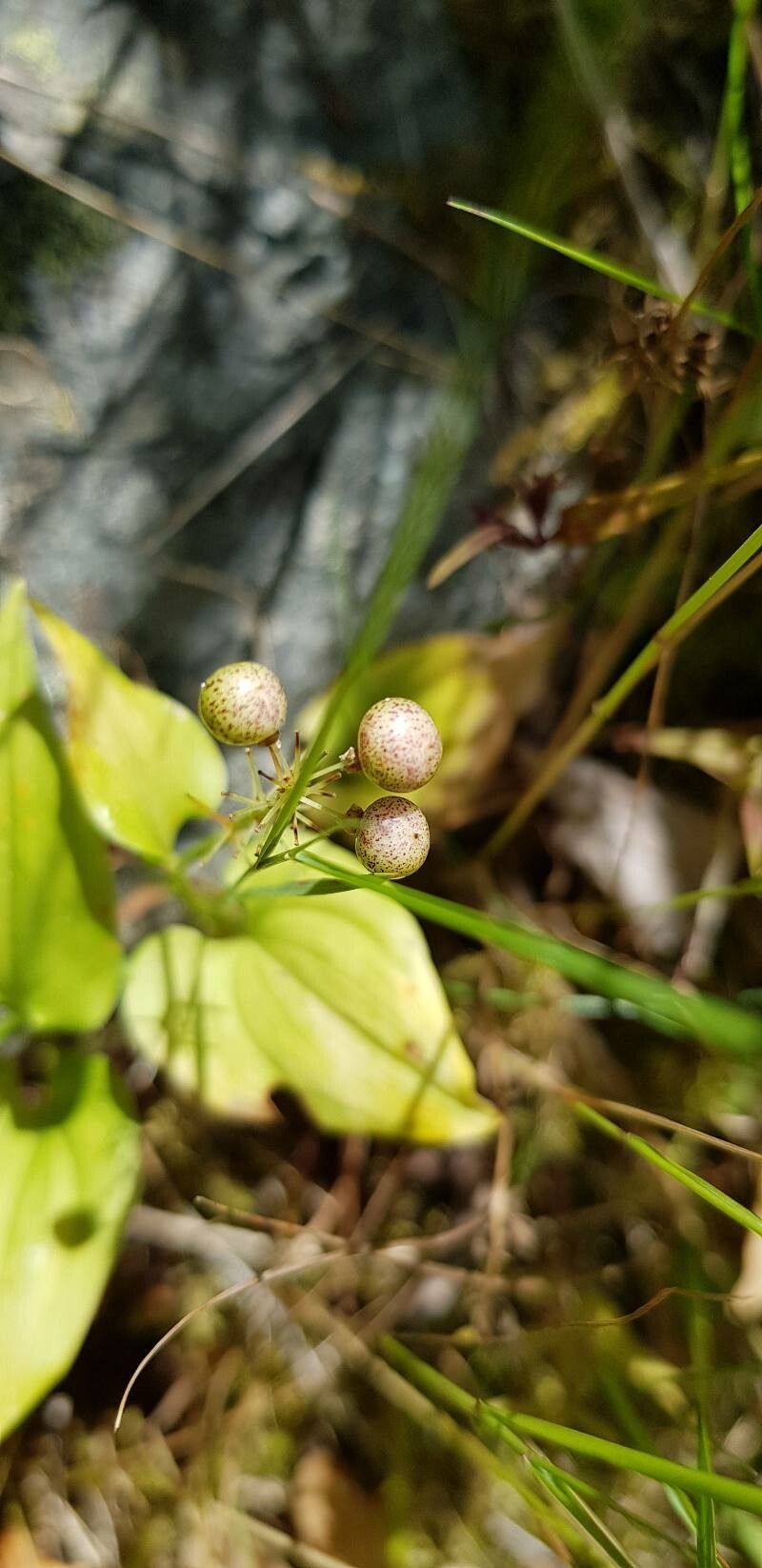
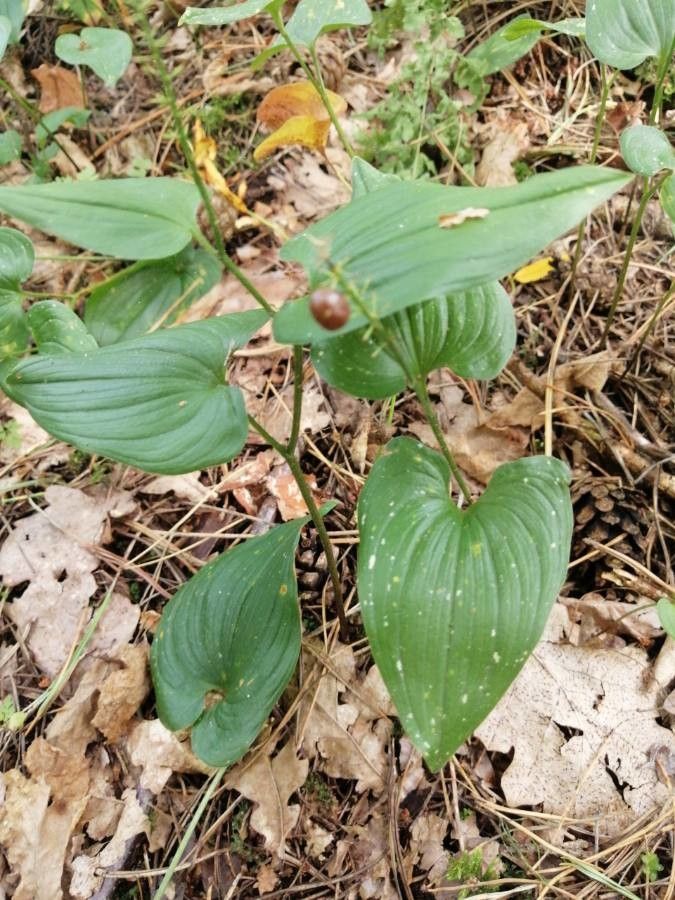
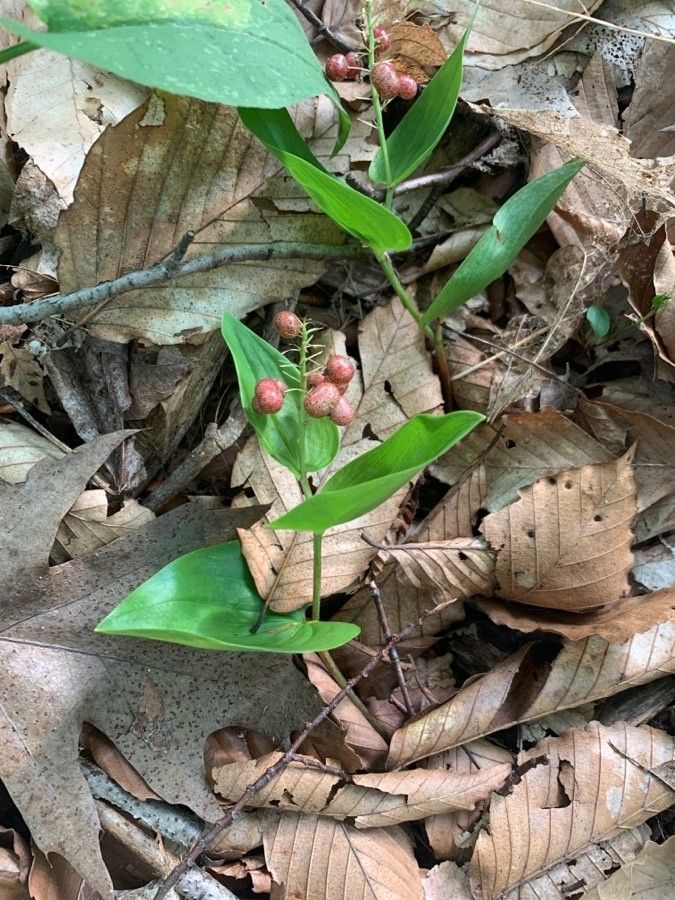
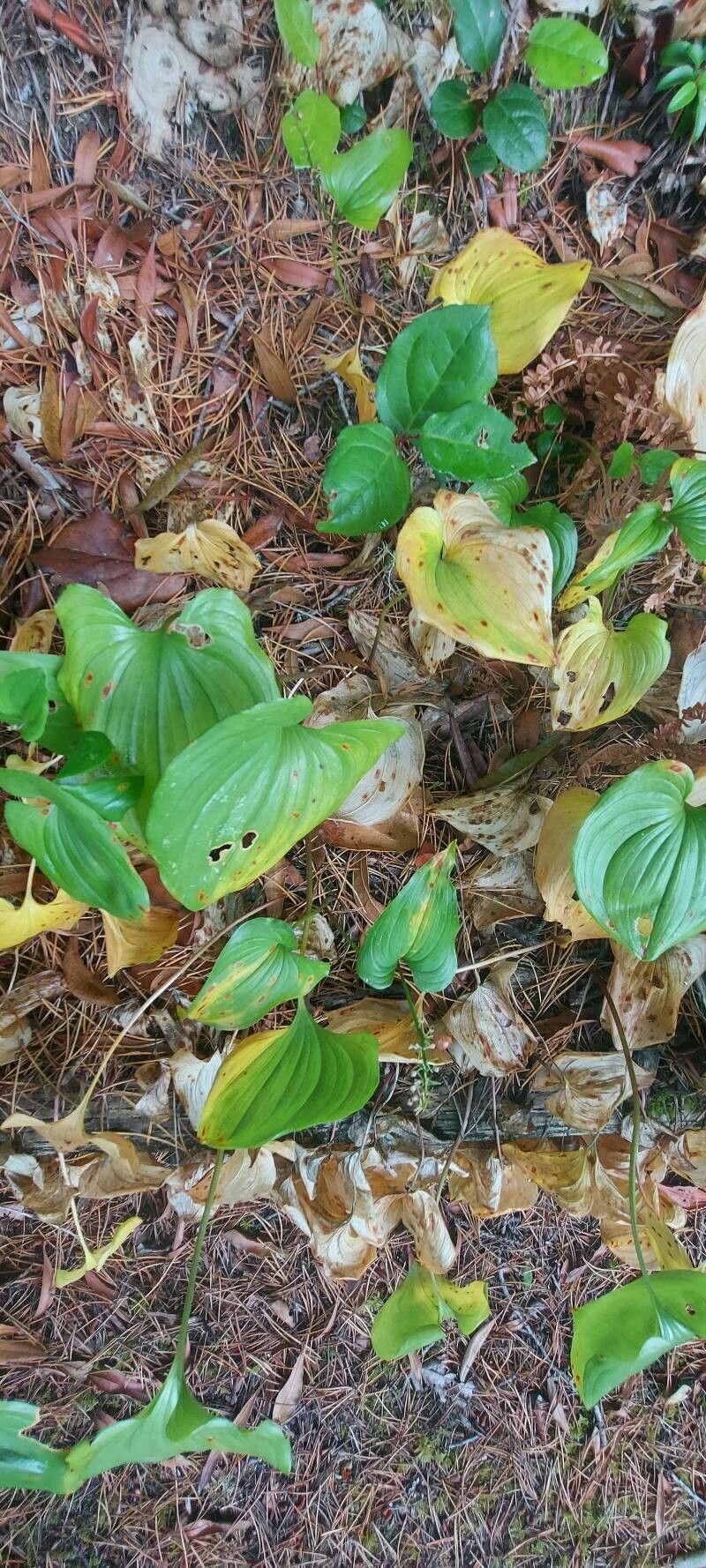
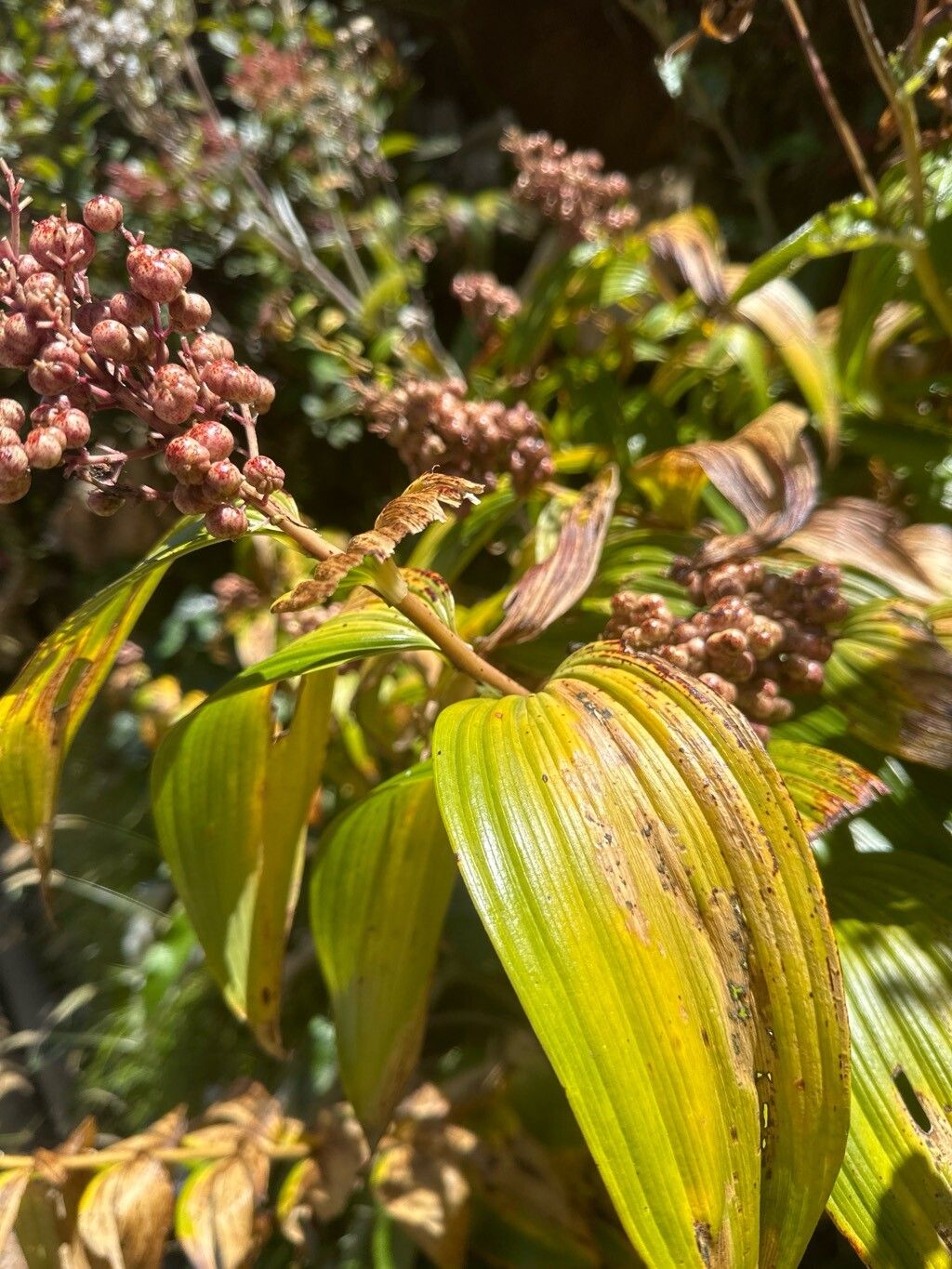
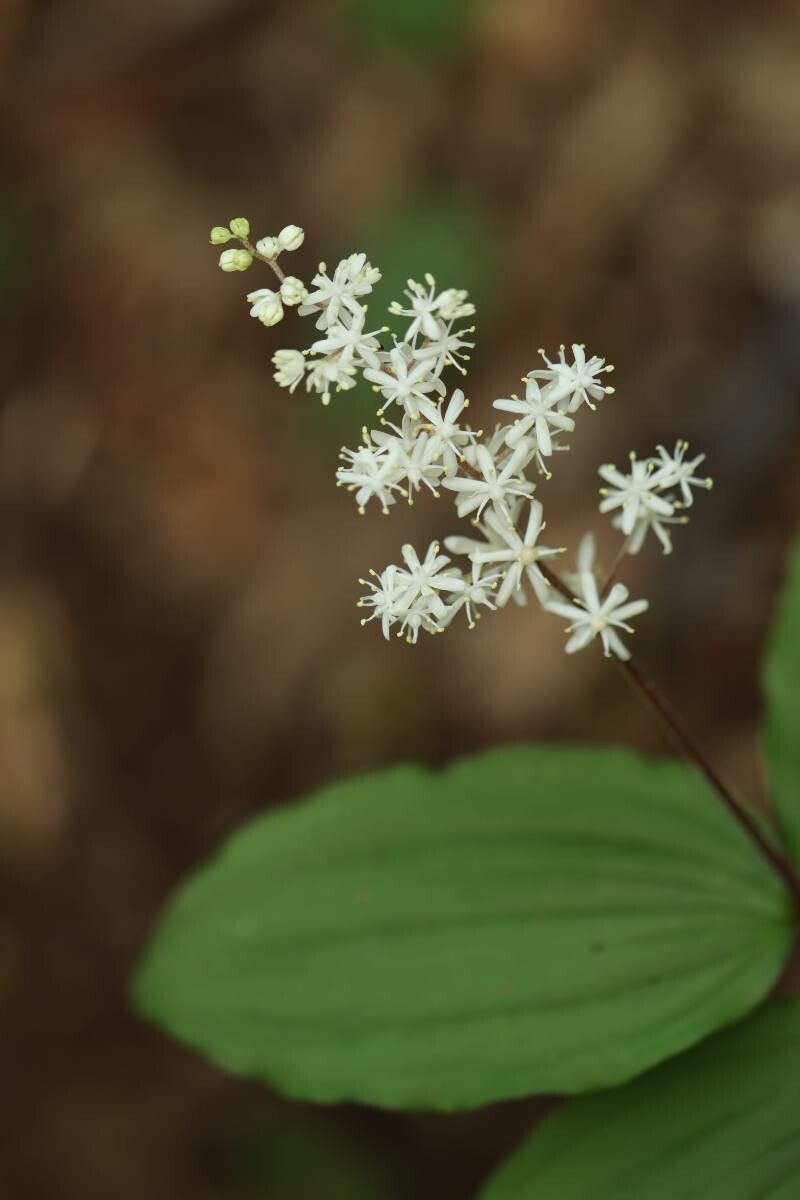
Maianthemum bifolium (false lily of the valley or May lily) is often a localized common rhizomatous flowering plant, native from western Europe (including Britain) east to Siberia, China and Japan.Non-flowering stems usually have only one waxy leaf, but on flowering plants there is one basal leaf that withers away before flowering, and two stem leaves produced alternately up the 10–20 cm tall stems, which are topped off with many star-shaped white flowers. The leaves are heart to triangular, 3–8 cm long and 2–5 cm broad, with small fine hairs on the veins. The flowers have four tepals, four stamens and have two chambers in the pistil; flowering is in mid spring to early summer. This species, along with Maianthemum canadense and Maianthemum dilatatum are the only four-tepaled species. One to two seeds are produced in round berries that are speckled red when immature and redden with age. This species is found in the wild growing in open forests and on damp soils in grassy ditches and thickets.
May lily has strong resistance to disease and, in general, is not highly susceptible to illnesses. Still, it can be vulnerable to pests and diseases present in its environment. Such infections tend to be mild. Care-wise, this plant needs a moderate level of attention. It should be trimmed regularly to preserve its appearance and support healthy growth. Applying fertilizer can also encourage blooming. May lily is appropriate for anyone who has outdoor space, like a garden or patio, and does not need extensive experience in plant care. It may demand increased attention when cultivated indoors.
How to keep Maianthemum Bifolium.
Light
The May lily does best in spots where sunlight is filtered through leaves for most of the day, and it can still grow in areas where a leaf canopy greatly reduces light. Too much intense light can damage it, while too little light can hinder its growth.
Water
The May lily flourishes in consistently moist and evenly watered soil, similar to the conditions found in its native forest understory. To support its growth, especially indoors where light is moderate, it is important to water it weekly and mist it regularly. These practices help maintain the proper hydration and humidity levels it needs.
Temperature
May lily is a robust plant, adapted to climates from 32 to 89.6 °F (0 to 32 ℃). Its hardiness enables it to prosper across different seasons, though it favors milder, temperate temperatures for optimal growth.
Fertilizer
For May lily, the main time to apply fertilizer is early spring, when the flowers are developing. The correct fertilizer promotes better blooms and helps May lily produce attractive flowers. Fertilizing in early spring ensures strong flowering during the season and supplies energy for dormant growth phases.
Pruning
The May lily features small, heart-shaped leaves and delicate white flowers. To maintain its health and appearance, prune it in early spring. This will help remove any damaged foliage and encourage compact growth. Be sure to use clean tools to prevent infections. Regular pruning not only reduces overcrowding but also enhances airflow, promotes blooming, and keeps the plant looking tidy.
Pot & Repot
For the May lily to thrive in pots, it needs excellent drainage.
Botanical profile.
- Plant Type
- Herb
- Life Cycle
- Perennial
- Genus
- Maianthemum
- Family
- Asparagaceae
- Hardiness Zone
- 3-7
- Mature Height
- 15 cm to 23 cm
- Mature Spread
- 91 cm
- Leaf Color
- Green
- Leaf Type
- Deciduous
- Flower Color
- White
- Flower Size
- 0.25 cm to 0.51 cm
- Bloom Time
- Mid spring, Late spring
- Planting Time
- Spring, Summer, Autumn
- Harvest Time
- Mid summer, Late summer
- Native Area
- Sweden, Austria, Slovakia, Montenegro, Slovenia, Croatia, Belarus, Russia, Germany, Estonia, Koppen, South Korea, Latvia, Romania, Belgium, Netherlands, France, Czech Republic, Poland, Ukraine, Serbia, China, Lithuania, Norway, Italy, Kazakhstan, Spain, Switzerland, Denmark, Japan, Mongolia, Finland, United Kingdom, Hungary
Other names.
Reader questions.
How should I water my May lily plant?
When watering the May lily, it is recommended to use filtered water at room temperature. Tap water may have harmful particles, so filtered water is better. The May lily prefers warm water as cold water may shock it. Avoid overhead watering as it can cause issues with the foliage. Instead, thoroughly soak the soil with filtered room temperature water. This helps moisten the roots and aids in the spread and nutrient absorption.
Why should I put fertilizer on my May lily?
Fertilization is essential for keeping your May lily healthy and ensuring that its leaves both look great and function properly. By fertilizing your May lily, you can maintain consistent leaf color and a healthy texture. Fertilization also benefits the plant's roots by promoting the growth of new roots and preserving existing ones. This helps the May lily not only stay healthy in the present, but also improves its ability to absorb nutrients from the soil in the long run.
What are the sunlight requirements for May lily?
May lily requires varying amounts of sunlight to thrive. Partial sun, consisting of about 3-6 hours of sunlight, is beneficial, whereas full shade allows for less than 3 hours of sunlight. It's important to observe how sunlight moves through your garden to find the perfect balance of light and shade, ensuring your plants are happy.
What are the ideal growing conditions for May Lily?
The May lily thrives in climates with temperatures ranging from 32 to 89.6 °F (0 to 32 °C), making it a hardy plant suited for varying seasons. It prefers milder, temperate temperatures for optimal growth. The plant is highly cold-tolerant and does not need extra frost protection during winter. However, it is recommended to water the plant generously before the first freeze in autumn to keep the soil moist and help prevent drought and water scarcity during winter and early spring.
What do I need to do if I give too much or too little water to my May lily?
Overwatering and underwatering both harm your May lily, but overwatering is more common. When overwatered, the plant's stems and leaves wilt and turn yellow. Overwatering for too long can cause root rot, mold, and mildew, which can kill the plant. Underwatering is less likely, as the May lily can withstand drought. However, when underwatering occurs, the leaves become brittle and brown. It is important to identify signs of overwatering early. Diseases like root rot may become irreversible if not addressed promptly. If you notice early signs, reduce watering immediately and check the soil's drainage. Replace poorly draining soil with a loose, well-draining potting mix. If signs of underwatering are present, increase watering until the signs improve.
When should I fertilize my May lily for the best results?
When you grow your May lily outdoors, it will produce new growth in early spring. This is the cue to start fertilizing for the year. Usually, applying fertilizer once in the spring is enough for the May lily to thrive. However, if you want to maximize its growth, you can fertilize it multiple times during the spring and early summer. In this case, you can feed the May lily approximately every month to a month and a half.
How does May lily grow in different lighting conditions?
May lily thrives in areas where sunlight filters through foliage for most of the day but can also grow well in locations where light is heavily obstructed by leaf canopy. Excessive exposure to intense light may be harmful, and insufficient light might impede its growth. For indoor plants lacking in natural sunlight, using artificial lighting, such as LED lights, can promote faster and healthier growth. It's recommended to provide full sun plants with 30-50W/sq ft of artificial light, partial sun plants with 20-30W/sq ft, and full shade plants with 10-20W/sq ft. The light source should be placed 12-36 inches above the plant, mimicking natural sunlight for about 8-12 hours per day.
How does low temperature affect May Lily and what are the solutions?
May lily is extremely cold-tolerant, with winter temperatures ideally maintained above -35°C. If temperatures fall below this threshold, there might not be noticeable changes during winter, but a decrease in sprouting or no sprouting at all might occur in spring. To address this, any parts that have failed to sprout by spring should be removed.
How many times a week should I give water to my May lily?
If your May lily is in a pot, the best way to check if it needs water is to stick your finger into the soil. If the top two to three inches of soil are dry, it's time to water it. If your May lily is planted outside, you can use the same method. When the top few inches of soil are dry, it's time to water. Usually, during spring and early fall, watering once a week is enough. In extremely hot weather, you may need to water twice or more per week. However, mature May lilies are able to handle drought well.
When is it not a good idea to fertilize my May lily plant?
During late fall and winter, your May lily will go dormant and stop growing. It's best to avoid fertilizing it during this time. If you choose to fertilize in spring and summer, gradually reduce the amount as summer nears, because the May lily's growth rate will slow down. In general, avoid fertilizing when the weather is extremely hot or the soil is very dry, as this can stress the May lily and cause it to die sooner.
What are the symptoms of light deficiency in May lily?
When grown indoors with insufficient light, May lily may exhibit symptoms such as smaller new leaves, leggy or sparse growth, faster leaf drop, slower or no new growth, lighter-colored new leaves, chlorosis, sunscald, leaf curling, wilting, and leaf scorching. These symptoms indicate that the plant is struggling with the available light conditions.
What impact does high temperature have on May Lily and how can it be mitigated?
May lily does not tolerate high temperatures well. When the temperature exceeds 32°C, the plant's growth halts, and it becomes more susceptible to rot. To mitigate damage from high temperatures, trim away the sunburned and dried-up parts of the plant. Moving the plant to a shaded location or using a shade cloth can protect it from the midday and afternoon sun. Ensuring the soil remains moist by watering the plant in the morning and evening can also help.