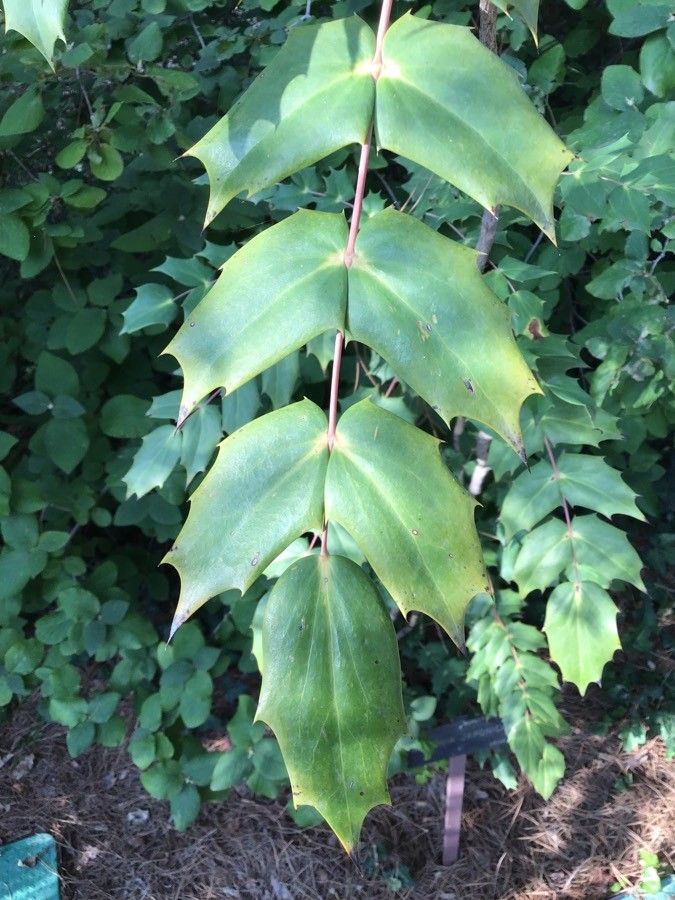
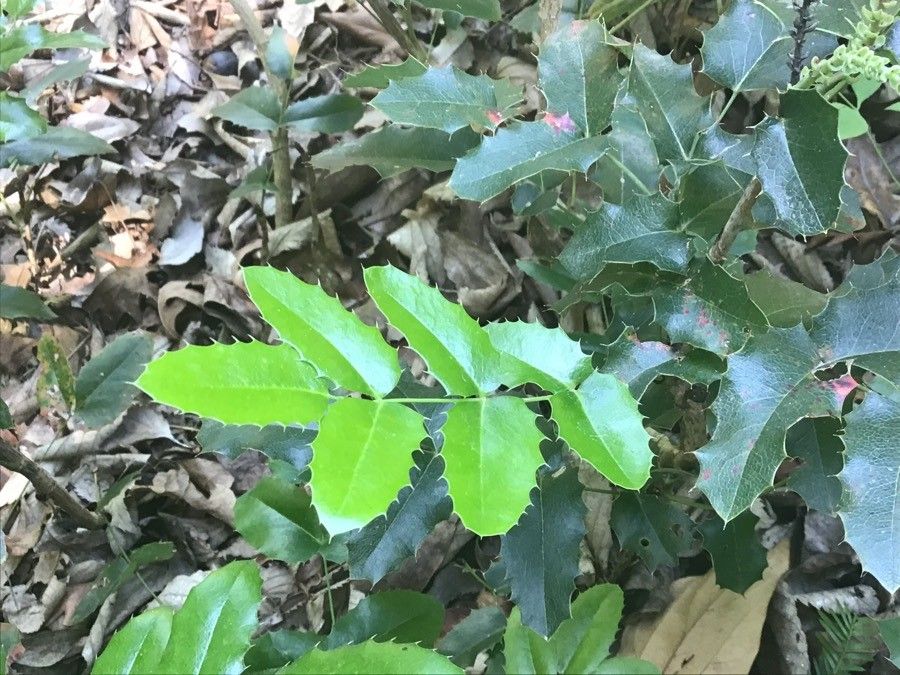
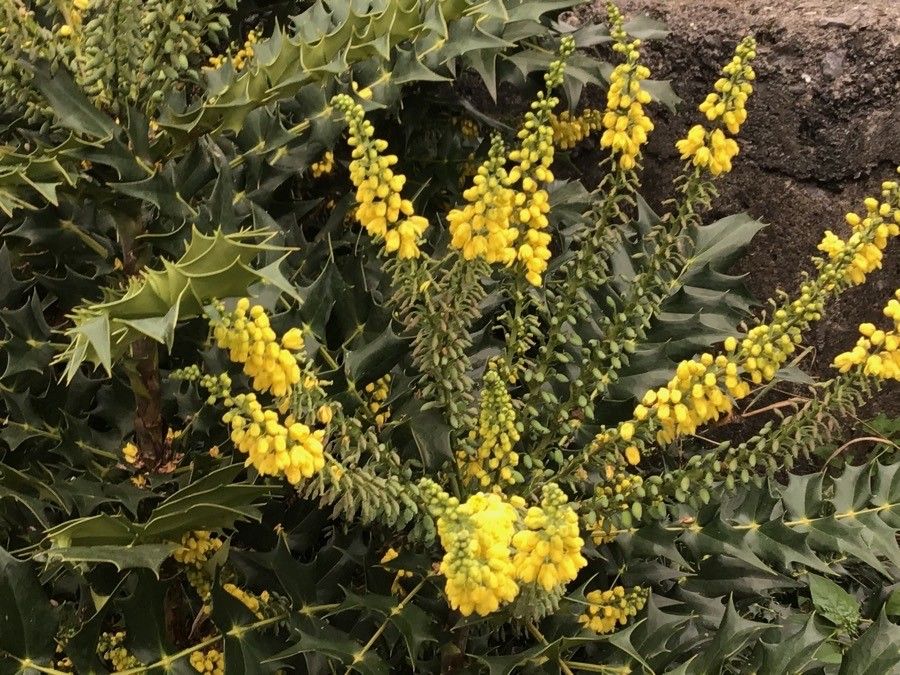
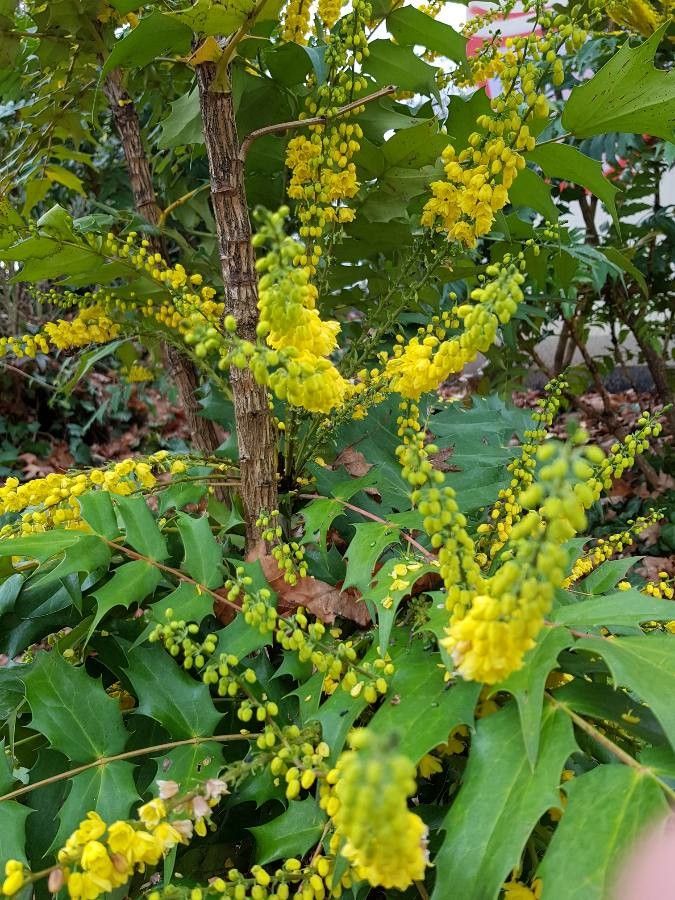
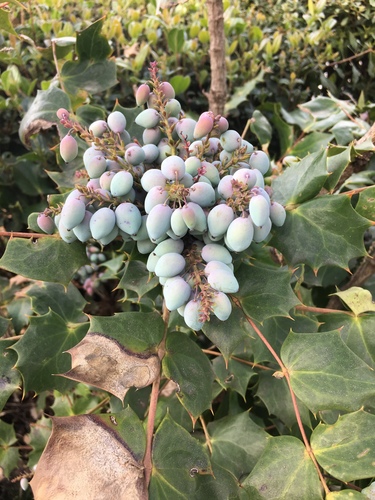
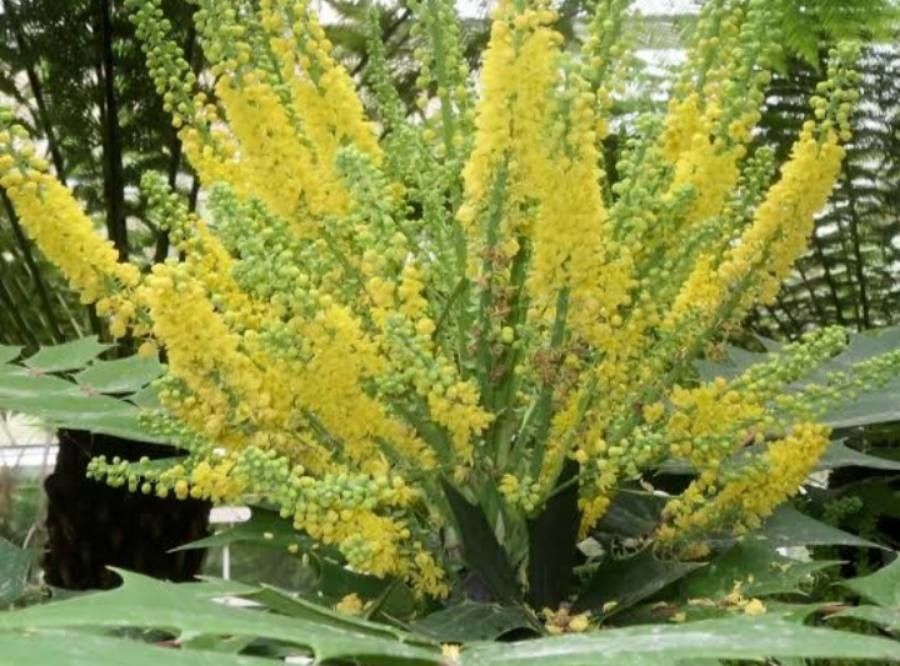
Mahonia japonica, commonly known as Japanese mahonia, is an evergreen shrub that belongs to the Berberidaceae family. Native to Japan and China, it has gained popularity as an ornamental plant worldwide due to its attractive foliage and flowers. The plant typically reaches up to 2 meters in height and spreads about 1.5 meters wide.
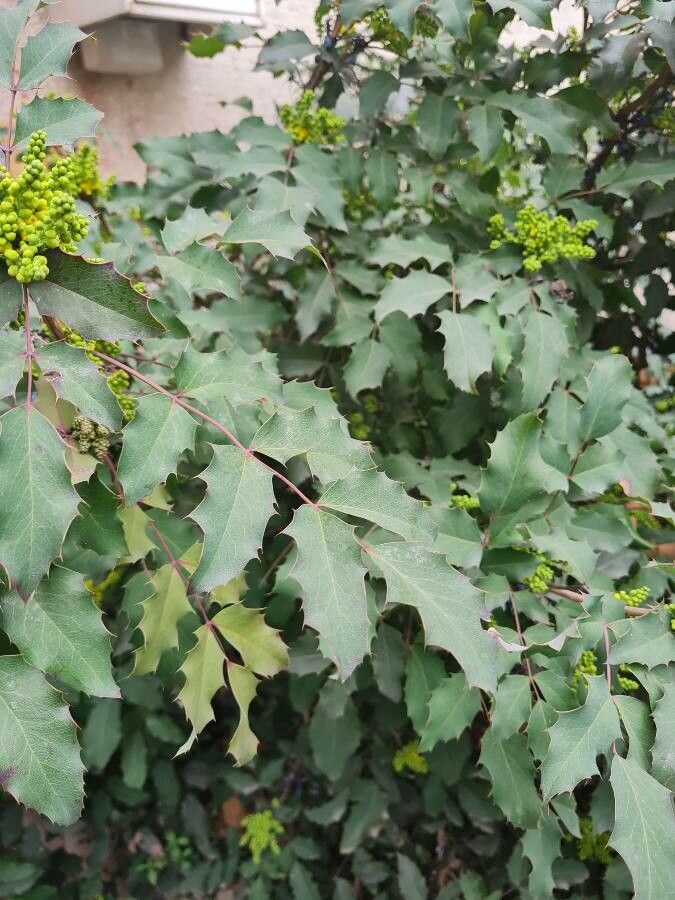
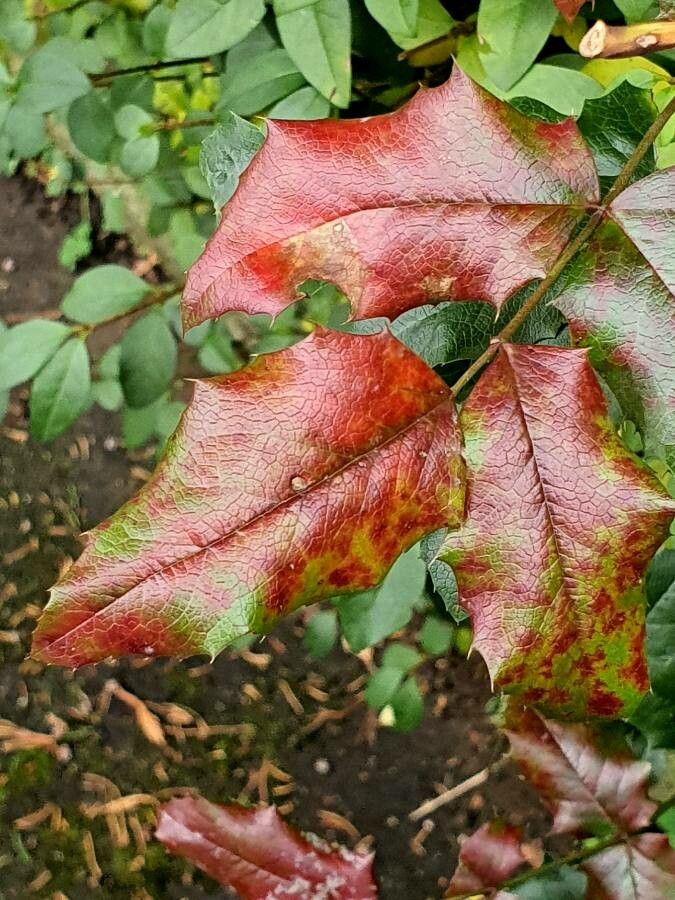
The leaves of Mahonia japonica are glossy green with spiny edges and are arranged in rosettes at the end of each stem. Its fragrant flowers appear in clusters from late autumn through early winter, showcasing bright yellow blooms that attract bees and other pollinators.
Mahonia japonica prefers well-drained soil rich in organic matter but can tolerate various soil types, provided they are not waterlogged or excessively dry. While it thrives best in partial shade or full sun, it can also adapt to full shade.
Once established, the plant requires minimal maintenance, though regular pruning helps to maintain its shape and size. Mahonia japonica is generally pest-resistant but may be susceptible to fungal diseases in humid conditions.
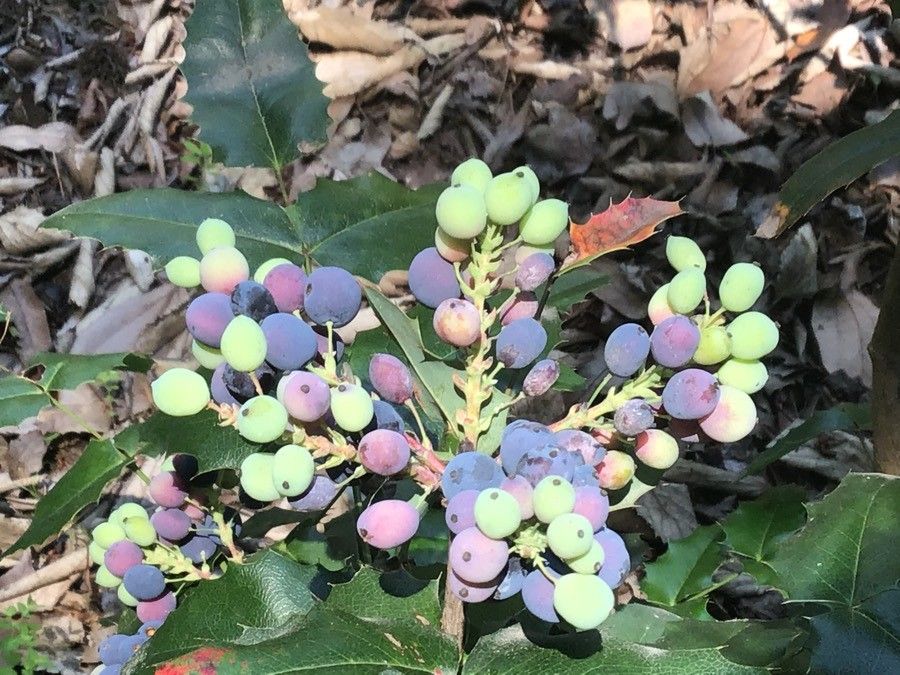
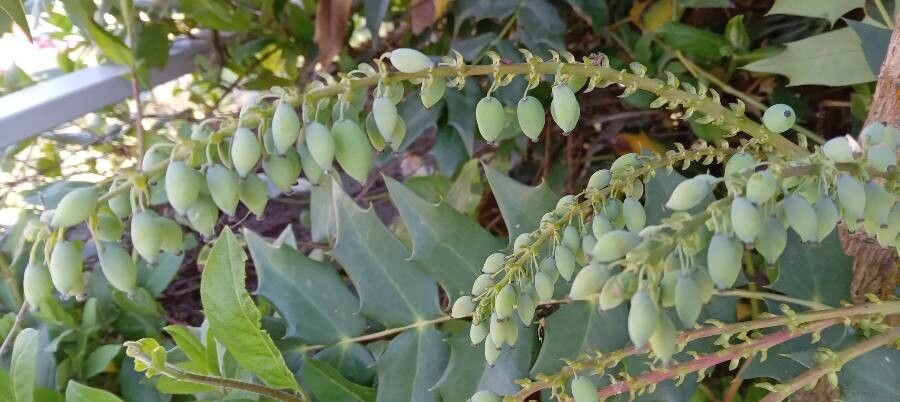
Overall, Mahonia japonica is an excellent choice for gardeners seeking an attractive evergreen shrub with year-round interest. Its glossy foliage, fragrant flowers, and winter berries, which attract birds, make it a valuable addition to any garden.
Japanese mahonia is disease-resistant and generally not susceptible to illnesses. As for care, this species is fairly low-maintenance. When grown outdoors it needs only light watering, and larger specimens typically do not require pruning. Smaller plants, however, should be pruned after they finish blooming. Japanese mahoniat is suitable for anyone with an outdoor area, such as a garden or deck, and does not need extensive care experience.
How to keep Mahonia Japonica.
Light
Japanese mahonia grows best in sites that receive a steady, moderate amount of sunlight during the day. Too much light can cause leaf scorch, while too little light often leads to weak growth. In its native habitat, this plant experiences consistently moderate sun.
Temperature
Japanese mahonia naturally occurs in areas where temperatures range from 59 to 89.6 °F (15 to 32 ℃). These temperature preferences mirror the plant's native habitat, indicating it should be maintained within that range to thrive. In colder or hotter seasons, consider adjusting the temperature to accommodate its needs.
Fertilizer
Timing is essential when fertilizing Japanese mahonia. Apply fertilizer in early spring and repeat monthly until early summer. Fertilizer promotes lovely blooms and supplies energy during both dormant and active growth periods.
Botanical profile.
- Plant Type
- Shrub
- Life Cycle
- Perennial
- Genus
- Mahonia
- Family
- Berberidaceae
- Hardiness Zone
- 7
- Mature Height
- 1.52 m to 2.13 m
- Mature Spread
- 1.22 m
- Leaf Color
- Green, Blue
- Leaf Type
- Semi-evergreen
- Flower Color
- Yellow
- Flower Size
- 0.51 cm to 1.02 cm
- Bloom Time
- Mid spring, Late spring
- Planting Time
- Spring, Summer
- Harvest Time
- Late summer, Early fall, Mid fall
Other names.