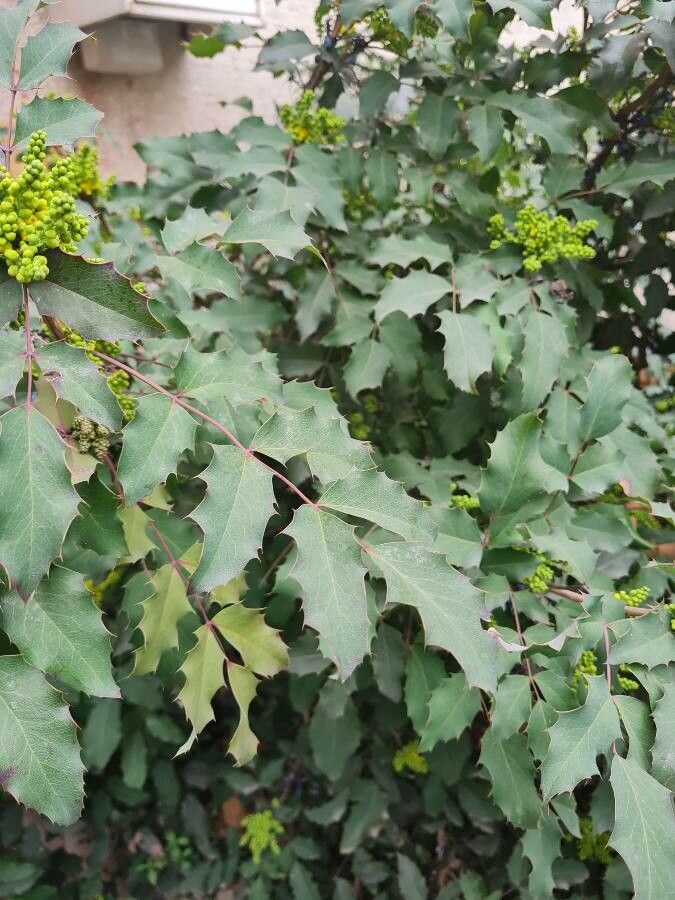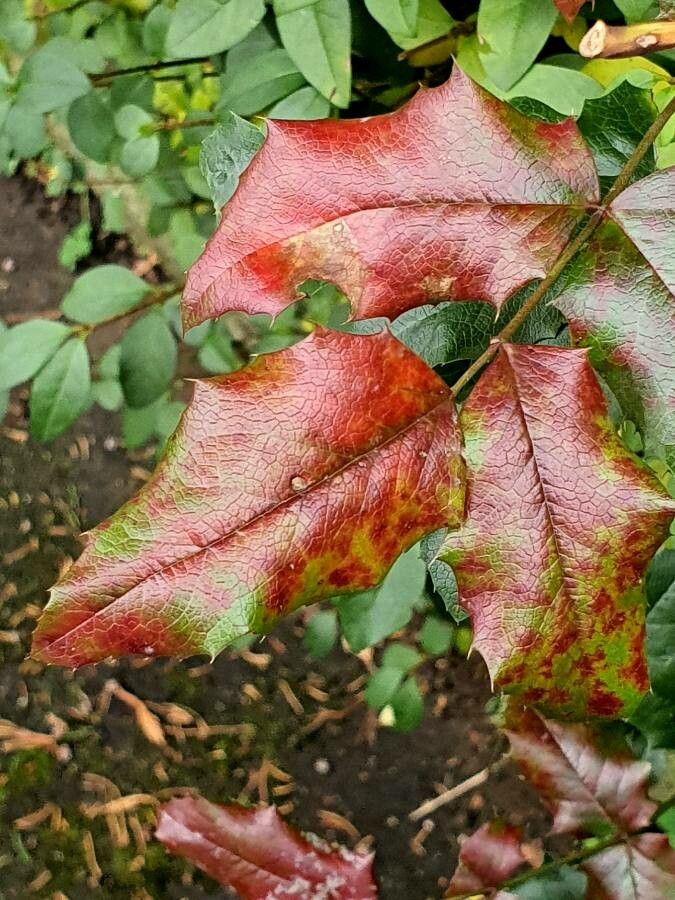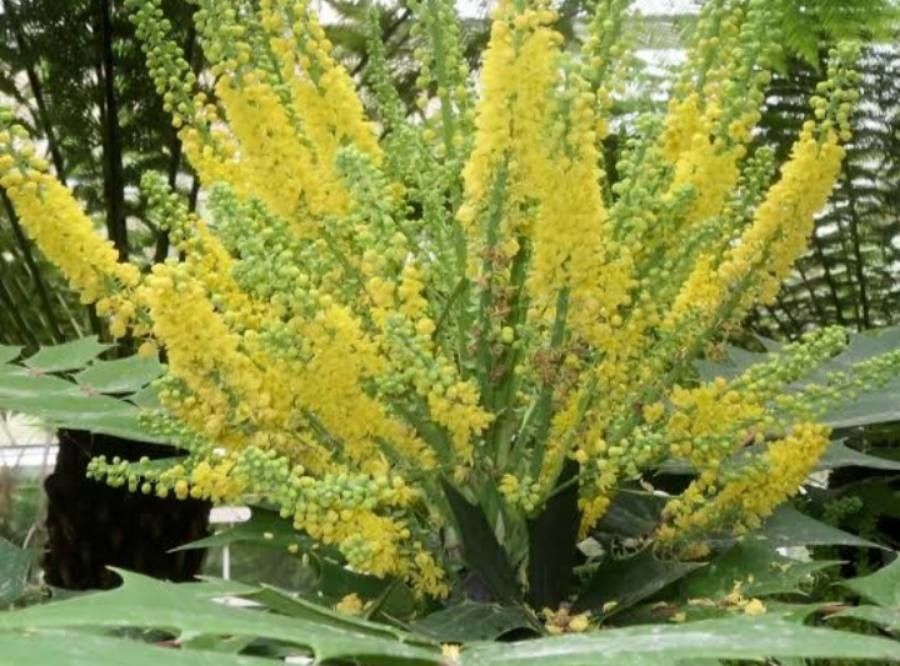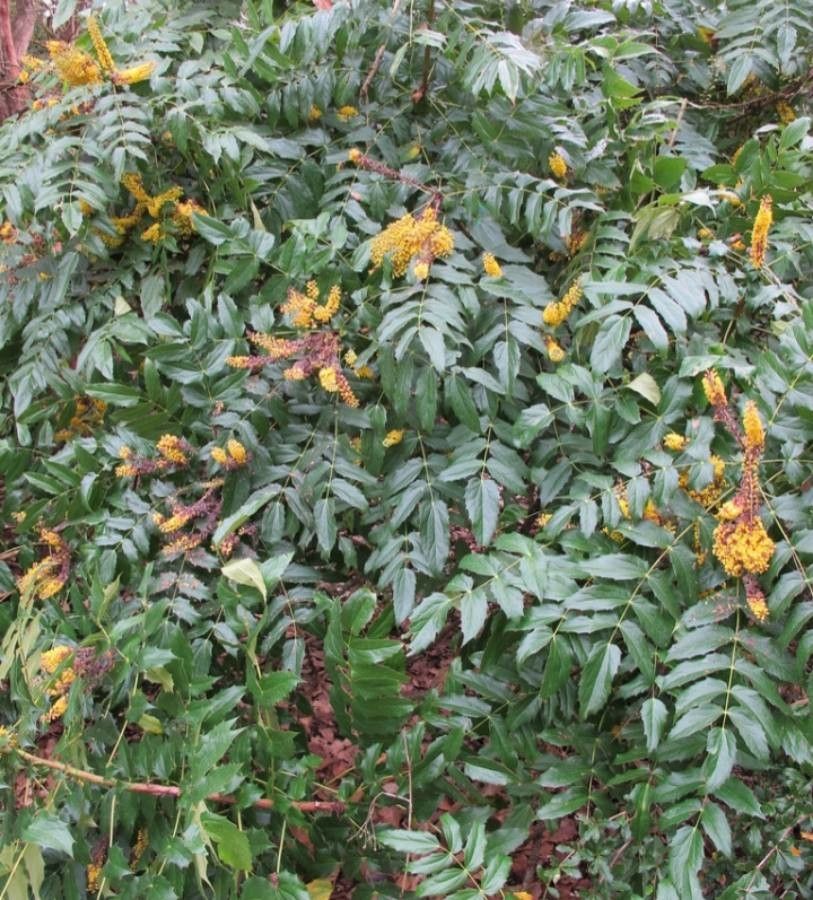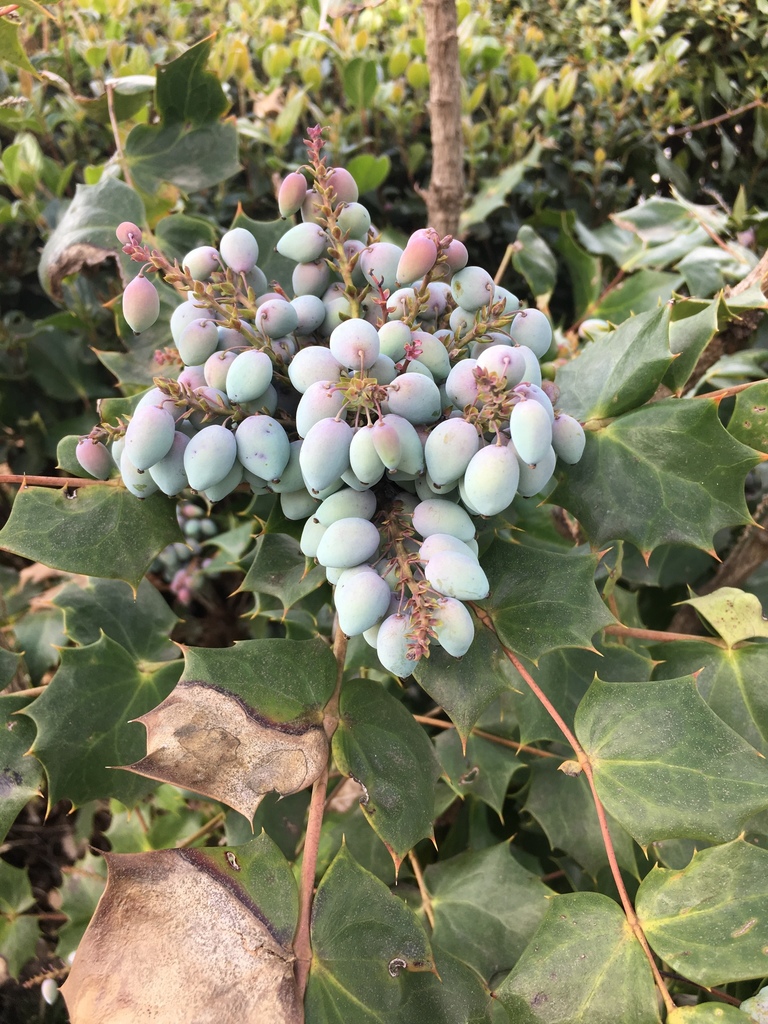
Mahonia bealei, commonly known as Beale's barberry or leatherleaf mahonia, is a species of flowering plant in the family Berberidaceae. Native to China and Taiwan, it has been introduced to North America as an ornamental plant.
This plant typically grows up to 6 feet tall and 4 feet wide, featuring a dense, upright habit. Its large, glossy green leaves are leathery in texture and spiny along the edges. In late fall or early winter, Mahonia bealei produces clusters of bright yellow flowers, which are followed by blue-black berries.
Mahonia bealei prefers partial shade but can tolerate full sun if provided with sufficient moisture. It is adaptable to a wide range of soil types but thrives in well-draining soil enriched with organic matter.
The plant is commonly used in landscaping for its attractive foliage and the winter interest provided by its flowers and berries. Additionally, the berries are appealing to birds.
In traditional Chinese medicine, Mahonia bealei has been used to treat various ailments such as fever, diarrhea, inflammation, and infections due to its antibacterial properties.
Overall, Mahonia bealei is an attractive ornamental shrub that offers year-round interest and potential medicinal benefits, drawing on its use in traditional medicine practices.
Leatherleaf mahonia is resistant to disease and generally not susceptible to illnesses. Regarding care, this plant is fairly low-maintenance. When grown outdoors it needs little watering, and larger specimens typically do not require pruning. However, smaller plants should be trimmed after they finish flowering. Leatherleaf mahoniat is suitable for anyone with an outdoor area, such as a garden or deck, and does not demand much gardening experience.
How to keep Mahonia Bealei.
Light
Leatherleaf mahonia favors sites where it can get moderate sunlight for a few hours daily and adapts to exposures from continuous sunlight to almost complete shade. In its native forest settings it prospered under the dappled light of the canopy. Too much sun can scorch the leaves, while too little can limit growth and lessen color vibrancy.
Temperature
Leatherleaf mahonia's native growth environment is a temperate climate, with a moderate temperature range of 15 to 35 ℃ (59 to 95 ℉). The plant prefers somewhat cooler conditions in winter and warmer conditions in summer. To accommodate seasonal changes, it is advisable to place the plant in a well-ventilated location during hot summer months and in a sheltered spot during winter months when frost is likely.
Fertilizer
Fertilize your Leatherleaf mahonia in early spring to encourage healthy growth. Regular feeding improves overall health, producing vigorous growth, greater resilience to harsh conditions, and enhanced resistance to diseases and pests. Keep to a specific fertilization schedule for your Leatherleaf mahonia to maintain vibrant foliage with deep color and a lush look.
Pot & Repot
When transferring a Leatherleaf mahonia to a new container, select a pot that is 1-2 inches larger (2.5–5.1 cm) with ample drainage. Use a well-draining potting mix. Repot in spring or fall, making sure the root ball sits slightly below the rim of the flower pot. Water thoroughly after repotting and place the plant in a warm spot with indirect sunlight.
Botanical profile.
- Plant Type
- Shrub
- Life Cycle
- Perennial
- Genus
- Mahonia
- Family
- Berberidaceae
- Hardiness Zone
- 8-9
- Mature Height
- 0.49 m to 3.96 m
- Mature Spread
- 0.91 m to 2.44 m
- Leaf Color
- Green, Blue, Bronze
- Leaf Type
- Evergreen
- Flower Color
- Yellow
- Flower Size
- 7.62 cm to 15.24 cm
- Bloom Time
- Early spring, Mid spring
- Planting Time
- Spring, Autumn
- Harvest Time
- Late spring, Early summer, Mid summer