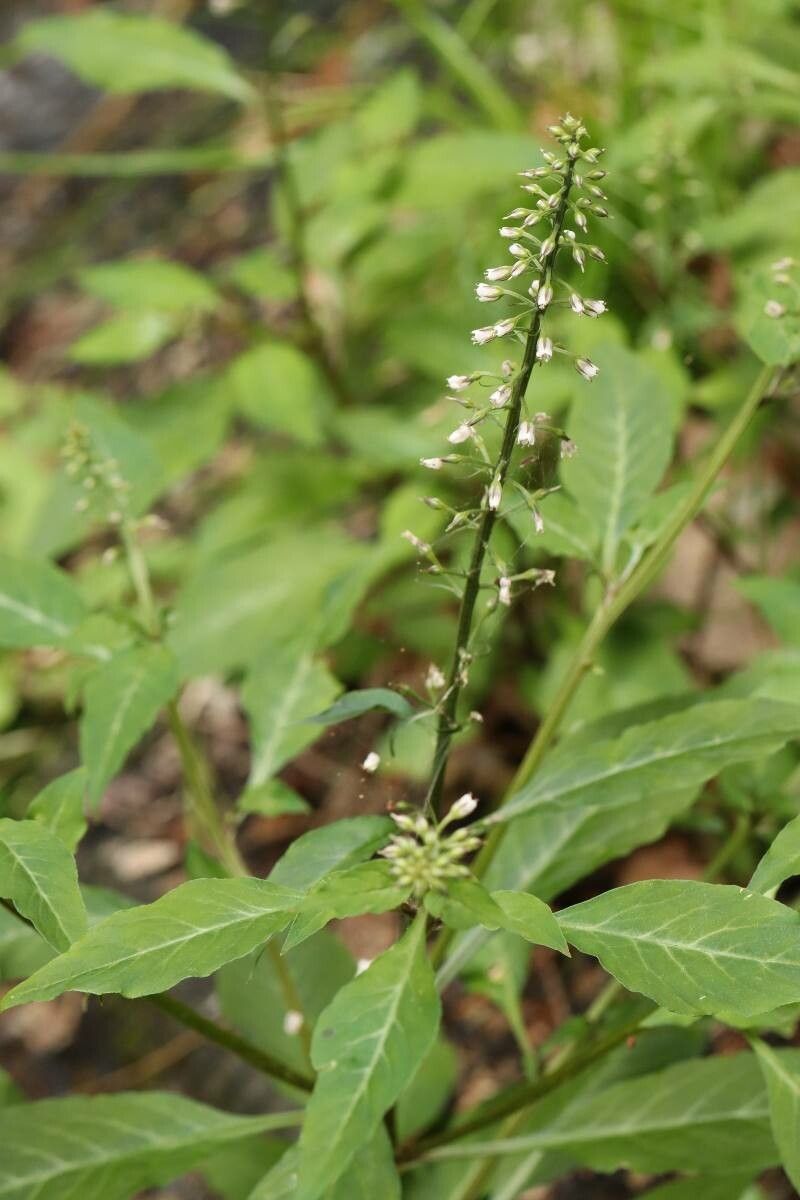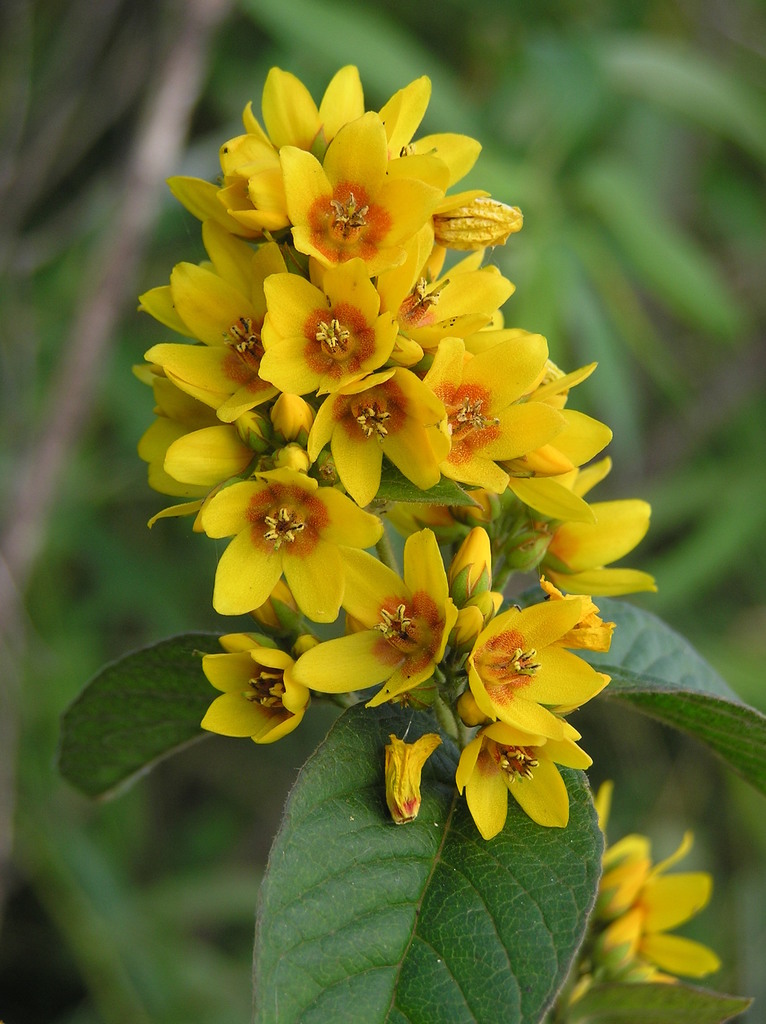
Lysimachia vulgaris, the yellow loosestrife or garden loosestrife, is a species of herbaceous perennial flowering plants in the family Primulaceae. It is native to wetlands, damp meadows and forests of south-east Europe. It is a tall plant with an upright habit, 50–150 centimetres (20–59 in) high, with erect panicles of conspicuous yellow flowers.: 519 The edges of the petals lack the fringe of hairs seen in L. punctata, and the hairy sepals have a conspicuous orange margin. : 114 It is in bloom from June through August in the British Isles. The leaves are opposite, ovate to lanceolate and spotted with translucent orange glands. L. vulgaris spreads by rhizomes, forming extensive patches and is sometimes considered invasive outside of its native range. In Australia growers have now successfully propagated and started growing the white variety in January in Tasmania.
Yellow loosestrife has strong resistance to disease and is usually not prone to illnesses. Still, it can be vulnerable to pests and ailments present in its environment. These problems are typically mild. In terms of care, the plant requires a moderate level of maintenance. It should be pruned regularly to keep a tidy appearance and support healthy growth. Fertilizing can also help encourage flowering. Yellow loosestrife is suitable for anyone with an outdoor area, such as a garden or patio, and does not demand extensive gardening experience. It may need more attention when grown indoors.
How to keep Lysimachia Vulgaris.
Light
Yellow loosestrife does well in spots that get sun for part of the day and can tolerate longer stretches of sunlight. This tolerance comes from the plant's native habitat, where light conditions varied a lot. Excessive or insufficient sun can negatively affect yellow loosestrife's health, altering its growth and the strength of its blooms.
Water
Yellow loosestrife flourishes in humid conditions and prefers consistently moist environments. To care for it, water the plant weekly, but increase the frequency during its flowering period when it requires more moisture.
Temperature
Yellow loosestrife is native to habitats with moderate temperatures and performs best between 41 and 89.6 °F (5 to 32 ℃). Depending on the season, adjustments to temperature may be necessary to achieve these optimal growth conditions.
Fertilizer
For Yellow loosestrife, the primary time to apply fertilizer is early spring when the flowers are forming. The correct fertilizer promotes stronger blooms and helps Yellow loosestrife produce attractive flowers. Fertilizing in early spring ensures good flowering throughout the season and supplies energy for dormant phases of growth.
Pruning
Yellow loosestrife is a vibrant plant featuring bright yellow flowers and a strong growth habit. To keep it healthy, it's best to prune it from early to late spring. Trim away any dead stems and thin out overcrowded areas to improve air circulation. Additionally, regular pruning after the blooms have faded can extend the flowering period and rejuvenate the plant for the following season.
Toxicity
Lysimachia vulgaris has no toxic effects reported.
Further reading →
The toxicity and danger assessments provided are for reference only. We do not assure their accuracy, so it's crucial not to depend on them. Seek professional advice when necessary for accurate guidance.
Botanical profile.
- Plant Type
- Herb
- Life Cycle
- Perennial
- Genus
- Lysimachia
- Family
- Primulaceae
- Hardiness Zone
- 4-8
- Mature Height
- 0.49 m to 1.52 m
- Mature Spread
- 49 cm to 91 cm
- Leaf Color
- Green
- Leaf Type
- Deciduous
- Flower Color
- Yellow
- Flower Size
- 2.03 cm to 7.62 cm
- Bloom Time
- Early summer, Mid summer
- Planting Time
- Spring
- Harvest Time
- Mid summer
Other names.
Reader questions.
How much water does my Yellow loosestrife plant need?
To ensure your Yellow loosestrife gets the right amount of water, don't be afraid to water generously. Check the top two to three inches of soil - if it's dry, give the plant a good soaking. Make sure to add enough water so that it completely saturates the soil and drains out of the pot's bottom drainage holes. If you don't see excess water draining, you may not have given enough water. However, be careful not to let water accumulate in the soil, as this can harm the plant. On the other hand, if water is not draining through the pot, it could mean the soil doesn't drain well, which is not good for the plant's health. If the plant is outside, it will generally need about 1 inch of rain per week.
Why should I add fertilizer to my Yellow loosestrife plant?
Fertilization is important for the Yellow loosestrife for several reasons. It provides key nutrients for the plant's growth above and below ground. However, the Yellow loosestrife's fertilization needs are relatively low. Though it can survive without fertilization, annual fertilization can be beneficial. It helps keep the plant alive and may improve flower quality and longevity. Therefore, those who want their Yellow loosestrife to look its best should maintain annual fertilization.
What are the sunlight requirements for Yellow Loosestrife?
Yellow Loosestrife requires partial sun, about 3-6 hours of sunlight, to thrive but can also flourish in full sun, which is above 6 hours of sunlight per day. It's important to observe the movement of sunlight through your garden to find the optimal spots that offer the right balance of light and shade for your plants, ensuring their well-being.
What is the optimal temperature range for growing Yellow loosestrife?
Yellow loosestrife (Lysimachia vulgaris) thrives best within a moderate temperature range of 41 to 89.6 °F (5 to 32 °C). To ensure optimal growth, temperature adjustments may be necessary throughout the seasons to maintain these conditions. The plant exhibits strong cold resistance, so special frost protection is generally not required. However, when winter temperatures are expected to drop below -30°C, it's important to provide cold protection by covering the plant with soil or straw and watering abundantly before the first freeze in autumn. This helps keep the soil moist and prevents drought and water scarcity during winter and early spring.
How should I water my Yellow loosestrife?
To properly water the Yellow loosestrife, it is recommended to use filtered water at room temperature. Tap water may have harmful particles that can affect the plant's health. Since the Yellow loosestrife is native to warm environments, it is important to avoid using cold water, as it can be a shock to the plant. It is also advised to avoid overhead watering, as it can cause issues with the foliage. Instead, pour the filtered room temperature water directly onto the soil until it is completely soaked. This method of watering benefits the plant by moistening the roots and aiding in their spread through the soil to collect necessary nutrients.
When should I put fertilizer on my Yellow loosestrife?
The best time to fertilize a Yellow loosestrife is in late winter to early spring when it is coming out of dormancy and starting to grow. Fertilizing at this time promotes healthy growth and sets the plant up for a great season. While early spring is the most beneficial, fall is also an acceptable time to fertilize. However, it is not recommended to fertilize during summer or winter.
How does the original habitat of Yellow Loosestrife affect its sunlight tolerance?
The sunlight tolerance of Yellow Loosestrife is significantly tied to its native habitat, which experiences a wide range of sunlight conditions. This plant thrives in sun-exposed areas for part of the day but can also withstand prolonged exposure to sunlight. However, both overexposure and underexposure to sunlight can negatively affect the plant's health, impacting its growth and the intensity of its blooms.
How does Yellow loosestrife react to low temperatures, and what are the recommended solutions?
Yellow loosestrife is notably cold-tolerant, preferring temperatures to remain above 5°C and ideally kept above -25°C during winter. Exposure to temperatures below -30°C may not show immediate changes during winter but can lead to decreased sprouting or a lack of sprouting come spring. If this occurs, it's recommended to remove any parts of the plant that fail to sprout in the spring as a solution to this issue.
What should I do if I give my Yellow loosestrife too much or too little water?
Overwatering is more common than underwatering for Yellow loosestrife, and it can cause wilting, yellowing, and diseases like root rot. Underwatering is less common but can result in brittle, brown leaves. It's important to notice signs of overwatering early because some diseases may be irreversible if left unaddressed. If you see signs of overwatering, reduce watering immediately and consider using well-draining soil. If your plant is underwatered, simply water more regularly until the signs improve.
When is the best time to not fertilize my Yellow loosestrife?
To properly care for your Yellow loosestrife, it is best to fertilize during late winter and early spring. This plant requires only one annual feeding due to its low fertilization needs. Fertilizing during spring, summer, and fall can lead to overfertilization and its associated complications, unless you missed fertilizing in spring, in which case fall feeding is acceptable. Additionally, there is no need to fertilize during winter as the Yellow loosestrife is in a dormant growth phase and does not produce new growth. Therefore, it is not recommended to fertilize during most of the winter.
What are the considerations for using artificial lighting with indoor plants?
When natural sunlight is insufficient for indoor plants, particularly during winter or in less sunny spaces, artificial lighting becomes essential for optimal growth. The right type of artificial light, such as LED lights, should be chosen because they can be customized to provide specific wavelengths of light needed by plants. Full sun plants require 30-50W/sq ft, partial sun plants need 20-30W/sq ft, and full shade plants require 10-20W/sq ft of artificial light. The light source should be placed 12-36 inches above the plant, mimicking natural sunlight, and plants typically need 8-12 hours of light per day.
What should be done if Yellow loosestrife experiences high temperatures?
In the event that Yellow loosestrife is exposed to temperatures above its preferable maximum of 32°C, particularly when they exceed 35°C, the plant's leaves may begin to lighten in color, become prone to curling, suffer from sunburn, and in severe cases, the entire plant might wilt and dry out. The recommended solutions to combat these symptoms of high temperature stress include trimming away any sunburned and dried-up parts of the plant, moving it to a shaded location away from midday and afternoon sun, or using a shade cloth to provide shade. Furthermore, it is beneficial to water the plant in the morning and evening to maintain soil moisture.