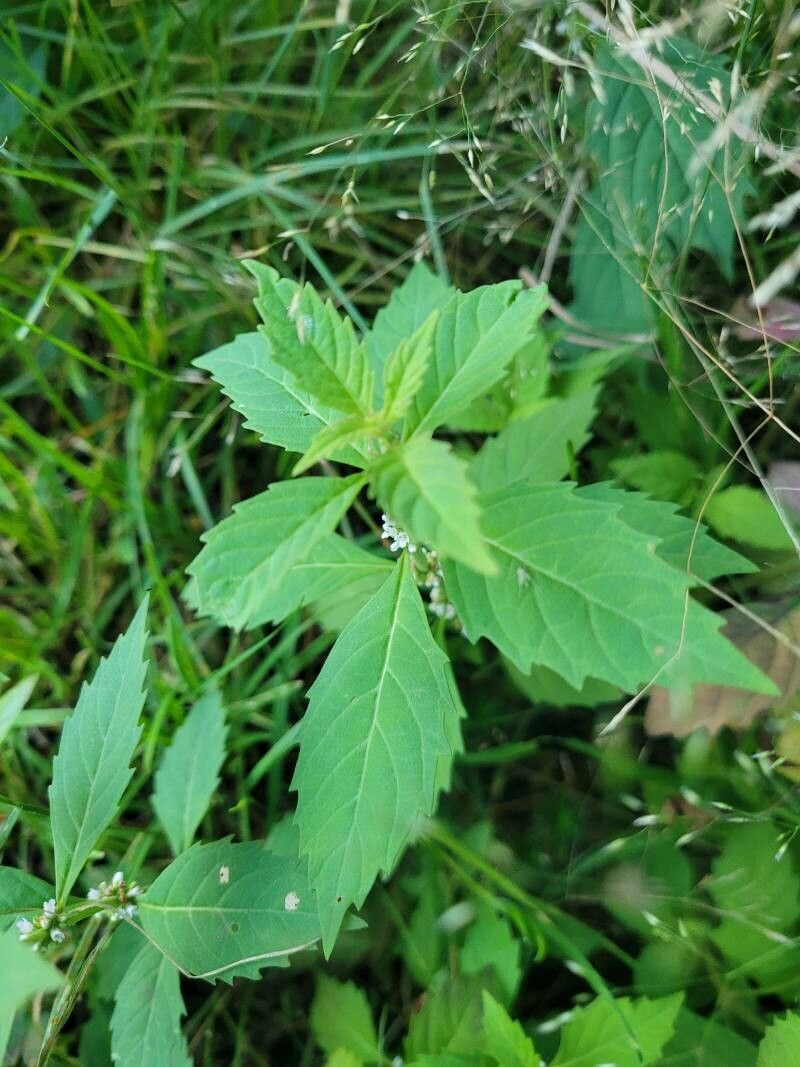
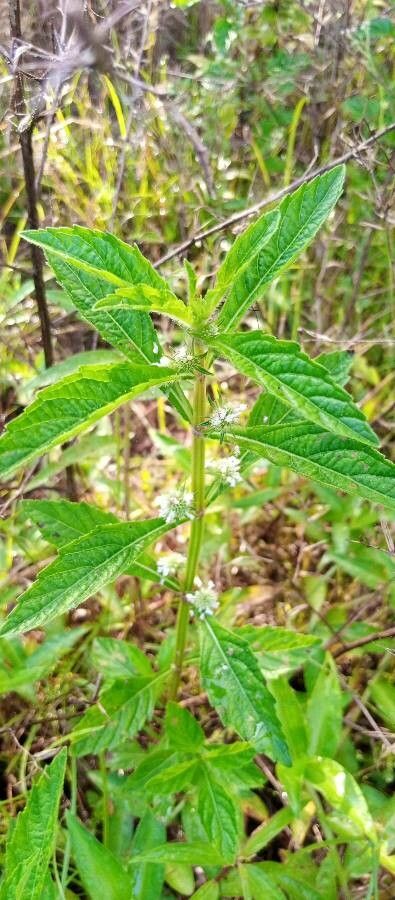
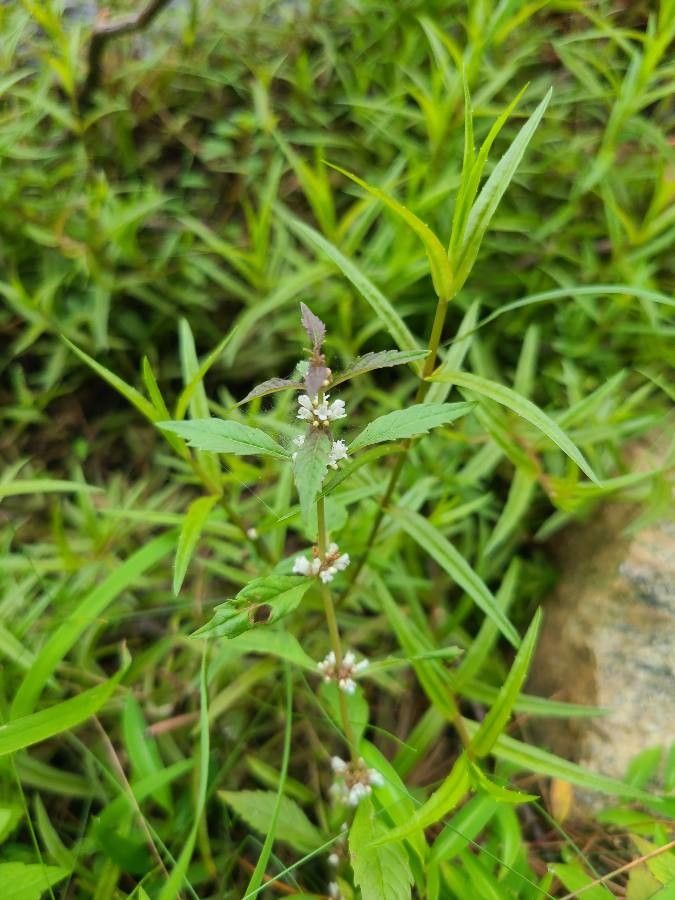
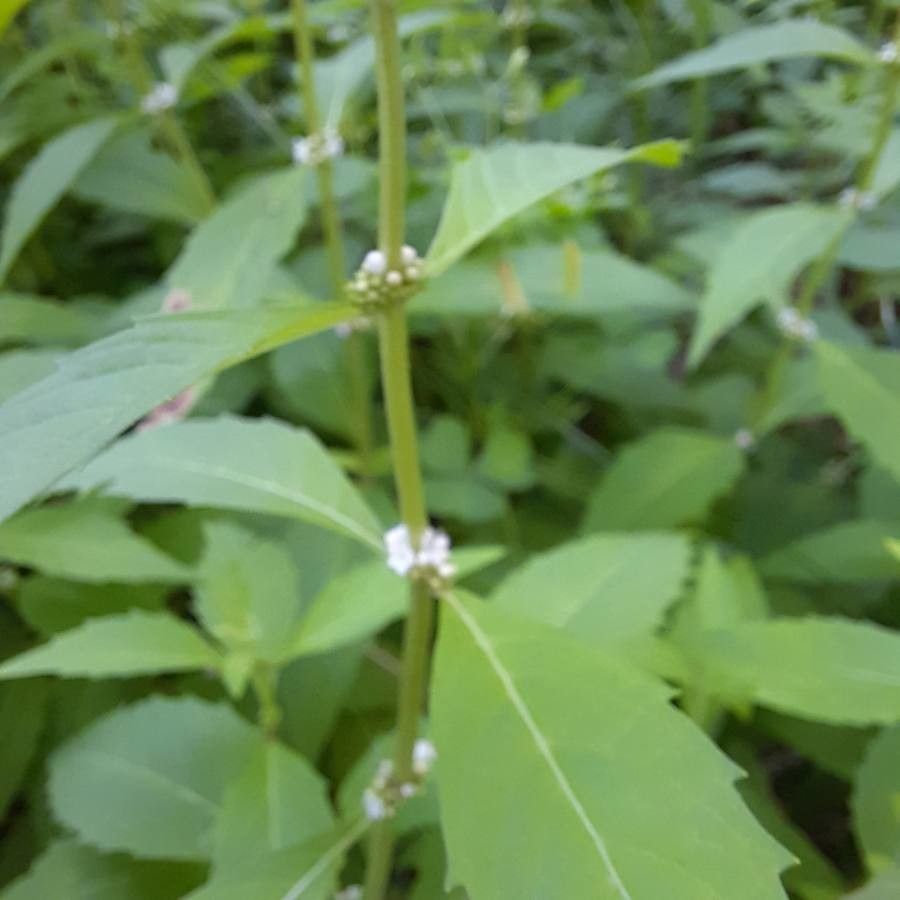
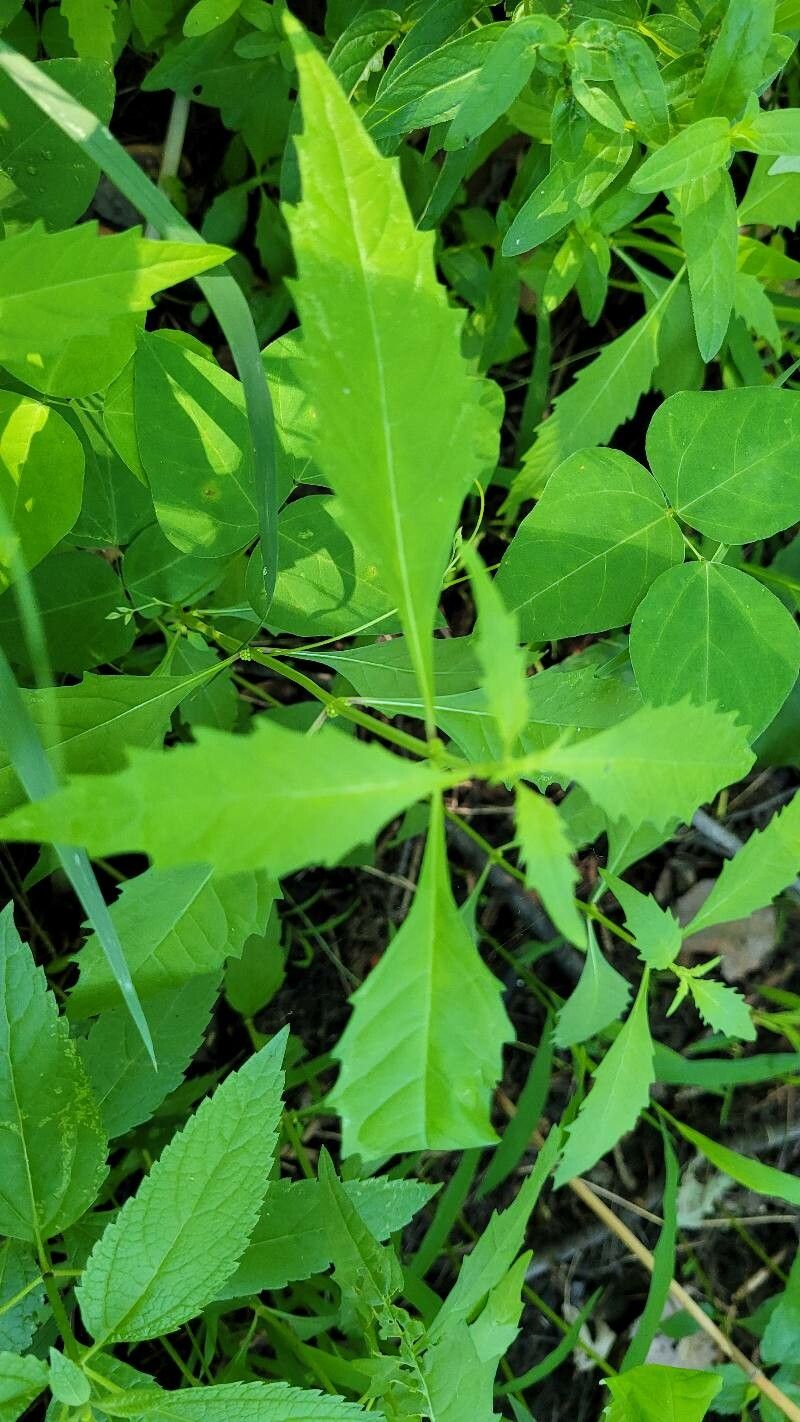
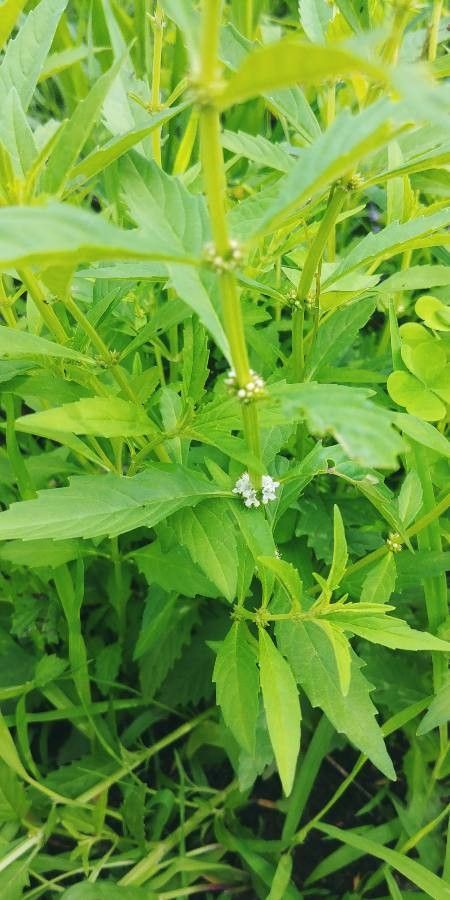
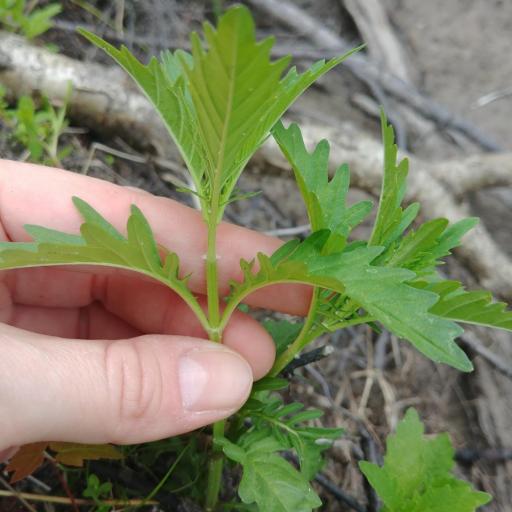
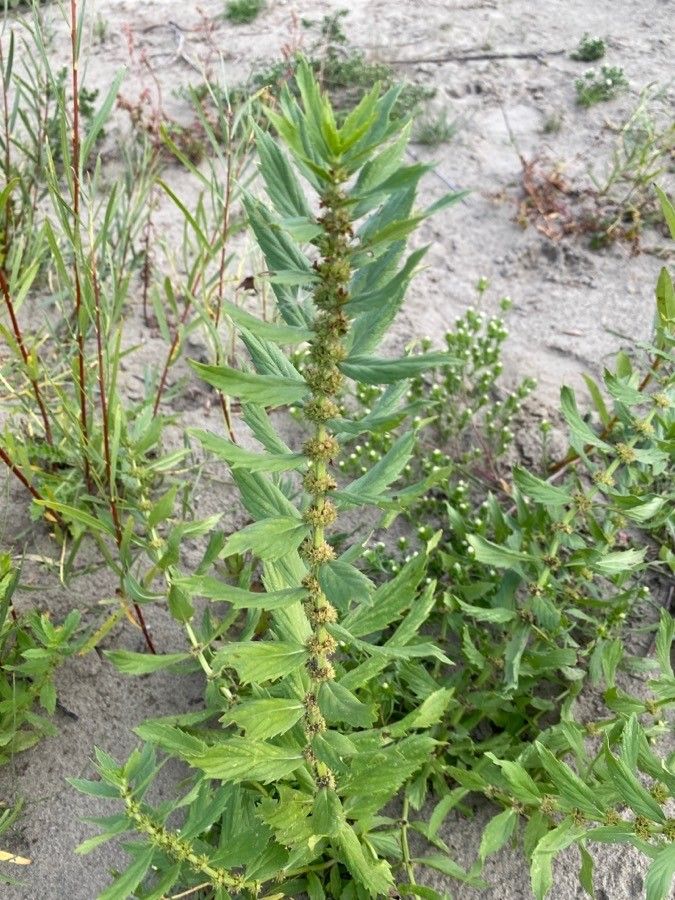
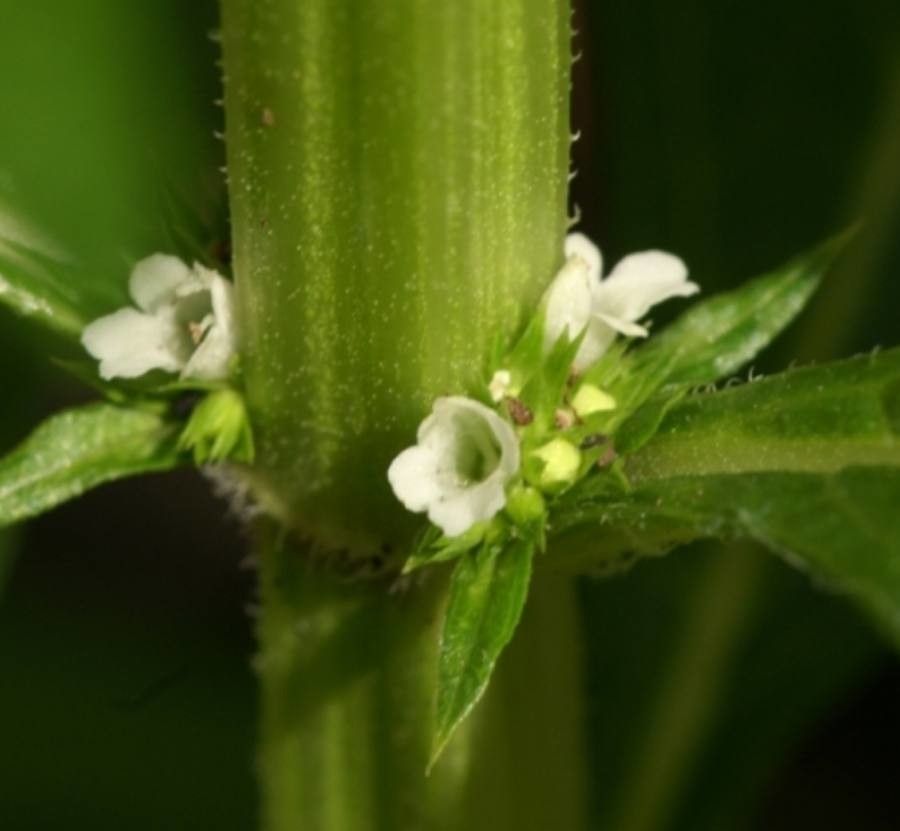
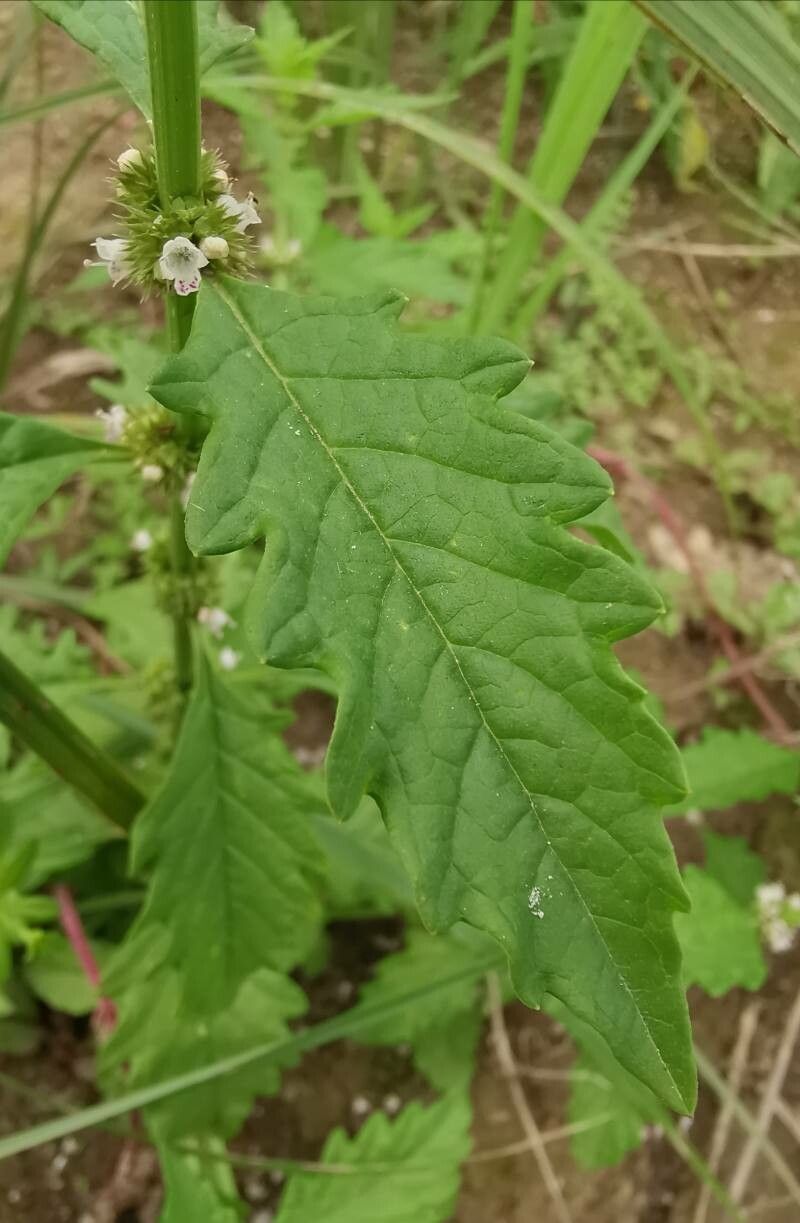
Lycopus uniflorus is a species of flowering plant in the mint family known by the common name northern bugleweed. It is native to much of North America (Canada, United States) and east Asia (China, Japan, Korea, Russian Far East) Lycopus uniflorus can be found most often in moist areas, such as marshes. This is a perennial herb growing from a slender rhizome with thickened, tuberlike tips. The plant grows upright 10 to 50 centimeters tall. Its stem is lined with pairs of toothed leaves with heads of flowers in their axils. The flower is white and a few millimeters in length. The root of the plant was used as a food by several Native American groups. The tubers can be peeled and eaten raw, or pickled.
Bugleweed has moderate resistance to disease but can be susceptible to problems such as leaf spot. Its susceptibility to insect pests varies by variety, though most are relatively less resistant to pests. For care, bugleweed needs regular watering and fertilization, plus frequent pruning to remove yellow leaves. It is important to manage pests and diseases when they arise and to harvest the plant promptly. Bugleweed is appropriate for people who can invest some time and effort in regular maintenance.
How to keep Lycopus Uniflorus.
Light
Bugleweed grows best in bright light but can also tolerate moderate light levels. In its natural habitat it receives abundant illumination, which promotes vigorous growth. However, too much exposure can cause health issues, such as reduced vigor. Likewise, insufficient light can stunt its growth and diminish its vitality.
Water
Bugleweed flourishes in moist environments and has the ability to retain water, which makes it drought-tolerant once it is well-established. Watering it weekly helps keep the soil moist without causing waterlogging. As an herbaceous perennial, bugleweed benefits from rain during the growing season, which supports a healthy life cycle.
Temperature
Bugleweed is native to regions with temperate climates and favors temperatures between 41 and 89.6 °F (5 to 32 ℃). Seasonal temperature adjustments may be required for its optimal growth.
Fertilizer
Bugleweed species do well with one or two applications of organic, natural fertilizers that contain potassium and phosphorus. Apply the fertilizer before planting, make sure it is worked into the soil and watered thoroughly. Usually a single application is enough, but a second can be applied once seedlings are established. Avoid overusing fertilizer to prevent damage to the plants.
Pruning
Bugleweed has square stems and small white tubular flowers. To promote growth and remove damaged stems, prune the plant from early to late spring by cutting just above the leaf nodes. Regular trimming helps control its invasiveness and enhances its health. Be sure to use clean tools to prevent disease. Moderate trimming throughout the growing season is also beneficial.
Botanical profile.
- Plant Type
- Herb
- Life Cycle
- Perennial
- Genus
- Lycopus
- Family
- Lamiaceae
- Hardiness Zone
- 4-8
- Mature Height
- 10 cm to 52 cm
- Mature Spread
- 20 cm to 40 cm
- Leaf Color
- Green
- Leaf Type
- Semi-evergreen
- Flower Color
- White
- Flower Size
- 0.25 cm to 0.51 cm
- Bloom Time
- Mid summer, Late summer, Early fall
- Planting Time
- Spring, Summer
- Harvest Time
- Fall
- Native Area
- Russia, Japan, Koppen, South Korea, China
Other names.
Reader questions.
What do I do if I give my Bugleweed too much or too little water?
If you realize that you have given too much water to your Bugleweed and are worried about the risk of disease, act promptly. The best solution for an overwatered Bugleweed is to remove it from its current location and let the roots dry a bit before replanting it elsewhere. Make sure that the new location has well-drained soil. If you are growing the plant in pots, you may consider transferring it to a pot with better drainage. On the other hand, if you have not given enough water, simply increase the frequency of watering your plant.
What are the sun requirements for Bugleweed (Lycopus uniflorus)?
Bugleweed thrives best in locations that offer full sun, which means the plant should receive more than 6 hours of sunlight daily. However, it can also adjust to partial sun conditions, where it gets about 3-6 hours of sunlight. It's important to observe how sunlight moves through your garden to find the perfect spots that provide the right balance of light and shade for your bugleweed, ensuring its health and happiness. Remember to watch for any changes in your plant, as the amount of sun it gets can significantly impact its growth and vitality.
What is the native environment of Bugleweed?
Bugleweed, scientifically known as Lycopus uniflorus, is native to environments with moderate climates. It thrives in a temperature range of 41°F to 89.6°F (5°C to 32°C). For optimal growth, seasonal adjustment in temperature may be necessary, especially to maintain relatively warm temperatures during winter, ensuring the plant is kept above freezing point to prevent damage.
How much should I water my Bugleweed?
Bugleweed needs a lot of water during its growing season. To meet this need, you should water it early and often in the spring and summer. In the beginning of the growing season, water your Bugleweed once or twice a week. As the season goes on, increase the frequency of watering. In summer, you might need to water it twice a day or more, depending on the weather. Once your Bugleweed has finished its major growth phases, you can reduce the watering to once a week until the end of the growing season.
What are some essential care tips for bugleweed?
Bugleweed requires ample light to thrive, but it can also adapt to moderate light levels. Its natural habitat has abundant illumination, which supports vigorous growth. However, too much exposure may weaken the plant, while insufficient light can stunt its growth and reduce vitality. For indoor plants, artificial lighting such as LED lights can provide a vital solution, especially in less sunny spaces or during winter. Full sun plants should receive 30-50W/sq ft of artificial light, partial sun plants 20-30W/sq ft, and full shade plants 10-20W/sq ft. The light source should be placed 12-36 inches above the plant and kept on for 8-12 hours per day to mimic natural sunlight.
How should Bugleweed be protected in winter?
During winter, it's crucial to protect Bugleweed from freezing temperatures. The plant should be kept above -5°C (25°F) to avoid damage. If outdoor temperatures approach this point, consider bringing the plant indoors or providing protection through a temporary greenhouse or by wrapping it with plastic film or fabric. This helps in maintaining the necessary warmth for the plant's survival and growth.
How should I water my Bugleweed plant?
Bugleweed has specific preferences for both the amount and method of watering it receives. It is important to know that improper watering techniques can potentially harm your tomatoes. The recommended way to water Bugleweed is to apply water directly to the soil, doing so in a slow and gentle manner. It is advised to avoid pouring all of the water into the soil at once or using overhead watering for your Bugleweed. It is important to note that while watering slowly, you should also ensure that the water penetrates deeply into the soil to ensure adequate moisture for the Bugleweed's growth.
What are the symptoms of light deficiency or overexposure in bugleweed?
When bugleweed is grown indoors or under inadequate light conditions, it may show subtle symptoms such as smaller new leaves, leggy or sparse growth, faster leaf drop, slower or no new growth, and lighter-colored new leaves. Excessive sunlight can lead to chlorosis, where leaves turn yellow due to chlorophyll breakdown, sunscald with pale or necrotic areas on the plant, leaf curling as a defense against too much sun, wilting due to increased water loss, and leaf scorching, indicated by brown or crispy leaf edges. Observing these symptoms early can help in adjusting light conditions for your bugleweed.
What are the symptoms and solutions for Bugleweed in low temperatures?
Bugleweed has a moderate tolerance to low temperatures, fairing best between 5°C and 32°C. Symptoms of cold stress include darkening of leaves, water-soaked necrosis, wilting, drooping, and in severe cases, leaves turning brown. To mitigate these issues, trim away frost-damaged parts and move the plant to a warm environment indoors or set up a greenhouse. If moving the plant indoors, placing it near a south-facing window or using supplemental lighting can ensure it gets sufficient sunlight.
How much water does my Bugleweed plant need?
Bugleweed is very popular among gardeners, both professional and amateur, and there is a lot of knowledge about how to care for these plants. One important aspect is knowing how much water they need. On average, Bugleweed will need about 1 - 1.5 inches of water per week, which should be evenly distributed during each watering session. As the weather gets hotter, you may need to increase the amount of water you provide, but as a general guideline, two inches per week should be sufficient.
How can I improve the light conditions for my bugleweed?
To ensure your bugleweed grows healthily, gradually increase its sunlight exposure. For indoor plants, move them closer to a south-facing window or use artificial lighting, such as desk or professional grow lights, for at least 8 hours a day. Outdoor plants should be moved to sunnier spots gradually to prevent sunburn. If sunlight is blocked by physical obstructions like trees, consider pruning or transplanting the plant to a brighter location. Note that parts of the plant affected by insufficient sunlight may not recover, but new growth will be healthy with improved light conditions.
How does high temperature affect Bugleweed and what are the solutions?
During summer, keeping Bugleweed's temperature below 32°C is crucial as exceeding 35°C can slow its growth, lighten the leaf color, and increase susceptibility to sunburn. Solutions include trimming away sunburned or dried parts, relocating the plant to a shaded area, particularly from the afternoon sun, and watering it in the morning and evening to maintain soil moisture, preventing stress from high temperatures.