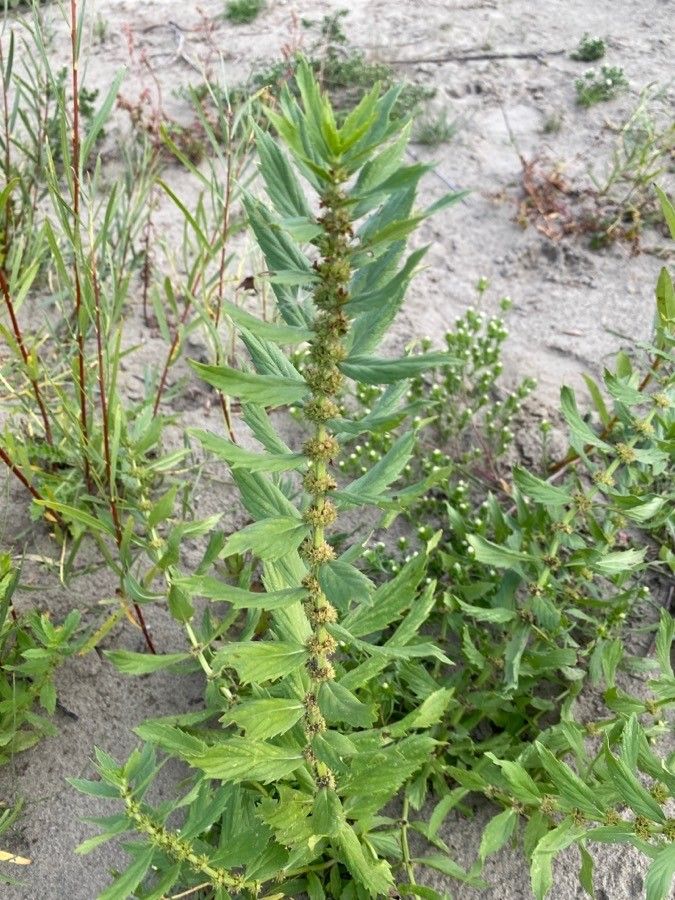
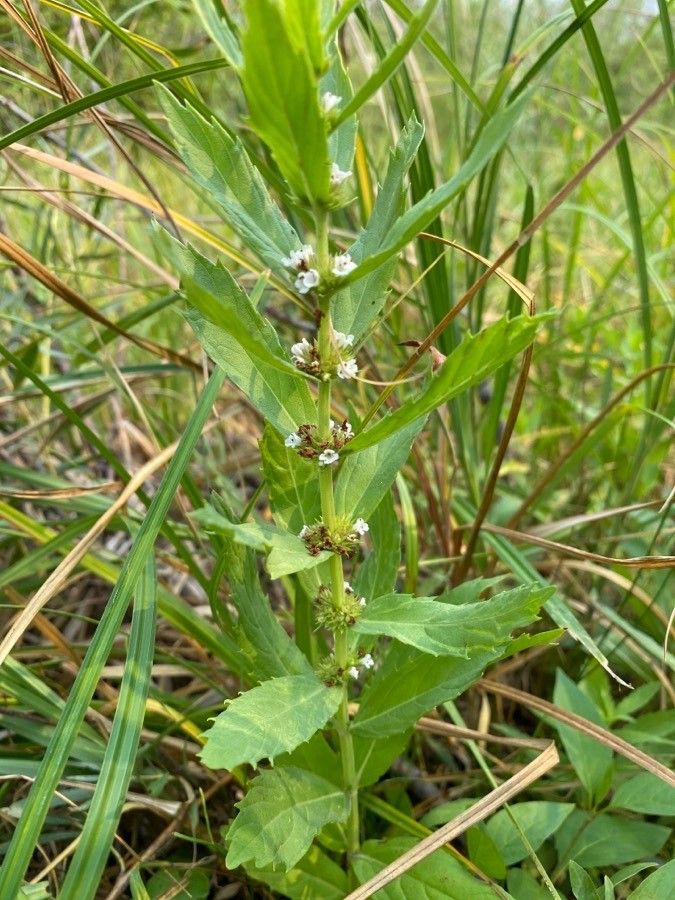
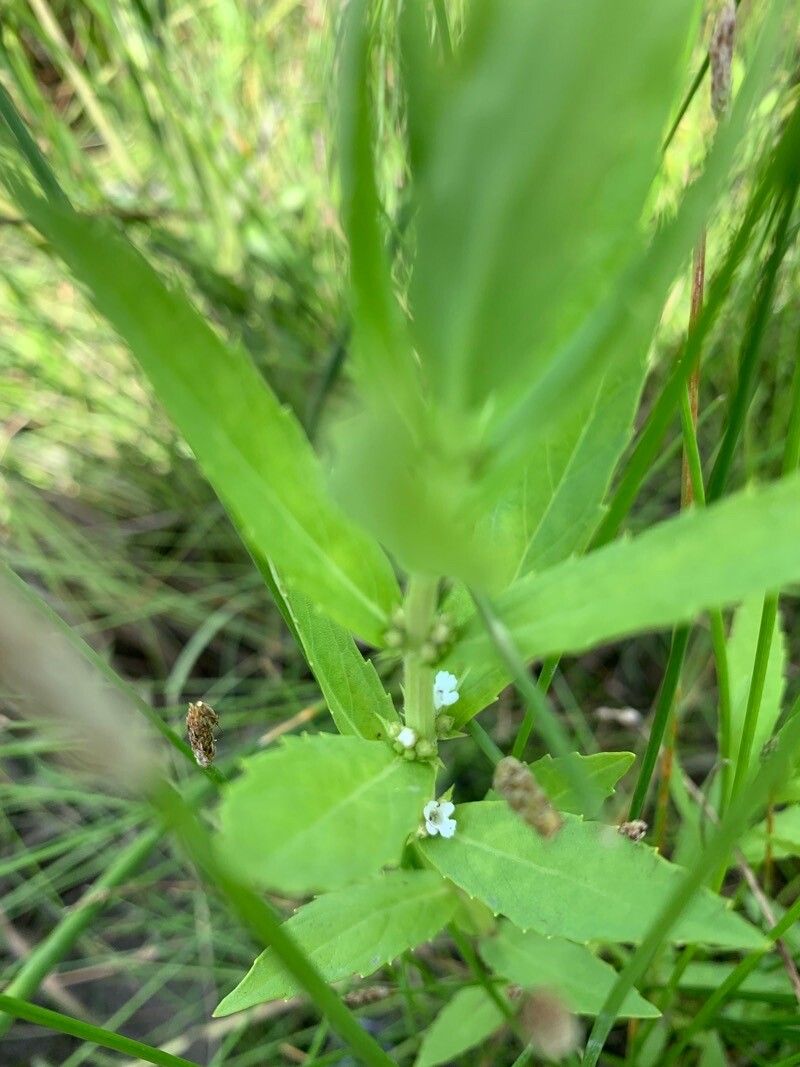
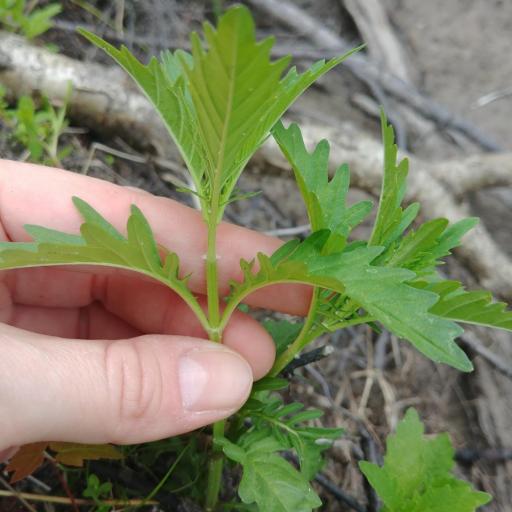
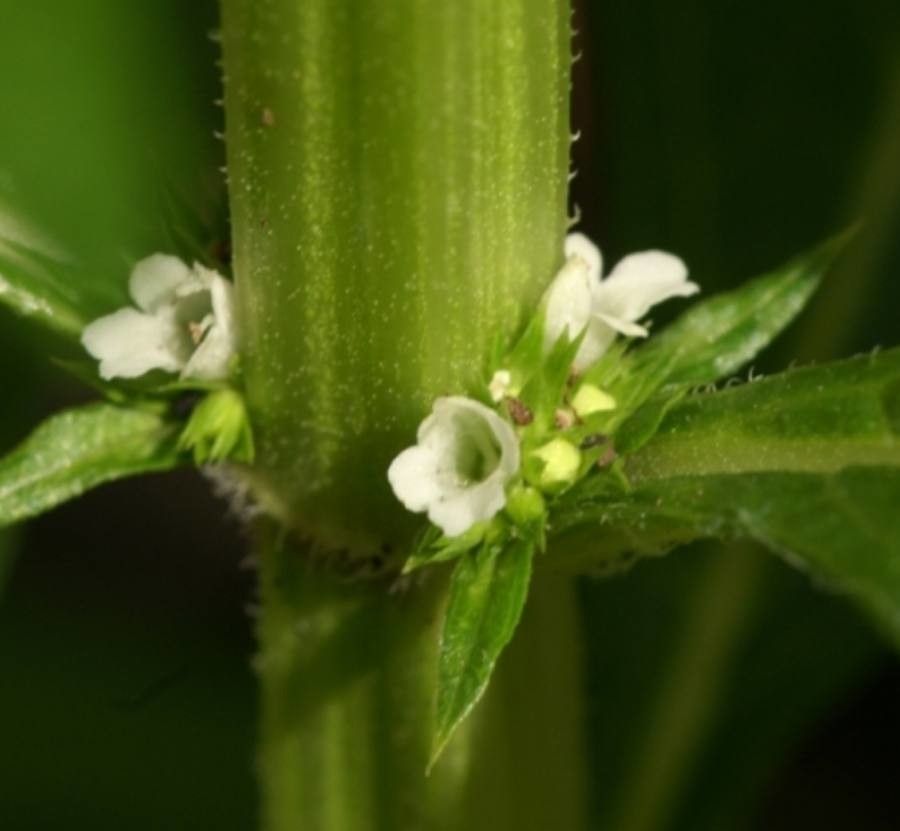
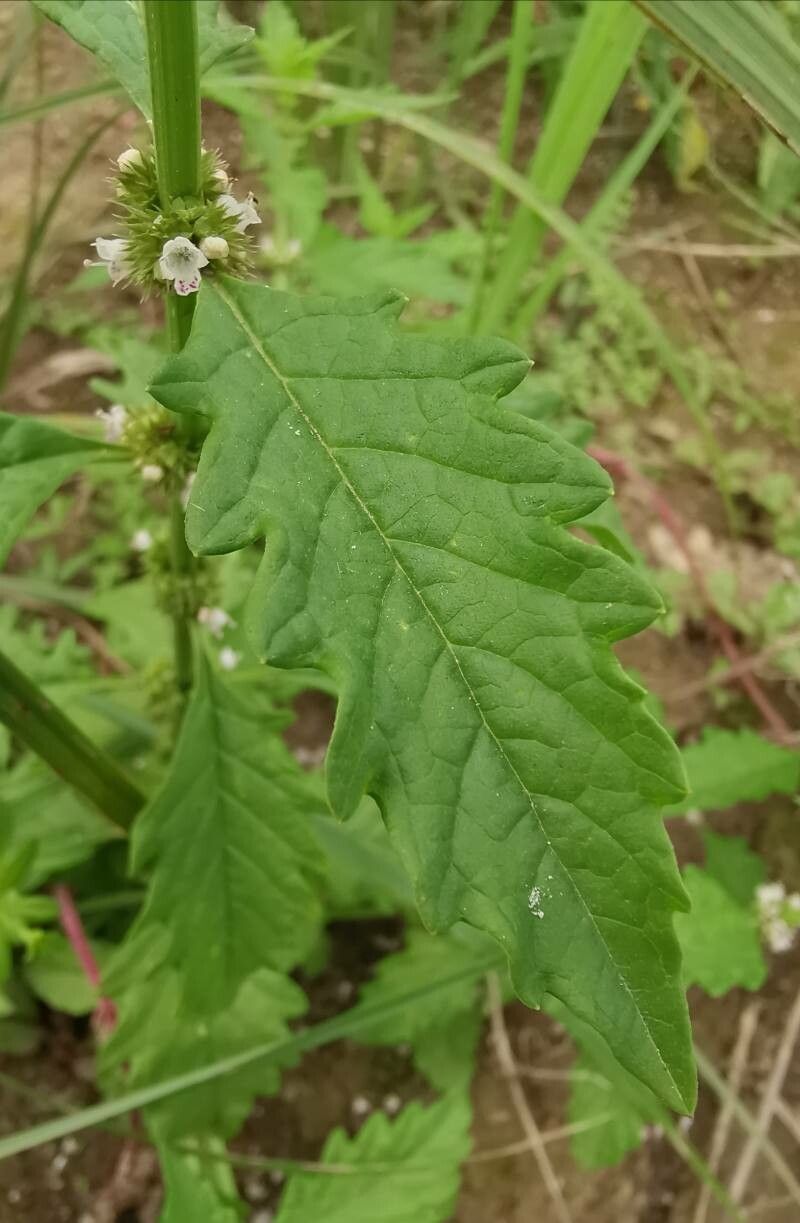
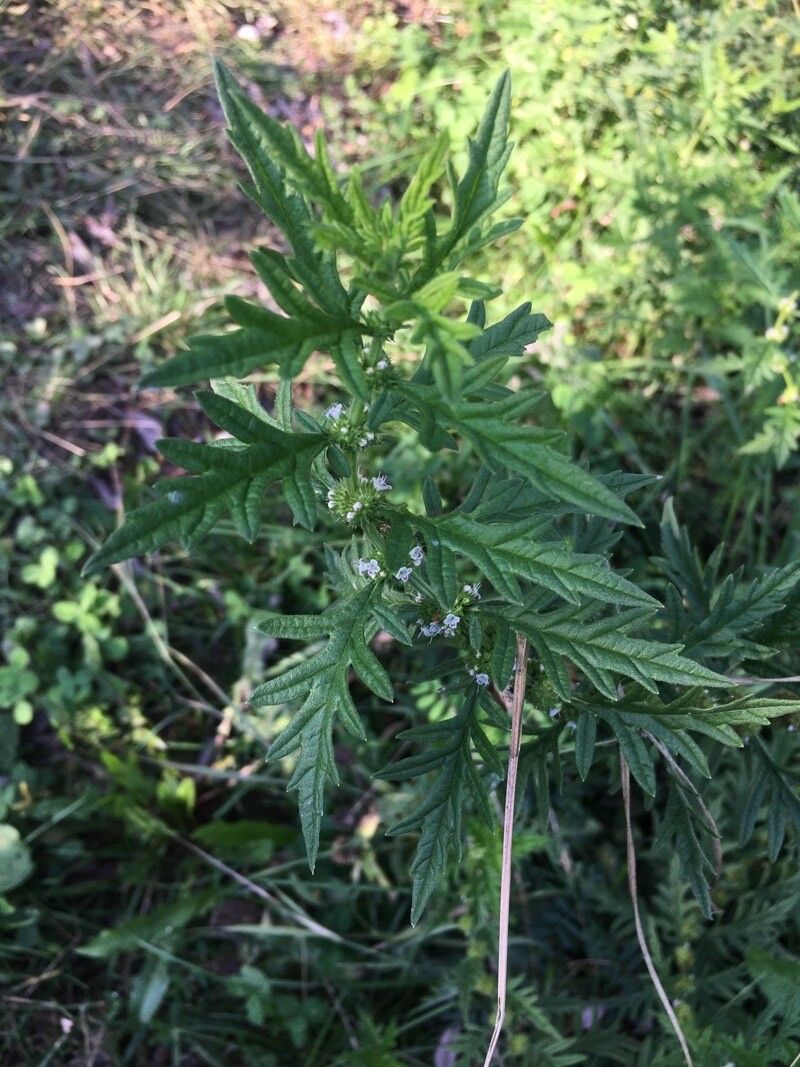
Lycopus asper is a species of flowering plant in the mint family known by the common name rough bugleweed. It is native to much of North America, where it can be found most often in moist areas, such as the soil near lakes. This is a perennial herb growing from a rhizome with thick, knobby tips. The plant grows erect to around 80 centimeters in maximum height, but is known to reach one meter. Its stem is lined with pairs of toothed leaves with heads of flowers in their axils. The flower is white and a few millimeters in length.
Rough bugleweed has good resistance to disease and is generally not highly susceptible. Still, it can be affected by pests and diseases found in its environment. Such infections are typically mild. Care-wise, this plant needs moderate upkeep. It should be pruned regularly to preserve its appearance and support healthy growth. Fertilizing can also encourage flowering. Rough bugleweed is a good choice for anyone with outdoor space, like a garden or patio, and does not demand extensive gardening experience. It may need extra attention if grown indoors.
How to keep Lycopus Asper.
Light
Rough bugleweed is a sun-loving, perennial herbaceous plant that comes from open habitats and is commonly found in meadows and grasslands. It favors full sun but can also tolerate partial sun.
Water
Rough bugleweed flourishes in moist soil and needs weekly watering to prevent dormancy. This perennial herb favors high humidity indoors, reflecting its wetland origins. To ensure optimal growth during its growing season, it's important to closely monitor soil moisture.
Temperature
Rough bugleweed can tolerate a wide range of temperatures, but its distribution may still be restricted by specific combinations of moisture and heat. It does best in warm summer climates with sufficient rainfall or watering. Extended periods of cloudy, rainy weather, as well as prolonged high temperatures, can increase the chance of Rough bugleweed dying. In winter, appropriate protection from the cold can improve the plant's survival rate.
Fertilizer
A single fertilizer application in spring is generally enough for Rough bugleweed, although several feedings can optimize growth. Apply fertilizer every month to six weeks. Fertilizing improves the leaves’ appearance and function, supporting even color and a healthy texture. It also encourages root development and nutrient uptake, aiding the plant’s long-term health.
Pruning
To help rough bugleweed thrive, it's important to prune it carefully. This involves removing dead stems and thinning the plant to improve airflow. The best time for pruning is from early to late spring, which encourages healthy growth. Regular maintenance also helps prevent the plant from spreading invasively, making it easier to manage.
Botanical profile.
- Plant Type
- Herb
- Life Cycle
- Perennial
- Genus
- Lycopus
- Family
- Lamiaceae
- Hardiness Zone
- 3-8
- Mature Height
- 15 cm to 91 cm
- Mature Spread
- 20 cm to 40 cm
- Leaf Color
- Green, Dark Green
- Leaf Type
- Deciduous
- Flower Color
- White
- Flower Size
- 0.20 cm to 0.25 cm
- Bloom Time
- Summer
- Planting Time
- Spring, Summer
- Harvest Time
- Late summer, Early fall, Mid fall
Other names.