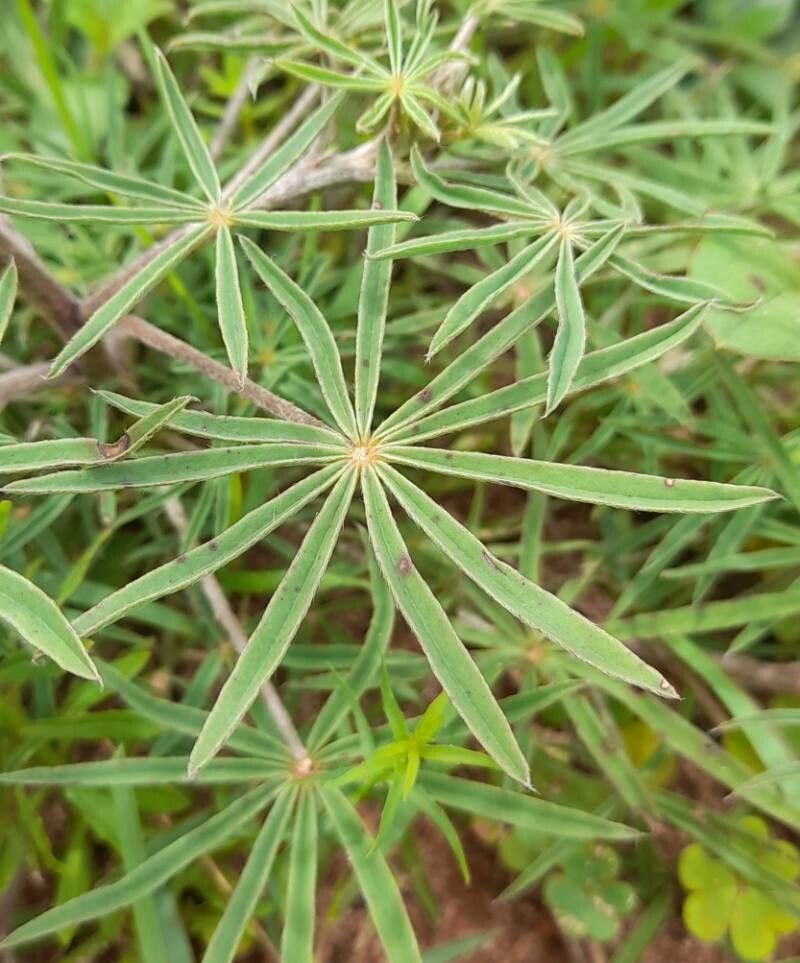
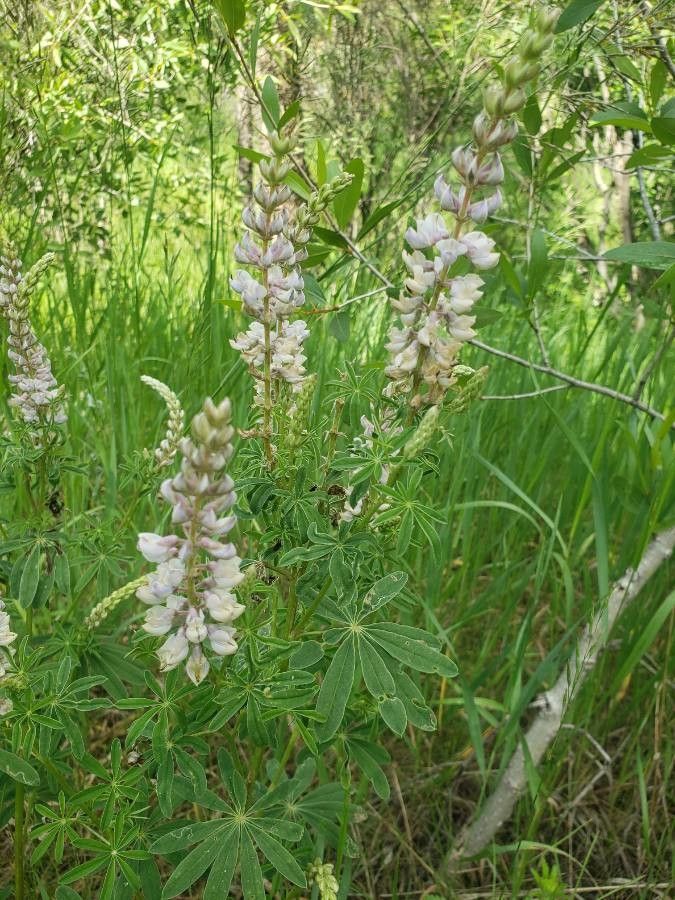
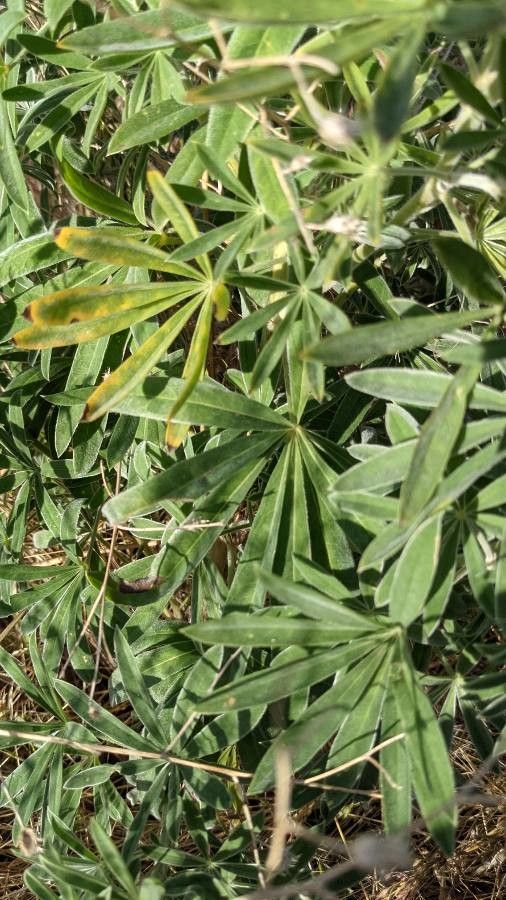
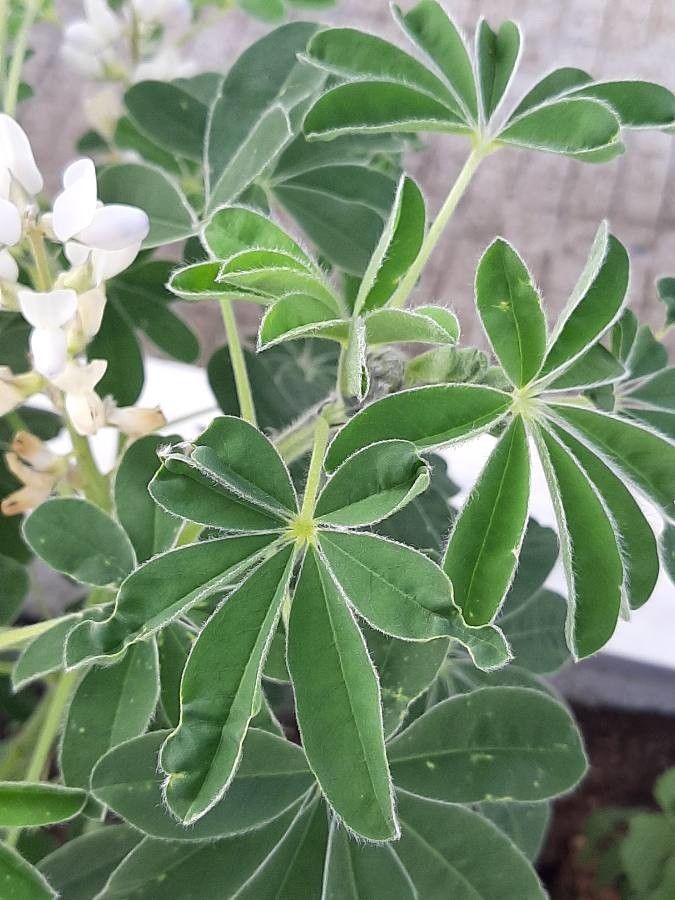
Lupinus sericatus is a species of lupine known by the common name Cobb Mountain lupine. It is endemic to the North Coast Ranges of California north of the San Francisco Bay Area, where it grows in the forest, woodlands, and chaparral of the slopes and canyons. It easily colonizes disturbed habitat as well. This is a perennial herb growing up to half a meter tall. Each palmate leaf is made up of 4 to 7 distinctive wide spoon-shaped leaflets each 3 to 5 centimeters long. The inflorescence is a raceme of several whorls of purple flowers, each flower between 1 and 2 centimeters long. The fruit is a hairy legume pod 2 or 3 centimeters long.
Cobb mountain lupine is fairly resistant to disease and typically does not suffer from many illnesses. However, it can be affected by pests and diseases present in its environment. These problems are usually minor. For care, the plant requires moderate maintenance. It should be pruned regularly to keep a neat appearance and support healthy growth. Fertilizing can also encourage better flowering. Cobb mountain lupine is well suited to people with outdoor spaces such as a garden or patio and does not demand extensive experience in plant care. It may need extra attention if grown indoors.
How to keep Lupinus Sericatus.
Light
Cobb mountain lupine is a sun-loving perennial, herbaceous plant native to open habitats, often growing in meadows and grasslands. It prefers full sun, but can also tolerate partial sun conditions.
Water
Cobb Mountain lupine thrives when it has well-draining soil and receives regular watering, ideally about 1 inch (2.5 cm) each week during the growing season. If the plant doesn't receive enough water, it may start seeding too early. On the other hand, too much water can lead to root rot and disrupt nitrogen fixation. Therefore, it's essential to find the right balance for the plant to grow optimally.
Temperature
Cobb mountain lupine can tolerate a wide range of temperatures, but its distribution may still be limited by different combinations of moisture and heat. It does best in warm summer conditions with sufficient rainfall or irrigation. Long periods of cloudy, rainy weather or extended high temperatures both increase the risk of Cobb mountain lupine dying. In winter, adequate protection from cold can raise the plant’s survival rate.
Fertilizer
The best time to fertilize a Cobb mountain lupine is in early spring, when it is coming out of dormancy and beginning active growth. Fertilization supplies essential nutrients needed for healthy growth. Although Cobb mountain lupine has relatively low fertilizer requirements, yearly feeding can improve its survival and encourage better, longer-lasting flowers.
Pruning
To help Cobb Mountain lupine thrive, it's best to perform pruning in early spring. Remove any dead or weak stems to promote growth and improve air circulation. Avoid heavy pruning at other times, as this can stress the plant and hinder blooming. Regular pruning not only helps maintain the plant's shape but also reduces the risk of disease and encourages abundant flowering.
Botanical profile.
- Plant Type
- Herb
- Life Cycle
- Perennial
- Genus
- Lupinus
- Family
- Fabaceae
- Hardiness Zone
- 7-9
- Mature Height
- 30 cm to 61 cm
- Mature Spread
- 30 cm to 46 cm
- Leaf Color
- Steel Blue, Slate Gray
- Leaf Type
- Deciduous
- Flower Color
- Purple, Blue
- Flower Size
- 1.02 cm to 2.03 cm
- Bloom Time
- Mid spring, Late spring, Early summer
- Planting Time
- Spring, Summer, Autumn
- Harvest Time
- Summer
Other names.
Reader questions.
What are the sunlight requirements for Cobb Mountain Lupine?
Cobb Mountain Lupine, also known by its botanical name Lupinus sericatus, thrives under specific sunlight conditions to ensure its growth and happiness. For optimal growth, Cobb Mountain Lupine requires 'Full sun' which entails above 6 hours of direct sunlight daily. However, it can also tolerate 'Partial sun' conditions, meaning it should receive about 3-6 hours of sunlight each day. It's essential to observe your garden's sunlight patterns over time, choosing spots that offer a harmonious balance of light and shade suited to meet these requirements, ensuring your plant thrives.