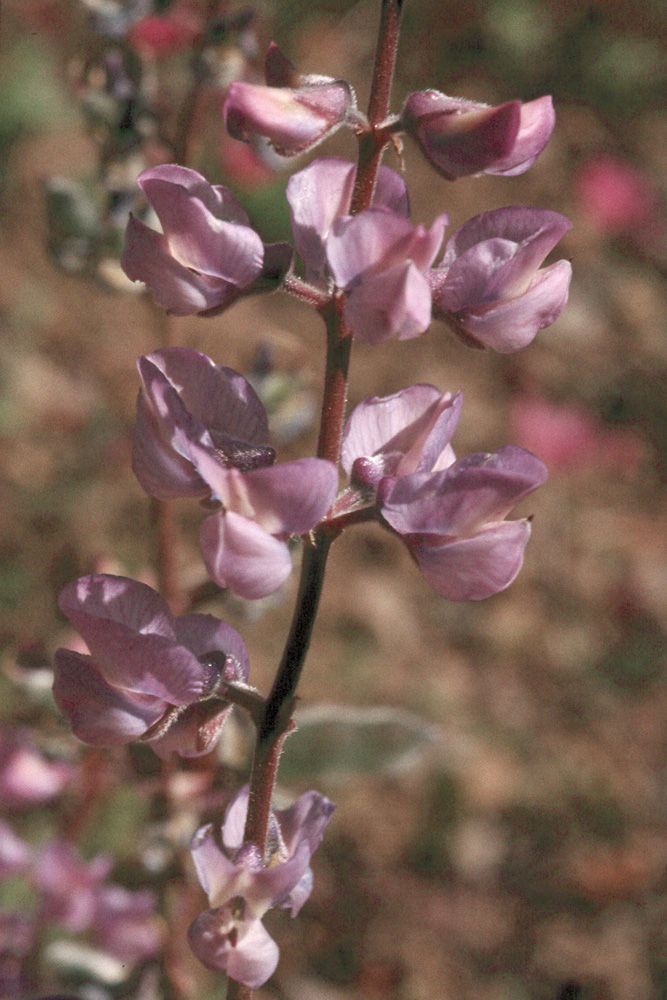
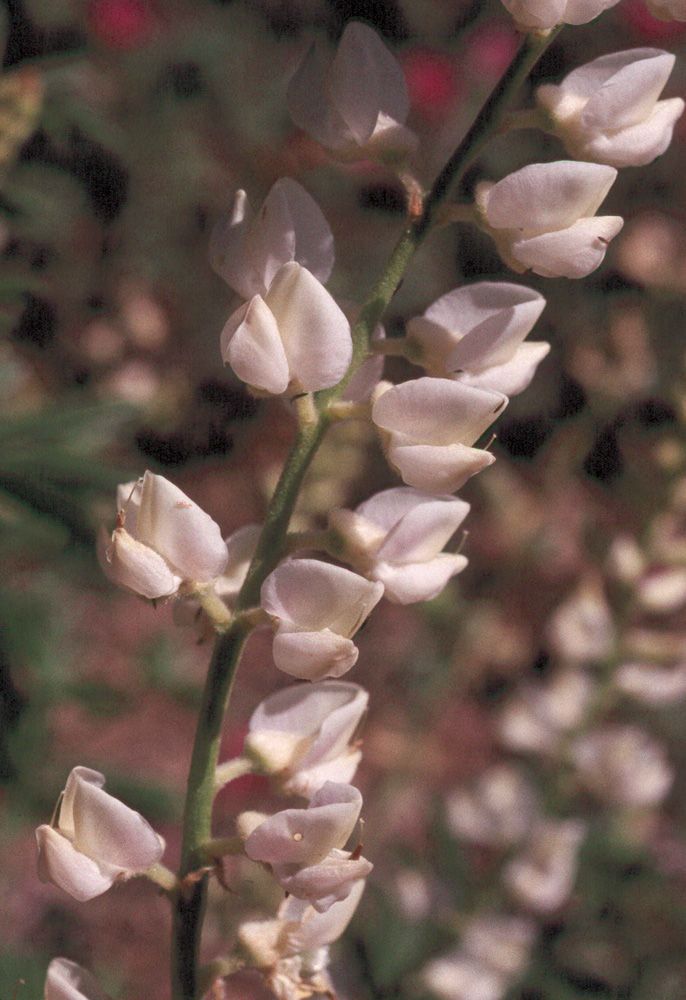
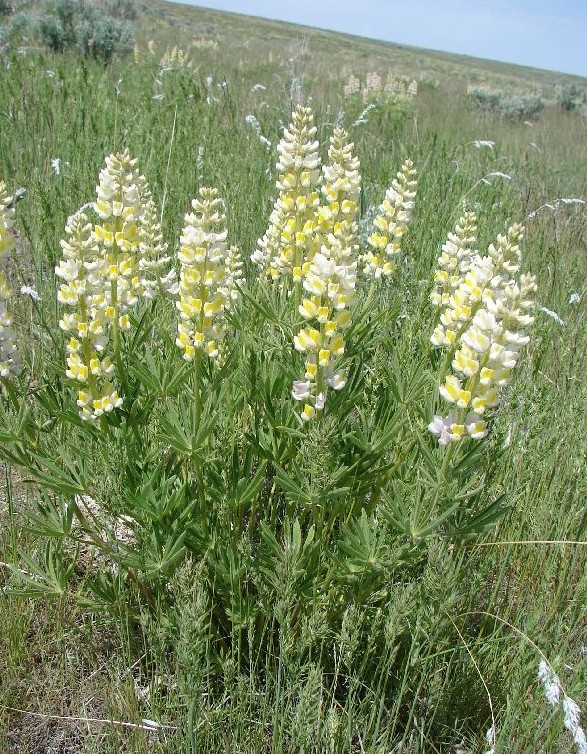
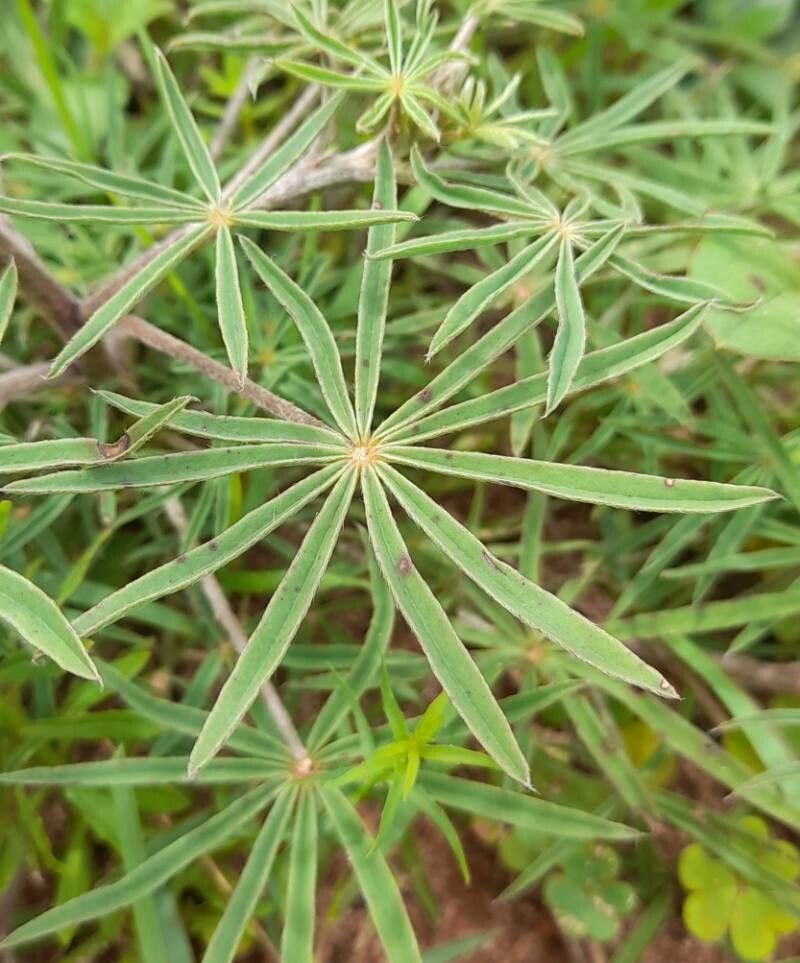
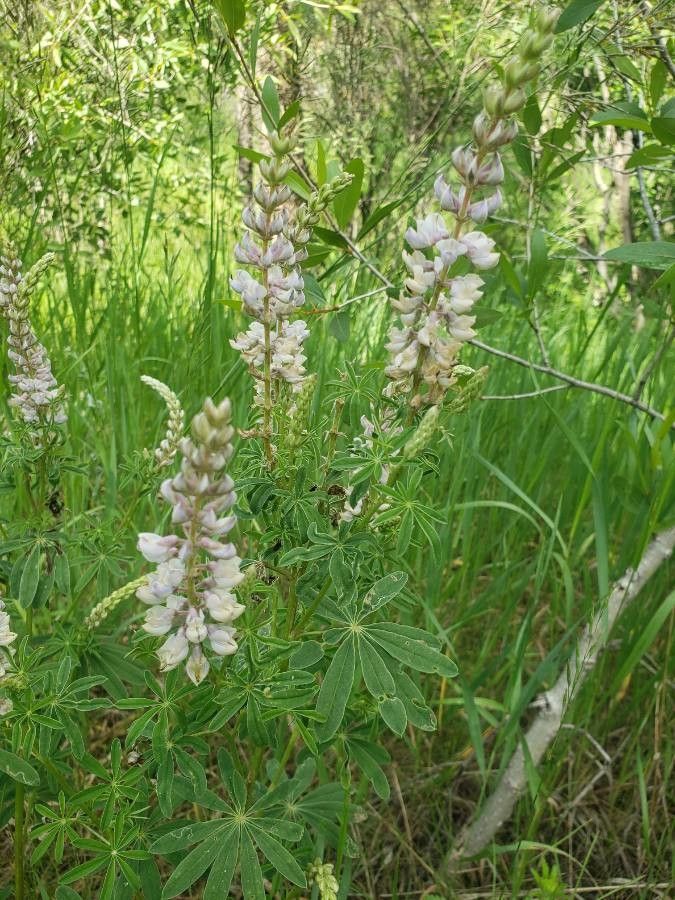
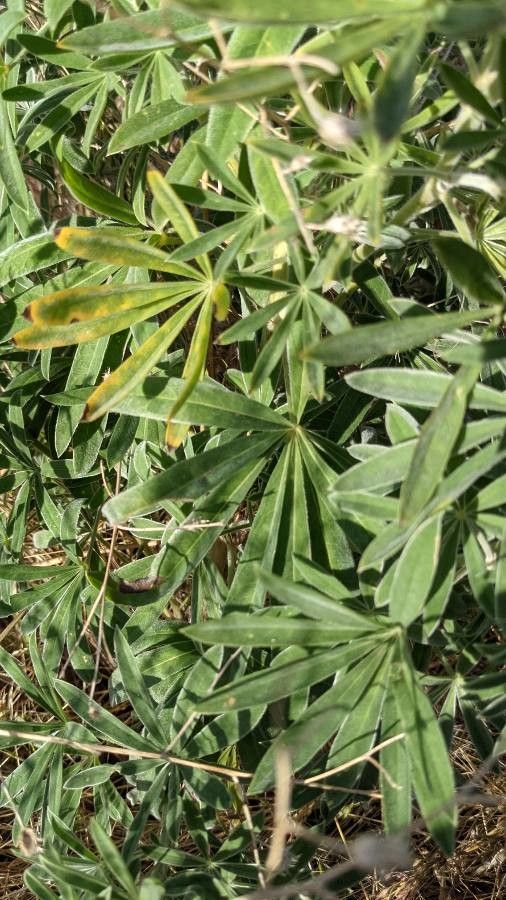
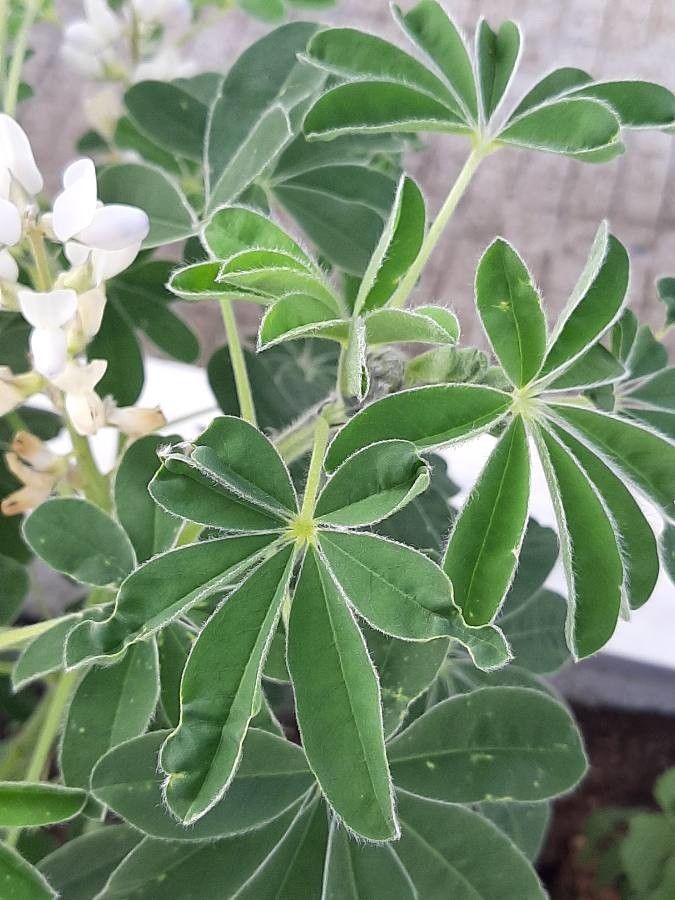
Lupinus arbustus is a species of lupine known by the common name longspur lupine. It is native to western North America from British Columbia to California to Utah, where it grows in several types of habitat, including sagebrush and forests. This is a perennial herb growing erect to a maximum of 70 centimetres (28 inches) tall. It is sometimes hairy in texture. Each palmate leaf is made up of 7 to 13 leaflets each up to 7 centimetres (2+3⁄4 inches) long. The inflorescence is up to 18 centimetres (7 inches) long, bearing whorls of flowers each up to 1.4 centimetres (7⁄12 inch) long. The calyx of sepals around the base of the corolla has a knoblike spur at the back. The flower corolla is white to yellow to various shades of purple or pink. The fruit is a hairy legume pod 2 or 3 centimetres (3⁄4 or 1+1⁄6 inches) long. There are several subspecies.
Long-spur lupine exhibits strong resistance to disease and is generally not susceptible to illnesses. With regard to care, this plant is fairly low-maintenance. When grown outdoors it needs only light watering, and larger specimens typically do not require pruning. Smaller plants, however, should be pruned once they have finished blooming. Long-spur lupinet is appropriate for anyone who has an outdoor area, like a garden or deck, and does not demand extensive caregiving experience.
How to keep Lupinus Arbustus.
Water
Long-spur lupine needs well-drained soil and regular watering for healthy growth. Aim to provide about 1 inch (2.54 cm) of water each week during the growing season. Too little water can cause the plant to go to seed early, while too much water can lead to root rot and interfere with nitrogen fixation. Therefore, maintaining the right soil moisture balance is essential for optimal growth.
Fertilizer
Fertilize your Long-spur lupine in early spring to encourage healthy growth. Regular feeding boosts overall health, producing robust growth, greater hardiness in adverse conditions, and better resistance to diseases and pests. Keep a consistent fertilization schedule for your Long-spur lupine to maintain foliage that is vibrant, deeply colored, and lush.
Pruning
To promote the growth of long-spur lupine, it is beneficial to prune the plant in early spring. This improves airflow and encourages healthier growth. Key techniques include removing dead stems and regularly deadheading flowers to prolong the blooming period. Pruning after the flowering season helps maintain the plant’s shape, but be cautious: heavy pruning when the plant is not dormant can hinder its development. By following these methods, you can ensure vibrant flowers and a healthy plant structure.
Botanical profile.
- Plant Type
- Shrub
- Life Cycle
- Perennial
- Genus
- Lupinus
- Family
- Leguminosae
- Hardiness Zone
- 4-11
- Mature Height
- 20 cm to 61 cm
Other names.
Reader questions.
What are the sunlight requirements for Long-spur lupine (Lupinus arbustus)?
Long-spur lupine (Lupinus arbustus) has specific sunlight requirements to thrive. It needs full sun, which means the plant should receive more than 6 hours of sunlight per day. For those areas where intense full-day sunlight isn't possible, partial sun, or about 3-6 hours of sunlight, can also be sufficient. It's important to observe the movement of sunlight through your garden to find the ideal spots that offer the right balance of light and shade. This careful placement ensures the plants remain happy and healthy.