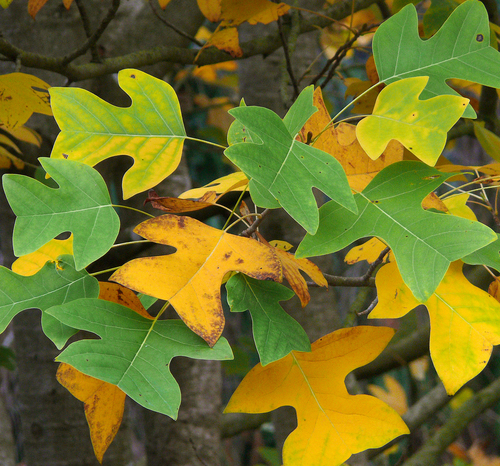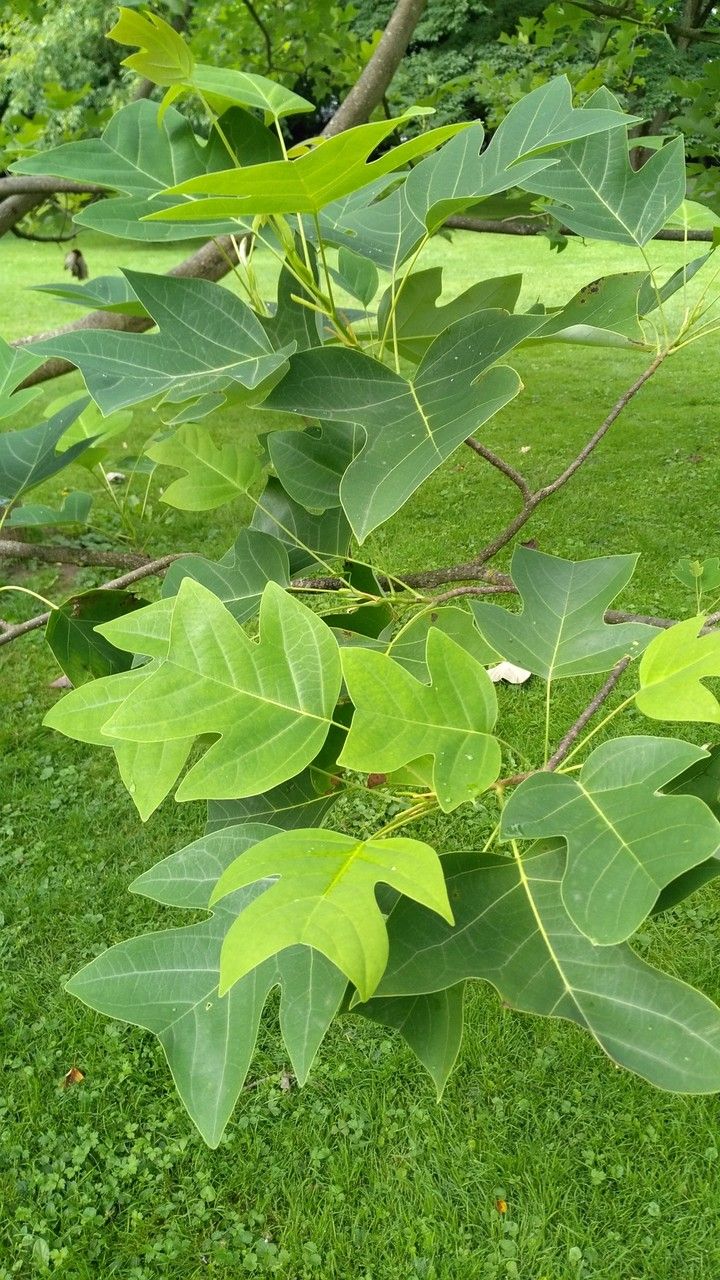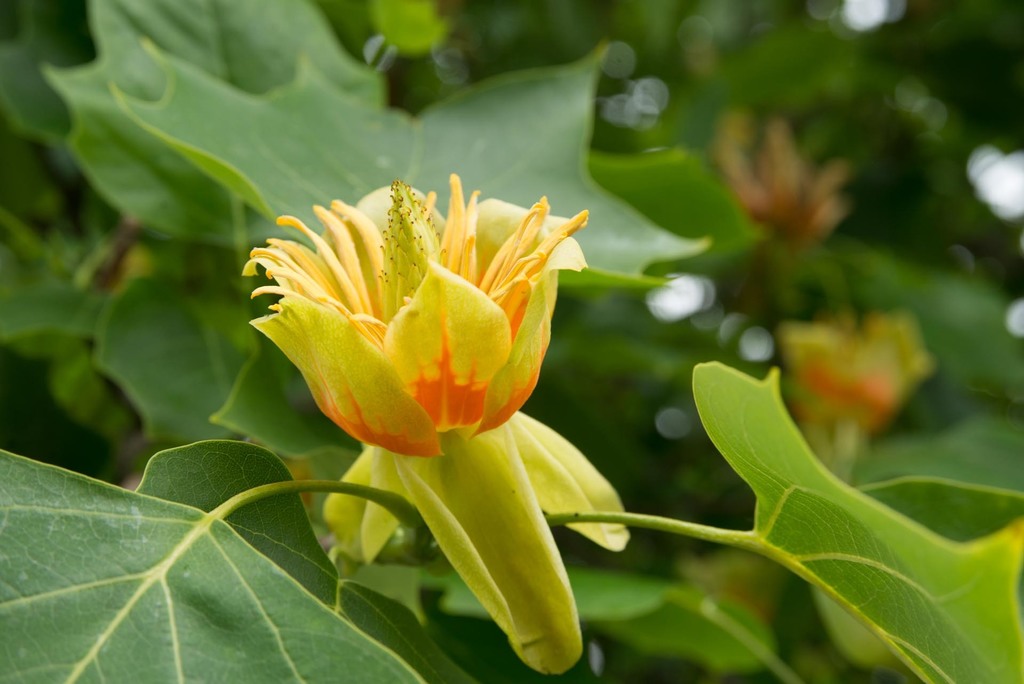
Liriodendron tulipifera, commonly known as the tulip tree or yellow poplar, is a deciduous tree native to North America. As a member of the magnolia family, it can grow up to 150 feet tall with a trunk diameter of up to 10 feet. The four-lobed leaves resemble tulip flowers, which is why it is commonly called the tulip tree. Its flowers are yellow-green with orange markings and appear in late spring or early summer.
The wood of Liriodendron tulipifera is highly valued for its strength and durability, making it popular for use in furniture making, cabinetry, flooring, and construction. The tree also has medicinal properties; its bark has been used by Native Americans as an anti-inflammatory agent.
Liriodendron tulipifera prefers moist soils but can tolerate drought once established. It thrives in full sun but can also manage partial shade. This tree is commonly found in forests throughout eastern North America, from southern Ontario down to Florida.
Scientists reportedly visited a rainforest for exploration and documented significant scientific data beneath a tree. They collected leaves from this tree to serve as a reminder of their discoveries for future generations. The leaves, which resemble the feet of geese, are from the tulip poplar. FUN FACT · FROM THE LIBRARY
Overall, Liriodendron tulipifera is an impressive tree that offers both aesthetic beauty and practical uses for humans. Additionally, its large size provides shelter for wildlife, such as birds and squirrels, that may use its hollowed-out trunk cavities for nesting.
Tulip poplar: When you see this tree in bloom, you might find yourself marveling at how it looks like tulips are growing on trees. The flowers grow upward and are cup-shaped, which is why they're often mistaken for tulips. This resemblance has earned the tree the name "tulip poplar."
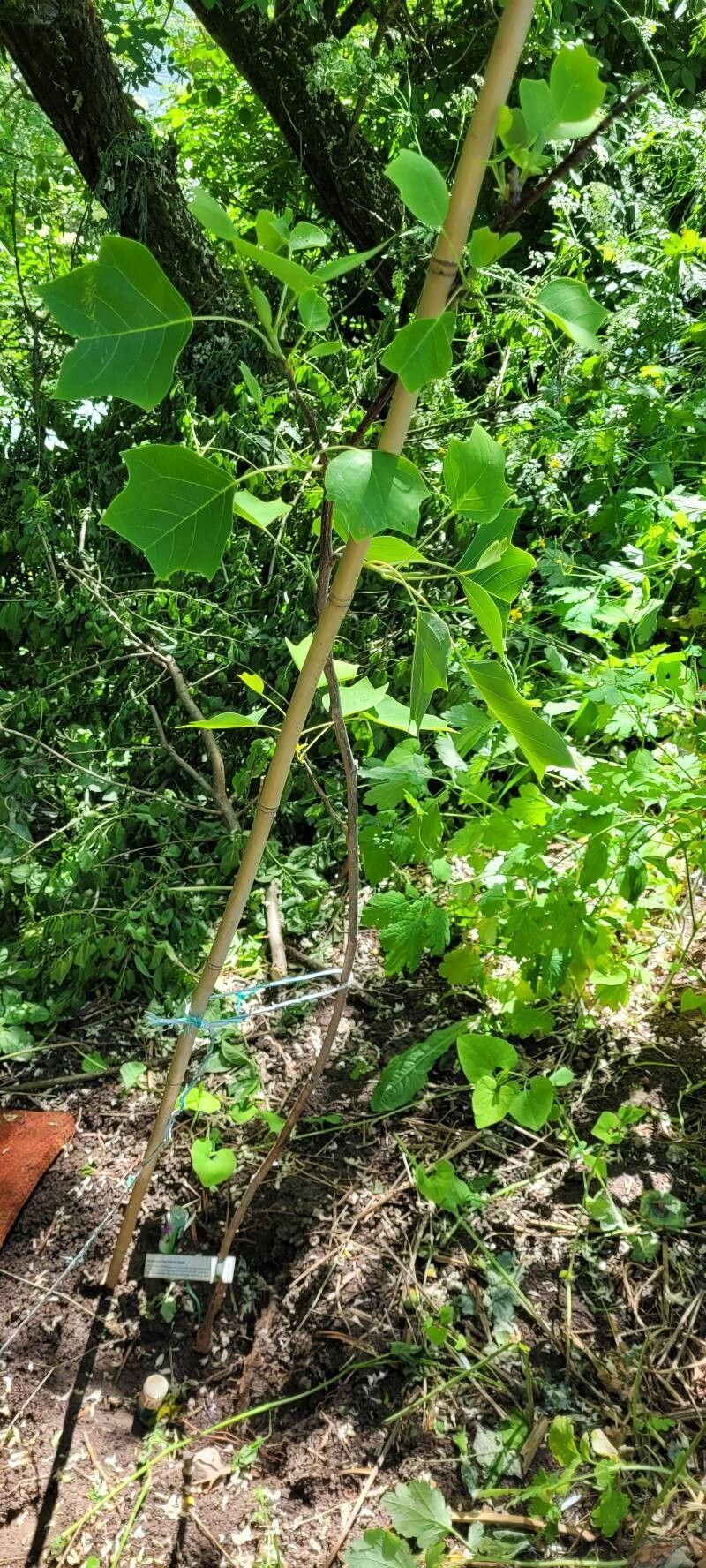
The tulip tree is fairly resistant to disease and is usually not susceptible to illnesses. With respect to care, this plant is fairly low-maintenance. When grown outdoors it needs only light watering, and larger specimens typically do not require pruning. Small plants, however, should be pruned after they finish blooming. The tulip tree is appropriate for anyone with outdoor space, such as a garden or deck, and does not demand much gardening experience.
How to keep Liriodendron Tulipifera.
Light
The tulip tree does best with plenty of sunlight each day, which promotes its overall growth and health. Various growth stages tolerate different light conditions, though a high level of sun exposure is preferred. Its native habitat contains abundant sunlight. Excessive sun can cause damage, while too little light may impede its growth.
Water
The tulip poplar, native to deciduous forests, grows best in moderately moist soil and needs watering every 1-2 weeks. It can adapt to drought by slowing its growth, making it a good choice for areas with variable rainfall.
Temperature
Tulip tree naturally grows in environments that can tolerate a wide range of temperatures, from cool to warm climates. It prefers temperatures between 41℉ to 95℉ (5℃ to 35℃) and can endure lows down to -28℉ (-33℃). In colder seasons, the tulip tree lowers foliage production and slows its growth to conserve energy and adjust its temperature needs.
Fertilizer
Fertilize your Tulip tree in early spring to encourage healthy growth. Regular fertilization improves overall health, leading to vigorous growth, greater resilience to adverse conditions, and enhanced resistance to diseases and pests. Keep a consistent fertilization schedule for your Tulip tree to maintain foliage that is vibrant, deeply colored, and lush.
Pruning
Pruning tulip poplars in early spring is essential for their health and vitality. Focus on removing dead or diseased wood, improving light access, and shaping the tree for a strong structure. This routine practice promotes better growth and increases flower production. Always use sharp, sterile tools to make clean cuts, ensuring the plant remains healthy and attractive.
Botanical profile.
- Plant Type
- Tree
- Life Cycle
- Perennial
- Genus
- Liriodendron
- Family
- Magnoliaceae
- Hardiness Zone
- 4-9
- Mature Height
- 10.06 m to 39.93 m
- Mature Spread
- 11.89 m
- Leaf Color
- Green, Yellow, White, Variegated, Gold
- Leaf Type
- Deciduous
- Flower Color
- Yellow, Orange
- Flower Size
- 3.81 cm
- Bloom Time
- Late spring, Early summer
- Planting Time
- Spring, Autumn
- Harvest Time
- Mid summer
- Native Area
- North America
Other names.
Reader questions.
When Should I Water My Tulip Poplar?
Determining the right time to water your tulip poplar involves checking for several signs. You should water when the top 2-3 inches of soil are dry, as indicated by a finger test or moisture meter. Other indicators include wilting or drooping leaves, leaves that curl or turn yellow in dry soil, stunted growth, cracked soil around the plant, prematurely wilting flowers, and during hot and dry weather conditions which increase evaporation and water loss. Check the root's color and texture; white or light-colored roots indicate health while dry, brown, and brittle roots suggest underwatering. Be cautious of watering too early, which can lead to root diseases, and too late, which might stunt growth or cause dehydration.
What happens if I give my Tulip poplar too much fertilizer?
When feeding a Tulip poplar, you must always be cautious of overfertilization. This is especially likely if you feed the plant at the wrong time, feed it too frequently, or skip watering the soil beforehand. Overfertilization can cause the Tulip poplar's leaves to turn brown and its growth to become stunted. Conversely, excessive fertilizer may also cause the tree to produce an abundance of weak new growth, which is more susceptible to breaking. Additionally, this weak wood can negatively impact the overall shape and structure of the Tulip poplar.
What are the sunlight requirements for a tulip poplar?
Tulip poplar requires full sun, defined as over 6 hours of sunlight daily, to thrive optimally. However, it can also grow under partial sun conditions, which means about 3-6 hours of sunlight each day. Monitoring the movement of sunlight through your garden is crucial for choosing the right spots that provide a perfect balance of light and shade, ensuring the plants' well-being and happiness.
What are the ideal growing temperatures for Tulip Poplar?
Tulip poplar thrives in a diverse range of temperatures, ideally between 41°F to 95°F (5°C to 35°C), and it possesses a remarkable ability to withstand cold, tolerating temperatures as low as -28°F (-33°C). The plant is adaptable, reducing its foliage and slowing growth in colder seasons to conserve energy. Even though Tulip poplar is cold-tolerant, it's recommended to provide extra protection if temperatures are expected to drop below -28°F (-33°C) by wrapping the trunk and branches with insulating materials and watering the plant abundantly before the first freeze in autumn.
How Should I Water My Tulip Poplar?
To water your tulip poplar effectively, utilize a traditional watering can with a long, narrow spout to direct water towards the root zone, minimizing moisture on leaves to prevent fungal diseases. Use room temperature water to avoid shocking the plant's roots and focus on watering the base to ensure the water penetrates deep into the soil. A moisture meter can be helpful to accurately judge the soil moisture. Employing well-draining soil can prevent waterlogging and promote healthy root development. These practices cater to the tulip poplar's unique needs for consistent moisture without being waterlogged.
Why should I fertilize my Tulip poplar tree?
Regular fertilization is essential for all types of Tulip poplars. It promotes overall plant health, encouraging robust growth and increasing resilience to challenging growing conditions. Nutrient-rich soil also helps the tree combat diseases and pests. The foliage of the Tulip poplar is particularly appealing, so it's important to prioritize its preservation. To achieve this, establish and follow a fertilizer schedule tailored to your specific Tulip poplar. Your efforts will result in vibrant, deeply colored leaves, enhancing the tree's overall appearance.
How does sunlight affect the growth of a tulip poplar?
The tulip poplar thrives in conditions of ample daily sunlight, which enhances its overall growth and health. While it adapts to varying light conditions during different growth stages, and its native habitat is characterized by plentiful sunlight, too much sun exposure can lead to damage, and insufficient light may impede its growth. To support growth, especially indoors or in darker spaces, artificial lighting can be a vital solution. Adequate lighting promotes healthier and faster growth, with recommendations for LED lights as they cater to specific plant needs. Different plants require varied amounts of artificial light intensity and duration based on their sunlight needs.
How should I care for my Tulip Poplar in winter?
In winter, tulip poplar doesn't generally require special frost protections due to its strong cold resistance. Nonetheless, for winters predicting temperatures below its substantial cold threshold of -28°F (-33°C), it's advisable to protect it by wrapping its trunk and branches with non-woven fabric or other suitable materials. Furthermore, an abundant watering before the initial freeze can help the soil retain moisture, thereby supporting the plant through the colder months.
How Much Water Does Tulip Poplar Really Need?
Tulip poplar's water needs are moderate but consistent to mimic its natural habitat of well-drained, moist soil. A mature plant might need about 2 gallons of water per week, but this can vary depending on environmental factors and the plant's size. Proper hydration is indicated by moist soil that's not waterlogged, along with vibrant growth and healthy leaves. Signs of underwatering include wilted, droopy leaves, and dry, detached soil, while overwatering can cause root rot, fungal diseases, and a soggy soil texture. Adjust the watering volume based on soil moisture, temperature, and humidity, using well-draining soil and deep watering techniques to ensure water reaches the root zone.
When should I fertilize my Tulip poplar tree?
To ensure healthy growth, it is recommended to fertilize your Tulip poplar for the first time in late winter or early spring. This provides the necessary nutrients for the tree to thrive once the weather warms up. If you live in a warm climate region, it can also be beneficial to give your Tulip poplar an additional fertilization in early fall. This not only adds more nutrients for the next growing season, but also helps the tree withstand the cold winter without leaf damage. By fertilizing earlier, the new branches will have enough time to grow and be able to endure the winter weather.
What are the signs of inadequate sunlight in tulip poplars and how can it be managed?
When tulip poplar doesn't receive enough sunlight, it may show signs like smaller new leaves, leggy or sparse growth, quicker leaf drop, stunted or halted new growth, lighter-colored new leaves, chlorosis, sunscald, leaf curling, wilting, and leaf scorching. To optimize growth, gradually expose the plant to more sunlight, use a south-facing window for indoor plants, or utilize artificial lighting if natural light is insufficient. For outdoor plants, relocating them to sunnier spots gradually can prevent sunburn. Managing light exposure involves reducing obstructions like trees by pruning and, for smaller plants, considering transplantation during dormant periods to locations with better sunlight and drainage.
What are the signs of cold damage in Tulip Poplar and how can I address them?
If a tulip poplar is exposed to temperatures below its cold tolerance, the branches might not exhibit immediate damage but could become brittle and dry by spring, failing to produce new shoots. To remedy this, prune away any dead branches to encourage new growth. It's crucial to maintain the temperature above the tolerable minimum during winter to prevent such damages.